Geometry Unit 9 & 10 Circle/Area OL IHS
 Call Kai
 Learn
Learn Practice Test
 Spaced Repetition
 Match
Match Flashcards
 Knowt Play
1/72

There's no tags or description
Looks like no tags are added yet.
Name | Mastery | Learn | Test | Matching | Spaced | Call with Kai |
|---|
No analytics yet
Send a link to your students to track their progress
73 Terms
circle
set of points that are equidistant from a given point called a center
-shaded area of circle is ellipse
radius
one point in them middle and one at the end
r= d/2
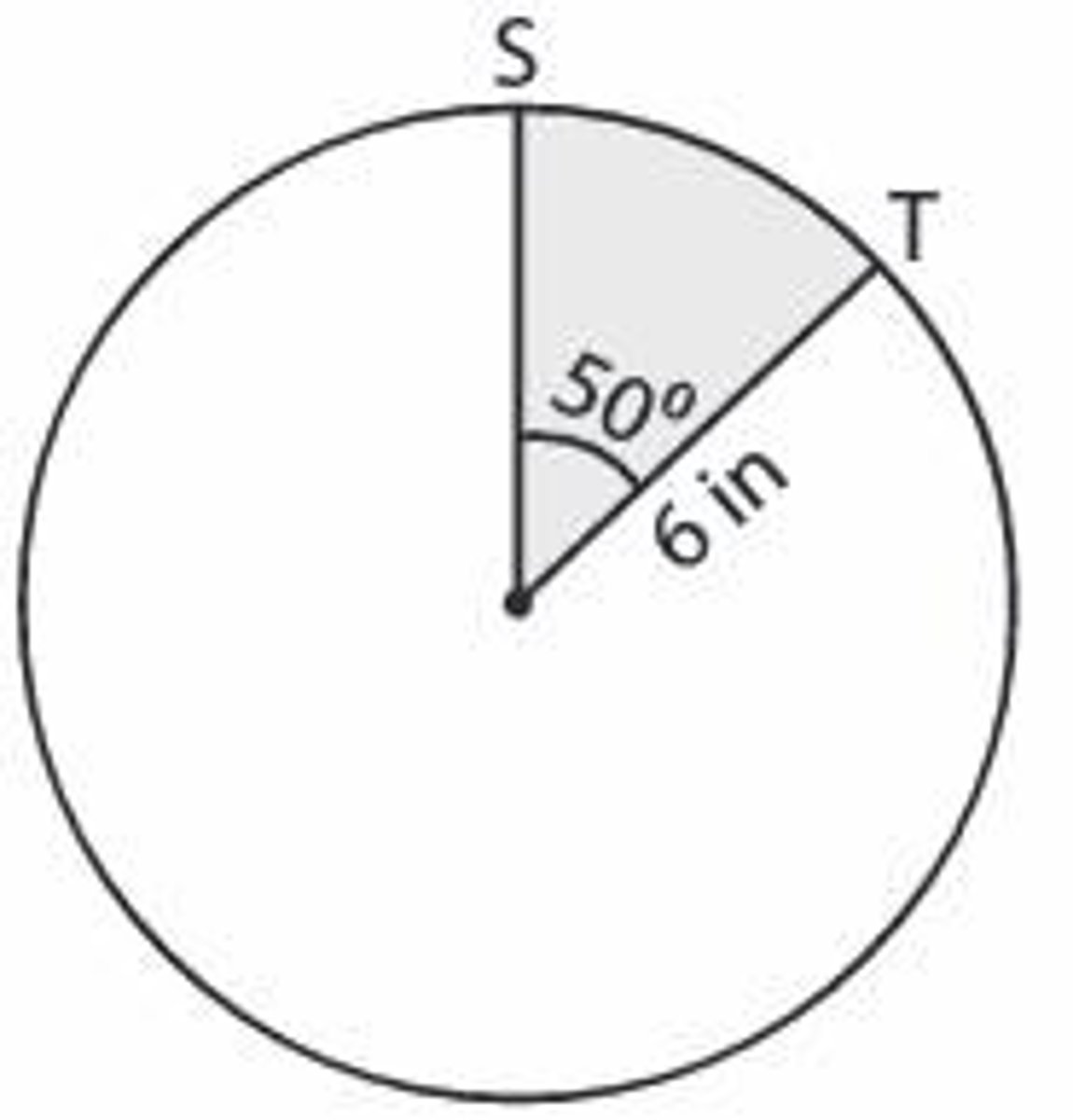
diameter
goes through the center of the circle
-a diameter is always a chord
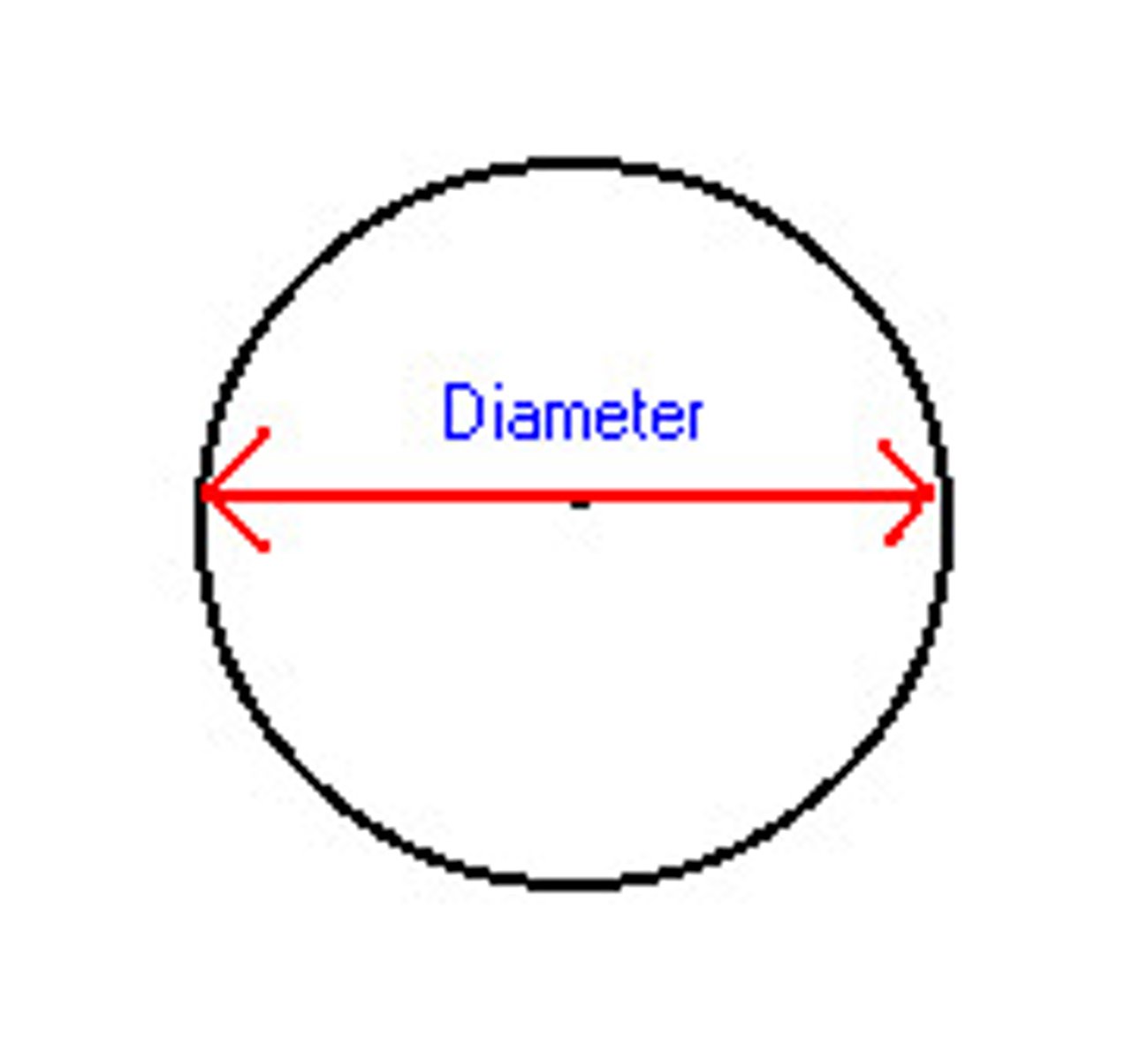
chord
segment with endpoints on a circle
-chord is not always diameter
secant
line that intersects a circle in two points
tangent
intersects circle in exactly 1 point
intersecting chords theorem
if two chords intersect, the product of the lengths of segments of one chord is equal to the product of the lengths of the segments of another
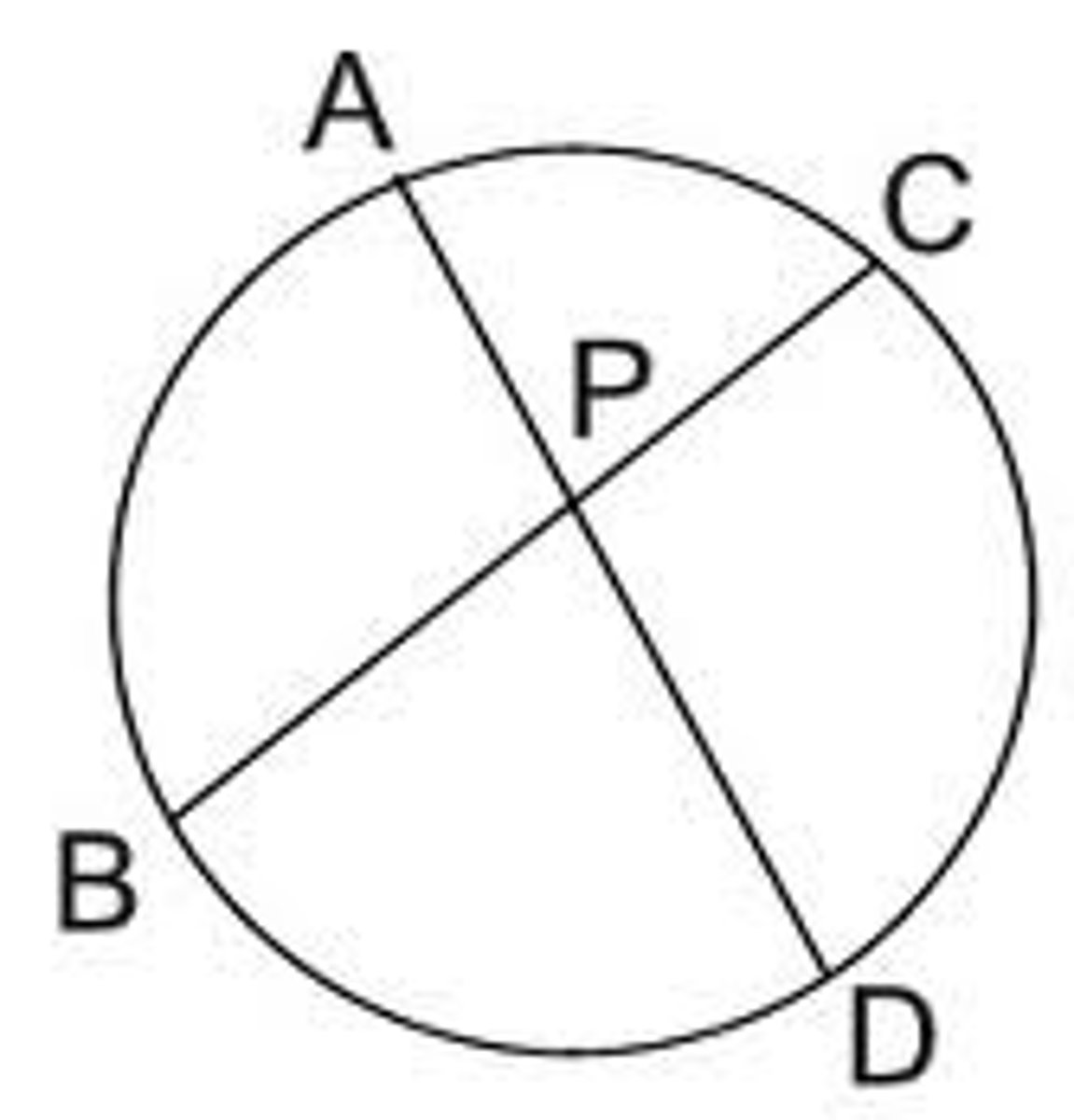
intersecting secants length theorem
when two sacant lines intersect, PA(PB) = PC(PD)
-multiply outside of segment with the entire segment by the other outside of segment and entire segment
Intersecting secant and tangent theorem
PC^2 = PA(PB)
-pc is tangent, pa is the outside part of segment, pb is the entire part of the segment
formula for circumference
C=dπ
-circumference increases/decreases when diameter increases/decreases
-distance around the edge of circle
area for circle
πr²
-amount of space inside
central angle
vertex at center of circle, enclosed by two radii
-major central angle greater than 180
-minor central angle less than 180
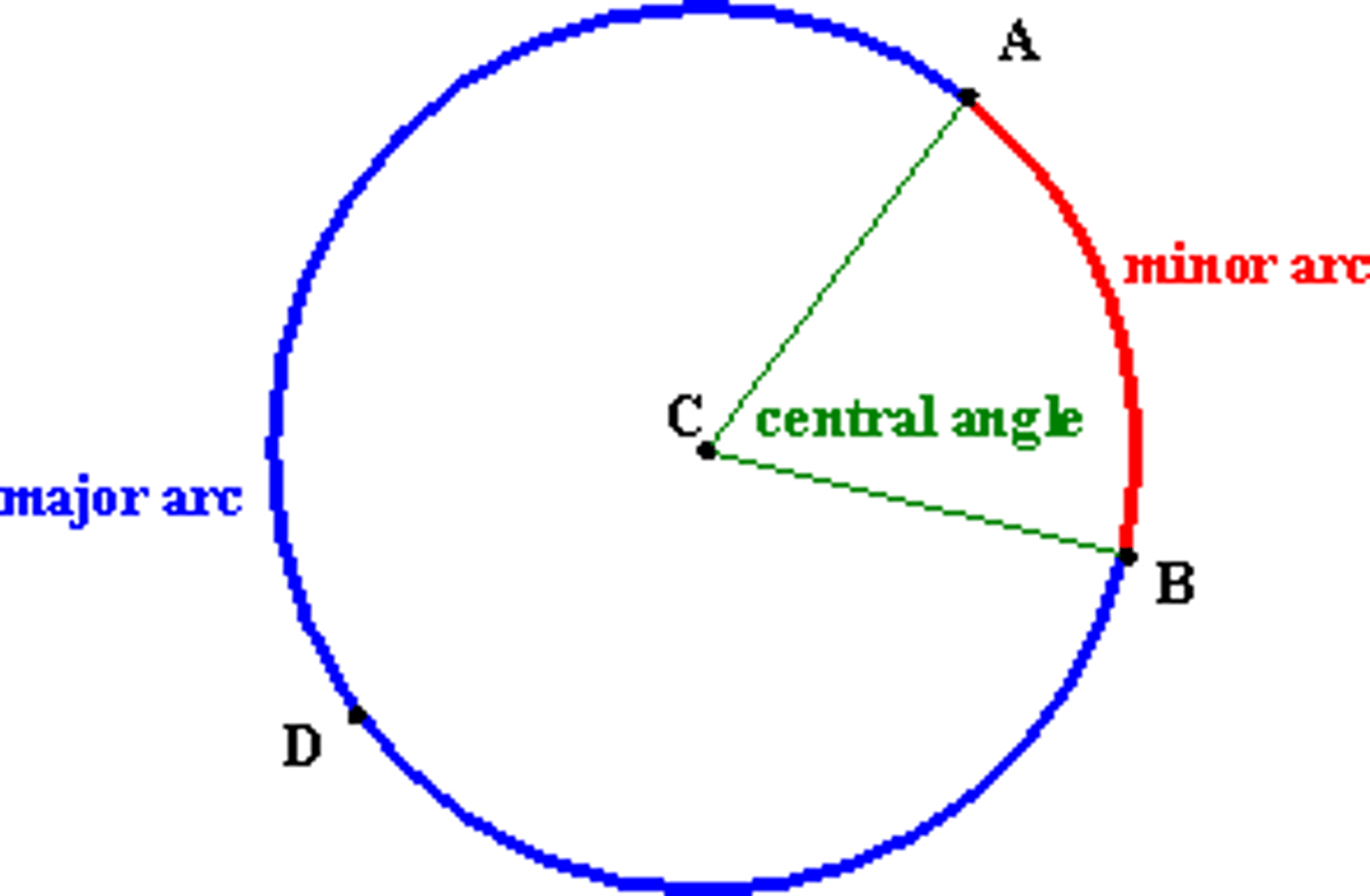
arc
part of a circle with endpoints that lie on the circle
-defined by central angle
-major or minor
-if two chords are congruent, then so are the arcs
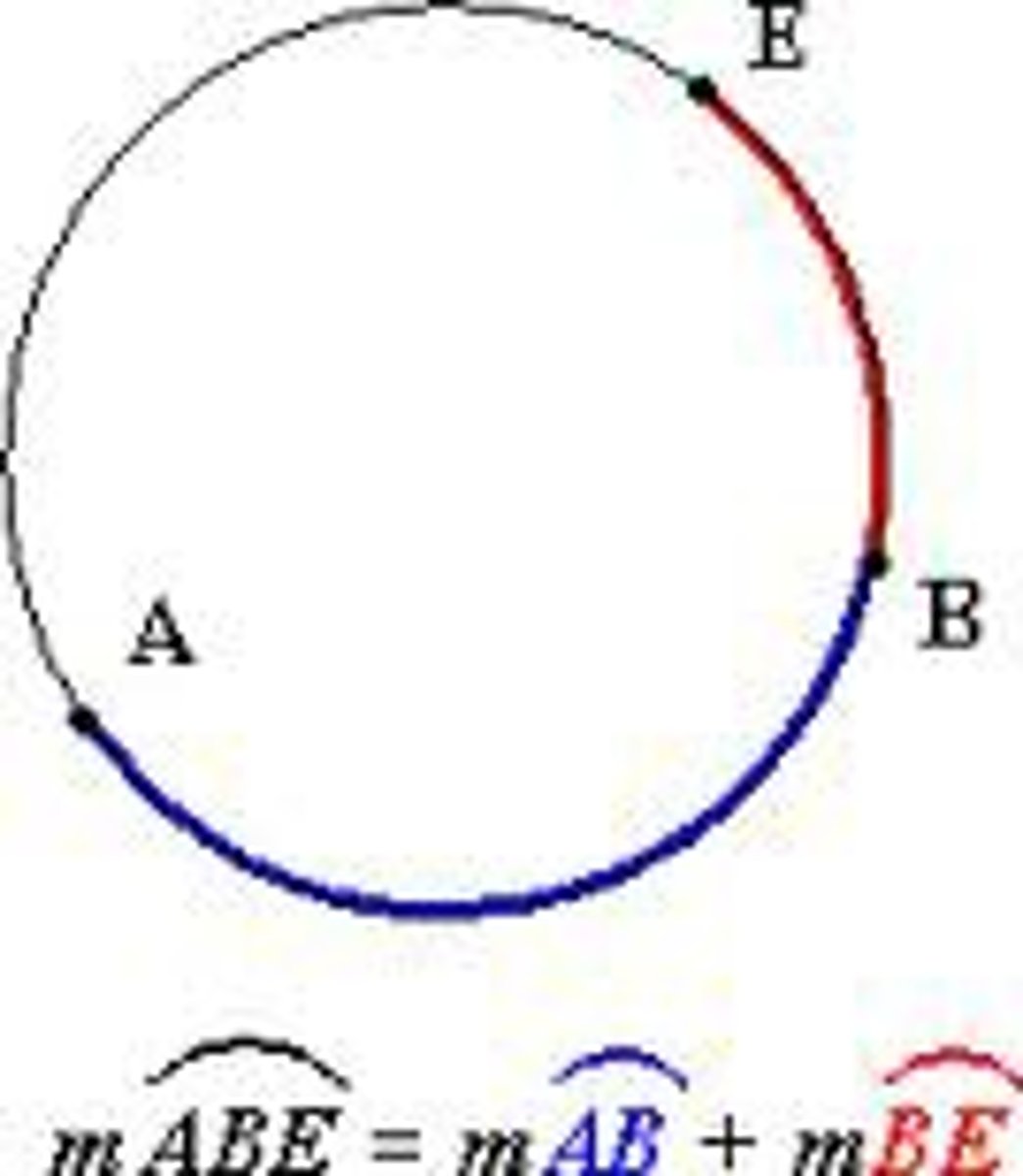
arc addition postulate
if an arc is formed by its adjacent arcs, then the measure of that arc is the sum of adjacent arcs
sector
portion of one circle that is enclosed by 2 radii and an arc of the circle
-major arcs --> major sector, vise versa
semicircle
sector enclosed by diameter of a circle and arc of the circle
-central angle is 180
quad circle
sector with a 90 degree central angle
how does the angle formed by the radii determine the sector type
-major/minor central angle = sector is major/minor
-180 degrees = semi circle
-90 degrees = quad circle
formula for arc length
mAB/360 times 2pi(radius)
measure of arc vs length of arc
-incline created by two sides that forms the angle of the arc
-distance between 2 end points (length)
--> ratio of degrees of arc to circle (360)
tangent line
touches circle at only 1 point
-point of tangency
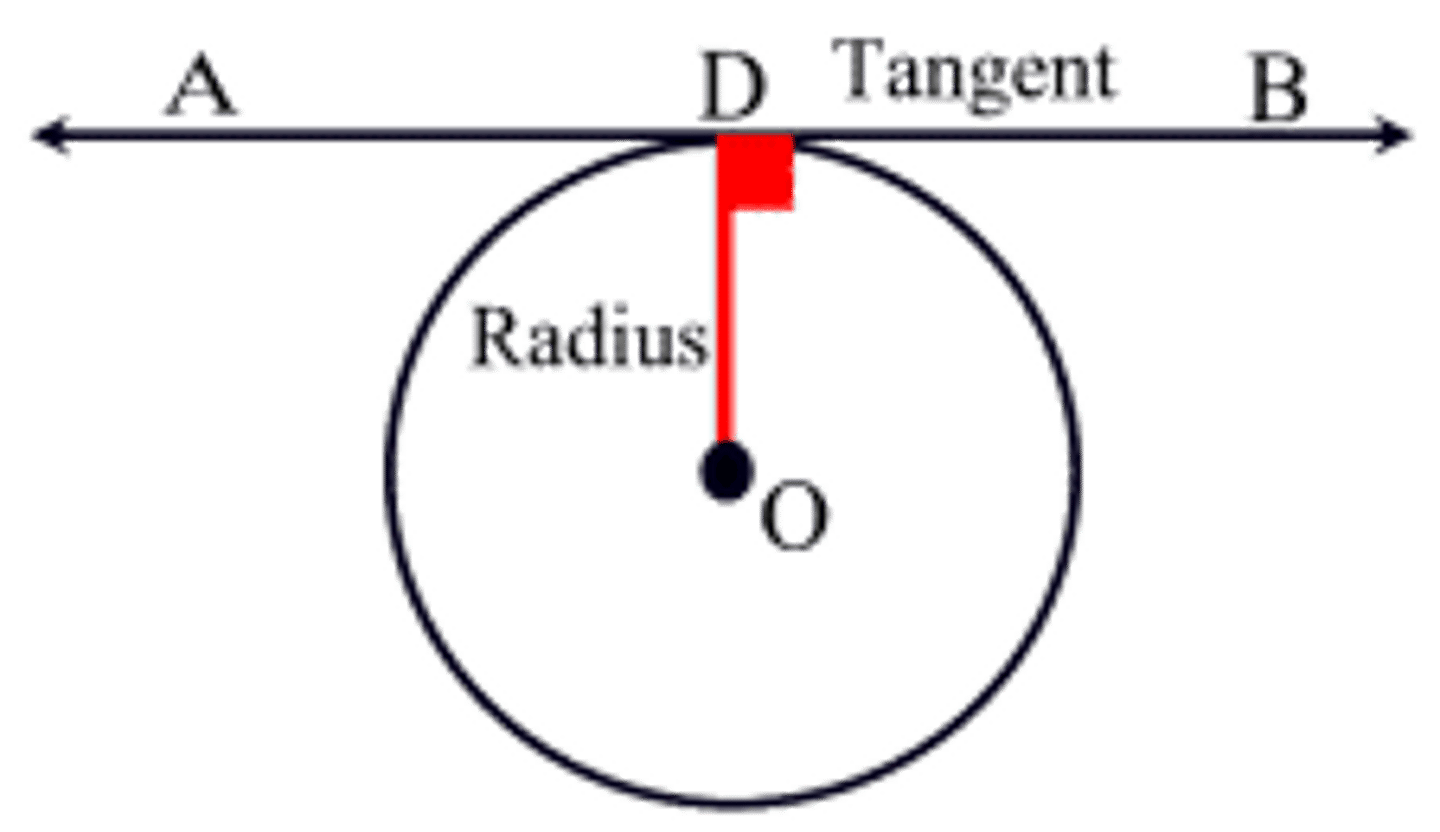
two tangent theorems
-If a line is tangent to a circle, it is perpendicular to the radius drawn in the point of tangency
-tangent segments to a circle from the same external point are congruent
Radian
Unit for measuring angles
-angle measure for 1 radian produces arc length equal to circle's radius
- 1 rad = 57.3 degrees
- 360 = 2pi rad
- 180 = pi rad
How to convert from degrees to radians
multiply the degree by pi/180
-reduce to lowest fraction, keep the pi
How to convert from radians to degrees
Multiply given value by 180/pi rad
How to tell if a point is inside/outside, or on circle
if the distance b/w a point and a circle's center is less than the radius, then it is inside
-if it is greater, then it is outside
-if it is the exact same, then it is on the circle
inscribed angle
formed by two chords of a circle with a common endpoint that forms a vertex
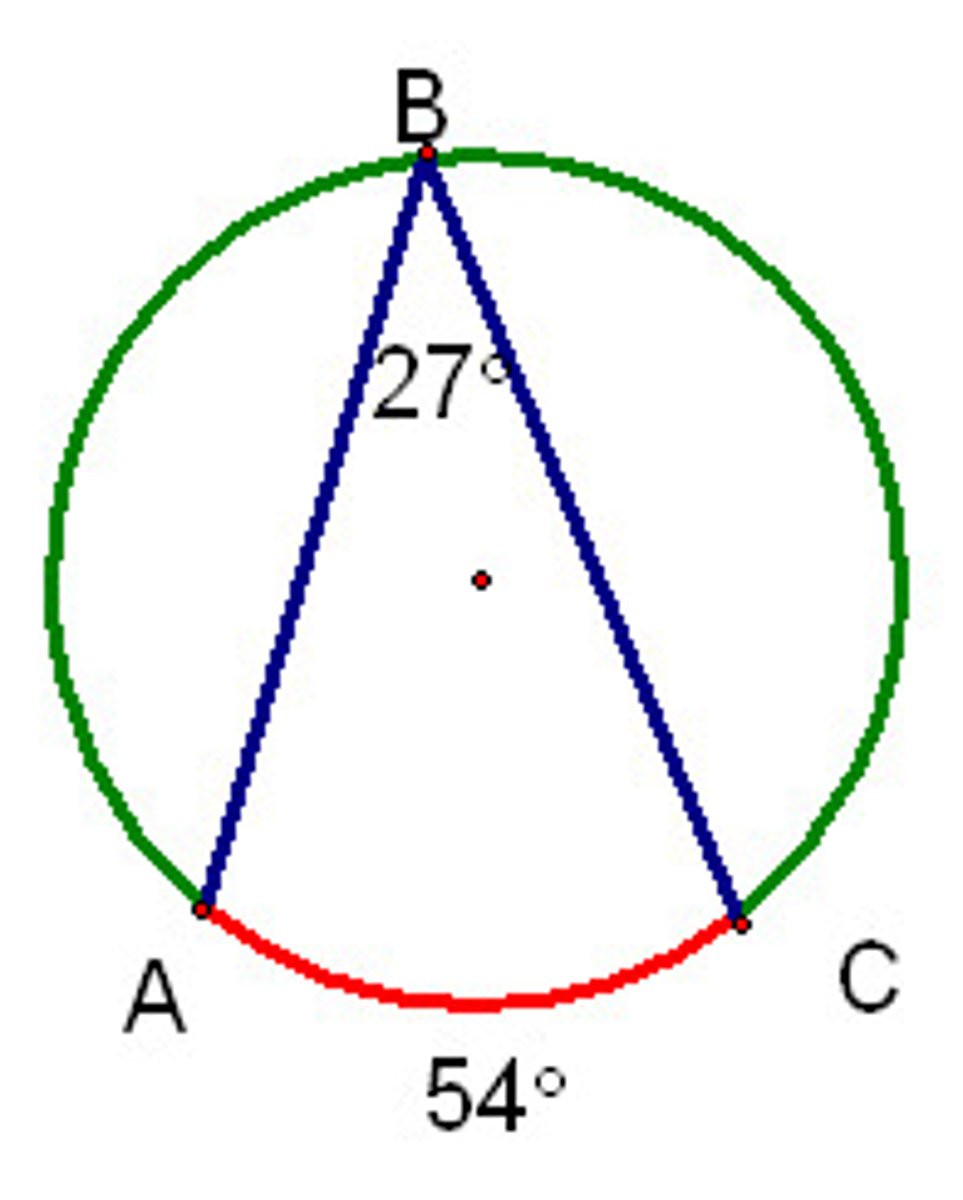
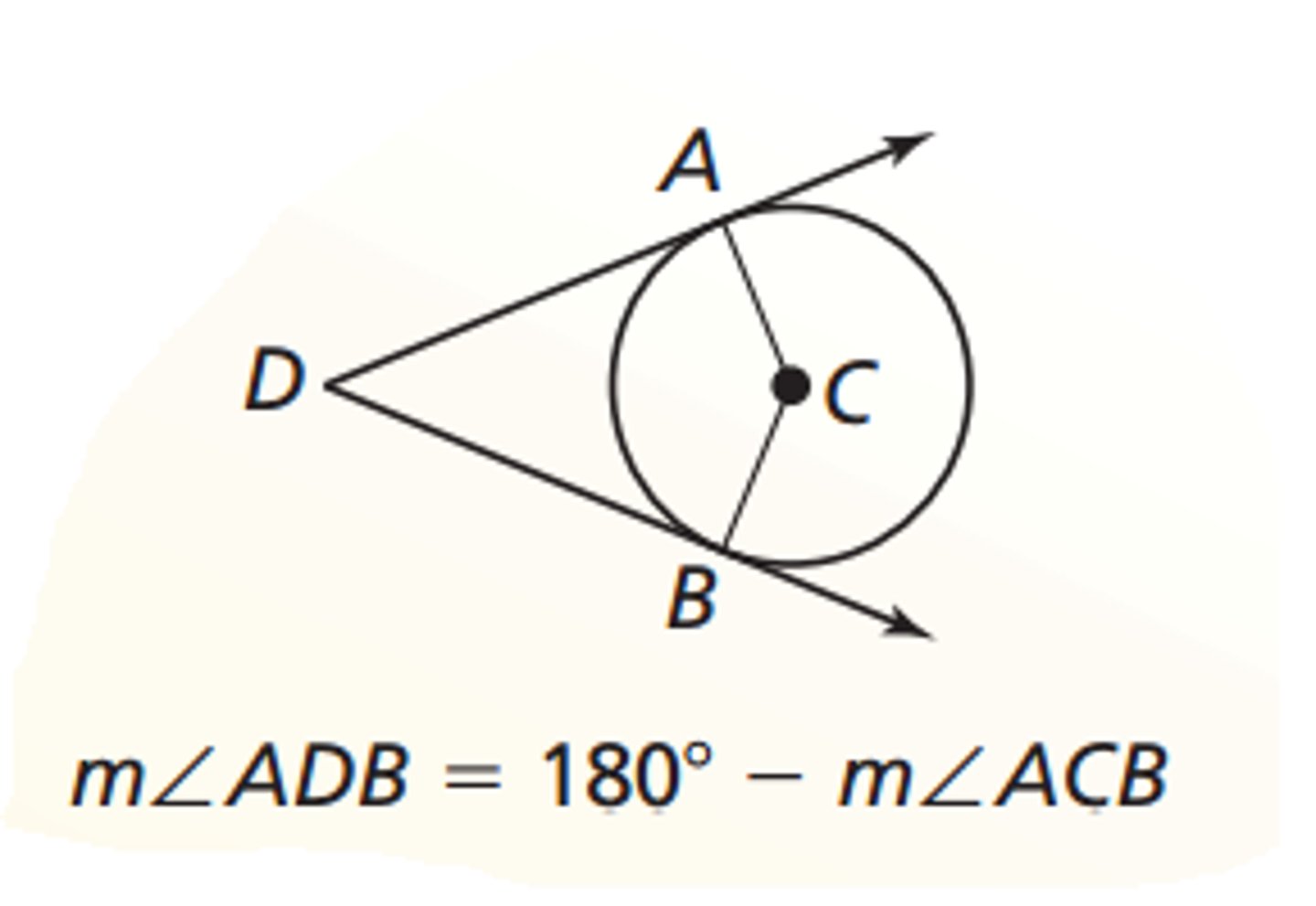
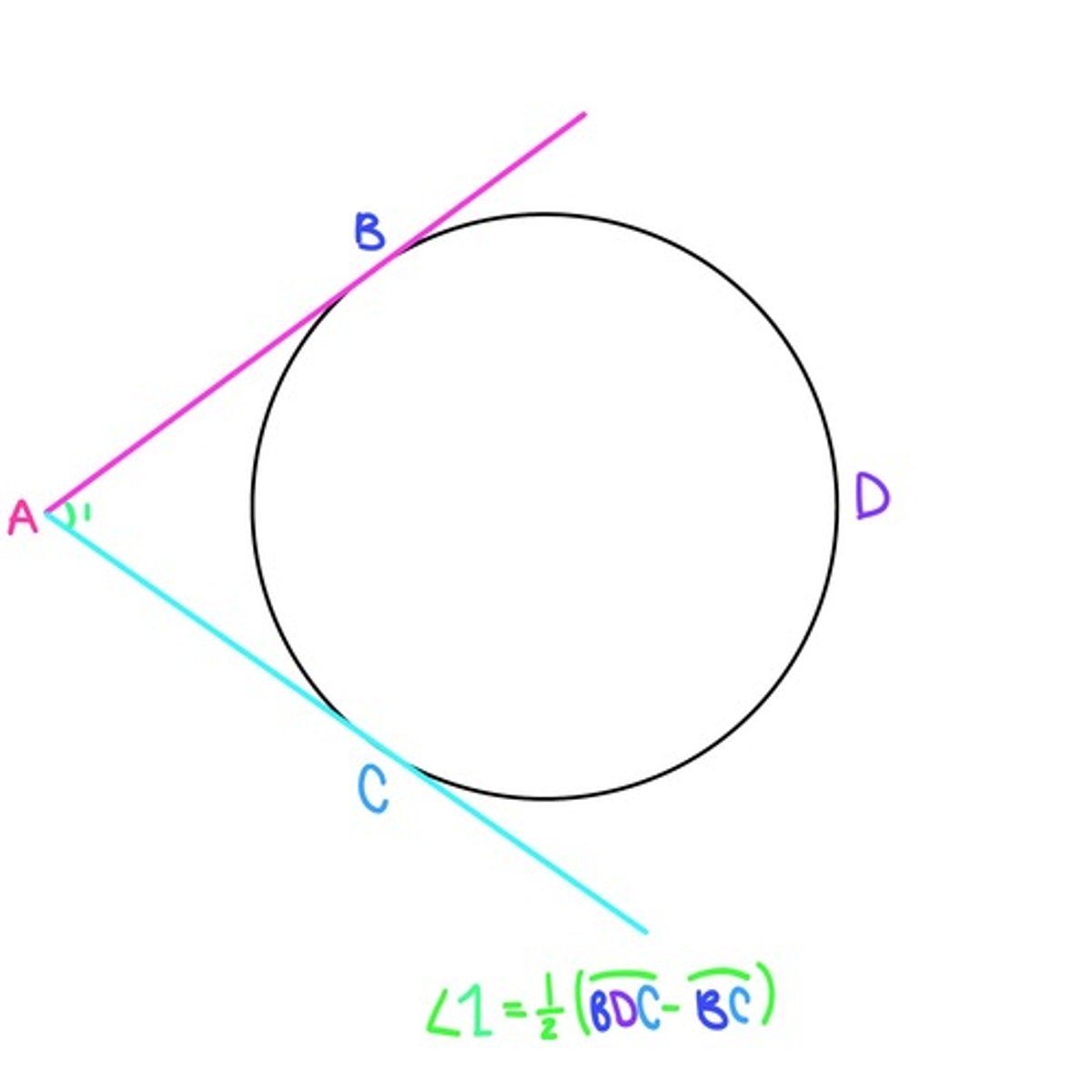
circumscribed angle
angle formed by two tangents to a circle with a common endpoint (vertex)
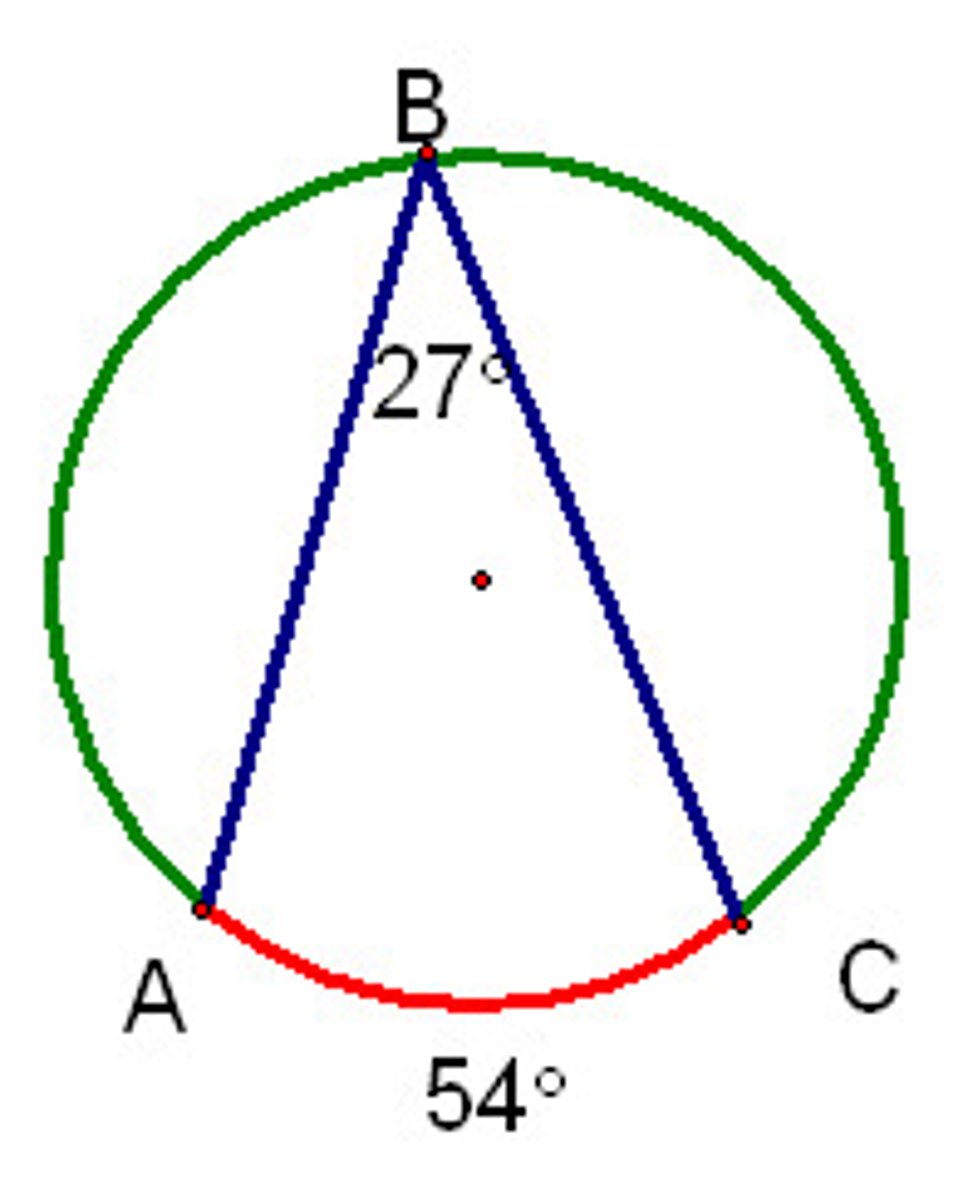
inscribed angle theorem and intercepted arcs
measure of an inscribed angle is half of the measure of the intercepted arc
properties of inscribed figures
-figure inside a circle
-All regular polygons can be inscribed in a circle
-All vertices of an inscribed polygon are on the circle.
-The center of an inscribed regular polygon is the center of the circle
-The radius of a regular polygon is also the radius of the circle.
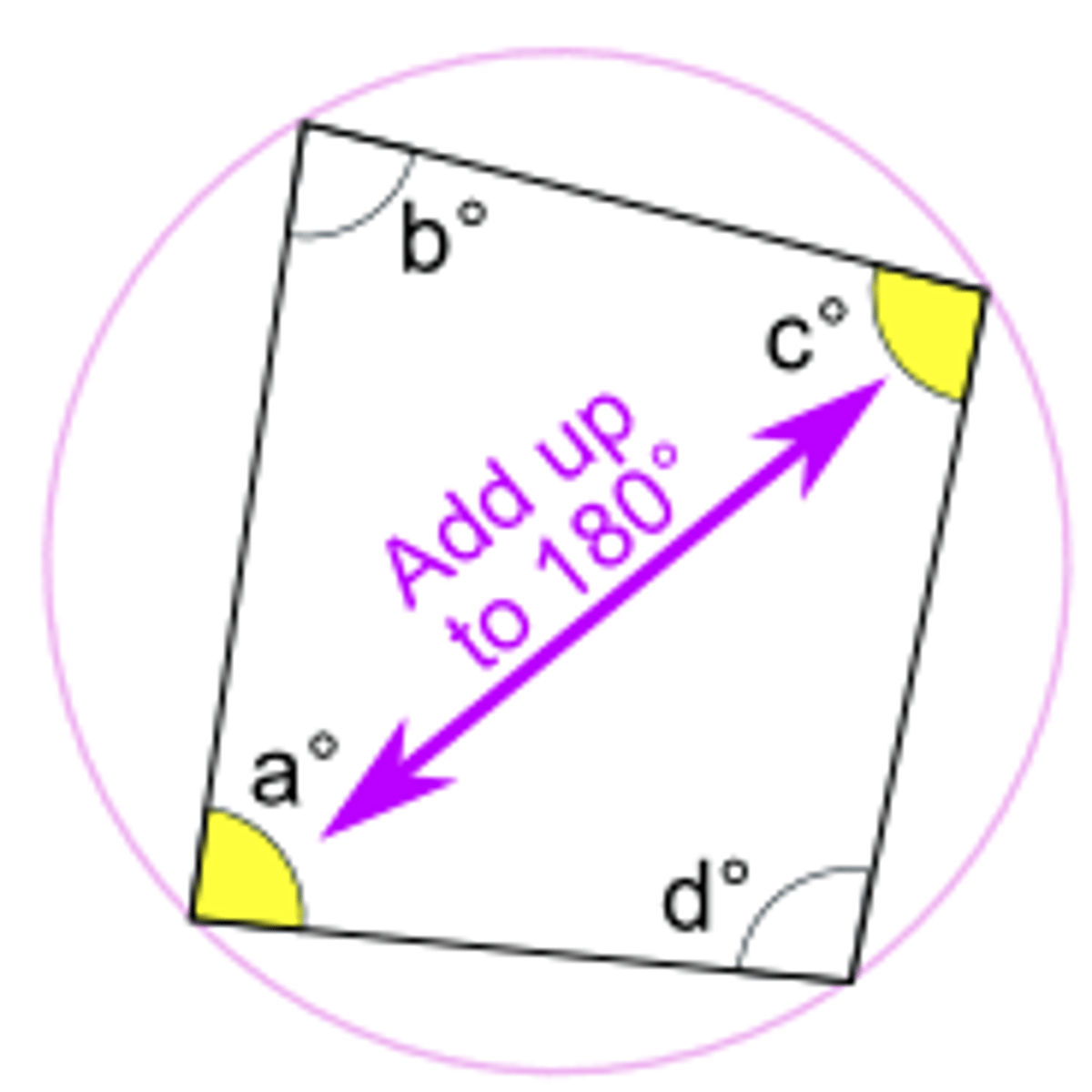
inscribed quadrilateral theorem
a quadrilateral is inscribed in a circle if and only if the opposite angles are supplementary
how to use a perpendicular bisector to construct a square in a circle
-always divides an segment into 2
-forms right angle
-to divide circle into equal angles, diving by number of vertices 360/n
tangent radius theorem
if a line is perpendicular to the raidus of a circle at its endpoint on the circle, then it is a tangent
-converse is also true
-forms right angles
-may need to use pythagorean theorem
tangent tangent angle theorem
If two segments from the same exterior point are tangent to a circle, then they are congruent
-forms a tangent tangent angle
-m
equation of a circle
(x-h)^2 + (y-k)^2 = r^2
- (h,k) is center, r is radius
-take opposites of h and k
-if given points instead of radius, use distance formula from the equation and the point to find the radius
how to plot a circle
plot center, then at least 4 points that are r units from center
review how to find equations of circle from different forms using algebra
1
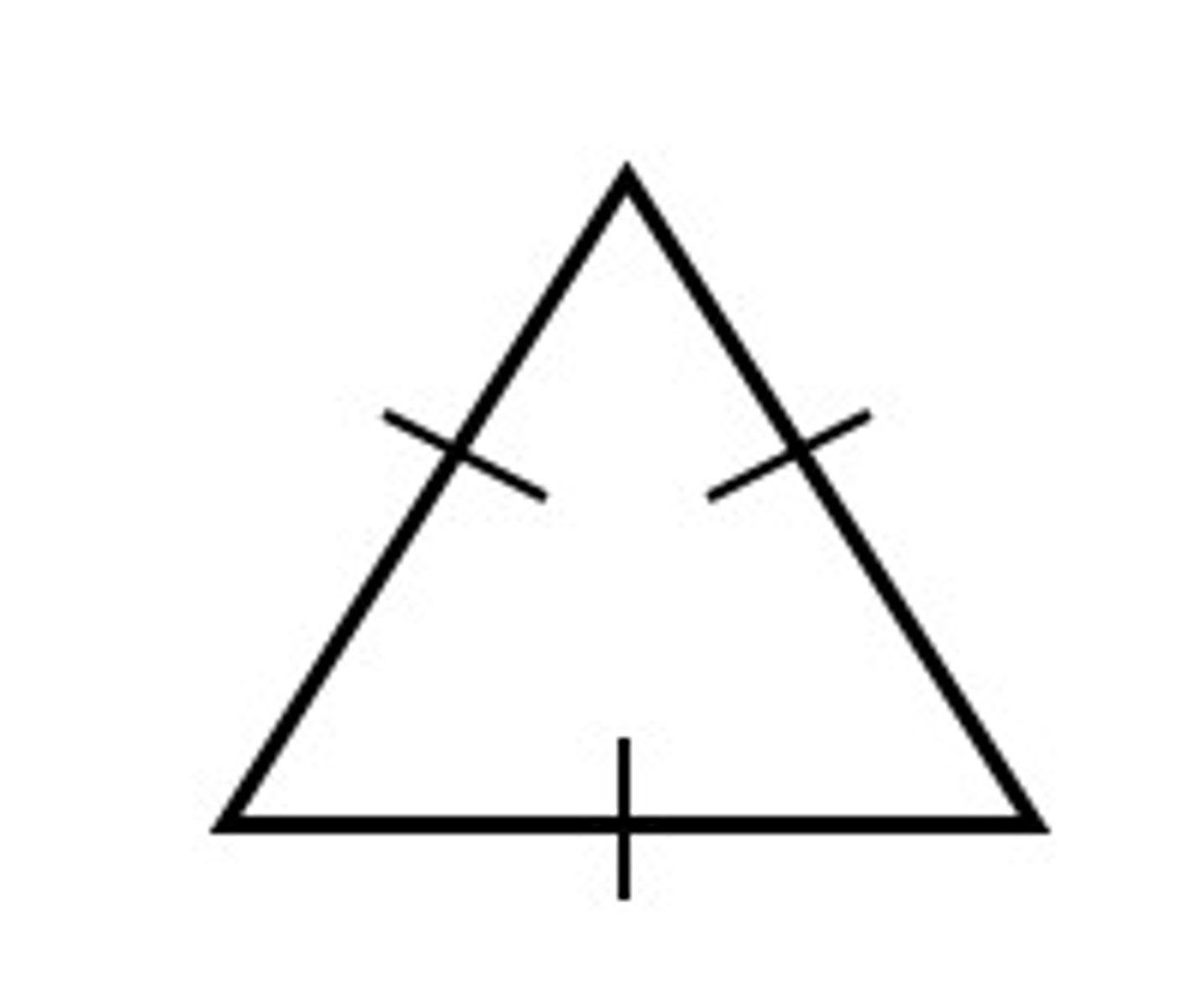
perimeter of regular polygons
-side lengths are the same
how to tell if its regular polygon
all sides and angles are congruent
how to find perimeter irregular polygon
-add up all sides to find perimeter
-can find it using area formula, pythagorean theorem, trig ratios
finding perimeter of irregular polygons with area
use area formula and substitute known values
finding perimeter of irregular polygons with pythagorean theorem
-u will know 2 out of 3 sides
finding perimeter of irregular polygons with trig ratios
-sin = opp/hyp
-cos A/ adj/hyp
-tan = opp/adj
hypotenuse (trig ratios)
-longest side of a right triangle and the side across from right angle
opposite (trig rtios)
side of an angle that is across the angle
adjacnet
side that touches the angle, not hypotenuse
-multiply by what isolates the variable
how to find perimeter of a polygon on a graph
use pythagorean theorem or distance formula
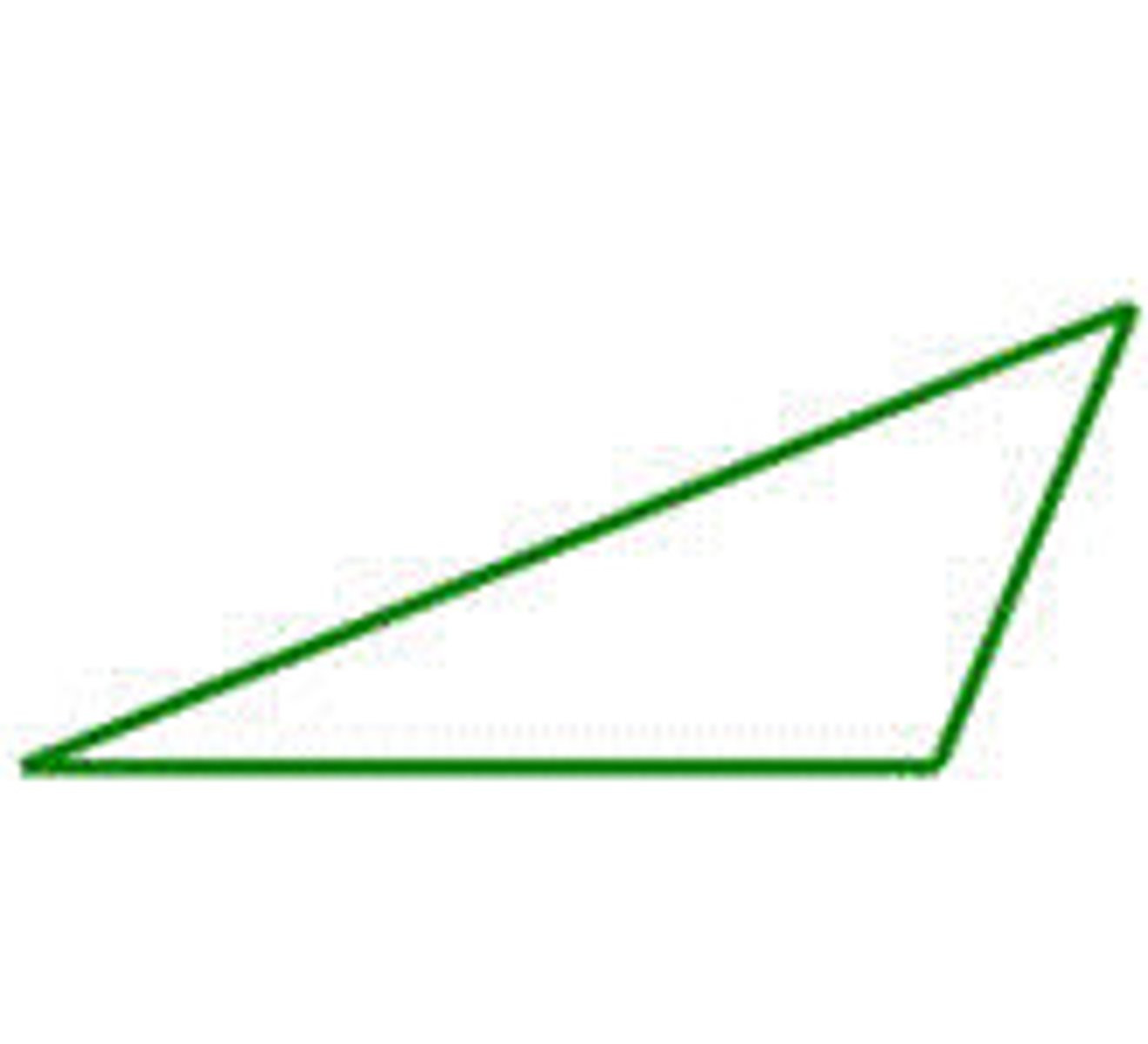
obtuse triangle
A triangle with one angle that is greater than 90 degrees.
-height is always outside of the triangle
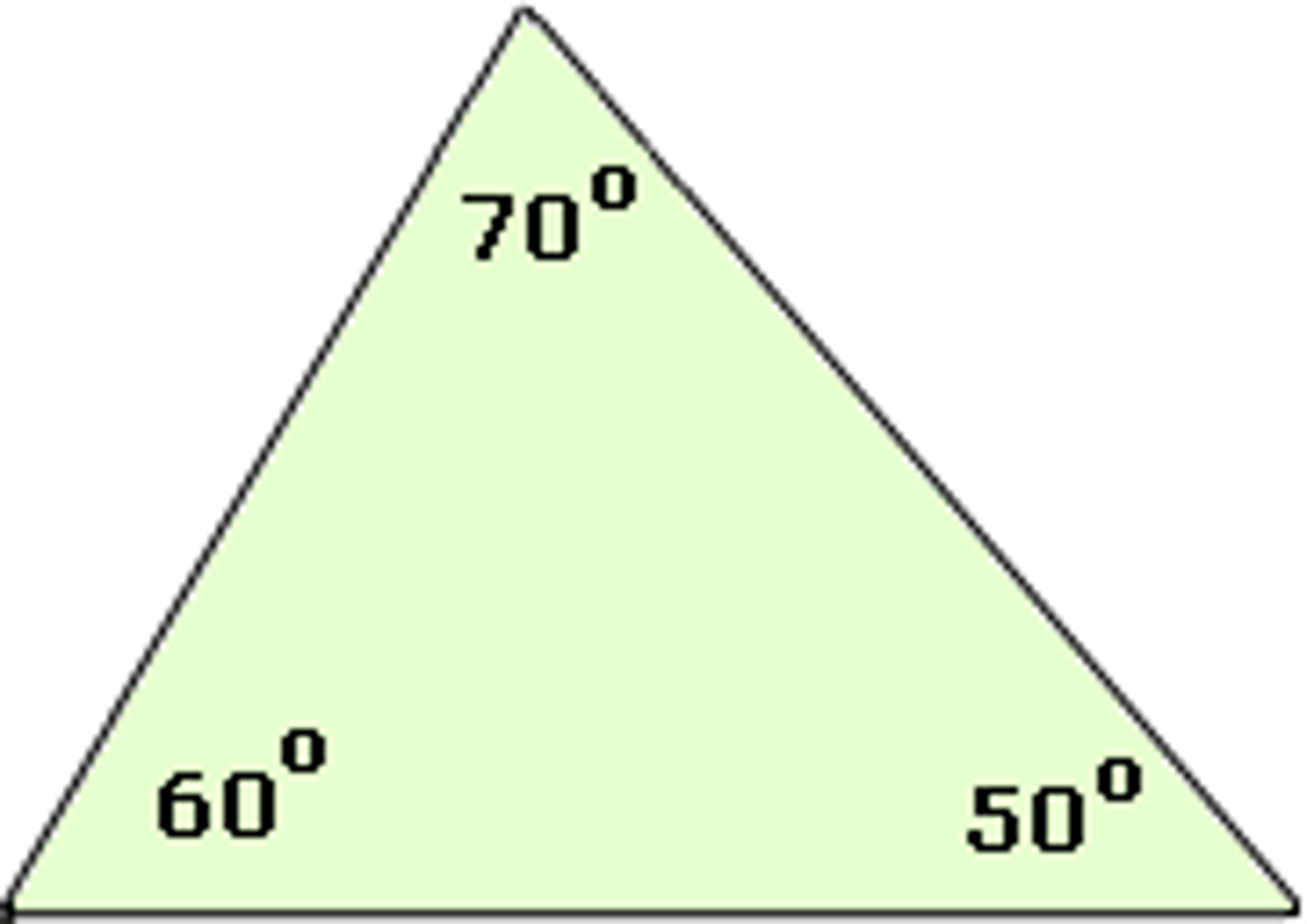
acute triangle
A triangle that contains only angles that are less than 90 degrees.
-base has to be perpendicular to height
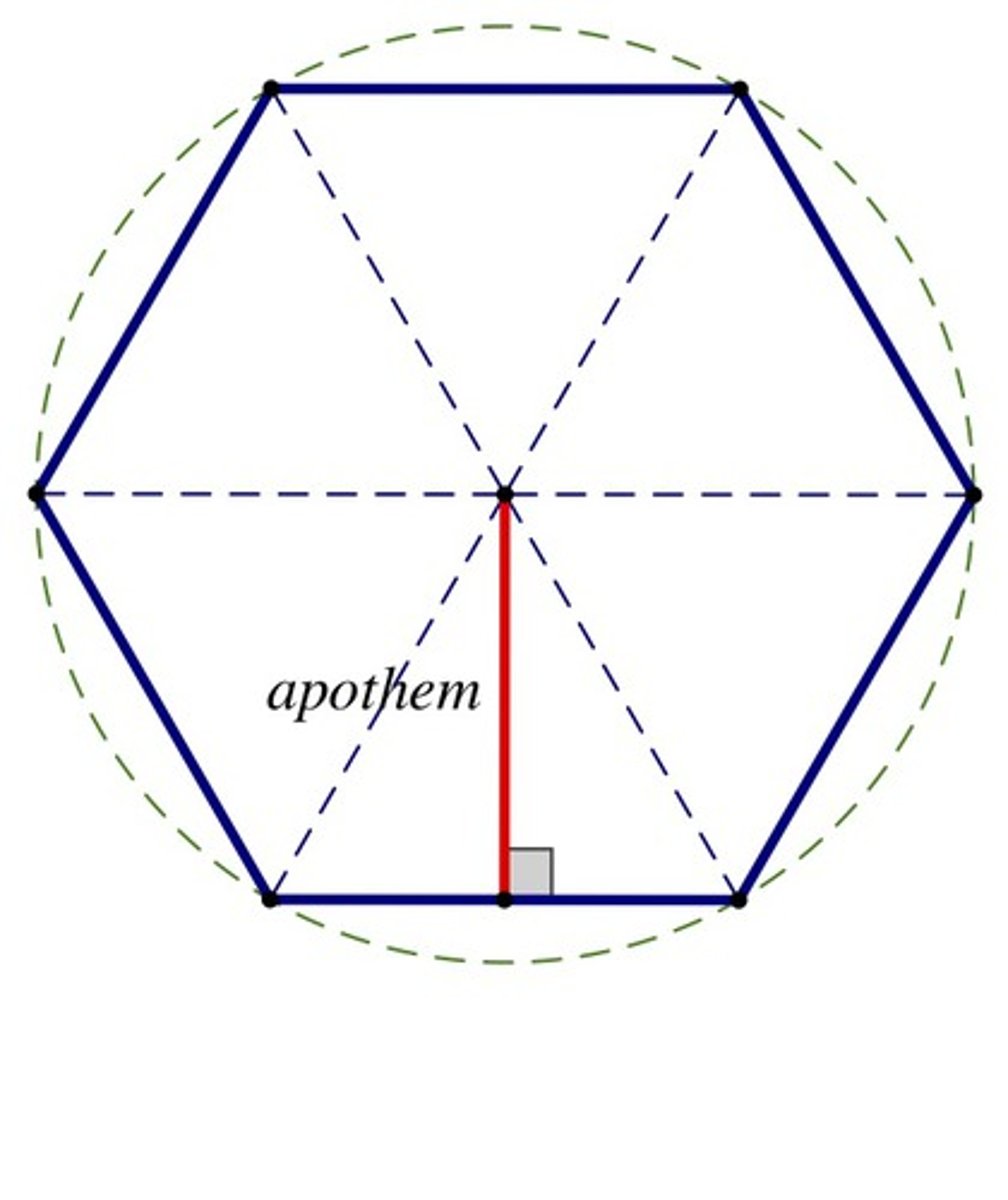
equation to calculate area of regular polygons
A = perimeter(apothem/2)
-triangle and rectangles must not overlap and you must be able to find area of them
apothem
a segment from the center of a regular polygon that is perpendicular to any side
area to find a sector
n/360pir^2
-n is measure of central angle
segment of a circle
a region of a circle between a chord and the minor arc formed by that chord
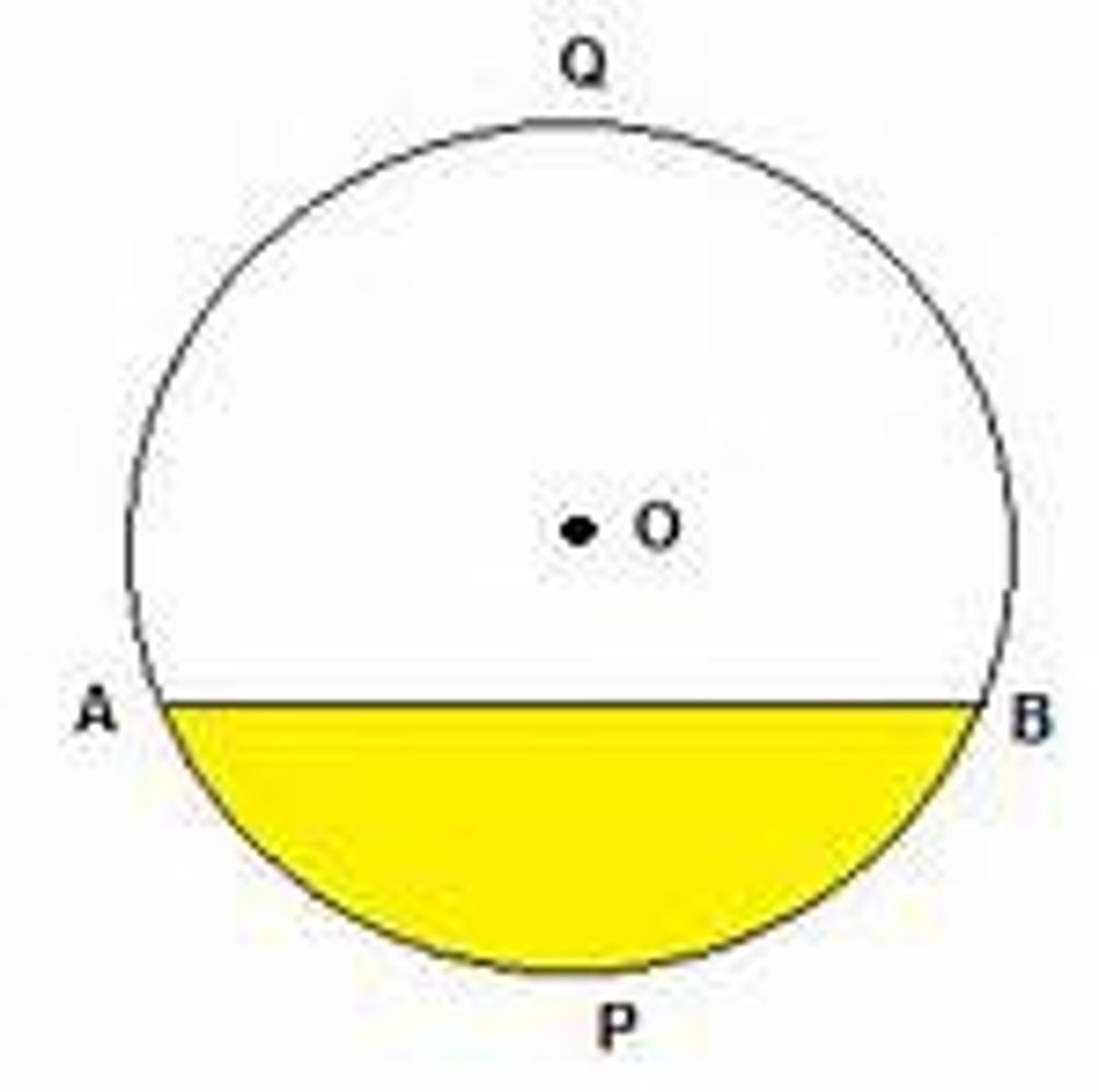
area to find segment of a circle
Asegmnet = Asector - A lower triangle
unknown figure
any shape that does not fit a geometric definition
using sine to find unknown height of a triangle
a = 1/2 a times b times sin0
-sin0 is included angle of sides and b
density
how packed something is
-number of things/total space
solid
object with length, width, depth, height
-3 dimensions
-has faces, edges, and vertices
polyhedron
not curved solid
volume
The amount of space an object takes up
surface area
all faces
eulers theorem
F+V=E+2
= F + V - E = 12
-true for all polyhedrons
types of solids
prism, pyramid, cone, sphere, cube, cylinder
area for sphere
4πr^2
area for cube
6s^2
pyramid
-polyhedron
-all lateral faces intersect at vertex
-vertical height called altitude
-slant height (l)
-base must be regular polygon
-1/2Pl + B
-P is perimeter of base, B is area of base
cone
-has altitude, slant height, base is circle
-not polyhedron
- piR(l + r)
regular pyramid
a pyramid whose base is a regular polygon and is a right pyramid
properties of a prism
1. sides of prism are parallelograms
2. cross section of prism is same across all lengths
3. prism is a polyhedron
4. bases are congruent
5. can find SA using nets
types of prisms
rectangular, cubes, triangular, pentagonol, hexagonol
formula for surface area of a prism
SA=2B+Ph
surface area for a cylinder
2πr²+2πrh
st eps for unit conversions
1. cnfirm units can be converted
2. find conversion factor
3. convert
- 100 cm = 1 m
- 3.28084 ft = 1 m
-if using area, square conversion factor first
-12 in = 1 ft