C12.5 Identification of ions and gases
 Call Kai
 Learn
Learn Practice Test
 Spaced Repetition
 Match
Match Flashcards
 Knowt Play
1/18

There's no tags or description
Looks like no tags are added yet.
Name | Mastery | Learn | Test | Matching | Spaced | Call with Kai |
|---|
No analytics yet
Send a link to your students to track their progress
19 Terms
State charge of carbonate ions
CO32-
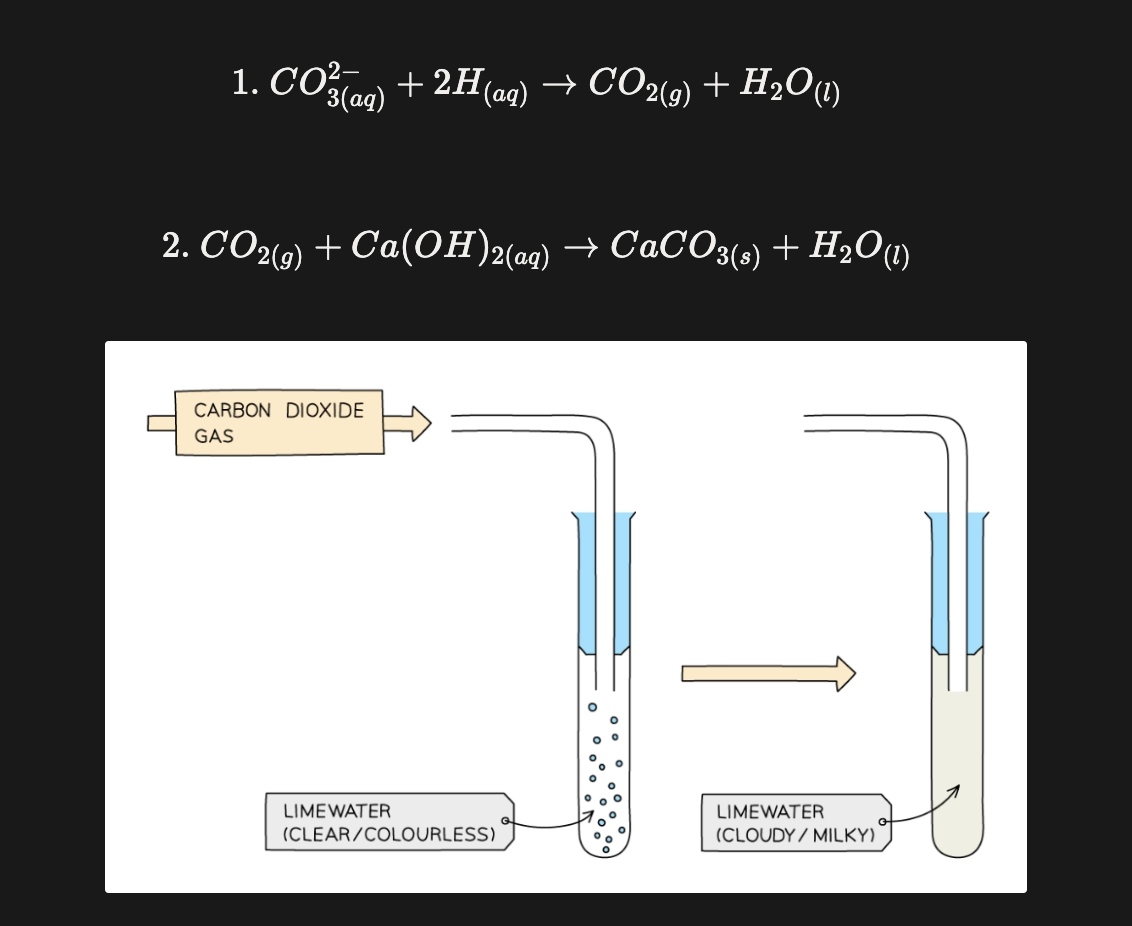
Describe test for carbonate ions
Add dilute acid
Bubble gas through limewater (calcium hydroxide)
White precipitate of calcium carbonate is formed if carbonate is present
Turns cloudy in presence of carbonate
This is because limewater is used to test for carbon dioxide, which is produced when carbonate compounds are present
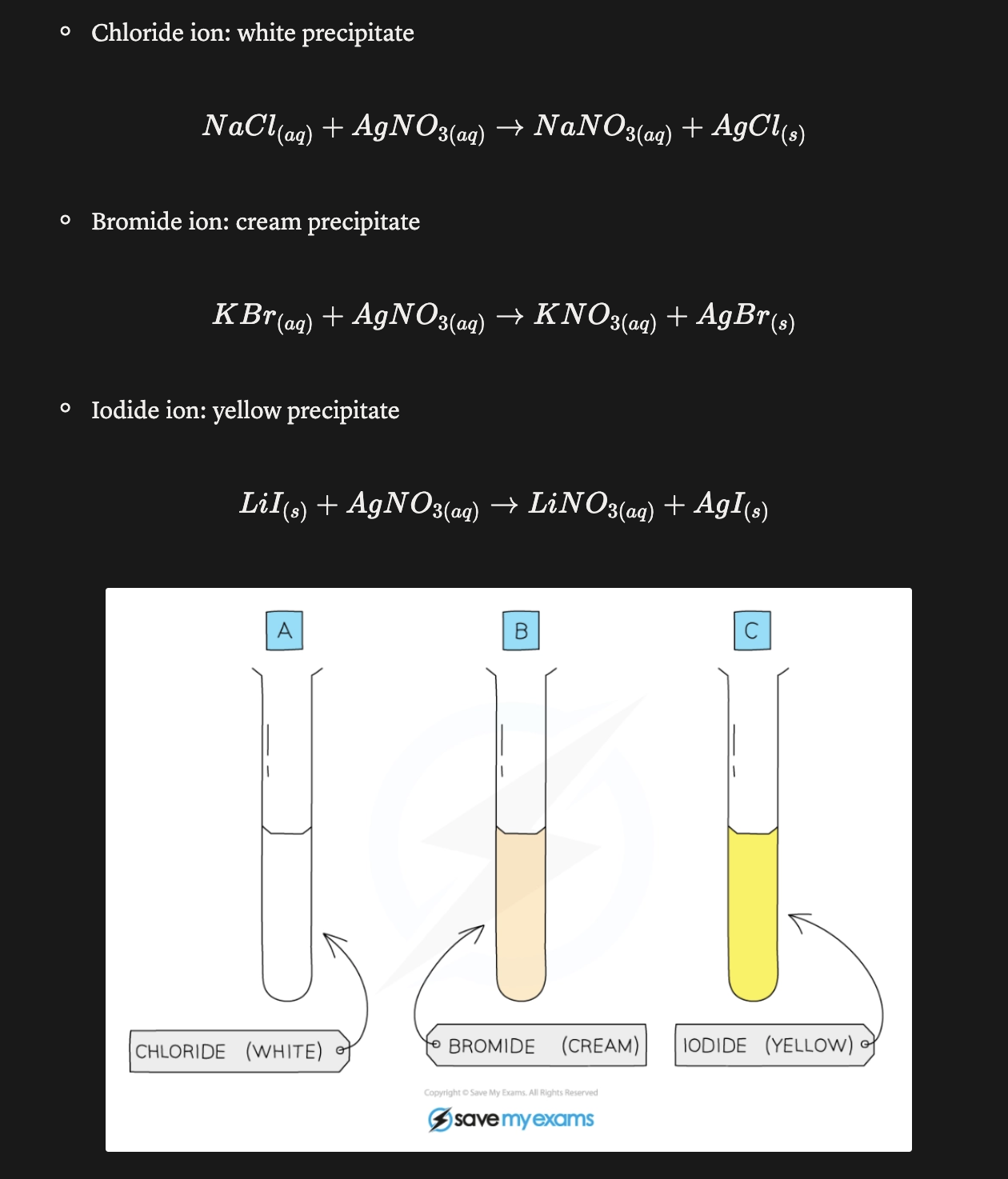
Describe test for halide ions
Acidify sample with nitric acid to remove any carbonate compounds
Add silver nitrate solution AgNO₃
Silver halide precipitate will form if halide ion is present — color of precipitate determines halide ion
State charge of nitrate ions
NO3-
Describe test for nitrate ions
Add aqueous sodium hydroxide (NaOH) and aluminium foil
Warm gently and test gas released, ammonia (NH₃)
Ammonia gas will turn damp red litmus paper blue
State charge of sulfate ions
SO42-
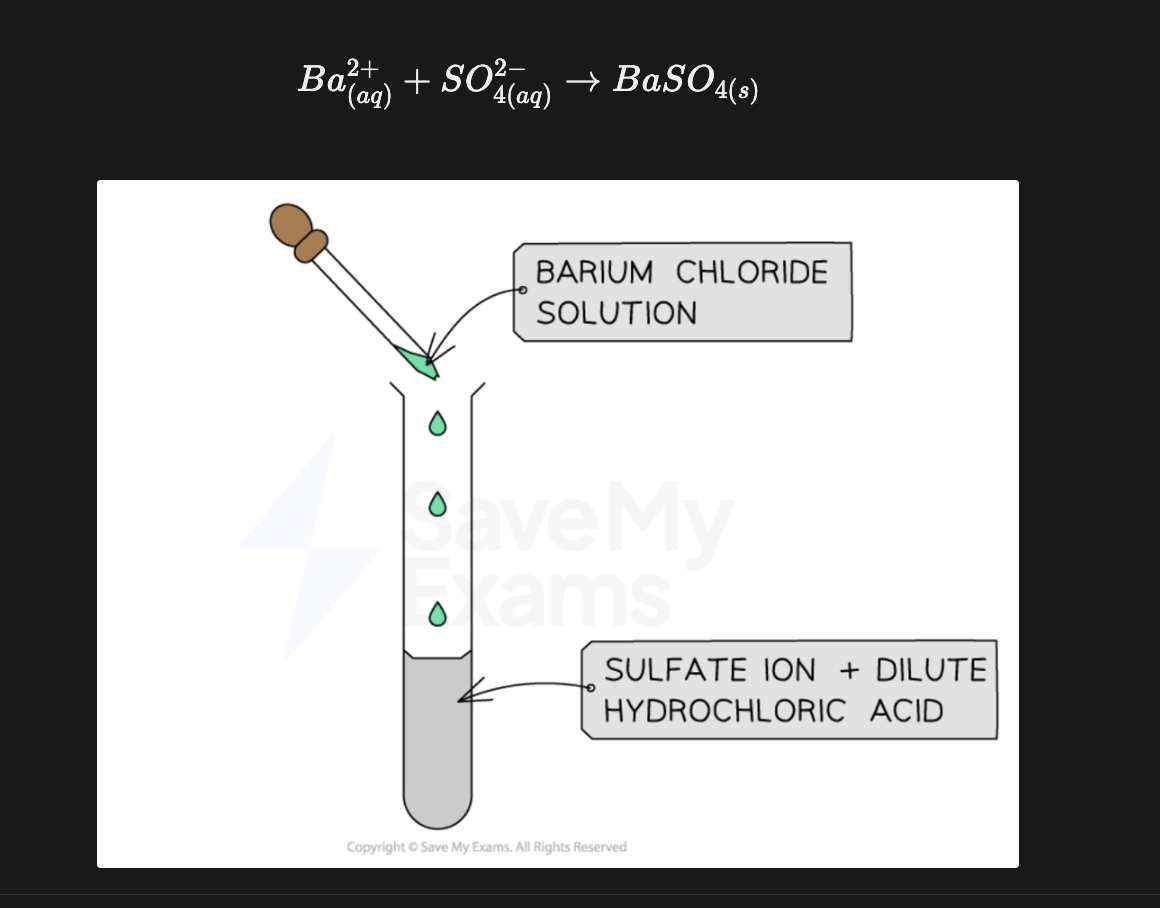
Describe test for sulfate ions
Acidify sample with dilute nitric or hydrochloric acid
Add a few drops of barium nitrate or chloride solution
White precipitate of barium sulfate is formed if sulfate ion is present
State charge of ammonium ions
NH4-
Describe test for ammonium ions
Ammonia can be used both as a testing agent and as a product
Gently warm solution with sodium hydroxide solution
This releases ammonia gas which turns red litmus paper blue
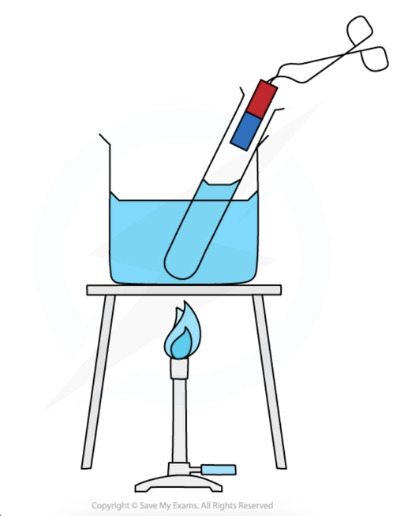
Describe the test for aqueous cations using sodium hydroxide/ammonia solutions
Sodium hydroxide and ammonia have the same tests
The metal hydroxide that forms will be the precipitate, written with state symbol (s)
If excess sodium hydroxide/ammonia is added, the precipitate may re-dissolve so it has to be added slowly
Sodium hydroxide and ammonia test for metal ions:
Add few drops of sodium hydroxide/ammonia solution
Record color changes or precipitates formed
Add excess sodium hydroxide/ammonia solution
Record any color changes or changes to precipitate
Why is excess sodium hydroxide/ammonia added?:
When you add a few drops initially, some metal ions will produce the exact same color
Adding excess is the only way to tell them apart, by determining whether precipitate dissolves or doesn’t dissolve
Name the color of precipitates formed from sodium hydroxide/ammonia solutions and whether they dissolve or not
Metal ion | Addition of few drops of sodium hydroxide or ammonia | Addition of excess sodium hydroxide | Addition of excess ammonia |
NH4+ | Ammonia gas given off | ||
Ca2+ | White precipitate forms | Precipitate does not dissolve | No precipitate forms with ammonia |
Cu2+ | Light blue precipitate forms | Precipitate does not dissolve | Precipitate dissolves to form a dark blue solution |
Fe2+ | Green precipitate forms | Precipitate does not dissolve | Precipitate does not dissolve |
Fe3+ | Red-brown precipitate forms | Precipitate does not dissolve | Precipitate does not dissolve |
Zn2+ | White precipitate forms | Precipitate dissolves to form colourless solution | Precipitate dissolves to form colourless solution |
How do you determine if flame test or sodium hydroxide/ammonium solution is used for cations?
Sodium hydroxide/ammonia solution: aqueous solution
Flame test: solid cation (like powder or crystals)
Describe flame test for cations
Clean unreactive metal wire (like nichrome or platinum) by dipping in concentrated HCl
Hold it in bunsen burner flame until there is no colour change
Moisten clean wire in HCl and dip wire into solid cation
Place wire into flame and observe colour to determine cation
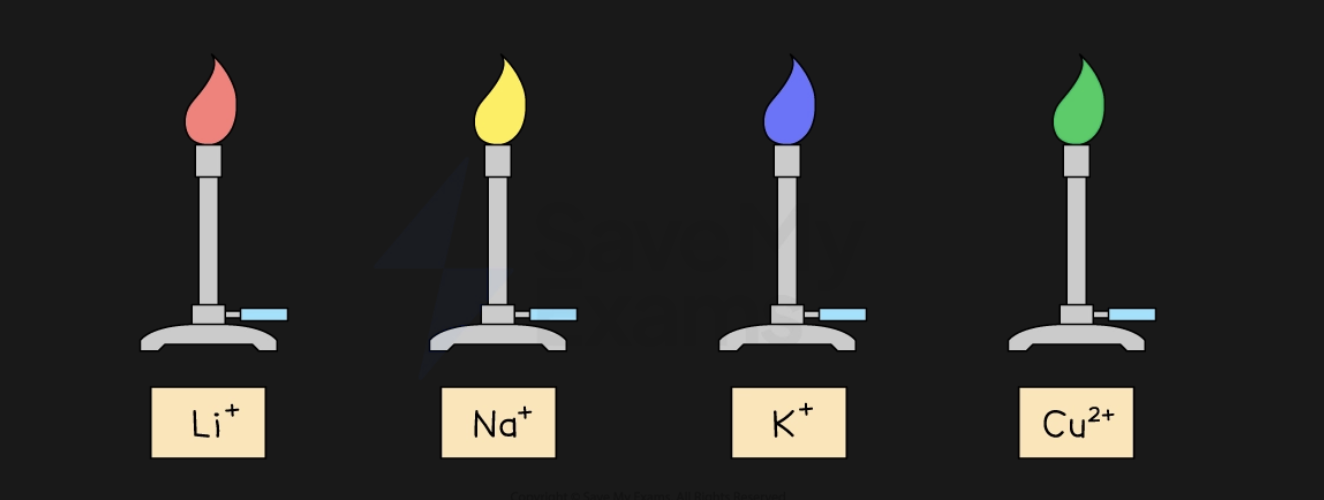
Name the colour of flame for each cation
Cation | Flame colour |
Li+ | Crimson |
Na+ | Yellow |
K+ | Lilac |
Cu2+ | Blue-green |
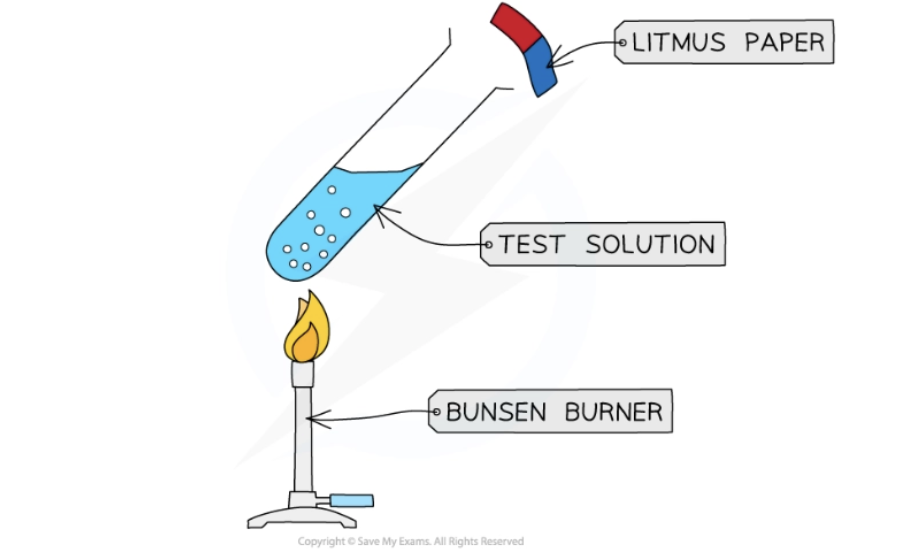
Describe test for ammonia gas
Gas that turns damp red litmus blue
Explanation: turns blue since it is highly alkaline
Can also be identified by its strong, pungent smell
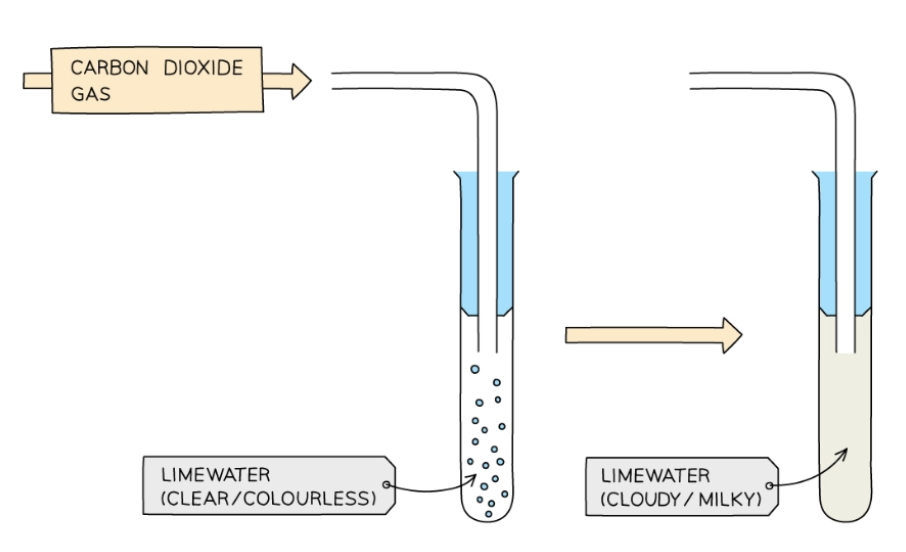
Describe test for carbon dioxide gas
Bubbling the gas through aqueous solution of limewater (calcium hydroxide)
If carbon dioxide is present, limewater turns cloudy white
Explanation: turns white because precipitate of calcium carbonate is formed
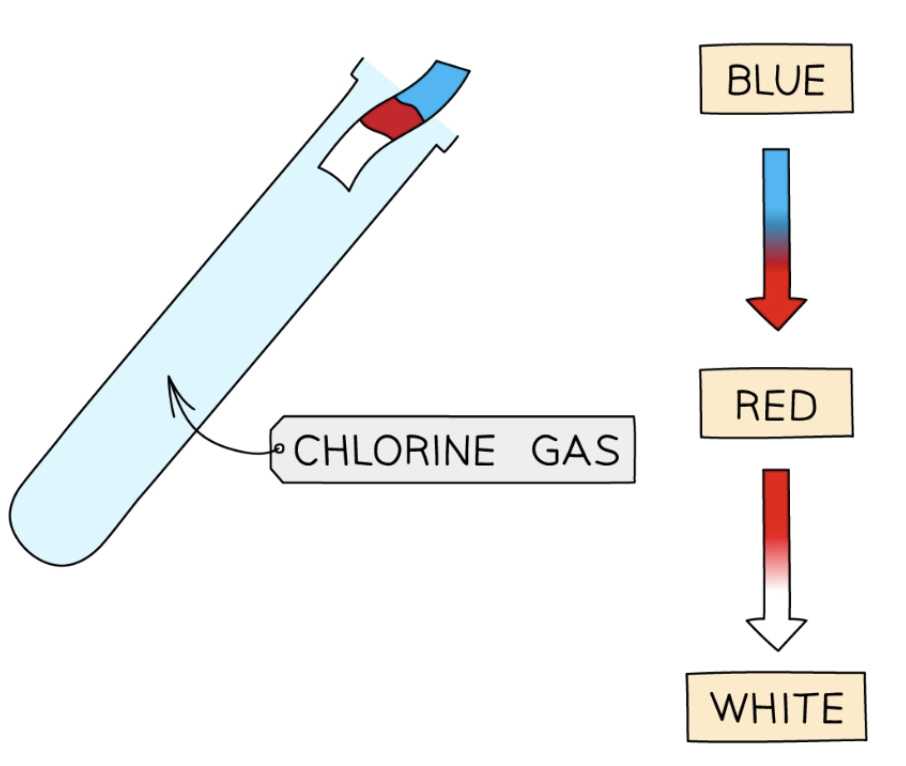
Describe test for chlorine gas
Gas that turns damp blue litmus red, and eventually bleaches white
Explanation: turns red because chlorine is acidic when dissolved in water, white because it is strongly oxidizing
Can also be identified by sharp, choking smell
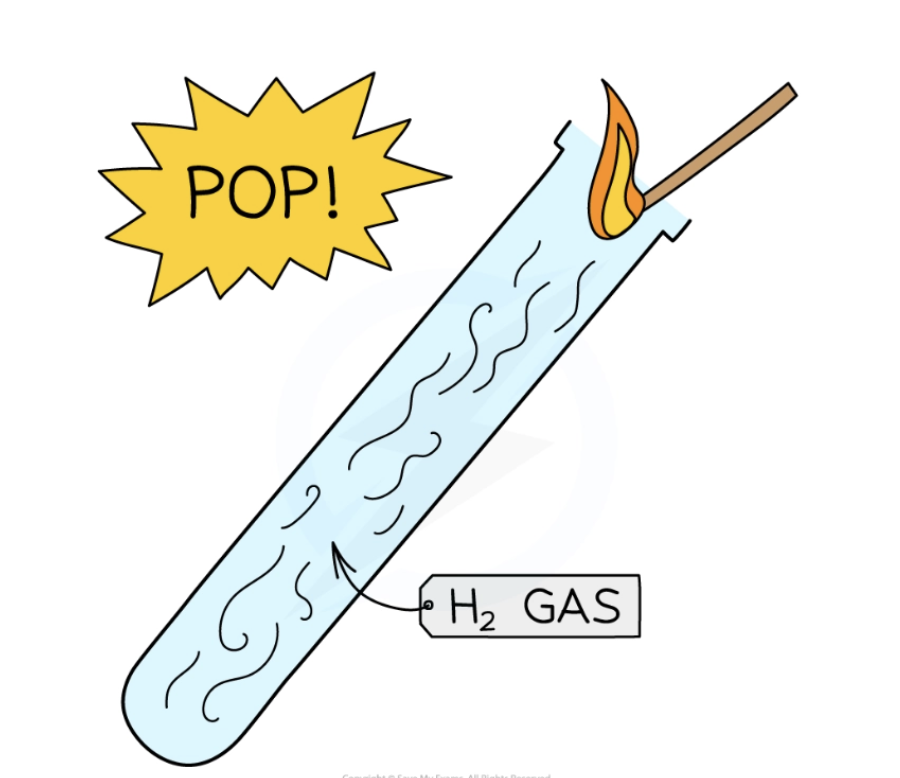
Describe test for hydrogen gas
Holding burning splint at end of test tube full with gas
If the gas is hydrogen, it burns and releases a loud squeaky pop sound
Explanation: this happens due to the combustion of hydrogen and oxygen
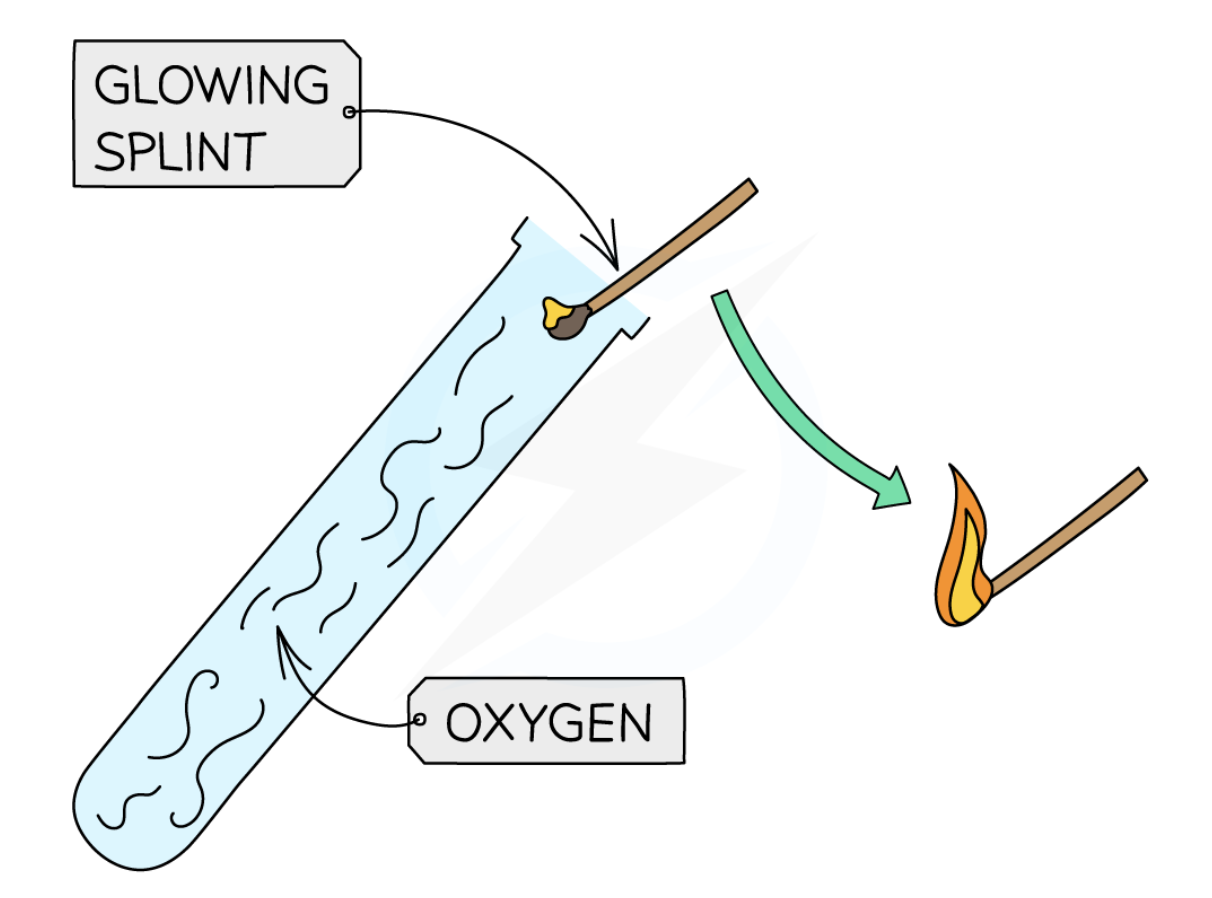
Describe test for oxygen gas
Place glowing splint inside test tube of gas
If the gas is oxygen, the splint will relight
Explanation: this is because oxygen promotes combustion, since the wood burns more readily in oxygen compared to air