Microbiology pretest #3.2
 Call Kai
 Learn
Learn Practice Test
 Spaced Repetition
 Match
Match Flashcards
 Knowt Play
1/45

There's no tags or description
Looks like no tags are added yet.
Name | Mastery | Learn | Test | Matching | Spaced | Call with Kai |
|---|
No analytics yet
Send a link to your students to track their progress
46 Terms
Lysogenic cycle
a method of viral reproduction where a bacteriophage incorporates its genome into the host bacterium's DNA, becoming a silent prophage. This allows the virus to replicate passively along with the host through cell division without killing it.
All of the following about viruses are true, but…
Viruses can only reproduce themselves
Reverse transcriptase
An enzyme that can synthesize DNA into RNA
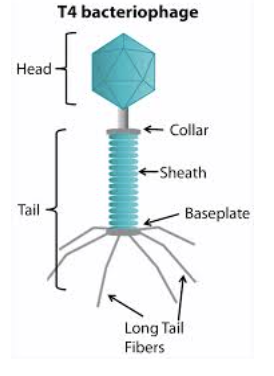
What kind of bacteria are in the picture of the bacteriophage?
Escherichia coli (E. coli)
Complex virus
Mosquitoes caused what disease?
West Nile Virus and Zika
Identify the viruses that cause paralysis
Poliovirus
What disease can you catch from mice?
Hantavirus
Hemorrhagic fever
Caused the Ebola Virus
Spongiform pathology
Prion diseases are rare, rapidly progressive, and fatal neurodegenerative disorders characterized by "spongy" brain tissue (vacuolation).
Vaccinia virus
Used in the smallpox vaccine
Causes a mild, localized infection known as vaccinia
Reticular Elementary virus elementary virus
Reticulate bodies (RBs) and elementary bodies (EBs) are two distinct, alternating forms in the life cycle of Chlamydia trachomatis
What animal kills the most people
Mosquito
Covid-19 and H₂ receptors
The S protein is critical for infection, forming a trimer that docks onto the ACE2 receptor of the host cell, allowing the virus to enter and release RNA
Herpes virus
highly contagious infection causing painful, fluid-filled blisters or ulcers, typically on the mouth (HSV-1) or genitals (HSV-2)
Spreads through direct skin-to-skin contact
A virus that causes immunodeficiency
HIV
Papillomavirus
A sexually transmitted virus that infects the skin and mucous membranes
Causes warts
Encephalitis
viral inflammation of the brain. It causes symptoms like high fever, headache, confusion, and seizures.
Portal of entry
any route a pathogen uses to enter a susceptible host, marking a critical link in the chain of infection
Identify the petri dish with brown spots
presence of fungi (mold)
If a small mammal bites you, what will happen
Tetanus or rabies
The Great Defluenzic pandemic
The Spanish flu was an exceptionally severe H1N1 influenza outbreak, infecting roughly one-third of the world's population (500 million) and causing 50 million or more deaths globally
Chicken pox
contagious disease caused by the varicella-zoster virus (VZV), characterized by an intensely itchy rash that turns into blisters and scabs
-shingles will come after
Urine manganese hemoglobin
High urine Mn has been correlated with increased blood hemoglobin and specific gravity, suggesting it may reflect the excretion of excess manganese
Fatal prion disease
group of rare, invariably fatal neurodegenerative disorders caused by misfolded proteins (prions) that trigger normal brain proteins to malfunction
Antigenic shift
An abrupt, major change in a virus's surface antigens (such as hemagglutinin or neuraminidase in influenza) caused by genetic reassortment, resulting in a new subtype
The Pandemic of 1918
Spanish Flu
an H1N1-subtype influenza A virus, which likely originated from an avian source
Bacteriophage going dormant
Through a process called "lysogeny," the dormant state is a survival strategy, allowing the phage to live within the host without killing it.
The Great Oxygenation Event
2.7 billion years ago, there was a major buildup of oxygen in Earth’s atmosphere, producing cyanobacteria from photosynthesis. Caused major environmental changes
Picture of young boy coughing like crazy… identify what virus
Whooping Cough
A highly contagious respiratory infection caused by Bordetella pertussis
Endospores
highly resistant, dormant structures formed by certain Gram-positive bacteria (e.g., Bacillus, Clostridium) to survive extreme environmental stress like heat, UV, and chemicals
Walking / atypical pneumonia
a mild, non-severe lung infection often caused by Mycoplasma pneumoniae bacteria
What spread at Jack in the Box
Escherichia coli O157:H7 (E. coli), - food poisoning
Mary Mallon
Healthy carrier of Salmonella, born with it in gallbladder, proving shes been asymptomatic since birth
Colifoam bacteria
E. coli
What does Streptococcus pyogenes cause?
Mild skin and throat infections (Strep throat) and impetigo
Certain strains cause fasciitis (flesh-eating disease)
Toxic shock syndrome
life-threatening bacterial infection caused by Staphylococcus aureus or Streptococcus pyogenes toxins, resulting in rapid-onset fever, low blood pressure, vomiting, rash, and organ failure
Linked to tampon use or open wound infections
Eating seafood, specifically oysters, can cause what?
Vibriosis
an infection caused by the Vibrio bacteria
contracted by consuming raw/undercooked shellfish (especially oysters) or exposing wounds to brackish water.
Devibrio- gets inside Gram-negative bacteria
cause infections (vibriosis) such as severe gastroenteritis or wound infections, often from eating raw shellfish or exposing open wounds to contaminated seawater
Sugar
It disrupts the balance of the gut microbiome, feeding harmful, pro-inflammatory bacteria while reducing protective beneficial bacteria
Avian Flu
H5H1
affecting wild birds and poultry, occasionally spreading to humans
Identify the type of bacteria that is in a large body of water
Vibrio Cholerae or Shigella dysenteriae
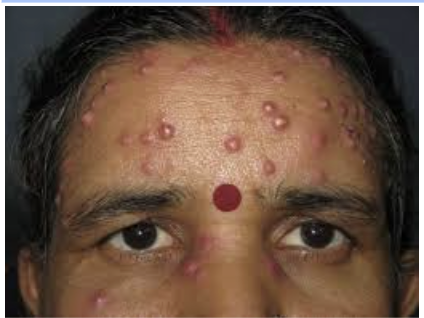
Foreuncles
or boils, are painful, pus-filled infections of hair follicles caused by bacteria (usually Staphylococcus aureus) entering the skin
What causes food poisoning?
Salmonella
Bubonic plague
caused by the bacterium Yersinia pestis, transmitted primarily by fleas from infected rodents
Why is eating raw pork risky?
Due to parasites and bacteria, Trichinella roundworms cause trichinosis
Variola major
Causes smallpox