Lesson 80 infertility
 Call Kai
 Learn
Learn Practice Test
 Spaced Repetition
 Match
Match Flashcards
 Knowt Play
1/57

There's no tags or description
Looks like no tags are added yet.
Name | Mastery | Learn | Test | Matching | Spaced | Call with Kai |
|---|
No analytics yet
Send a link to your students to track their progress
58 Terms
anestrus in cattle
absence of heat signs
cause: poor nutrition(#1 cause), heat, freemartinism, delayed puberty, lactation anestrus
PE: inactive ovaries, no large follicles, no CL
Silent heat
normal ovarian activity but no heat signs
cause: high incidence post partum→ neg energy balance, suckling, undernutrituion, management (envrionement)
PE: active ovaries, large follicles, CL present
Anestrus in mares
behavior aanestrus, seasonal anestrus, anovulatory follicles
cause: maiden mare, foal at foot, gray stallion (unpopular with mares)
endometritis
inflammation endometrium
results: early pregnancy loss and nifertility
types of endometritits
persitiant breeding induced
infectious
chronic degenerative
persistent breeding induced endometritis
actue inflammation after breeding is common. most of them resolve but 10-15% persists→ low pregnancy rate
-common in older pluriparous(given birth lots of times) mare
-predisposes to poor perinal/horizontal conformation→ windsucking
-impaired uterine clearance from endometritis
what is effective in resolving peristent breeding induced endometritis
oxytocin to help with uterine contraction
fetal mummification
b/w 3-8 months of gestation. death inside uterus w/o bacteria infection→ all fetal fluid gets reabsorbed
-fetus is stuck in uterus from closed cervix/ persistence CL
fetal maceration
fetal death in uterus with bacterial infection→ regressed CL+ partially open cervix→soft tissue detroyed only bones remain
-foul smelling vulvar discharge
hyroallantois
buildup of fluid in uterus, enlarged abdomen late gestation
-very rapid
effects: tachycardia, resp distress, anxiety, reduced appetite, dehydration, recumbenth
hydroammion
gradual and slow accumulation of excess amniotic fluid in last hald of gestation
-less severe consequences mostly fetal defects
what is normal value of allontoic and amniotic fluid
8-15 L for allontoic
2.5-10L for amniotic
uterin torsion in cattle
common: mid to late gestation
risk factor: posture when cows get up, lack exercise, poor uterine tone, sliping/falling
signs: depends on degree of torsion, colic, fetal hypoxia and uterine necrosis
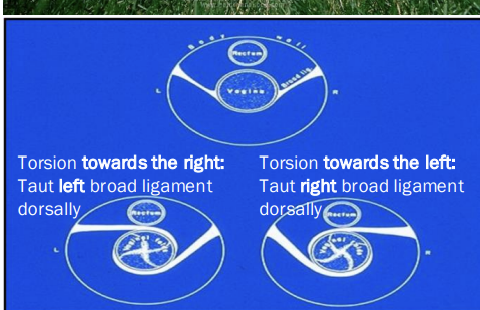
vaginal prolapse
occurs before calving
1st degree: intermittent prolapse of vagina
2nd degree: continuous prolapse of vagina
3rd: continuous prolapse cervix and vagina
4th: 3rd degree but with deep necrosis and adhesion ± peritonitis
uterine prolapse
usually postpartum, life threatening condition
-ruptured blood vessels→ hypovolemia
-absoprtion toxin→ endotoxic shock
-thromboembolism, trauma, necrosis prolapsed tissue
risk factor: dystocia, hypocalcemia
Retained fetal membrane in cattle
if fetal membrane does not expel after 24 hrs
-not a srs issue
risk factor: vitamin E, selenium deficiency, abortion, dystocia, twinning
retained fetal membrane in mares
if fetal membrane is not expelled after 3 hrs
-emergency situation→ delayed uterine involution, metritis, septicemia, endotoxemia, laminitis, death
common in draft mares, dystocia, inducted parturition, old multiparous maresMa
impotentia coeundi
inability to physically performi
poor libido
immature, inexperiences, reared in isolation, environment management, bad past experience
-multi sired her→ dominance issue
-penile traumainab
inability to mount
pain, foot lesion, joint issue, hindlimb conformation
inability to achieve intromission
failure of erection, deviation of penis
abnormalities that prevent intromission or protrusion of penisin
inability to ejaculate
damage to sensory nerves, compression spinal nerve root (age related in bulls)
impotentia generandi
ability to perform but sperm cannot fertilize or cause conception
quality issue of testes, epididymis, or accessory sex glands
testicular hypoplasia
smaller than normal testes
-oligozoospermia: low sperm concentration
-teratozoospermia: defective sperms
congenital, affected animals should be culled
-can be confused with testicualr degeneration
testicular degeneration
Acquired, infertility 4-8 weeks after injury, soft on palpation
libido still works but abnormal spermiogram
-oligozoospermia, teratozoospermia, immature sperm
the main difference between testicular hypoplasia and degeneration
congenital vs acquired
orchitis
direct infection of testes or hematogenous spread
commonly more unilateral
-localized infection→ temp degeneration, heat pain, swelling→ altered gait
-chronic→ shrunken testis fibrotic, adhesion to tunica and scrotum
epidydmitis
common in small ruminants
-primary infection or secondary to orchitis
signs: heat pain, swelling, temperature induced degeneration
-more commonly seen with defective sperm
seminal vesiculitis
common in young bulls <2 yrs or old bulls >9yrs
causes: B. abortus, E. coli, high energy diet more susceptible
signs: abnormal spermiogram-decreased motility, increased pH, pus in semen, increased leukocytes in semen
-acute: reluctance to mount, abdominal pain, hindlimb lameness
-chronic: infertility
Blocked ampulla in stallions
occurs at beginning of breeding season, obstruction or impaired ejaculation
-azoospermia(semen without sperm)/ oligospermia (low sperm count)
-low ALP concentration in semen. value helps show if fluid is flowing properly from teste and epididymis. low value= blocked. high value=normal
urethral tear in stallions
blood in ejaculate (hemospermia)
affects fertility
commonly found in pelvic urethra
a stallion has clear and watery semen containing no spermatozoa. testes are normal in size and consistency. what is most likely cause of azoospermia?
blocked ampullae
delayed puberty/ primary anesterus
no estrus by 2 yrs olds
econdary anestrus
bitch has had heat before but its been 12 months since the last one
causes: silent heat, missed heat, spayed, exogenous hormone treatment, ovarian disorder, secondary to other systemic diseases
split heat
split proestrus (no estrust) or split estrus (no ovultion) for first heat cyclesh
ortened diestrus/ anestrus
short intervals between estrus
common in German Shephard
<5 months interestrus interval, caused by poor fertility
at least 90 days needed for involution(return to normal)
a 2 yrs old female beagle shows vulvar swelling and serosanginous discharge for 5 days, then symptoms subside. two weeks later signs recur and the bitch is found to be receptive to the male. What is the most likely reason for this clinical presentation
split heat
vaginal hyperplasia
vaginal prolaspe/vaginal edema-enlargment of floor of caudal vagina cranial to urethral opening→ self mutilation, necrosis, infection, gangrene
not a true hyperplasia but edema from elevated estrogen
occurs during proestrus→ persist through estrus
spontaneous resolution in late estrus but can reappear prior to welping due to second estrogen peak
common in brachycephalics
pregnancy toxemia
life threatening to bitch and pups→ ketosis
inadequate nutrition to make up for negative energy balance
signs: anorexia, weight loss, hepatic lipidosis
puerperal metritis
uncommmon but very serious. occurs first week postpartum
severe inflammation of the uterus, infection from open cervix→ systemic illness
secondary to: retained placentas, retained pups, macerated pups, prolonged deliveries
subinvolution of placental sites (SIPS)
not life threatening, usually in first time bitches
delayed involution (ealing of placental site). normal is 12 weeks post partum.
invasion of endometrium by fetal trophoblastic cells→ erodes blood vessels
signs:hemorrhagic vulvar discharge for several weeks
hypocalcemia
eclampsia/puerpural tetany-life trheatneing
common in small bitches with large litters during 2-3rd week of lactation, Ca+ lost in milk
-signs: 1st will see behavior change
panting, restlessness, irritable, trembling, hypersalivation, whining, twitching, poor maternal care, weakness, stiff gait, facial pruritis, cannibalism, vomiting, convulsions, increashed HR and temp
difference in presentation of hypocalcemia bewtween dogs and cows
dogs- hyperexcitable symptoms
cow- recumbent
what is the pathophysiologic process underlying subinvolution of placental sites in dogs
persistence of trophoblastic cells causing continued erosion of uterine vessels
subfertility (male)
whelping rate of <75% when bred appropriately to normal bitch
infertility (male)
complete failure to impregnate bitches when bred appropriately
canine male infertility w/ normal copulation
cause abnormal semen quality
Azoospermia/ oligiozoospermia
hematospermia
teratospermia
asthenospermia
canine male infertility w/o normal copulation
failure to acheive erection, failure to ejaculate, failure to achieve normal copulation
Sexual overuse can affect fertelity by
decreasing libido and sperm numbersho
w does hyperadrenocorticism affect semen quality
high cortisol causes negative feedback on LH
testicular causes to azoospermia
intersex-common in cocker spaniel, blue terrier, pugs, beagles, GSP, Weimeraners
germinal cell aplasia
bilateral cryptorchidism
trauma
autoimmune disorder
neoplasia
post testicular causes to azoospermia
epididymal segmental aplasia
sperm granulomapr
pretesticular cause to azoospermia
hypopituitarism, hyperadrenocortisism, glucocorticoid therapy, hernia, fever
causes for oligiozoospermia
testicular hypoplasia, testicular degeneration (age related), orchitis, epididymitis, unilateral segmental aplasia
drugs: glucocorticoids, chemothreapy, ketoconazole, cimetidine, androgens, estrogens, anabolic stroids
testicular neoplasia
causes for hematospermia
benign prostatic hyperplasia, trauma, neoplasia
causes for teratozoospermia (low % of morphilogically normal sperms)
senescence-deterioration from aging
abstinence or overuse
orchitis
fever
causes for asthenozoospermia(low motility)
lubricants, latex, chemical residue, temperature
breeding male dog shows reduced semen volume and no spermatozoa in ejaculate but spermatozoa observed in urine. WHat is the reason azoospermia in this dog?
retrograde ejaculation-semen ejaculate backwards into bladder