Art History Test 5 Early Middle ages
 Call Kai
 Learn
Learn Practice Test
 Spaced Repetition
 Match
Match Flashcards
 Knowt Play
1/30

There's no tags or description
Looks like no tags are added yet.
Name | Mastery | Learn | Test | Matching | Spaced | Call with Kai |
|---|
No analytics yet
Send a link to your students to track their progress
31 Terms
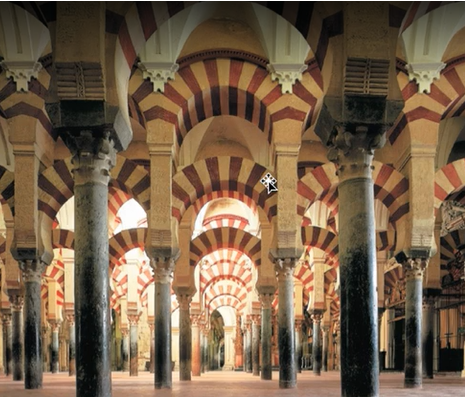
Arches of the Great Mosque, Cordoba
8th-10th centuries
786-787
Columns are 9’9” h
Horse shoe arch
candystriping
double lobed arches; two sets of arches stacked up on one another
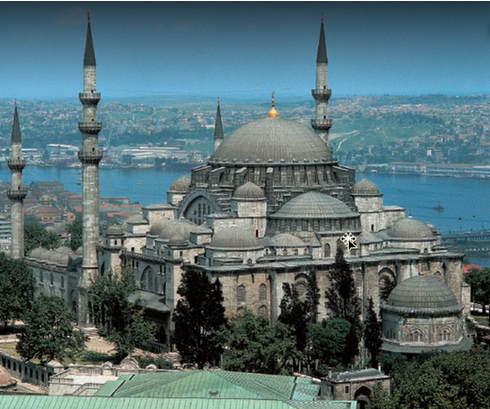
Sinan the Great Mosque of Suleyman I
Turkey
Begun in 1550
Sinan = greek who converted to islam; became “architect of the empire” supervisor of building in istanbul/overseer of all public works
central mosque plan with dome
4 minarets (towers calling the faithful to worship) greek style central plan
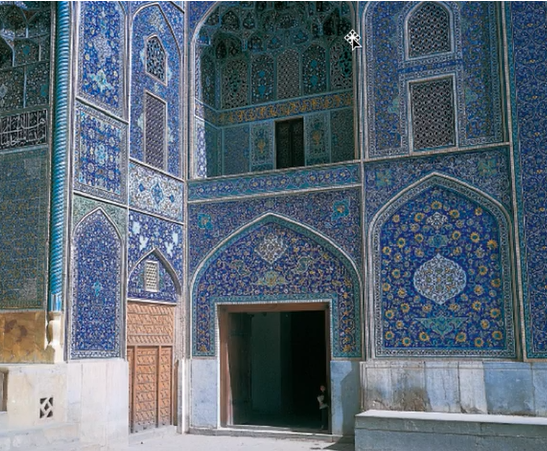
The Luftullah Mosque
Iran 1602-1616
3 types of byzantine patterning, floral, calligraphic, and geometric with byzantine colors
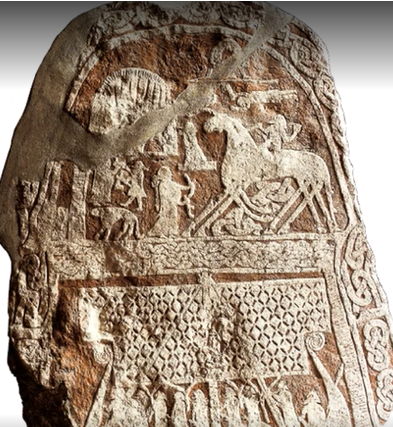
Warrior Entering Valhalla
Gotland (east side of sweden)
8th-9th century limestone relief (newly repainted)
5’9” high
Warrior named Hjoruv, rides Odin’s eight legged horse Sleipnir, into valhalla. above are two female aid, with long hair and a long skirt, welcomes hjoruv into valhalla by extending a drinking horn to the man with an axe. On the lower half of the stone is a Viking ship filled with warriors and a sail decorated with diamond shapes
Shows the importance of the journey into valhalla by warriors and the importance of warring and raiding in viking society. importance of ship burials like those mentioned in beowulf and the belief that the deceased sail into the after-life
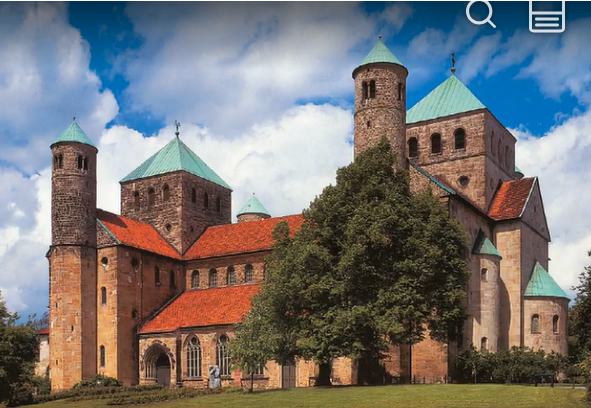
Restored Abbey Church of Saint Michael’s Exterior
1001-1031
Main apse faces west instead of east. this type of plan is called west work and was sometimes used in germany
1 large apse, 3 smaller apses at rear of church
2 transepts with central towers above each transept
4 entrances on sides of church
4 smaller towers at each end of transepts
stone exterior
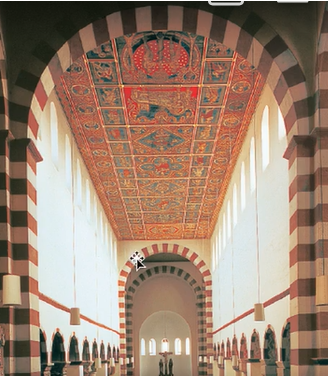
Restored Interior of Saint Michael’s
Round arch with candystriping, islamic influence
painted ceiling shows biblical scenes to teach people who could not read
simple white walls above nave with clerestory windows to let light in
Looking toward main apse and altar
Bronze doors: scenes from the old testament teach people who could not read biblical stories; focus on God as judge and believers as sinners
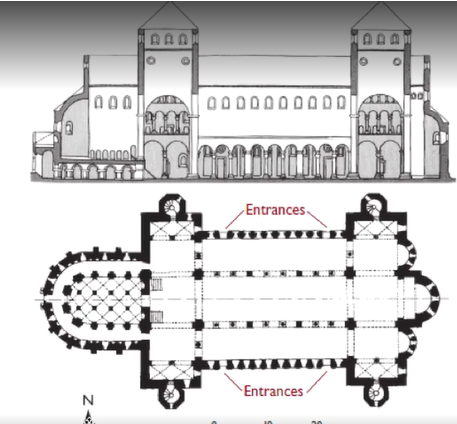
Section and Plan of St. Michael’s church
latin style basilica
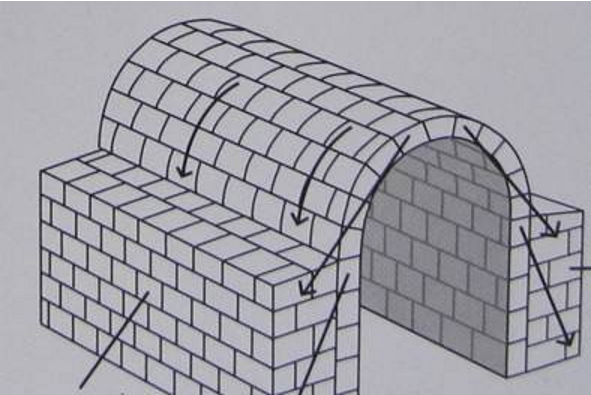
Barrel Vault
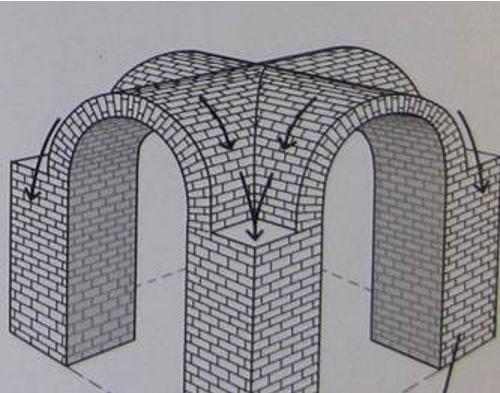
Groin Vault
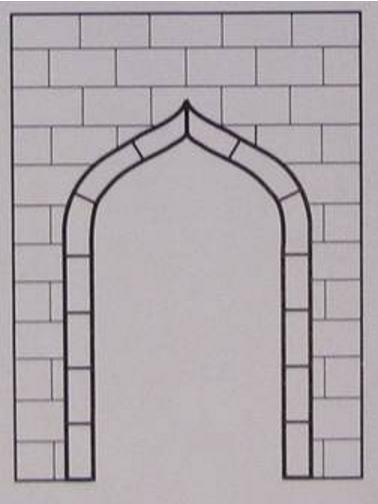
Pointed Arch
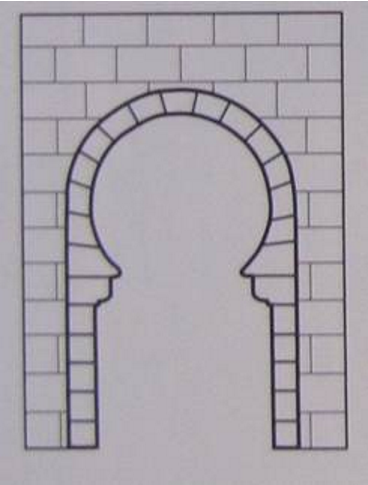
Horse Shoe Arch
History of Early Middle Ages
600-900 AD, Follows the decline of the Roman Empire
Islam grows in Spain from the Moors who ruled the Roman Province in NW Africa including morocco and algeria
Islam continues to grow in spain until 1400’s when Christians re-conquer it
Islamic Religion
Arabia was united after Muhammad’s death under the first caliph ruler
Over the next 20 years, Islamic Armies conquer large portions of the byzantine empire and middle east
The split of Sunni and Shiite Muslims happens due to a rift between the caliphs
Islam accepts moses and jesus as forerunners of Muhammad; images are built on non-figurative images to avoid idols
What did Muhammad do
570 AD, Islam is founded by prophet muhammad who was born in Mecca in Western Arabia. Muhammad moves to Medina and establishes Islam. He writes the Koran, which was divinely inspired and he died in 632 AD
Beliefs of Muslims
Follows the Koran, Written in Arabic (Kufic) language
There is no god but allah and muhammad is his messenger
Ritual prayer in the direction of Mecca five times a day
Charitable giving to the poor
Fasting and abstinence during the holy month of Ramadan
Hadj: an annual pilgrimage to Mecca taken at least once during lifetime
Dome of the Rock Subject Matter
First Islamic place of worship in Jerusalem built in the late 7th century
Centrally planned octagonal structure which was built around a large boulder
built by a caliph who wanted to “dazzle the minds” of muslims and prevent them from seeing beauty in monuments dedicated to other faiths.
Dome of the Rock Formal Qualities
Octagonal - 8 sides and centrally planned around a large boulder
faced with cut marble and mosaics
3 types of byzantine and persian patterning including geometric, floral, and calligraphic
Golds, Yellow, and blues
gilded dome
Dome of the Rock Symbolism
Islam: site from which gabriel let muhammad through the heavenly spheres to allah
Judaism: abraham’s sacrifice of isaac, location of first temple built by solomon and believed to be the site where adam was created from the torah and pentateuch
christianity: abraham’s sacrifice of isaac; location of first temple built by solomon, and is belived to be the site of the creation of adam from genesis
History of the Vikings
800-1000 AD
Vikings are Scandinavian warriors from Norway, Sweden and Denmark known for raiding. Stories are recorded in icelandic sagas from iceland. Scandinavia was an agricultural society divided into small communities and ruled by royal families who were elected to the throne
800 AD - Vikings developed sailing ships which made extensive travel possible including trips to byzantium, baltics, france, british isles, and north america
Artistic influences of vikings
Artistic influences: Islamic, Byzantine, and Ancient Near Eastern influences are shown in the animated human-like animal forms and geometric designs with natural organic shapes
Religion of Vikings
World sprung from a formless mass from which ice giant, ymir emerges. He is killed and from his blood his giant ancestors emerge. Giants are in conflict with gods and goddesses, but they also make alliances with them.
Asgard
dwelling of gods and location of Valhalla (heaven)
Midgard
middle of earth, inhabited by humans, the earthly realm
Utgard
outer earth, home of trees and cult of tree gods
odin
god of wisdom, created the first human couple, god of Vikings
Thor
god of thunder, protector of cosmos
Njord
sea god
Frey
god of virility
Freja
goddess of fertility
Rune stones and Picture stones
used by vikings, anglo saxons, goths and germanic people
upright stones used for writing events and drawing pictures of events - memorials, voyages, battles and daily activities
the 16 letter runic alphabet is from 300 AD, Stones preserved the mythical, literary and cultural history of Scandinavians.
Northern European Art: The carolingian period: 800 AD
Pope crowned Charlemagne as Roman Emperor of St. Peter’s in Rome. He rules France, Germany, Switzerland, Belgium, Holland, Northern spain, and italy to the south of rome
charlemagne created a cultural revival of ancient rome where monasteries expand the network of learning throughout europe. This expansion includes the creation of libraries and educational reform with an emphasis on the liberal arts
Latin is the language of manuscript texts