ANS 402 Exam 1
 Call Kai
 Learn
Learn Practice Test
 Spaced Repetition
 Match
Match Flashcards
 Knowt Play
1/195

There's no tags or description
Looks like no tags are added yet.
Name | Mastery | Learn | Test | Matching | Spaced | Call with Kai |
|---|
No analytics yet
Send a link to your students to track their progress
196 Terms
Why do producers need to be able to accurately determine the weight of their cattle? Better than a guess?
To reduce risk of antibiotic or anthelmintic resistance
A farm needs to cull an animal from its' herd. There are 4 cows to choose from. Which one would be the most appropriate to cull?
Cow G47 an 6 year old cow weighing 1700 lbs at BCS 8 with large teats and low udder and sway back caring for a 5.5 month old calf that below average weight.
Cow C98 a 10 year old cow weighing 1300 lbs at BCS 6 with solid teeth and good hoof set caring for a 5.5 month old calf that is an average weight.
Cow L14 a 2 year old cow weighing 1085 lbs at BCS 4.5 with good structure and uniform udder caring for a 6 month old calf that is above average weight.
Cow F87 a 7 year old cow weighing 1200 lbs at BCS 5 with minor elongation of hind hooves and good udder caring for a 5 month old calf that is above average weight.
Cow G47. bad BCS. bad udder/teat structure. calf below average weight
If I were to drive across the US, where would I most likely see the largest number of large feedlots?
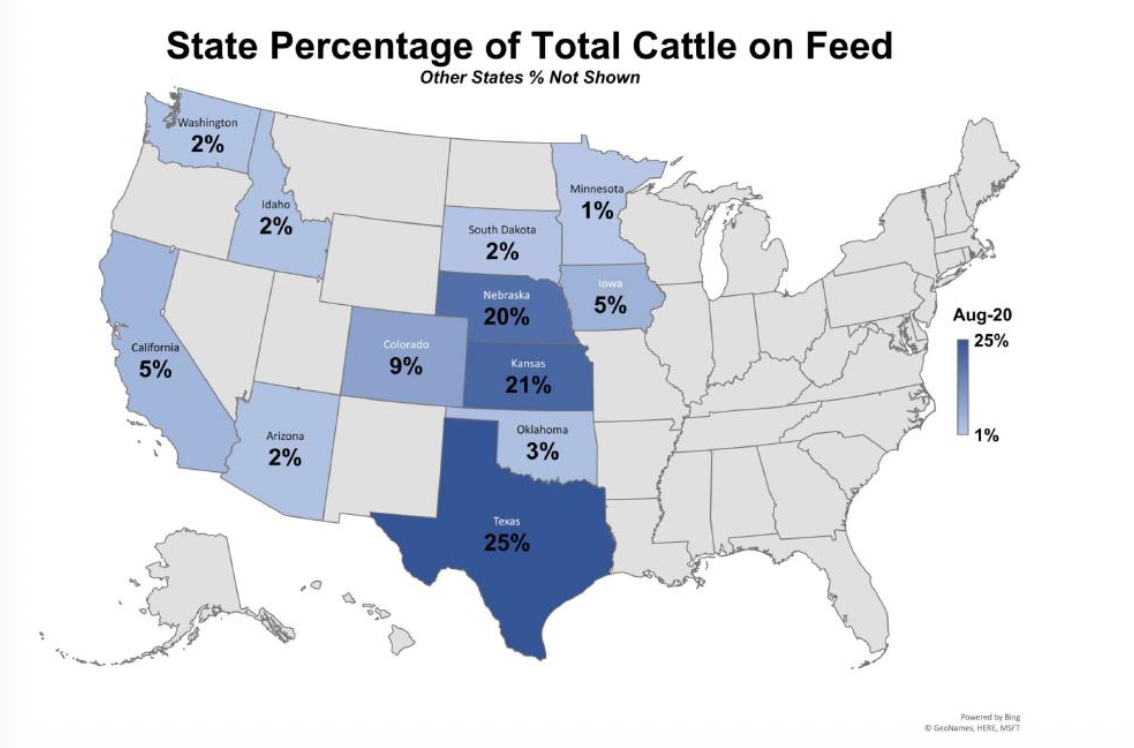
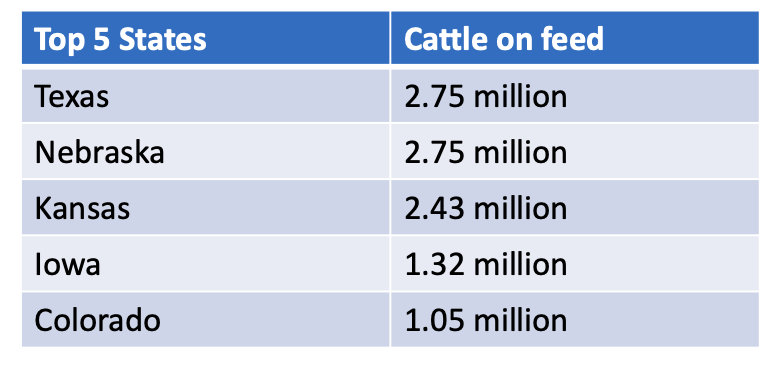
Top 5 states based on # cattle on feed: Texas, Nebraska, Kansas, Iowa, Colorado
Texas 25%, Kansas 21%, Nebraska 20%, Colorado 9%, California 5%, Oklahoma 3%
%= stage percentage of total cattle on feed
Which beef industry production sector has the greatest number of producers/managers making decisions while caring for the live animals?
Commercial Cow-Calf
What is the prominent red bodied- white faced breed of cattle at the E. Carroll Joyner Beef Educational Unit that calves in the spring?
Hereford
Which types of cattle can be placed in the feedlot for a period of time before going to slaughter?
a. Top seedstock cows in their prime, Heifers selected for breeding.
b. Some mature (cull) cows and bulls from beef operations and mature (cull) dairy cows.
c. Beef genetic steers, Beef genetic heifers not selected for breeding, Dairy genetic steers.
B, C
Which sector of the beef industry has the fewest number of people/operators making management decisions, which is leading to increased scrutiny of this sector? The narrowest belt of the hourglass?
Packers/Processors
According to BQA, What is the most preferred administration of injections (within label guidelines)?
Subcutaneously in the neck of the animal.
always in neck. never in rump. if allowed to give SQ or IM, always go SQ.
Which statement best describes the cow-calf industry in North Carolina.
Most producers have less than 50 cows, the major feed resource is forages (pasture, hay, silage), and the farms are family owned
Making management decisions is often related to trying to make a profit to keep the business around. Which method is likely to be the most sustainable over a long period of time.
Optimum- maximizing outputs relative to inputs.
Why is Body Condition Scoring important for Beef Quality Assurance?
a. To ensure that the appropriate amount of a vaccine is administered to the group of cows.
b. Helps producers identify animals that may need removed from the herd due to risk of health problems for being emaciated or calving difficulty from being too obese.
c. Helps producers group animals of similar fitness to adjust nutritional resources based on cows' needs.
d. So that the producer know which cows should calve in the next month if they leave their bull in with the cows all year.
b. Helps producers identify animals that may need removed from the herd due to risk of health problems for being emaciated or calving difficulty from being too obese.
c. Helps producers group animals of similar fitness to adjust nutritional resources based on cows' needs.
You were talking to a neighbor and they don't understand why changes in the beef industry take so long and why the steaks they buy aren't always the same size (circumference and thickness) like the chicken breast meat they get is. Help them understand.
a. Cattle are raised outdoors utilizing many natural resources (forages) all across the US, so different genetics are needed to match to the environment.
b. It takes somewhere between 2- 3 years for cattle to go from conception to slaughter and add another 2 years if you are selecting new heifers to change the genetics.
c. In general, consumers have sent the signals to the industry that they do not want "cookie cutter" and that they want the variation so that each person and pick what they want at the store.
d. The beef industry is not vertically integrated, therefore each cow-calf operation (~750,000) chooses their own genetics and how they raise the calves prior to feedlot finishing.
e. The packers like to create variety of product so they take steaks that are similar and cut them to different shapes and sizes to look like different types of meat.
a. Cattle are raised outdoors utilizing many natural resources (forages) all across the US, so different genetics are needed to match to the environment.
b. It takes somewhere between 2- 3 years for cattle to go from conception to slaughter and add another 2 years if you are selecting new heifers to change the genetics.
d. The beef industry is not vertically integrated, therefore each cow-calf operation (~750,000) chooses their own genetics and how they raise the calves prior to feedlot finishing.
Which of the following statements is important for business management?
a. If you read it on the internet, it must be true.
b. The grass is always greener on the other side of the fence.
c. Vertical integration is the key to success.
d. If you don't measure it, you can't manage it.
d. If you don't measure it, you can't manage it.
You are managing a cow-calf operation that calves in March. It is January 17th and a the temperatures dropped to 15 degrees F. Your best friend texted that they are doing a movie marathon in honor of the snow day and invited you to join. The water line froze so the stock tank is empty. The ice shorted out the electric fence and the bull got over into the pasture with the cows. There is about 1/2 inch of snow on the grass in the pasture and you have round bales of hay available for feeding. You must prioritize your activities. Which one the the most urgent and highest priority concern as the manager of the cow-calf operation?
The water line froze so the stock tank is empty.
Beef bites: BQA biosecurity
BQA program has now expanded from just focusing on the safety of beef products to include animal welfare, health, and management practices
BQA now oversees biosecurity in management practices (protecting overall herd health and prevents the spread of infectious diseases)
acronym explaining five key elevments of good biosecurity plan, A-RITS stands for assessment, resistance, isolation, traffic control, and sanitation.
Assessment: evaluating what diseases are present in the herd, the economic impact of those diseases, and the exposure risk of outside factors that could bring in diseases
Resistance: mproving a cattle’s immune system through nutrition, low-stress handling, and vaccination programs. Vaccines: not available for every disease (so overall herd health important)
Isolation prevents disease spread by limiting contact between cattle, most importantly when bringing new cattle onto a farm
Traffic Control and Sanitation both reduce the spread of disease through equipment, people, vehicles, animals, and manure.
Beef Bites: ten critical 2025 beef industry events
1. An economist from Oklahoma State University predicted strong prices in 2025 with the peak anticipated in 2027.
2. Trump proposed plans to reduce retail beef prices in the US by importing four times more Argentine beef, but the plan ultimately failed.
3. Uncertainty about the migration of the New World Screwworm has shuttered and slowed cattle import from Mexico.
4. There is much scrutiny of the shrinking cow herd size, lowest since 1950s.
5. Angus industry faced much turmoil over the decision of the American Angus Association to partner with Bezos Earth Fund and Global Methane Hub on research investigating genetic differences in methane production.
6. The challenges and necessity for food animal veterinarians continues to be a major focus.
7. The government has made investments to support the development of more small, local beef processors but challenges still remain with income and product sustainability.
8. Tyson has announced the closure of one of its largest beef processing plants effective early 2026. The impacts are yet to be determined.
9. Legislation is progressing to delist gray wolves from the Endangered Species Act as numbers have soared beyond the regional carrying capacity.
10. Mandatory Country of Origin Labeling has been brought back up for all beef products sold a retail markets. This is met with mixed reaction across the industry.
Keeping a vigilant eye on local, national, and global affairs from legislation, to health concerns, to weather are critical for their impacts of beef production
Beef bites: Six Innovative Cattle Technologies
1. Electronic identification (eID) tags track individual cattle improving traceability across the beef supply chain.
2. Performance tracking systems combined with eID technology allow cattle data to be followed for the animal's lifetime. (track performance, make marketing decisions, and understand carcass results)
3. Herd management software replaces handwritten records by digitally tracking feeding, health, inventory, and costs with greater accuracy. ( save time and reduce errors)
4. Feed bunk management technology uses cameras and monitoring systems to track feed intake and bunk conditions around the clock. (avoid over- or underfeeding, boost feed efficiency)
5. Feed efficiency technologies let producers see which cattle turn feed into weight gain the fastest, helping cut days on feed and lower costs.
6. Genetic testing gives producers more reliable information when selecting bulls, reducing risk and increasing confidence in purchases. Widespread use of genomics represents one of the biggest advances in beef production in the past two decades.
Beef bites: breeding and maternal nutrition in beef quality
Beef quality (fat composition, marbling, and tenderness, is strongly influenced by farmers management decisions even before birth)
Two factors that contribute most are breed selection and maternal nutrition.
Breed type plays a major role in carcass composition and quality as a whole. Several Bos Taurus breeds present higher marbling scores over Bos Indicus.
Cross breeding of beef and dairy cattle genetics affect carcass quality as well. If the cow has genetics for a smaller uterine capacity, it can restrict the calves development, leading to lower marbling.
maternal nutrition increasing marbling and tenderness when a higher protein diet and/or protein supplementation is introduced.
High antioxidant diets also improve meat quality by increasing product shelf life and stability of meat flavor; these diets contain ingredients such as thyme and rosemary which preserve beef tenderness and flavor.
Beef bites: stocker calves gain more value through improved forage use, tighter uniformity, and increased efficiency
Implementing management practices, improved nutrition, and sorting can add value to stocker calves.
Management practices that add value include: vaccine programs, castration, dehorning, and pregnancy checking.
Feedlots sort cattle based on size, color, and sex of the animal to improve growth efficiency. Presorting calves into uniform groups before shipping adds value to the group
In the southeast, many stocker operations are blended operations that graze calves on pasture while also supplementing with feed.
Moving west, burning is a common practice to increase the growth of grass before grazing in the spring. Cattle performance is lower for cattle on pastures that are not burned.
Hutson Angus, a producer in Oklahoma, makes breeding decisions for their herds based on phenotype and feed efficiency testing. Culling is done in their program based on weaning weight and phenotype. Cattle that do well on the feed efficiency test move on to finishing, while the low performers stay as stocker cattle.
Beef bites: virtual fencing
Modern beef producers are increasingly turning to precision livestock farming (PLF) tools like virtual fencing to manage herds
Virtual fencing uses GPS-enabled collars and software to create invisible boundaries that guide cattle without physical fences
,This reduces time spent building and maintaining fences and supports rotational grazing strategies that improve forage use and land stewardship.
technologies provide detailed animal movement and behavior data that help producers make more informed management decisions.
early commercial uptake shows producers value the flexibility and labor efficiencies PLF technologies offer.
Challenges remain, including technology costs, connectivity requirements, and the need for producer training.
Beef bites: Understanding ranchers perspective on adopting cow-calf operation
As concerns about livestock’s ecological impact grow, the beef sector faces increasing pressure to improve sustainability and reduce emissions.
Cow-calf operations are at the center of these efforts. Understanding rancher perspectives is crucial for developing effective environmental practices.
To explore this, a multi-state online survey of cattle ranchers was conducted in partnership with state cattlemen’s associations. The survey examined ranchers' trust in educational programs, motivations for adopting new practices, and approaches to grazing management.
Ranchers mainly adopt innovations to boost profitability, improve animal health, and achieve favorable cost–benefit outcomes.
However, these same economic factors sometimes act as barriers to adoption. While many ranchers recognize the importance of grazing management plans, they face challenges with implementation, and written plans remain uncommon. For ranchers, sustainability means balancing environmental stewardship, economic viability, animal welfare, and family legacy. These priorities are closely linked in cow-calf production.
Beef bites: subcutaneous backfat accumulation in bulls may lead to semen morphology issues and failure of a Breeding Soundness Exam
A recent study at UGA has found that subcutaneous back fat on bulls can lead to a decrease in fertility.
The study included over 700 bulls, fed the same high energy feed. bulls all displayed a similar average daily gain and performance, but the amount of back fat varied.
Bulls were divided into three groups and evaluated via BSE and carcass ultrasound to determine amount of backfat.
The study excluded bulls that failed the BSE for other reasons, and focused on semen quality.
They found that all three groups had similar motility, but varied greatly in morphology. “10% of them failed their breeding soundness evaluation, which is greater than two times the bulls that were in our other two categories (Denton)”. This decline in semen quality is recognized by less normal sperm cells and more primary and secondary abnormalities.
valuable in seedstock operations, where fertility is the product. overconditioning can harm the output of their bulls. location of fat deposits is an important factor to consider. For example, large fat deposits in the scrotum can negatively affect temperature regulation, and thus affect semen quality. it is important for producers to closely monitor the location and size of any fat deposit on their breeding bulls, as they can impact fertility.
Beef bites: advantages of detailed record keeping
record keeping can be the key to a successful business, yet there are still many operations that are leaving valuable information on the table.
Record keeping can be an excellent source of information for a farm, including but not limited to: productive heifers/cows/bulls, financial information, vaccination and vet records, farrier records, feed and supplies ordered, etc.
These record keeping systems can differ greatly depending on the type of operation.
Records can be done in many different ways… a small operation may choose to hand write their records in a notebook, while a large operation may utilize a computer program to compile their records. Each system will present strengths and weaknesses, and it is ultimately up to each farm to decide what works best for them. It may also be advantageous to speak with your veterinarian about what kind of record system will aid in their work.
f you have unanswered questions about your operation, record keeping could answer each and every one of them. Ultimately, record keeping can make or break an operation and should be used to a producer’s advantage.
Beef bites: How well-planned vaccination schedules help build strong calf immunity
In order to have a functioning cow-calf operation, producers must prioritize having healthy cows and healthy calves.
Having a good vaccination plan ensures that cows have strong immunity which equips them to produce high quality colostrum, which is very important for calf survival and immune protection.
During the beginning of a calves life, it is important that they obtain antibodies through colostrum. Good colostrum intake during the first 24 hours of a calves life provides passive immunity for early disease. However as the calf continues to grow, the maternal antibodies begin to decline, which leaves calves susceptible to disease. This decline means we need to have an effective vaccination program to help maintain immunity.
It is imperative that your vaccination schedule is well organized. If you vaccinate too early, you can run the risk of interfering with maternal antibodies, however if you vaccinate too late the calf will not be protected during critical growth development. All together having an organized cow and calf vaccination program set you up for a successful cow-calf operation.
Beef bites: Vaccinating Calves Early Pays Off Later
cow-calf operations, vaccinations might not seem necessary this early on, but it will pay off in the future!
High-mortality rated illnesses such as Bovine Respiratory Disease (BRD) is the number one cause of mortality in pre-weaned calves, and can be seen in cows of all ages and phases of beef production.
it is also important to understand when it is best to administer vaccinations. Cows are recommended to be vaccinated before calving, as it increases colostrum quality, positive antibodies, and lactation periods.
Calves are recommended to be vaccinated shortly after birth (around 2-3 months), but before any transition periods or high-stress situations. administering vaccinations after transition/stressful periods will decrease the success rate of fighting off illnesses such as BRD. it is very necessary to prevent future illness, and produce the best quality beef possible.
Beef bites: Data, Genomics and Collaboration Are Transforming Cattle Genetics and Herd Profitability
This article focused on an interview with Marty Ropp at Allied Genetic Resources (AGR).
He was raised in the pig genetics industry and transitioned into beef genetics after the 1998 market collapse. The swine genetics industry failed to adopt technology, gather/apply data, and engage with customers which resulted in business failures.
Ropp wanted to make sure nothing like this happened in the beef industry, so he started AGR (member-owned company that offers services and products to help ranchers and cattle producers improve genetics, collect and apply data, and increase the profitability value of their herds). combination of seedstock, feeder calf marketing, genomics and data services to increase the total value across the beef industry through better genetics
Ropp wanted to focus on are that data and technology drive progress, it is important to have good, reputable relationships with customers and provide them a reliable service, and value is created through data. He also mentioned the importance of collaboration within the industry, working with everyone from members to tech companies and stakeholders to produce the most profitable product.
Beef bites: detrimental effects of a high-grain diet on adolescent bull fertility due to reduced sperm mobility and infirm embryos formed from in vitro fertilization
Seedstockers are seeing an influx of producers seeking bulls with genetic predispositions for enhanced growth, believe this will correlate with higher profits. seedstockers are overfeeding their young bulls to speed up sexual maturity and promote larger carcasses.
study in which 29 yearling Angus bulls were separated into two groups: one fed a moderate grain diet and the other a high grain diet.
the high-grain diet group ate more of each feedstuff. To evaluate the effect on the sperm, the researchers performed a motility analysis and used in vitro fertilization.
The effectiveness of the sperm was based on the zygote’s ability to successfully transition from a single-celled zygote to a blastocyst. successful only if uniform divisions occurred and growth doubled at each stage.
The results after 114 days showed bulls fed a high-grain diet weighed 87.3kg more than the group fed a moderate portion. The excessive weight correlated with a reduction in sperm movement.
fewer high-grain sired zygotes convert into blastocysts six days after fertilization There were also fewer cells in the blastomere and the trophectoderm of the zygotes sired by high-grain bulls, which can directly translate to poor placenta formation and fetal growth.
Other data showed a significant association between extensive subcutaneous back fat, observed in the high-grain bulls, and delayed embryonic development compared with embryos from a leaner bull. For example, high-grain bull embryos were 15.6 hours slower in development from the blastomere to the morula (Tariq et al., 2025).
Beef bites: How beef cattle reproductive systems are affected by heat stress
Heat stress can affect male and female reproductive tracts due to the release of cortisol.
In females the release of cortisol will inhibit the release of many vital repro hormones (LH, FSH, GnRH, etc.) and cause a negative effect on their tract causing problems with ovulation and reducing the likelihood for successful fertilization.
Heat stress could also cause harm to the male reproductive tract, scrotal pouch needs to be 4-6 degrees C lower than the internal body temp to function properly. When the scrotum temp is higher, leads to a decrease in sperm fertility, motility, and overall semen quality.
Through environmental changes such as providing extra water and allowing animals access to cooling fans can help decrease heat stress.
The biggest thing producers can do when selecting cattle would be picking breeds that are more tolerant to heat. (bos indicus cattle are more tolerant to the heat because of their coat colors, lower metabolic rate, and increase in sweat rates)
creating a crossbred animal with these breeds could improve their reproductive efficiency in these harsh climates.
Beef bites: Using AI to Improve Herd Genetics
Artificial insemination is used frequently in cattle, specifically the dairy industry, to allow for superior bull semen, increasing superior bull's genetics. In beef AI is not used frequently by commercial producers. The main use of AI in beef is found in seedstock producers. AI is a great way to jumpstart genetic improvements in your herd, shorten calving season, increase weaning weights, and ultimately increase profit.
For producers that are on the fence about AI, they can use an estrus synchronization protocol with natural service to get adjusted to the schedule that using AI brings to become accustomed to the shortened calving season. helps them decide if AI is a technology they are interested in pursuing.
It is important to look at EPDs and genomic testing to ensure that the genetics you are getting have been proven, and that they align with the changes you want to make in your herd. Handling cattle in a low-stress environment is essential for the best chance of conception. Having skilled laborers ensures the best results.
Beef bites: The impact of nutrition for first time cows
First-calf heifer nutrition is important in the weeks right after calving because it affects future reproduction and overall herd productivity.
their intake is lower, their diet must be higher in nutrient density, particularly in energy. feed intake actually drops in the few weeks before calving and doesn’t fully recover until about a week after, (make sure the feed meets energy needs)
Nutrients are first used for basic body functions, activity, and growth before reproduction (in first-calf heifers). they take longer to return to heat after calving
If nutrition is lacking, this delay becomes even longer and can reduce the chance of rebreeding on time. Each missed heat cycle can reduce the weaning weight of the next calf, reducing profitability.
Experts recommend maintaining a rising plane of nutrition in first-calf heifers entering breeding season to maintain body condition and facilitate earlier cyclicity.
Where are most beef cows in NC? (counties)
Cow= mature female bovine
Chatham, Randolph, Wilkes, Duplin, Iredell, Cleveland, Union, Surry, Alleghany, Alexander
Stocker
young growing calves looking to build skeletal growth and muscles
Cattle Inventory in North Carolina
366,000 hd
down around 100K head from max of 476k in 1996
Beef cows are ~45% of all NC Cattle
lots of beef cows and calves (cow-calf state) ~300k
less replacement hefers and slaughtered in state ~70k
not many steers, bulls, and dairy cows ~40k
sml % slaughtered as most leave state to be slaughtered
Cattle industry (beef + dairy) $747,000,000
What are highest rank states in terms of all cattle? Where does NC rank?
Central US
Texas, nebraska, kansa, oklahoma, california, missouri, south dakota, iowa, wisconsin, colorado
NC ranks 34 (shipping out most)
Top states in Beef Cow Inventory? NC rank?
Texas, Oklahoma, Missouri, Nebraska, South Dakota, Kansas, Montana, Kentucky, Florida, North Dakota
NC ranks 27 (shifts up from all cattle as big cow-calf state and more beef cows than total cattle)
National Inventory of Cattle. Changes from 2022 to 2023.
Cattle and calves ~98k
Cows and heifers that have calved ~40k
beef cows ~30k
milk cows ~9k
Heifers 500lbs and over ~16k
beef cow replacement ~4k
milk cow replacement ~4k
other heifer ~8k
Steers 500 lbs and over ~14k
Bulls 500 lbs and over ~2k
Calves under 500 lbs ~27k
Cattle on feed ~13k
Calf crop ~35k
*all decreased except for milk cows which remained the same
most cows/heifers that have calved and calf crop (mainly beef cow)
second most heifers (for replacement and other)
more steers and bulls over 500 lbs
Not many cattle on feed (only 13k of almost 100k)
How has calf crop percentage changed over six-month period from 2022 to 2023?
Jan-Jun: ~25k
Jul-Dec: ~9k
In both six-month frames from 22 to 23, number of head went down yet the percent of total was the same ..
Jan-Jun 73.4%
Jul-Dec 26.6%
most of US used spring calving season
How has the number of cattle/calves inventory and beef produced changed in the last 100 years?
The number of cattle and calves has went down yet the number of beef produced has increased.
We are getting more meat from less cattle (advanced in reproduction, nutrition, descreases need for more cows as efficiency increases)
ex of efficiency measurements:
# lbs of feed per product
bigger fram animals
reproduction
What is BQA?
Common sense husbandry techniques + Scientific knowledge
leads to Better quality cattle and … Increased consumer confidence!
the adoption of a way of thinking — to always approach management decisions with thoughtfulness and an appreciation for the responsibility you have to the animals, consumers, the environment, and to the larger beef industry.
History of BQA
Early 1960’s USDA -HACCP was developed for food safety assurance
1982: USDA FSIS develop Pre-harvest Beef Safety Production Program
1985: 3 feedlots certified as “Verified Production Control feedyards” serving as backbone of BQA
Mid 1980’s: State Cattlemen’s Association’s start BQA type programs
1990’s: USDA mandate HACCP & voluntary BQA programs for pre-harvest expand
1990-2000: Injection site lesions decline from 21.6 to 2.5% in fed cattle
abesses in beef if injected in rump/loin
injections need to be in neck to prevent from entering major cuts
1998-2017: Injection site lesions decline from 31 to 7% in beef breeding cattle
2000’s: Self assessment resources developed by BQA
Mid 2000’s: National BQA program goes online 24/7/365
can complete anytime, completely free
for NC certification: have to take class/training before taking written exam
*need to remember every bovine become meat (need to manage all bovine as such)
BQA Objectives
Set production standards that producers can realistically meet/exceed.
Production of defect free food, Biosecurity, Animal health, Well-being, Production Performance, Environmental Stewardship
Establish data retention and record keeping systems (HAVE to keep records)
Provide hands-on training
Provide technical assistance (to producers, educators, etc)
Provide the basis and foundation for the beef industry to share our producers’ commitment to continuous improvement and responsible cattle management
BQA Cattle Care
Abuse of cattle is not acceptable under any circumstances.
Provide personnel with training/experience. (to keep animal and people safe)
Make timely observations of cattle.
Design, provide, and regularly inspect facilities.
Keep feed and water handling equipment clean.
BQA Biosecurity
Evaluate the biosecurity risks on your operation and follow a plan to help mitigate risk.
ex: some farms never accept new head while some bring in cattle regularly
Recognize and mitigate the biosecurity risks- new cattle.
Apply basic sanitation practices to decrease the chance of microbial contamination.
Prevent manure contamination of feed and feeding equipment.
BQA Herd Health (plan, guidelines, drug use)
Develop a herd health plan that conforms to good veterinary and husbandry practices.
Provide disease prevention practices to protect herd health.
Vaccinations save money longterm. prevention less expensive than treatment
Follow all FDA/USDA/EPA guidelines and label directions for each product.
withdrawal period, correct dose and route of administration
Use FDA-approved feed additives including those requiring a veterinary feed directive (VFD) in accordance with label requirements.
Keep extra-label drug use (ELDU) to a minimum and only when prescribed by a veterinarian working under a Veterinary/Client/Patient Relationship (VCPR).
without a vet, its ILLEGAL
BQA Herd Health (injections)
Properly administer products labeled for subcutaneous (SQ) administration in the neck region.
When available, use products approved for SQ, intravenous (IV), intranasal (IN) or oral administration rather than products administered intramuscular (IM) as all products can cause tissue damage when administered IM.
Administer products labeled for (IM) in the neck region only — no exceptions, regardless of age.
Do not administer more than 10cc of product per IM injection site.
Use the proper needle size for injections and never reuse a bent needle.
large diameter (smaller gauge) for antibiotics
small diameter (higher gauger) for vaccines/hormones
*IM and SQ injections can be made in neck region closer to head. only SQ injections can be made in neck region closest to shoulder
BQA Herd Health (marketability)
Do not market compromised — terminally ill and/or non-ambulatory cattle.
cattle need to be able to walk off farm. they can’t carry disease bc it could be transmitted to consumer
Humanely euthanize non-ambulatory animals using appropriate methods.
BQA Transportation
Knowingly inflicting physical injury or unnecessary pain on cattle when loading, unloading, or transporting animals is not acceptable.
Handle/transport all cattle in such a fashion to minimize stress, injury, and bruising.
as cattle get bigger, need to make new equipment to ensure safety (need to work with engineers and other sectors to do this)
Use vehicles to transport cattle that provide for the safety of personnel and cattle during loading, transporting, and unloading.
*there are seperate BQA programs for cattle transporters
BQA Transportation (guidelines)
Follow these guidelines when transporting your own livestock:
Perform a structural check of trailer/truck and tires prior to loading livestock.
needs to be safe for animal. dont compromise safety for easy cleaning
Check weather and route to ensure a safe and uneventful trip.
avoid harmful weather conditions for cattle and driver
Verify withdrawal on any animals being sold and fit to ship.
DO NOT load up cattle with a withdrawal time
Load using Low Stress Handling Practices.
Minimize time in transit by limiting stops and using prior preparation to ensure an organized event.
regulations prevent too many hours of driving but there are some extensions for welfare purposes (ex. driving 2 mores hours rather than stopping for 8 hrs and offloading cattle)
BQA Record Keeping (individual)
Employ strict adherence to pre-harvest withdrawal periods on product labels and to extended withdrawals as determined by a veterinarian within the context of a VCPR.
Identify all animals with appropriate individual and/or group identification methods.
When cattle are treated/processed individually, record the following in the treatment records:
Individual animal identification, Date treated, Product administered and manufacturer’s lot/serial number, Dosage, Route and location of administration, Earliest date animal will have cleared the withdrawal period, Name of individual administering the treatment
*individual is best system if possible
BQA Record Keeping (group)
When cattle are treated/processed as a group, identify all cattle within the group as such, and record the following information:
Group or lot identification, Date treated, Product administered and manufacturer’s lot/serial number, Dosage, Route and location of administration, Earliest date animal will clear the pre-harvest withdrawal period, Name of individual administering the treatment
BQA Record Keeping (transfering, medication, pesticides, time)
Whenever possible, transfer all processing and treatment records with the cattle to next owner or production level.
Inform prospective buyers of any cattle that have not met pre-harvest withdrawal times.
When applicable, keep complete records when formulating or feeding medicated feed rations.
required to keep record of medicated feed
Maintain records of any pesticide use on pasture or crops that could potentially lead to violative residue in cattle.
products have different withdrawal times
Keep records for a minimum of 2 years or longer as required by laws/ regulations (e.g., 3 years for Restricted Use Pesticides)
BQA Nutrition (access, interruptions, quality, circumstances)
Ensure cattle have access to an adequate water supply and appropriate nutrition (from Code of Cattle Care).
Avoid feed and water interruption longer than 24 hours.
Only use feedstuffs and feed ingredients of satisfactory quality.
Under certain circumstances (e.g., droughts, frosts, and floods), test feedstuffs or other dietary components to determine the presence of substances that can be detrimental to cattle well-being such as nitrates, prussic acid, mycotoxins, etc
something to think about. will there eventually be regulations on forever chemical in beef
BQA Nutrition (label, protein sources, by products)
Use only USDA, FDA, and EPA approved products for use in cattle; these products must be used in accordance with the product label.
ask questions if needed. talk to feed companies. ex: not cleaning feed mixer can be harmful (residues,toxic)
Analyze suspect feedstuffs prior to use and seek supplier assurance of feed ingredient quality.
Do not feed ruminant-derived protein sources per FDA regulations.
Support feeding of by-product/co-product ingredients with sound science.
hemp by-products illegal (don’t know residue safety)
BQA Environmental Stewardship
Manage forage and water resources with appropriate principles to optimize production while protecting or enhancing the environment.
Use, store, and dispose of all pesticides with care and according to label directions.
Monitor and manage key environmental control points that affect soil and water resources.
Properly dispose of carcasses.
euthanasia drugs change disposal practice
*need to take care of environment for future!
BQA Worker Safety
Maintain a safe workplace and use appropriate personal protective equipment when needed.
Train employees and others working in your operation on safe practices in using equipment, handling cattle, handling animal health products, and around potentially hazardous areas.
BQA Emergency Action Planning
Develop and maintain an emergency action plan.
Inform everyone involved in your operation what to do in case of an emergency.
ex: need enough halters on trailer in case of emergency. roadside assistance can’t tow or change tire w/ animal on trailer
Summary of beef industry structure
Cow/calf (Seedstock)
727,900 operations, 90% operations/44% cows <50 hd, 10% operations/56% cows% >100 hd
most considered family farms (even if thousands head)
Stocker
Not well defined
drylot and pasture
move to seperate area of operation to grow
Feedlot
30,320 feedlot operations
5% >100 head feed 81% of cattle (large corporations manage many farms under 1 corporation
Packer (Purveyor)
700 packers
4 harvesting 80% of cattle/(2 mill head capacity)
tightest beslt (fewest # of producers)
slaughter facilities
Retailer (Imports)
128,000 retailers
38,015 supermarkets >$2 mill/annual
250 food chains
Consumer (Exports)
293 million in US
5.9 billion in world
hourglass shape based on # of producers
cattle not vetically integrated like other industries (they are sold many times throughout life cycle)
The Beef Belt
Cash Receipts 70%
Beef Cows 60%
Cattle on feed 85%
Cattle Harvested 80%
more land, less people, crops growing nearby in beef belt (central US)
Cow-Calf Segment
Majority of farms/producers involved in beef industry
Tremendous variation across US
Over 80 breeds represented
32 million head of beef cows
+9 million head of dairy cows
88% calf crop
Wean at 3-7 months (6-8 months mostly, 3 extremely early)
Rely heavily on forages as feedstuffs
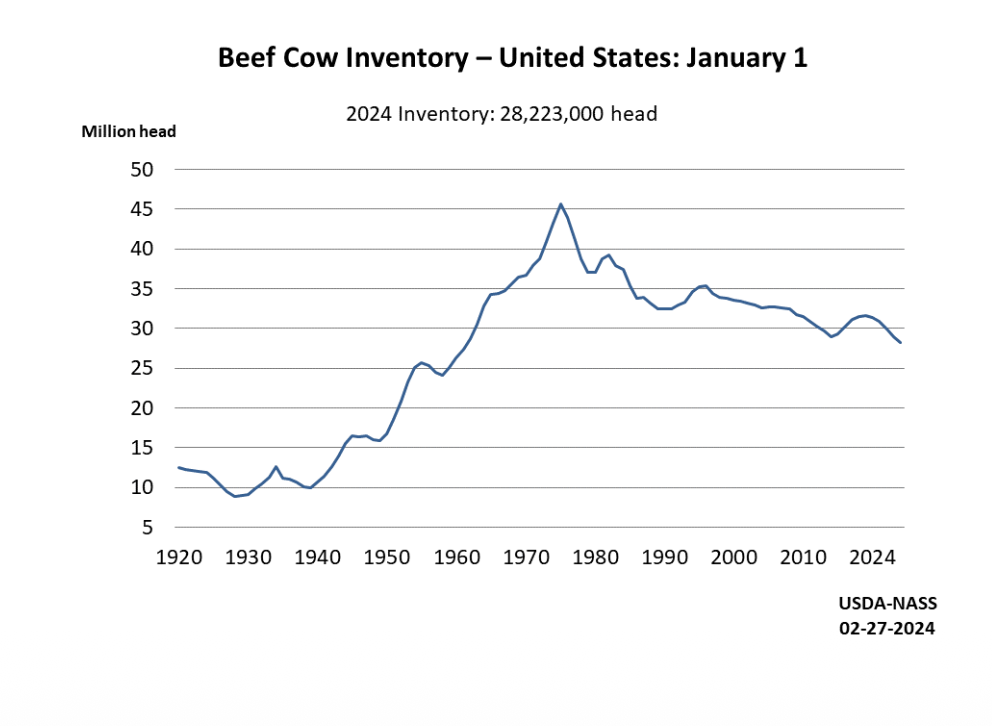
Trends in US cow herd size
number of cows decrease in US while product increases
peak numbers of cows around 1970 and since slowly decreases
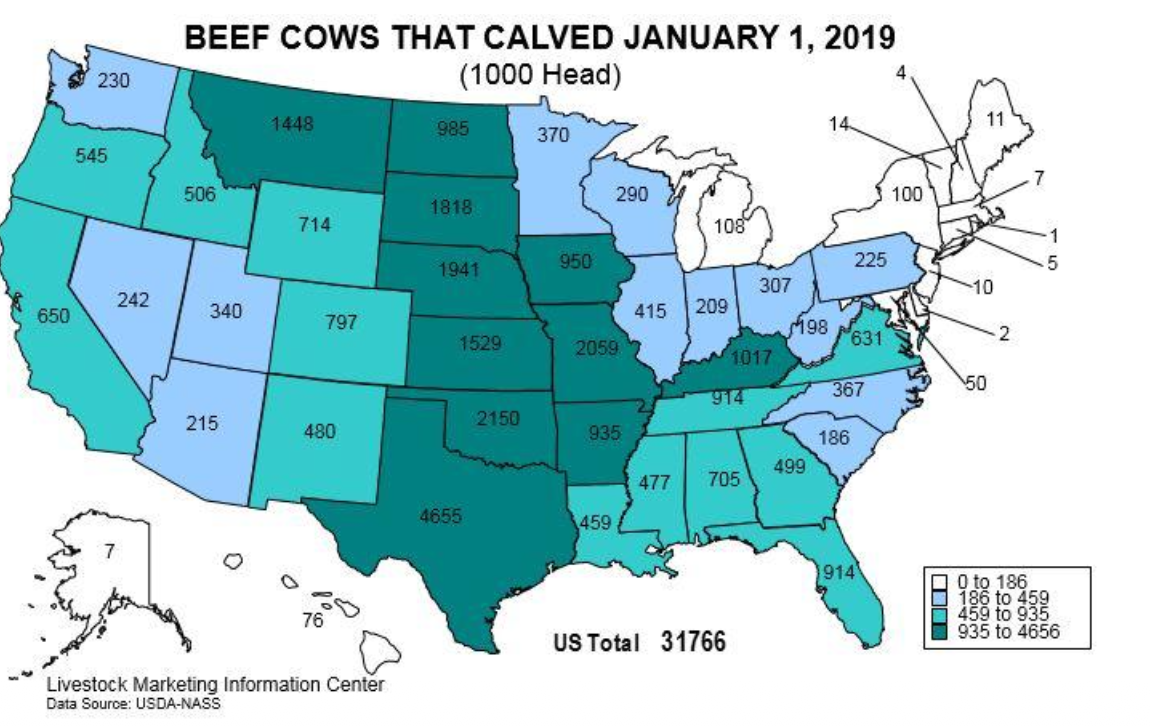
Beef cow locations
Cow-Calf Segment
Seedstock
58,000 breeders
8%
ex: NCSU BEU
tracking cattle cattle throughout life to see how they’re making impact for consumers
looking at genetics and tracking # throughout
goal: improve genetics and management
Commercial cow-calf
728,000 producers
92%
goal: produce calves to go into beef production
Cow-Calf Segment (avg herd size/operations)
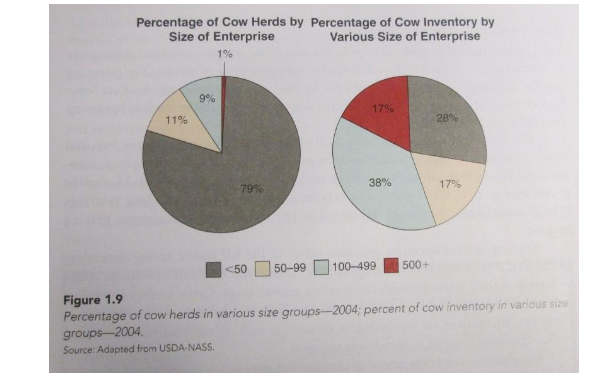
US average cow herd size = 43.5 cows (most dont do as full time job)
Operations with over 100 cows are 9.9% of operations but account for 56% of cows inventory
Yearling or Stocker segment
Transition sector
Stocker: 3-4 months (90-120 days) grazing (up to 12 months)
timing depends on supply/demand of incoming and outgoing cattle
Preconditioning: 1-2 day mixed diet
Backgrounding: 3-4 months dry lot forage/silage based diet
Goal of putting weight on calves before feedlot (healthy uniform cattle)
*can be pasture or dry lot
Feedlot segment
Add weight to calves for harvest
Feeding period ranges from 90-300 days (120 -150 days)
70-90 % concentrate diet
Feed efficiency is critical
2.5-4 lbs ADG
~ 6 lbs of feed DM/lb of gain
26 million head of cattle marketed/year
steers, heifer not selected for breed. vast majority of dairy males. some mature beef and dairy ows will spend some time here to put on fat/muscle
*high investment period for high quality beef (genetics, nutrition, etc). optimizing nutrition/growth efficiency.
Location of cattle on feed
Feedyards most conc. in central US. dryer states better for cattle
Feedlot segment
The top 16 cattle feeding states in the US feed > 98% of the cattle
<5% feedlots have capacity of over 1,000 head but they market 80-85% of all feedlot cattle
40% of marketed cattle fed on feedlots with >32,000 head capacity
*border being closed may shift texas around since they finish a lot of cattle from northern Mexico
Packer segment
Geographically near where cattle are fed or marketed
32.5 million head of cattle slaughtered
Slaughter, process and distribute 26 billion pounds of beef annually
800 packing plants in US under USDA inspection
95% of US slaughter capacity
1,900 packing plants in US under state inspection
*refrigeration revolutjionized beef production. we are now able to finish away from the consumer and where cattle are to dec. stress
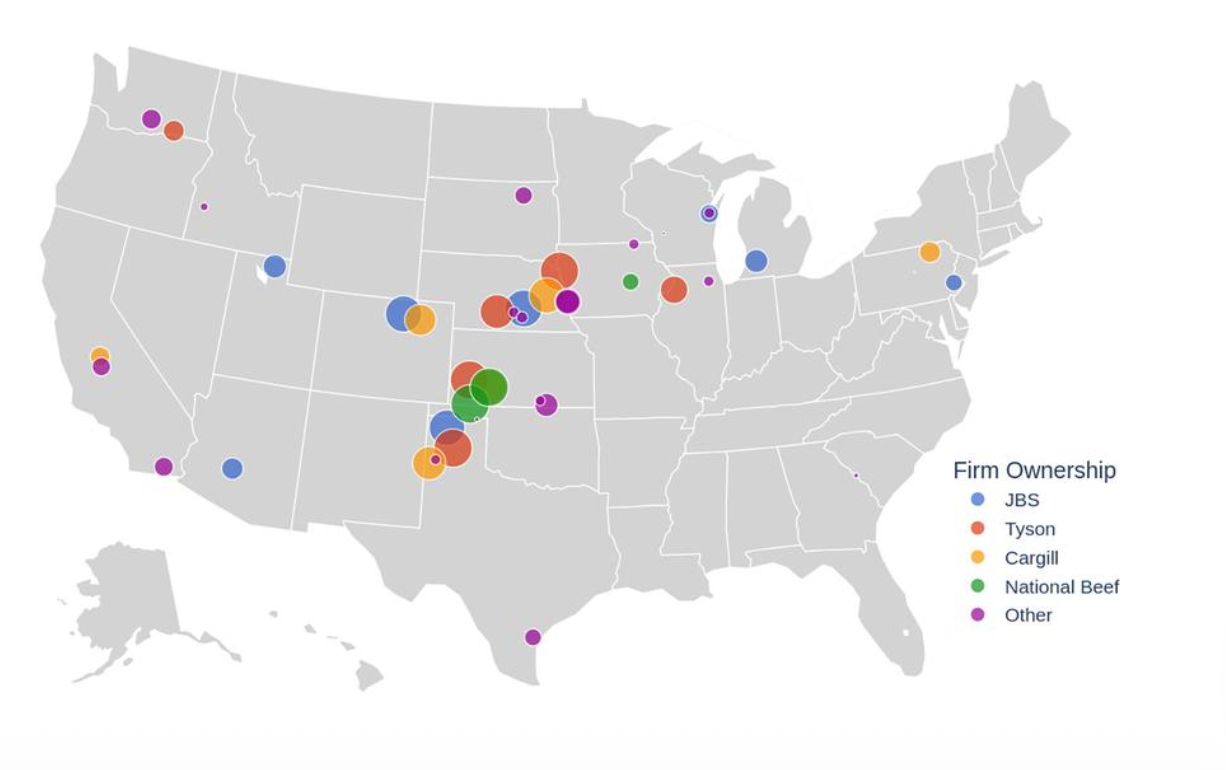
2022 Commercial Cattle Harvest
Packing plants largerly in central us.
JBS, Tyson, Cargill, National Beef
*larger circle = bigger corporation
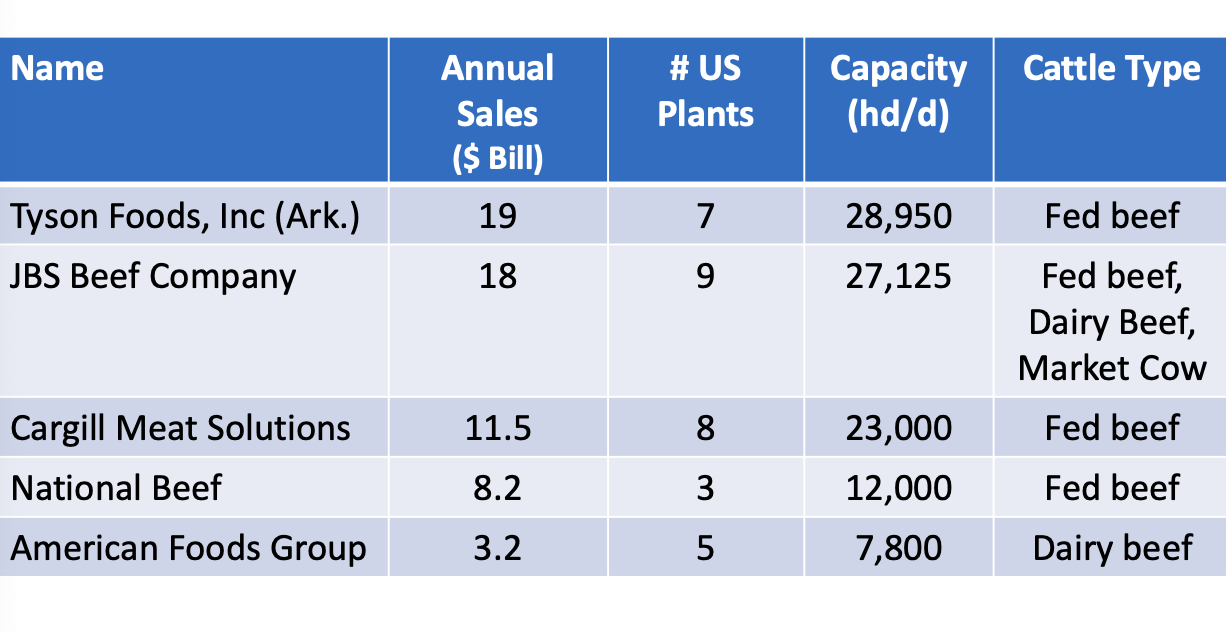
2015/2016 Top Beef Packing Companies
Typson, JBS, Cargill, National Beef, American Foods
Purveyor segment
Specialized meat processors who buy, further process, and sell beef to the food service industry
>350 companies
Process ~5% of all beef (processed are smoked cured, altered feeds. we don’t process much as most sold as 100% beef. health benefits to this!)
Retailers segment
Responsible for getting bulk of beef to the consumer
$638 million annual sales
Can be ready to eat or raw product
128,000 retail companies
Annual per capita distribution
hambuger-28lbs
steaks/roasts-30 lbs
processed-9 lbs
Retailer Segment
Top 10 Grocery Stores in US by Sales
*always buyouts and things changing
Walmart (walmart , sams)
Kroger (kroger, harris teeter, smiths)
Costco Wholesale group
Alberstons
Ahold Belhaize USA (Food Lion, Stop and Shop)
Publix
HE Butt Grocery
Meijer
Wakefern Food Corp
Aldi
Whole foods (division of amazon)
Consumer segment
348,000,000 people in US in Jan 2026
US Per Capita consumption of beef:
Increased 1960 to 1976 (94.4 lbs)
Decreased 1976 to 1990’s (67.8 lbs)
Stabilized 1990 to 1997 (65.7 lbs)
Increased 1998 to 2002 (67.2 lbs)
Decreased 2002-2016 (53.8 lbs)
Increased 2016-2018 (57.2 lbs)
Increased 2018-2023 (58.3 lbs)
Decreasing? 2023-present (56.9 lbs)
Time and convenience are the limiting factors to the number of meals consumed at home
pultry skyrocketed. rpelacing beef as animal protein (cheap/easy)
shifting trends as whole food are now prioritized. this may change things
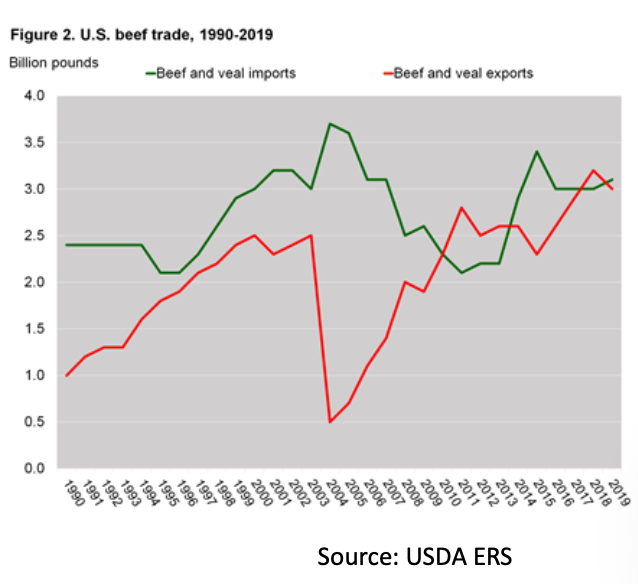
Import/Export Segment
Exports (high quality, byproducts)
$8.3 billion
3.0 billion pounds
10% of US beef supply
Japan (26%), South Korea (23%), Mexico (14%), Hong Kong (8%), Canada (8%), Others (20%)
Imports (lean beef)
$2.4 billion
3.1 billion pounds
Canada (28%), Australia (23%), Mexico (19%), New Zealand (13%), Nicaragua (6%), Others (11%)
Mexico/Canada: Import and export depending on time of years (based on forage, land resources)
Beef industry segments
Seedstock
Cow/calf
Yearling Stocker
Feedlot
Packer
Retailer
Purveyor
Consumer
Exports
Imports
How long does it take from breeding to consumption?
24-36months (2-3 yrs)
9 m from conception to birth
7 m to weaning
15-18m to market
*seedstock has to predict what the world will want in the furture (9m gestation, wait 2 yrs to breed, another 9 to see her offspring). another reason why not vertically integrated)
The beef industry (3 P’s)
People (need to think about everyone)
Producers
Processors
Consumers
Products
Number of cattle
Pounds produced
Pounds consumed
Profitability
If you don’t measure it, you can’t manage it!
Understand the available resources
Know how the resources are interrelated
ex: cant make money if you dont know where it goes
The most important resource?
Misconception that is goes Cattle → Forage/Feed → Financial/Economic → Human
it actually goes Human→ Financial/Economic→ Forage/Feed → Cattle
*we dont want to jump into getting cattle without having resources
Challenges of personnel management for beef farms
Most farms are family owned/operated
Some of the most difficult or easiest people to work with effectively are family
Not traditional employee structure
Where do paid (non-family) employees fit in?
What is the goal of the farm operation?
Profitability
Lifestyle
Hobby
since there are insurances, taxes, and other legal processes needed to bring in outside employees, many people things its easier to not and stick with family
Implementation of the Planning Process in Beef Cattle Operations
What type of cattle operation needs a Business Plan?
What should be included in the business plan?
Farm leadership structure
Type of cattle operation (sector, breed, breeding season)
Farm calendar
Breeding program
Nutritional program
Reproductive program
Health program
Marketing program
Time & Human Resource Mngmt
Doing the Right Things vs. Doing Things Right
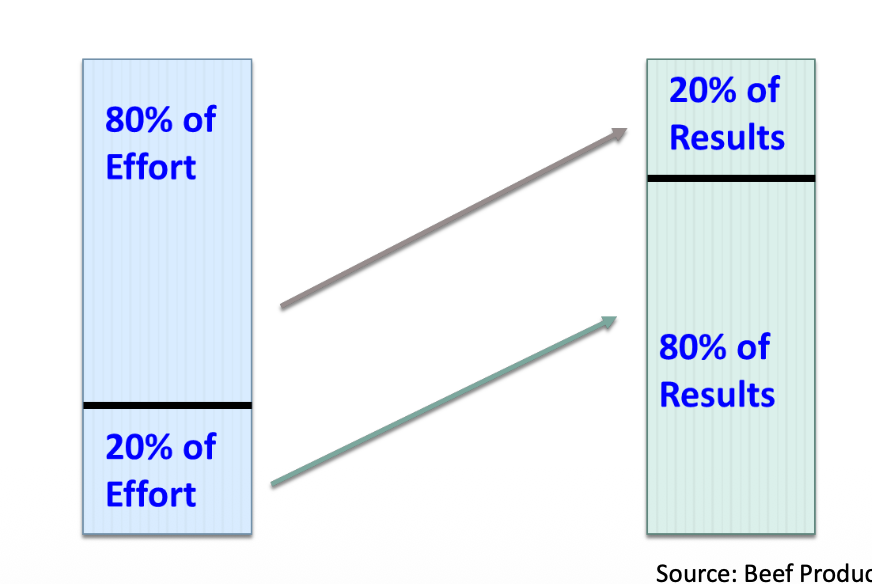
80% - 20% Rule of Business
80% of effors yields 20% results
20% effots (ex: timing vacines) yields 80% results
Identify Priorities
urgent v. non urgent
important v. non important
Urgent and Important
Cattle Out
No water
Bull got into Heifers
Not Urgent and Important
Budget Planning
Marketing Plan
Fence Repair
Urgent and Non Important
Phone Call
Meetings
Not Urgent and Not important
TV
Salesperosn visit
*depends on the situation. can definitely shift
Information Management
What information does a given beef operation need? records (production, health, vaccine, financial, forage)
We are in the digital and technology age, why is information management and transfer so difficult in the beef industry? cost, labor intensive
Is it sector dependent? yes
How to facilitate information transfer? technology is making it easier to transfer
Financial Management
Accurate records are critical
Must be forward thinking
Keep business ahead of personal feelings for most effective decision making
ex: culling. may love the cow but need to do whats in best financial interest
Work with financial advisors, loan officers, tax consultants, business managers, take economics courses
partner with different industries!
Land and Feed Resources
Land is not free (even if you already own it)
Largest capital investment of cow-calf enterprise
Most grazing land is not suitable for crops
Feed costs
50% or more of annual operating costs
US average is ~ $800/cow (goes up if open or late)
Must match cow biological type to resources available
Cattle Resources
A lot of variation among operations
What is the ideal?
*different breeds have different advantages. no perfect beed
some better for comercial settings (ex: hereford/angus better for maternal, indicus better for southern regions
mixing may be beneficial. have to look at resources
Equipment Resource
How much and what type of equipment do you really need?
Cooperatives with neighbors? (county extension can help)
New vs. Used?
Contract harvesters?
*easy to get caught up in shiny things but need to think if we really need them or could buy used or borrow.
need to keep in mind scale of operation
Market Resource
Price takers
Not very often seller gets to determine the value of their cattle
Marketing programs
Try to capture best market premiums
Alliances, Contracts, or Formula Pricing
joing marketing alliances )work together wiht other farmers to put together uniform cattle)
Basic structure of alliances
Cow-Calf Producer + Feeder + Packer →
Joint Venture →
Combine resources
Reduce costs
Quantity/quality control
Shared financial risk
Capitalize on specialized market opportunities
Sharing of data
Returns
Shared by all three segments
working together to optimize outcomes
Management Systems
All management systems should be evaluated with the profitability formula:
Profit (Loss) = (Production x Price) – Cost
1. Maximum: Increasing productivity without consideration of cost or sustainability
lot of businesses collapse here. achieving hightest of one trait while compromising others)
2. Optimum: To maximize productivity or output that is sustainable over a long period of time
Efficiency (2 types)
Biological Efficiency: Measured in biological units
The number of pounds of beef produced as compared to the number of pounds of feed consumed.
feedyards priotize this
Economic Efficiency: Measured in economic units
Number of dollars earned as compared to thenumber of dollars invested.
*we can’t do this without recording data.
need to look at the margins: 5:1, 2:1, etc
Risk Management
A decision making process that evaluates the chance or probability of an adverse outcome.
Some Inherent Risks:
1. Weather
2. Price Fluctuation
3. Change in input Cost
4. Equipment Breakdown
5. Change in Government Regulations
6. Variability in Animal / Crop Performance
7. Disease
8. Labor / Human Issues
Cow-Calf Production
Goals or Objectives:
Marketable calves
Utilize land resources
Why?
Love cattle
Make a living
Manage land resources
Is this the beginning or the end of the cattle industry?
both, sending out calves to be used in end of industry
Cow-Calf Production (types of farms, regions)
Many types of farms fall into this category
Seedstock
Hobbyist
Commercial
Intensive vs. Extensive
Regional differences in management systems
Western states vs. High plains vs. Southeast
Successful cow-calf producers…
Invest wisely
Business perspective
Proactive in industry
communicate with people across state and US
Collect data
Hard work
Creativity
Risk management
Successful cow-calf producers…
they MANAGE
You can’t manage what you don’t measure
How do you know if you are managing your operation economically?
How do you know you are making genetic improvements?
How do you know if you are meeting welfare standards?
we can sometimes get blinded by surroundings. need to communicate to see if normal
avg producers is 65 yrs old so they think differently.
Average cow-calf returns
market fluctuates. need to be prepared for this. BACKUP plan!!
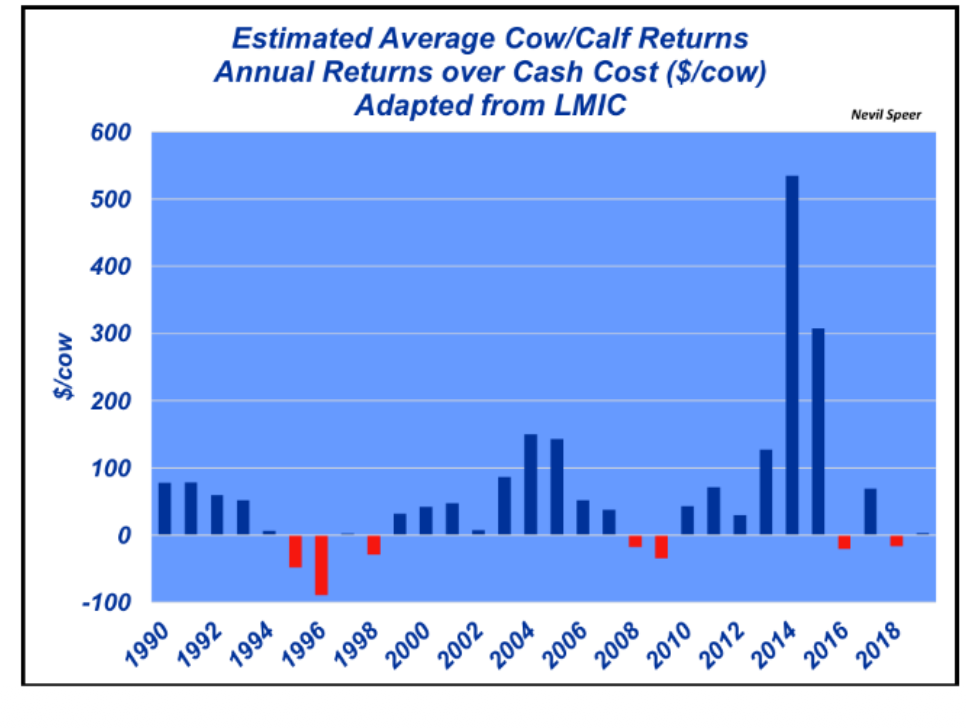
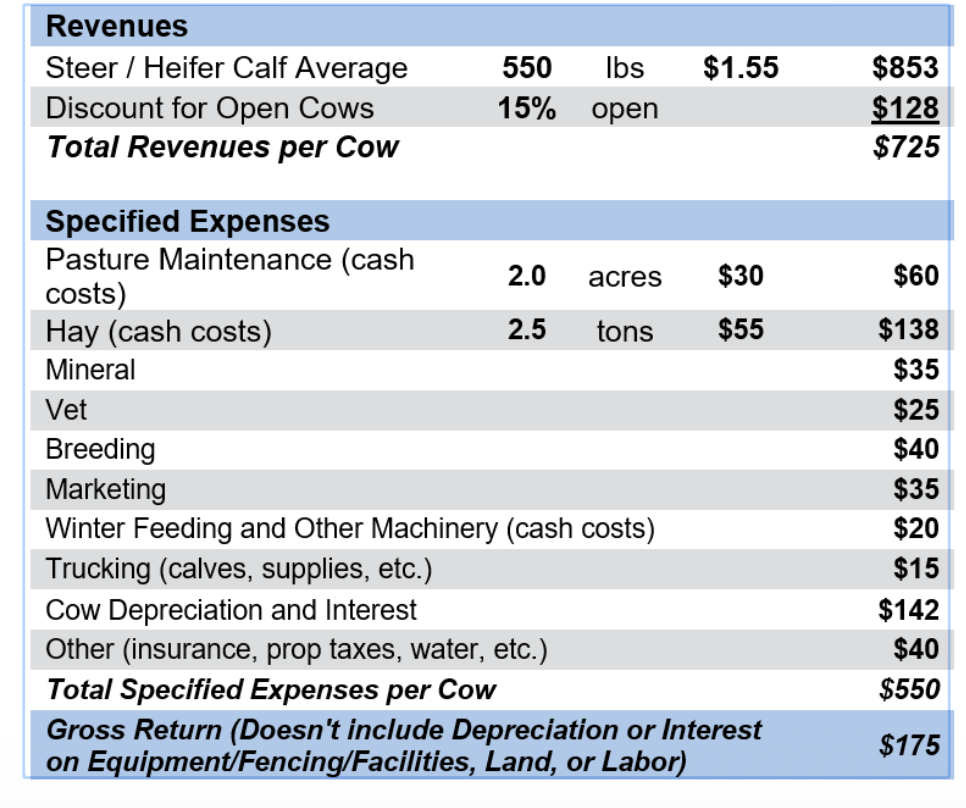
Quick look at cow-calf economics
not many places where money comes in
LOTS of places where money goes out
important to keep tract of this