Health Assessment Final: Jarvis test bank questions
 Call Kai
 Learn
Learn Practice Test
 Spaced Repetition
 Match
Match Flashcards
 Knowt Play
1/99

There's no tags or description
Looks like no tags are added yet.
Name | Mastery | Learn | Test | Matching | Spaced | Call with Kai |
|---|
No analytics yet
Send a link to your students to track their progress
100 Terms
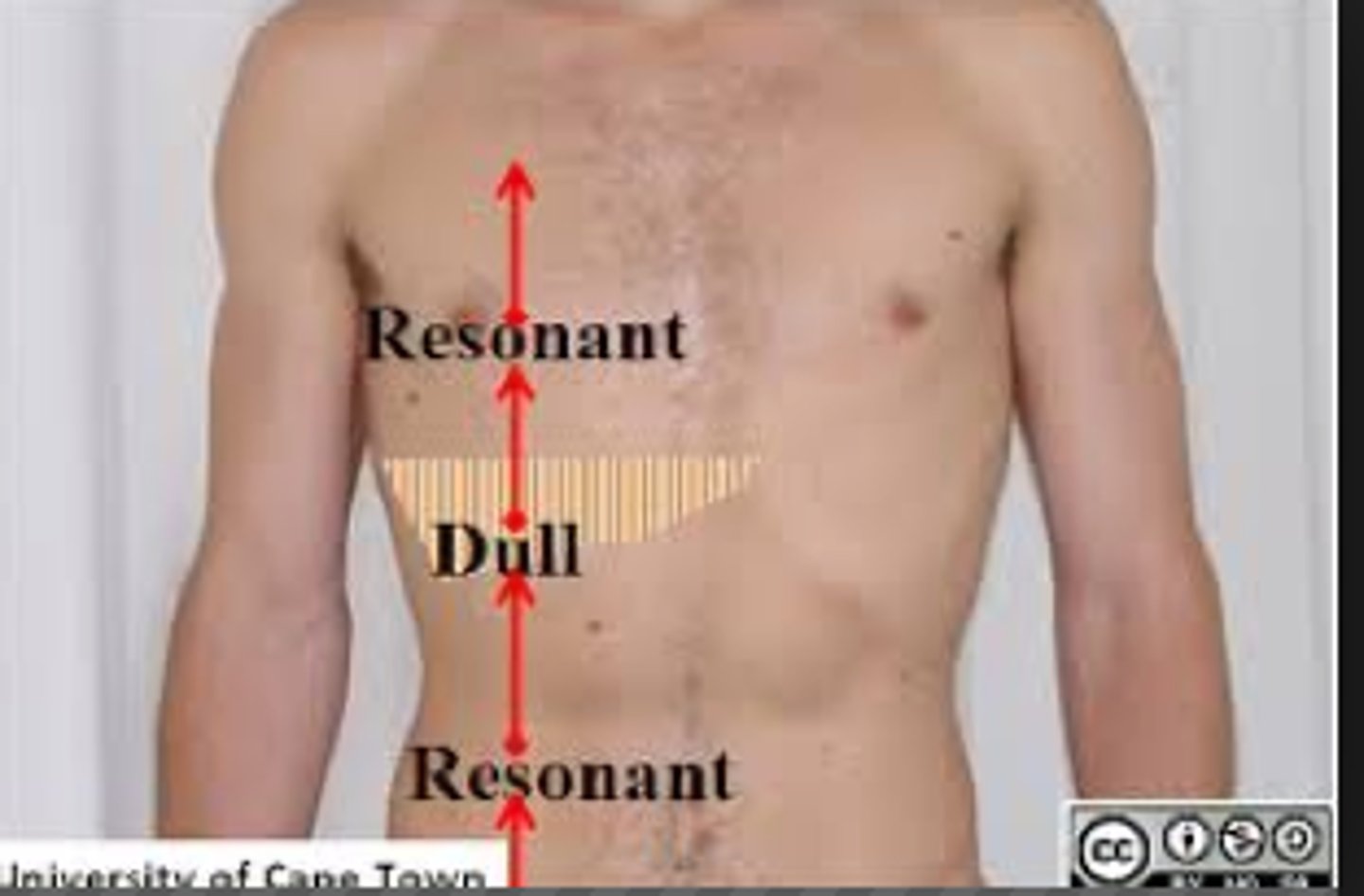
The nurse is percussing the seventh right intercostal space at the midclavicular line over the liver. Which sound should the nurse expect to hear?
a. Dullness
b. Tympany
c. Resonance
d. Hyperresonance
A
The liver is located in the right upper quadrant and would elicit a dull percussion note.
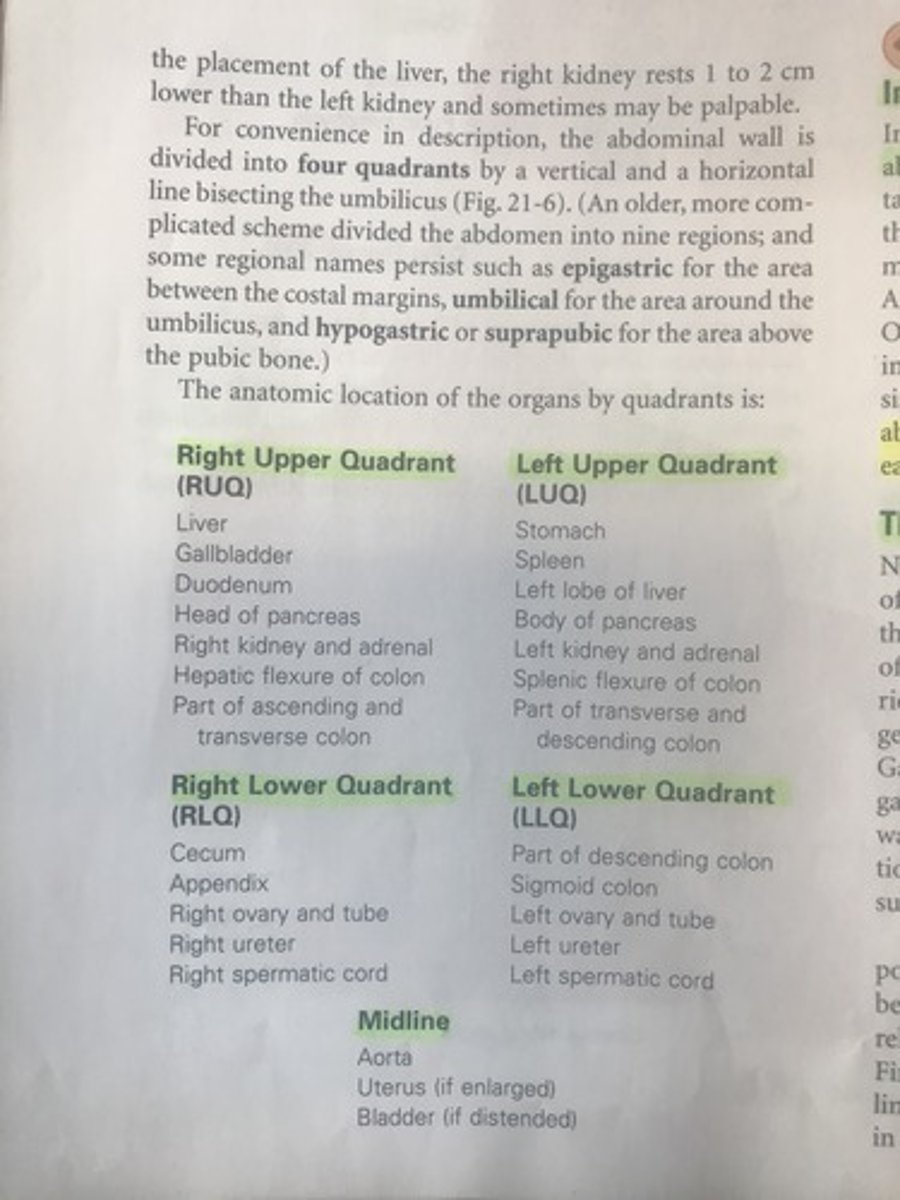
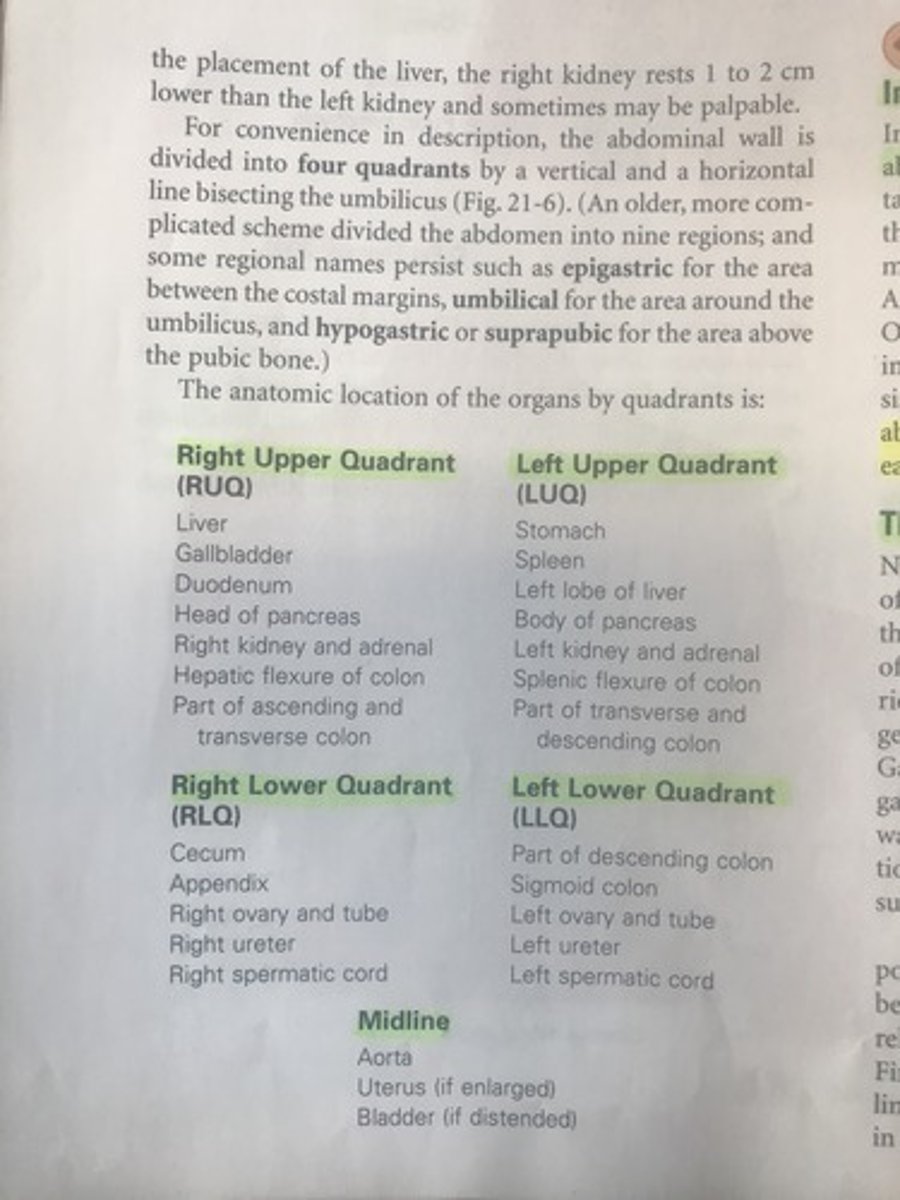
Which structure is located in the left lower quadrant of the abdomen?
a. Liver
b. Duodenum
c. Gallbladder
d. Sigmoid colon
D
The sigmoid colon is located in the left lower quadrant of the abdomen
A patient is having difficulty swallowing medications and food. The nurse would document that this patient has:
a. Aphasia.
b. Dysphasia.
c. Dysphagia.
d. Anorexia.
C-
Dysphagia is a condition that occurs with disorders of the throat or esophagus and results in difficulty swallowing. Aphasia and dysphasia are speech disorders. Anorexia is a loss of appetite.
The nurse suspects that a patient has a distended bladder. How should the nurse assess for this condition?
a. Percuss and palpate in the lumbar region.
b. Inspect and palpate in the epigastric region.
c. Auscultate and percuss in the inguinal region.
d. Percuss and palpate the midline area above the suprapubic bone.
D
Dull percussion sounds would be elicited over a distended bladder, and the hypogastric area would seem firm to palpation.
The nurse is aware that one change that may occur in the gastrointestinal system of an aging adult is:
a. Increased salivation.
b. Increased liver size.
c. Increased esophageal emptying.
d. Decreased gastric acid secretion.
D
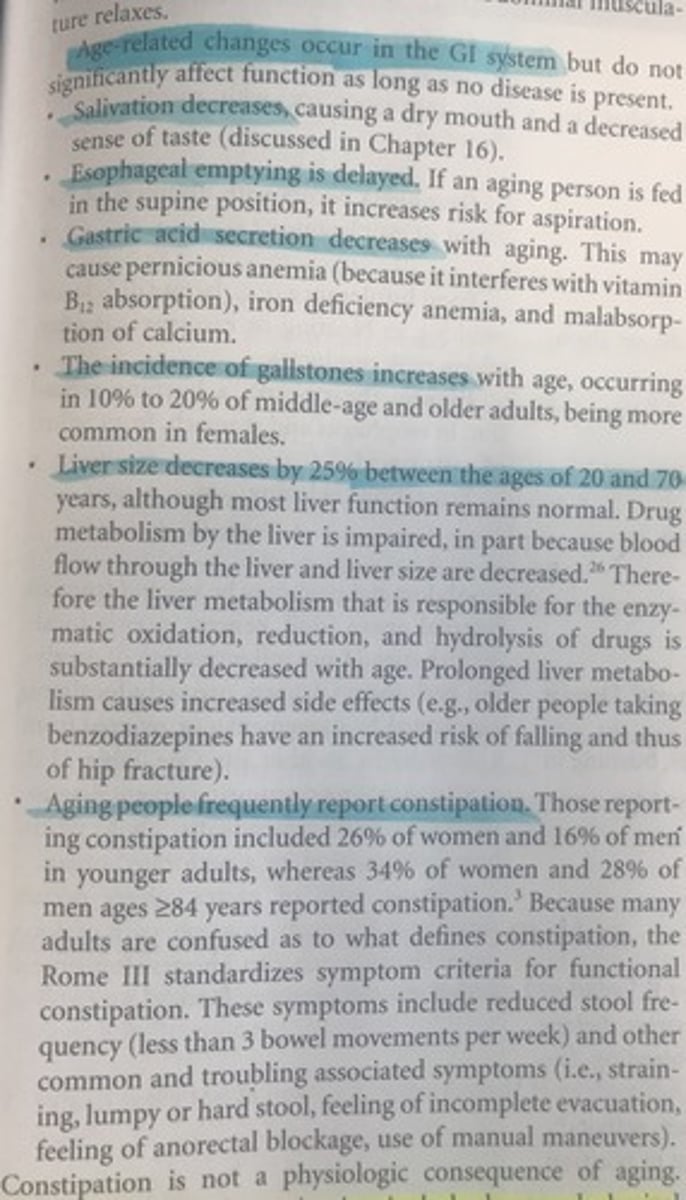
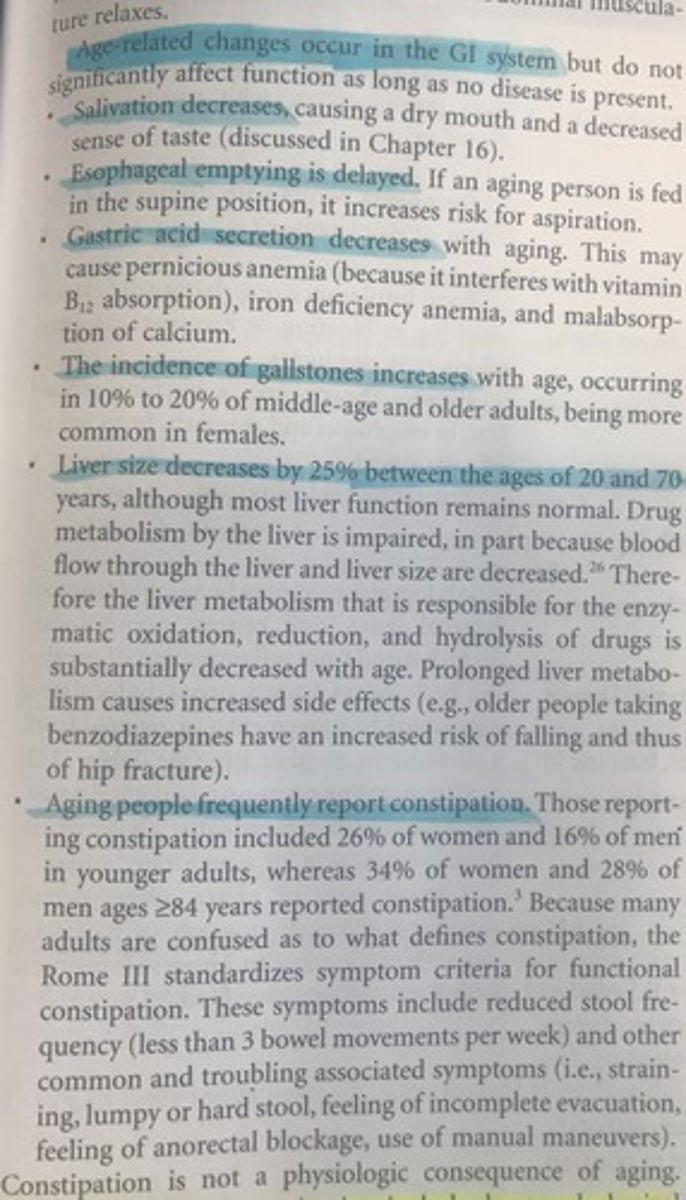
Gastric acid secretion decreases with aging. As one ages, salivation decreases, esophageal emptying is delayed, and liver size decreases.
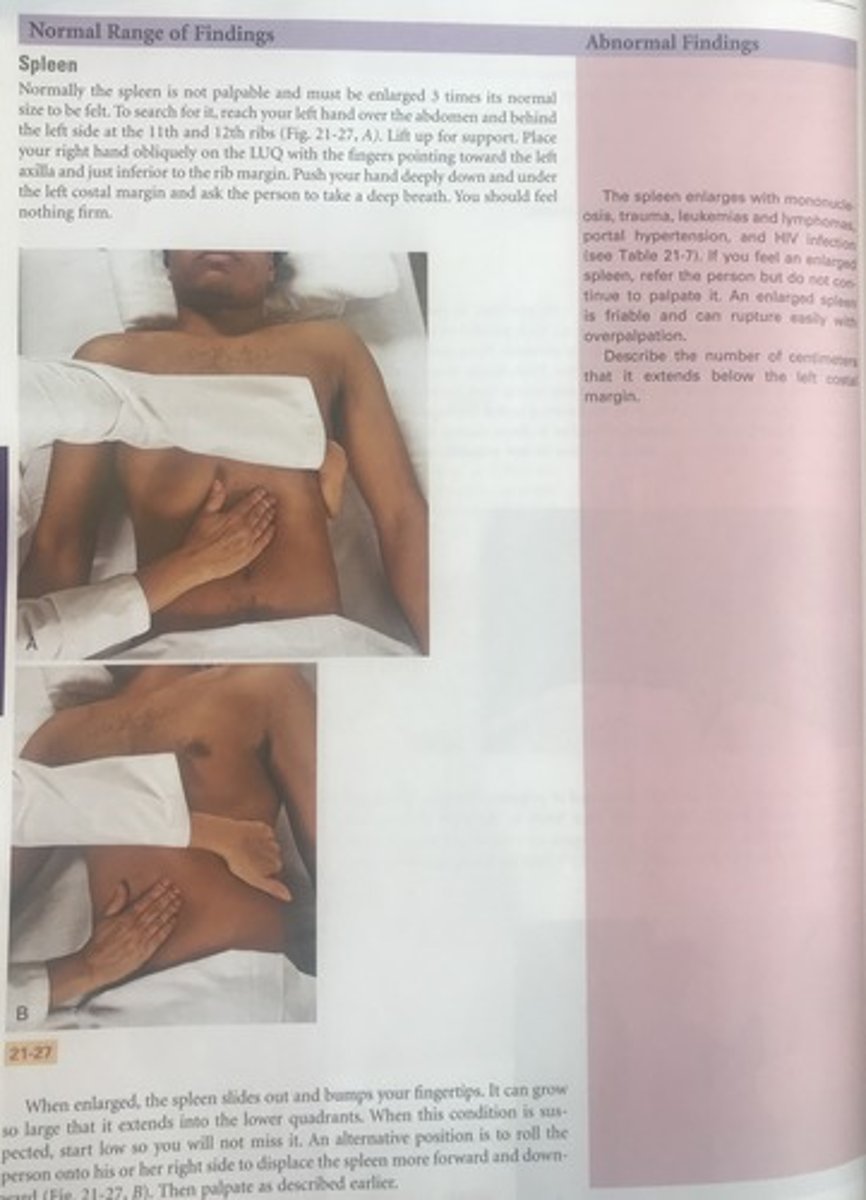
A 22-year-old man comes to the clinic for an examination after falling off his motorcycle and landing on his left side on the handle bars. The nurse suspects that he may have injured his spleen. Which of these statements is true regarding assessment of the spleen in this situation?
a. The spleen can be enlarged as a result of trauma.
b. The spleen is normally felt on routine palpation.
c. If an enlarged spleen is noted, then the nurse should thoroughly palpate to determine its size.
d. An enlarged spleen should not be palpated because it can easily rupture.
D
If an enlarged spleen is felt, then the nurse should refer the person and should not continue to palpate it. An enlarged spleen is friable and can easily rupture with overpalpation.
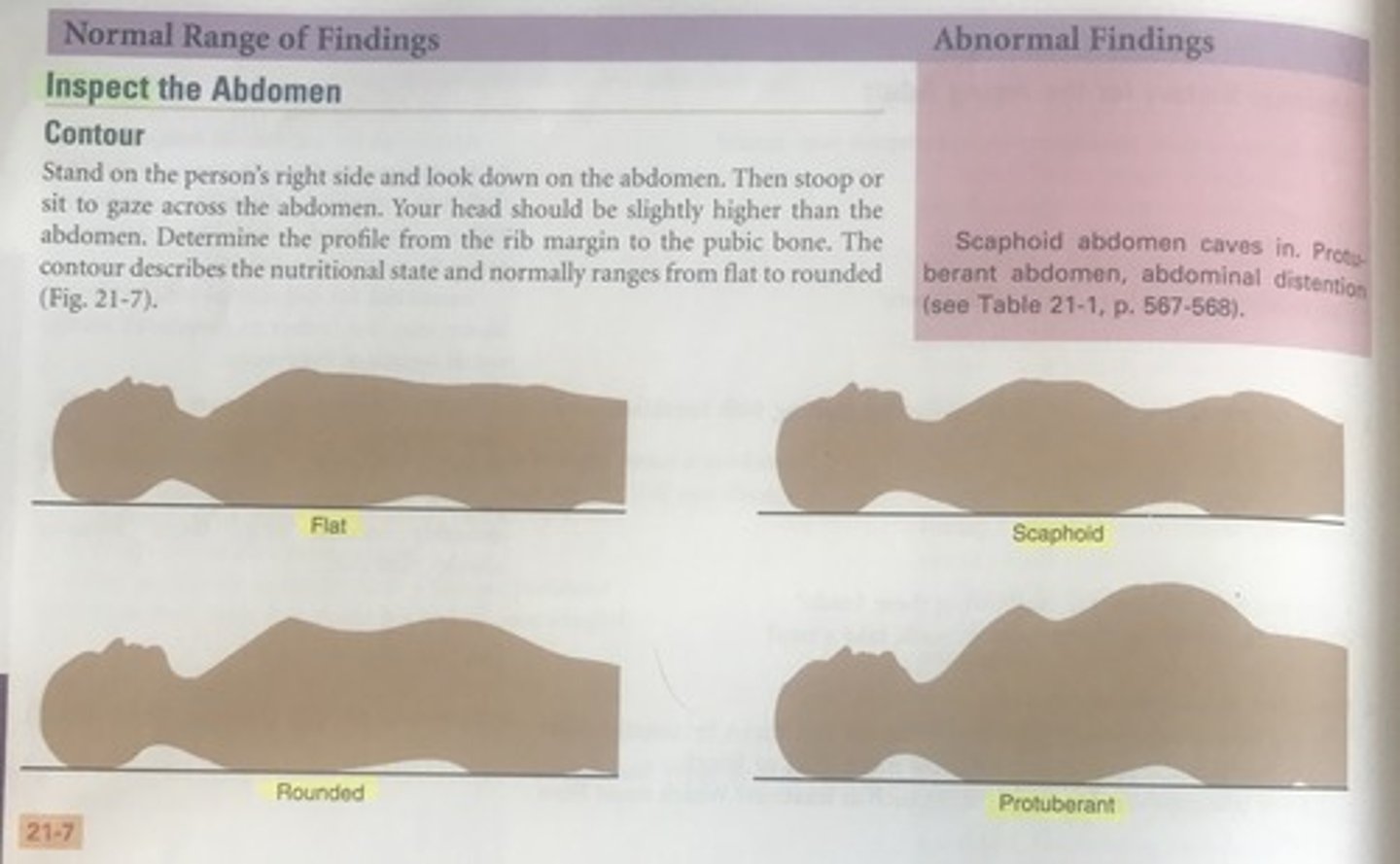
A patient's abdomen is bulging and stretched in appearance. The nurse should describe this finding as:
a. Obese.
b. Herniated.
c. Scaphoid.
d. Protuberant.
D
A protuberant abdomen is rounded, bulging, and stretched (see Figure 21-7). A scaphoid abdomen caves inward.
The nurse is describing a scaphoid abdomen. To the horizontal plane, a scaphoid contour of the abdomen depicts a ______ profile.
a. Flat
b. Convex
c. Bulging
d. Concave
D
Contour describes the profile of the abdomen from the rib margin to the pubic bone; a scaphoid contour is one that is concave from a horizontal plane (see Figure 21-7).
While examining a patient, the nurse observes abdominal pulsations between the xiphoid process and umbilicus. The nurse would suspect that these are:
a. Pulsations of the renal arteries.
b. Pulsations of the inferior vena cava.
c. Normal abdominal aortic pulsations.
d. Increased peristalsis from a bowel obstruction.
C
Normally, the pulsations from the aorta are observed beneath the skin in the epigastric area, particularly in thin persons who have good muscle wall relaxation
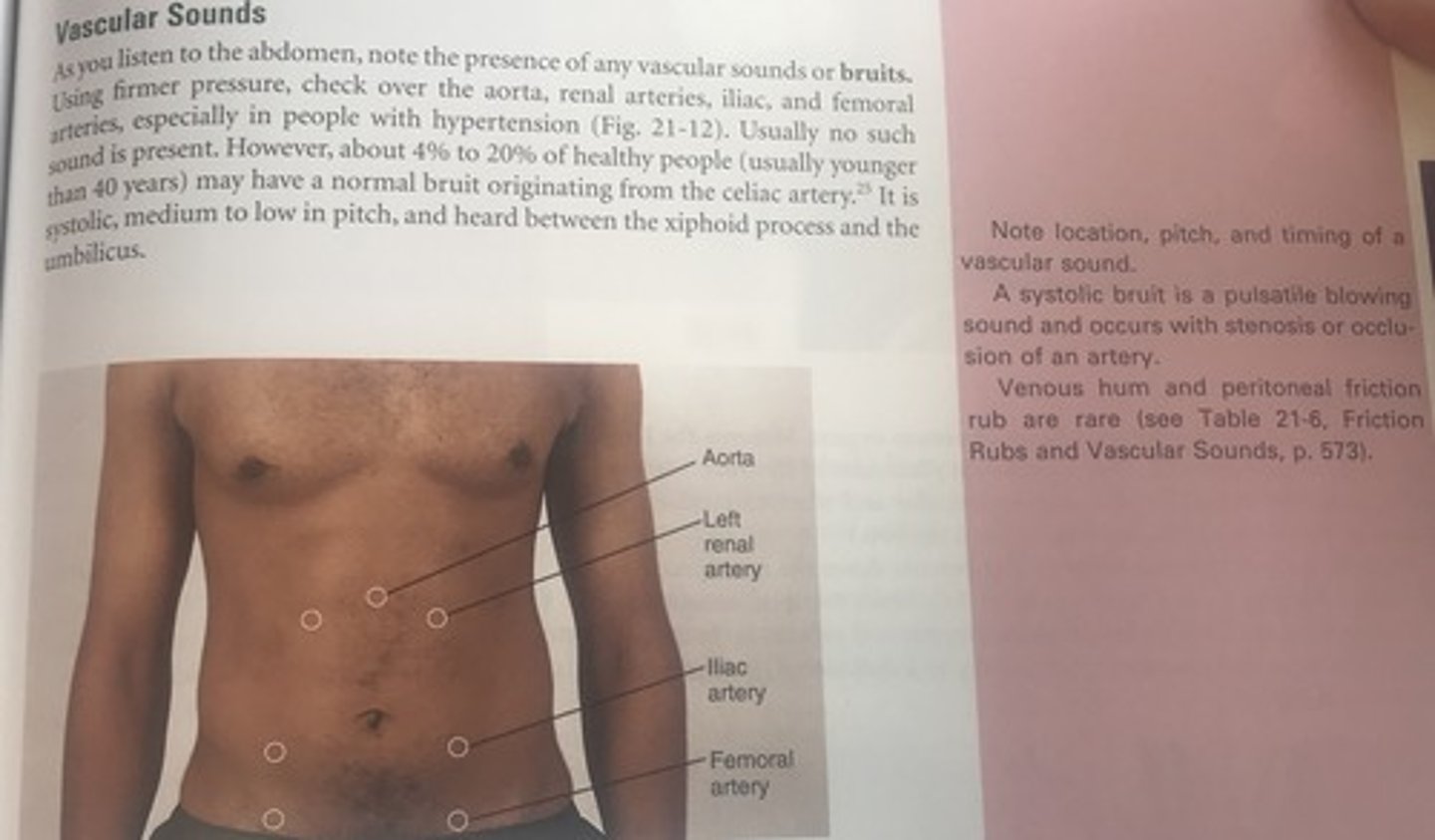
A patient has hypoactive bowel sounds. The nurse knows that a potential cause of hypoactive bowel sounds is:
a. Diarrhea.
b. Peritonitis.
c. Laxative use.
d. Gastroenteritis.
B
Diminished or absent bowel sounds signal decreased motility from inflammation as exhibited with peritonitis, with paralytic ileus after abdominal surgery, or with late bowel obstruction.
The nurse is watching a new graduate nurse perform auscultation of a patient's abdomen. Which statement by the new graduate shows a correct understanding of the reason auscultation precedes percussion and palpation of the abdomen?
a. "We need to determine the areas of tenderness before using percussion and palpation."
b. "Auscultation prevents distortion of bowel sounds that might occur after percussion and palpation."
c. "Auscultation allows the patient more time to relax and therefore be more comfortable with the physical examination."
d. "Auscultation prevents distortion of vascular sounds, such as bruits and hums, that might occur after percussion and palpation."
B
Auscultation is performed first (after inspection) because percussion and palpation can increase peristalsis, which would give a false interpretation of bowel sounds.
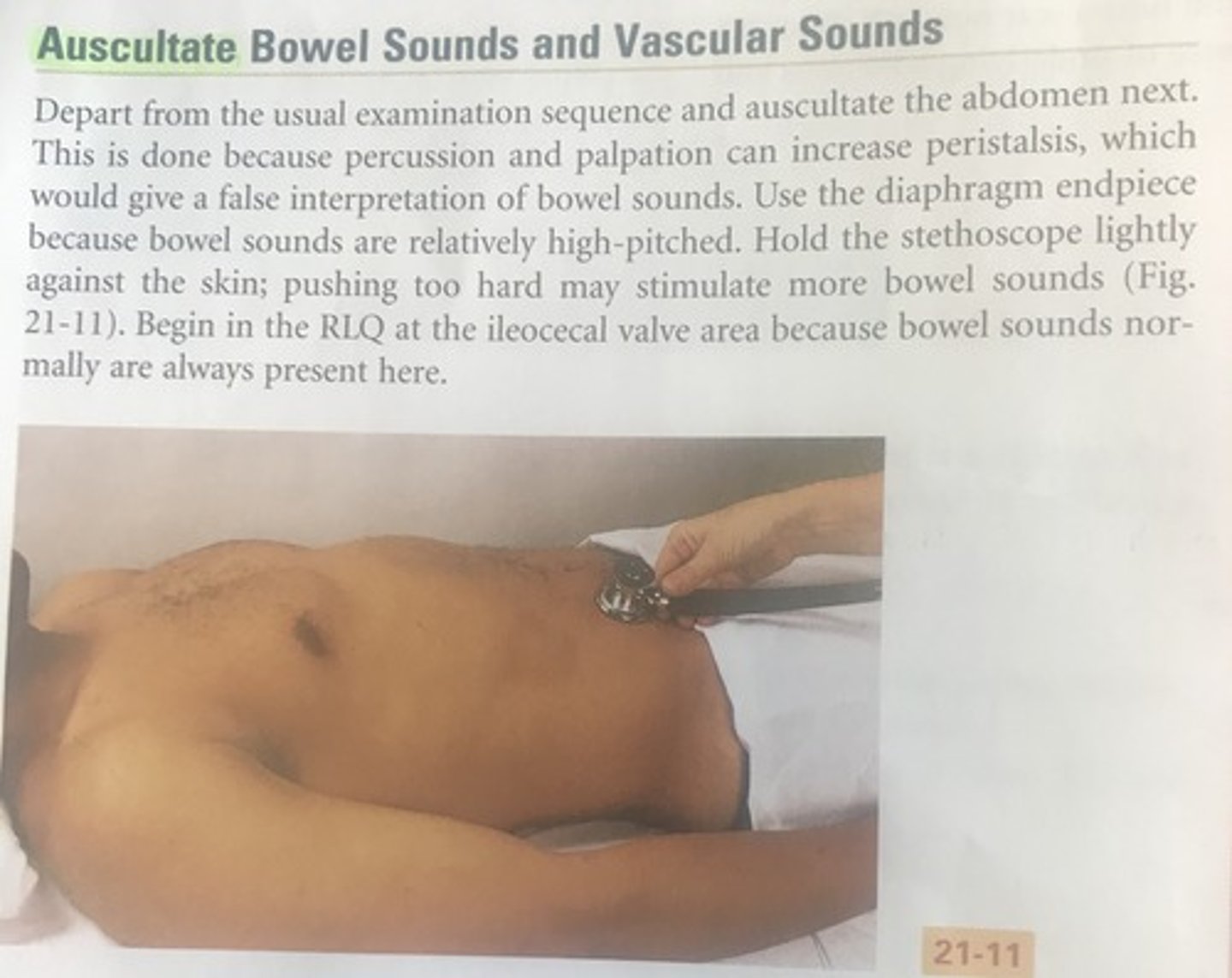
The nurse is listening to bowel sounds. Which of these statements is true of bowel sounds? Bowel sounds:
a. Are usually loud, high-pitched, rushing, and tinkling sounds.
b. Are usually high-pitched, gurgling, and irregular sounds.
c. Sound like two pieces of leather being rubbed together.
d. Originate from the movement of air and fluid through the large intestine.
B
Bowel sounds are high-pitched, gurgling, and cascading sounds that irregularly occur from 5 to 30 times per minute. They originate from the movement of air and fluid through the small intestine.
The physician comments that a patient has abdominal borborygmi. The nurse knows that this term refers to:
a. Loud continual hum.
b. Peritoneal friction rub.
c. Hypoactive bowel sounds.
d. Hyperactive bowel sounds.
D
Borborygmi is the term used for hyperperistalsis when the person actually feels his or her stomach growling.
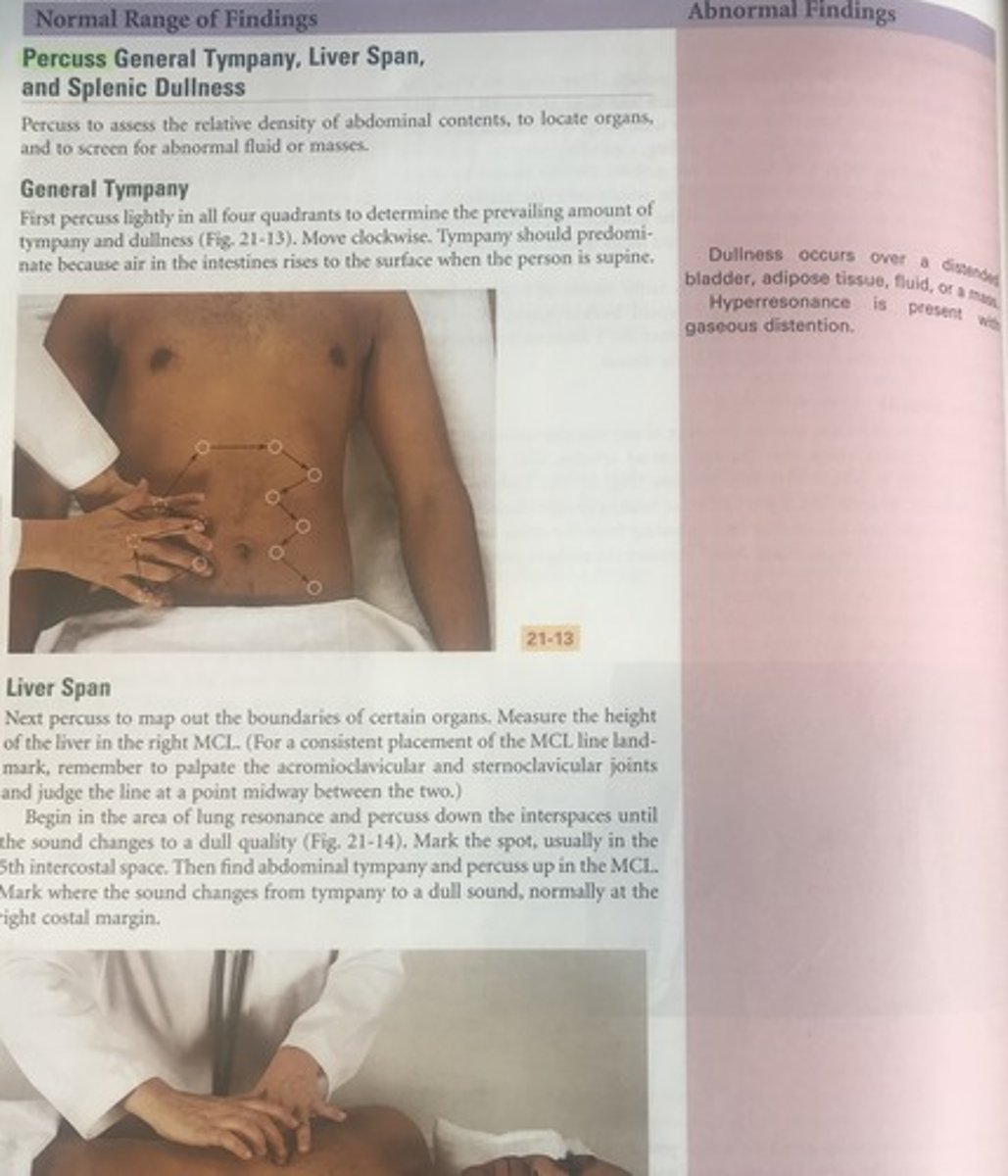
During an abdominal assessment, the nurse would consider which of these findings as normal?
a. Presence of a bruit in the femoral area
b. Tympanic percussion note in the umbilical region
c. Palpable spleen between the ninth and eleventh ribs in the left midaxillary line
d. Dull percussion note in the left upper quadrant at the midclavicular line
B
Tympany should predominate in all four quadrants of the abdomen because air in the intestines rises to the surface when the person is supine. Vascular bruits are not usually present. Normally, the spleen is not palpable. Dullness would not be found in the area of lung resonance (left upper quadrant at the midclavicular line).
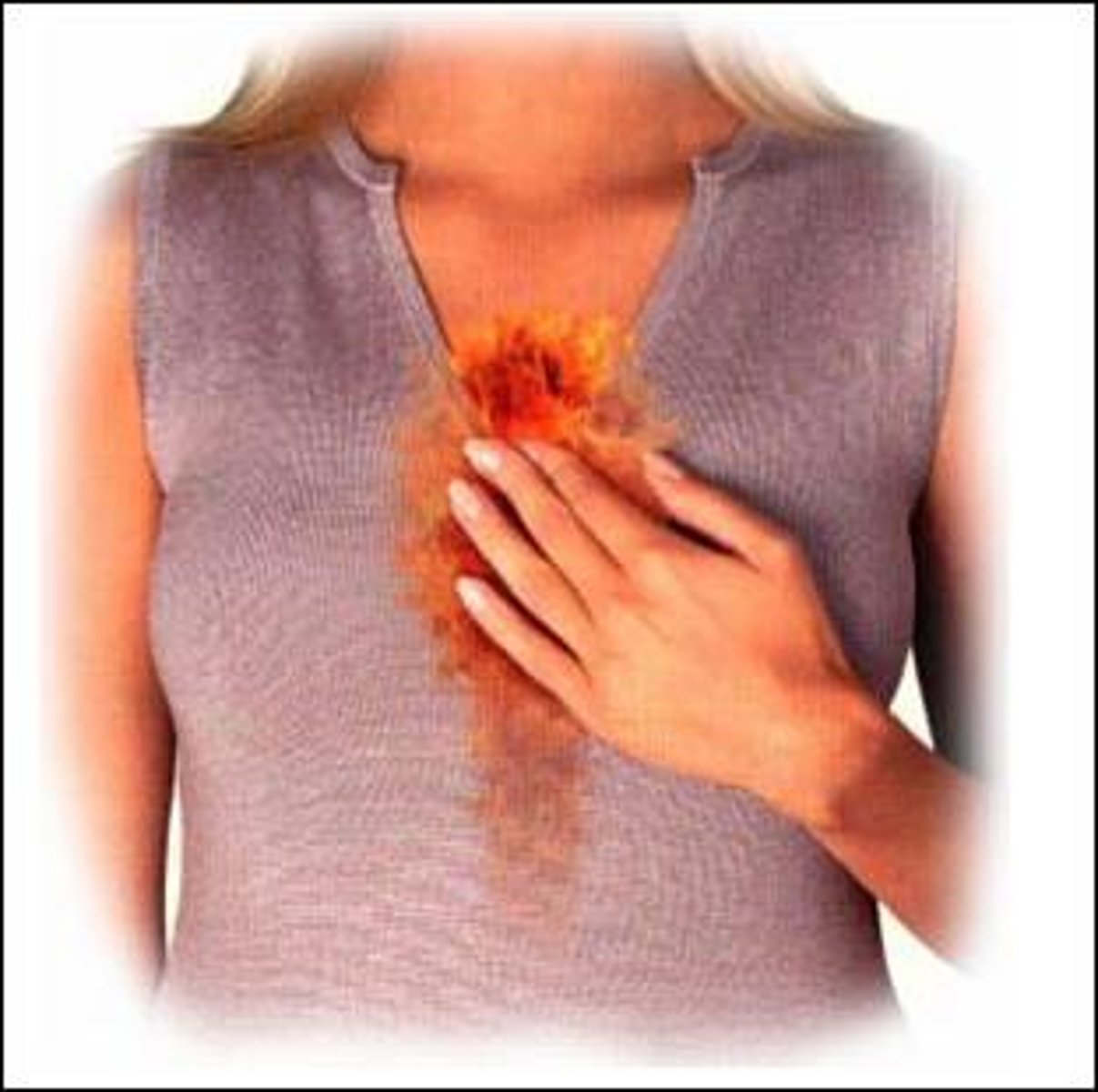
The nurse is assessing the abdomen of a pregnant woman who is complaining of having "acid indigestion" all the time. The nurse knows that esophageal reflux during pregnancy can cause:
a. Diarrhea.
b. Pyrosis.
c. Dysphagia.
d. Constipation.
B
Pyrosis, or heartburn, is caused by esophageal reflux during pregnancy. The other options are not correct
The nurse is performing percussion during an abdominal assessment. Percussion notes heard during the abdominal assessment may include:
a. Flatness, resonance, and dullness.
b. Resonance, dullness, and tympany.
c. Tympany, hyperresonance, and dullness.
d. Resonance, hyperresonance, and flatness.
C
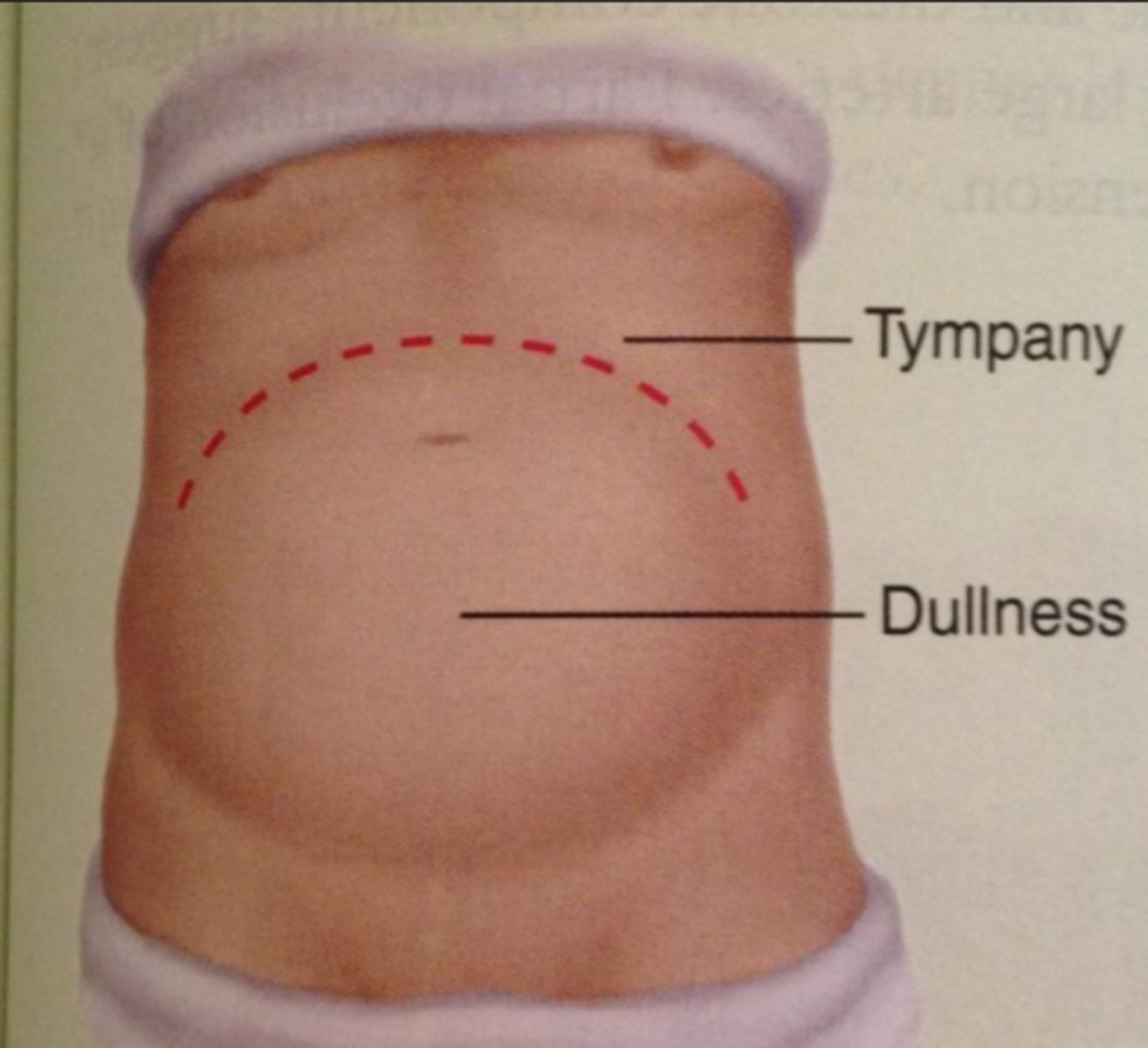
Percussion notes normally heard during the abdominal assessment may include tympany, which should predominate because air in the intestines rises to the surface when the person is supine; hyperresonance, which may be present with gaseous distention; and dullness, which may be found over a distended bladder, adipose tissue, fluid, or a mass.
An older patient has been diagnosed with pernicious anemia. The nurse knows that this condition could be related to:
a. Increased gastric acid secretion.
b. Decreased gastric acid secretion.
c. Delayed gastrointestinal emptying time.
d. Increased gastrointestinal emptying time.
B
Gastric acid secretion decreases with aging and may cause pernicious anemia (because it interferes with vitamin B12 absorption), iron-deficiency anemia, and malabsorption of calcium.
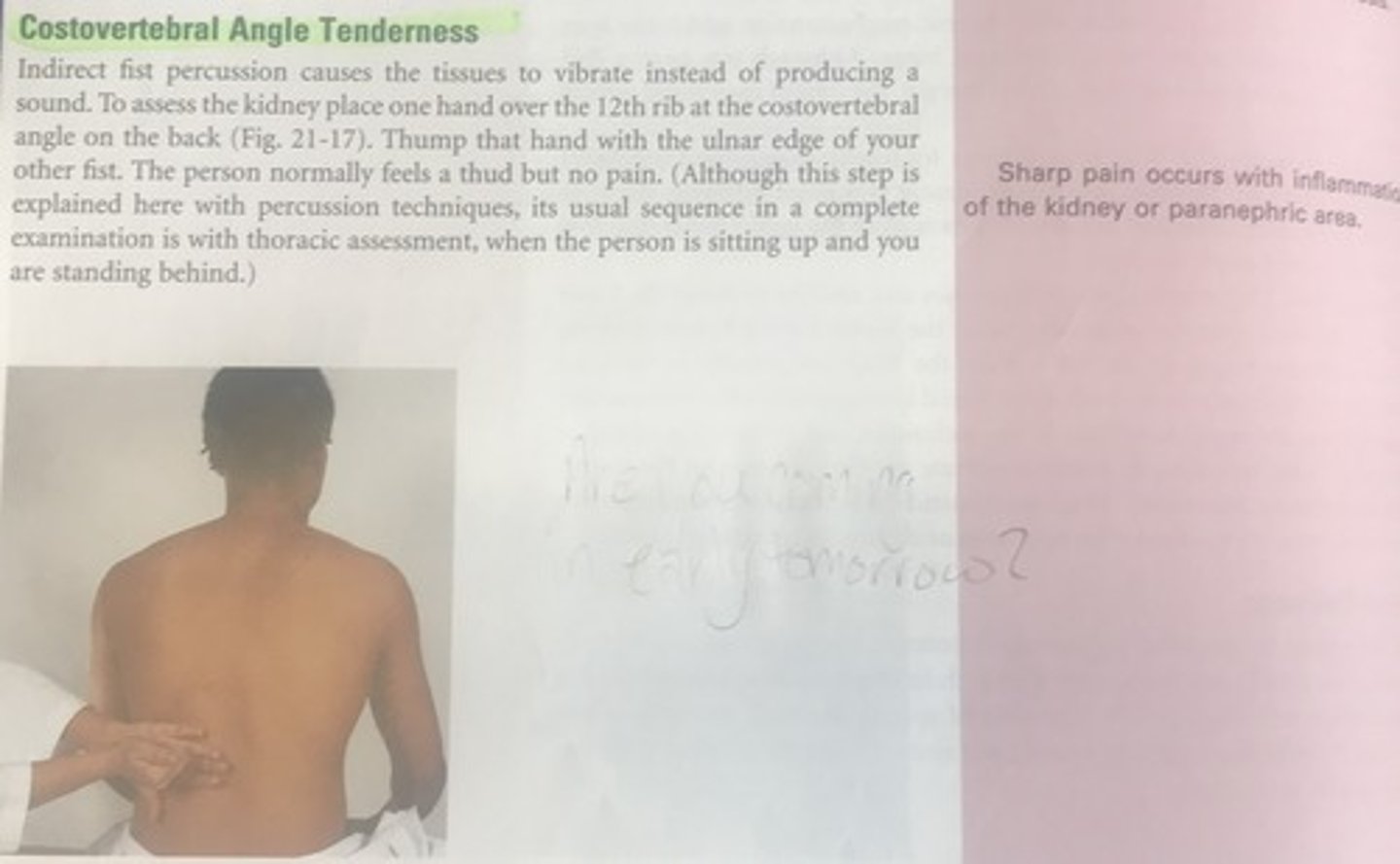
A patient is complaining of a sharp pain along the costovertebral angles. The nurse is aware that this symptom is most often indicative of:
a. Ovary infection.
b. Liver enlargement.
c. Kidney inflammation.
d. Spleen enlargement.
C
Sharp pain along the costovertebral angles occurs with inflammation of the kidney or paranephric area. The other options are not correct
A nurse notices that a patient has ascites, which indicates the presence of:
a. Fluid.
b. Feces.
c. Flatus.
d. Fibroid tumors.
A
Ascites is free fluid in the peritoneal cavity and occurs with heart failure, portal hypertension, cirrhosis, hepatitis, pancreatitis, and cancer
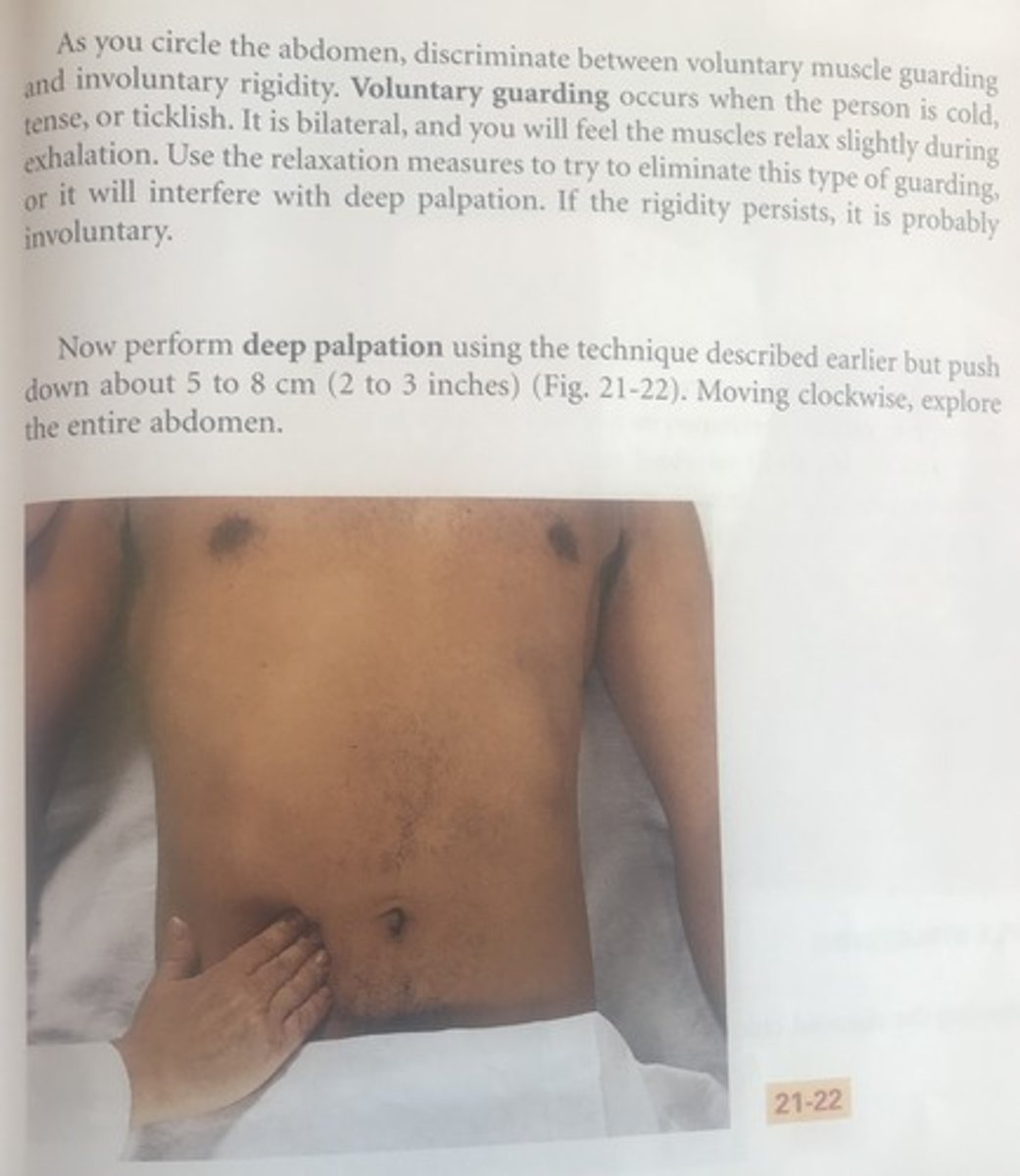
The nurse knows that during an abdominal assessment, deep palpation is used to determine:
a. Bowel motility.
b. Enlarged organs.
c. Superficial tenderness.
d. Overall impression of skin surface and superficial musculature.
B
With deep palpation, the nurse should notice the location, size, consistency, and mobility of any palpable organs and the presence of any abnormal enlargement, tenderness, or masses.
The nurse notices that a patient has had a black, tarry stool and recalls that a possible cause would be:
a. Gallbladder disease.
b. Overuse of laxatives.
c. Gastrointestinal bleeding.
d. Localized bleeding around the anus.
C
Black stools may be tarry as a result of occult blood (melena) from gastrointestinal bleeding. Red blood in stools occurs with localized bleeding around the anus
During an abdominal assessment, the nurse elicits tenderness on light palpation in the right lower quadrant. The nurse interprets that this finding could indicate a disorder of which of these structures?
a. Spleen
b. Sigmoid
c. Appendix
d. Gallbladder
C
The appendix is located in the right lower quadrant. When the iliopsoas muscle is inflamed, which occurs with an inflamed or perforated appendix, pain is felt in the right lower quadrant.
The nurse is assessing the abdomen of an older adult. Which statement regarding the older adult and abdominal assessment is true?
a. Abdominal tone is increased.
b. Abdominal musculature is thinner.
c. Abdominal rigidity with an acute abdominal condition is more common.
d. The older adult with an acute abdominal condition complains more about pain than the younger person.
B
In the older adult, the abdominal musculature is thinner and has less tone than that of the younger adult, and abdominal rigidity with an acute abdominal condition is less common in the aging person. The older adult with an acute abdominal condition often complains less about pain than the younger person.
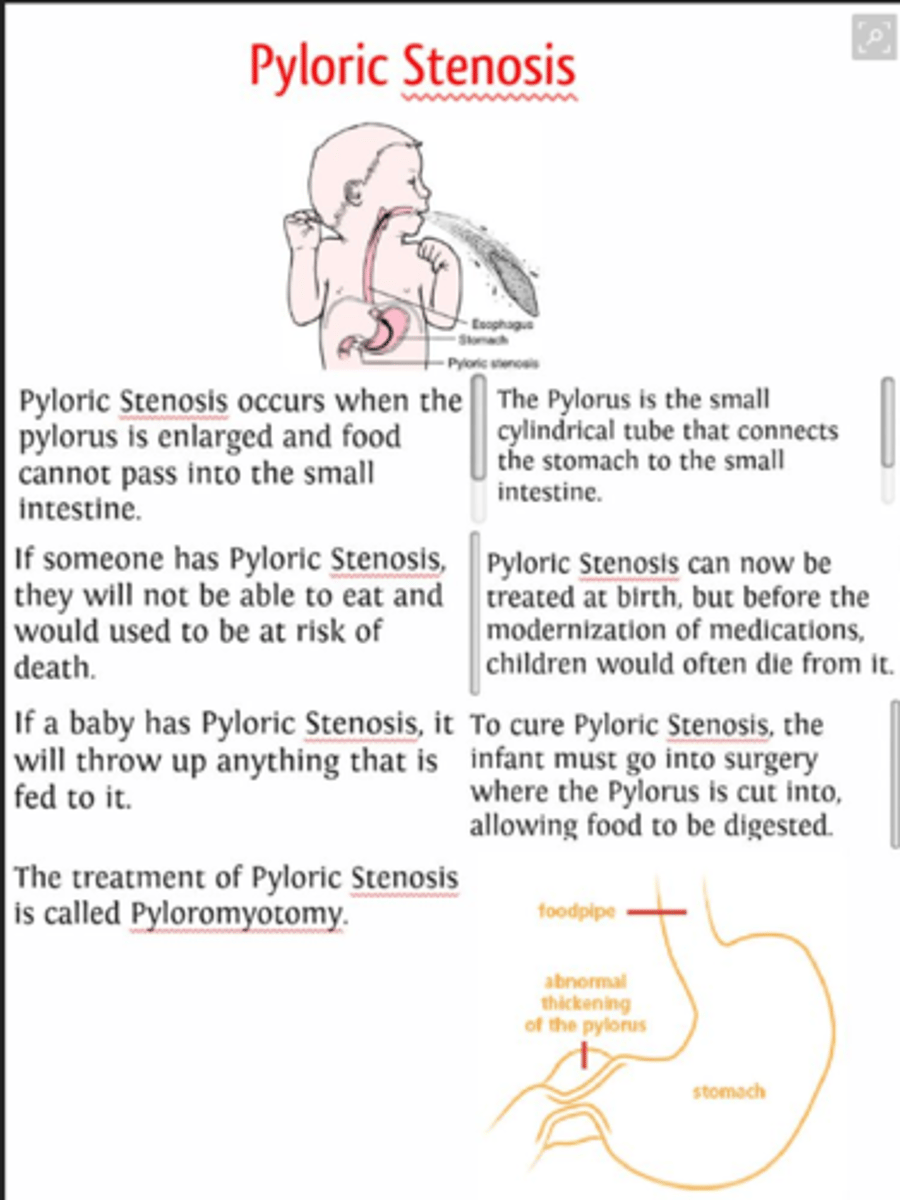
During an assessment of a newborn infant, the nurse recalls that pyloric stenosis would be exhibited by:
a. Projectile vomiting.
b. Hypoactive bowel activity.
c. Palpable olive-sized mass in the right lower quadrant.
d. Pronounced peristaltic waves crossing from right to left.
A
Significant peristalsis, together with projectile vomiting, in the newborn suggests pyloric stenosis. After feeding, pronounced peristaltic waves cross from left to right, leading to projectile vomiting. One can also palpate an olive-sized mass in the right upper quadrant.
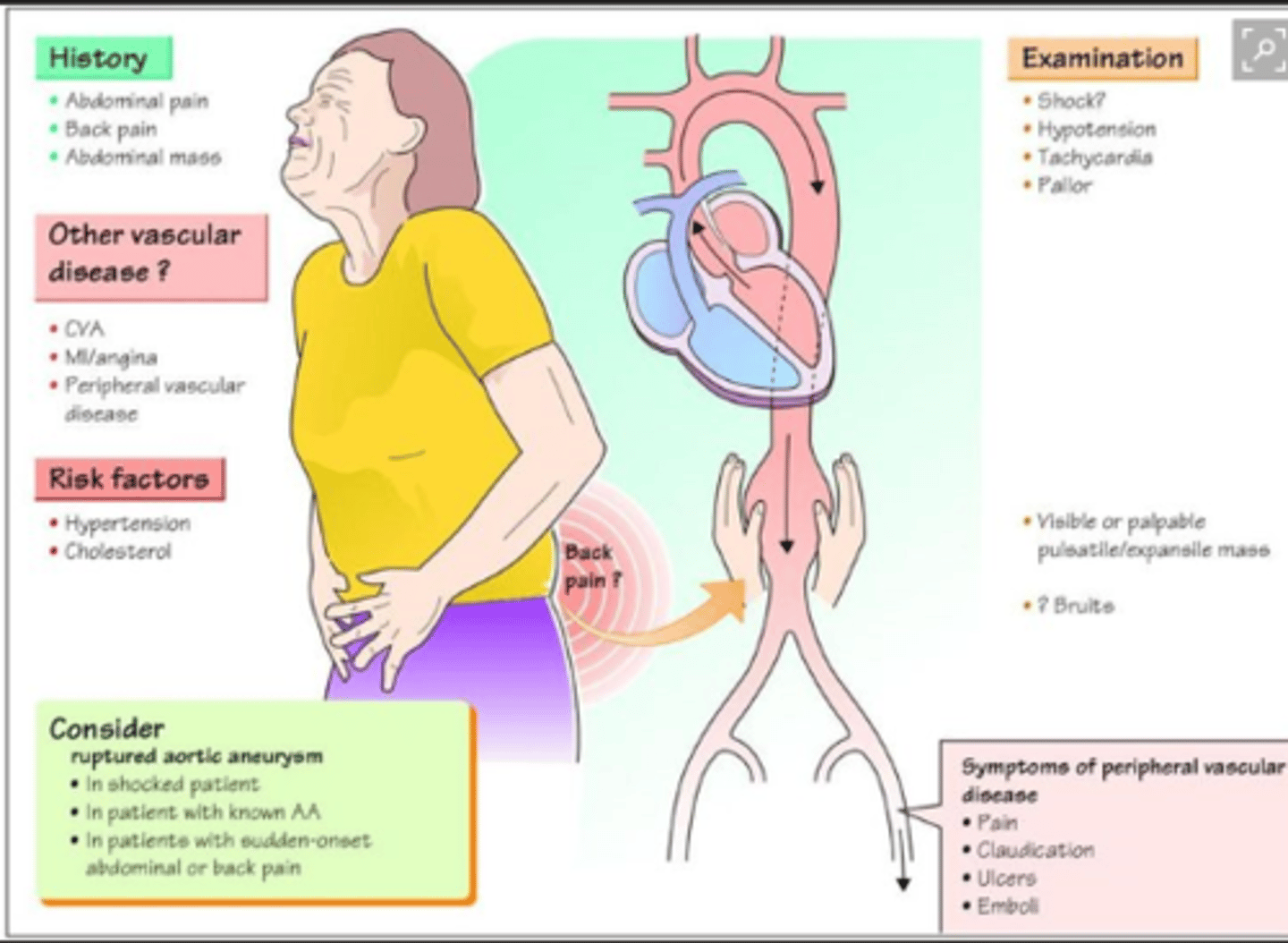
The nurse is reviewing the assessment of an aortic aneurysm. Which of these statements is true regarding an aortic aneurysm?
a. A bruit is absent.
b. Femoral pulses are increased.
c. A pulsating mass is usually present.
d. Most are located below the umbilicus.
C
Most aortic aneurysms are palpable during routine examination and feel like a pulsating mass. A bruit will be audible, and femoral pulses are present but decreased. Such aneurysms are located in the upper abdomen just to the left of midline.
During an abdominal assessment, the nurse is unable to hear bowel sounds in a patient's abdomen. Before reporting this finding as silent bowel sounds, the nurse should listen for at least:
a. 1 minute.
b. 5 minutes.
c. 10 minutes.
d. 2 minutes in each quadrant.
B
Absent bowel sounds are rare. The nurse must listen for 5 minutes before deciding that bowel sounds are completely absent.
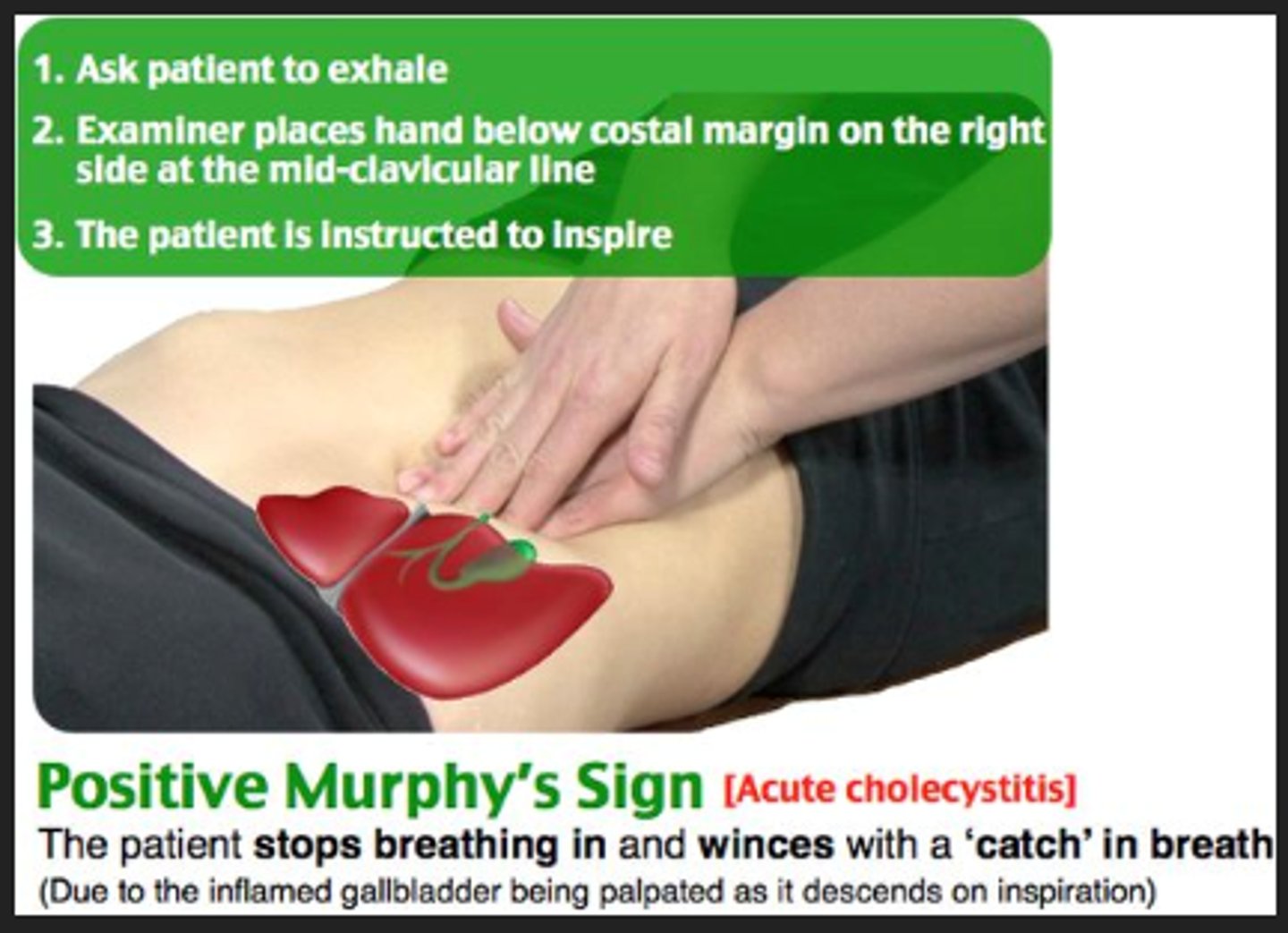
A patient is suspected of having inflammation of the gallbladder, or cholecystitis. The nurse should conduct which of these techniques to assess for this condition?
a. Obturator test
b. Test for Murphy sign
c. Assess for rebound tenderness
d. Iliopsoas muscle test
B
Normally, palpating the liver causes no pain. In a person with inflammation of the gallbladder, or cholecystitis, pain occurs as the descending liver pushes the inflamed gallbladder onto the examining hand during inspiration (Murphy test). The person feels sharp pain and abruptly stops midway during inspiration.
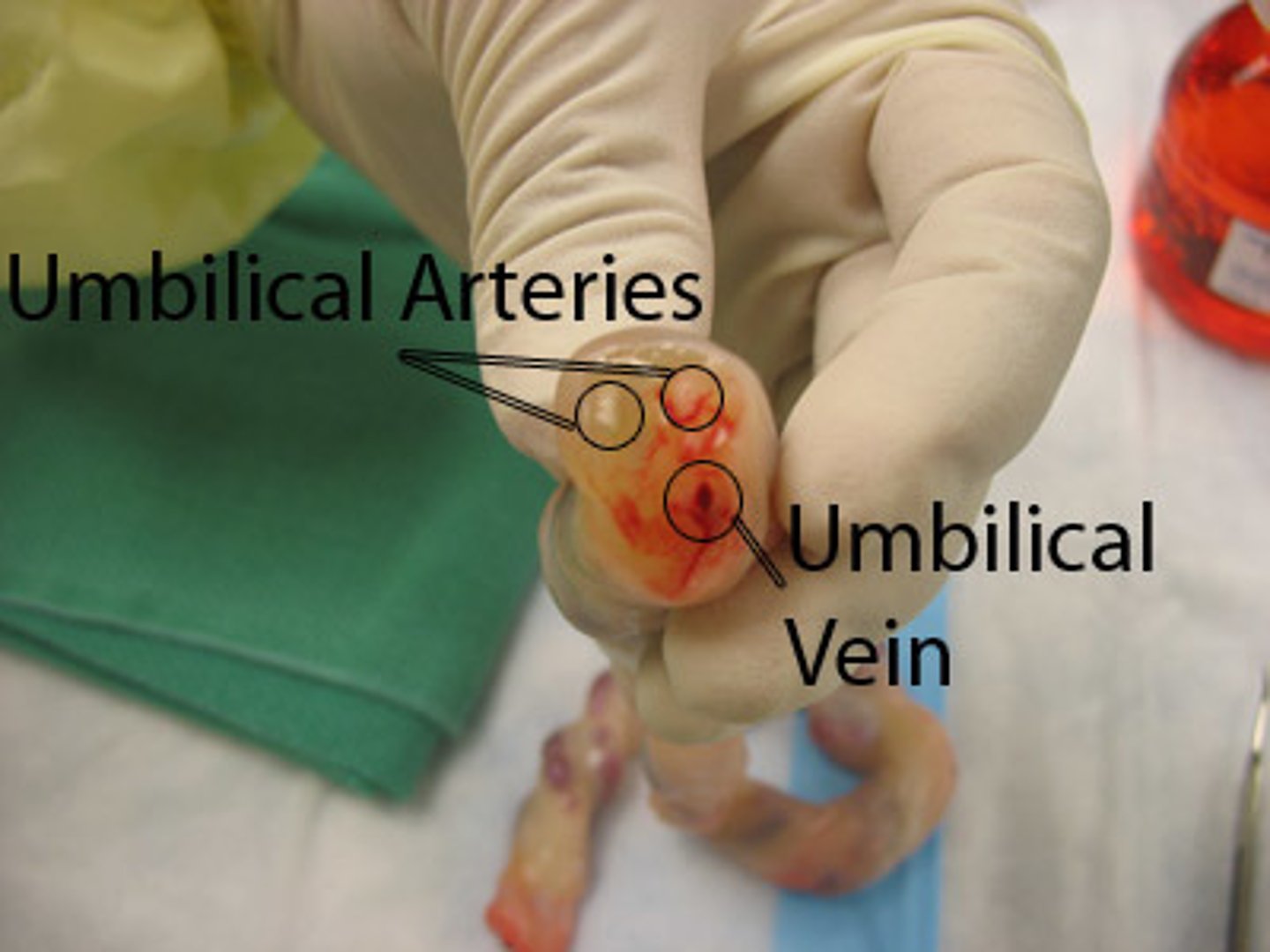
Just before going home, a new mother asks the nurse about the infant's umbilical cord. Which of these statements is correct?
a. "It should fall off in 10 to 14 days."
b. "It will soften before it falls off."
c. "It contains two veins and one artery."
d. "Skin will cover the area within 1 week."
A
At birth, the umbilical cord is white and contains two umbilical arteries and one vein inside the Wharton jelly. The umbilical stump dries within a week, hardens, and falls off in 10 to 14 days. Skin will cover the area in 3 to 4 weeks
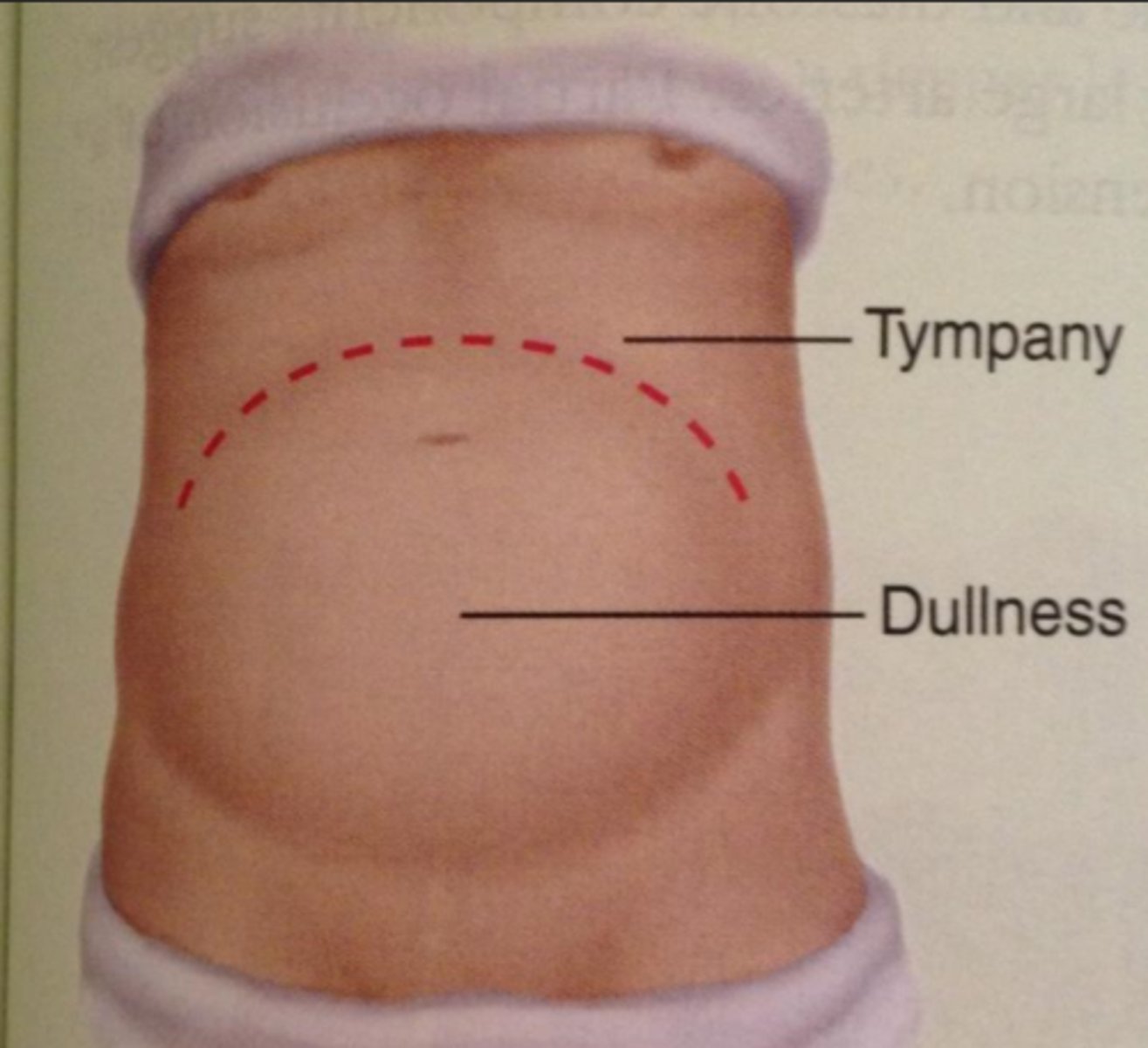
Which of these percussion findings would the nurse expect to find in a patient with a large amount of ascites?
a. Dullness across the abdomen
b. Flatness in the right upper quadrant
c. Hyperresonance in the left upper quadrant
d. Tympany in the right and left lower quadrants
A
A large amount of ascitic fluid produces a dull sound to percussion
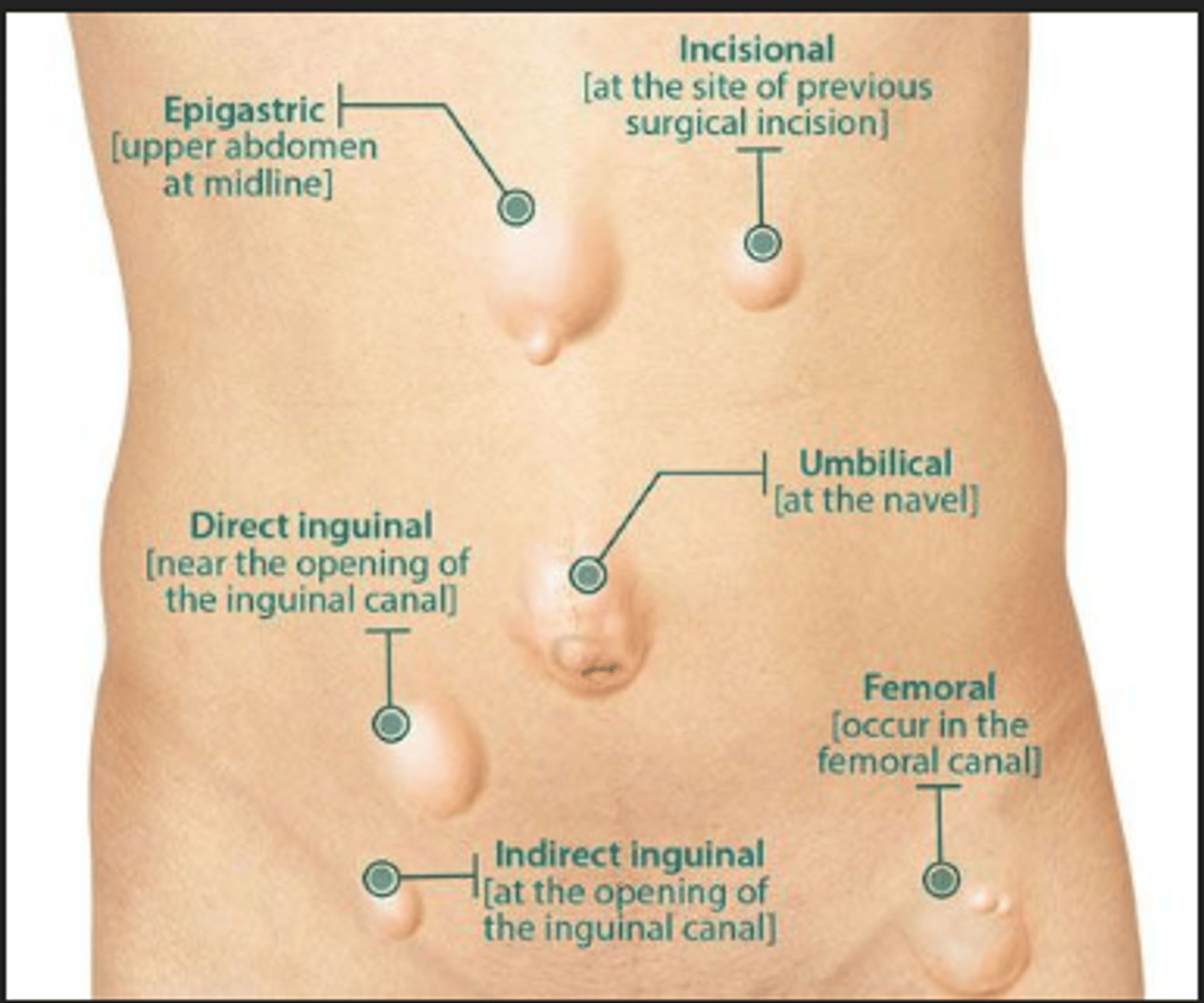
A 40-year-old man states that his physician told him that he has a hernia. He asks the nurse to explain what a hernia is. Which response by the nurse is appropriate?
a. "No need to worry. Most men your age develop hernias."
b. "A hernia is a loop of bowel protruding through a weak spot in the abdominal muscles."
c. "A hernia is the result of prenatal growth abnormalities that are just now causing problems."
d. "I'll have to have your physician explain this to you."
B
The nurse should explain that a hernia is a protrusion of the abdominal viscera through an abnormal opening in the muscle wall
A 45-year-old man is in the clinic for a physical examination. During the abdominal assessment, the nurse percusses the abdomen and notices an area of dullness above the right costal margin of approximately 11 cm. The nurse should:
a. Document the presence of hepatomegaly.
b. Ask additional health history questions regarding his alcohol intake.
c. Describe this dullness as indicative of an enlarged liver, and refer him to a physician.
d. Consider this finding as normal, and proceed with the examination.
D
A liver span of 10.5 cm is the mean for males and 7 cm for females. Men and taller individuals are at the upper end of this range. Women and shorter individuals are at the lower end of this range. A liver span of 11 cm is within normal limits for this individual.
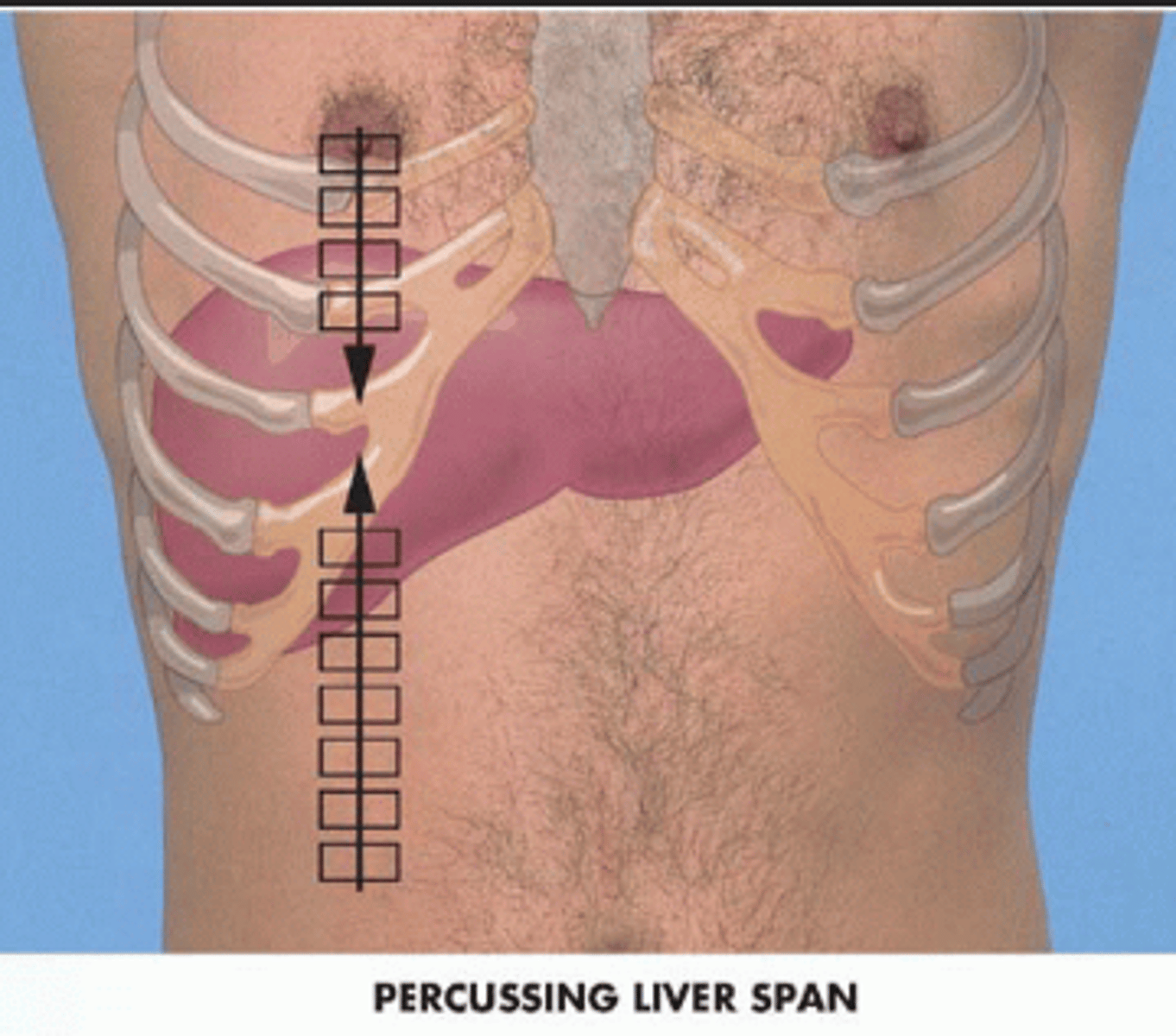
When palpating the abdomen of a 20-year-old patient, the nurse notices the presence of tenderness in the left upper quadrant with deep palpation. Which of these structures is most likely to be involved?
a. Spleen
b. Sigmoid colon
c. Appendix
d. Gallbladder
A
The spleen is located in the left upper quadrant of the abdomen. The gallbladder is in the right upper quadrant, the sigmoid colon is in the left lower quadrant, and the appendix is in the right lower quadrant
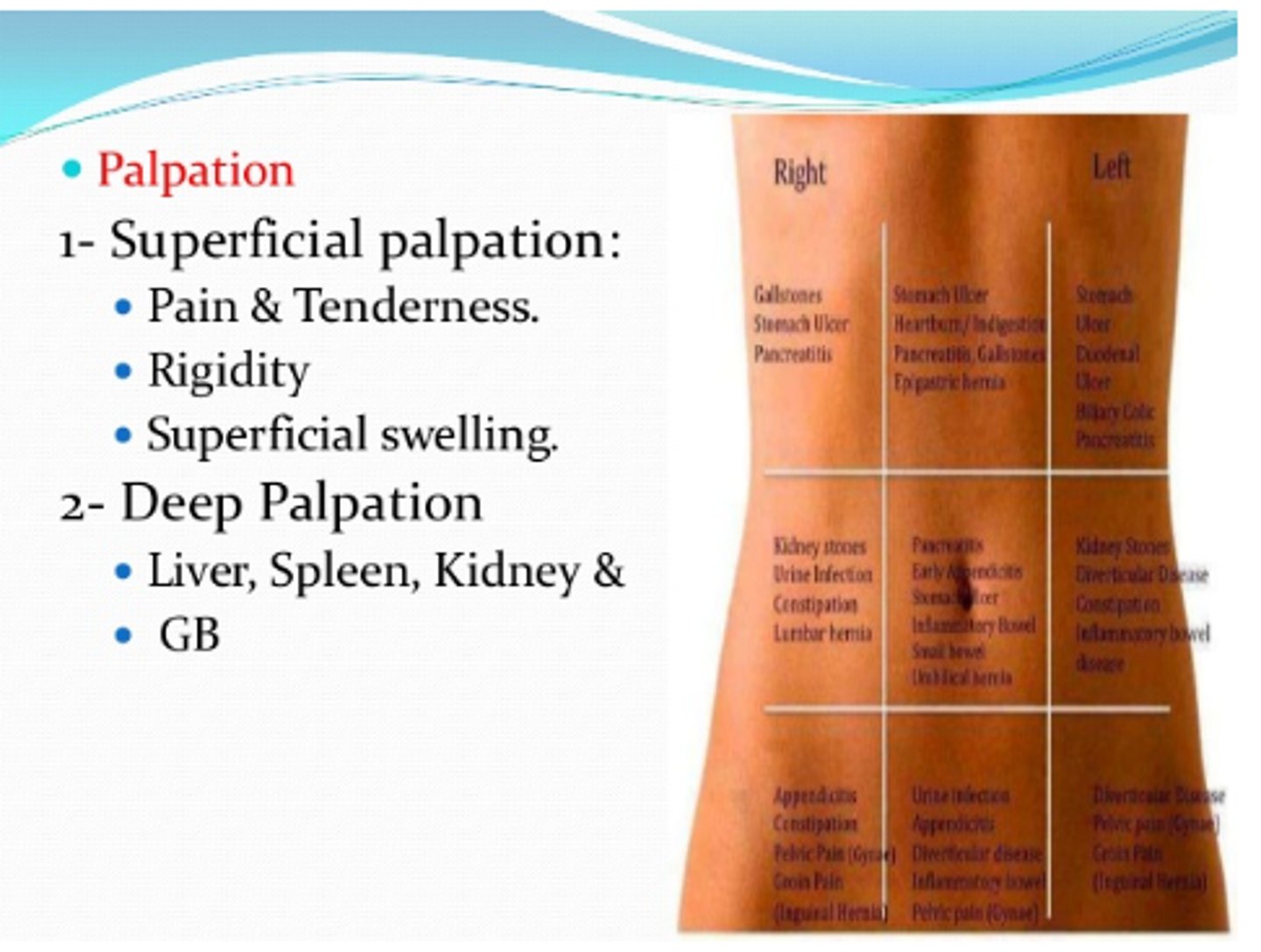
The nurse is reviewing statistics for lactose intolerance. In the United States, the incidence of lactose intolerance is higher in adults of which ethnic group?
a. Blacks
b. Hispanics
c. Whites
d. Asians
A
A recent study found estimates of lactose-intolerance prevalence as follows: 19.5% for Blacks, 10% for Hispanics, and 7.72% for Whites.
The nurse is assessing a patient for possible peptic ulcer disease. Which condition or history often causes this problem?
a. Hypertension
b. Streptococcal infections
c. Recurrent constipation with frequent laxative use
d. Frequent use of nonsteroidal antiinflammatory drugs
D
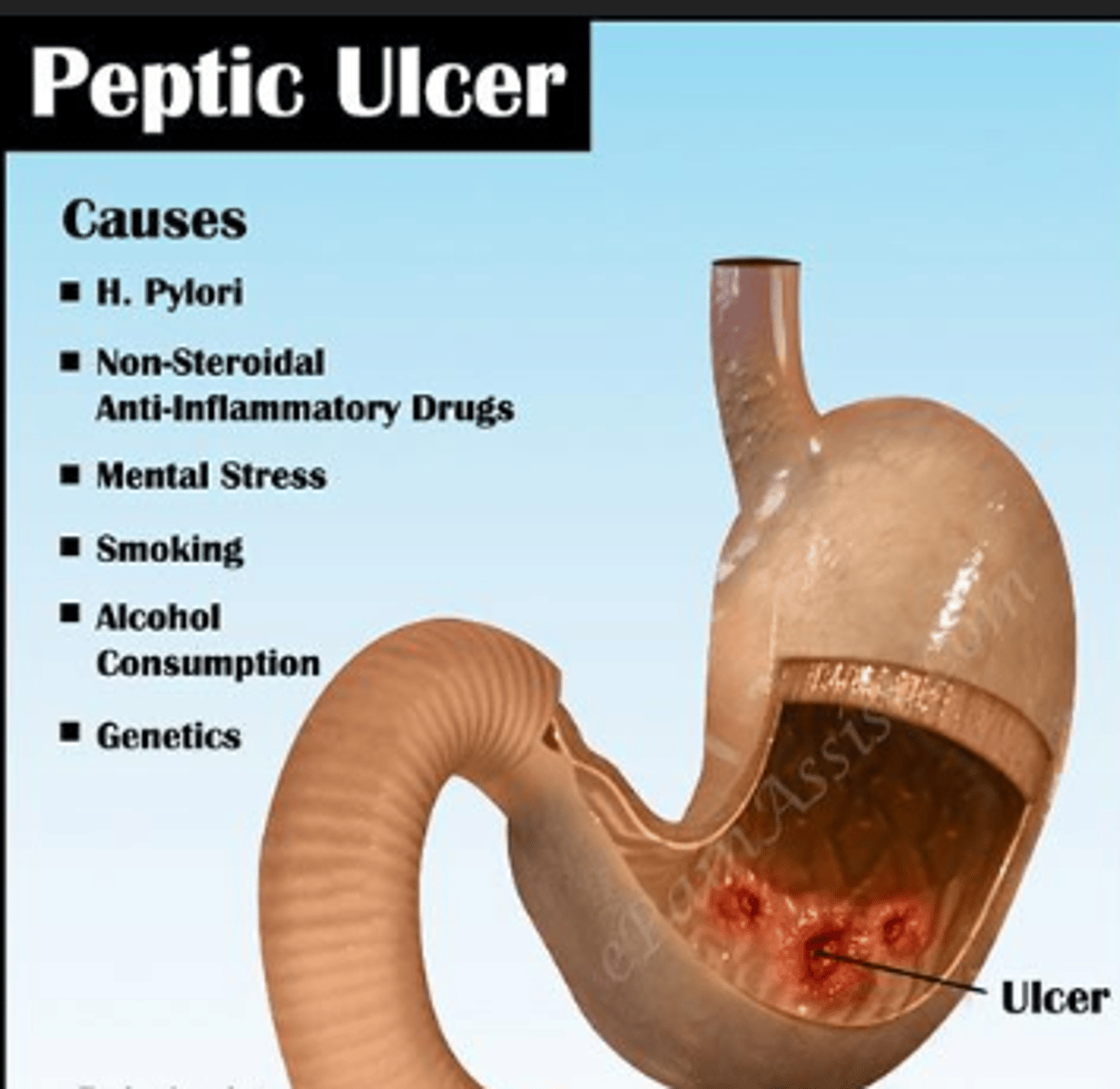
Peptic ulcer disease occurs with the frequent use of nonsteroidal antiinflammatory drugs, alcohol use, smoking, and Helicobacter pylori infection.
During reporting, the student nurse hears that a patient has hepatomegaly and recognizes that this term refers to:
a. Enlarged liver.
b. Enlarged spleen.
c. Distended bowel.
d. Excessive diarrhea.
A
A
The term hepatomegaly refers to an enlarged liver. The term splenomegaly refers to an enlarged spleen. The other responses are not correct.
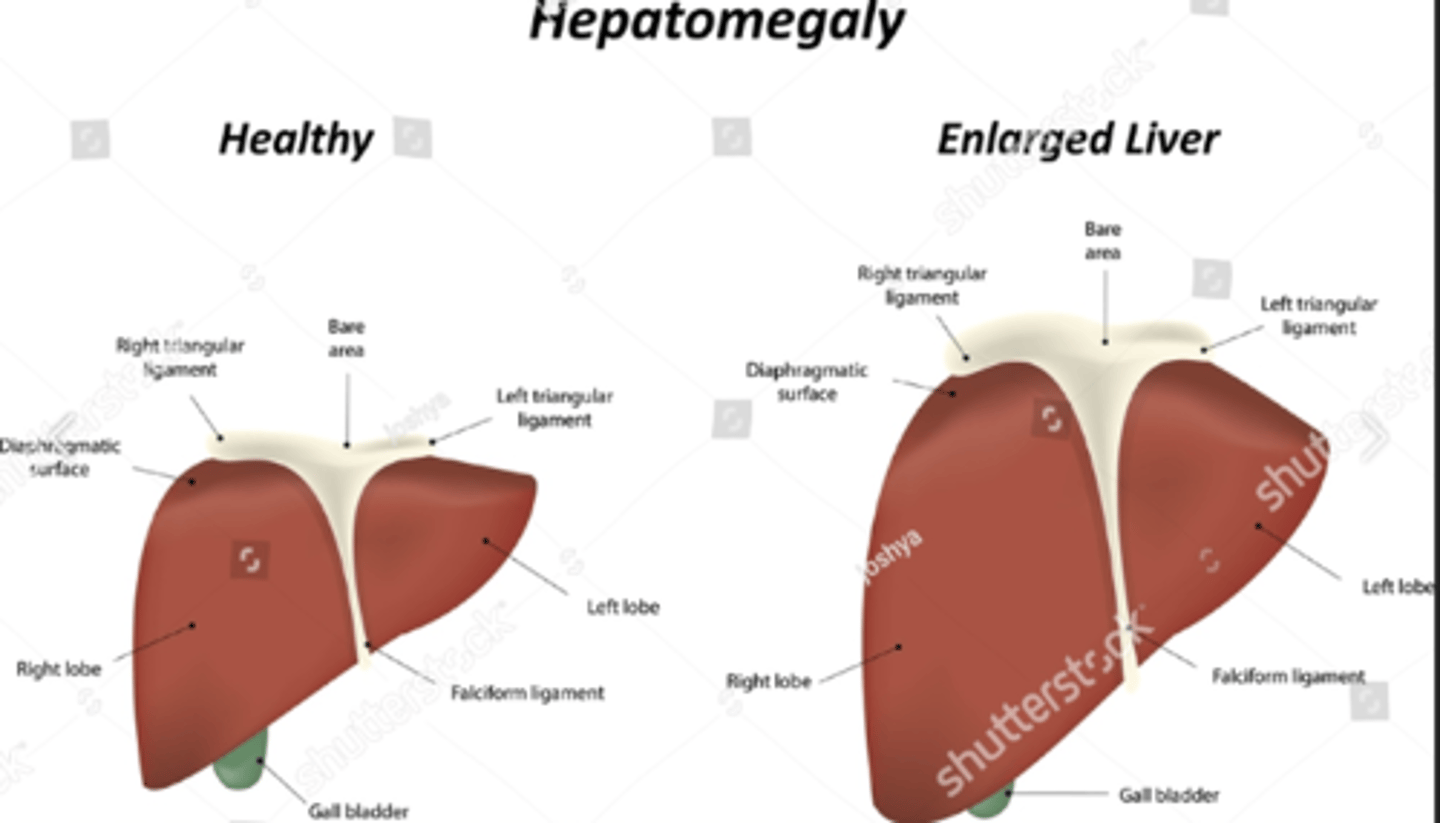
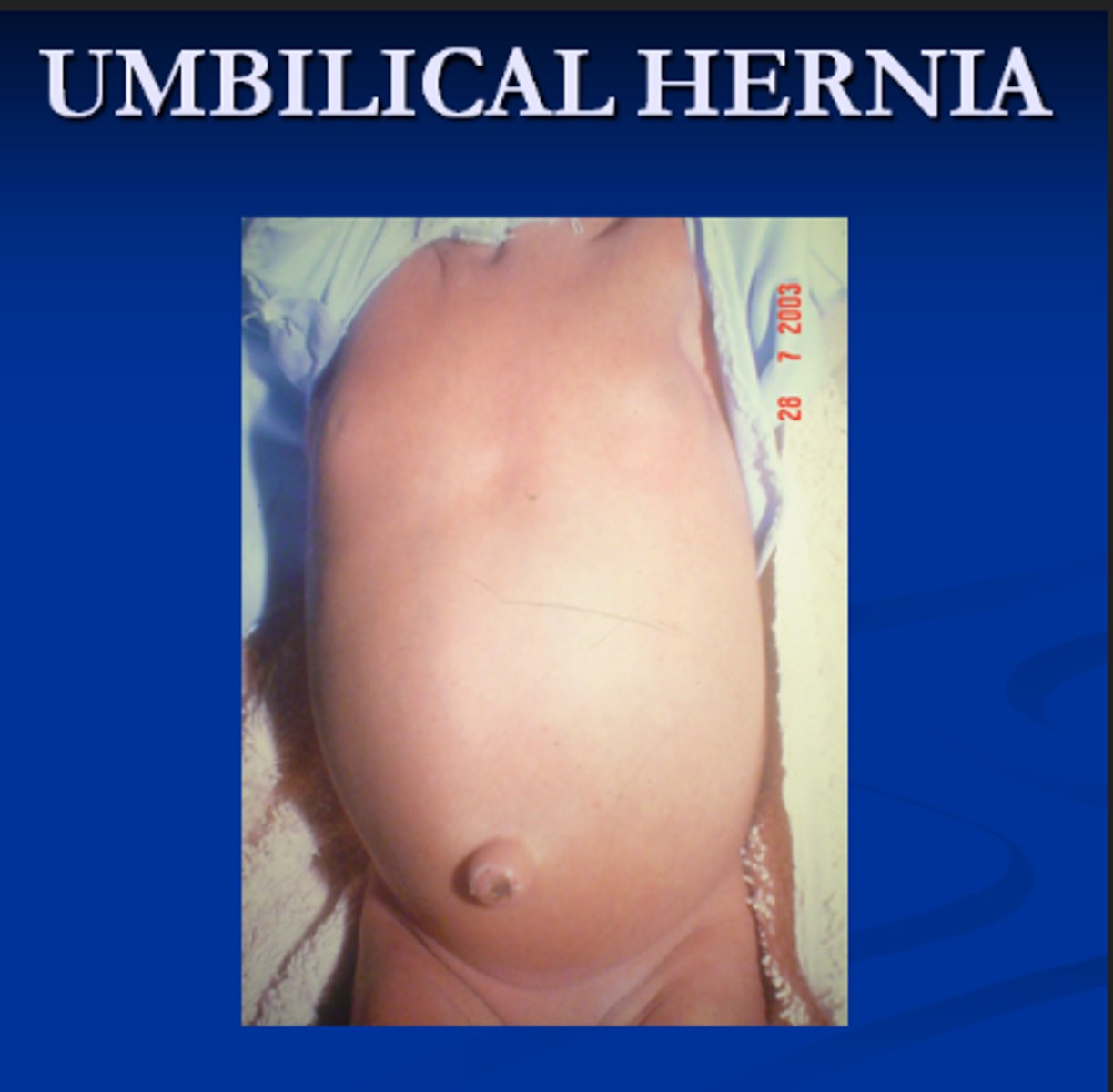
During an assessment, the nurse notices that a patient's umbilicus is enlarged and everted. It is positioned midline with no change in skin color. The nurse recognizes that the patient may have which condition?
a. Intra-abdominal bleeding
b. Constipation
c. Umbilical hernia
d. Abdominal tumor
C
The umbilicus is normally midline and inverted with no signs of discoloration. With an umbilical hernia, the mass is enlarged and everted. The other responses are incorrect
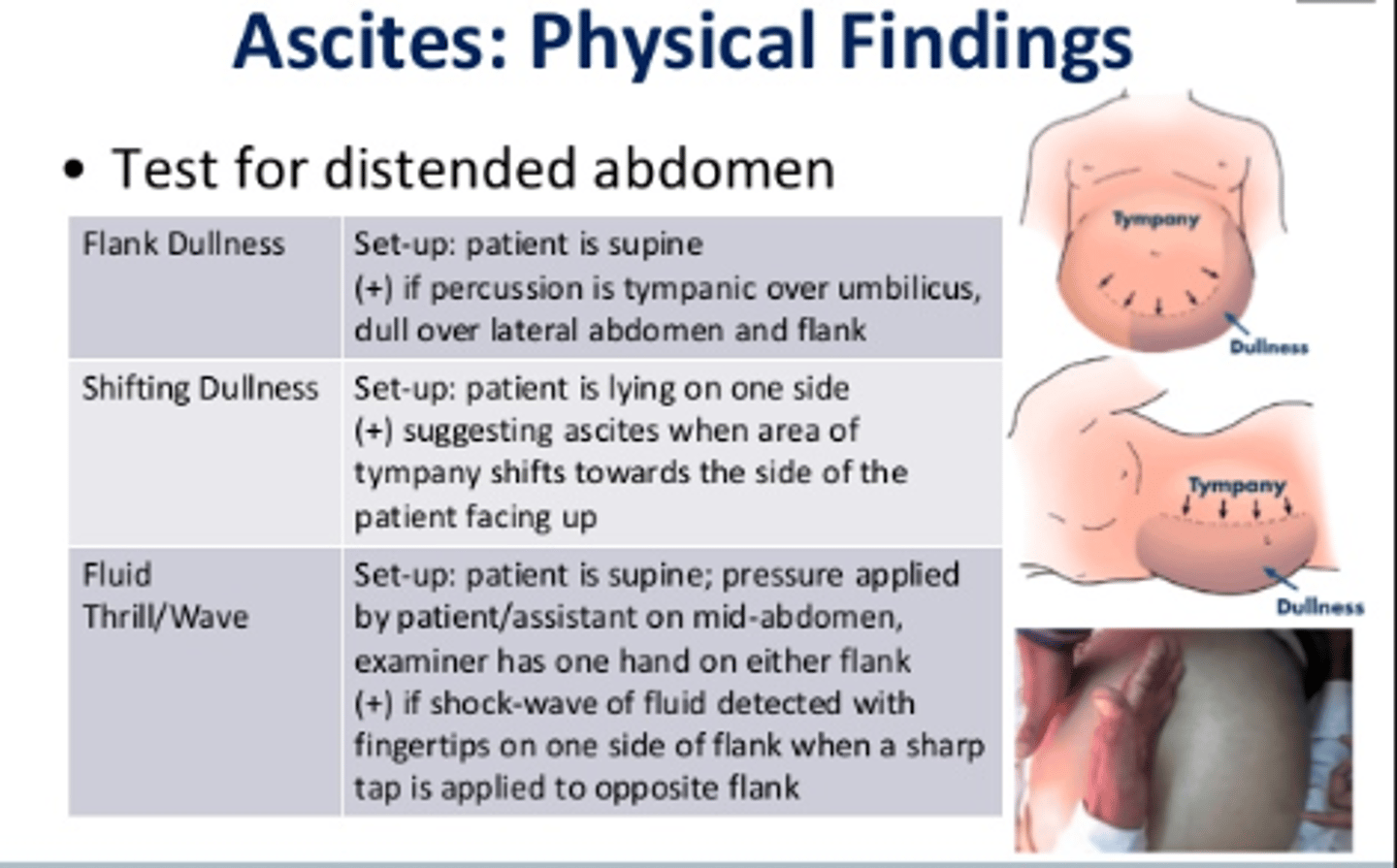
During an abdominal assessment, the nurse tests for a fluid wave. A positive fluid wave test occurs with:
a. Splenomegaly.
b. Distended bladder.
c. Constipation.
d. Ascites.
D
If ascites (fluid in the abdomen) is present, then the examiner will feel a fluid wave when assessing the abdomen. A fluid wave is not present with splenomegaly, a distended bladder, or constipation.
The nurse is preparing to examine a patient who has been complaining of right lower quadrant pain. Which technique is correct during the assessment?
The nurse should:
a. Examine the tender area first.
b. Examine the tender area last.
c. Avoid palpating the tender area.
d. Palpate the tender area first, and then auscultate for bowel sounds.
B
The nurse should save the examination of any identified tender areas until last. This method avoids pain and the resulting muscle rigidity that would obscure deep palpation later in the examination. Auscultation is performed before percussion and palpation because percussion and palpation can increase peristalsis, which would give a false interpretation of bowel sounds.
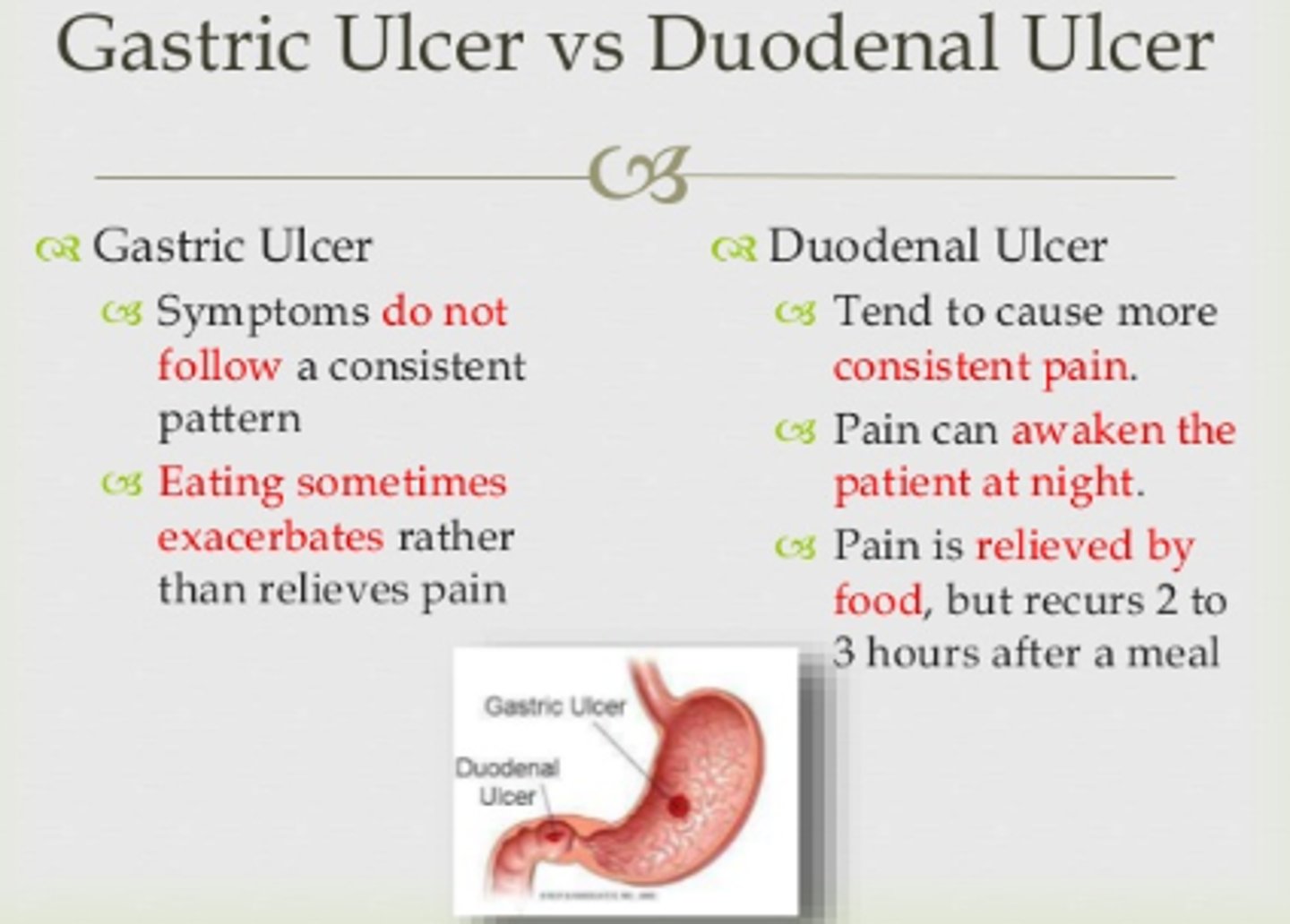
During a health history, the patient tells the nurse, "I have pain all the time in my stomach. It's worse 2 hours after I eat, but it gets better if I eat again!" Based on these symptoms, the nurse suspects that the patient has which condition?
a. Appendicitis
b. Gastric ulcer
c. Duodenal ulcer
d. Cholecystitis
C
Pain associated with duodenal ulcers occurs 2 to 3 hours after a meal; it may relieved by more food. Chronic pain associated with gastric ulcers usually occurs on an empty stomach. Severe, acute pain would occur with appendicitis and cholecystitis.
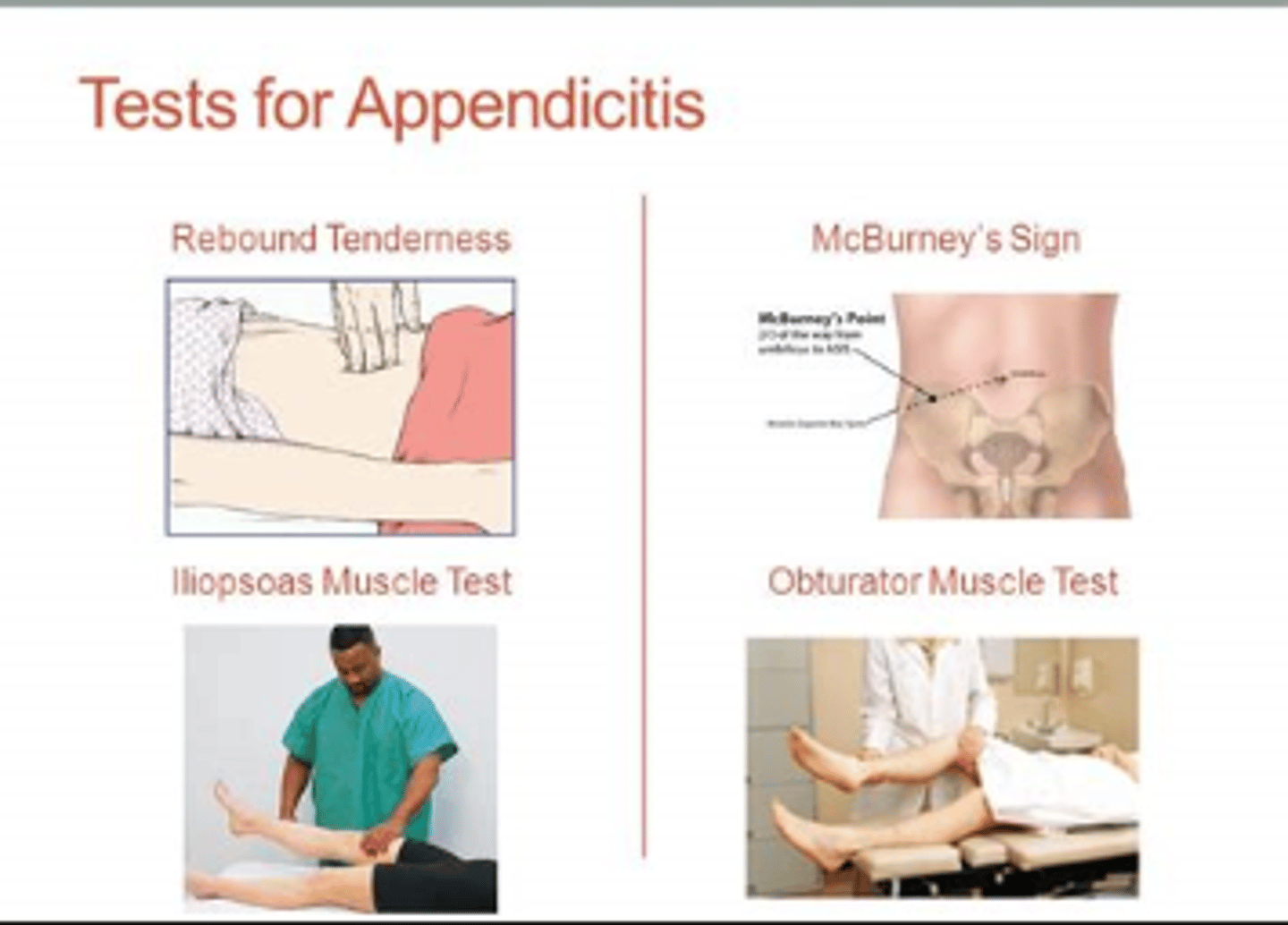
The nurse suspects that a patient has appendicitis. Which of these procedures are appropriate for use when assessing for appendicitis or a perforated appendix? Select all that apply.
a. Test for the Murphy sign
b. Test for the Blumberg sign
c. Test for shifting dullness
d. Perform the iliopsoas muscle test
e. Test for fluid wave
B, D
Testing for the Blumberg sign (rebound tenderness) and performing the iliopsoas muscle test should be used when assessing for appendicitis. The Murphy sign is used when assessing for an inflamed gallbladder or cholecystitis. Testing for a fluid wave and shifting dullness is performed when assessing for ascites.
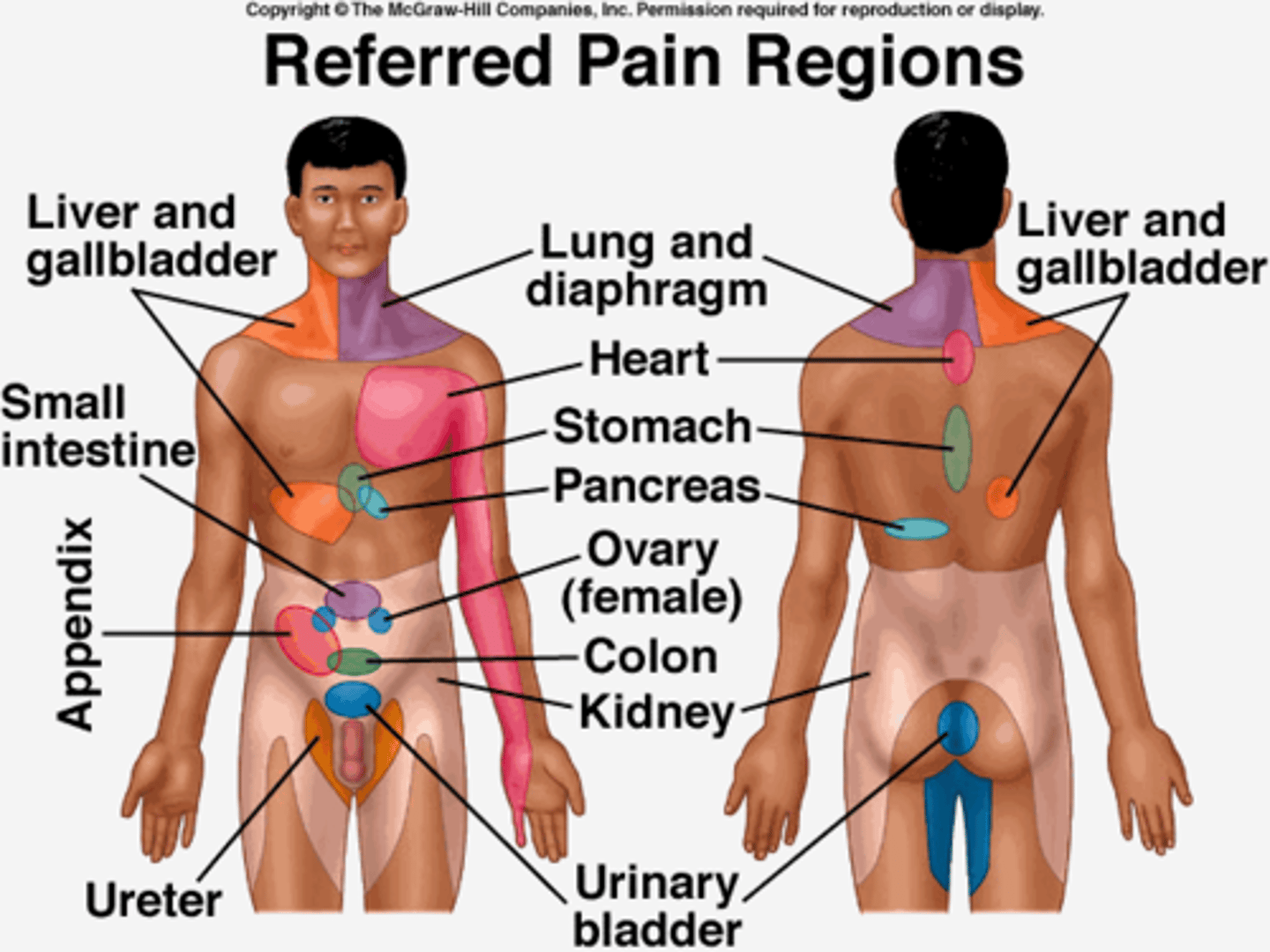
What are the areas for referred pain? Referred pain
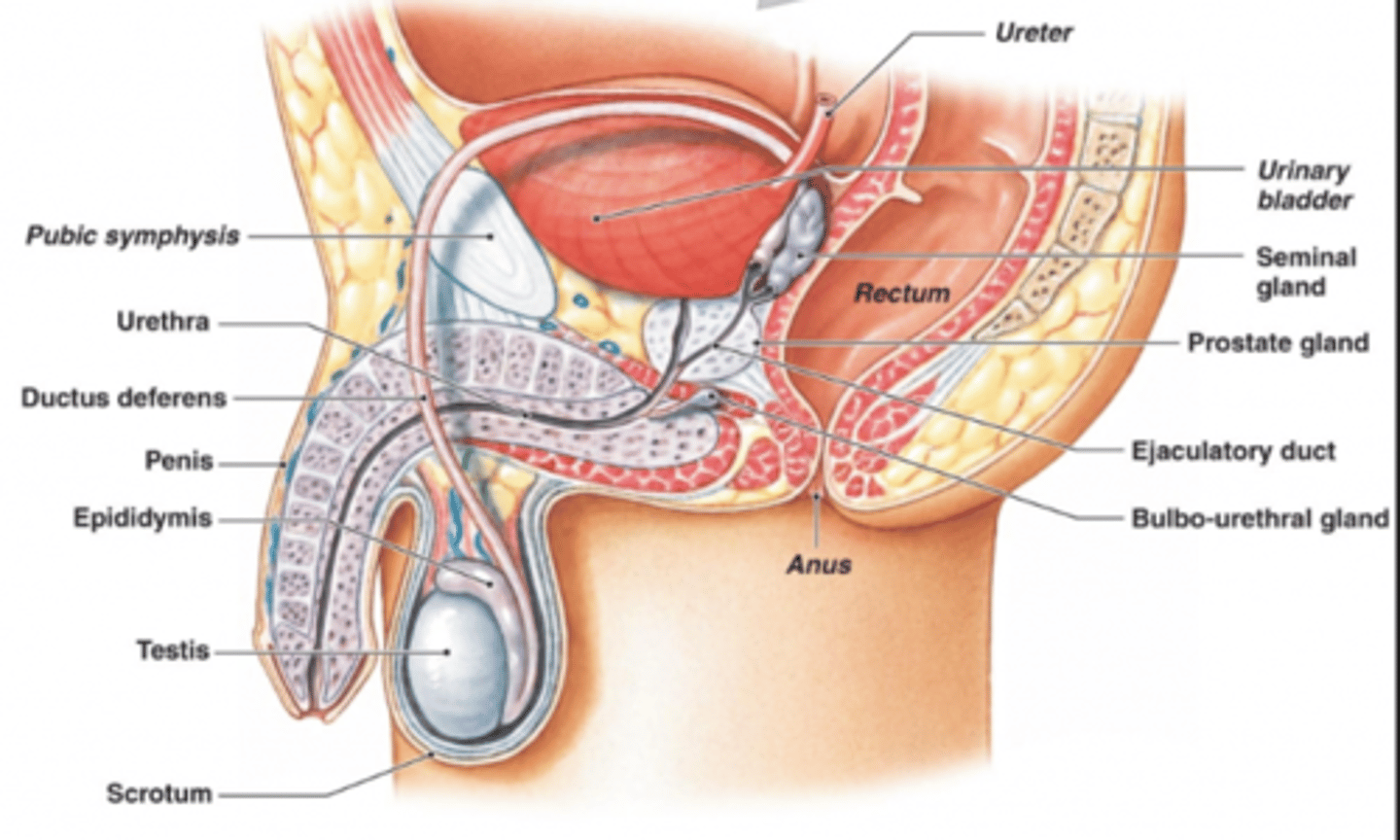
The external male genital structures include the:
a. Testis.
b. Scrotum.
c. Epididymis.
d. Vas deferens.
B
The external male genital structures include the penis and scrotum. The testis, epididymis, and vas deferens are internal structures.
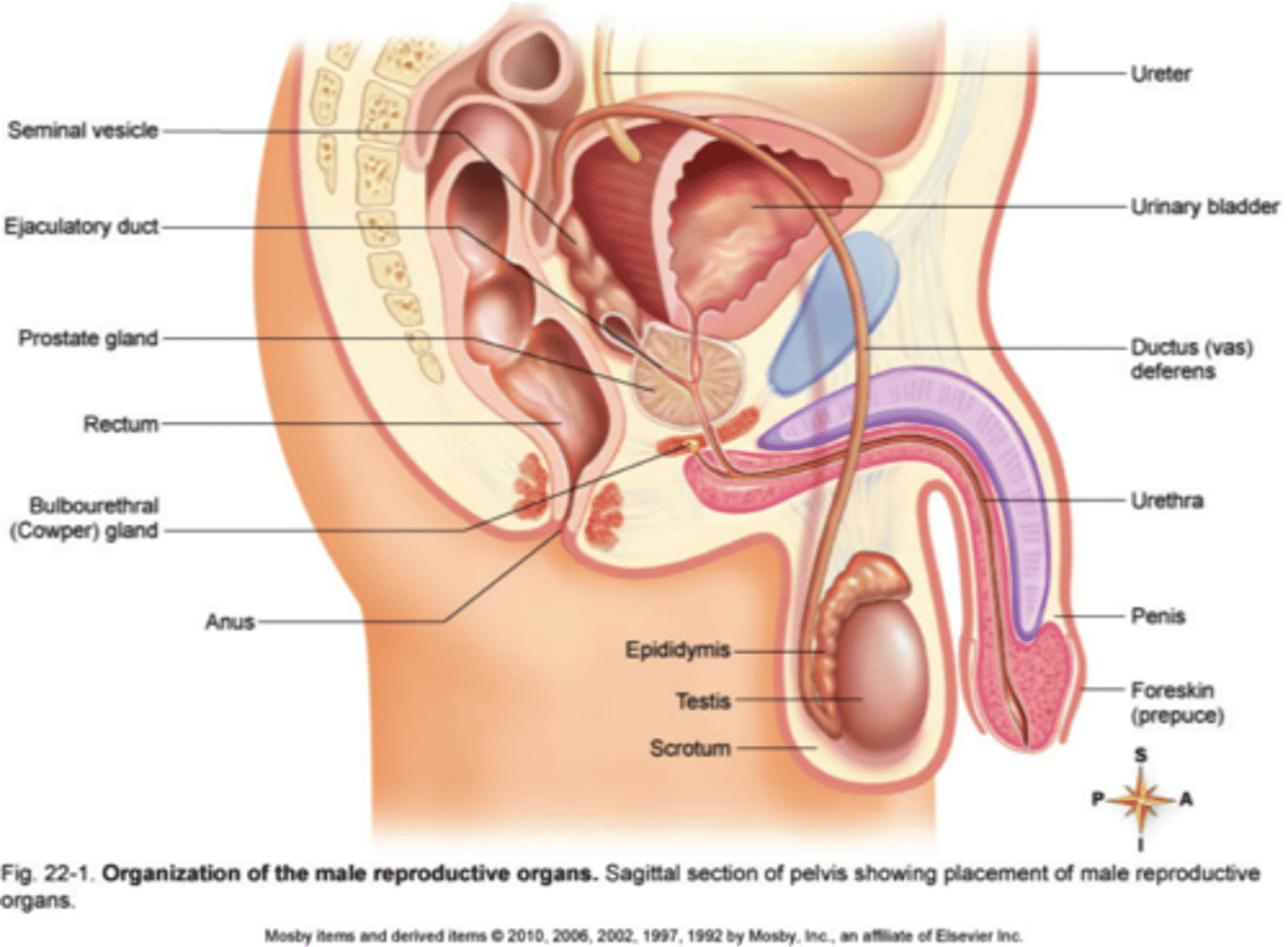
An accessory glandular structure for the male genital organs is the:
a. Testis.
b. Scrotum.
c. Prostate.
d. Vas deferens.
C
Glandular structures accessory to the male genital organs are the prostate, seminal vesicles, and bulbourethral glands.
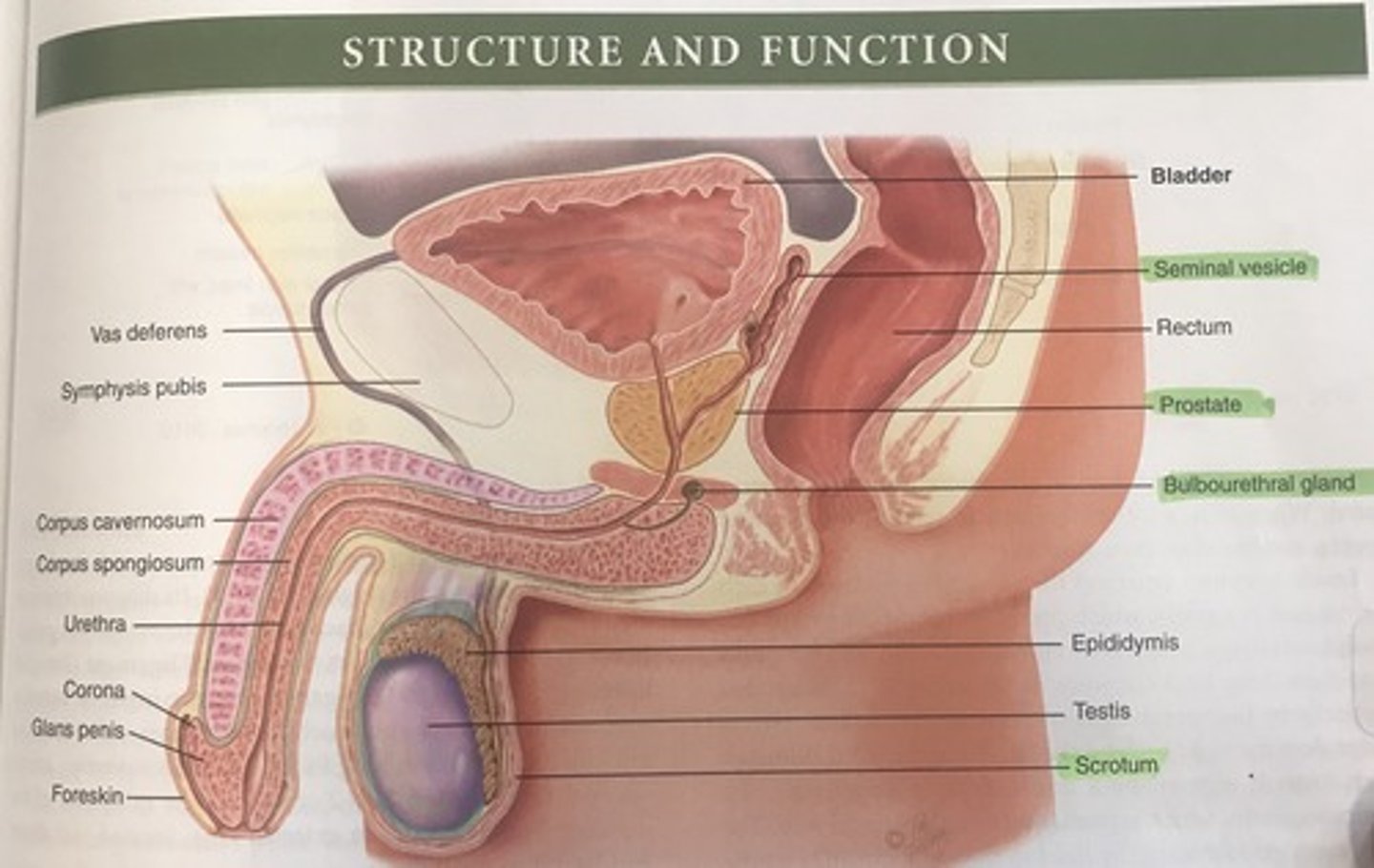
Which of these statements is true regarding the penis?
a. The urethral meatus is located on the ventral side of the penis.
b. The prepuce is the fold of foreskin covering the shaft of the penis.
c. The penis is made up of two cylindrical columns of erectile tissue.
d. The corpus spongiosum expands into a cone of erectile tissue called the glans.
D
At the distal end of the shaft, the corpus spongiosum expands into a cone of erectile tissue, the glans. The penis is made up of three cylindrical columns of erectile tissue. The skin that covers the glans of the penis is the prepuce. The urethral meatus forms at the tip of the glans.
When performing a genital examination on a 25-year-old man, the nurse notices deeply pigmented, wrinkled scrotal skin with large sebaceous follicles. On the basis of this information, the nurse would:
a. Squeeze the glans to check for the presence of discharge.
b. Consider this finding as normal, and proceed with the examination.
c. Assess the testicles for the presence of masses or painless lumps.
d. Obtain a more detailed history, focusing on any scrotal abnormalities the patient has noticed.
B
After adolescence, the scrotal skin is deeply pigmented and has large sebaceous follicles and appears corrugated.
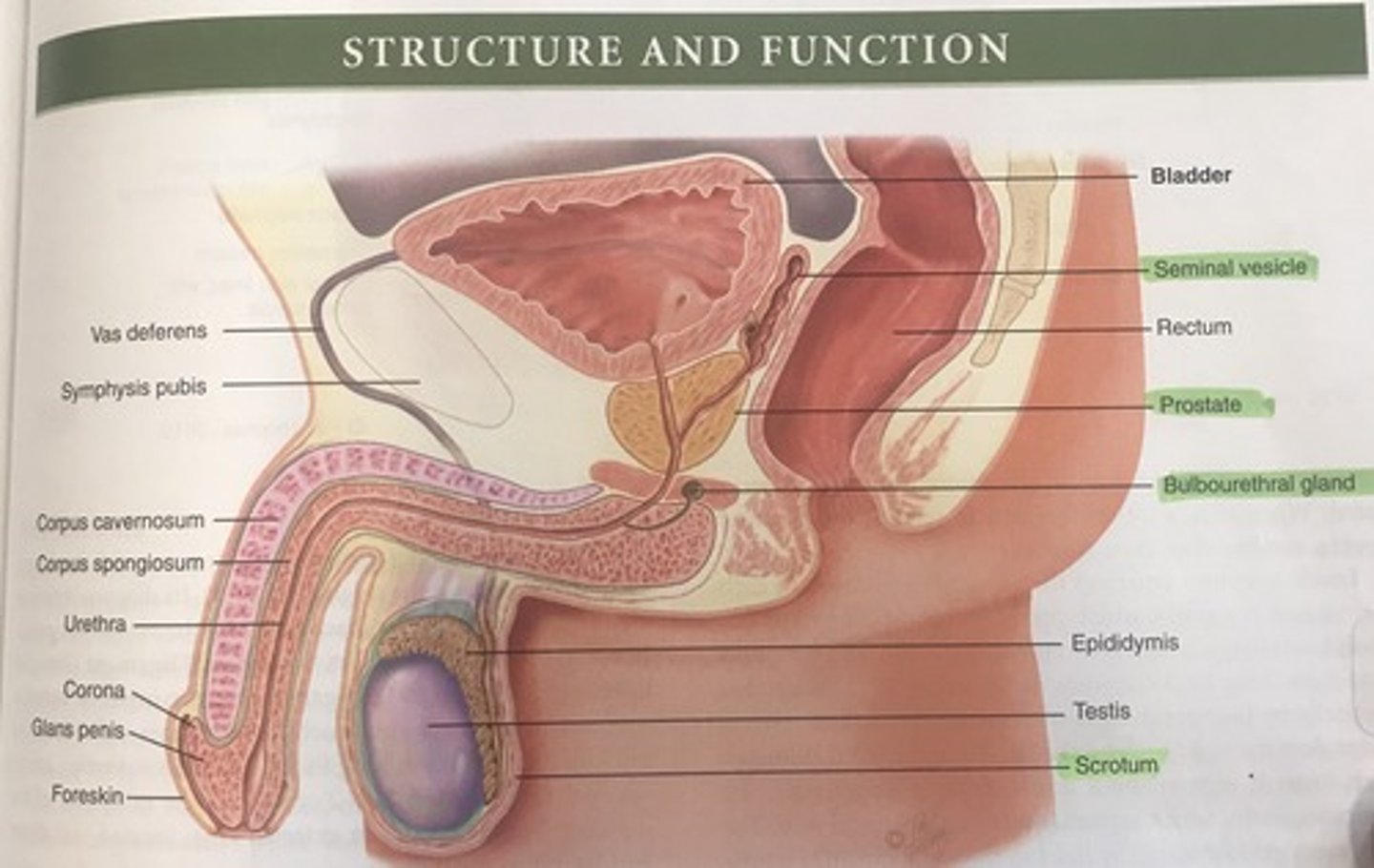
Which statement concerning the testes is true?
a. The lymphatic vessels of the testes drain into the abdominal lymph nodes.
b. The vas deferens is located along the inferior portion of each testis.
c. The right testis is lower than the left because the right spermatic cord is longer.
d. The cremaster muscle contracts in response to cold and draws the testicles closer to the body.
D
When it is cold, the cremaster muscle contracts, which raises the scrotal sac and brings the testes closer to the body to absorb heat necessary for sperm viability. The lymphatic vessels of the testes drain into the inguinal lymph nodes. The vas deferens is located along the upper portion of each testis. The left testis is lower than the right because the left spermatic cord is longer.
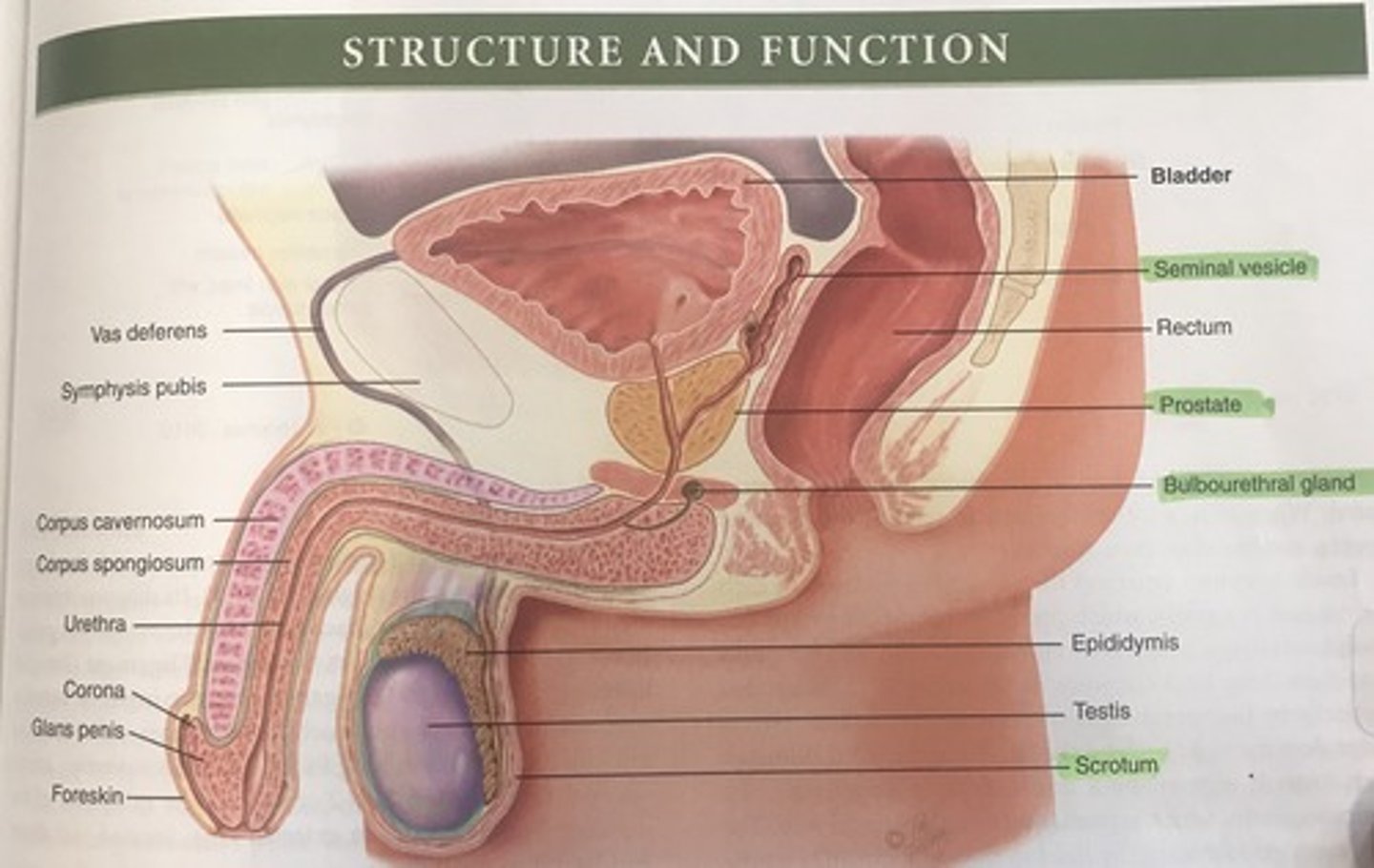
A male patient with possible fertility problems asks the nurse where sperm is produced. The nurse knows that sperm production occurs in the:
a. Testes.
b. Prostate.
c. Epididymis.
d. Vas deferens.
A
Sperm production occurs in the testes, not in the other structures listed.
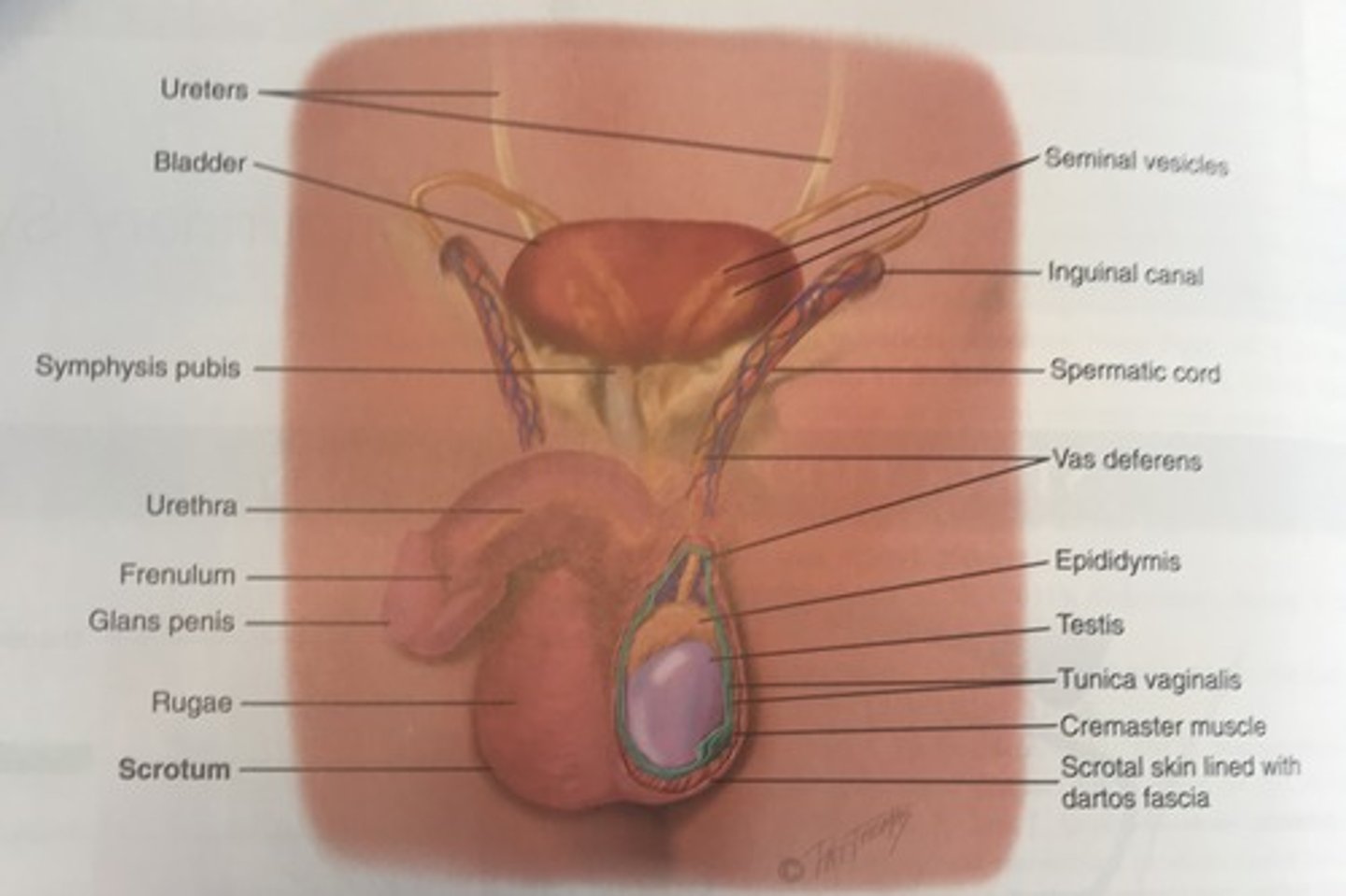
A 62-year-old man states that his physician told him that he has an "inguinal hernia." He asks the nurse to explain what a hernia is. The nurse should:
a. Tell him not to worry and that most men his age develop hernias.
b. Explain that a hernia is often the result of prenatal growth abnormalities.
c. Refer him to his physician for additional consultation because the physician made the initial diagnosis.
d. Explain that a hernia is a loop of bowel protruding through a weak spot in the abdominal muscles.
D
A hernia is a loop of bowel protruding through a weak spot in the musculature. The other options are not correct responses to the patient's question.
The mother of a 10-year-old boy asks the nurse to discuss the recognition of puberty. The nurse should reply by saying:
a. "Puberty usually begins around 15 years of age."
b. "The first sign of puberty is an enlargement of the testes."
c. "The penis size does not increase until about 16 years of age."
d. "The development of pubic hair precedes testicular or penis enlargement."
B
Puberty begins sometime between age 9 for African Americans and age 10 for Caucasians and Hispanics. The first sign is an enlargement of the testes. Pubic hair appears next, and then penis size increases
During an examination of an aging man, the nurse recognizes that normal changes to expect would be:
a. Enlarged scrotal sac.
b. Increased pubic hair.
c. Decreased penis size.
d. Increased rugae over the scrotum.
C
In the aging man, the amount of pubic hair decreases, the penis size decreases, and the rugae over the scrotal sac decreases. The scrotal sac does not enlarge.
An older man is concerned about his sexual performance. The nurse knows that in the absence of disease, a withdrawal from sexual activity later in life may be attributable to:
a. Side effects of medications.
b. Decreased libido with aging.
c. Decreased sperm production.
d. Decreased pleasure from sexual intercourse.
A
In the absence of disease, a withdrawal from sexual activity may be attributable to side effects of medications such as antihypertensives, antidepressants, sedatives, psychotropics, antispasmotics, tranquilizers or narcotics, and estrogens. The other options are not correct.
A 59-year-old patient has been diagnosed with prostatitis and is being seen at the clinic for complaints of burning and pain during urination. He is experiencing:
a. Dysuria.
b. Nocturia.
c. Polyuria.
d. Hematuria.
A
Dysuria (burning with urination) is common with acute cystitis, prostatitis, and urethritis. Nocturia is voiding during the night. Polyuria is voiding in excessive quantities. Hematuria is voiding with blood in the urine.
A 45-year-old mother of two children is seen at the clinic for complaints of "losing my urine when I sneeze." The nurse documents that she is experiencing:
a. Urinary frequency.
b. Enuresis.
c. Stress incontinence.
d. Urge incontinence.
C
Stress incontinence is involuntary urine loss with physical strain, sneezing, or coughing that occurs as a result to weakness of the pelvic floor. Urinary frequency is urinating more times than usual (more than five to six times per day). Enuresis is involuntary passage of urine at night after age 5 to 6 years (bed wetting). Urge incontinence is involuntary urine loss from overactive detrusor muscle in the bladder. It contracts, causing an urgent need to void.
When the nurse is conducting sexual history from a male adolescent, which statement would be most appropriate to use at the beginning of the interview?
a. "Do you use condoms?"
b. "You don't masturbate, do you?"
c. "Have you had sex in the last 6 months?"
d. "Often adolescents your age have questions about sexual activity."
D
The interview should begin with a permission statement, which conveys that it is normal and acceptable to think or feel a certain way. Sounding judgmental should be avoided.
Which of these statements is most appropriate when the nurse is obtaining a genitourinary history from an older man?
a. "Do you need to get up at night to urinate?"
b. "Do you experience nocturnal emissions, or 'wet dreams'?"
c. "Do you know how to perform a testicular self-examination?"
d. "Has anyone ever touched your genitals when you did not want them to?"
A
The older male patient should be asked about the presence of nocturia. Awaking at night to urinate may be attributable to a diuretic medication, fluid retention from mild heart failure or varicose veins, or fluid ingestion 3 hours before bedtime, especially coffee and alcohol. The other questions are more appropriate for younger men.
When the nurse is performing a genital examination on a male patient, the patient has an erection. The nurse's most appropriate action or response is to:
a. Ask the patient if he would like someone else to examine him.
b. Continue with the examination as though nothing has happened.
c. Stop the examination, leave the room while stating that the examination will resume at a later time.
d. Reassure the patient that this is a normal response and continue with the examination.
D
When the male patient has an erection, the nurse should reassure the patient that this is a normal physiologic response to touch and proceed with the rest of the examination. The other responses are not correct and may be perceived as judgmental.
The nurse is examining the glans and knows which finding is normal for this area?
a. The meatus may have a slight discharge when the glans is compressed.
b. Hair is without pest inhabitants.
c. The skin is wrinkled and without lesions.
d. Smegma may be present under the foreskin of an uncircumcised male.
D
The glans looks smooth and without lesions and does not have hair. The meatus should not have any discharge when the glans is compressed. Some cheesy smegma may have collected under the foreskin of an uncircumcised male.
When performing a genitourinary assessment, the nurse notices that the urethral meatus is ventrally positioned. This finding is:
a. Called hypospadias.
b. A result of phimosis.
c. Probably due to a stricture.
d. Often associated with aging.
A
Normally, the urethral meatus is positioned just about centrally. Hypospadias is the ventral location of the urethral meatus. The position of the meatus does not change with aging. Phimosis is the inability to retract the foreskin. A stricture is a narrow opening of the meatus.
The nurse is performing a genital examination on a male patient and notices urethral drainage. When collecting urethral discharge for microscopic examination and culture, the nurse should:
a. Ask the patient to urinate into a sterile cup.
b. Ask the patient to obtain a specimen of semen.
c. Insert a cotton-tipped applicator into the urethra.
d. Compress the glans between the examiner's thumb and forefinger, and collect any discharge.
D
If urethral discharge is noticed, then the examiner should collect a smear for microscopic examination and culture by compressing the glans anteroposteriorly between the thumb and forefinger. The other options are not correct actions
When assessing the scrotum of a male patient, the nurse notices the presence of multiple firm, nontender, yellow 1-cm nodules. The nurse knows that these nodules are most likely:
a. From urethritis.
b. Sebaceous cysts.
c. Subcutaneous plaques.
d. From an inflammation of the epididymis.
B
Sebaceous cysts are commonly found on the scrotum. These yellowish 1-cm nodules are firm, nontender, and often multiple. The other options are not correct.
When performing a scrotal assessment, the nurse notices that the scrotal contents show a red glow with transillumination. On the basis of this finding the nurse would:
a. Assess the patient for the presence of a hernia.
b. Suspect the presence of serous fluid in the scrotum.
c. Consider this finding normal, and proceed with the examination.
d. Refer the patient for evaluation of a mass in the scrotum.
B
Normal scrotal contents do not allow light to pass through the scrotum. However, serous fluid does transilluminate and shows as a red glow. Neither a mass nor a hernia would transilluminate
When the nurse is performing a genital examination on a male patient, which action is correct?
a. Auscultating for the presence of a bruit over the scrotum
b. Palpating for the vertical chain of lymph nodes along the groin, inferior to the inguinal ligament
c. Palpating the inguinal canal only if a bulge is present in the inguinal region during inspection
d. Having the patient shift his weight onto the left (unexamined) leg when palpating for a hernia on the right side
D
When palpating for the presence of a hernia on the right side, the male patient is asked to shift his weight onto the left (unexamined) leg. Auscultating for a bruit over the scrotum is not appropriate. When palpating for lymph nodes, the horizontal chain is palpated. The inguinal canal should be palpated whether a bulge is present or not.
The nurse is aware of which statement to be true regarding the incidence of testicular cancer?
a. Testicular cancer is the most common cancer in men aged 30 to 50 years.
b. The early symptoms of testicular cancer are pain and induration.
c. Men with a history of cryptorchidism are at the greatest risk for the development of testicular cancer.
d. The cure rate for testicular cancer is low.
C
Men with undescended testicles (cryptorchidism) are at the greatest risk for the development of testicular cancer. The overall incidence of testicular cancer is rare. Although testicular cancer has no early symptoms, when detected early and treated before metastasizing, the cure rate is almost 100%.
The nurse is describing how to perform a testicular self-examination to a patient. Which statement is most appropriate?
a. "A good time to examine your testicles is just before you take a shower."
b. "If you notice an enlarged testicle or a painless lump, call your health care provider."
c. "The testicle is egg shaped and movable. It feels firm and has a lumpy consistency."
d. "Perform a testicular examination at least once a week to detect the early stages of testicular cancer."
B
If the patient notices a firm painless lump, a hard area, or an overall enlarged testicle, then he should call his health care provider for further evaluation. The testicle normally feels rubbery with a smooth surface. A good time to examine the testicles is during the shower or bath, when one's hands are warm and soapy and the scrotum is warm. Testicular self-examination should be performed once a month
A 2-month-old uncircumcised infant has been brought to the clinic for a well-baby checkup. How would the nurse proceed with the genital examination?
a. Eliciting the cremasteric reflex is recommended.
b. The glans is assessed for redness or lesions.
c. Retracting the foreskin should be avoided until the infant is 3 months old.
d. Any dirt or smegma that has collected under the foreskin should be noted.
C
If uncircumcised, then the foreskin is normally tight during the first 3 months and should not be retracted because of the risk of tearing the membrane attaching the foreskin to the shaft. The other options are not correct.
A 2-year-old boy has been diagnosed with physiologic cryptorchidism. Considering this diagnosis, during assessment the nurse will most likely observe:
a. Testes that are hard and painful to palpation.
b. Atrophic scrotum and a bilateral absence of the testis.
c. Absence of the testis in the scrotum, but the testis can be milked down.
d. Testes that migrate into the abdomen when the child squats or sits cross-legged.
C
Migratory testes (physiologic cryptorchidism) are common because of the strength of the cremasteric reflex and the small mass of the prepubertal testes. The affected side has a normally developed scrotum and the testis can be milked down. The other responses are not correct.
The nurse knows that a common assessment finding in a boy younger than 2 years old is:
a. Inflamed and tender spermatic cord.
b. Presence of a hernia in the scrotum.
c. Penis that looks large in relation to the scrotum.
d. Presence of a hydrocele, or fluid in the scrotum.
D
A common scrotal finding in boys younger than 2 years of age is a hydrocele, or fluid in the scrotum. The other options are not correct.
During an examination of an aging man, the nurse recognizes that normal changes to expect would be:
a. Change in scrotal color.
b. Decrease in the size of the penis.
c. Enlargement of the testes and scrotum.
d. Increase in the number of rugae over the scrotal sac.
B
When assessing the genitals of an older man, the nurse may notice thinner, graying pubic hair and a decrease in the size of the penis. The size of the testes may be decreased, they may feel less firm, and the scrotal sac is pendulous with less rugae. No change in scrotal color is observed.
When performing a genital assessment on a middle-aged man, the nurse notices multiple soft, moist, painless papules in the shape of cauliflower-like patches scattered across the shaft of the penis. These lesions are characteristic of:
a. Carcinoma.
b. Syphilitic chancres.
c. Genital herpes.
d. Genital warts.
D
The lesions of genital warts are soft, pointed, moist, fleshy, painless papules that may be single or multiple in a cauliflower-like patch. They occur on the shaft of the penis, behind the corona, or around the anus, where they may grow into large grapelike clusters. (See Table 24-4 for more information and for the descriptions of the other options.)
A 15-year-old boy is seen in the clinic for complaints of "dull pain and pulling" in the scrotal area. On examination, the nurse palpates a soft, irregular mass posterior to and above the testis on the left. This mass collapses when the patient is supine and refills when he is upright. This description is consistent with:
a. Epididymitis.
b. Spermatocele.
c. Testicular torsion.
d. Varicocele.
D
A varicocele consists of dilated, tortuous varicose veins in the spermatic cord caused by incompetent valves within the vein. Symptoms include dull pain or a constant pulling or dragging feeling, or the individual may be asymptomatic. When palpating the mass, the examiner will feel a soft, irregular mass posterior to and above the testis that collapses when the individual is supine and refills when the individual is upright. (See Table 24-6 for more information and for the descriptions of the other options.)
When performing a genitourinary assessment on a 16-year-old male adolescent, the nurse notices a swelling in the scrotum that increases with increased intra-abdominal pressure and decreases when he is lying down. The patient complains of pain when straining. The nurse knows that this description is most consistent with a(n) ______ hernia.
a. Femoral
b. Incisional
c. Direct inguinal
d. Indirect inguinal
D
With indirect inguinal hernias, pain occurs with straining and a soft swelling increases with increased intra-abdominal pressure, which may decrease when the patient lies down. These findings do not describe the other hernias. (See Table 24-7 for the descriptions of femoral, direct inguinal, and indirect inguinal hernias.)
When the nurse is performing a testicular examination on a 25-year-old man, which finding is considered normal?
a. Nontender subcutaneous plaques
b. Scrotal area that is dry, scaly, and nodular
c. Testes that feel oval and movable and are slightly sensitive to compression
d. Single, hard, circumscribed, movable mass, less than 1 cm under the surface of the testes
C
Testes normally feel oval, firm and rubbery, smooth, and bilaterally equal and are freely movable and slightly tender to moderate pressure. The scrotal skin should not be dry, scaly, or nodular or contain subcutaneous plaques. Any mass would be an abnormal finding.
The nurse is inspecting the scrotum and testes of a 43-year-old man. Which finding would require additional follow-up and evaluation?
a. Skin on the scrotum is taut.
b. Left testicle hangs lower than the right testicle.
c. Scrotal skin has yellowish 1-cm nodules that are firm and nontender.
d. Testes move closer to the body in response to cold temperatures.
A
Scrotal swelling may cause the skin to be taut and to display pitting edema. Normal scrotal skin is rugae, and asymmetry is normal with the left scrotal half usually lower than the right. The testes may move closer to the body in response to cold temperatures.
A 55-year-old man is experiencing severe pain of sudden onset in the scrotal area. It is somewhat relieved by elevation. On examination the nurse notices an enlarged, red scrotum that is very tender to palpation. Distinguishing the epididymis from the testis is difficult, and the scrotal skin is thick and edematous. This description is consistent with which of these?
a. Varicocele
b. Epididymitis
c. Spermatocele
d. Testicular torsion
B
Epididymitis presents as severe pain of sudden onset in the scrotum that is somewhat relieved by elevation. On examination, the scrotum is enlarged, reddened, and exquisitely tender. The epididymis is enlarged and indurated and may be hard to distinguish from the testis. The overlying scrotal skin may be thick and edematous. (See Table 24-6 for more information and for the descriptions of the other terms.)
The nurse is performing a genitourinary assessment on a 50-year-old obese male laborer. On examination, the nurse notices a painless round swelling close to the pubis in the area of the internal inguinal ring that is easily reduced when the individual is supine. These findings are most consistent with a(n) ______ hernia.
a. Scrotal
b. Femoral
c. Direct inguinal
d. Indirect inguinal
C
Direct inguinal hernias occur most often in men over the age of 40 years. It is an acquired weakness brought on by heavy lifting, obesity, chronic cough, or ascites. The direct inguinal hernia is usually a painless, round swelling close to the pubis in the area of the internal inguinal ring that is easily reduced when the individual is supine. (See Table 24-6 for a description of scrotal hernia. See Table 24-7 for the descriptions of femoral hernias and indirect inguinal hernias.)
The nurse is providing patient teaching about an erectile dysfunction drug. One of the drug's potential side effects is prolonged, painful erection of the penis without sexual stimulation, which is known as:
a. Orchitis.
b. Stricture.
c. Phimosis.
d. Priapism.
D
Priapism is prolonged, painful erection of the penis without sexual desire. Orchitis is inflammation of the testes. Stricture is a narrowing of the opening of the urethral meatus. Phimosis is the inability to retract the foreskin.
During an examination, the nurse notices that a male patient has a red, round, superficial ulcer with a yellowish serous discharge on his penis. On palpation, the nurse finds a nontender base that feels like a small button between the thumb and fingers. At this point the nurse suspects that this patient has:
a. Genital warts.
b. Herpes infection.
c. Syphilitic chancre.
d. Carcinoma lesion.
C
This lesion indicates syphilitic chancre, which begins within 2 to 4 weeks of infection. (See Table 24-4 for the descriptions of the other options.)
During a health history, a patient tells the nurse that he has trouble in starting his urine stream. This problem is known as:
a. Urgency.
b. Dribbling.
c. Frequency.
d. Hesitancy.
D
Hesitancy is trouble in starting the urine stream. Urgency is the feeling that one cannot wait to urinate. Dribbling is the last of the urine before or after the main act of urination. Frequency is urinating more often than usual.
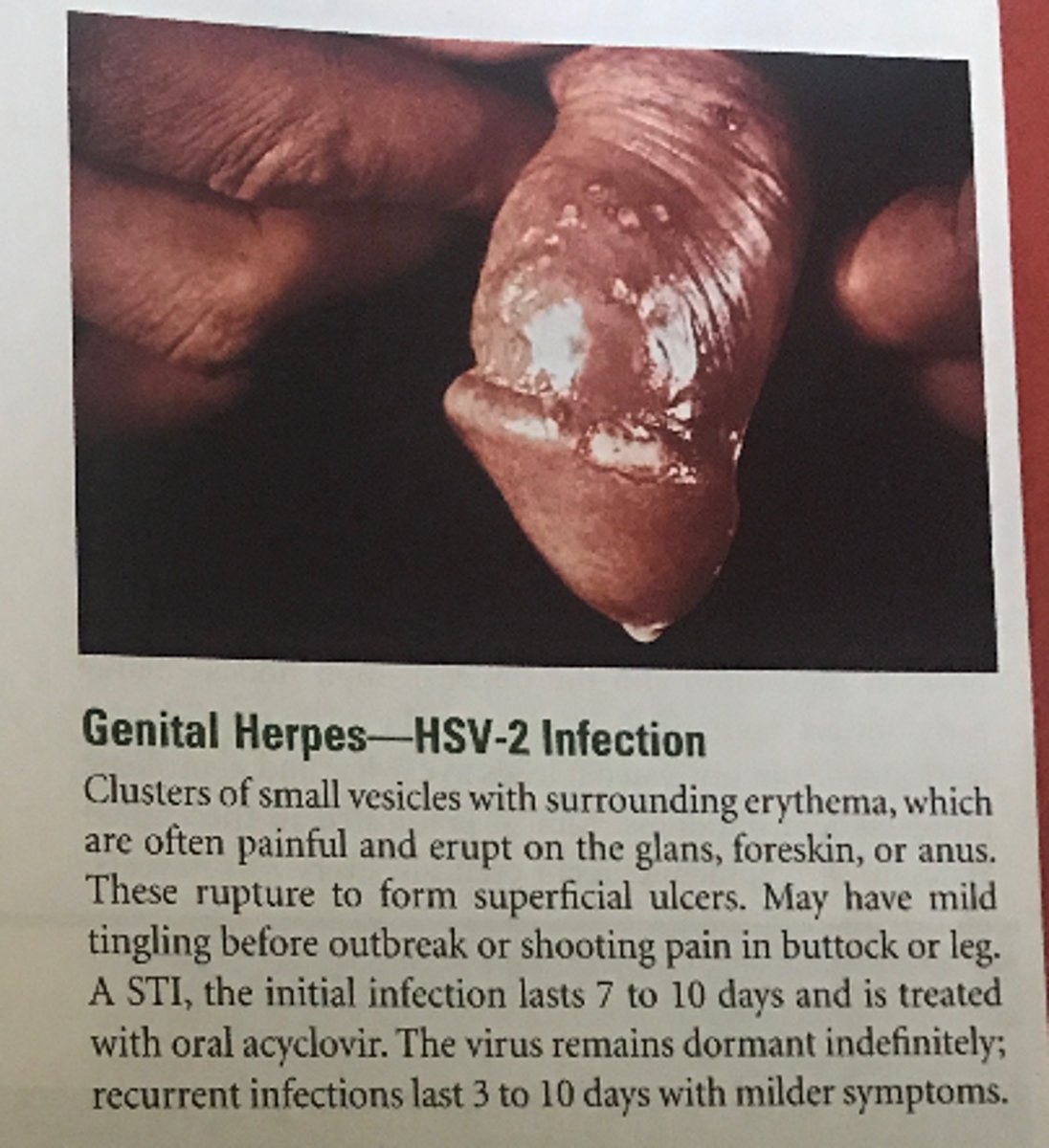
During a genital examination, the nurse notices that a male patient has clusters of small vesicles on the glans, surrounded by erythema. The nurse recognizes that these lesions are:
a. Peyronie disease.
b. Genital warts.
c. Genital herpes.
d. Syphilitic cancer.
C
Genital herpes, or herpes simplex virus 2 (HSV-2), infections are indicated with clusters of small vesicles with surrounding erythema, which are often painful and erupt on the glans or foreskin. (See Table 24-4 for the descriptions of the other options.)
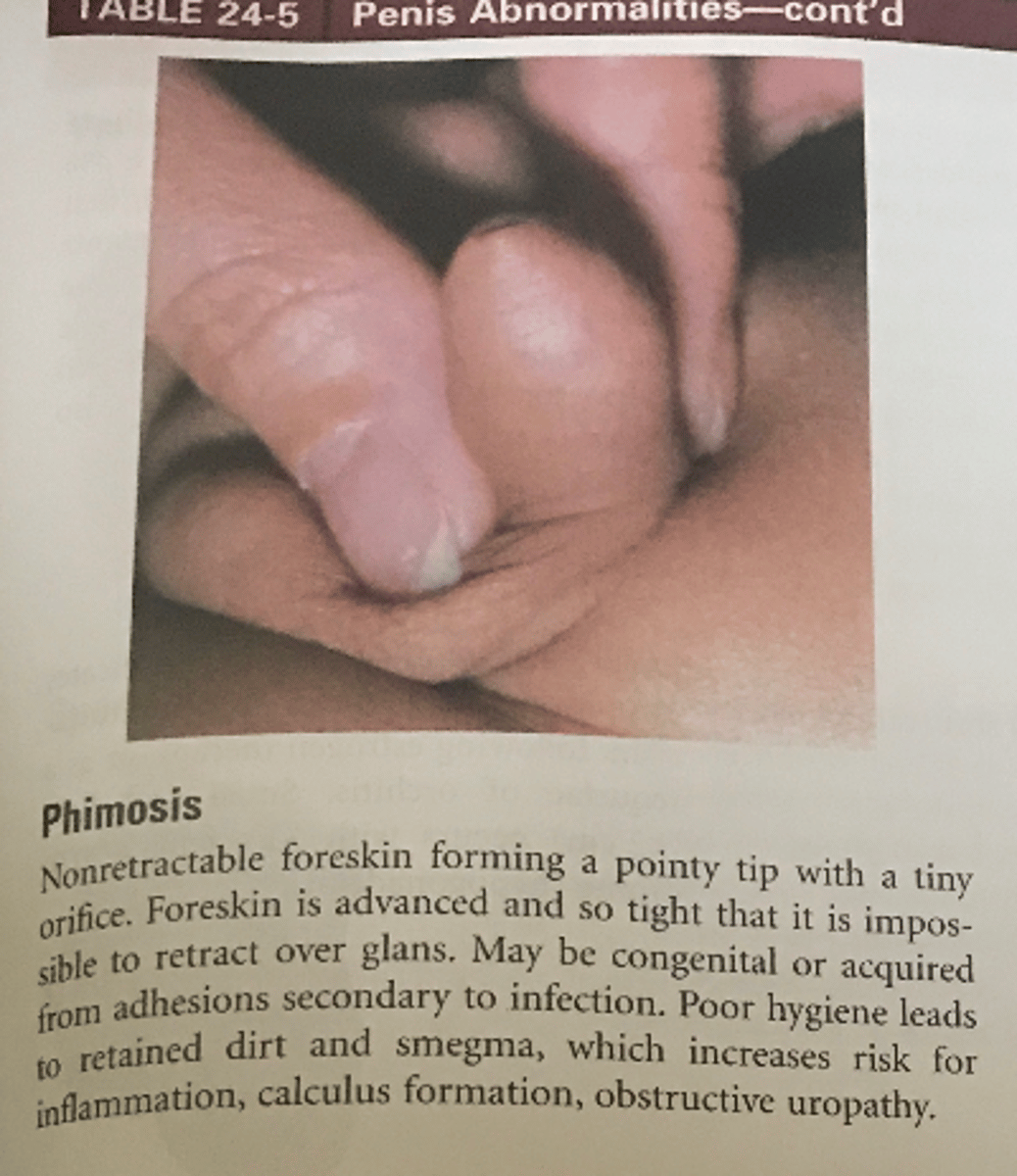
During a physical examination, the nurse finds that a male patient's foreskin is fixed and tight and will not retract over the glans. The nurse recognizes that this condition is:
a. Phimosis.
b. Epispadias.
c. Urethral stricture.
d. Peyronie disease.
A
With phimosis, the foreskin is nonretractable, forming a pointy tip of the penis with a tiny orifice at the end of the glans. The foreskin is advanced and so tight that it is impossible to retract over the glans. This condition may be congenital or acquired from adhesions related to infection. (See Table 24-3 for information on urethral stricture. See Table 24-4 for information on epispadias and Peyronie disease.)
A 55-year-old man is in the clinic for a yearly checkup. He is worried because his father died of prostate cancer. The nurse knows which tests should be performed at this time? Select all that apply.
a. Blood test for prostate-specific antigen (PSA)
b. Urinalysis
c. Transrectal ultrasound
d. Digital rectal examination (DRE)
e. Prostate biopsy
A, D
Prostate cancer is typically detected by testing the blood for PSA or by a DRE. It is recommended that both PSA and DRE be offered to men annually, beginning at age 50 years. If the PSA is elevated, then further laboratory work or a transrectal ultrasound (TRUS) and biopsy may be recommended.
A 16-year-old boy is brought to the clinic for a problem that he refused to let his mother see. The nurse examines him, and finds that he has scrotal swelling on the left side. He had the mumps the previous week, and the nurse suspects that he has orchitis. Which of the following assessment findings support this diagnosis? Select all that apply.
a. Swollen testis
b. Mass that transilluminates
c. Mass that does not transilluminate
d. Scrotum that is nontender upon palpation
e. Scrotum that is tender upon palpation
f. Scrotal skin that is reddened
A, C, E, F
With orchitis, the testis is swollen, with a feeling of weight, and is tender or painful. The mass does not transilluminate, and the scrotal skin is reddened. Transillumination of a mass occurs with a hydrocele, not orchitis
Which statement concerning the anal canal is true? The anal canal:
a. Is approximately 2 cm long in the adult.
b. Slants backward toward the sacrum.
c. Contains hair and sebaceous glands.
d. Is the outlet for the gastrointestinal tract.
D
The anal canal is the outlet for the gastrointestinal tract and is approximately 3.8 cm long in the adult. It is lined with a modified skin that does not contain hair or sebaceous glands, and it slants forward toward the umbilicus.
Which statement concerning the sphincters is correct?
a. The internal sphincter is under voluntary control.
b. The external sphincter is under voluntary control.
c. Both sphincters remain slightly relaxed at all times.
d. The internal sphincter surrounds the external sphincter.
B
The external sphincter surrounds the internal sphincter but also has a small section overriding the tip of the internal sphincter at the opening. The external sphincter is under voluntary control. Except for the passing of feces and gas, the sphincters keep the anal canal tightly closed.
The nurse is performing an examination of the anus and rectum. Which of these statements is correct and important to remember during this examination?
a. The rectum is approximately 8 cm long.
b. The anorectal junction cannot be palpated.
c. Above the anal canal, the rectum turns anteriorly.
d. No sensory nerves are in the anal canal or rectum.
B
The anal columns are folds of mucosa that extend vertically down from the rectum and end in the anorectal junction. This junction is not palpable but is visible on proctoscopy. The rectum is 12 cm long; just above the anal canal, the rectum dilates and turns posteriorly
The structure that secretes a thin, milky alkaline fluid to enhance the viability of sperm is the:
a. Cowper gland.
b. Prostate gland.
c. Median sulcus.
d. Bulbourethral gland.
B
In men, the prostate gland secretes a thin milky alkaline fluid that enhances sperm viability. The Cowper glands (also known as bulbourethral glands) secrete a clear, viscid mucus. The median sulcus is a groove that divides the lobes of the prostate gland and does not secrete fluid.
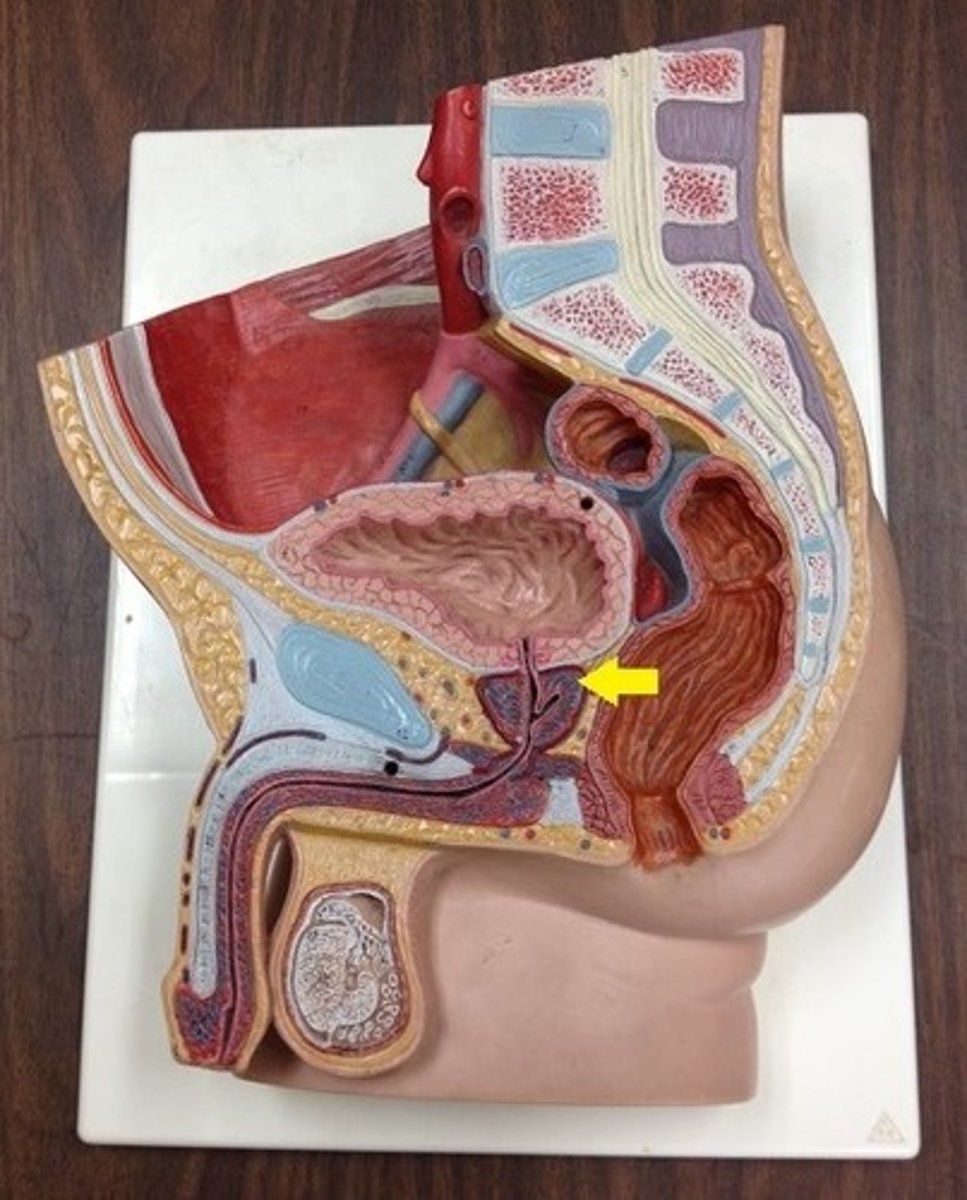
A 46-year-old man requires an assessment of his sigmoid colon. Which instrument or technique is most appropriate for this examination?
a. Proctoscope
b. Ultrasound
c. Colonoscope
d. Rectal examination with an examining finger
C
The sigmoid colon is 40 cm long, and the nurse knows that it is accessible to examination only with the colonoscope. The other responses are not appropriate for an examination of the entire sigmoid colon.
The nurse is caring for a newborn infant. Thirty hours after birth, the infant passes a dark green meconium stool. The nurse recognizes this is important because the:
a. Stool indicates anal patency.
b. Dark green color indicates occult blood in the stool.
c. Meconium stool can be reflective of distress in the newborn.
d. Newborn should have passed the first stool within 12 hours after birth.
A
The first stool passed by the newborn is dark green meconium and occurs within 24 to 48 hours of birth, indicating anal patency. The other responses are not correct.
During the assessment of an 18-month-old infant, the mother expresses concern to the nurse about the infant's inability to toilet train. What would be the nurse's best response?
a. "Some children are just more difficult to train, so I wouldn't worry about it yet."
b. "Have you considered reading any of the books on toilet training? They can be very helpful."
c. "This could mean that there is a problem in your baby's development. We'll watch her closely for the next few months."
d. "The nerves that will allow your baby to have control over the passing of stools are not developed until at least 18 to 24 months of age."
D
The infant passes stools by reflex. Voluntary control of the external anal sphincter cannot occur until the nerves supplying the area have become fully myelinated, usually around 1 to 2 years of age. Toilet training usually starts after the age of 2 years.
A 60-year-old man has just been told that he has benign prostatic hypertrophy (BPH). He has a friend who just died from cancer of the prostate. He is concerned this will happen to him. How should the nurse respond?
a. "The swelling in your prostate is only temporary and will go away."
b. "We will treat you with chemotherapy so we can control the cancer."
c. "It would be very unusual for a man your age to have cancer of the prostate."
d. "The enlargement of your prostate is caused by hormonal changes, and not cancer."
D
The prostate gland commonly starts to enlarge during the middle adult years. BPH is present in 1 in 10 men at the age of 40 years and increases with age. It is believed that the hypertrophy is caused by hormonal imbalance that leads to the proliferation of benign adenomas. The other responses are not appropriate.
A patient who is visiting the clinic complains of having "stomach pains for 2 weeks" and describes his stools as being "soft and black" for approximately the last 10 days. He denies taking any medications. The nurse is aware that these symptoms are mostly indicative of:
a. Excessive fat caused by malabsorption.
b. Increased iron intake, resulting from a change in diet.
c. Occult blood, resulting from gastrointestinal bleeding.
d. Absent bile pigment from liver problems.
C
Black stools may be tarry as a result of occult blood (melena) from gastrointestinal bleeding or nontarry from ingestion of iron medications (not diet). Excessive fat causes the stool to become frothy. The absence of bile pigment causes clay-colored stools.
After completing an assessment of a 60-year-old man with a family history of colon cancer, the nurse discusses with him early detection measures for colon cancer. The nurse should mention the need for a(n):
a. Annual proctoscopy.
b. Colonoscopy every 10 years.
c. Fecal test for blood every 6 months.
d. DREs every 2 years.
B
Early detection measures for colon cancer include a DRE performed annually after age 50 years, an annual fecal occult blood test after age 50 years, a sigmoidoscopic examination every 5 years or a colonoscopy every 10 years after age 50 years, and a PSA blood test annually for men over 50 years old, except beginning at age 45 years for black men (American Cancer Society, 2006).
A 30-year-old woman is visiting the clinic because of "pain in my bottom when I have a bowel movement." The nurse should assess for which problem?
a. Pinworms
b. Hemorrhoids
c. Colon cancer
d. Fecal incontinence
B
Having painful bowel movements, known as dyschezia, may be attributable to a local condition (hemorrhoid or fissure) or constipation. The other responses are not correct.
The mother of a 5-year-old girl tells the nurse that she has noticed her daughter "scratching at her bottom a lot the last few days." During the assessment, the nurse finds redness and raised skin in the anal area. This finding most likely indicates:
a. Pinworms.
b. Chickenpox.
c. Constipation.
d. Bacterial infection.
A
In children, pinworms are a common cause of intense itching and irritated anal skin. The other options are not correct.
The nurse is examining only the rectal area of a woman and should place the woman in what position?
a. Lithotomy
b. Prone
c. Left lateral decubitus
d. Bending over the table while standing
C
The nurse should place the female patient in the lithotomy position if the genitalia are being examined as well. The left lateral decubitus position is used for the rectal area alone.
The nurse is preparing to palpate the rectum and should use which of these techniques? The nurse should:
a. Flex the finger, and slowly insert it toward the umbilicus.
b. First instruct the patient that this procedure will be painful.
c. Insert an extended index finger at a right angle to the anus.
d. Place the finger directly into the anus to overcome the tight sphincter.
A
The nurse should gently place the pad of the index finger against the anal verge. The nurse will feel the sphincter tighten and then relax. As it relaxes, the nurse should flex the tip of the finger and slowly insert it into the anal canal in a direction toward the umbilicus. The nurse should never approach the anus at right angles with the index finger extended; doing so would cause pain. The nurse should instruct the patient that palpation is not painful but may feel like needing to move the bowels
While performing a rectal examination, the nurse notices a firm, irregularly shaped mass. What should the nurse do next?
a. Continue with the examination, and document the finding in the chart.
b. Instruct the patient to return for a repeat assessment in 1 month.
c. Tell the patient that a mass was felt, but it is nothing to worry about.
d. Report the finding, and refer the patient to a specialist for further examination.
D
A firm or hard mass with an irregular shape or rolled edges may signify carcinoma. Any mass that is discovered should be promptly reported for further examination. The other responses are not correct.
While performing an assessment of the perianal area of a patient, the nurse notices that the pigmentation of anus is darker than the surrounding skin, the anal opening is closed, and a skin sac that is shiny and blue is noted. The patient mentioned that he has had pain with bowel movements and has occasionally noted some spots of blood. What would this assessment and history most likely indicate?
a. Anal fistula
b. Pilonidal cyst
c. Rectal prolapse
d. Thrombosed hemorrhoid
D
The anus normally looks moist and hairless, with coarse folded skin that is more pigmented than the perianal skin, and the anal opening is tightly closed. The shiny blue skin sac indicates a thrombosed hemorrhoid.
During an assessment of the newborn, the nurse expects to see which finding when the anal area is slightly stroked?
a. Jerking of the legs
b. Flexion of the knees
c. Quick contraction of the sphincter
d. Relaxation of the external sphincter
C
To assess sphincter tone, the nurse should check the anal reflex by gently stroking the anal area and noticing a quick contraction of the sphincter. The other responses are not correct.
A 13-year-old girl is visiting the clinic for a sports physical examination. The nurse should remember to include which of these tests in the examination?
a. Testing for occult blood
b. Valsalva maneuver
c. Internal palpation of the anus
d. Inspection of the perianal area
D
The perianal region of the school-aged child and adolescent should be inspected during the examination of the genitalia. Internal palpation is not routinely performed at this age. Testing for occult blood and performing the Valsalva maneuver are also not necessary.