Unit 5: Cellular Reproduction (Mitosis and Meiosis)
 Call Kai
 Learn
Learn Practice Test
 Spaced Repetition
 Match
Match Flashcards
 Knowt Play
1/37

There's no tags or description
Looks like no tags are added yet.
Name | Mastery | Learn | Test | Matching | Spaced | Call with Kai |
|---|
No analytics yet
Send a link to your students to track their progress
38 Terms
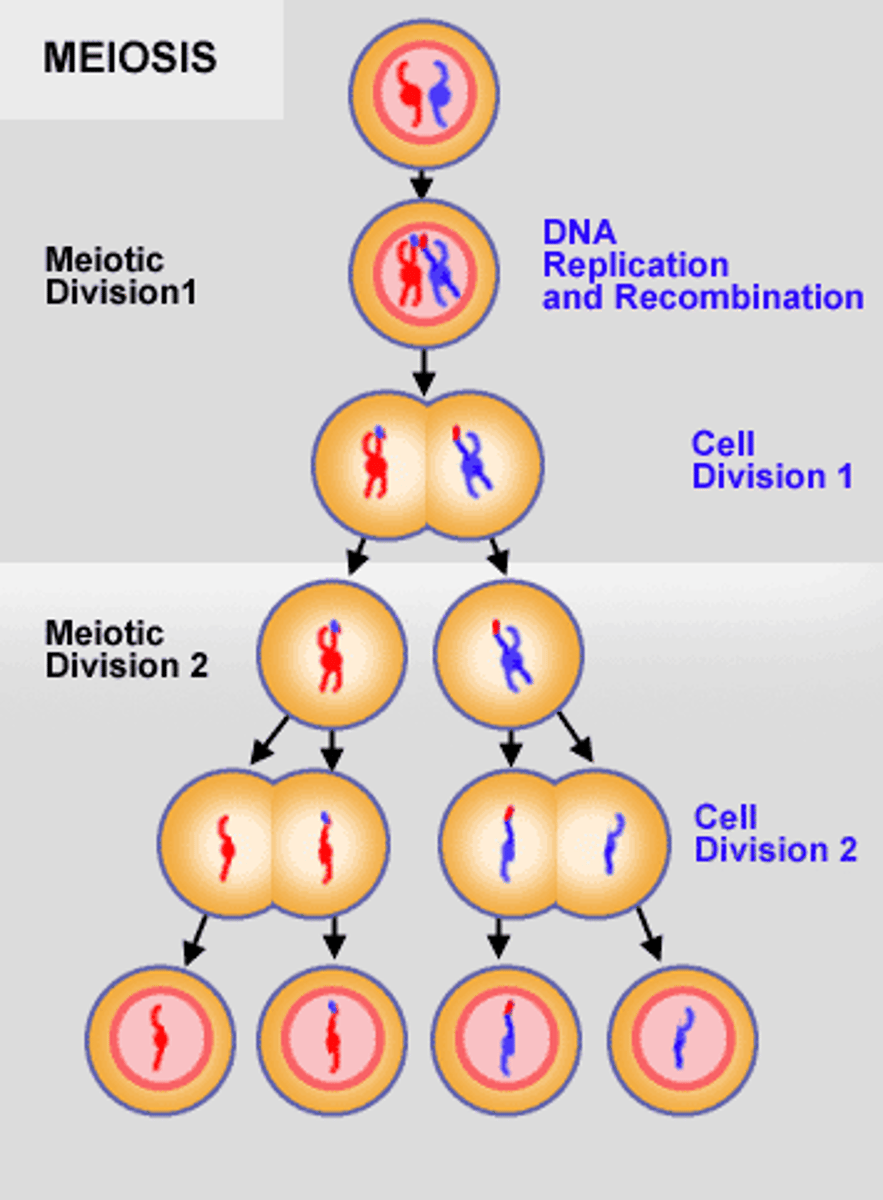
Meiosis
Cell division that produces reproductive cells (sperm or egg); produces four cells that are haploid
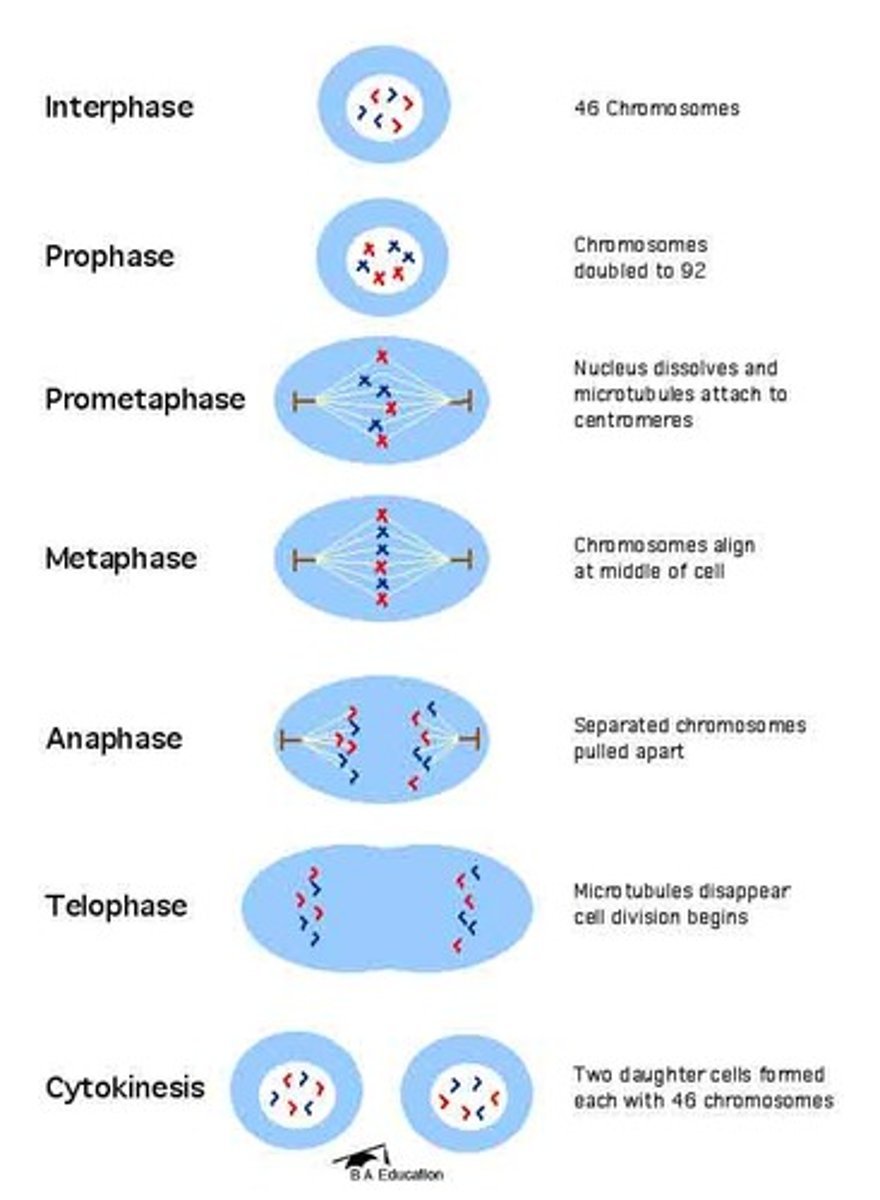
Mitosis
cell division in which the nucleus divides into nuclei containing the same number of chromosomes; produces two cells identical to the original cell that are diploid
cell cycle
The regular sequence of growth and division that cells undergo
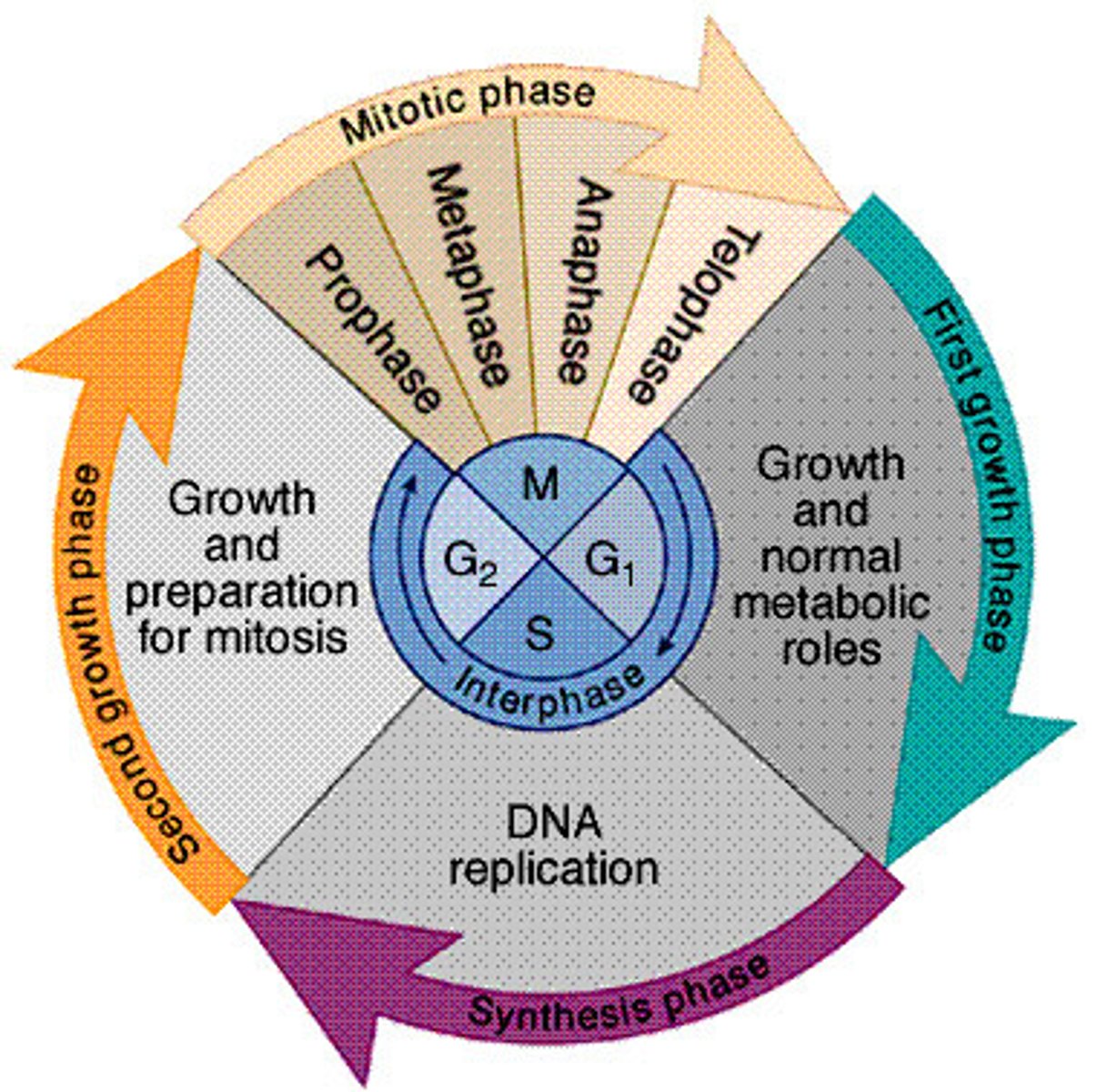
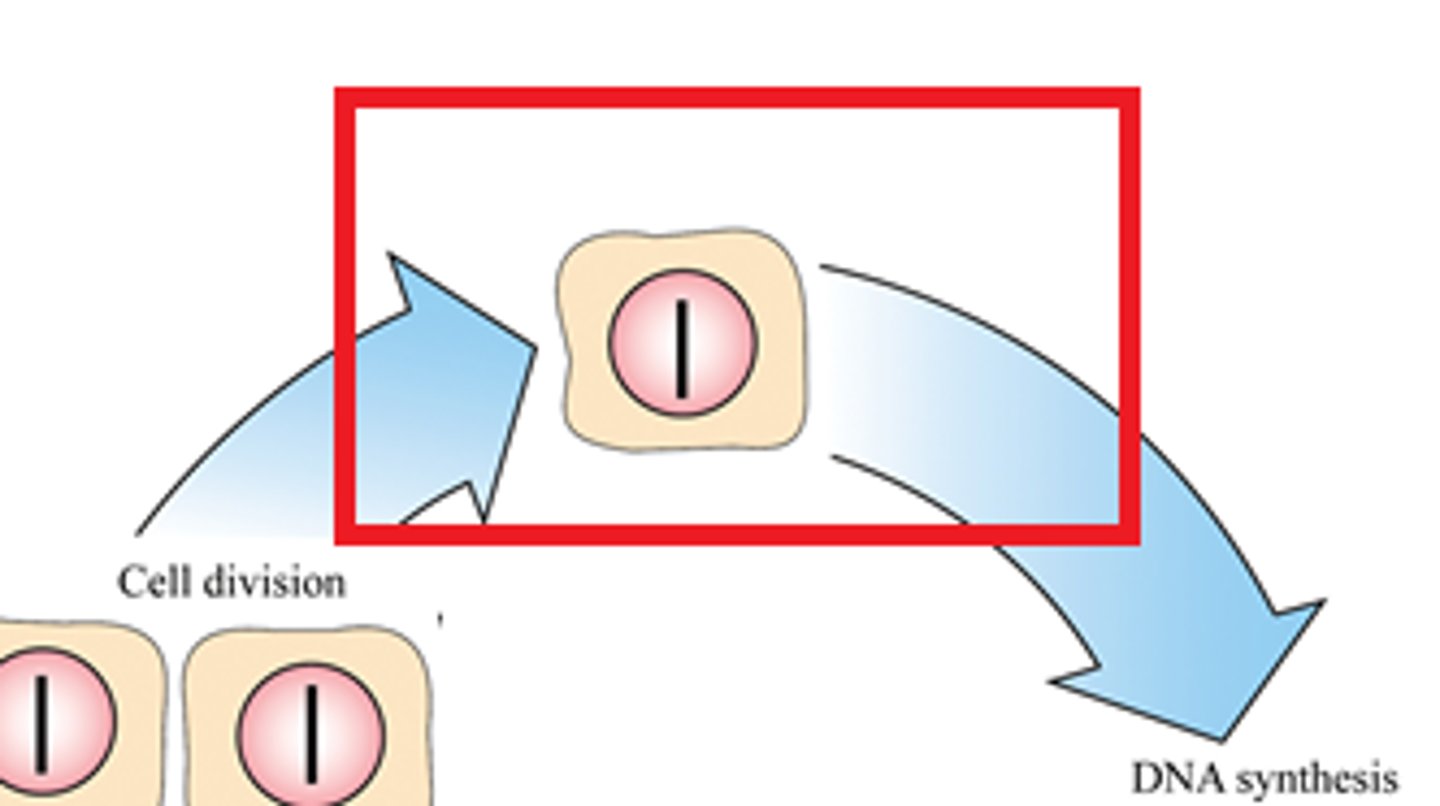
G1 phase
The first gap, or growth phase, of the cell cycle, consisting of the portion of interphase before DNA synthesis begins.
S phase
The synthesis phase of the cell cycle; the portion of interphase during which DNA is replicated.
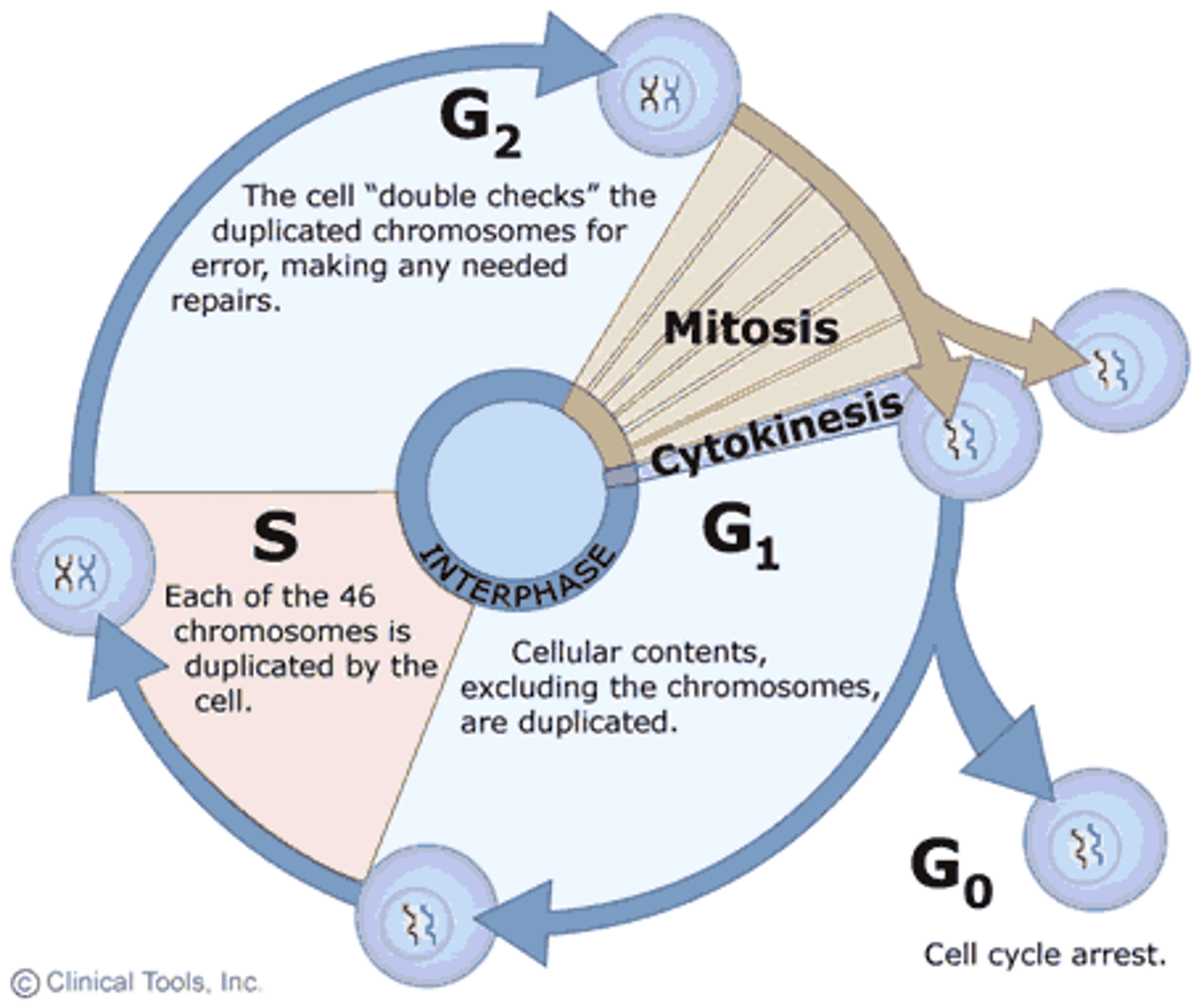
Interphase
period of the cell cycle between cell divisions
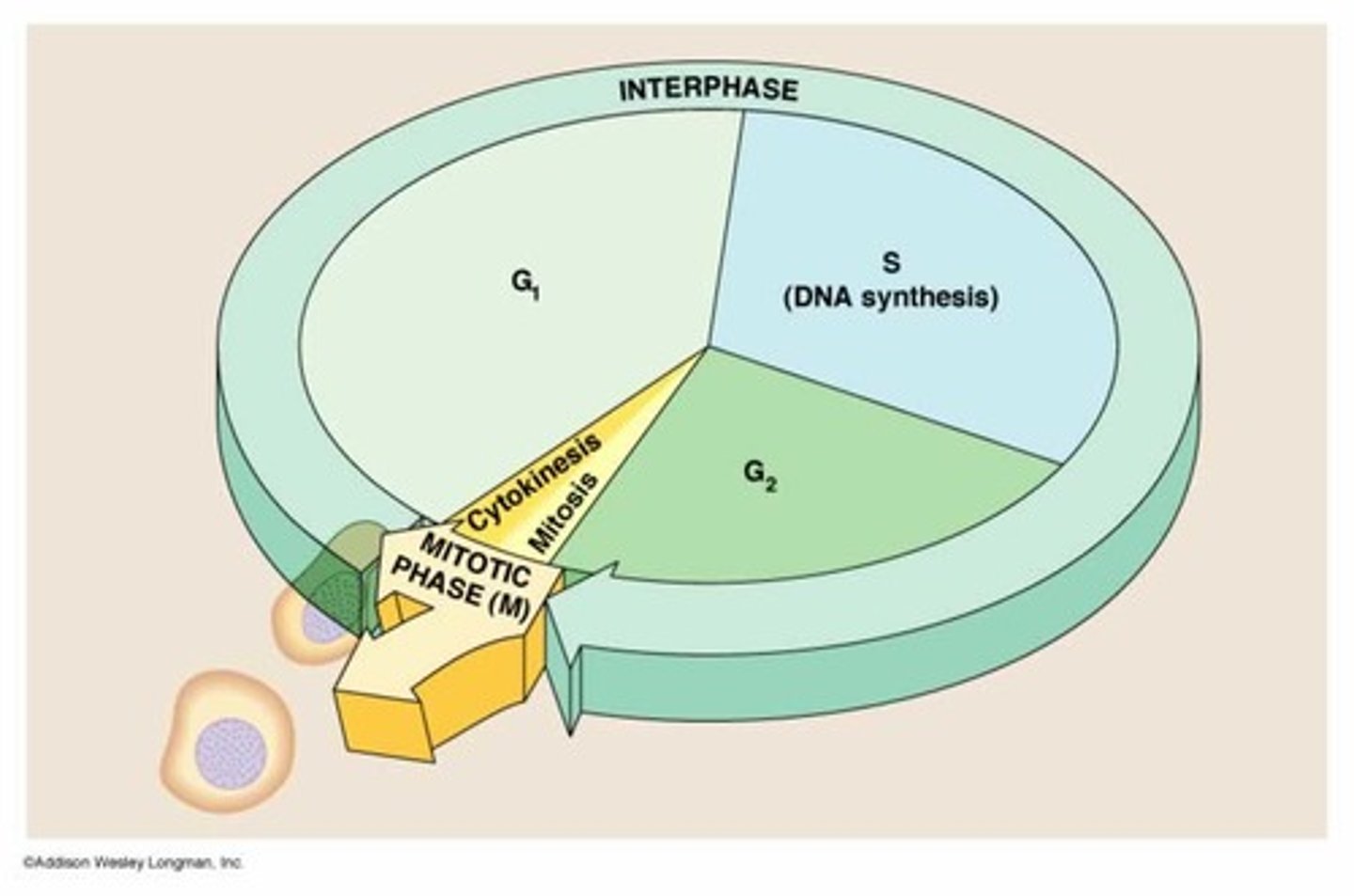
G2 phase
The second growth phase of the cell cycle, consisting of the portion of interphase after DNA synthesis occurs. Organelles reproduce.
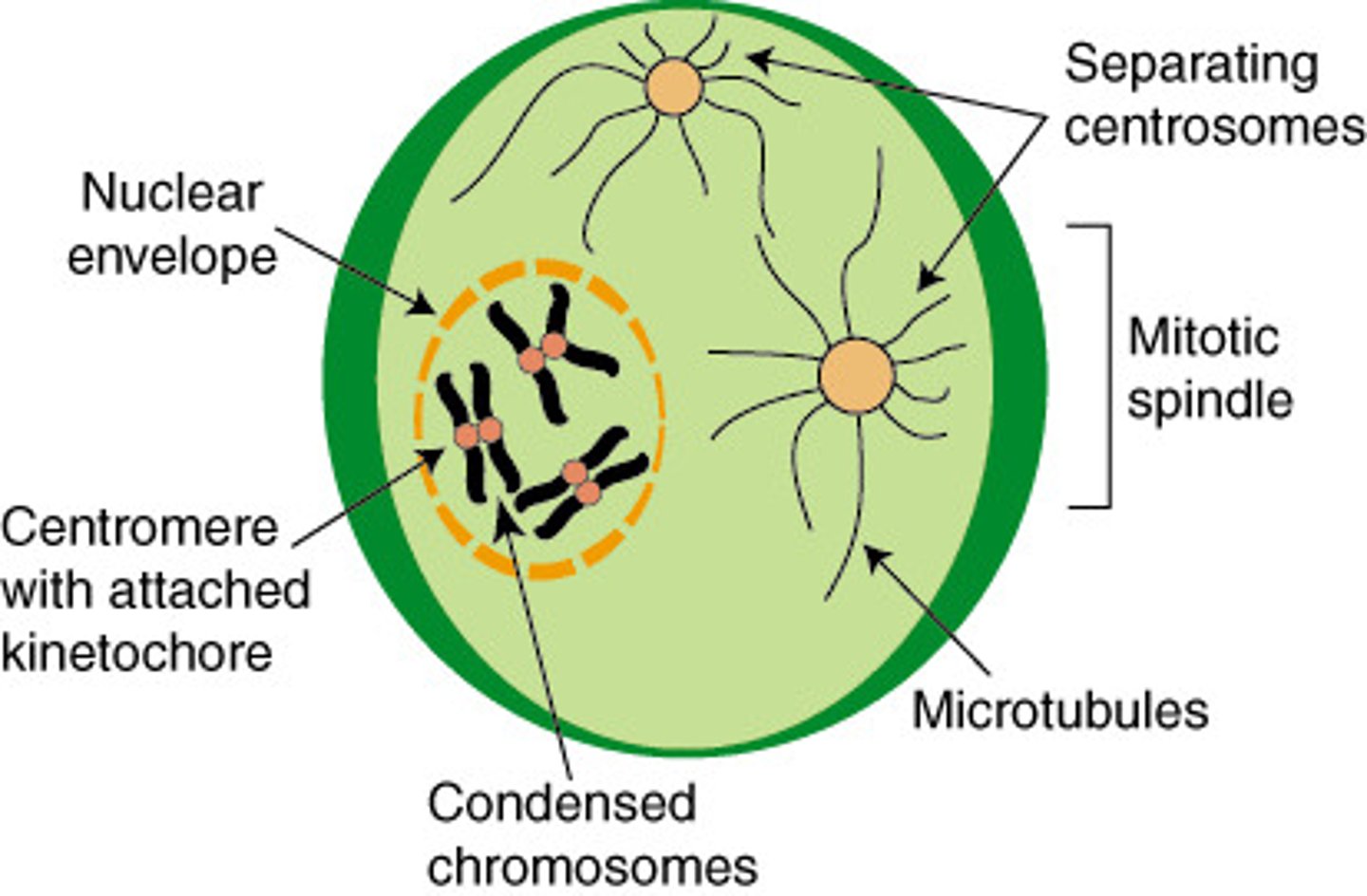
Prophase
Chromosomes become visable, nuclear envelop dissolves, spindle forms
Metaphase
Chromosomes line up in the middle of the cell
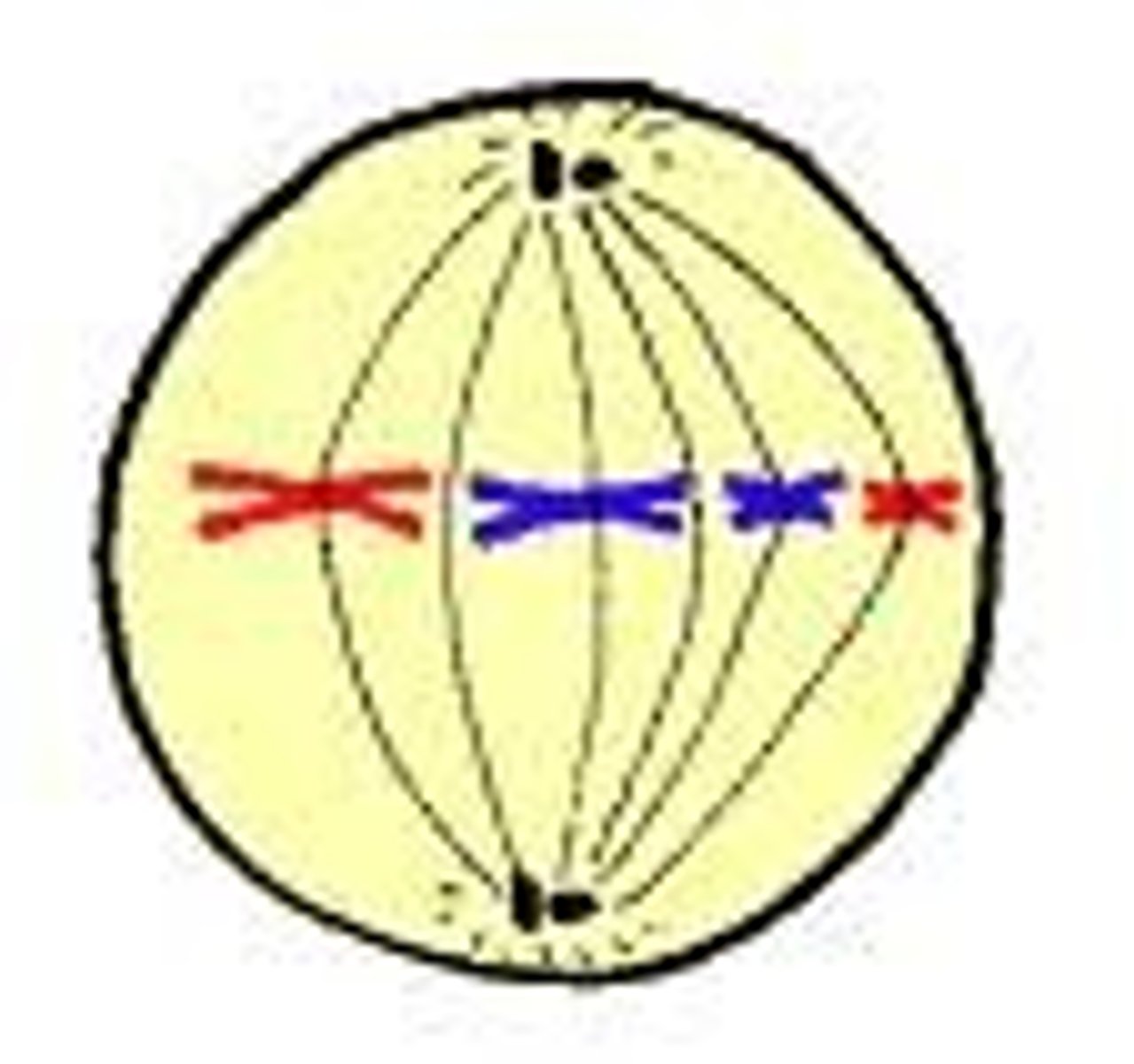
Anaphase (Mitosis)
Phase of mitosis in which the chromosomes separate and move to opposite ends of the cell
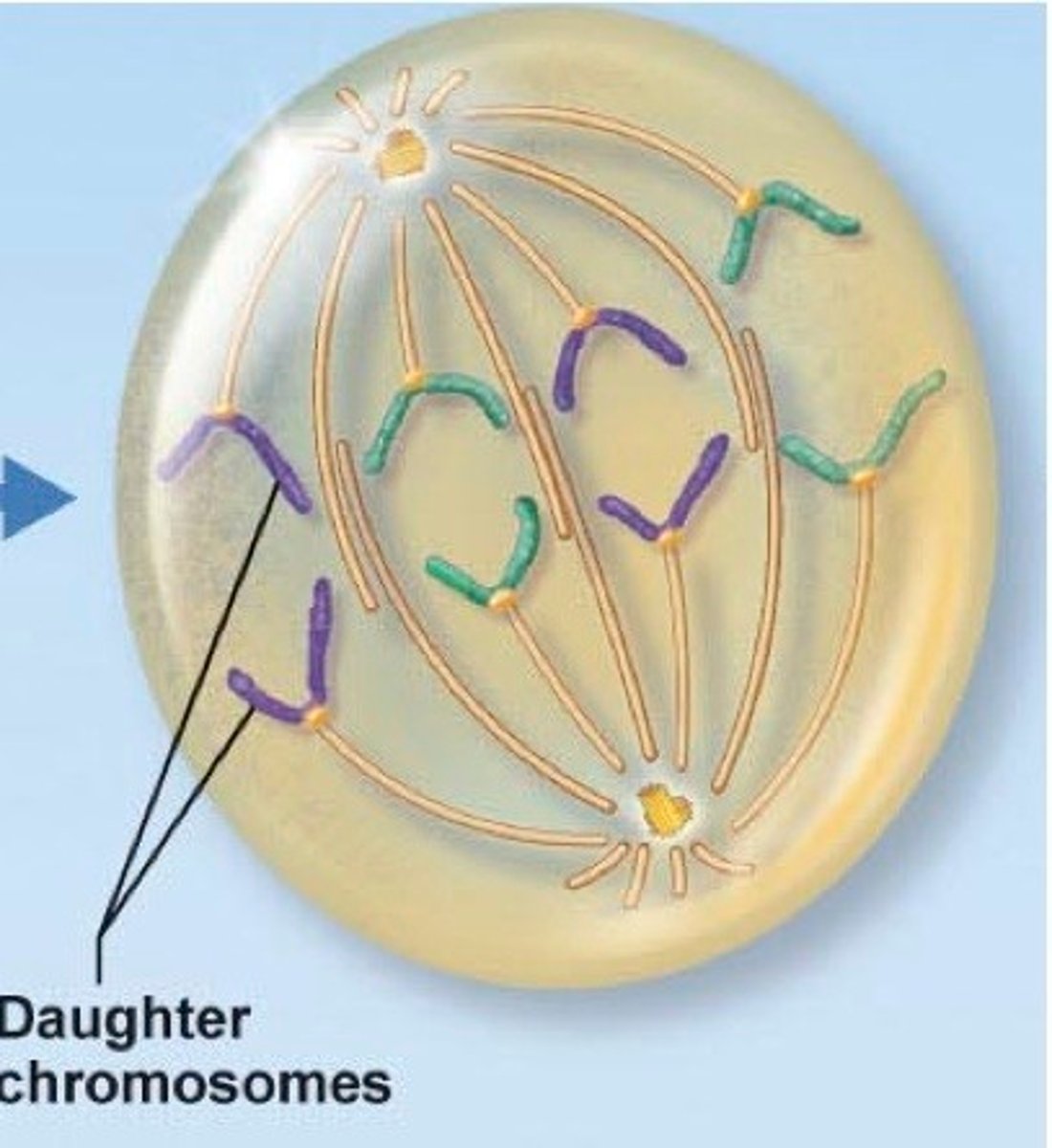
Telophase
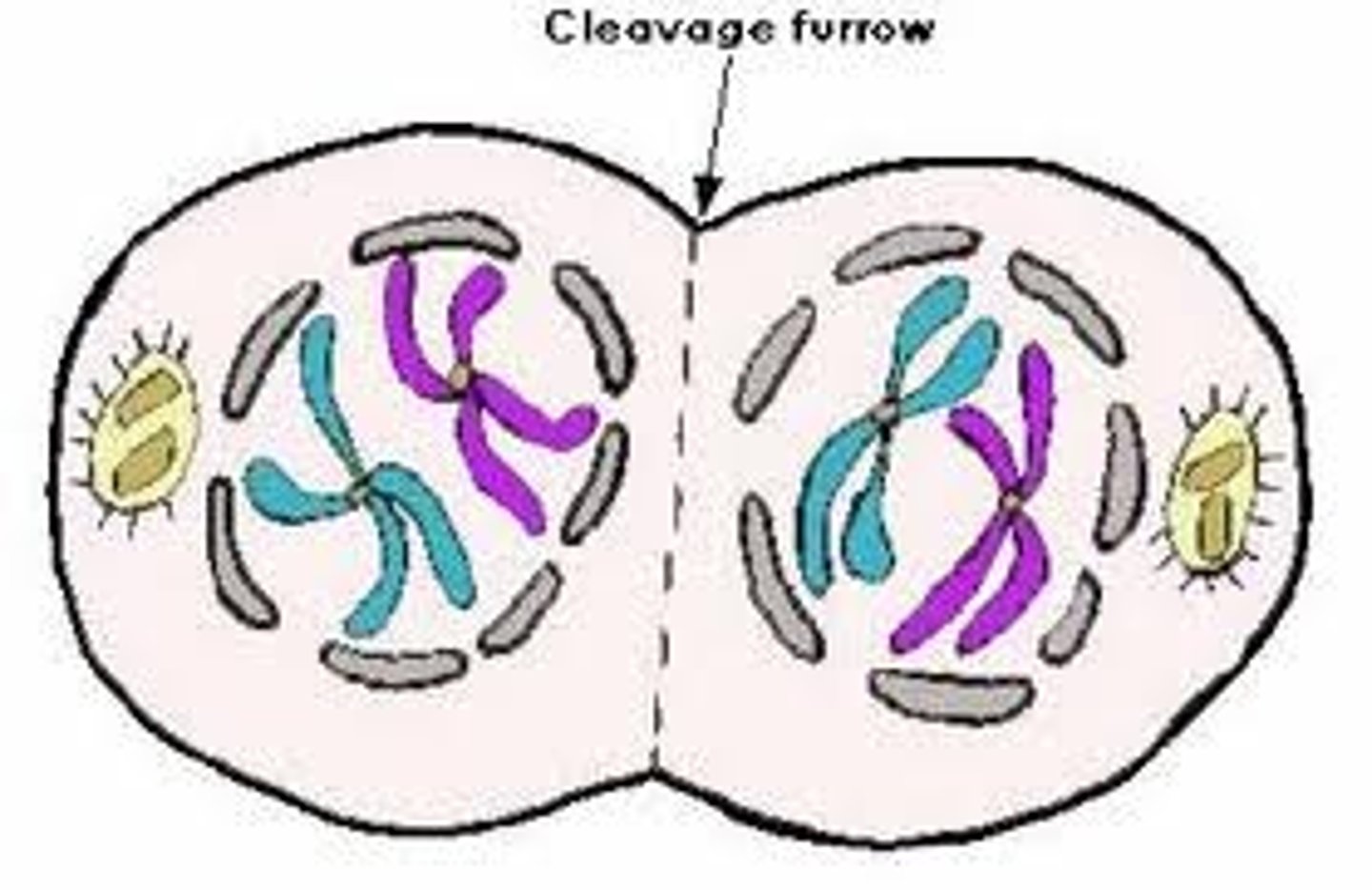
the final phase of cell division, between anaphase and interphase, in which two nuclei are formed.
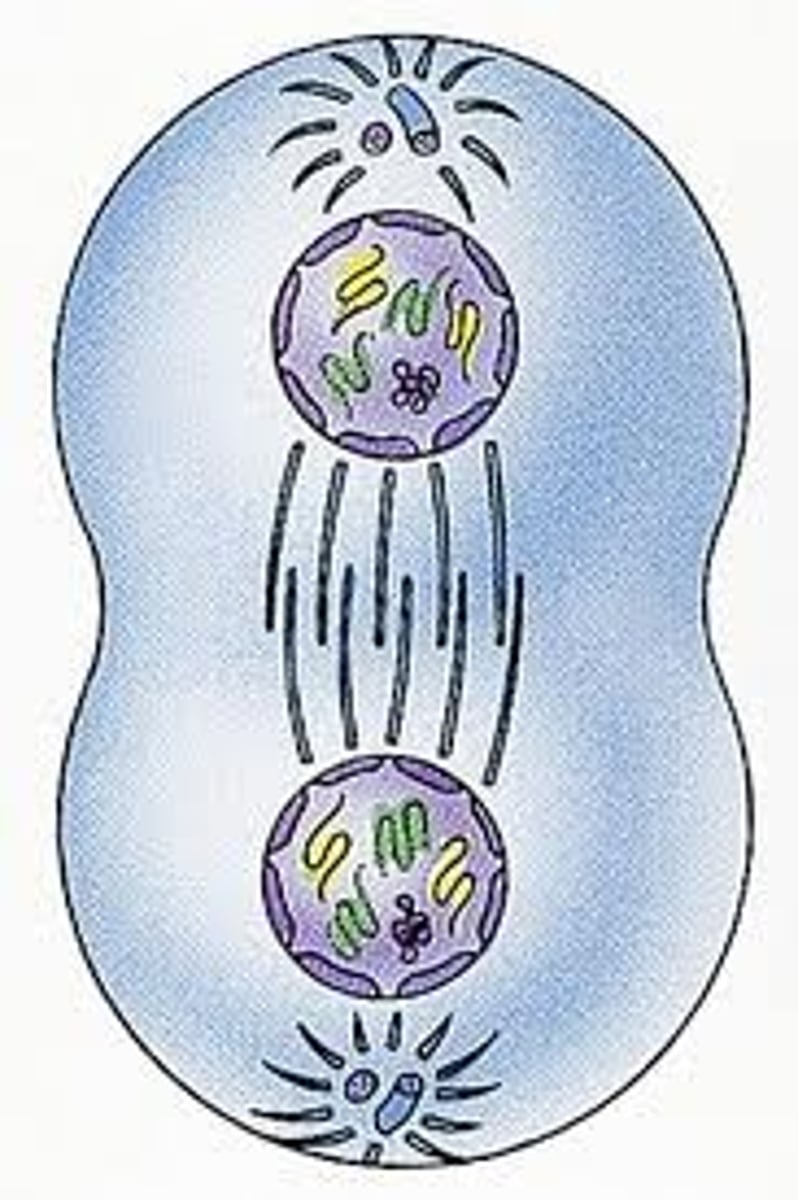
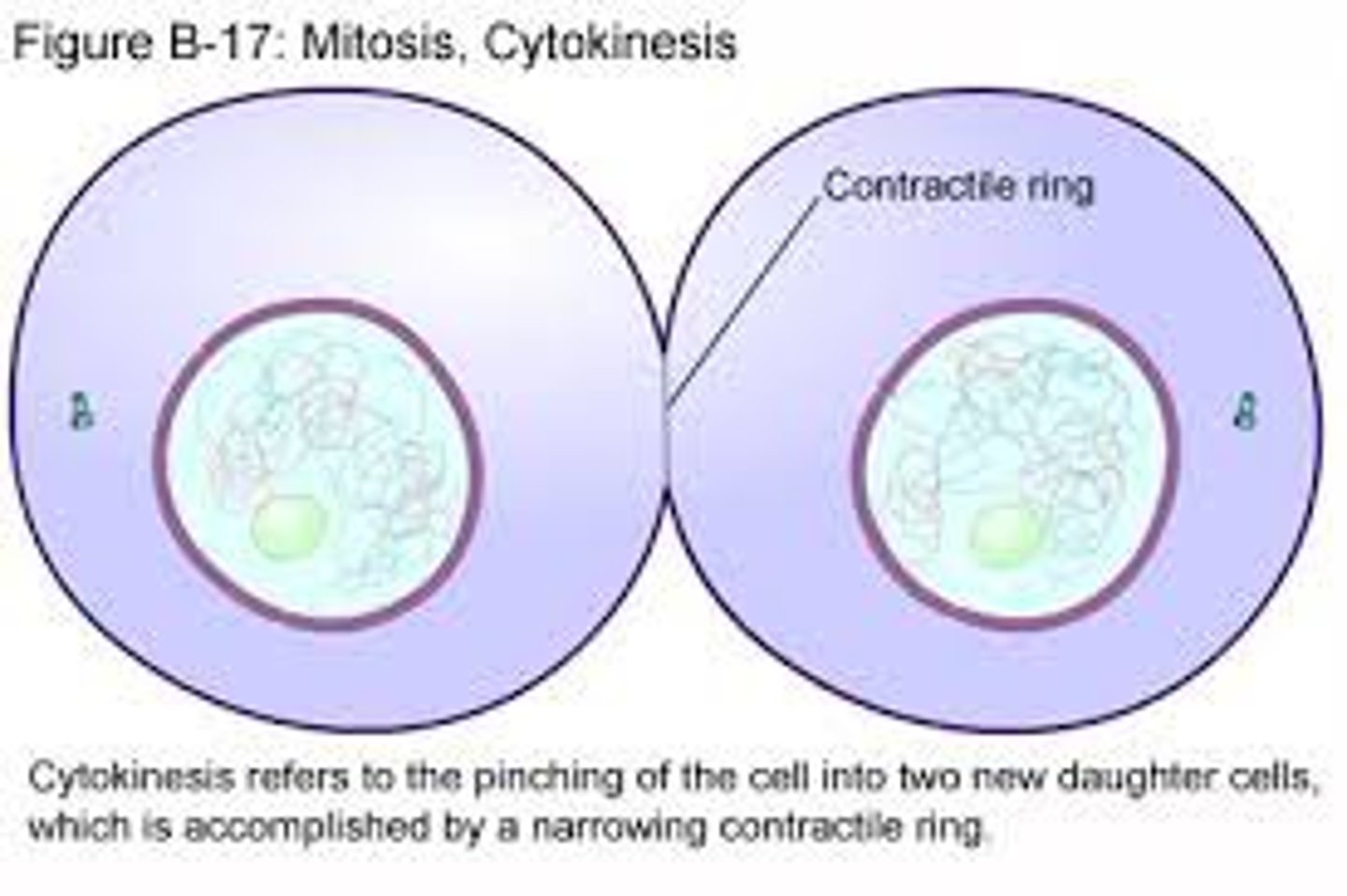
Cytokinesis
Division of the cytoplasm during cell division
G0 phase
A nondividing state in which a cell has left the cell cycle.
Cyclins
proteins that regulate the timing of the cell cycle in eukaryotic cells
spindle fibers
Protein structures which move the chromosomes during cell division.
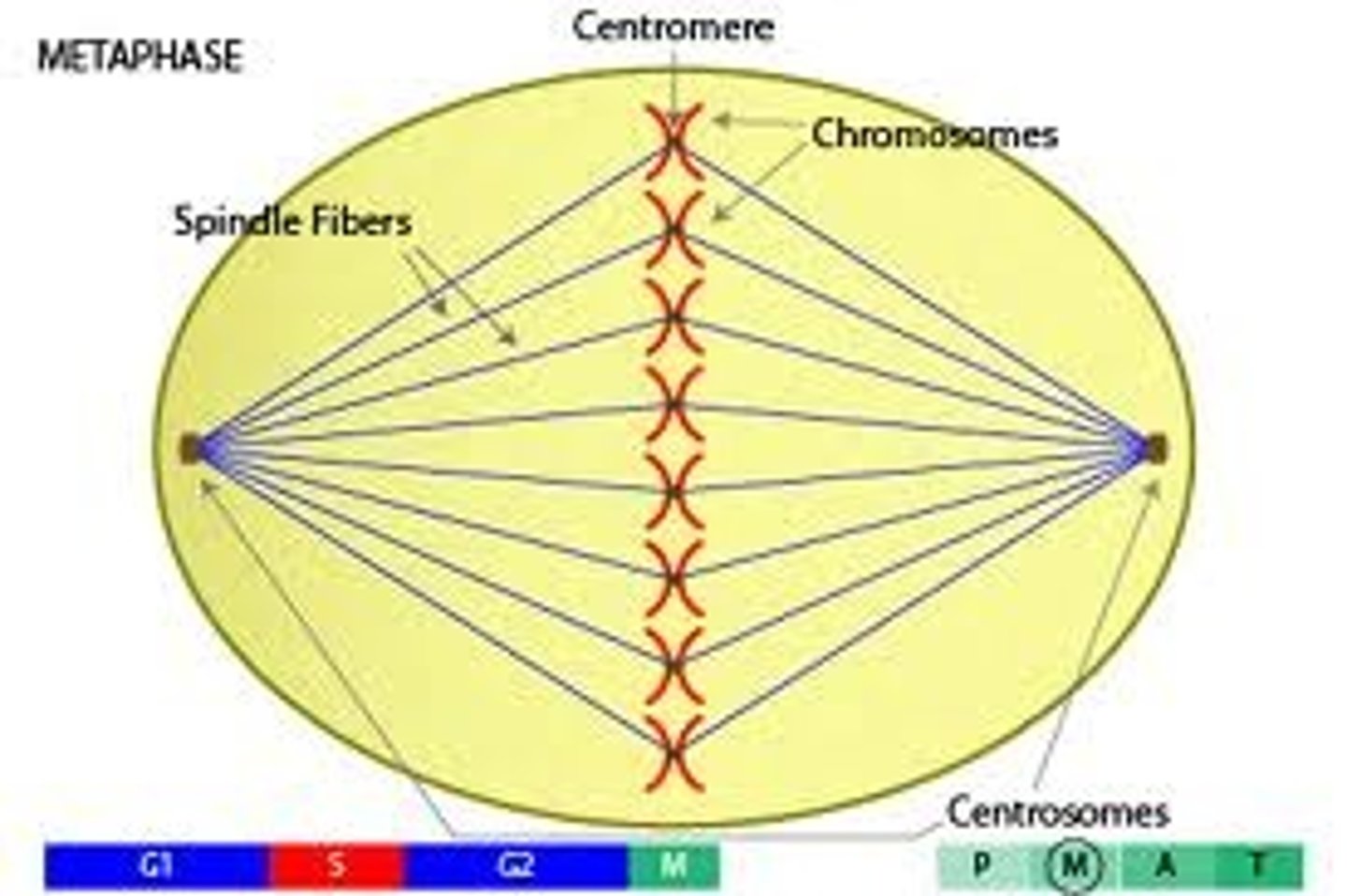
Centrioles
Cell organelle that aids in cell division in animal cells only
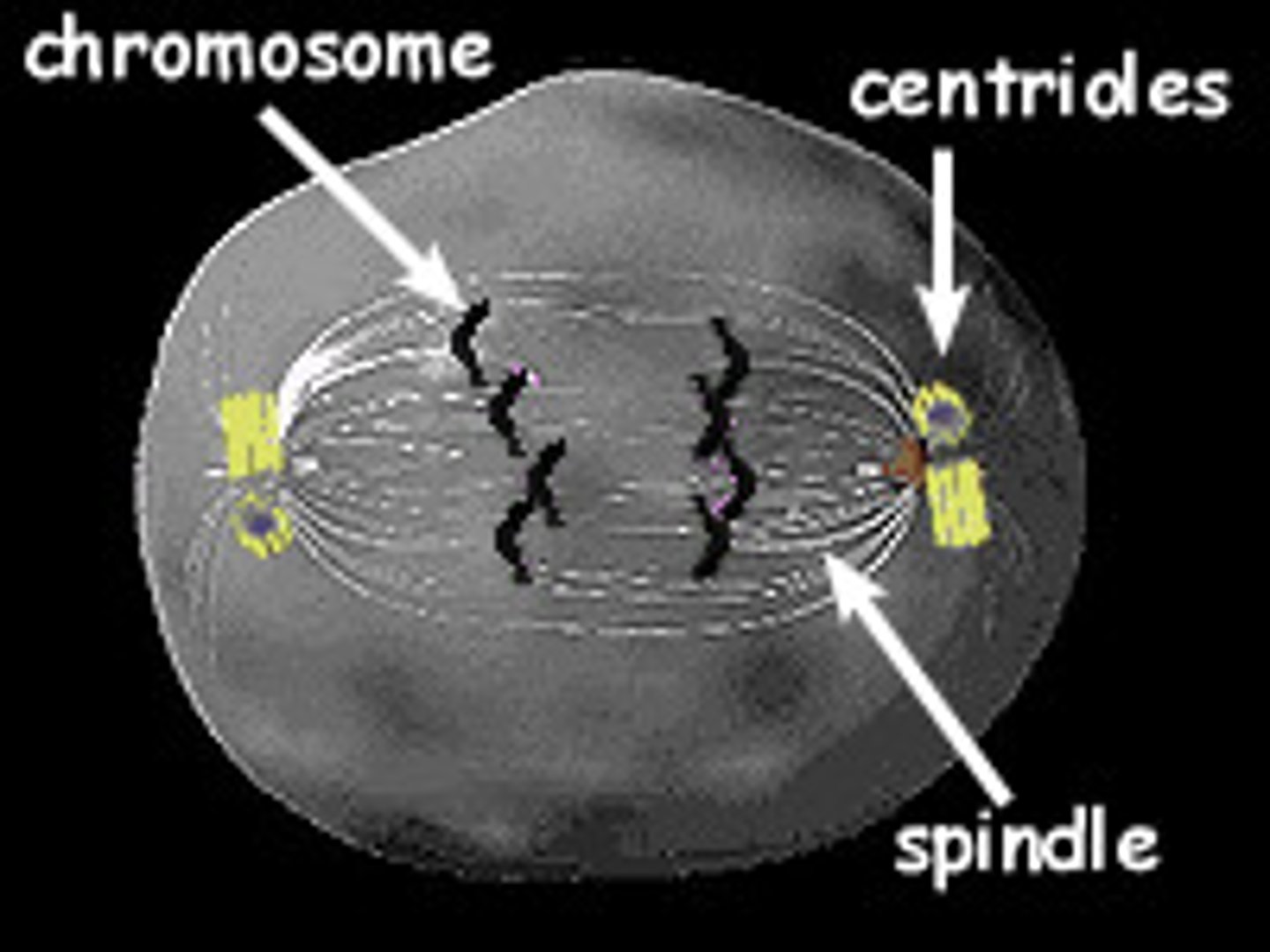
cell size limitations
the surface area doesnt grow as fast as the volume of the cell., if a cell is too large the demand on DNA is too much
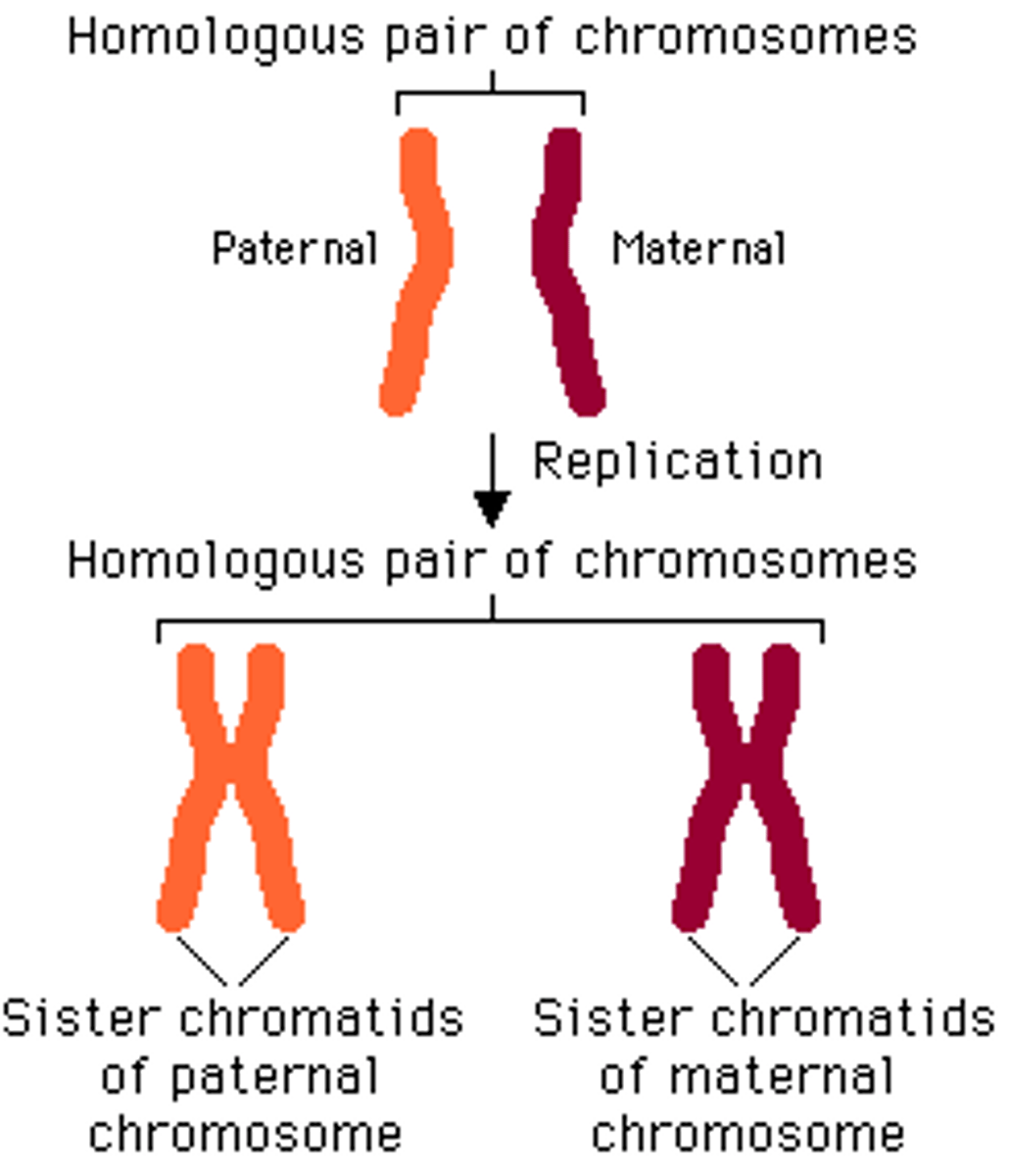
chromatids
two identical chromosomes that split and contain the same genetic material
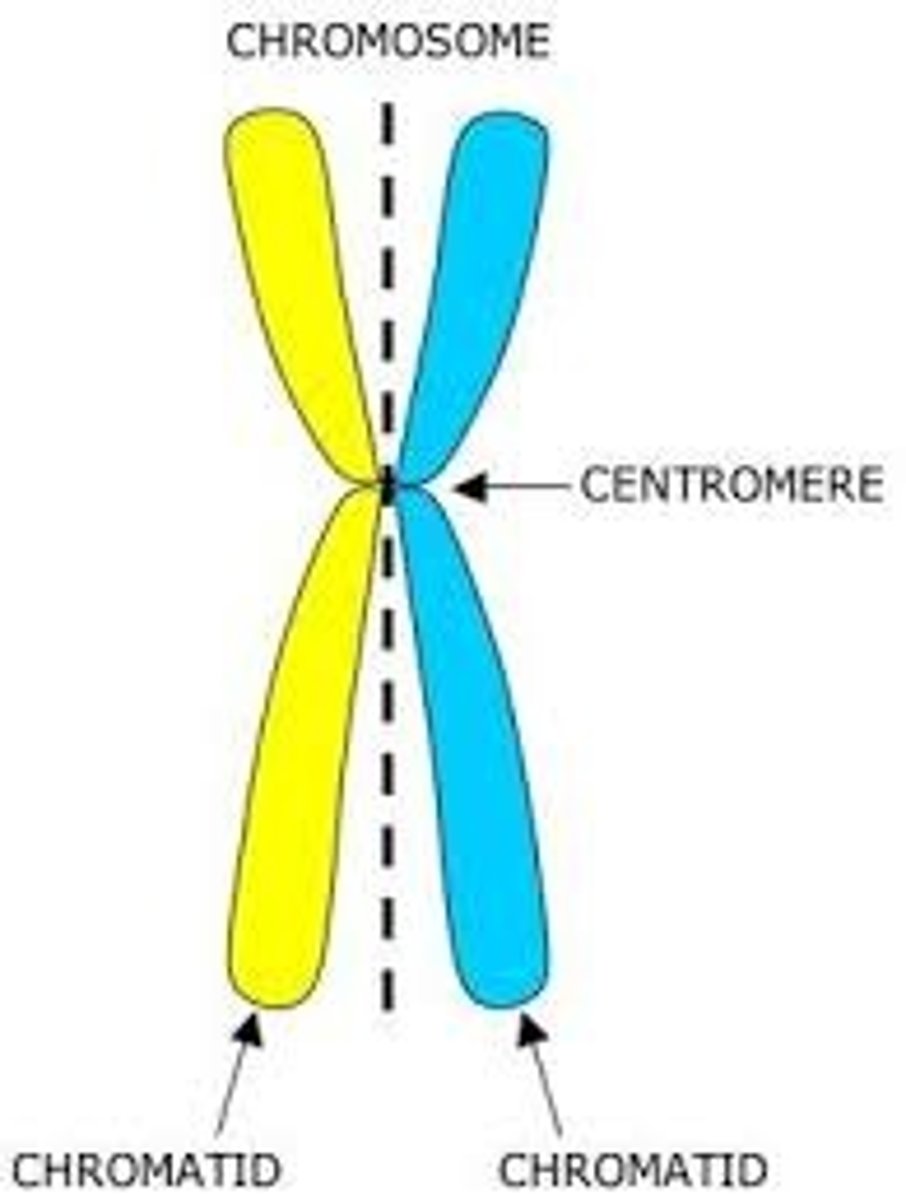
Centromere
Area where the chromatids of a chromosome are attached
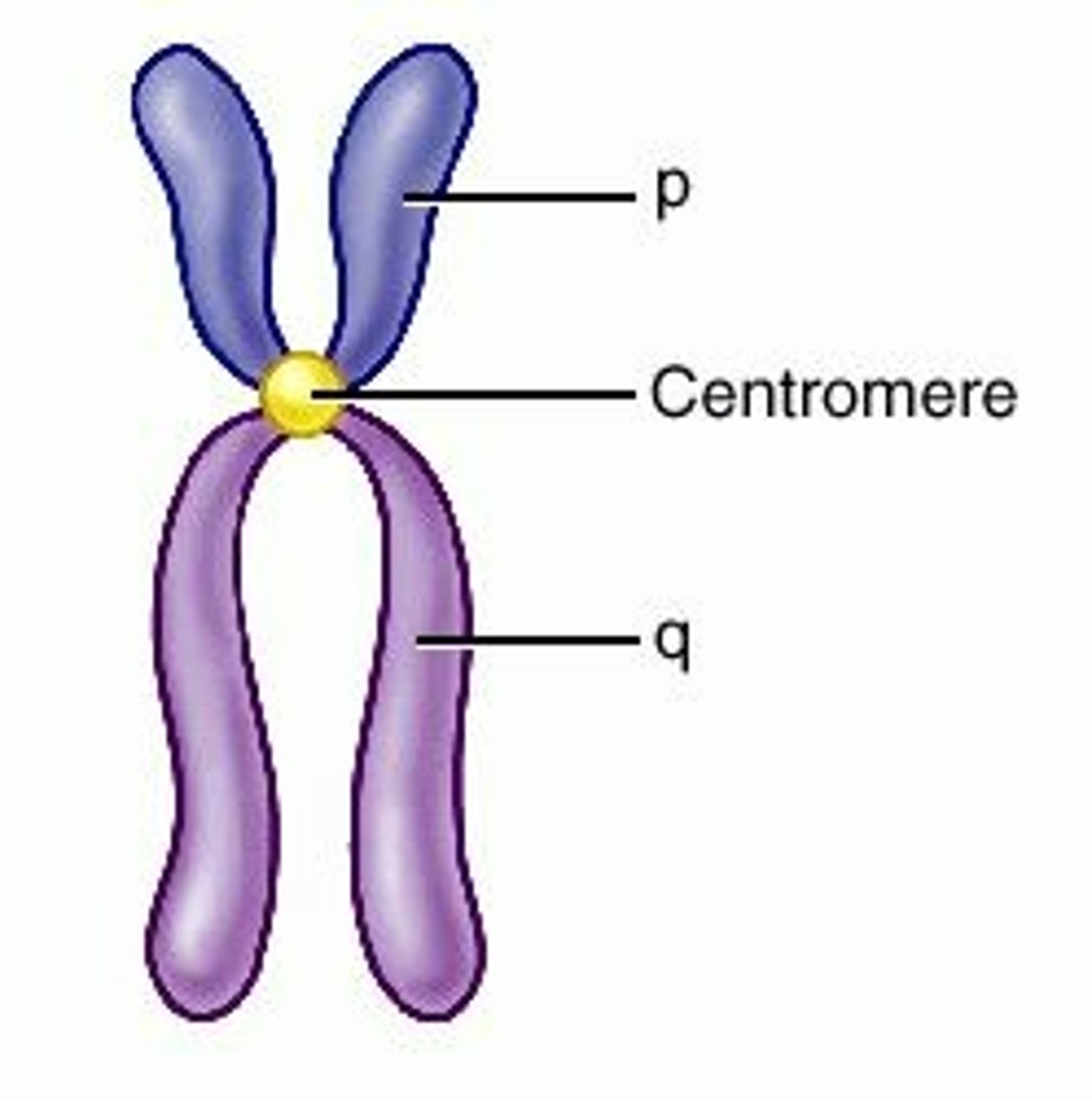
Chromatin
granular material visible within the nucleus; consists of DNA tightly coiled around proteins
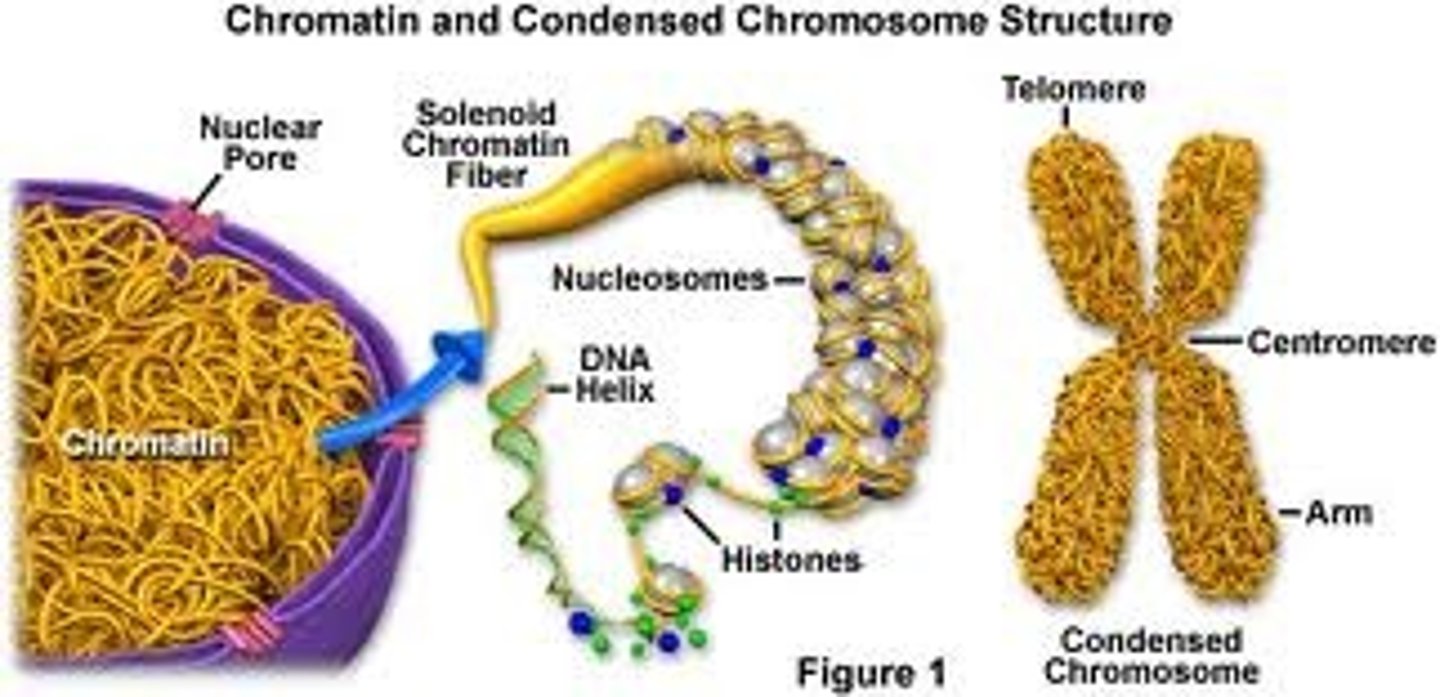
Histones
protein molecules around which DNA is tightly coiled in chromatin
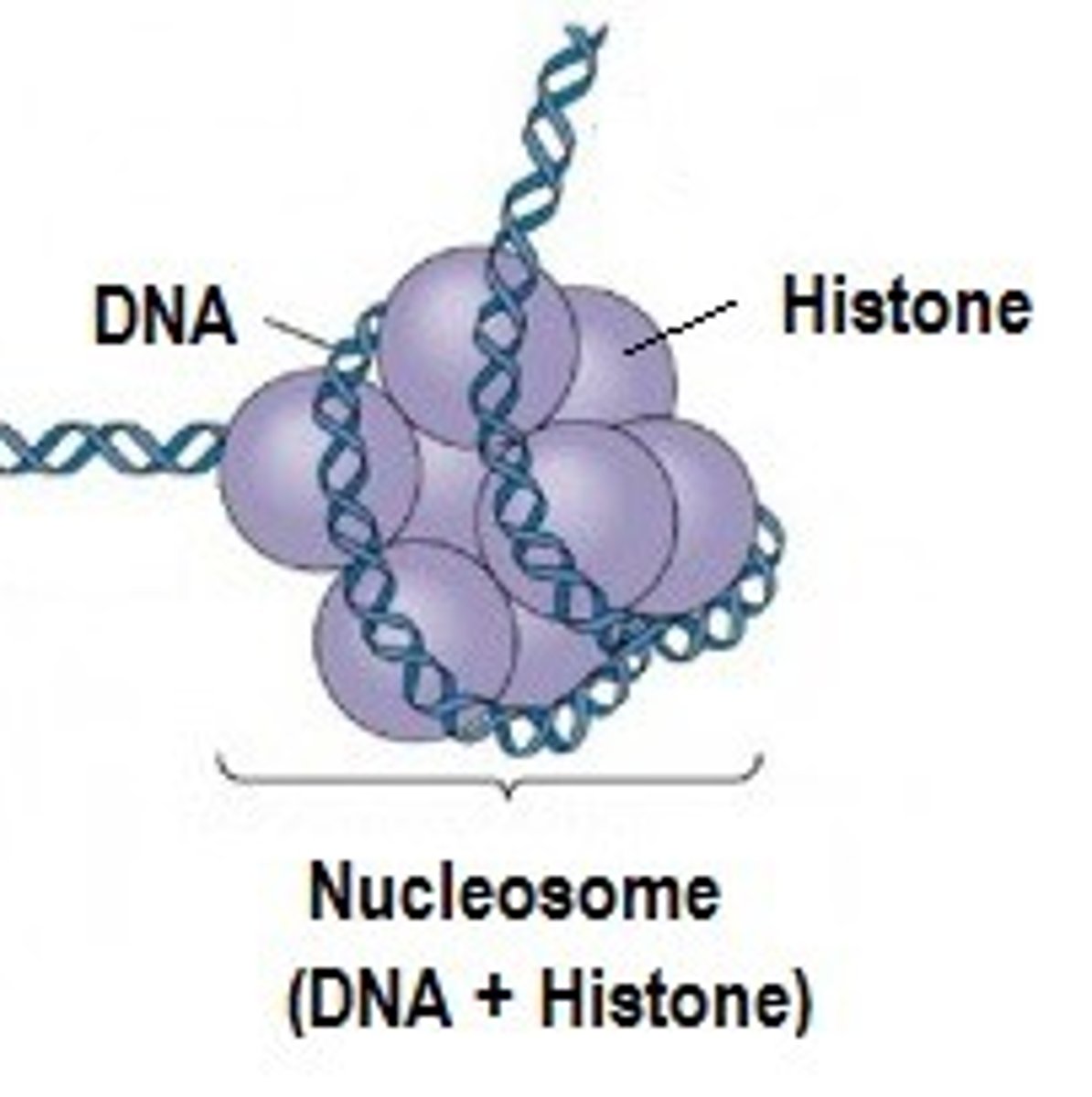
Haploid
An organism or cell having only one complete set of chromosomes. (in humans 23 chromosomes)
Diploid
2 sets of chromosomes (in humans - 46 chromosomes).
homologous chromosomes
Chromosomes that have the same sequence of genes, that have the same structure, and that pair during meiosis.
Tetrad
structure containing 4 chromatids that forms during meiosis
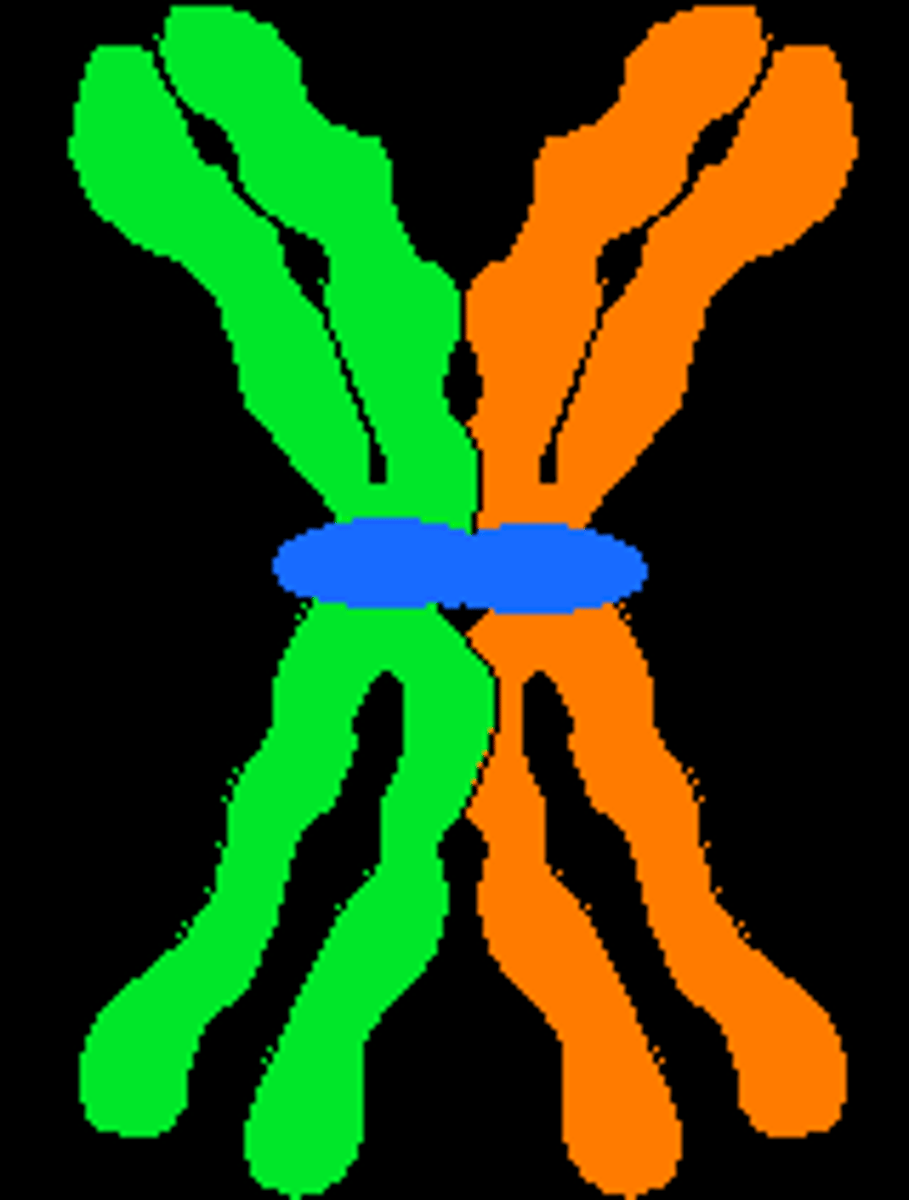
crossing over
Process in which homologous chromosomes exchange portions of their chromatids during prophase I.
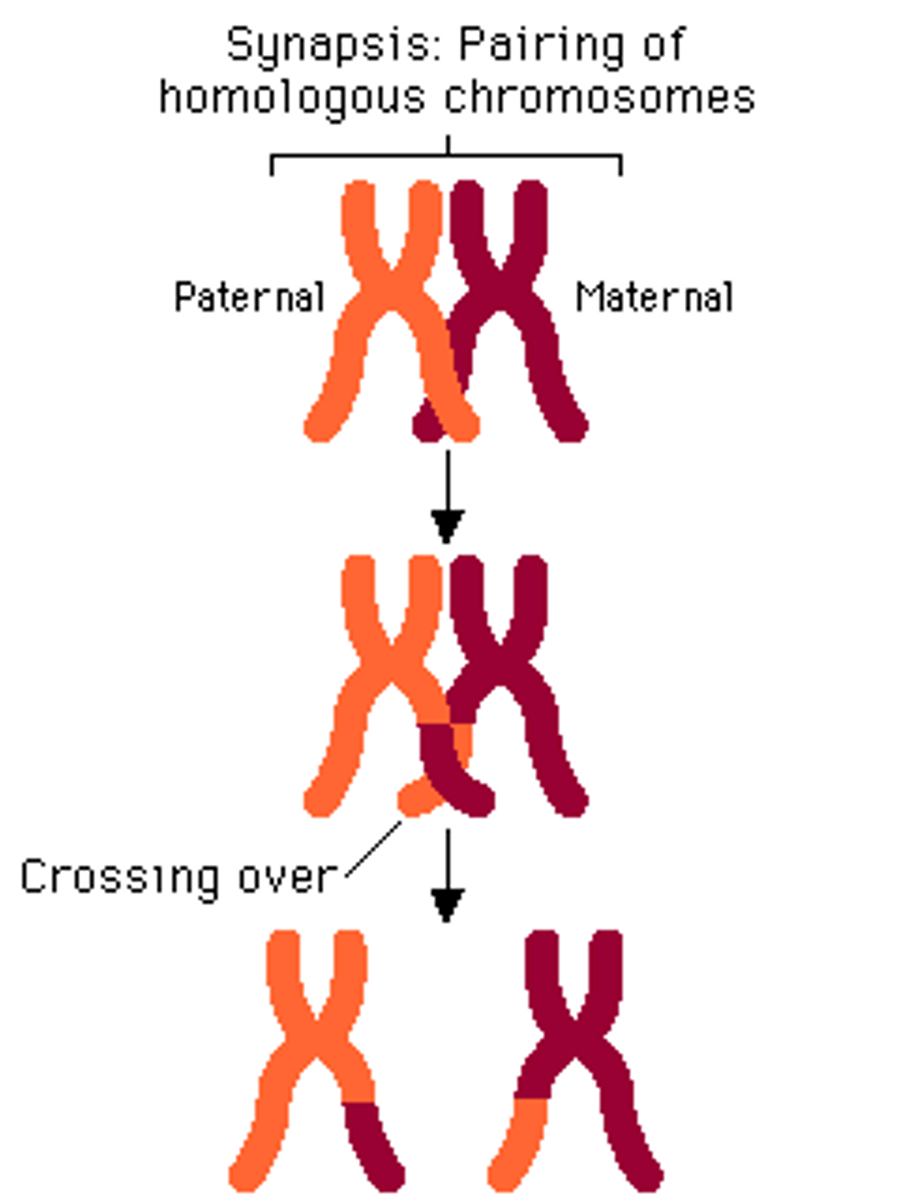
Prophase I (Meiosis)
homologous chromosomes pair up and form tetrads, crossing over occurs
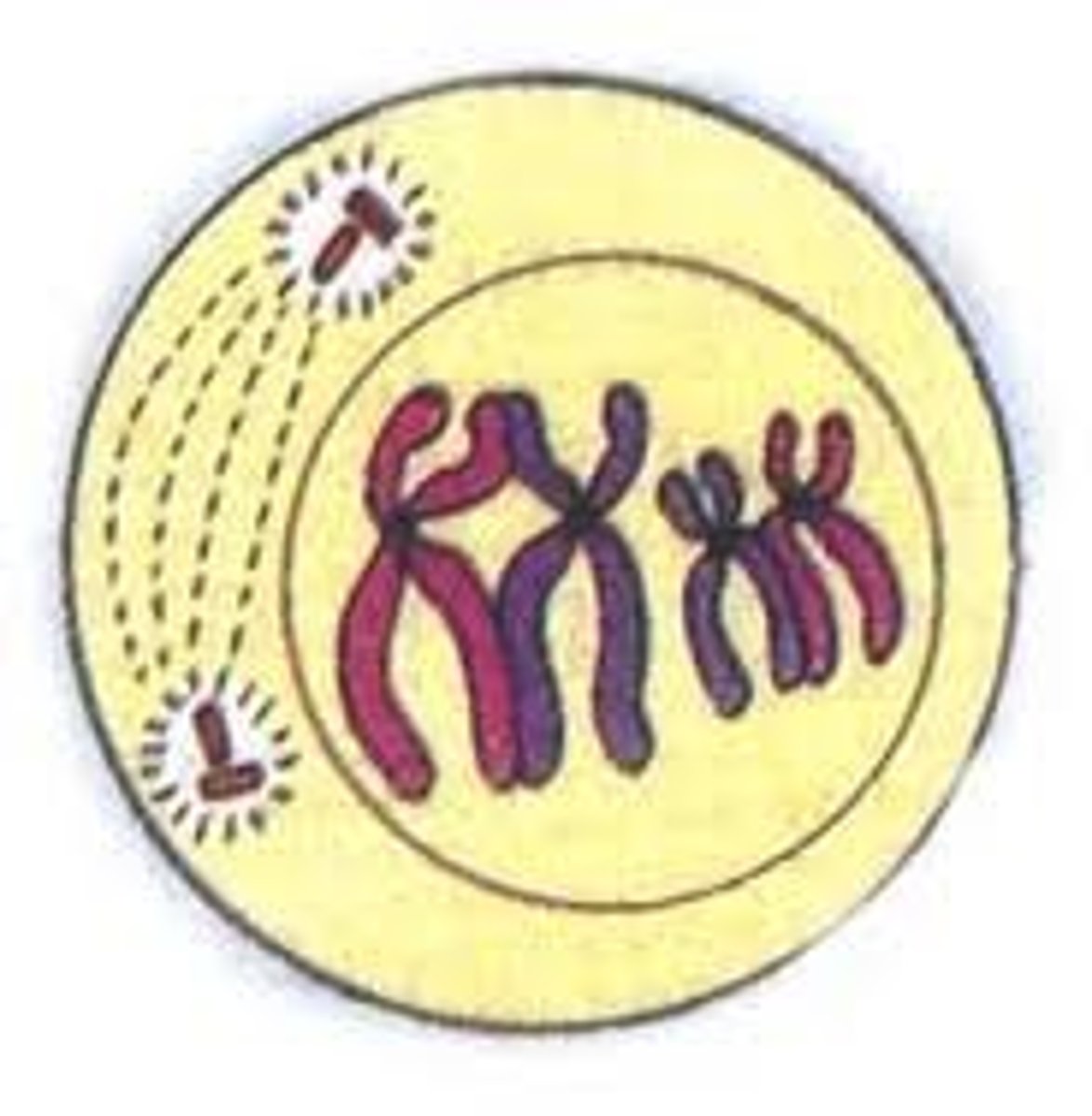
Metaphase I (Meiosis)
Tetrads are lined up at the metaphase plate; Spindle fibers attach
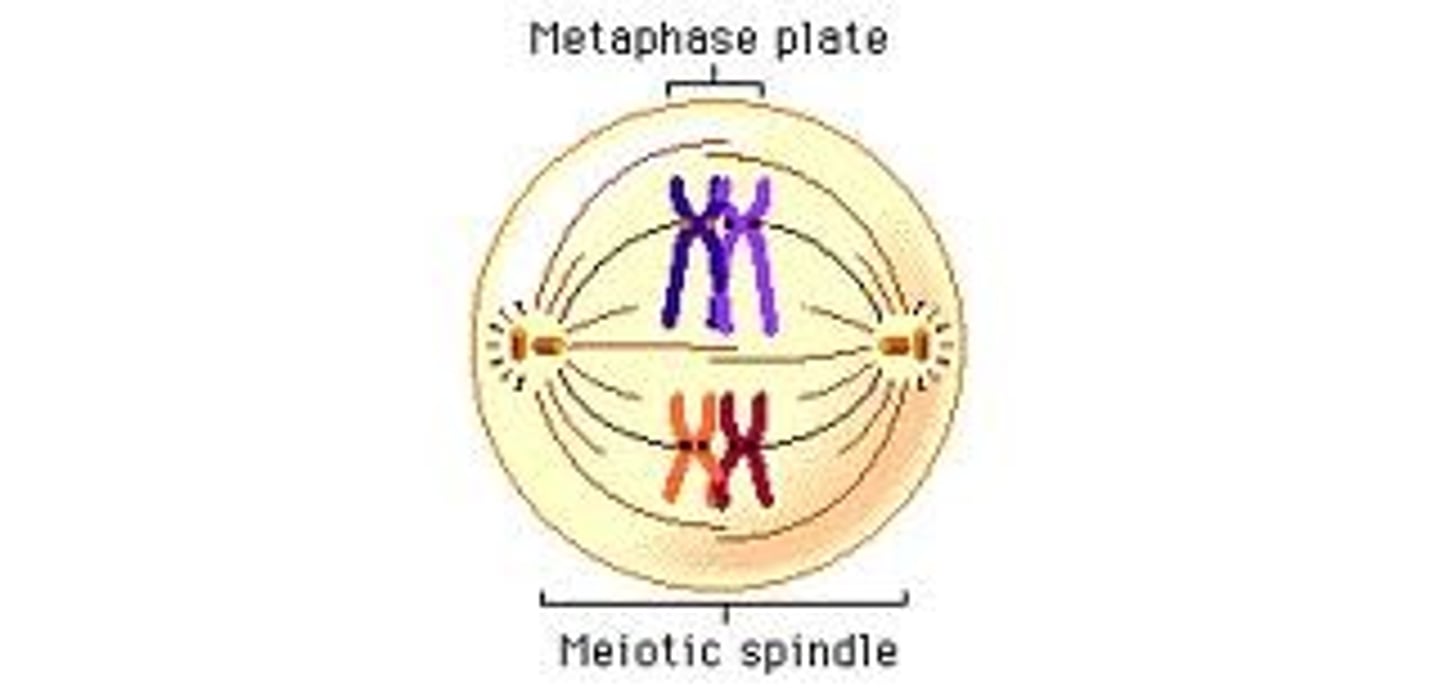
Anaphase I (Meiosis)
Homologous chromosomes separate
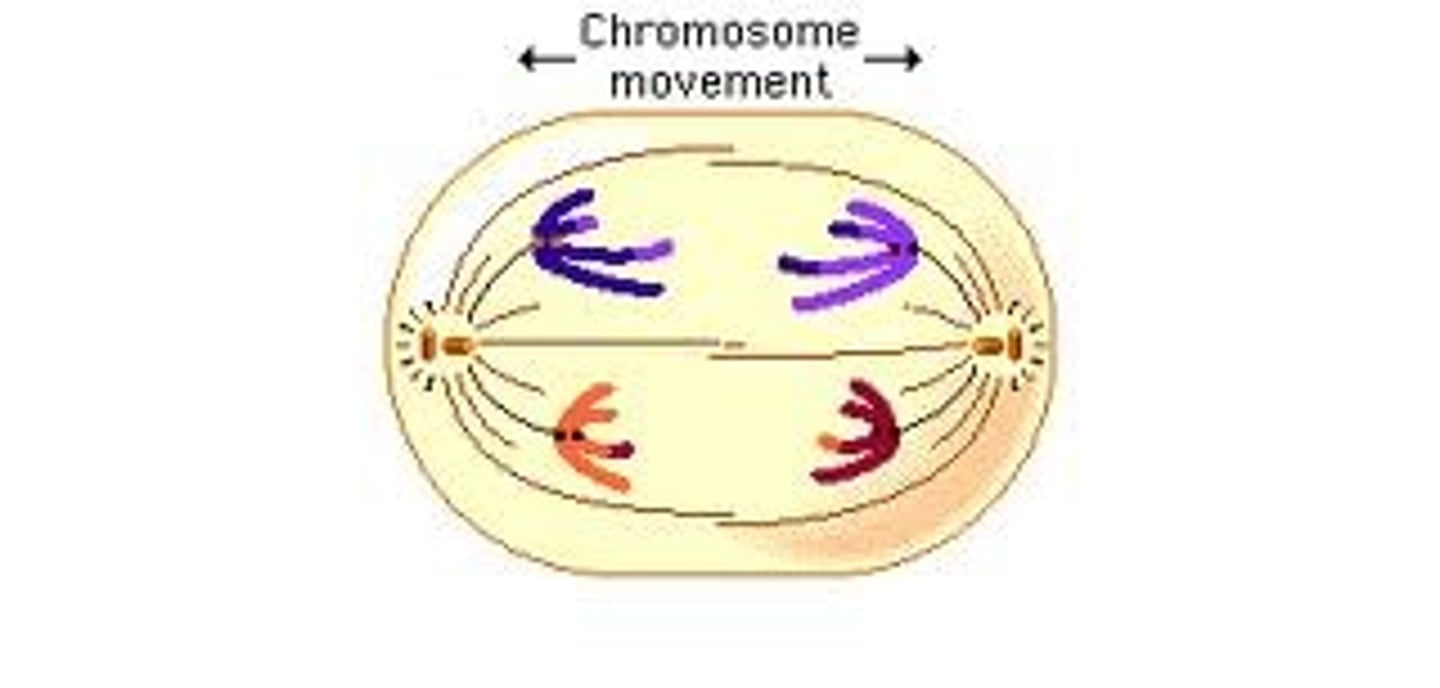
Telophase I (Meiosis)
Cytokinesis occurs, the result are two haploid daughter cells
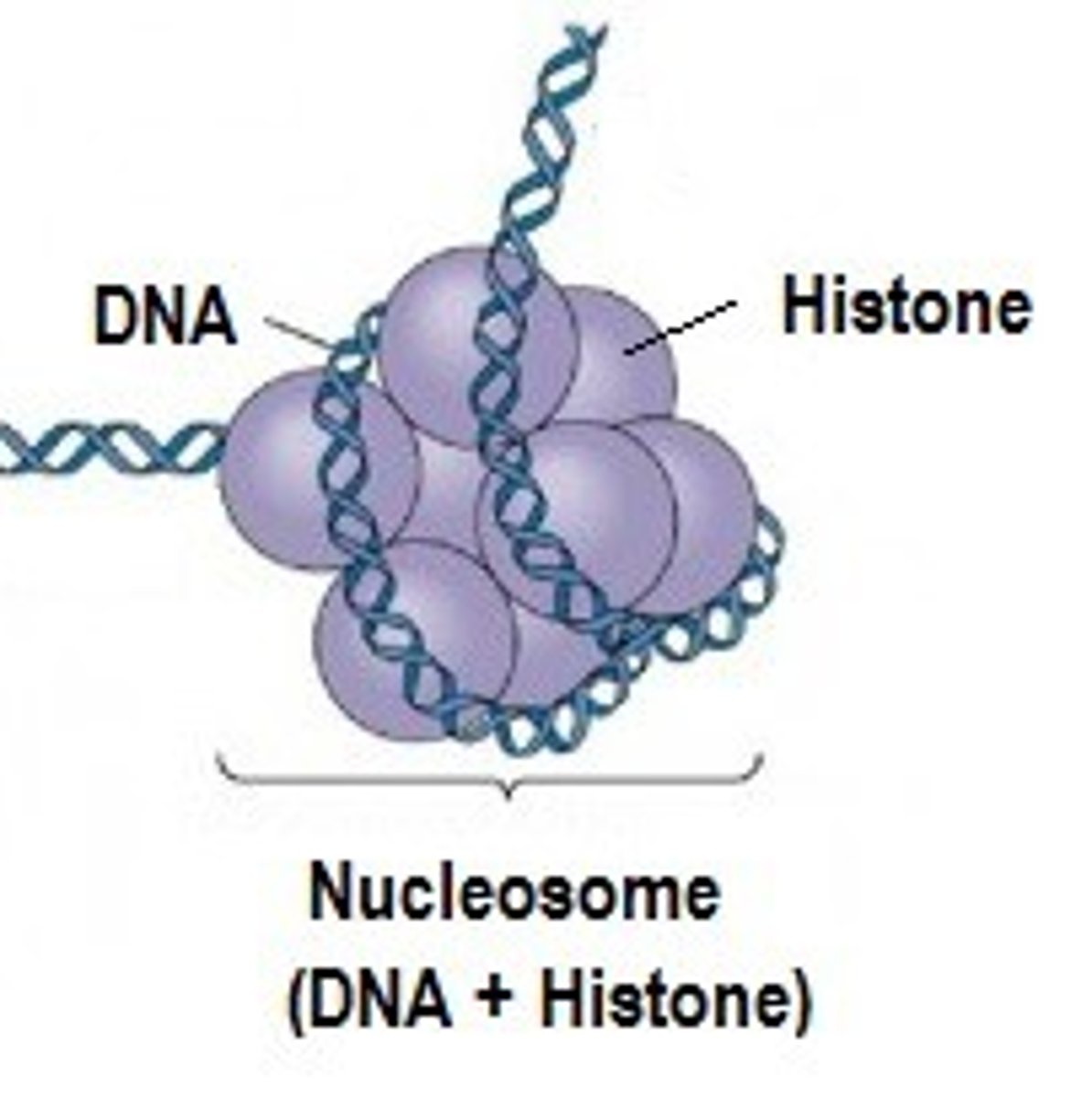
Nucleosome
repeating subunit of chromatin fibers, consisting of DNA coiled around histones
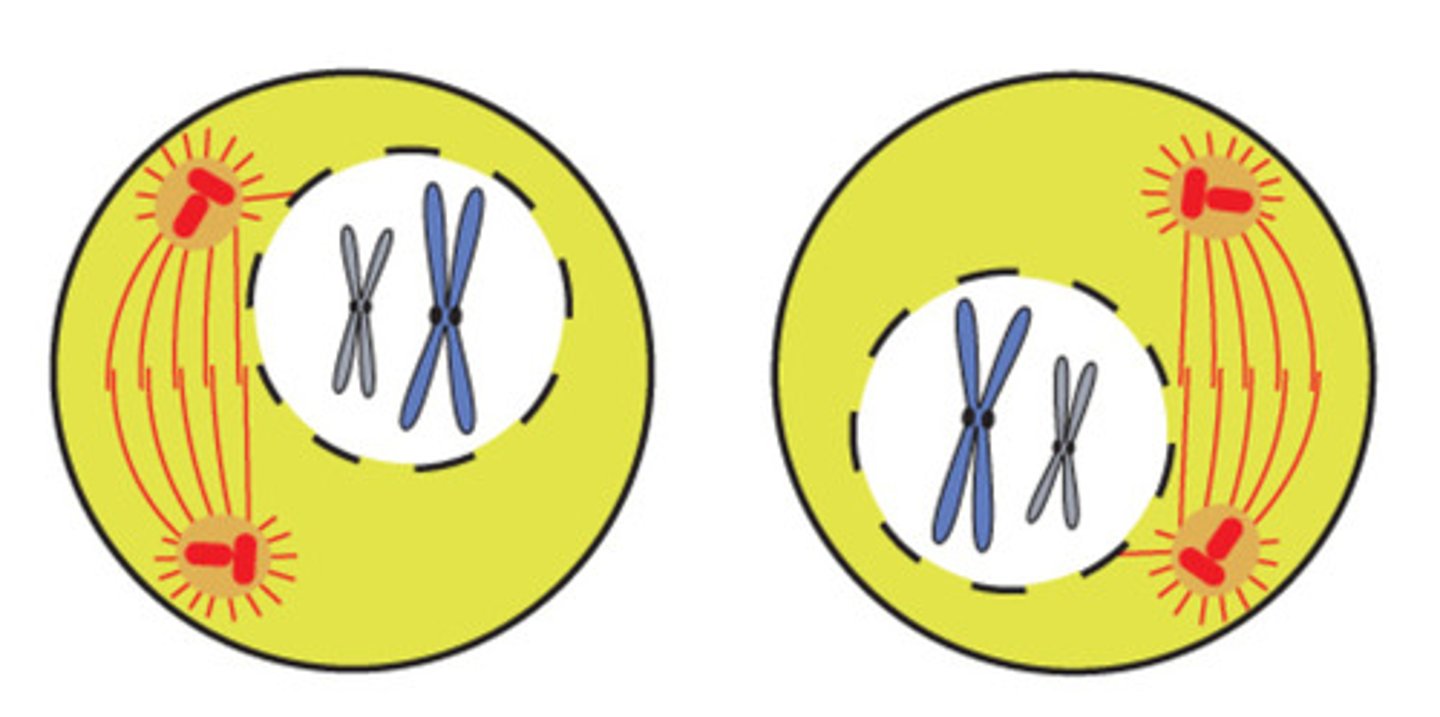
Prophase II (Stage 6)
chromosomes condense - nuclear membranes start to dissolve again. Sister chromatids are again joined by a centromere. Spindles start to reform between centrosomes.
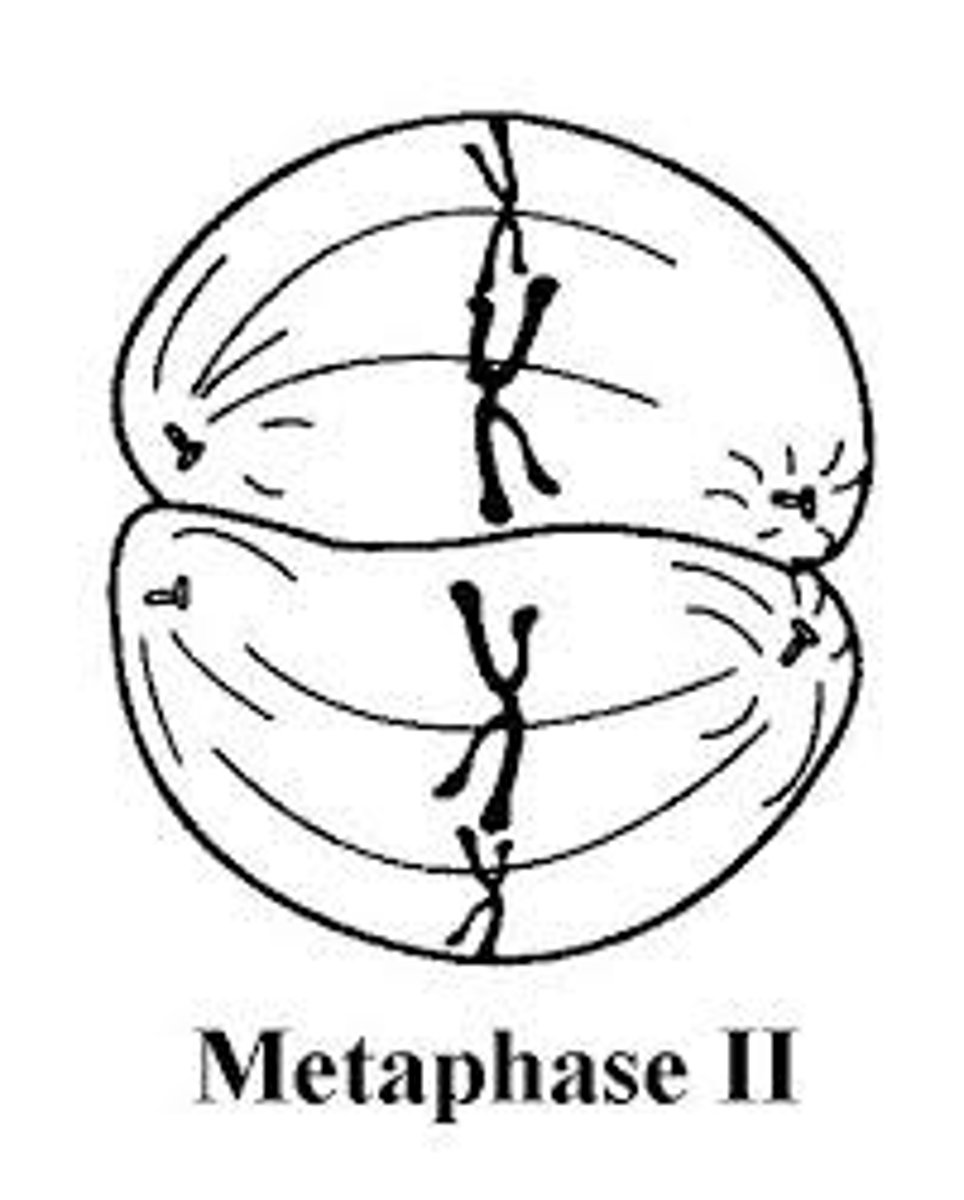
Metaphase II (Stage 7)
The chromosomes line up down the middle of the cells
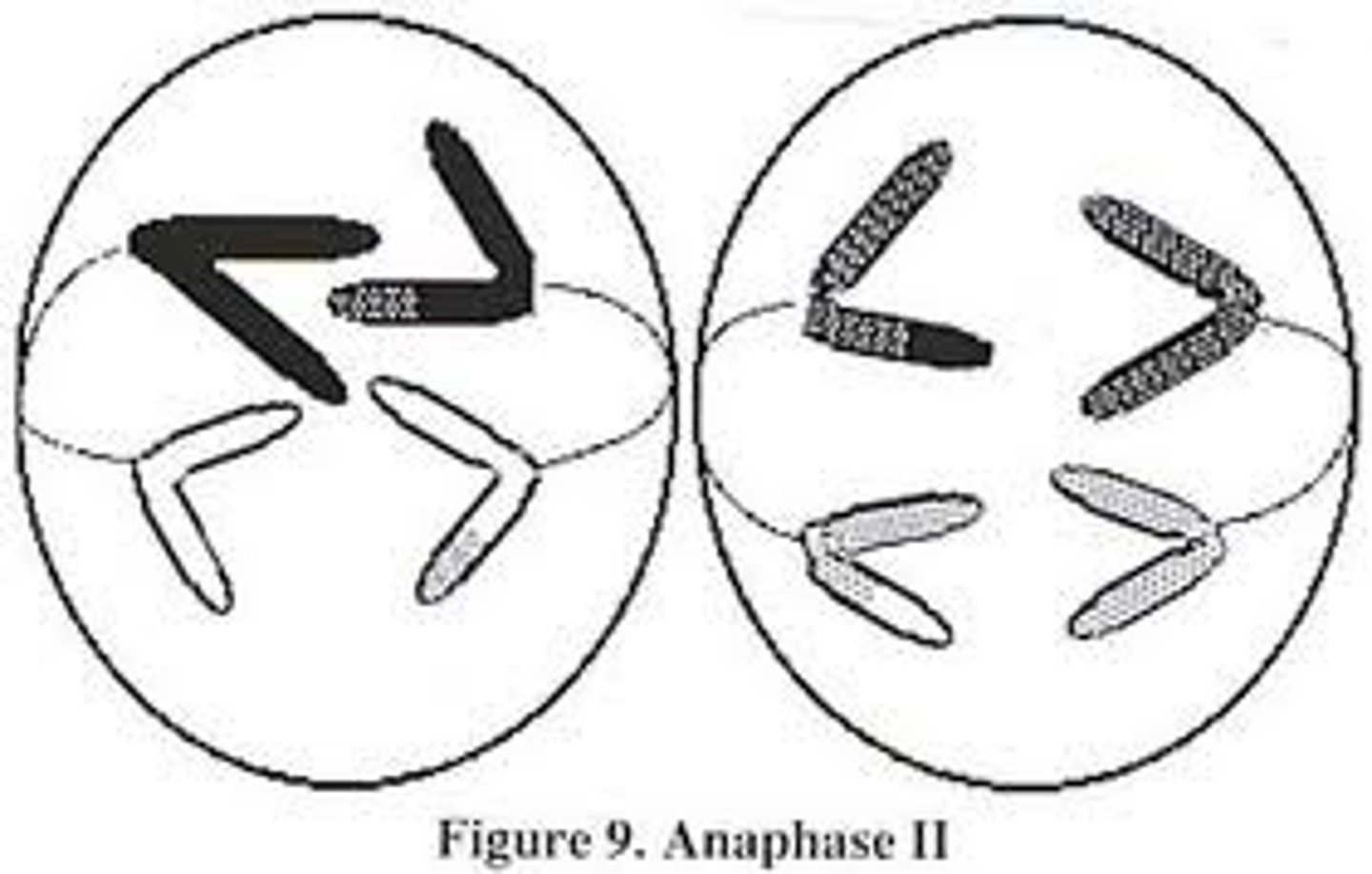
Anaphase II (Stage 8)
sister chromatids separate
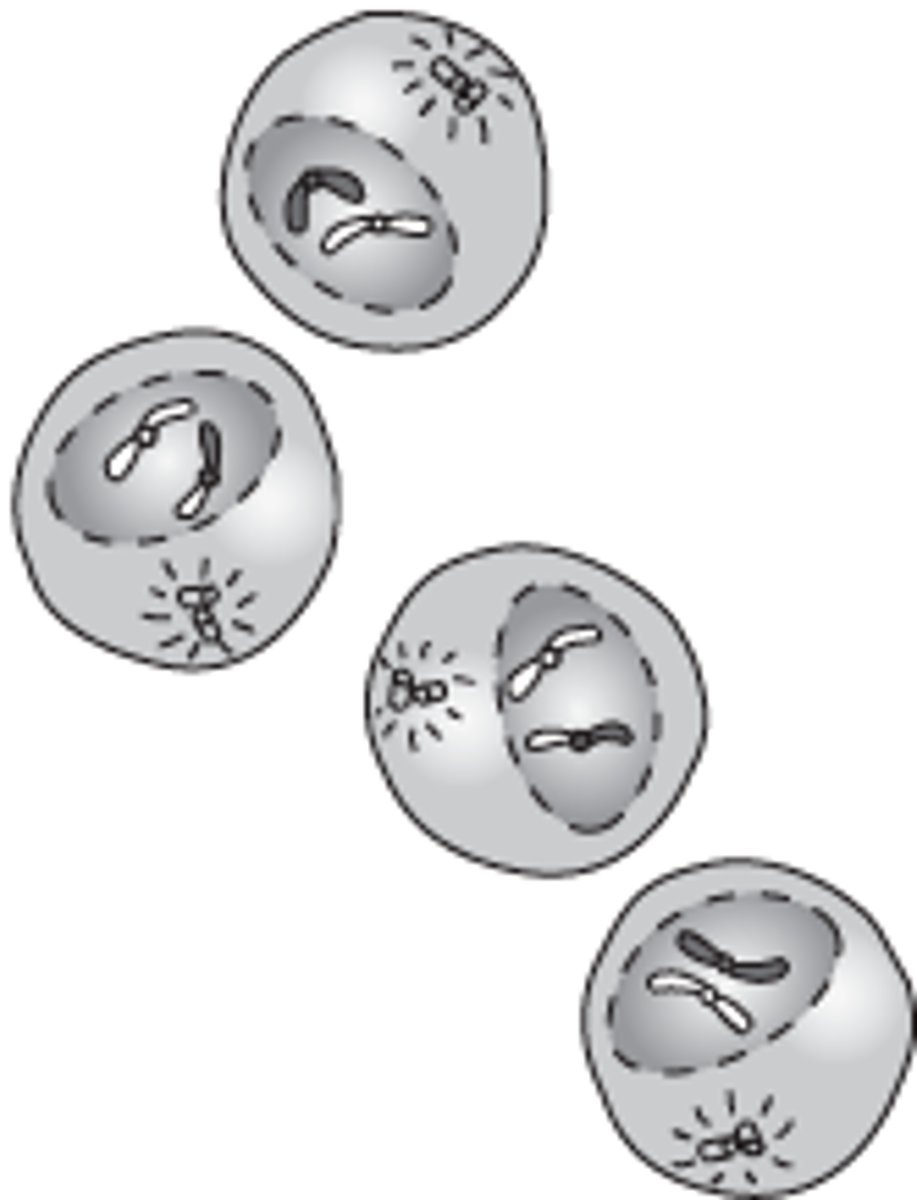
Telophase II and Cytokinesis
A nuclear envelope forms around each set of chromosomes. the cytoplasm divides.
Karyotype
A display of the chromosome pairs of a cell arranged by size and shape.
autosomal chromosomes
22 chromosome pairs that control traits NOT related to gender--same in females and males.
sex chromosomes
Chromosomes that determine the sex of an individual; x and y chromosomes