Intro To Audio Part 2 electric boogaloo
 Call Kai
 Learn
Learn Practice Test
 Spaced Repetition
 Match
Match Flashcards
 Knowt Play
1/61

There's no tags or description
Looks like no tags are added yet.
Name | Mastery | Learn | Test | Matching | Spaced | Call with Kai |
|---|
No analytics yet
Send a link to your students to track their progress
62 Terms
Equalization (EQ)
Frequency Dependent Control of Amplitude
Low Pass/High Cut filter
Cuts off high frequencies at a certain point leaving the lower frequencies audible
Low Cut/High pass filter
Cuts off low frequencies at a certain point, leaving higher frequencies audible
Shelving filter/High boost and cut
Filter to boost or cut a wide range of frequencies equally
Graphic EQ
A control surface that gives a graphical representation of how you are affecting the balance of frequencies
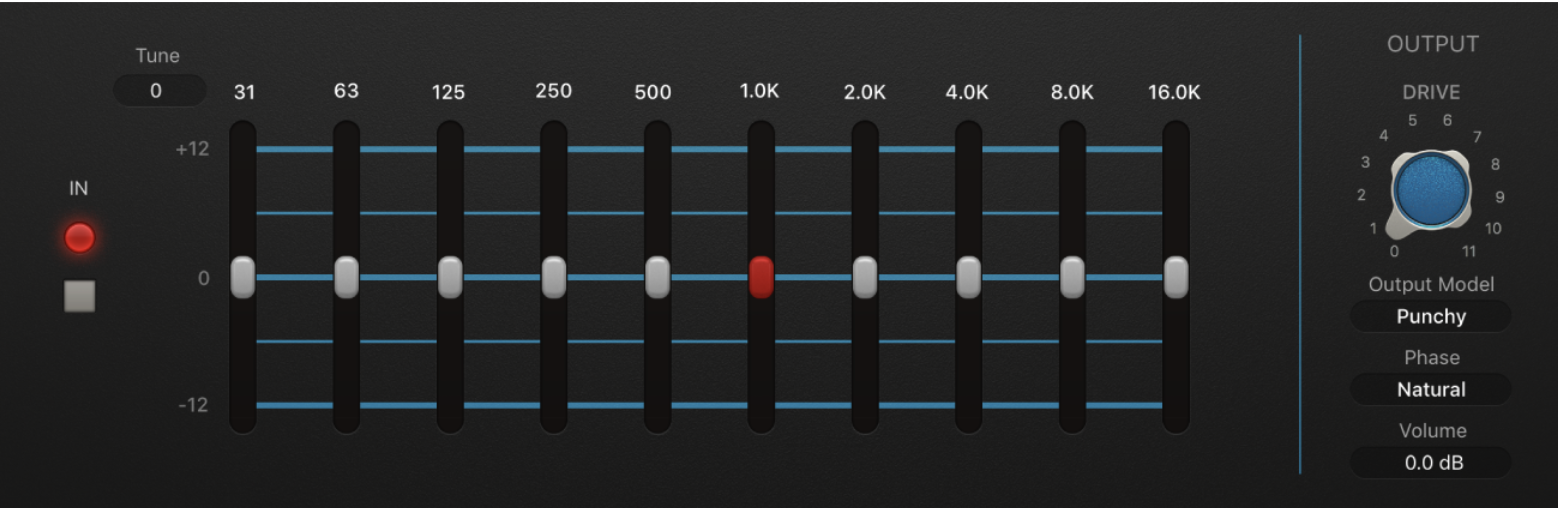
1/3 octave graphic EQ
each band covers 1/3 of an octave (major 3rd)
Fully parametric EQ
each band (typically 3-5) has fully variable control of three parameters
The three bands most commonly seen on parametric EQ
Center Frequency, Boost/Cut, Bandwidth or Q
What is Q
Center Frequency/Bandwidth
Dynamics Processors
Processors that manipulate dynamic range
Compression
a variable gain amplifier; once the input exceeds a threshold, output gain decreases as input increases
Threshold
The input level at which compression begins
Ratio
Number of dB in above the threshold that yields one dB out
Attack Time
the amount of time a compressor waits to start working once signal has crossed the threshold
Release Time
How long after the input signal drops below the threshold until the compressor returns to unity gain
Function of a Limiter
has a ratio of 10/1 or higher, essentially limiting, or putting a ceiling on the output
Hard Knee
Transitions to compression abruptly
Soft Knee
Transitions to compression over a range
Sidechain or Key input
Triggers compression of one signal with another signal (often a bass with a kick drum)
Expander or Noise Gate
Signals above the threshold remain at unity gain; signals below the threshold are made quieter
What are Delay and Reverb
Time Based Processors made up of actual, or simulated, reflections of sound waves
Delay
Made up of discreet reflections; heard as individual events
Reverb
Made up of a multiplicity of reflections, too close together in time to be individually discernable
Analog tape delay
While in record mode, send a signal to the record head; the time it takes the tape to travel to the playback head is the delay time
Feedback
feeding the output of a device back into its input in order to get repeating delays
Digital Delay
digital recorders that hold onto a signal and then release it after a time
VCO
Voltage controlled oscillator
LFO
Low frequency oscillator
what does VCO and LFO do
Produce a varying waveform in the analog digital domain that is used to modulate the parameters of delays and other devices
Phasing, Flanging, and Chorus
all produced using a VCO/LFO to modulate delay times
Early Reflections (Reverb)
give a sense of how big the space is and where you are in it
Onset of Reverb
begins when reflections build up in the space to form a wash of sound
Reverb Time
determined by how reflective the space is
RT60
how long it takes the reverb to decay 60dB
Chamber Reverb
a dedicated space (chamber) with a speaker in it and one or more microphones; we send a signal to the speaker and capture the reverb with the mics
Plate Reverb
Utilizes a metal plate suspended in a box like enclosure, a driver excites the plate and contact microphones pick up the vibrations dissipated in the plate
Spring Reverb
energy is dissipated in one or more springs and picked up the same way as plate reverb
Digital Reverb
uses algorithms to mimic the sounds of the other three methods of reverb, and of all kinds of spaces.
doubling delays
delays that are not heard as individually discernible events, but are not reverb.
The Haas effect
Short delays are perceived as coming from different places but are not heard as echoes
Direct/Reverb Ratio
the balance between the direct sound a source and the reverberant sound in a space.
Digital Audio
Computer based encoding and decoding of a waveform
Two big advantages of digital over analog
You can use computers to manipulate audio
There is no noise from storage media on playback
Binary Numbers
Utilize 1’s and 0’s to allow computers to make calculations super fast
How many values does a 16 bit word have?
0 - 65,536
What is a Sample
an instantaneous snapshot of amplitude
Sample Rate
how many samples are taken per second
Sample and Hold
this takes a sample and holds that value until the next sample is taken
Nyquist Rule
As long as the sample rate is at least 2x higher than the highest frequency present in your signal, you retain all the information.
Nyquist Frequency
the high frequency limit of a sampler
Aliasing
a frequency at the output that was never at the input; happens when you violate the Nyquist rule
Anti-Aliasing filter
a low pass filter that cuts off any frequency higher than half the sample rate
Quantization
the approximation of amplitude; rounding up or down to the nearest available quantization level
Analog to digital converter
outputs the 16 bit word that corresponds to the quantized amplitude
Multiplexor
takes the 16 bit parallel of the A/D converter and puts it into serial, or sequential form
low level distortion
when a waveform doesn’t cross at least 2 quantization levels, it gets quantized to only one, and causes distortion
Dither
a low level noise that is added to all inputs to ensure that all signals cross at least two quantization levels
Error protection and interleaving
the scrambling of the data on the storage medium so that any damage affects small parts of many digital words instead of wiping out entire words
Disadvantage of digital compared to analog
digital audio has a counterintuitive distortion characteristic
2/1 rule
the distance between microphones should be at least twice the distance from the microphones to the sound source
Granulation noise
the sound artifacts that can occur during the process of granular synthesis
What is Bandwidth
The range of frequencies that a device can handle