Biology Paper 1
 Call Kai
 Learn
Learn Practice Test
 Spaced Repetition
 Match
Match Flashcards
 Knowt Play
1/58

There's no tags or description
Looks like no tags are added yet.
Name | Mastery | Learn | Test | Matching | Spaced | Call with Kai |
|---|
No analytics yet
Send a link to your students to track their progress
59 Terms
Eukaryotic Cell
Cell that has a nucleus and other membrane-bound organelles
Prokaryotic Cells
Genetic material is not enclosed in a nucleus. They are much smaller
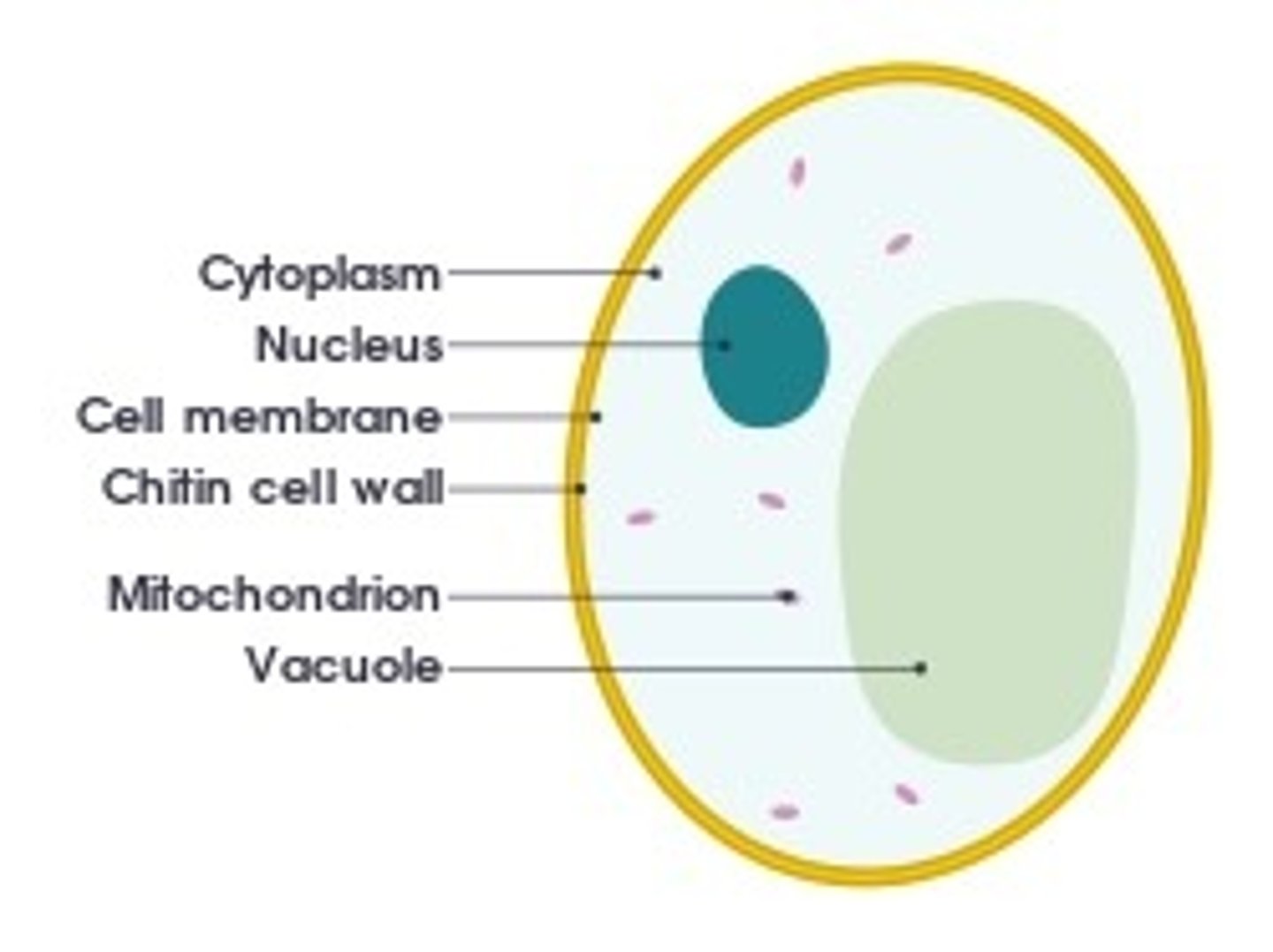
An Animal cell contains...
Nucleus, cytoplasm, cell membrane, mitochondria, ribosomes
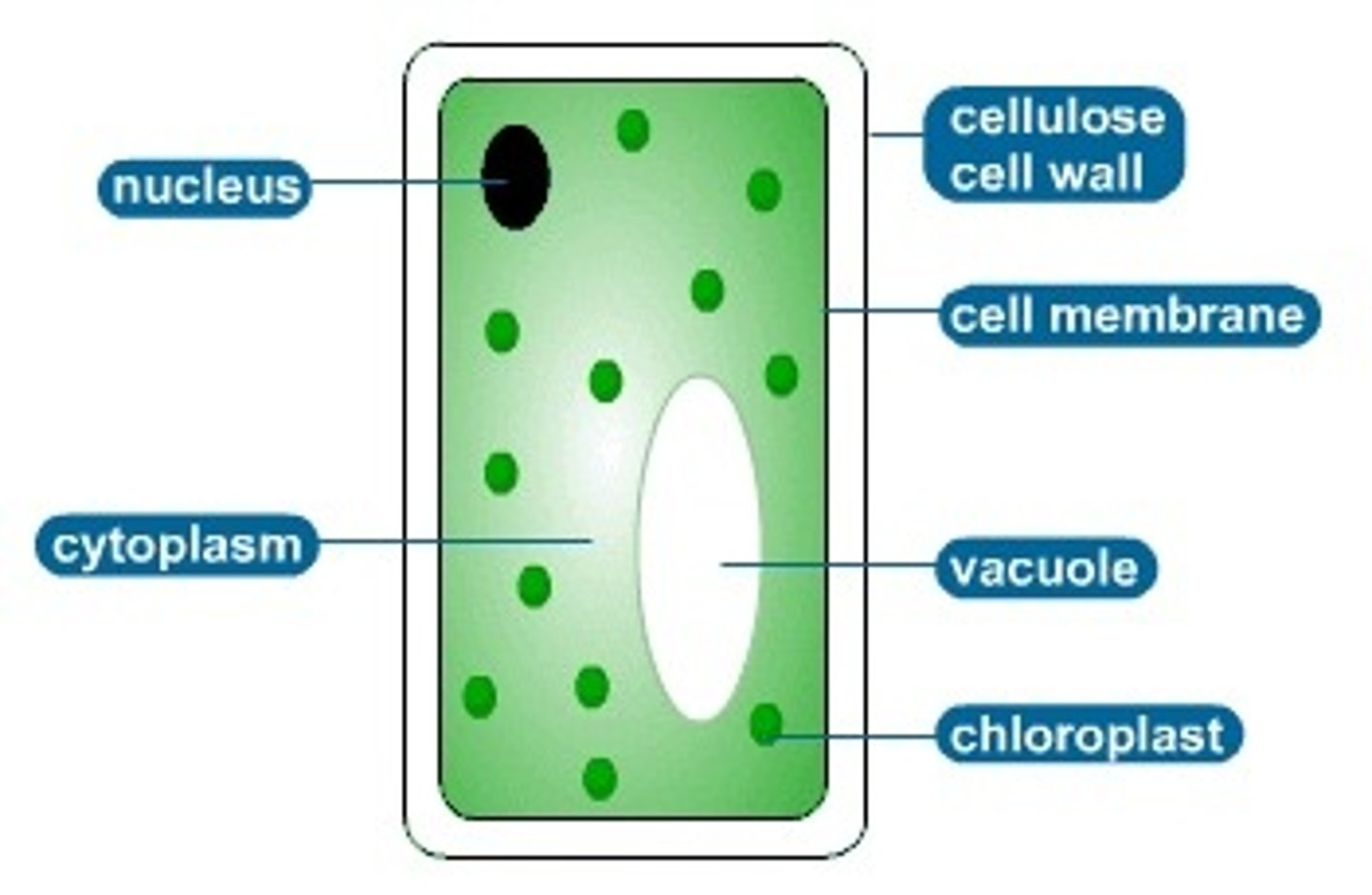
A plant cell contains...
Nucleus, cytoplasm, cell membrane, mitochondria, ribosomes, chloroplasts, cell wall, vacuole
Function of Nucleus
Enclose genetic material
Function of Cytoplasm
Liquid where chemical reactions occur
Function of cell Membrane
Control what enters and leaves the cell
Function of Mitochondria
Where aerobic respiration takes place
Function of Ribosomes
Site of protein synthesis
Function of chloroplasts
Contain chlorophyll and are the site of photosynthesis
Function of cell wall
Strengthen the cell; made of cellulose
Function of Vacuole
Full of cell sap; keeps the plant cells shape
Differentiation
The process of a cell becoming specialised; having a specific function
Sperm cells adaptations
Half the genetic material, long tail for swimming, lots of mitochondria for energy, contain egg-digesting enzymes
Nerve cell adaptations
Long axons carry impulses, myelin insulates and speeds up, synapse allow impulses to move, contains egg digesting enzymes
Muscle cell adaptations
Can contract, lots of mitochondria, wok together
Root hair cell adaptations
Large surface area to volume ratio, no chloroplasts
Xylem adaptations
No end walls, made from dead lignin cells
Phloem adatations
Have a companion cell to provide energy
Microscopes Practical
Use a slide and place it in microscopes on the lowest magnification. Focus the microscope while increasing the magnification.
Magnification =
size of image/size of real object
Electron Microscopes
Have a higher resolution and magnification. Can see in greater detail. they are more heavy, less portable and more expensive.
Bacteria
Multiply by Binary fission. About once every 20 minutes.
Practical: Antibiotics and bacteria
1. Sterilise area
2.Sterilise inoculation loop using fire
3. Open agar plate near flame
4. Spread Bacteria over plate
5. Place antibiotic paper in plate
6. Incubate for a few days at 25 degrees
Gametes
Sex cells that contain half the number of chromosomes
Chromosomes
Humans have 23 pairs of chromosomes. They carry genes
Cell Cycle
1. DNA replicates, the cell grows and copies internal structures
2. Mitosis takes place, cell splits
3. Two identical cells are formed
Stem cell
An undifferentiated cell which can give rise to more cells of the same type and can differentiate to form other types of cells
Stem cells Location
They are found in plant meristems, embryos and in bone marrows
Bone Marrow Transplant
Treat patients with leukaemia. The implanted stem cells divide to form new blood cells.
Therapeutic Cloning
A donor embryo is conceived to provide stem cells with the same genes for a patient.
Diffusion
The spreading out of particles resulting in a net movement from an area with a high concentration to an area of low concentration
Factors affecting the rate of diffusion
↑ concentration gradient ↑ diffusion
↑ temperature ↑ diffusion
↑ SA:V ↑ diffusion
↓ diffusion pathway ↑ diffusion
Osmosis
Diffusion of water from a dilute solution through a partially permeable membrane
Active Transport
Moves substances from a more dilute solution to a more concentrated solution against the concentration gradient.
Practical: effects of osmosis
1. Cut potato into equal-sized cubes
2. Measure mass and size of the cube
3. Put potato into 10cm3 of 0.5 molar sugar solution
4. Put potato into 10cm3 of 0.25 molar sugar solution
5. Put potato into 10cm3 of Water
6. Leave overnight
7. Measure mass and sizw again
Tissue
A group of cells with a similar structure and function
Organ
Group of tissues working together for a specific function
Digestion
Is the breaking down large insoluble molecules into small soluble molecules by enzymes
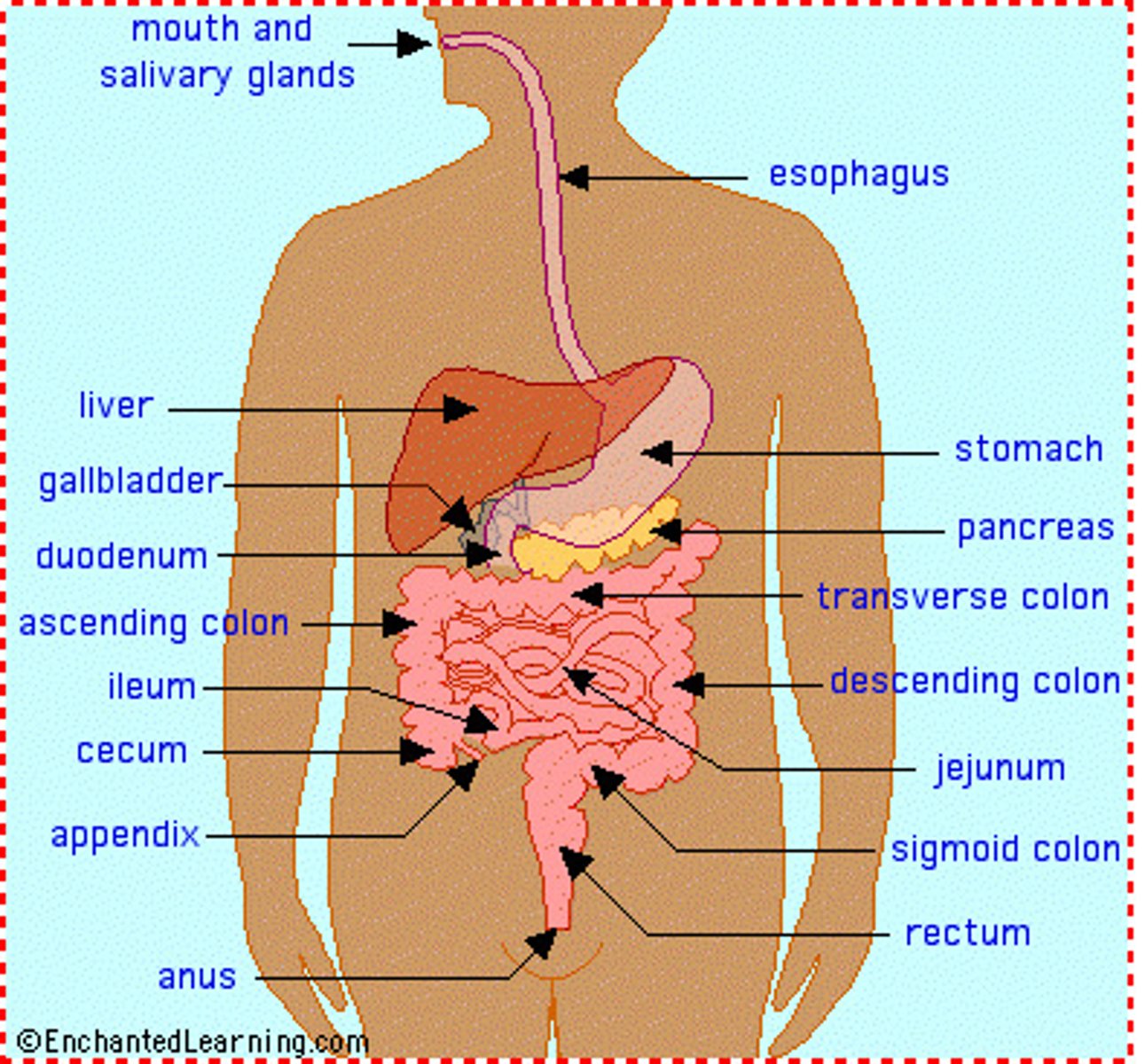
The digestive system contains
Mouth, oesophagus, stomach,small intestine, large intestine, liver, panaceas, rectum, duodenum
Function of mouth
Food is chewed here. Enzymes begin to break it up
Function of Oesophogus
Squeezes food down using peristalsis motion.
Function of Stomach
The digestion of proteins begins. It contains hydrochloric acid. Churning action make food into a fluid
Function of Small intestine
Absorbs nutrients(glucose, protein) from food.
Function of Large Intestine
Absorbs water from food
Function of Liver
Produces Bile
Function of Pancreas
Produces enzymes
Enzymes
Large protein molecules that catalyse chemical reactions without having any chemical change to themselves. Work at an optimum PH and temperature.
Protease
Breaks down proteins into amino acids. Made in the stomach, pancreas and small intestine.
Amalayse
Breaks down carbohydrates into starch. Made in the Salivary glands and the pancreas.
Lipease
Breaks down lipids into 3 fatty acids and 1 glycerol. Made in the pancreas and small intestine
Bile
Speeds up digestion of lipids. Stored in the Gall bladder. Emulsifies the lipids to increase the surface area that enzymes can work on and nutrilaises stomach acid
Hydrochloric acid
Provides the optimum PH for enzymes to work in the stomach.
Practical: PH and enzymes
1. Place a drop of iodine solution into each well of spotting tile
2. Get three test tubes and add
A - 2cm3 starch solution
B - 2cm3 amylase solution
C - 2cm3 PH 5 buffer solution
3. Place the test tubes in a 30C water bath
4. Mix the solutions and start timer
5. Every 30 secs add a drop of the mixed solution into a new well in the spotting tile
6. If starch is present it will turn blue, stop adding solution when it remains orange
7. Repeat using PH 6,7,8 buffers
Practical: Starch test
1. Place 2cm3 food solution in a test tube
2. Add a few drops of iodine
Present= turn blue black
Not present= stay orange
Practical: Sugar test
1. Place 2cm3 food solution in a test tube
2. Add 10 drops Benedict's solution
3. Place test tube in beaker of hot water
4. Leave for 5 minutes
Present = turn green/red
Not present = stay blue
Practical: Protein test
1. Place 2cm3 food solution in a test tube
2. Add 2cm3 of Biurets
Present = turn pink/purple
Not present = stay blue
Practical: Lipid test
1. Place 2cm3 food solution in a test tube
2. Add 3 drops Sudan III
3. Shake gently
Present = red stained oil layer will float to surface
Not present = stay red
Small intestine adaptations
Villi and Micro villi increase SA:V ratio
Good blood supply
Thin membrane