b10 - the human nervous system
 Call Kai
 Learn
Learn Practice Test
 Spaced Repetition
 Match
Match Flashcards
 Knowt Play
1/83

Earn XP
Description and Tags
anki exported for the eoy cram
Name | Mastery | Learn | Test | Matching | Spaced | Call with Kai |
|---|
No analytics yet
Send a link to your students to track their progress
84 Terms
what is homeostasis
the act of maintaining a consistent internal environment
why is homeostasis important
as it keeps cell processes and enzymes at optimum efficiency
what internal conditions are controlled by homeostasis
body temperature
- water content of the body
- blood glucose concentration
what are the demands of a control system
receptors
- control centres
- effectors
what are effectors in control systems
carry out what is needed
how fast does the nervous system carry messages
1 and 120m per second
what are stimuli to the nervous system picked up by
receptor cells
neurones make up what
nerves
what is the central nervous system known as
CNS
what organs are in the CNS
brain and spinal cord
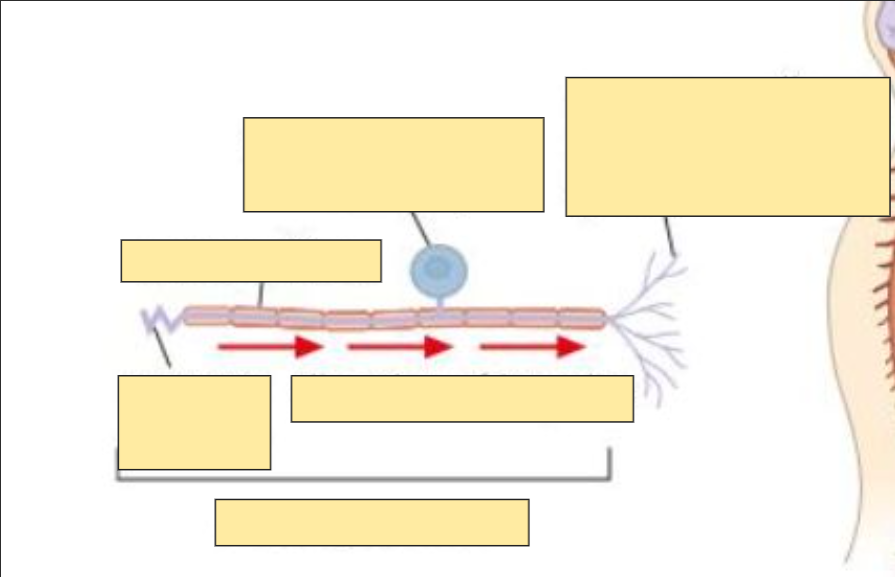
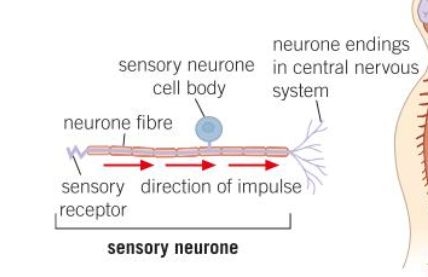
the cells that carry impulses fom your sense organs to your CNS are what
sensory neurones
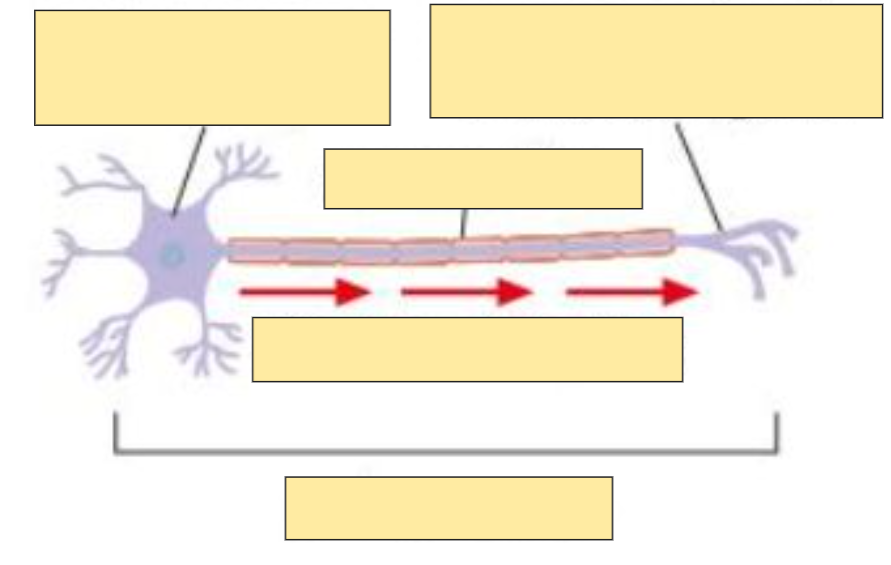
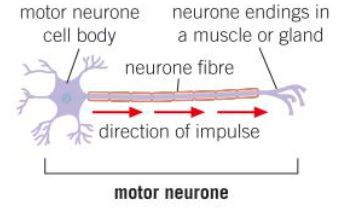
wht cells carry impulses from CNS to the rest of your body
motor neurones
motor neurones cause what to respond
effectors
simplified nervous system workings list
stimulus
reflex pathway
stimulus -> recpetor -> sensory neurone -> relay neurone -> motor neurone -> effector -> response
reflex actions control what
breathing, digestion and help to avoid danger
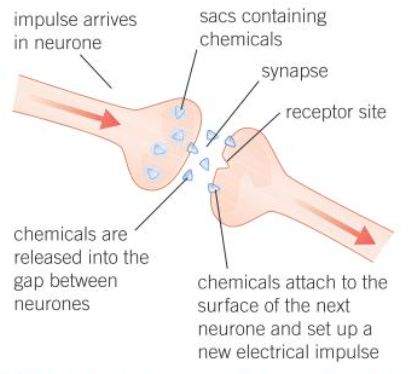
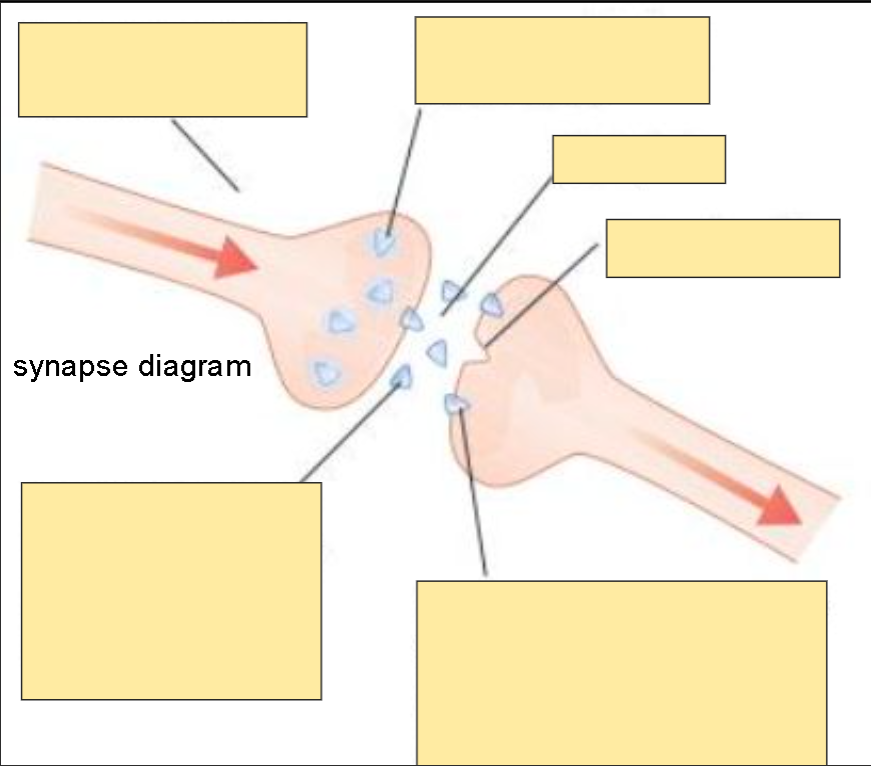
what are the cehmicals that diffuse acoss synapses called
neurotransmitters
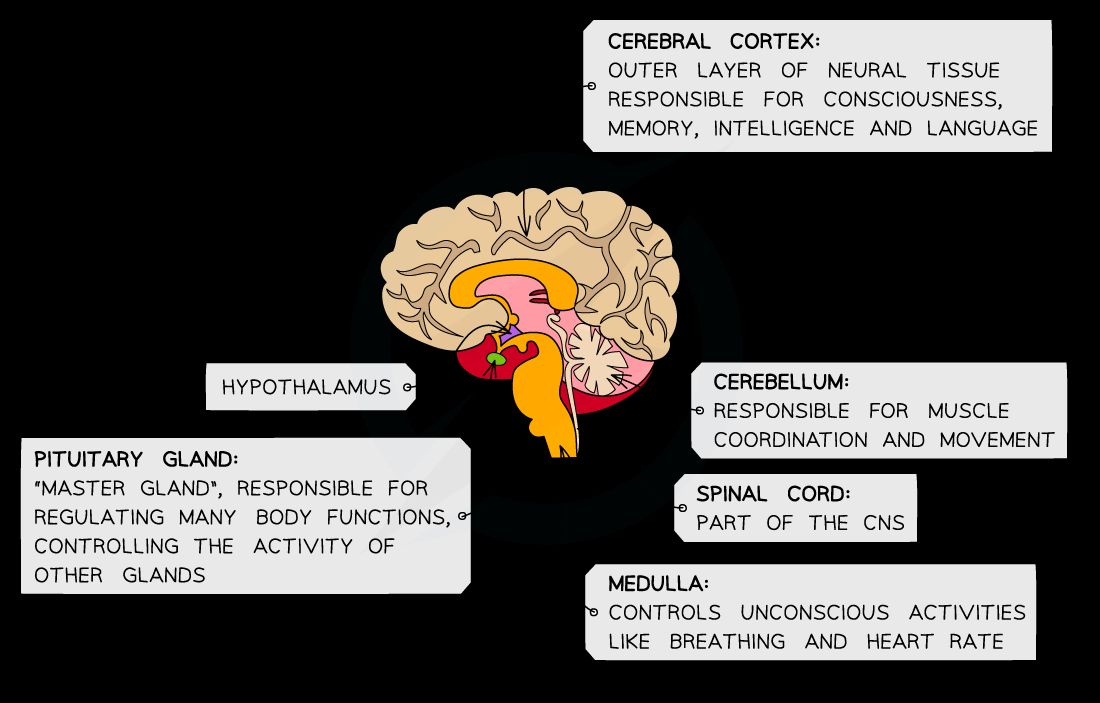
what is the role of the brain in the nervous system?
the brain processes information from sensory receptors and sends impulses along motor neurones to coordinate responses.
what does the brain control?
movement, complex behaviour, thoughts, feelings, and unconscious processes.
how is the brain protected?
it is protected by the skull and covered by protective membranes called the meninges.
what is the brain made of?
billions of interconnected neurones forming specialised regions.
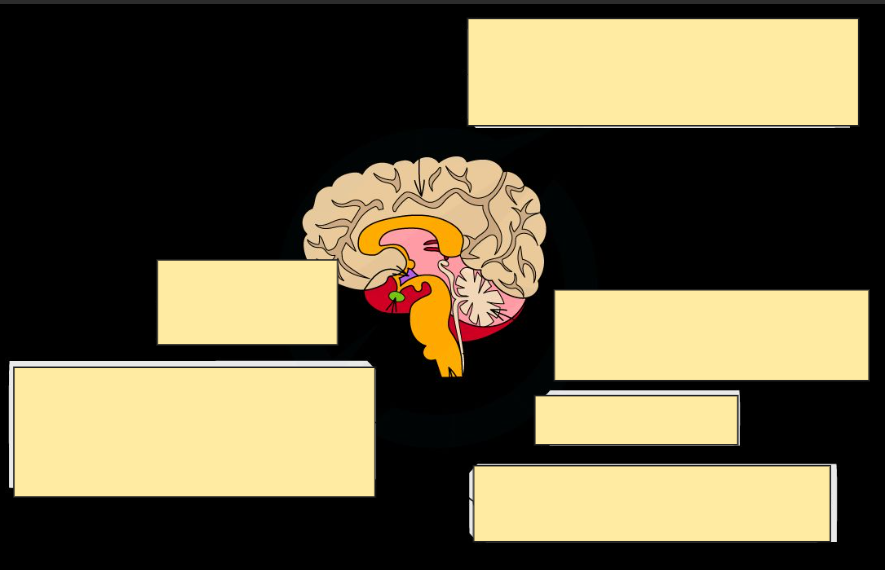
what is the function of the cerebral cortex?
memory, consciousness, language, and intelligence.
what is the function of the cerebellum?
coordination of muscular activity and balance.
what is the function of the medulla?
control of unconscious activities such as heartbeat, breathing, and movements of the gut.
what is the function of the hypothalamus?
it controls body temperature and links the nervous system to the endocrine system.
what is the function of the pituitary gland?
it produces hormones that control other glands and body systems.
how have scientists mapped functions of different brain areas?
by studying people with brain damage and linking behaviour changes to damaged regions.
how can electrical stimulation help scientists study the brain?
stimulating specific areas causes responses such as hunger, fear, or movement, helping identify their functions.
why can brain surgery be done while a patient is conscious?
because there are no sensory pain receptors in the brain tissue itself.
what is an mri scan used for?
to produce detailed images of the brain and link damaged areas to loss of function.
how can modern mri scanners improve understanding?
they can take images while a person performs tasks to show active regions.
why is the brain difficult to treat medically?
it is complex and delicate, drugs may not pass the membranes easily, and surgery risks causing unintended damage.
why are brain disorders difficult to investigate?
many different neurones and chemicals interact, and the functions of some areas are not fully understood.
what is the retina?
a light-sensitive layer at the back of the eye containing receptor cells sensitive to light intensity and colour.
what are the light-sensitive cells in the retina called?
rods and cones.
what is the function of rods?
rods are sensitive to light intensity and work well in dim light.
what is the function of cones?
cones detect colour and work best in bright light.
what is the sclera?
the tough white outer layer of the eye that protects the eyeball.
what is the cornea?
the transparent curved front of the sclera that refracts light into the eye.
why is the cornea important?
it refracts light strongly to help focus it on the retina.
what is the pupil?
the hole in the centre of the iris through which light enters the eye.
what is the function of the iris?
it controls the size of the pupil and therefore the amount of light entering the eye.
what happens to the pupil in bright light?
circular muscles contract, radial muscles relax, and the pupil constricts.
what happens to the pupil in dim light?
circular muscles relax, radial muscles contract, and the pupil dilates.
what is the function of the lens?
it fine-tunes the focusing of light onto the retina.
what holds the lens in place?
suspensory ligaments.
which muscles change the shape of the lens?
ciliary muscles.
what is accommodation?
the process of changing the shape of the lens to focus on near or distant objects.
how does the lens focus on a near object?
ciliary muscles contract, suspensory ligaments slacken, and the lens becomes thicker and more curved.
how does the lens focus on a distant object?
ciliary muscles relax, suspensory ligaments tighten, and the lens becomes thinner and less curved.
what fills the inside of the eyeball?
a thick transparent jelly called the vitreous humour that maintains the spherical shape.
what happens when light hits the retina?
receptor cells are stimulated and send impulses along sensory neurones in the optic nerve to the brain.
what is the optic nerve?
a bundle of sensory neurones that carries impulses from the retina to the brain.
what is the blind spot?
the point where the optic nerve leaves the eye and there are no receptor cells.
why are you not normally aware of your blind spot?
the brain fills in the missing information.
what is refraction?
the change in direction of light as it passes between different media.
where must light be focused for a clear image?
directly on the retina.
what happens if light is focused in front of or behind the retina?
the image is blurred.
how is the image formed on the retina?
it is real and inverted (upside down).
how does light from distant objects travel?
in almost parallel rays.
how does light from near objects travel?
it diverges strongly.
how does the eye focus on a distant object?
ciliary muscles relax, suspensory ligaments tighten, the lens becomes thin and less curved, and light is refracted slightly onto the retina.
how does the eye focus on a near object?
ciliary muscles contract, suspensory ligaments loosen, the lens becomes thicker and more curved, and light is refracted strongly onto the retina.
why does accommodation become more difficult with age?
the lens becomes less elastic and harder, making it difficult to focus on near objects.
what is myopia?
a defect where distant objects appear blurred but close objects are clear.
what causes myopia?
light is focused in front of the retina due to a lens that is too curved or an eyeball that is too long.
how is myopia corrected?
using a concave lens that diverges light rays before they enter the eye.
what type of lens corrects myopia?
a concave lens.
what is hyperopia?
a defect where close objects appear blurred but distant objects are clear.
what causes hyperopia?
light is focused behind the retina due to a lens that is too flat or an eyeball that is too short.
how is hyperopia corrected?
using a convex lens that converges light rays before they enter the eye.
what type of lens corrects hyperopia?
a convex lens.
why do concave lenses correct myopia?
they diverge light rays so the image is focused further back onto the retina.
why do convex lenses correct hyperopia?
they converge light rays so the image is focused further forward onto the retina.
what do contact lenses do?
they correct vision defects by refracting light like glasses but sit directly on the surface of the eye.
what is laser eye surgery used for?
to change the shape of the cornea to correct myopia or hyperopia.
how does laser surgery correct myopia?
it reduces the thickness of the cornea so light is refracted less and focused on the retina.
how does laser surgery correct hyperopia?
it changes the curvature of the cornea so light from near objects is refracted more strongly onto the retina.
what is lens replacement surgery?
a procedure where an artificial lens is implanted to permanently correct vision.
what are risks of lens replacement surgery?
damage to the retina, infection, and cataracts if the natural lens remains.
did you get all of them
yes
did you get all of them
yes
did you get all of them
yes
did you get all of them
yes