special relativity
 Call Kai
 Learn
Learn Practice Test
 Spaced Repetition
 Match
Match Flashcards
 Knowt Play
1/29

There's no tags or description
Looks like no tags are added yet.
Name | Mastery | Learn | Test | Matching | Spaced | Call with Kai |
|---|
No analytics yet
Send a link to your students to track their progress
30 Terms
postulates of Special theory of Relativity
all physical laws are the same in all IRF
speed of light in a vacuum in invariant in all IRF
(called special theory because it only applies to IRFs)
proper time
the time between two events that occur at the same location in an IRF
measured from IRF at rest relative to events

time dilation
time between two events as observed in an IRF at constant velocity relative to events. this is longer than proper time
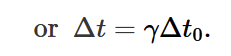
time dilation
e.g two clocks in an IRF appear to run slow when viewed by observer in another IRF moving relative to the clocks
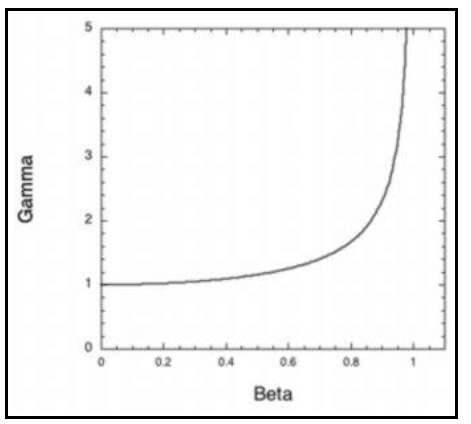
scale of relatvistic time dilation
approaching c, Δt approached infinity
proper lentgh
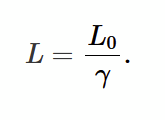
proper length of an object is that of an object at rest in an IRF
contracted length
moving objects shrink along their direction of travel as measured by an observer in and IRF moving relative to the object
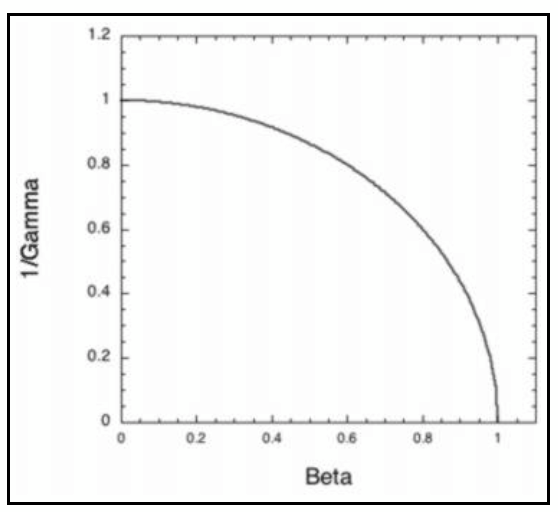
1/gamma against beta
approaching the speed of light, contracted length tends to 0
lorentz transformation O → O’
O’ is moving at V relative to O
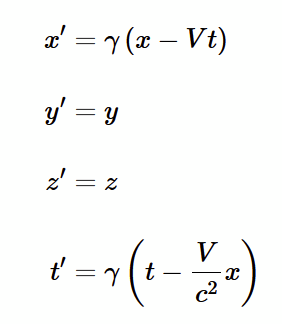
lorentz transforms O’ → O
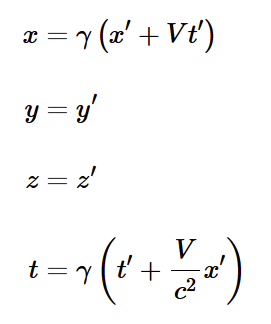
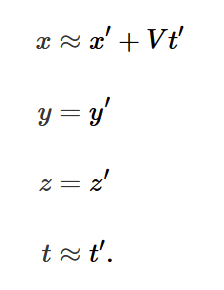
recovery of galilean transforms
since 𝛾 ~ 1 + 𝛽² / 2 in the limit V << c, galilean coordinate transforms can be recovered
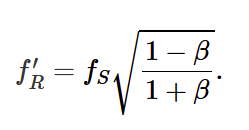
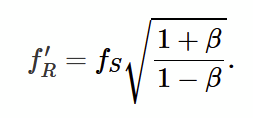
relativistic doppler shift (receiver-source separating)
receiver-source aproaching
lorentz invariant space-time
this measurement is lorentz invariant - all observers must agree on the space-time separation of two events
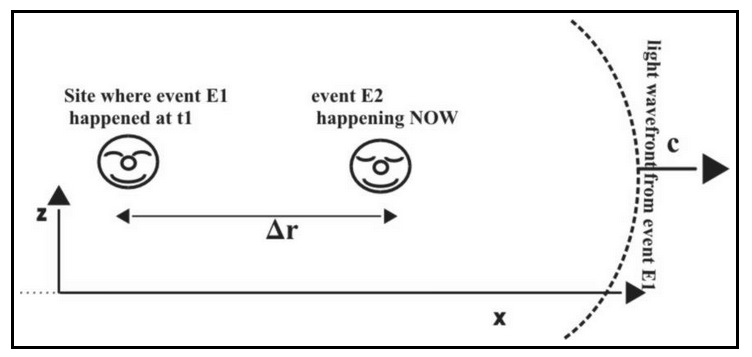
time like separation 𝛥s² > 0
light from E1 reaches position E2 before E2 occurs
so, E1 could have caused E2 (i.e. cause and effect relationship between them is possible)
E1 MUST be in the past of E2
𝛥x can be 0 for some observers since c𝛥t > 0
𝛥t cannot be 0 for any observer since c𝛥t > 𝛥x.
so, all observers agree that the events are separated in time (also enforcing that E1 is in the past of E2)
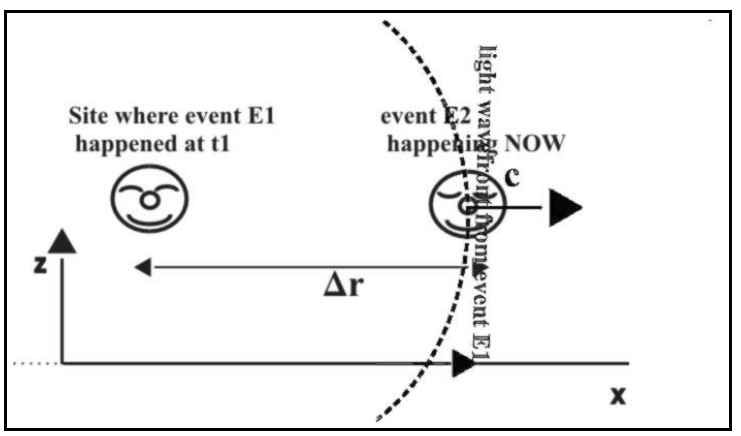
light-like separation 𝛥s² = 0
we can see that c𝛥t = 𝛥x so:
for material observer (m ≠ 0), E1 happened before E2 since light took some time to travel from E1 to E2
for an observer travelling at c, they can say that 𝛥x = 0 and so c𝛥t = 0. E1 and E2 occur simultaneously at the same place
a very fast moving observer may approximate the above
so, there may be a causal relationship between E1 and E2 connected by light
space-like separation 𝛥s² < 0
we can see that |𝛥x| > |c𝛥t|, so:
light from either event cannot reach the site of the other before it happens
there can be NO causal relationship between E1 and E2
since c𝛥t < 𝛥x, no observer can get from one event to the other alongside each (you can’t travel faster than speed of light)
c𝛥t can be 0 for some observers (some observers may see both events simultaneously)
c𝛥t can be positive or negative (i.e. observers may see one event before another)
concepts of past and future are meaningless as the two events are unconnected
causality summary

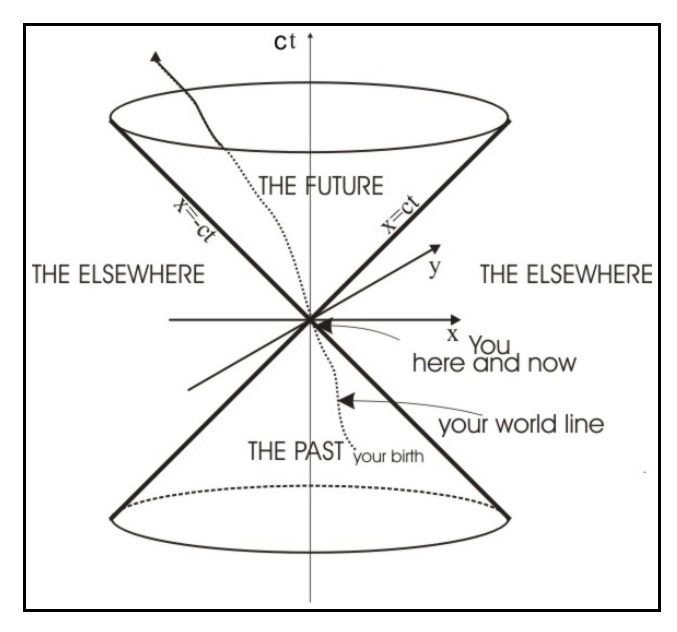
light cone/world line
this is a spacetime diagram
constructing a light cone
an event is represented by the origin of the diagram
the path the light from this event takes is described as a cone ct=x2+y2
in 1d this is just x = ct
there are 3 conclusions about the future event:
any event lying in the cone may have causal relation to origin’s event (time like separation)
any event lying on boundary of cone may have causal relation to origin event Only through light connection (light like separation)
any event lying elsewhere/outside cannot have been caused by origin event (space like separation)
by reversing the sign of cone equation, we also can describe past events in the same manner
plotting graph of constant space-time for events
event A lies in the cone, so it must have time-like separation so the line of constant space-time 𝛥sA is c𝛥t = the positive root of 𝛥s²A + 𝛥x²
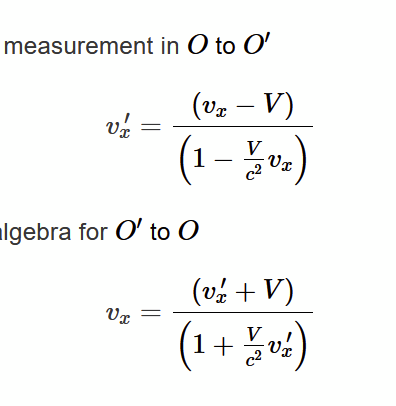
lorentz velocity transform
V is the velocity of O’ IFR while v’/v is the velocity of an object not at rest relative to the observer, measured by O’ or O respectively
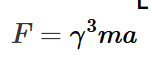
relativistic force (1D)
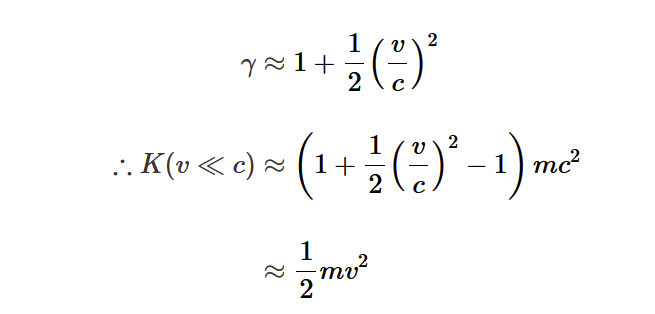
recovery of classical kinetic energy
subsitute approximation for gamma into the relativistic K equation and the classical expression will emerge
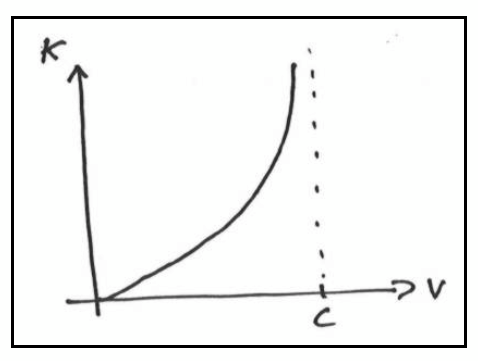
kinetic energy vs speed
k → infinity as v → c
total relativistic energy
LHS: total energy
RHS: kinetic energy + rest energy
mass-energy equivalence
mass is just another form of energy
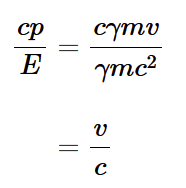
energy/momentum relation for velocity
allows you to find any particle’s velocity without computing gamma
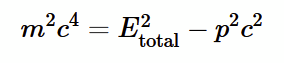
lorentz invariant energy
this equation in invariant under lorentz transforms - LHS is the same in all IRFs.
Restmass energy is conserved in relativity
minkowski diagram
a space time diagram for one IRF that includes the space-time time and space axes for another IRF.