NUT 200 - Exam 3
 Call Kai
 Learn
Learn Practice Test
 Spaced Repetition
 Match
Match Flashcards
 Knowt Play
1/57

There's no tags or description
Looks like no tags are added yet.
Name | Mastery | Learn | Test | Matching | Spaced | Call with Kai |
|---|
No analytics yet
Send a link to your students to track their progress
58 Terms
fat soluble vitamins
Vitamins that dissolve in fats and oils, and are absorbed along with dietary fat. These include vitamins A, D, E, and K, which are stored in the body's fatty tissues and liver.
water soluble vitamins
Vitamins that dissolve in water and are not stored in the body. They include the B-vitamins and vitamin C, which must be consumed regularly.
absorption of vitamins
begins in stomach with release of vitamins from food
digestive enzymes aid in release
bile and the liver help with the breakdown of FAT SOLUBLE vitamins
fat soluble vitamins are packaged into micelles to be absorbed into the small intestine and then chylomicrons pick them up into the lymphatic circulation
water soluble vitamins are absorbed directly into small intestine and released directly into blood
dosages of fat soluble vs water soluble vitamins
Fat soluble vitamins are stored in the body and can accumulate to toxic levels, requiring careful dosage management. In contrast, water soluble vitamins are excreted through urine when in excess, necessitating more frequent intake.
common similarities and differences between water soluble and fat soluble vitamins
Both types of vitamins are essential for health, but water soluble vitamins are not stored in the body and must be consumed regularly, while fat soluble vitamins are stored and can reach toxic levels if consumed excessively. Additionally, absorption mechanisms differ, with fat soluble vitamins requiring fats for absorption.
why is water so important
water is the most abundant substance in the body
water as a part of body fluids
intracellular and extracellular fluids
electrolytes
minerals that help maintain fluid balance: sodium, potassium, phosphate, magnesium, calcium, chloride
functions of water in the body
maintains fluid balance
acts as a universal solvent
lubricant for joints, eyes, mucus, saliva
aids in digestion
skin health
cognitive function
manages blood volume
water balance
water consumed = water lost
you take in water through beverages and food and you lose water through urine, large intestine, lungs, and skin
insensible water loss
water loss thorough evaporation from skin and when you exhale
sensible water loss
through urine, feces, vomit, sweat, etc
dehydration
occurs when the body loses more fluids than it takes in, impairing normal function. Key symptoms include extreme thirst, dark yellow urine, fatigue, and dry mouth
hyponatremia
dangerous condition where sodium levels in the blood are too low (typically <135 mEq/L), causing cells to swell with excess water. Symptoms include nausea, headache, fatigue, confusion, muscle weakness, and seizures. Causes range from overhydration and diuretics to heart, kidney, or liver disease.
daily water needs
MEN: 16 cups/day (about 13 cups of beverages)
WOMEN: 12 cups/day (about 9 cups of beverages)
about 80% of your liquid should come from beverages, and 20% from the food you eat
fluid needs vary due to age, sex, activity levels, etc
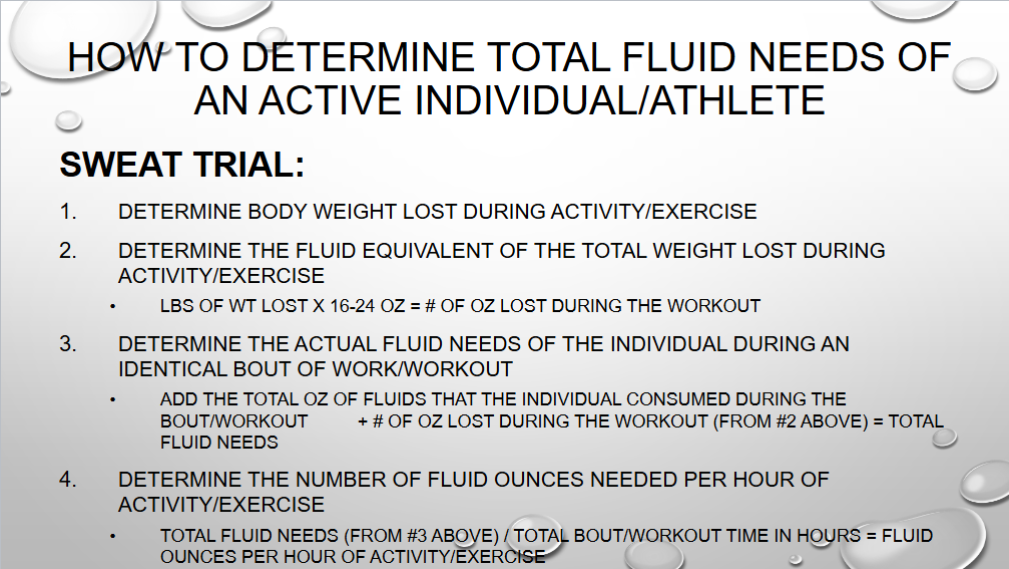
sweat trial
example: 145lbs before 2 hours of tennis, 143 at the end, he consumed 16 oz of fluid during practice.
2lb weight loss
2lbs x 16-24oz = 32-48oz
16oz + 32-48oz = 48-64oz/2 hour
simon needs 24 - 32 oz per hour
other considerations to staying hydrated
caffeine and alcohol
high protein diets (more fluid loss)
diuretics
minerals
inorganic elements needed in relatively small amounts that are necessary for day to day functioning
they are found in rocks and soils
both animal and plant foods are good sources
major minerals vs trace minerals
Major minerals (macrominerals) are required in amounts of 100mg or more daily, while trace minerals are needed in smaller amounts usually less than 20mg
examples (major): calcium, sodium, potassium, magnesium
examples (trace): iron, iodide, zinc, fluoride, copper
how is alcohol made
fermentation of yeast and natural sugars in…
grains: beer
fruits: wine
liquor is concentrated alcohol collected through distillation
what happens to alcohol in the body? how is it absorbed?
**alcohol is a TOXIN, and the body works quickly to metabolize and eliminate it
some alcohol is metabolized in the stomach by ALCOHOL DEHYDROGENASE
some alcohol is absorbed through the stomach, food helps slow the absorption of alcohol
most alcohol is absorbed in the small intestine
most alcohol is metabolized in the liver (diff slide)
metabolization of alcohol in the liver
one standard drink is metabolized in 1 ½ to 2 hours
ethanol → acetaldehyde → acetate → CO2 + H2O
alcohol dehydrogenase converts alcohol to acetaldehyde
acetaldehyde dehydrogenase converts it to acetate
microsomal ethanol oxidizing system
metabolizes alcohol when CHRONICALLY HIGH levels of alcohol are present in the liver
negative effects of alcohol
CNS depressant
slows down transmission of nerve impulses
impairs thoughts, actions, and behavior
can disrupt sleep
it is a diuretic
can interfere with insulin and glucagon
may lead to malnutrition
7kcal/g
how can alcohol lead to malnutrition
7kcal/day
increases fat and weight around stomach
alcohol calories can displace nutritious food
excessive alcohol can interfere with absorption or use of protein, zinc, magnesium, thiamin, folate, and vitamins B12, A, D, E, K
how can alcohol damage organs
inflammation of esophagus
cancers of esophagus, mouth, and throat
gastritis and stomach ulcers
hypertension and damage to heart tissue
alcoholic liver disease (fatty liver → alcoholic hepatitis → cirrhosis)
alcohol use disorder
the continuation of alcohol consumption even though this behavior has created social, psychological, and or physical health problems
binge drinking: consumption of 5 or more drinks (men) 4 by women in about two hours
overweight vs obese (bmi)
overweight: 10-15lbs more than healthy weight
greater than or equal to 25 bmi
obese: 25-40lbs more than healthy weight
greater than or equal to 30 bmi
risks of being underweight in young adults/older adults/men
young adults: nutrient deficiencies, low energy, decreased concentration, menstrual irregularities
older adults: low body protein and fat stores, depressed immune system, osteoporosis
men: suppression of testosterone
BMI
body mass index, basically proportionate between your weight and height. it is a screening tool not a diagnostic tool
ideal bmi is between 18.5-24.9
central obesity
excess visceral fat, increases risk of heart disease, diabetes, hypertension
visceral fat vs subcutaneous fat
Visceral fat is deep, firm fat surrounding internal organs (like the liver and intestines), acting as a major metabolic risk factor for heart disease and diabetes. Subcutaneous fat is the "pinchable," soft fat stored directly under the skin. While subcutaneous fat is largely cosmetic, visceral fat is highly active and dangerous
techniques to measure body fat
skinfold thickness
bioelectrical impedance
DEXA
underwater weighing
bodpod
energy balance (+ vs -)
calories in vs calories out
positive energy balance: more calories consumed than expended
negative energy balance: more calories expended than consumed
what are energy needs comprised of
basal metabolism (BMR)
thermic effect of food (TEF)
physical activities
basal metabolic rate (BMR)
minimum amount of energy you need to just function
60% of total energy needs
many factors: age, sex, body side, caffeine, drugs, stress
thermic effect of food
amount of calories expended to digest, absorb, and process food
how many calories do you need in a deficit to lose 1lb
3500 calories
if you decrease your intake by 500 calories a day you will lose 1lb per week
appetite
psychological desire for food
hunger
physiological need for food
satiation
the state of being fully gratified or filled, often leading to a decrease in motivation or behavior towards a specific stimulus
ghrelin
secreted from the stomach when its empty to stimulate HUNGER
leptin
produced in fat cells and released to stimulate satiety
non exercise associated thermogenesis
energy expended for everything we do that is not sleeping, eating, or intentional exercise
how can you lose weight healthfully?
eat more energy dense foods
using myplate as a guide
physical activity
behavior modification
weight cycling
repeated gain and loss of body weight
common result of fad diets
ways of dealing with extreme obesity
very low calorie diets (must be medically supervised)
medications
surgery
3 main requirements for increasing body weight
participation in appropriately planned weight training program
achieving a positive energy balance
achieving a positive nitrogen balance
disordered eating
abnormal and potentially harmful eating behaviors that do not meet specific criteria for eating disorders
eating disorders
psychological illnesses that involve specific abnormal eating behaviors and other factors
eating disorders have the highest mortality rate of any mental illness
anorexia nervosa
severe calorie restriction
self starvation and excessive weight loss
intense fear of being fat
distorted body image
bulimia nervosa
involves cycle of binge eating and purging
purging can include self induced vomiting, excessive exercising, strict dieting or fasting, abuse of diet pills/laxatives/diuretics
binge eating disorder
compulsive overeating
eating in secret, feelings of shame
avoidant restrictive food intake disorder (ARFID)
avoidance of eating
NOT characterized by a disturbance in body image
may be due to lack of interest, sensory sensitivities, fear of eating
orthorexia
extreme focus on healthy or righteous eating
female athlete triad
syndrome of three interrelated conditions: low energy availability (with or without eating disorders), menstrual dysfunction (amenorrhea), and low bone mineral density (osteoporosis/osteopenia)
RED-S (relative energy deficiency in sport)
impaired function in athletes due to inadequate caloric intake to meet needs of athletes.
muscle dysmorphia
an intense and excessive preoccupation or dissatisfaction with body size and muscularity