Fraud
 Call Kai
 Learn
Learn Practice Test
 Spaced Repetition
 Match
Match Flashcards
 Knowt Play
1/43

There's no tags or description
Looks like no tags are added yet.
Name | Mastery | Learn | Test | Matching | Spaced | Call with Kai |
|---|
No analytics yet
Send a link to your students to track their progress
44 Terms
adulterant
An adulterant is a term for a substance found within
other substances such as food, even though it is not
allowed for legal or other reasons
substance added that should not be there
Food fraud
Food fraud covers cases where there is a violation of
food law, which is committed intentionally to pursue
an economic, financial or other gain through
consumer deception
whats difference between food fraud and adulteration
Adulteration can be non-intentional (accident), fraud is
always intentional
Food Integrity
Ensuring that food which is offered for
sale or sold is not only safe and of the nature, substance
and quality expected by the purchaser but also captures
other aspects of food production, such as the way it has
been sourced, procured and distributed and being honest
about those elements to consumers.
food is safe and quality + sourcing, distributed + honestly presented
Food Crime
incidents involving food that is a violation
of a criminal statute
Food terrorism
Food Terrorism : Food adulterated with an ideological
rather than an economic intention, with as primary goal
to scare the consumer.
How common is fraud
- 9,800 tons of food and 26.4 million liters of liquids
- In many cases, the products turned out to originate from conventional agriculture and not from organic farms
- 51 000 kg of fraudulently treated honey
- 8000 tonnes of illicit food and beverages seized (focus was on
mislabelling/illegal labelling)
- Only small portion is detected, some is unknown and most is esitimated known fraud
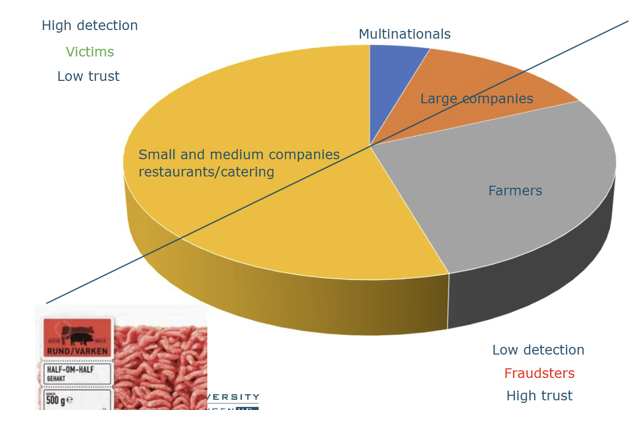
WHo commits fraud
mostly small and medium companies: restuarants and catering
high detection: victims: low trust
Multinationals the least
Low detection as there is high trust
High trust → low detection
Low trust → high detection
What are the most fraudulant products
1. Olive oil
2. Meat
3. Honey
4. Saffron
5. Orange juice
6. Coffee
OMHSOC
Old Men Hate Sweet Orange Coffee
Honey fraud
-increased risk due to manuka honey and raw honey
-most honey is glucose syrup and caramel
- added sugar
- added high fructose corn syrup
- completely artificial
- country of origin
- flower species of origin
- organic/non-organic
Combinations thereof
Olive oil fraud
most aldurated product in EU
bc its high valze with high demand and limited supply
mix with low wuality or other vegetable oils like sunflower oily
misleading label calling it virgin
meat
-halal when its not
- replace ‘expensive’ meat with cheap meat
- replace lamb with turkey/chicken (...)
- replace beef with horse meat or pork
- replace steak with cheaper parts of the animal
- adding volume to the meat
- add water to chicken breasts
- add glycerin to meat cuts
- combine pieces of meat (glue)
- country of origin or other labels (organic, halal, animal welfare...)
- reuse of out-of-date meat
horsemeat scandal
- Not single scandal
- First found the Irish market
- 2 large and many small scandals Europe
- Many years
- Nobody tasted difference
- Still occurring, spain 2023
- Ikea had horsemeat scandal
- MCdonalds DID NOT
Wine fraud
- label fraud
- cheaper mixtures
- wrong grapes
- adding colour
- adding tannins
- allergy label missing
- typical for restaurants
example: False Chianti UK
2025 unique fraud
- Saliva oil: made from unfinished dishes
- Plucked street pigeons: roast duck
- Cheese made from expired cheese and remoulded for sale
- Eggs being coloured india to mimic premium eggs and sell for double
Is Fraud something new
No
started in roman times
target:
poor people
people outside of cities
In roman times what was most fradulent dish
Garum a fermented fish sauce
Fraud nowadays…
Main differences with today :
- wide variety of frauds
- use of (very) toxic materials
When did the Netherlands start food inspection
Around 1900 in the Netherlands start of food inspection services on municipal/city
level
Why is food fraud increasing again
-challenging economic times
-complex food supply chains
when does long term fraud occur
when people dont know what original tastes/looks
consumers more focused on price
does not seem to affect perceived quality
What are the 7 types of Fraud
Dilution
Counterfeiting
unapproved enhancements
Grey market production
Mislabelling
concealment
Substituition
Don’t Cook Ugly Grey Meat, Cook Steak
what are the top 2 fraud types
Dilution most common
Mislabelling
describe dilution fraud
o Dilute with cheaper product for financial gain. Oldest form (roman times)
o Example: adding water to liquid, cheaper oil, chalk to powders
o Safety: has potential but not much safety issue.
describe countefieting
1. Counterfeiting
o Copy of popular food/brand
o Safety: production often not under proper standards and some unsafe ingredients
describe unapproved enhancements
o Intentional food adulteration for economic gain
o Examples: melamin ( sold as protein powder, bc its cheap), cheap unnaproved additives, unapproved metal salts
o Safety: melamin unsafe
o Melamin scandal china infant nutrition: causes kidney failsure, mainly in small children
describe grey market production
o Sale of unreported or stolen product
o Common for highly taxed products such as alcohol
o Safety: usually produced under normal conditions. Problem is rejected material is sold as normal products.
mislabelling
o Changing the label information :
- other ingredients
- change in expiration date
- change provenance
- labels (organic, halal, etc)
Examples:
- horse meat scandal
- re-labelled milk (India, Japan) or meat(Germany)
- Algerian wine sold as French
o wine
- Chianti from powder
- Quail eggs
o Organic eggs: should start with 0 code
o Fraud with organic (or halal/kosher/animal friendly) :
- organic ingredients are not organic
- production is not organic
- mixing with non organic products
- adding a non-certified label
- lack of control
o safety:
- other ingredients may not be safe
- production is not controlled
- after expiration date
concealment
o Adding an ingredient to conceal a flaw in the product
o Examples:
- animals injected with hormones/medicine to
conceal a disease
- harmful colour on (citrus) fruits to cover defects
o Safety: - the flaw can be harmful and not be detected
- the new/added ingredient can be harmful
substituition
o Replacing one ingredient with another (close to
dilution and often combined)
o Examples :
- other proteins in milk (feathers, skin)
- salt scandal
- plastic rice
- change the source of your ingredient
Potentially yes:
- the new/added ingredient/source can be harmful
Prevention, detecting and management of fraud
Very difficult :
- no standards
- can happen everywhere
- supply chain
- production
- after production
- learn from old cases
- spot trends
- detection very difficult and expensive
- prevention is better.
give an example of fraud spotting
- Vanilla 30-50 times more expensive
- Vanillin way cheaper
- Vanilla planifolia vc other (cheaper) orchids with vanilla flavour
give examples for fraud detection
-chemical markers : DNA, heating,
-physical markers: color
-salt: sound frequency
what are the 3 food safety management systems
HACCP hazards: prevention of accidental adulteration
TACCP threats: prevention intentional alduteration ( ideologically motivated)
VACCP vulnerabilites: prevention intentional adulteration (economically driven)
what are the 2 methods for fraud prevention and management
targeted analysis
non-targeted analysis
describe targeted analysis
- Target list of components
- We know what to look for and only find what we look for
- Analytical control methofs to faster detect/ control presence.
describe non-targeted analysis
- Product/ingredient profile
- New unknown peak
what effects fraud has after for producer/company etc
- direct costs (recalls)
- loss of product
- consumer trust
- loss of income
- market shares
who is responsible
Many players and who is responsible ?
- food producers
- small farmers (can’t do anything, but can be fraudulous)
- small companies (can do something, can also be fraudulous)
- multinationals (invest a lot, depend on others, hardly ever fraudulent)
- retailers (average number of food products in a supermarket 12.000-40.000)
- government
- certification bodies
Share information : platforms, congresses etc
how would you prevent fraud/ manage it
Like HACCP :
- have clear overview of your supply chains and processes
- conduct a food fraud vulnerability assessment
- which ingredients may be a risk ?
- which suppliers may be a risk ?
- which steps are a risk ?
- address all types of fraud
- design a food fraud prevention strategy
- where to control
- what to control
- who to control
- have a back-up plan
- be prepared for recalls/communication etc
- implement the strategy
- test the strategy
- monitor the strategy and the ‘environment’
- update the strategy at least annually or after every change in supply chain or
process NOT easy and often very underestimated or neglected AND expensive
What is VACCP
vulnerability assessment and critical control point
what is the focus of VACCP
focuses on preventing food fraud, which is intentional contamination. (food fraud prevention program) |
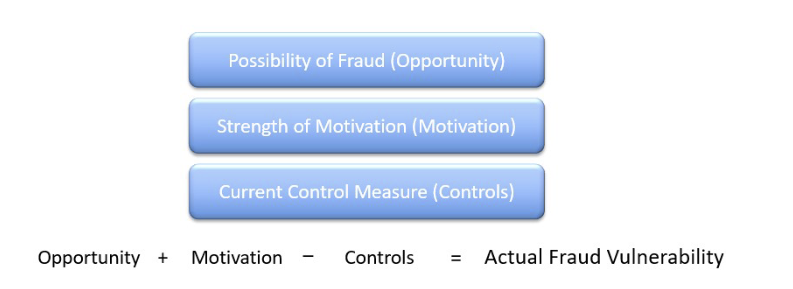
Food fraud vulnerability assessment concept relies on
assessment of actual
vulnerability to fraud.
Opportunity+motivation+ controls = actual fraud vulnerability
whats difference between HACCP and VACCP
HACCP focuses on food safety while VACCP on preventing food fraud
HACCP can have negative health impacts while VACCP more damage to reputation and certifiations
HACCP accounts for physical,microbial,chemical hazards while HACCP
HACCP seeks to address food safety, VACCP seeks to address the occurrence of food fraud which is usually more linked to food quality.
HACCP analysis is through toxicological studies giving exposure limits then used to give critical control measures while with VACCP analysis is broad and not precise.