6.2 Variation & Evolution
 Call Kai
 Learn
Learn Practice Test
 Spaced Repetition
 Match
Match Flashcards
 Knowt Play
1/36

Earn XP
Description and Tags
6.2.1 Variation – 6.3.2 Speciation | 6.2.4 Genetic Engineering – 7.5.4 Role of Biotechnology | 6.2.5 Cloning – 6.1.3 Advantages & Disadvantages of Sexual & Asexual Reproduction
Name | Mastery | Learn | Test | Matching | Spaced | Call with Kai |
|---|
No analytics yet
Send a link to your students to track their progress
37 Terms
What is variation?
The differences in the characteristics of individuals in a population.
What may variation be due to differences in? (3)
Genetic causes — the genes they have inherited
Environmental causes — the conditions in which they have developed
A combination of genes and the environment
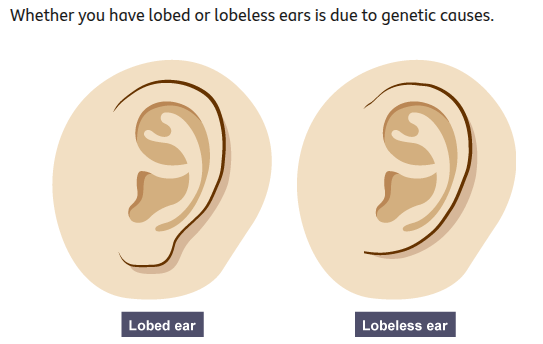
What are examples of features that show environmental variation? (3)
Scars
Smaller and yellow leaves — plants
Language and accent
Mutations & Variation:
Mutations occur ______________.
Very rarely a mutation will lead to a new ____________.
If the new ______________ is suited to an environmental __________ it can lead to a relatively _________ change in the species.
continuously
phenotype
phenotype
change
rapid
What is evolution?
A change in the inherited characteristics of a population over time through a process of natural selection which may result in the formation of a new species.
What is the theory of evolution by natural selection?
All species of living things have evolved from simple life forms that first developed more than three billion years ago.
How do two population of one species form two new species, and what is this called?
If they become so different in phenotype that they can no longer breed to produce fertile offspring.
Speciation
What is the process of natural selection? (4)
Mutations occur — provides variation between organisms
If a mutation provides a survival advantage — organism is more likely to survive
Survivors pass advantageous mutations onto offspring through genes
Over many generations, mutation becomes more common within the population.
What is the definition of natural selection?
The process by which the frequency of advantageous traits passed on in genes gradually increases in a population over time.
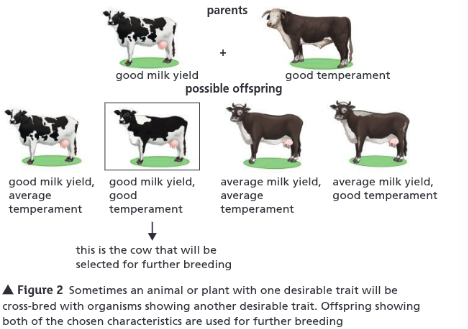
What is the definition of selective breeding/artificial selection?
The process by which humans breed plants and animals for particular genetic characteristics.
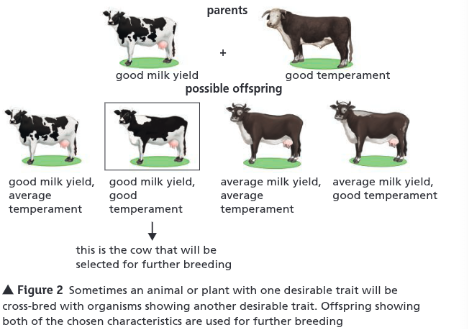
What is the process of selective breeding/artificial selection?
Choosing parents with the desired characteristic from a mixed population
Breeding them together
Breeding the offspring with the desired characteristic together
Continuing over many generations until all the offspring show the desired characteristic
Characteristics chosen for selective breeding can be chosen for usefulness or appearance.
What are some examples of the characteristics that can be chosen for selective breeding? (4)
Disease resistance in food crops
Animals which produce more meat or milk
Domestic dogs with a gentle nature
Large or unusual flowers
Selective breeding can lead to ‘____________’ where some breeds are particularly prone to _________ or ___________ _________.
inbreeding
disease
inherited defects
What is the definition of inbreeding?
Formation of offspring from the breeding of closely related individuals.
Why does selective breeding/artificial selection reduce the number of alleles in the population, and what effect does this have?
Only individuals with the chosen alleles are allowed to breed.
This reduces the variation between individuals and the variation in the alleles for a given characteristic.
How can a lack of variation caused by selective breeding have a negative effect on a population?
If conditions change, a lack of variation can mean that none of the organisms can adapt and they may go extinct.
What is the definition of genetic engineering?
A process which involves modifying the genome of an organism by introducing a gene from another organism to give a desired characteristic.
Examples of Genetic Engineering:
Plant crops have been _______________ ________________ to be resistant to ___________ or to produce bigger better __________.
Bacterial cells have been ________________ _____________ to produce useful substances such as human __________ to treat ___________.
genetically engineered
diseases
fruits
genetically engineered
insulin
diabetes
In genetic engineering, genes from the chromosomes of humans and other organisms can be ‘cut out’ and transferred to cells of other organisms.
What is the name for crops that have had their genes modified in this way?
Genetically modified (GM) crops
GM crops include ones that are resistant to ________ ________ or to __________.
GM crops generally show ___________ _________.
insect attack
herbicides
increased yields
What are the concerns with GM crops?
Effect of eating GM crops on human health
GM crops often made infertile — forcing farmers to buy new seed every year
Genes from GM plants and animals might spread to wild plants and animals — e.g. infertility/pesticide genes could spread into wild populations
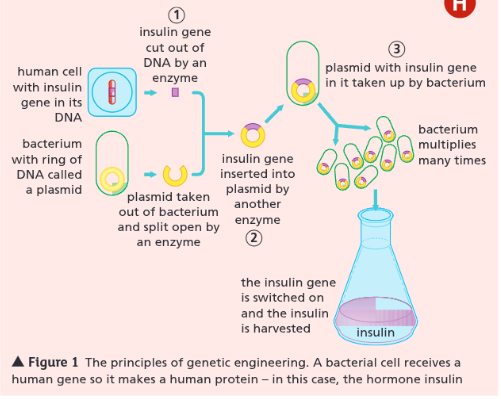
What are the main steps in the process of genetic engineering?
Enzymes are used to isolate the required gene
This gene is inserted into a vector — e.g. bacterial plasmid or virus
The vector is used to insert the gene into the required cells
Genes are transferred to the cells of animals, plants, or microorganisms at an early stage in their development — so that they can develop with desired characteristics
Genetic Modification in Medicine:
It may be possible to use genetic engineering to cure ___________ __________.
It is called ______ ___________ and involves transferring __________ genes (not faulty) into patients so the correct ____________ are produced.
inherited disorders
gene therapy
normal
proteins
What are the perceived benefits of genetic engineering?
Medicine — mass produce hormones in microorganisms
Agriculture — improves yields by:
improving growth rates
introducing modifications:
allows crops to grow in different conditions — e.g. hotter or drier climates
allows plants to make their own herbicides/pesticides
Crops with extra vitamins can be produced
Greater yields can help solve world hunger
What is the definition of cloning?
Creating genetically identical copies of an organism.
What are the four methods of cloning?
Tissue cultures
Cuttings
Embryo transplants
Adult cell cloning
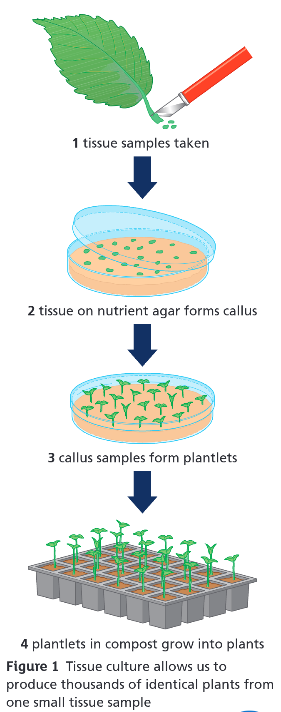
What are tissue cultures?
Using small groups of cells from part of a plant to grow identical new plants.
How can cuttings be used?
Taking cuttings (sections of plants) from a plant with a desirable feature
Planting them to produce genetically identical clones of the plant
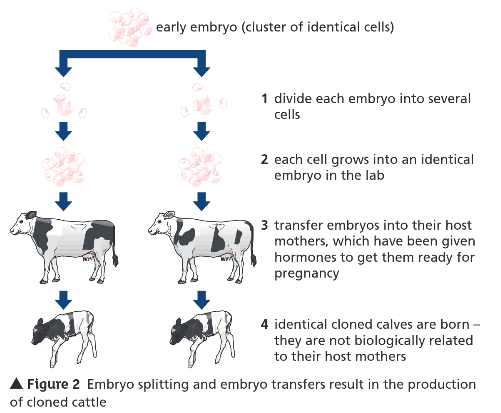
What are embryo transplants?
Splitting apart cells from a developing animal embryo before they become specialised
Transplanting the identical embryos into host mothers
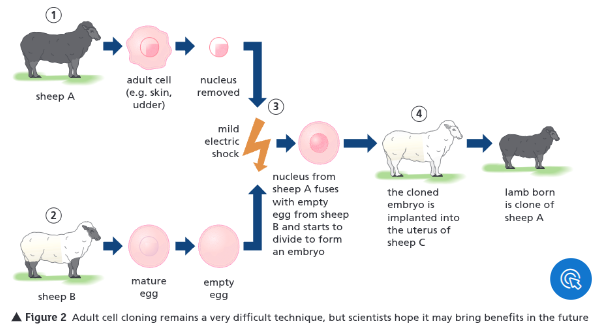
What is the process of adult cell cloning?
Nucleus removed from unfertilised egg cell
Nucleus from adult body cell inserted into empty egg cell
Electric shock stimulates egg cell to divide → forms an embryo
Embryo cells = adult body cell — genetic information
When embryo has developed into a ball of cells — inserted into womb of adult female to continue development
What are the benefits of cloning? (3)
Produces lots of offspring with a specific desirable feature.
Studying clones could help research into embryo development.
Can prevent the extinction of endangered species or bring back species that have become extinct.
What are the risks of cloning? (3)
Reduces variation — less likely for a population to survive if the environment changes.
Clones have a low survival rate and could have genetic problems.
Could lead to human cloning.
![<ul><li><p>Commercially, hundreds of pink-flowered snapdragon plants can be produced from box one pink-flowered plant.</p></li><li><p><strong>Figure 7</strong> shows a tissue culture technique used for producing many plants from one plant.</p></li></ul><p>Give a reason for each of the following steps shown in <strong>Figure 7</strong>. [5 marks]</p><ul><li><p>Several groups of cells are scraped off the leaf</p></li><li><p>Nutrients are added to the agar jelly</p></li><li><p>Hormones are added to the agar jelly</p></li><li><p>The plant cells are kept in sterile conditions</p></li><li><p>The plant cells are kept at 20°C</p></li></ul><p></p>](https://assets.knowt.com/user-attachments/af25340a-8455-488c-b12d-79c852e549c9.png)
Commercially, hundreds of pink-flowered snapdragon plants can be produced from box one pink-flowered plant.
Figure 7 shows a tissue culture technique used for producing many plants from one plant.
Give a reason for each of the following steps shown in Figure 7. [5 marks]
Several groups of cells are scraped off the leaf
Nutrients are added to the agar jelly
Hormones are added to the agar jelly
The plant cells are kept in sterile conditions
The plant cells are kept at 20°C
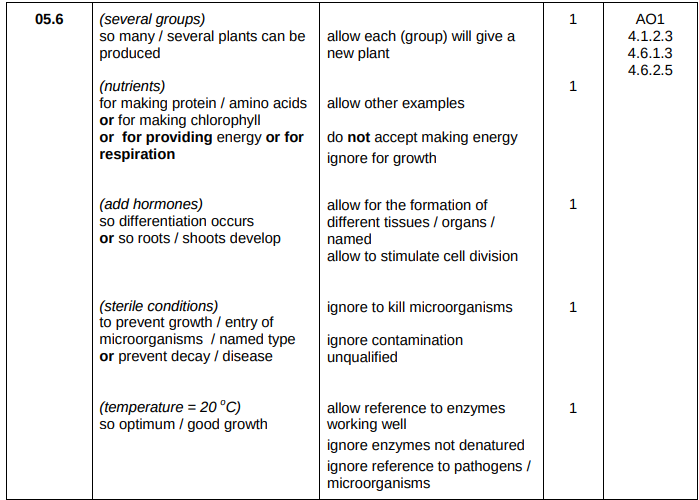
Several plants can be produced
For making amino acids
So differentiation occurs
To prevent entry of microorganisms
For optimum growth
![<ul><li><p>Commercially, hundreds of pink-flowered snapdragon plants can be produced from one pink-flowered plant.</p></li><li><p><strong>Figure 7</strong> shows a tissue culture technique used for producing many plants from one plant.</p></li></ul><p>Explain why the method shown in <strong>Figure 7</strong> produces <strong>only</strong> pink-flowered plants. [2 marks]</p>](https://assets.knowt.com/user-attachments/baeaea37-bae4-41a7-8e7e-a5065726a7ac.png)
Commercially, hundreds of pink-flowered snapdragon plants can be produced from one pink-flowered plant.
Figure 7 shows a tissue culture technique used for producing many plants from one plant.
Explain why the method shown in Figure 7 produces only pink-flowered plants. [2 marks]
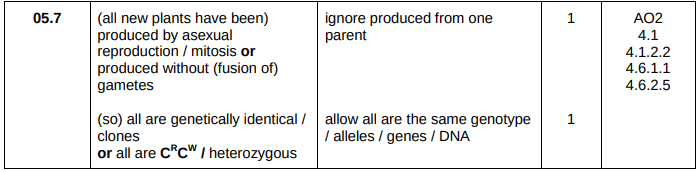
Produced by asexual reproduction
So they are all genetically identical
![<ul><li><p>Ragwort is a weed that grows on farmland.</p></li><li><p>Ragwort is poisonous to horses.</p></li><li><p>The herbicide glyphosate will kill ragwort and other weeds.</p></li><li><p>Scientists use bacteria for the genetic engineering of crop plants to make the crops resistant to glyphosate.</p></li><li><p><strong>Figure 8</strong> shows the growth of a culture of the bacteria in a solution of nutrients at 25 °C.</p></li></ul><p>Why did the rate of reproduction increase between 2 hours and 7 hours? [1 mark]</p>](https://assets.knowt.com/user-attachments/f54e3fff-357a-4b97-b3aa-5fa58588e8ee.png)
Ragwort is a weed that grows on farmland.
Ragwort is poisonous to horses.
The herbicide glyphosate will kill ragwort and other weeds.
Scientists use bacteria for the genetic engineering of crop plants to make the crops resistant to glyphosate.
Figure 8 shows the growth of a culture of the bacteria in a solution of nutrients at 25 °C.
Why did the rate of reproduction increase between 2 hours and 7 hours? [1 mark]
More bacteria so more divisions per unit time

![<ul><li><p>Ragwort is a weed that grows on farmland.</p></li><li><p>Ragwort is poisonous to horses.</p></li><li><p>The herbicide glyphosate will kill ragwort and other weeds.</p></li><li><p>Scientists use bacteria for the genetic engineering of crop plants to make the crops resistant to glyphosate.</p></li><li><p><strong>Figure 8</strong> shows the growth of a culture of the bacteria in a solution of nutrients at 25 °C.</p></li><li><p>After 12 hours, the rate of reproduction decreased.</p></li></ul><p>Suggest three ways the scientists could maintain a high rate of reproduction in the bacterial culture. [3 marks]</p>](https://assets.knowt.com/user-attachments/41b95ac3-494a-48a8-b034-79bda76ea683.png)
Ragwort is a weed that grows on farmland.
Ragwort is poisonous to horses.
The herbicide glyphosate will kill ragwort and other weeds.
Scientists use bacteria for the genetic engineering of crop plants to make the crops resistant to glyphosate.
Figure 8 shows the growth of a culture of the bacteria in a solution of nutrients at 25 °C.
After 12 hours, the rate of reproduction decreased.
Suggest three ways the scientists could maintain a high rate of reproduction in the bacterial culture. [3 marks]
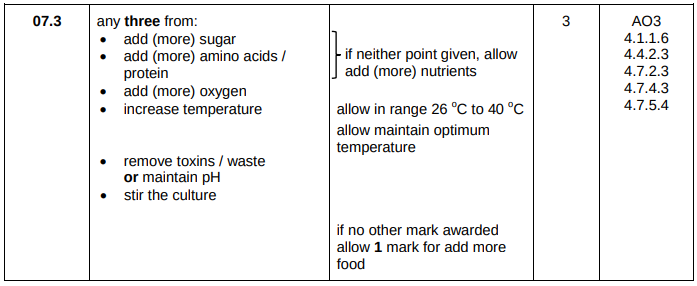
Add more amino acids
Increase temperature
Add more oxygen
Ragwort is a weed that grows on farmland.
Ragwort is poisonous to horses.
The herbicide glyphosate will kill ragwort and other weeds.
Scientists use bacteria for the genetic engineering of crop plants to make the crops resistant to glyphosate.
Scientists transferred a gene for resistance to the herbicide glyphosate into the bacteria.
The genetically-modified (GM) bacteria can then transfer the glyphosate-resistance gene to a crop plant.
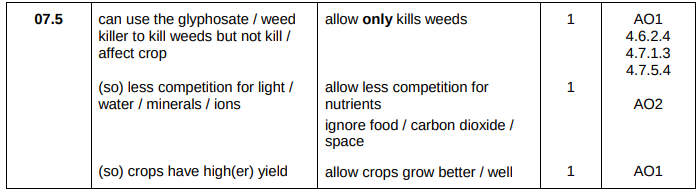
Explain the advantage of making crop plants resistant to glyphosate. [3 marks]
Can use the glyphosate to kill weeds but not kill crop
So less competition for light, water, and mineral ions
So crops have a higher yield