ELECTIVE L1: Money growth and inflation
 Call Kai
 Learn
Learn Practice Test
 Spaced Repetition
 Match
Match Flashcards
 Knowt Play
1/16

There's no tags or description
Looks like no tags are added yet.
Name | Mastery | Learn | Test | Matching | Spaced | Call with Kai |
|---|
No analytics yet
Send a link to your students to track their progress
17 Terms
money supply
controlled by the central bank
when central bank increases more money supply → price rises
continous increase in money → persisten inflation
money demand
how much people want to hold
monetary neutrality
changes in money supply affect nominal variables not real variables
nominal variables examples:
price, wages, money values
real variables:
output, employment, real income
in the long run, increasing money only raises prices, not real production
printing money & hyperinflation
inflation tax: government can finance spending by printing money
hyperinflation: too much money creation → money loses value quickly
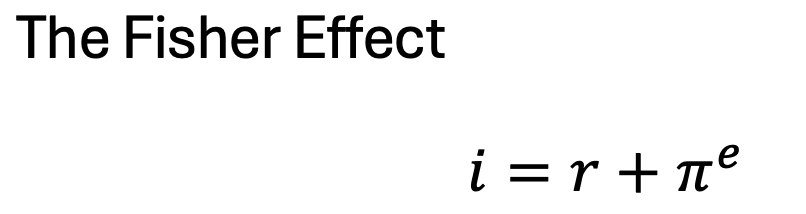
the fisher effect
i = nominal interest rate
r = real interest rate
𝜋𝑒 = expected inflation
when expected inflation increases, nominal interest rate also increase
real interest rate stays roughly the same
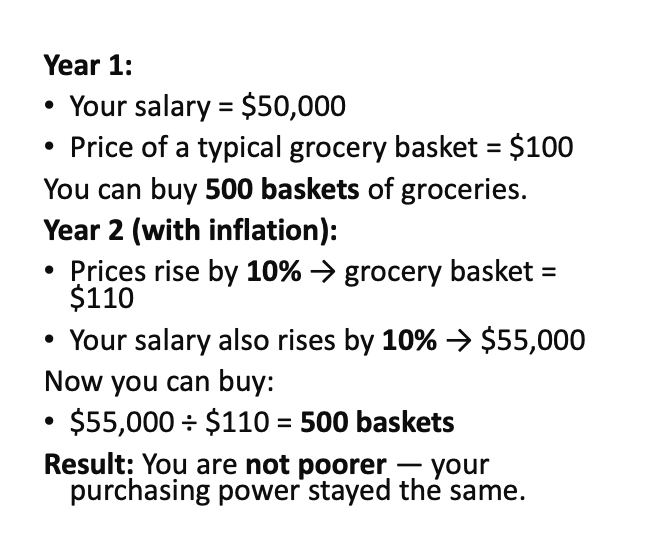
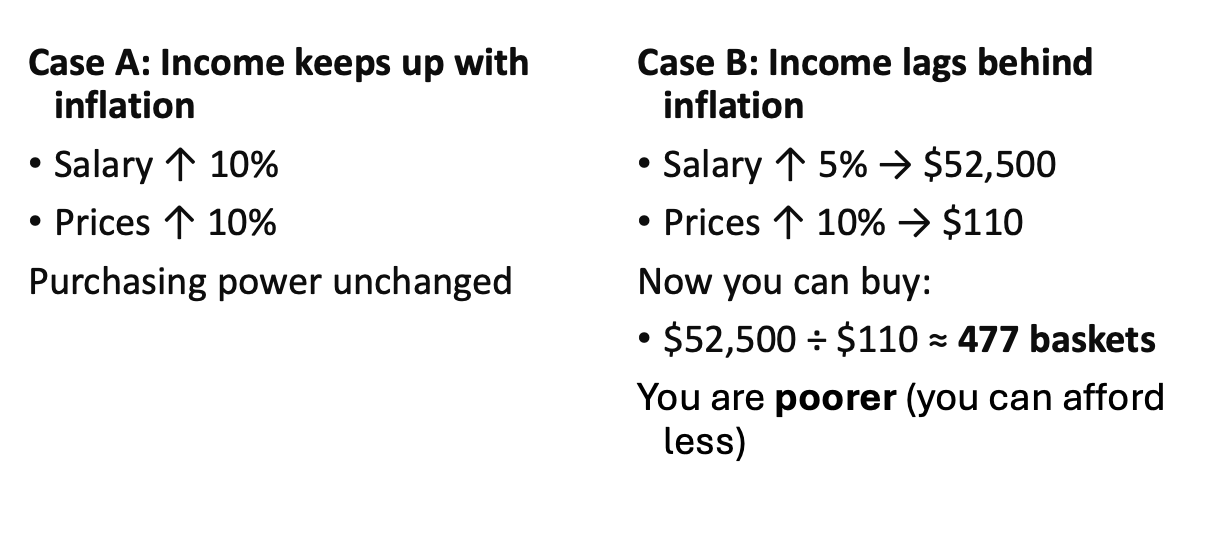
does inflation make you poorer?
not entirely true
nominal income also increases but the real income (purchasing power) is what matters
costs of inflation
shoe leather cost
menu cost
relative price variability
tax distortions
confusion and inconvenience
redistribution of wealth
shoe-leather cost
people reduce cash holdings
more trips to the bank
menu cost
business frequently change prices
relative price variability
price change unevenly → confusion
tax distortions
inflation affects taxes unfairly
confusion and inconvenience
money becomes a less reliable measure
redistribution of wealth
borrowers benefit
lenders lose
severity of inflation
hyperinflation
moderate inflation
hyperinflation
very harmful
often defined as less 50% per month
economically devastating as it destroys basic functions of money
moderate inflation
cost exist but are smaller and debated
1-4% annually in many economies
not automatically harmful sometimes can be useful
pros:
encourages spending / investment: prices rise slowly → less likely to hoard cash
eases debt burdens: borrowers repay loans in “cheaper” future dollars
allows wage flexibility: real wages can adjust without nominal wage cuts which workers resist
cons:
erodes purchasing power: especially fixed income
menu cost: frequent price change
uncertainty: inflation becomes volatile
redistribution effect: hurt saves and helps borrowers
central bank target low but positive inflation
they aim for 2% inflation due to:
zero inflation risks deflation (worse, ppl delay spending)
slight inflation gives policymakers room to adjust interest rate
balances growth with stability