Risk Factors for Cardiovascular disease
 Call Kai
 Learn
Learn Practice Test
 Spaced Repetition
 Match
Match Flashcards
 Knowt Play
1/13

There's no tags or description
Looks like no tags are added yet.
Name | Mastery | Learn | Test | Matching | Spaced | Call with Kai |
|---|
No analytics yet
Send a link to your students to track their progress
14 Terms
CVD is the #1 killer of adults in the US
yes, even more than cancer
Uncontrollable risk factors include..
males > females
Age (greater after age 55)
family history
Controllable risk factors
smoking
obesity
sedentary lifestyle
untreated hypertension
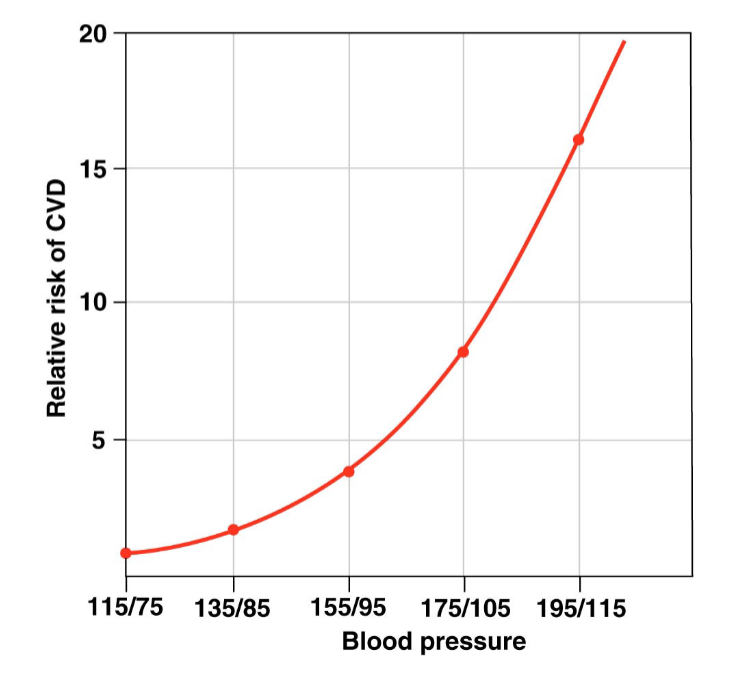
The relationship between blood pressure and the risk of developing cardiovascular disease
it’s a direct relationship!
essential hypertension has no clear cause other than hereditary
Hypertension increases the risk of developing …
Atherosclerosis
starts by causing carotid and aortic baroreceptors to adapt and become less sensitive to the elevated pressure
as a result, the Heart muscle hypertrophies
heart tissue becomes less flexible and begins to decrease in function overall
causes pulmonary edema
→ back up blood in lungs, which causes swelling
leads to congestive heart failure
Treatment options
calcium channel blockers and beta-blocking drugs affect heart function
→ L type Calcium channels, more calcium = increasing influx, increasing contraction ~ so if we block these, heart contracting slower
→ if we block beta-blocking drugs, we have less heart stimulation (bc beta-receptors are sympathetic)
Diuretics, renin inhibitors, and angiotensin-converting enzyme (ACE) inhibitors all manipulate blood volume via the urinary system
Some uncontrollable genetic risk factor can be modified or mitigated by healthy lifestyle choices
high levels of lipids in the blood
→ lead to atherosclerosis
→ carried in the blood by lipoproteins
— HDL-C versus LDL-C
— modify diet to increase cholesterol intake, have high lvls of HDL’s and low levels of LDLs to maintain CVS health
— exercise stimulates the production of HDL
diabetes mellitus increases risk of developing CVD
→ this metabolic disorder contributes to development of atherosclerosis
→ modify diet to include as little processed sugar as possible
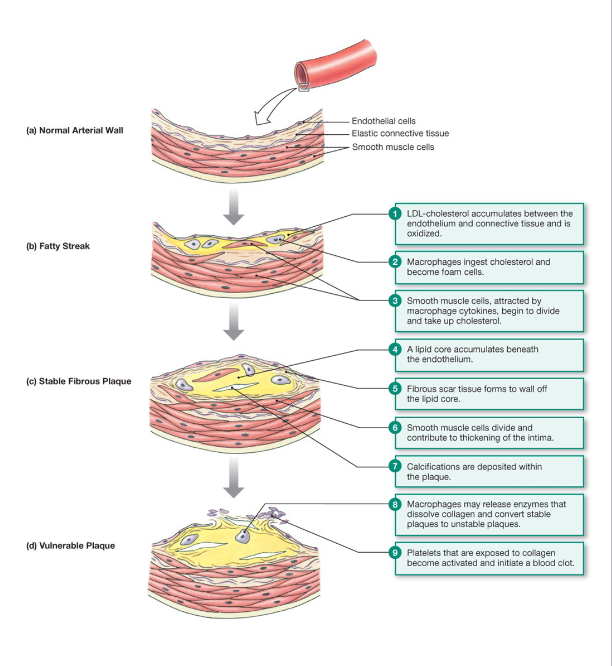
The development of atherosclerotic plaques entails…
Hypertension weakens or tears artery walls
LDL-C transported under weakened endothelial cell lining
Macrophages are called in to ingest excess cholesterol, but become foam cells and cause smooth muscle to divide
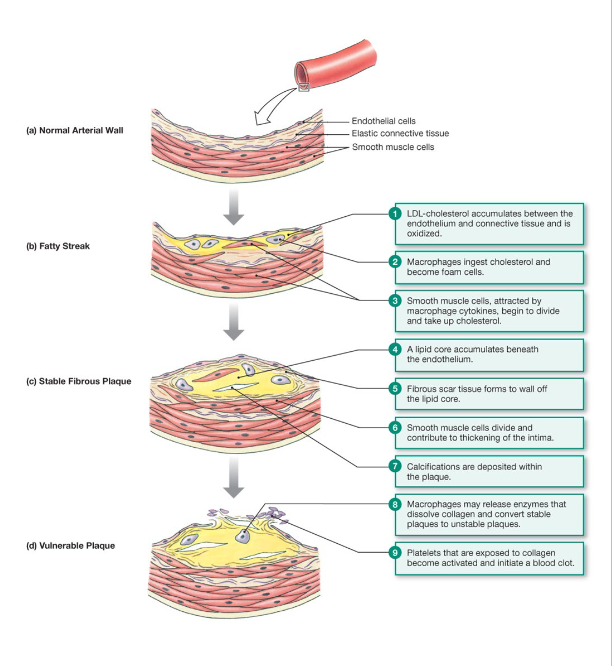
As foam cells, and smooth muscle cells accumulate, a bulging plaque forms
can block artery by itself
can become fibrous and initiate a blood clot
can break off and travel to another part of the body causing a thrombosis or stroke (in the brain)
Angiogenesis
New blood vessel development!
necessary for normal development, wound healing, and uterine lining growth during a woman’s menstrual cycle
controlled by cytokines
→ regulatory proteins for growth
These cytokines could be used to fight coronary heart disease
could stimulate growth of collateral circulation, or arterial branches to by-pass blocked regions
Inhibiting angiogenesis could be used to fight cancerous masses
tumors require extensive blood supply to provide nutrients for their rapid cell division
starving them of their blood supply could destroy some tumors
Angiogenesis also occurs as a consequence of exercise
Increase capillary density for increased energy need and surface area of growing muscles