Endocrine System (exam 3)
 Call Kai
 Learn
Learn Practice Test
 Spaced Repetition
 Match
Match Flashcards
 Knowt Play
1/7

There's no tags or description
Looks like no tags are added yet.
Name | Mastery | Learn | Test | Matching | Spaced | Call with Kai |
|---|
No analytics yet
Send a link to your students to track their progress
8 Terms
Endocrine System
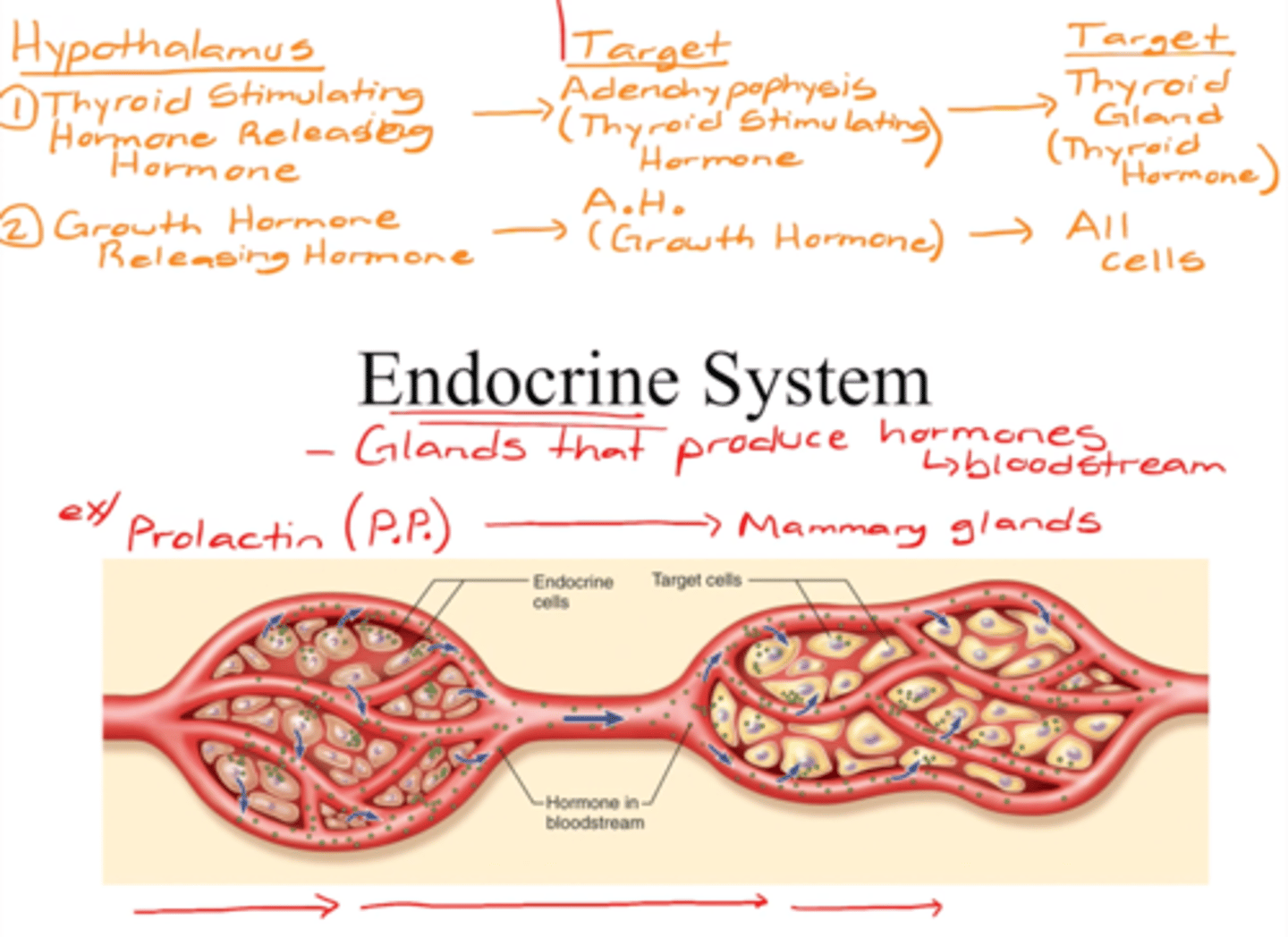
- glands that produce hormones
- secretes into blood stream
(ex; prolactin (made by anterior pituitary gland) -> mammary glands
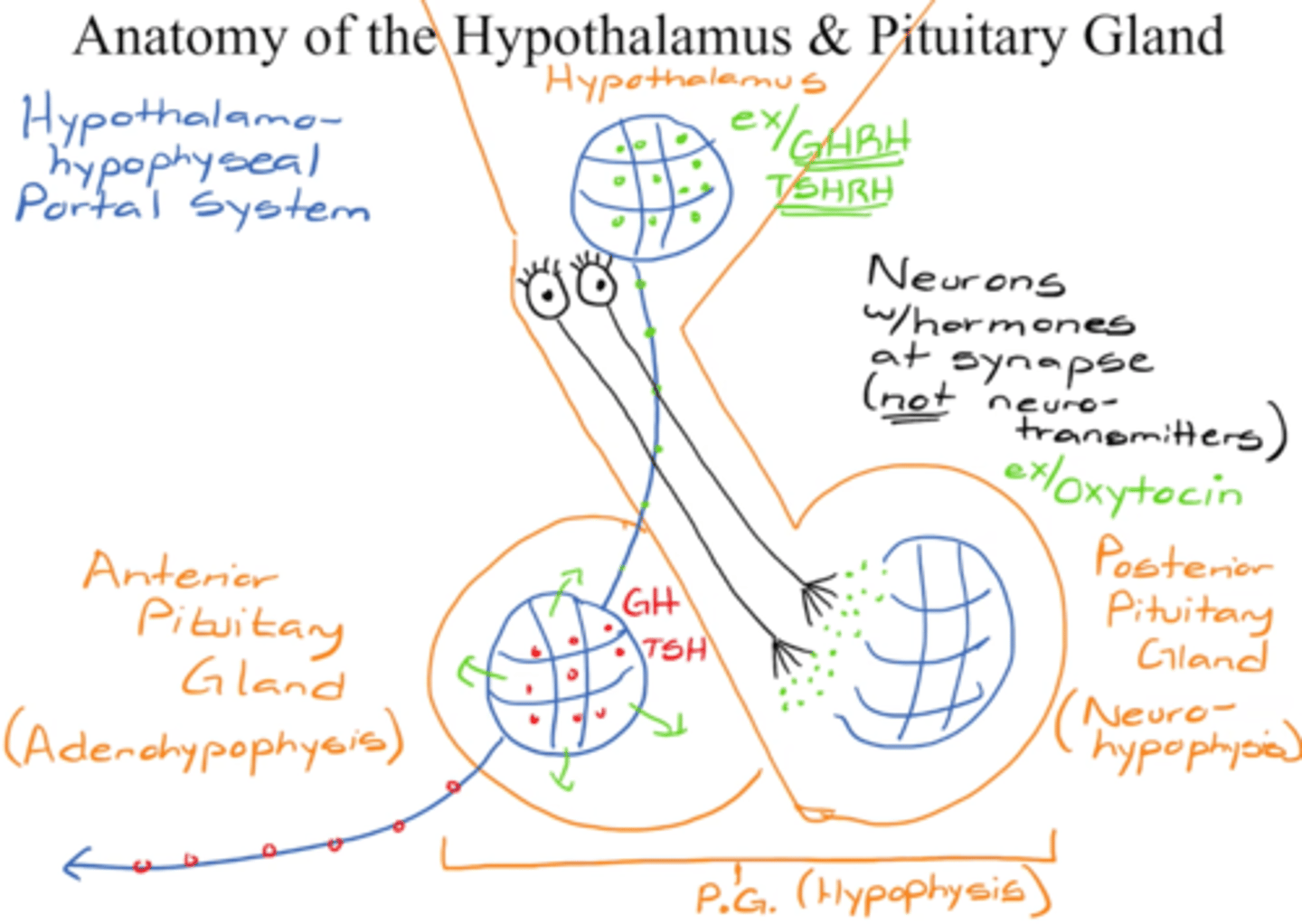
Anatomy of Hypothalamus & Pituitary Gland
- hypothalamus = controller of entire endocrine system
F: release hormones that control the release of other hormones
hypothalamohypophyseal portal system
- capillary-vein-capillary
- concentration stays really high
- doesn't need to be washed over entire body
- only for anterior pituitary gland (adenohypophysis)
neurons
- only for posterior pituitary gland (neurohypophysis)
- neurons w/ hormones at synapse
- not neurotransmitters
- release proteins (ex; oxytocin) -> capillary bed
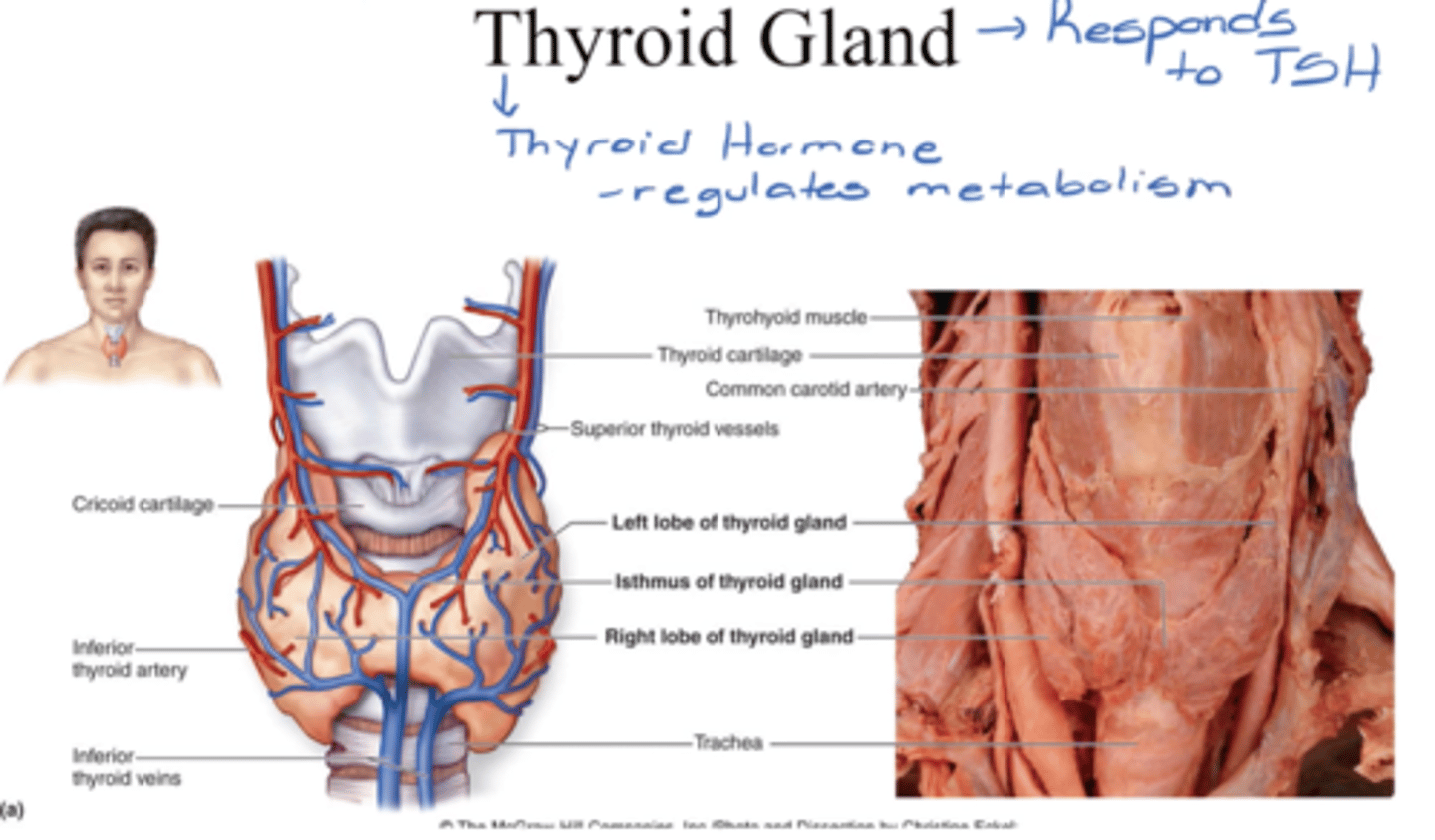
Thyroid Gland
- responds to TSH, which comes from adenohypophysis
- releases thyroid hormone
F: regulates metabolism
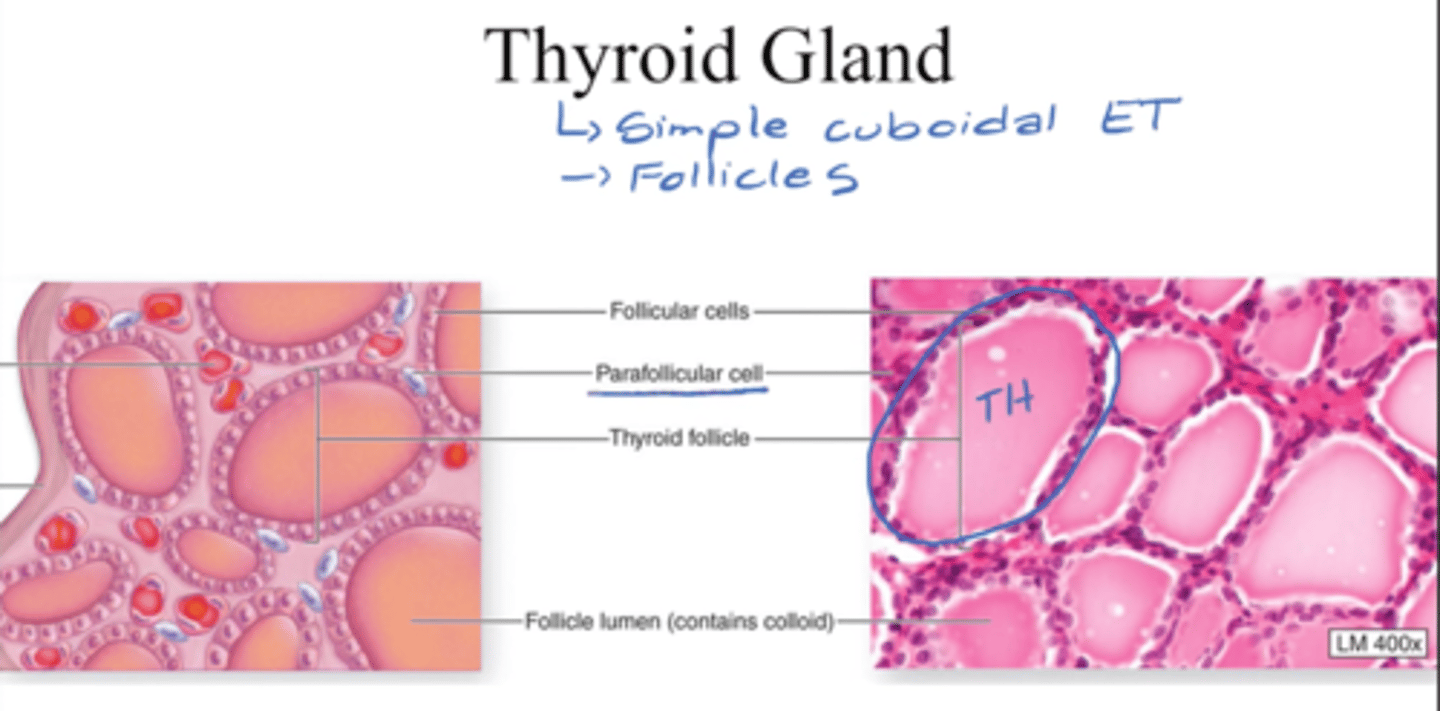
Thyroid Gland
- made of simple cuboidal ET, which make hormone
- makes follicles & in the middle fills up w/ TH
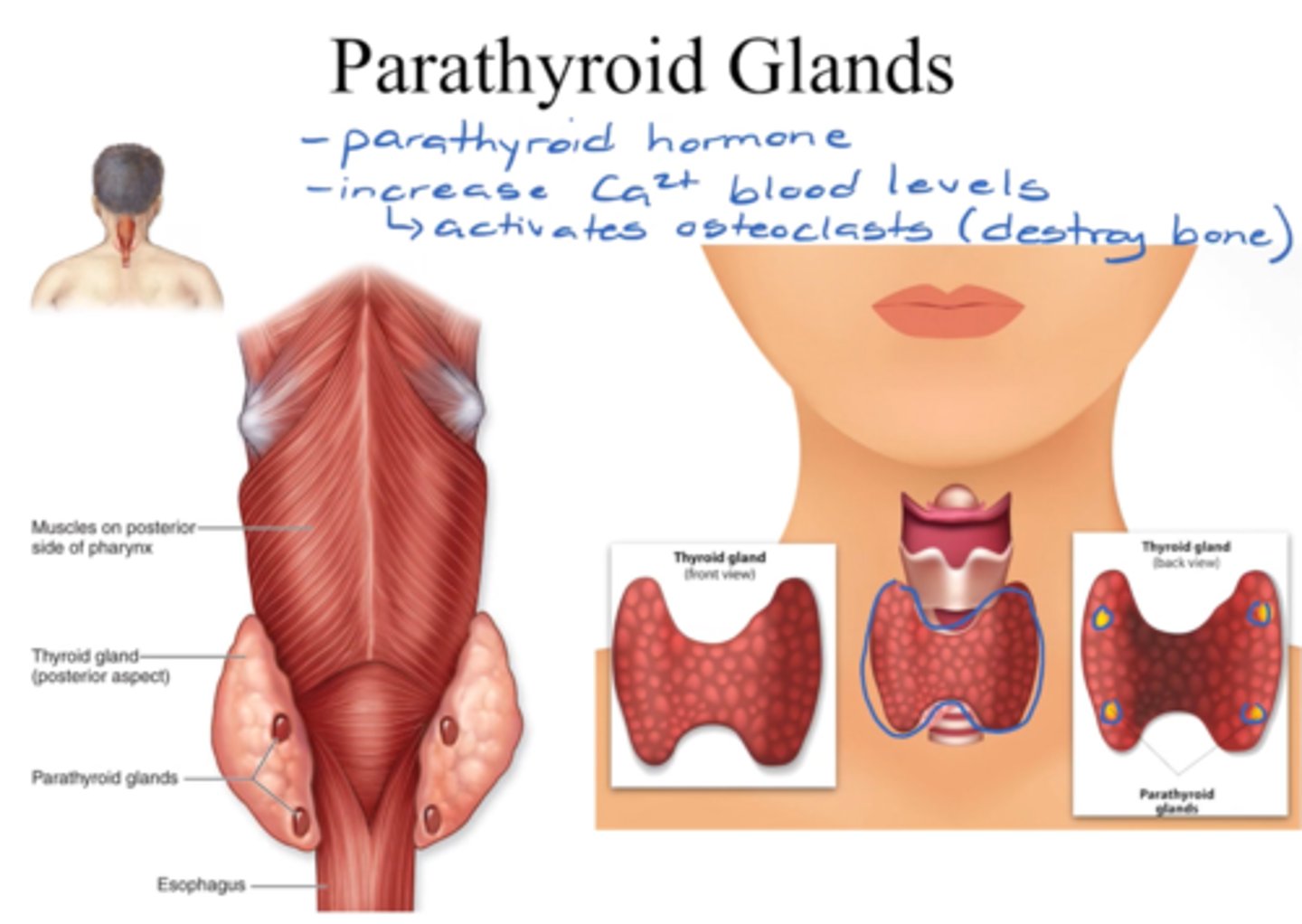
Parathyroid Gland
- 4 small glands on the back of thyroid
- release parathyroid hormone
- which increases Ca2+ blood levels
- activates osteoclasts (break bone down)
- active if not eating enough Ca2+ in diet
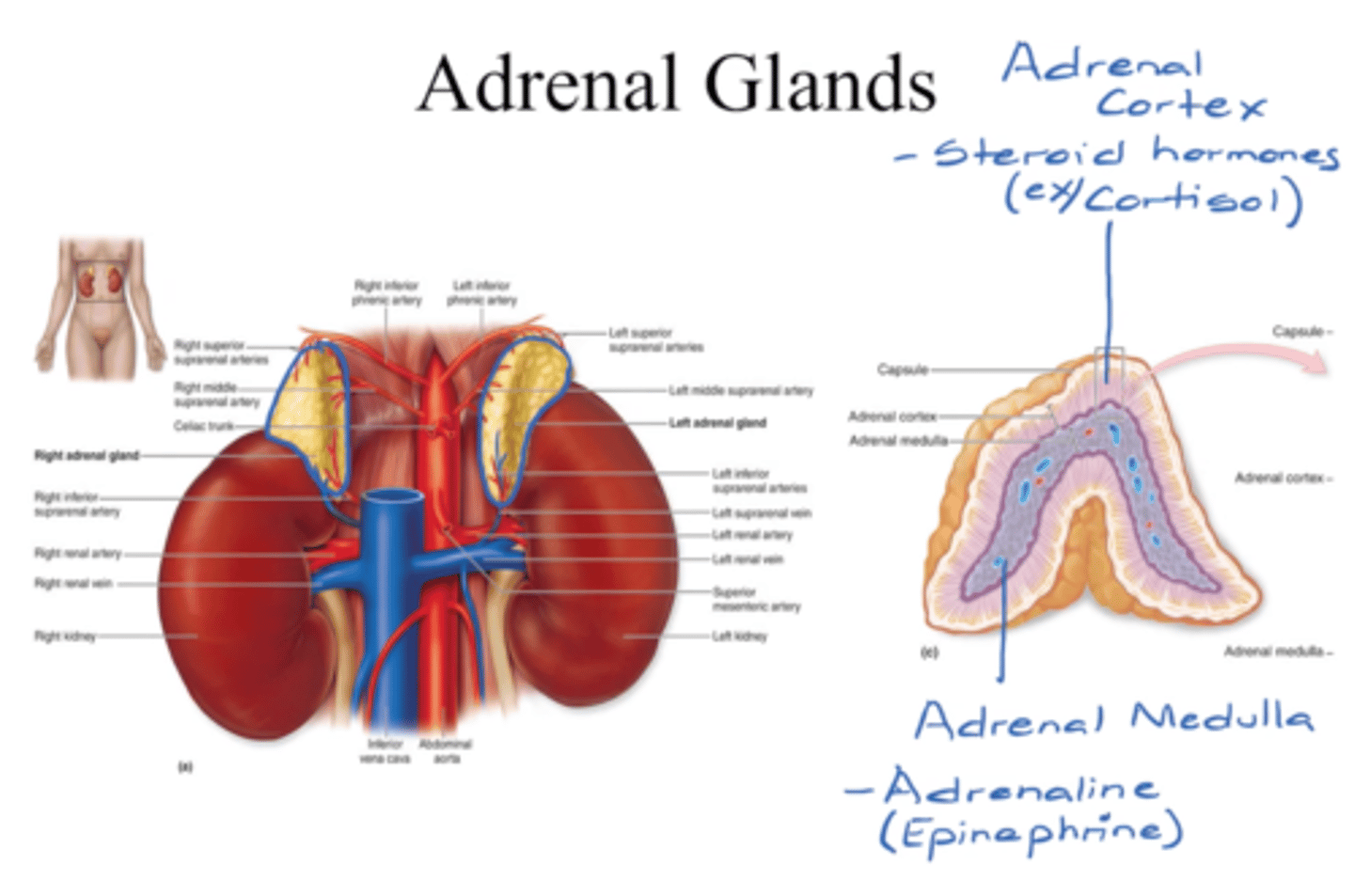
Adrenal Gland
- sit on top of kidneys (2 glands)
(1) adrenal cortex
- releases steroid hormones (ex; cortisol = stress)
(2) adrenal medulla
- releases adrenaline (epinephrine)
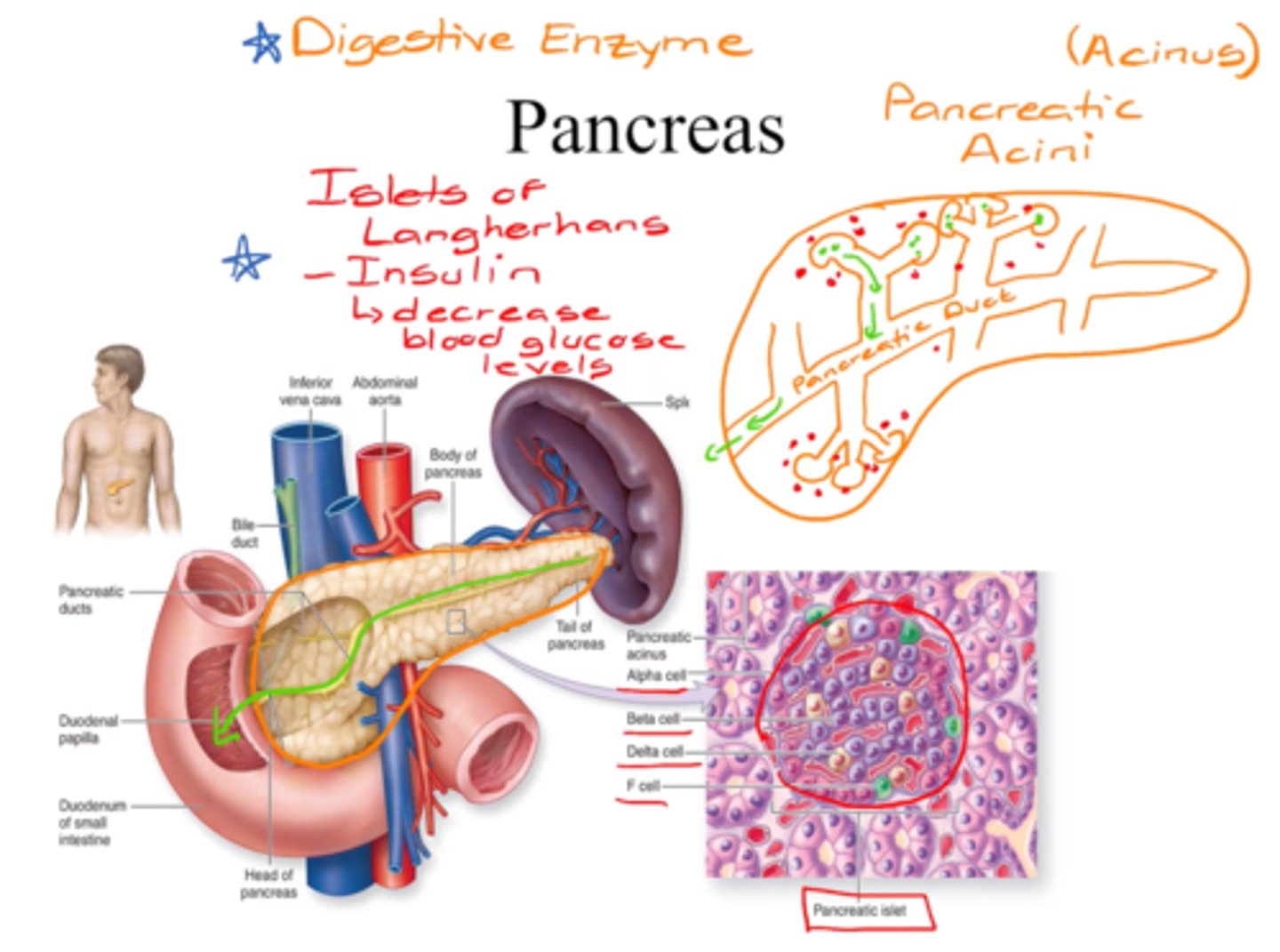
Pancreas
- pancreatic duct -> (alveolar) pancreatic acini(us)
- releases a digestive enzyme (part of digestive sys)
islets of langerhans
- releases insulin -> decrease blood glucose levels
(ex; after eating, release insulin to absorb glucose)
Clinical Condition
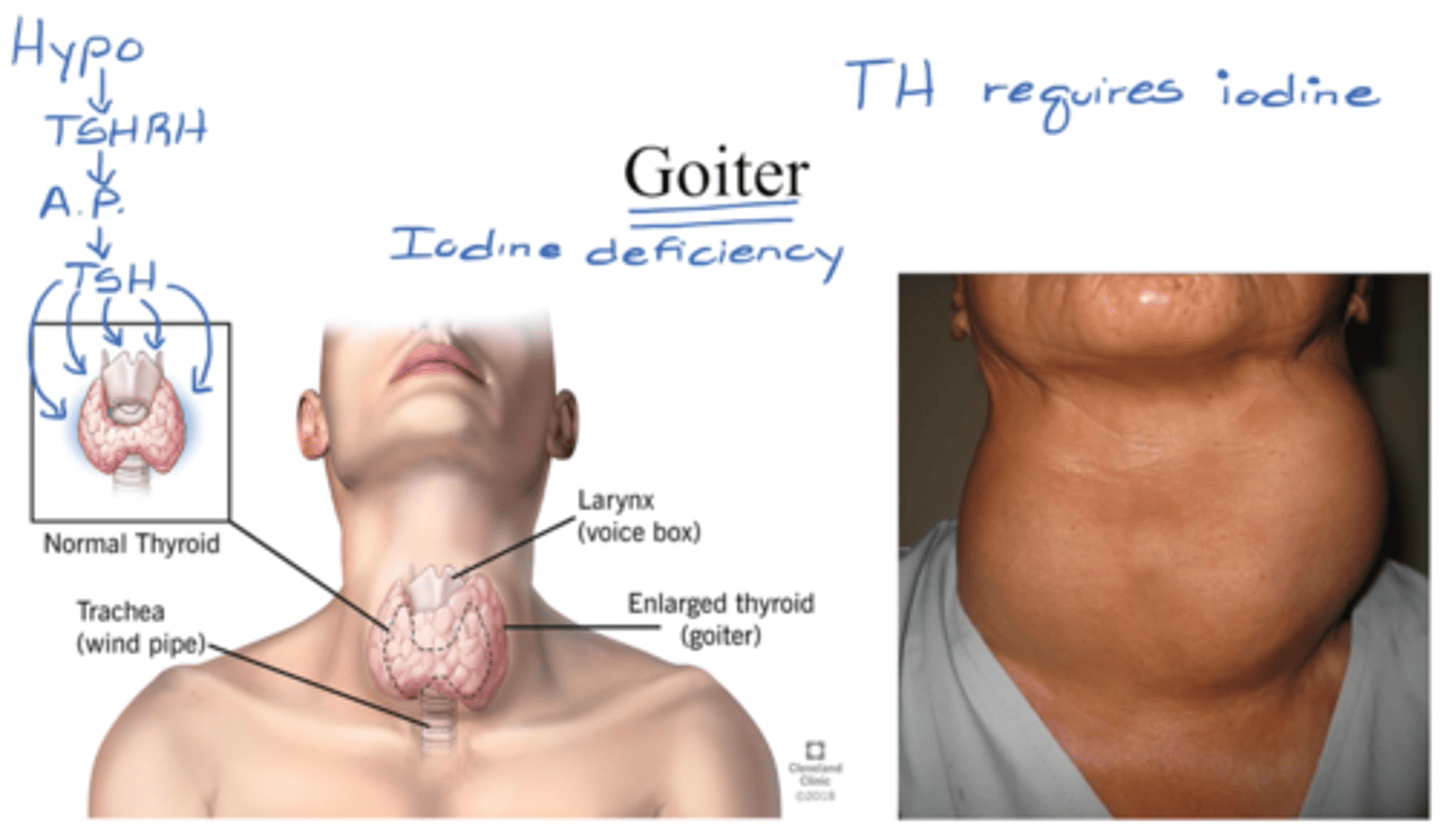
- Goiter
- enlarged thyroid gland b/c lack of iodine
- can't make TH, but is still receiving signals from hypothalamus
- need to release TH, dependent on it
- continues to be stimulated & it gets bigger