Fashion Final
 Call Kai
 Learn
Learn Practice Test
 Spaced Repetition
 Match
Match Flashcards
 Knowt Play
1/28

There's no tags or description
Looks like no tags are added yet.
Name | Mastery | Learn | Test | Matching | Spaced | Call with Kai |
|---|
No analytics yet
Send a link to your students to track their progress
29 Terms
current fashion systems- sustainable fashion
use high volumes of non renewable resources (including petroleum), extracted to produce clothes often used only for a short period of time
nonrenewable
petroleum
only used for short time
then incinerated
fashion materials
largely lost to landfill
or incineration
environmental costs of garment production
water pollution
toxic chemicals
creation of waste
huge energy consumption
garment production
one of world’s biggest/most labor intensive manufacturing industries
40 mil workers in world
lowest paid in world
over 90% can’t negotiate wages/conditions
sustainable fashion
no unified definition- currently an umbrella term for all potential directions
clothing made ethically/environmentally friendly
way brands create clothing w no negative impacts on the environment
positive impact on people/communities associated w its activities
protecting both enviornment & those producing garments
sustainable fashion types
slow fashion (quality, longevity>fast paced trends/mass production)
eco (sustainable materials, organic, fair wages, animal welfare, waste reduction)
circular fashion (keep in circulation as long as possible)
ethical fashion (fair wages, social responsibility, human rights)
elements key to sustainability (matrix)
cutting emissions (co2)
addressing overproduction
ensuring fair wage of garment workers
safe working conditions
greenwashing
marketing technique, implies brand uses vague, misleading, or false claims
to suggest its more eco-friendly than it is
PR tool
green hushing
companies choosing not to disclose details of climate targets
avoid scrutiny/allegations of greenwashing
circular economy
model of production and consumption, life cycle of products extended
sharing
leasing
reuing
repairing
refurbishing
recycling
existing materials/products as long as possible (not all recycling is the same)
upcycling
highest form of recycling/circular economy
main goal
turn into a new thing
downcycling
converting no longer usable materials/products into a new one of lower economic value
ethical fashion
production, working conditions, fair trade practices
moral stance company takes
ensure no human beings or animals hurt in manufacturing
slow fashion
opposite of fast fashion
whole product lifecycle considered
sharing/renting clothes
high quality garments to increase longevity
circular fashion
off-shoot of circular economy
materials/products in society used and circulated amongst ppl for as long as possible
practices like recycling, upcycling, thrifting
eco fashion
clothing/goods made by non-harmful methods
(ex, using recycled materials, organic materials, etc.)
inspirational sustainable initiative examples
Eileen fisher (circular economy)- green eileen recycling project, employee ownership of company, renew/second life program, waste no mar (turns damaged clothes into new designs)
Patagonia (B-corp, resell, activism, corporate social responsibility, repair program/recycling)
Patagonia Case ex.
**best practice!!
sustainable apparel coalition (failed but attempt to standardize sustainability assessment/reporting)
accountability/circular strategy
transparency (publishes supply chain)
carbon footprint (wants nuetrality by 2025)
product lifecycle (high quality, repair hubs, resell program)
raw materials (less harmful, recyclable, invest in sustainable techniques/technology)
activism (education campaigns, earth tax= 1% back to environmental nonprofits)
social responsibility (fair trade programs, one of few that discloses worker wages)
2022: instead of selling, family/founder put all of profits (100mil/year) to combat climate change/protext undeveloped land across world
formulating a successful communication strategy
brand positioning: luxury v. mass
levels of communication: product, brand, corporate
communication objective: awareness, image, reputation
dream factor communication
(unique/specific to the fashion/luxury industry)
creating a lifestyle
product focus through visual communication
creative directors as ambassadors
heritage storytelling hype
role of creative directors
now not just in design
new goal is to becoe the communication strategy
staying culturally relevant
crucial now/modern day
understanding cultural shifts/times
showcases cultural relevance
key role in translating cultural meaning into strategy
from image maker to brand builder
connects brand heritage to art, cinema, music, sport, youth culture
cultural relevance
move from product centric to meaning centric models
builds long-term brand equity
added value urges consumer to keep choosing one brand over another
and pay higher price
where brands engage collective identities and evolving values
reduces dependence on paid visibility
sustaining it required blancing heritage, innovation, societal engagement with leadership
esp. creative director
cultural adjacency
contrast cultural relevance
generates short term visibility but lacks durable meaning
whats required to sustain cultural relevance
balancing:
heritage
innovation
societal engagement
with leadership
content creators vs. influencers
dif bc of social movments
more social issues emerging (sustainability, BLM, LGBTQ, body shaming)
creators can be hired for values similar to those of brand
content creators= creative focus, quality/creativity of content
influencers= focused on sponsoring content, increasing follower base
considerations when choosing a talent:
value match
relationship building
profile strength
audience demographic
methodology of measurement in digital communication/marketing
performance monitored through dif sources/channels
each uses its own logic
(print, digital, social, influencer activities rely on separate tools/datasets)
challenges in digital performance measurement
KPI (key performance indicator) varies by platform
ER (engagement rate)
reaction
sentiment analysis
voice echo
EMV (earned media value)
AVE (advertising value equivalency)
traffic
impressions
ROI (return on investment)
ROAS (return on ad spend)
MIV (media impact value
diffcult to compare
algorithms/visibility rules always changing (esp social media- alters what counts as “success”)
each data provider applies dif. weighing systems & metric (numbers often incompatible criteria = brand struggles)
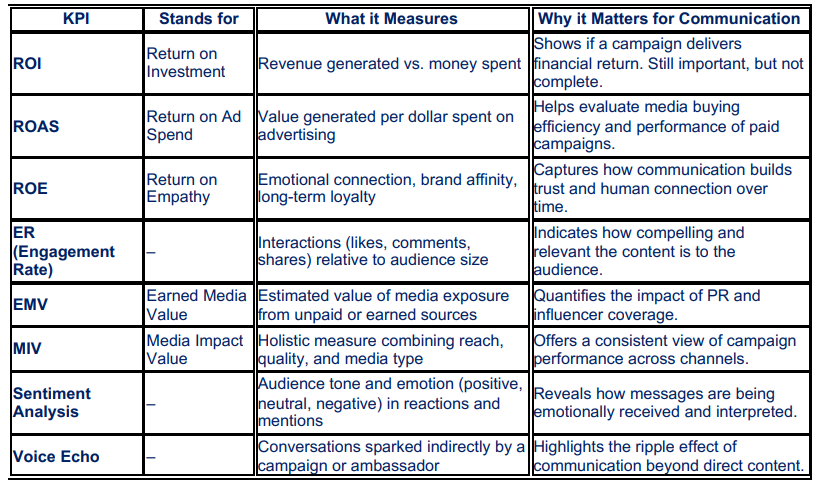
communication KPIs
new brand communication changes
from image to video
influencing to educating
press/VIPs to consumers to customer engagement
from ROI to ROE (captive conversations, conscious communication, innovating influence)