env econ chatper 2
 Call Kai
 Learn
Learn Practice Test
 Spaced Repetition
 Match
Match Flashcards
 Knowt Play
1/9

Earn XP
Description and Tags
why perfect markets create efficient results
Name | Mastery | Learn | Test | Matching | Spaced | Call with Kai |
|---|
No analytics yet
Send a link to your students to track their progress
10 Terms
subjunctive value judgments vs lenses
choosing what to do about environmental challenges requires a yardstick (an analytical baseline), but can’t rest on purely objective criteria
yardstick for zoologist field
preserving biodiversity has infinite intrinsic value in itself
yardstick for religious/theological field
preserving nature is an obligation to protect god’s legacy/creation
sinning against nature is a sin against ourselves
yardstick for economic field
it is rational to preserve nature only if the social benefits are larger than the costs of doing so (eg if it is efficient)
the social definition
in econ, ‘social’ refers to the whole of society
‘social benefits’ & ‘social costs’ represent the total aggregated sum of all benefits & costs experienced by the whole population
resource allocation baseline
environmental econ views the environment as a scarce resource
in a perfect market, prices signal relative scarcities, steering competition to promote innovation & erode market power
economic truth of perfect markets: core takeaway
if the whole word were a perfect market with respect to environmental usage, no environmental problem would exist from an economic perspective
even if the environment were completely destroyed, if that destruction happened efficiently (if marginal social benefits = marginal social costs), it would not present an economic problem
environmental issues exist purely because real-world markets fail, are imperfect, or lack market prices entirely for environmental goods
social welfare maximisation (the baseline equilibrium)
equilibrium price (P*) maximises total social welfare (consumer surplus + producer surplus)
achieves the absolute best outcome possible under scarcity
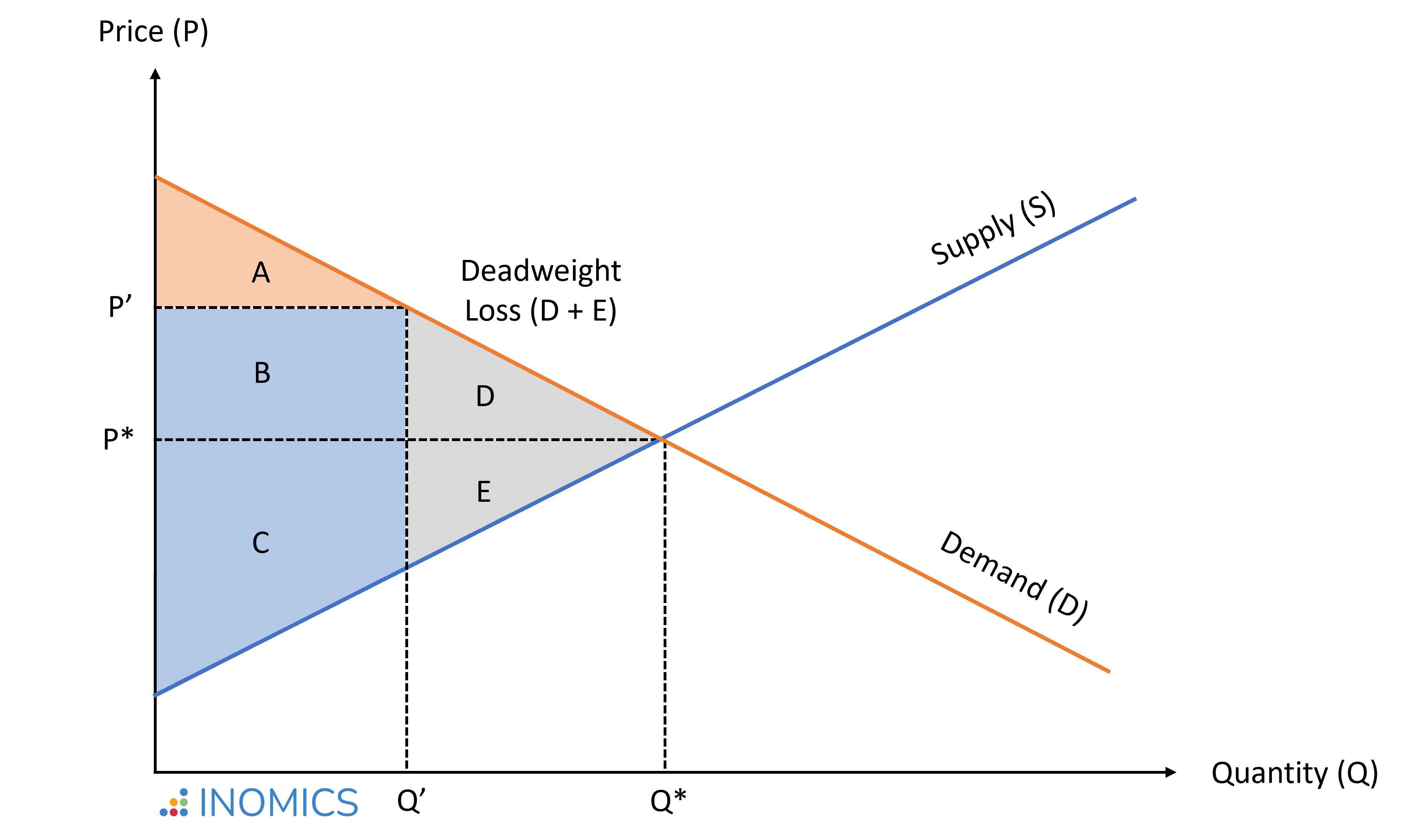
price inefficiencies & deadweight loss (welfare loss)
any deviation from equilibrium price (P*) shrinks consumer & producer surpluses, creating a net reduction in overall social welfare
the merit-order effect in electricity
step-by-step staircase graph plotting the price of electricity (€/MWh) against generation quantity (GW)
power plants are queued up along the supply curve from lowest to highest marginal cost
renewables (solar, water, wind) have near-0 marginal costs & sit at the bottom left
nuclear and biogas next
fossil fuels (coal, then natural gas) have highest marginal operational costs & sit on the far right.
market clearing price: vertical line for demand intersects this staircase.
marginal cost of the very last (most expensive) power plant needed to meet that demand sets market clearing price for all suppliers
shows how pricing signals scarcity → when demand is high, expensive fossil fuels set a high market clearing price, making low-carbon renewables highly profitable (yielding them massive producer surplus)