Exam 3
 Call Kai
 Learn
Learn Practice Test
 Spaced Repetition
 Match
Match Flashcards
 Knowt Play
1/60

There's no tags or description
Looks like no tags are added yet.
Name | Mastery | Learn | Test | Matching | Spaced | Call with Kai |
|---|
No analytics yet
Send a link to your students to track their progress
61 Terms
Define electrical vector?
direction of depol wave travel
What is the mean electrical vector, and what way does it normally point?
sum of all individual vectors, points down and to the left
What leads do we use to find the quadrant for axis?
Lead I and aVF
What lead definitions define extreme RAD?
negative in I and aVF
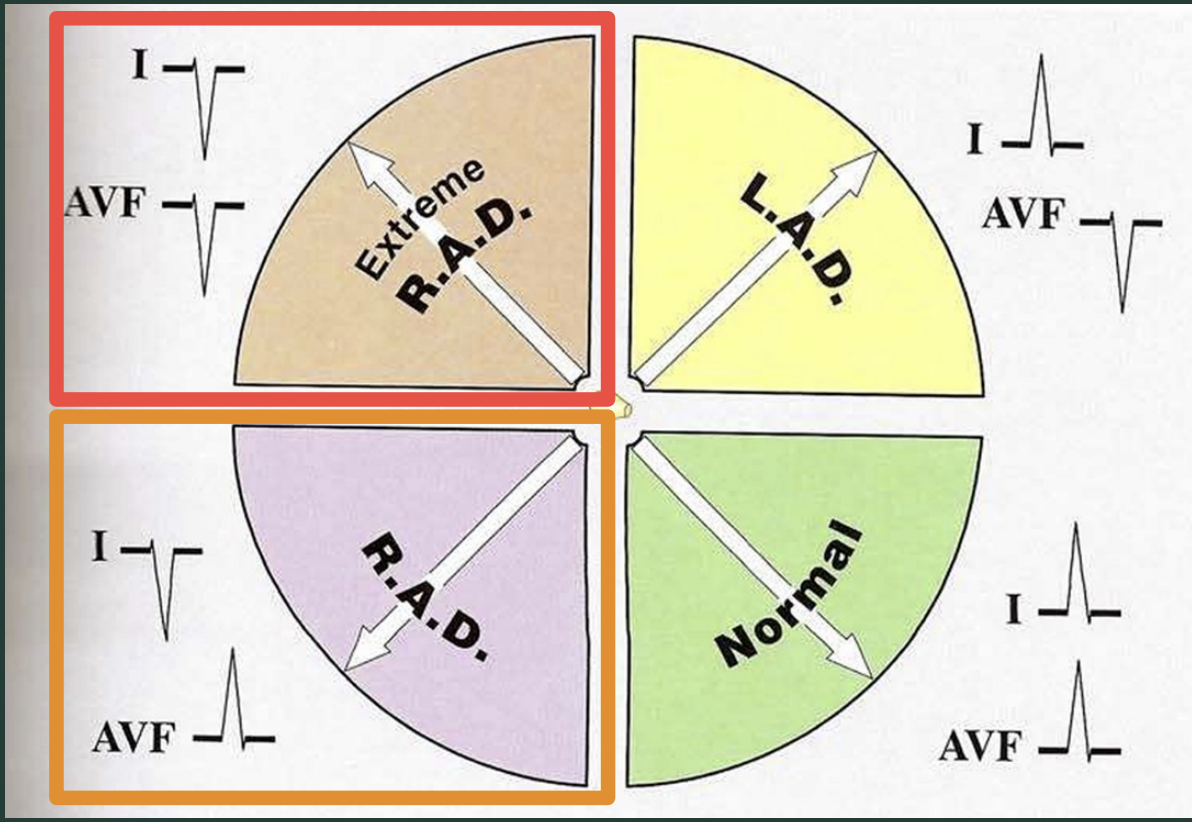
What lead definitions define RAD?
negative in lead I and positive in lead aVF
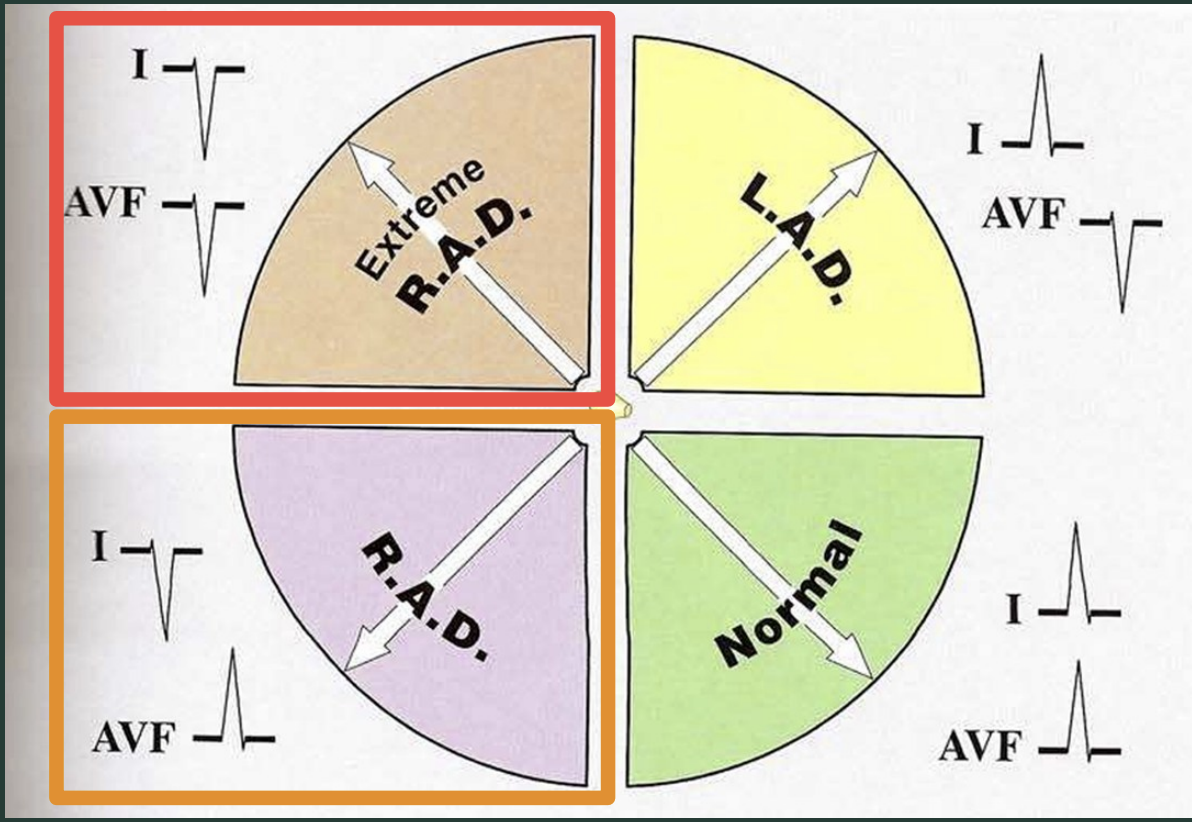
What lead definitions define LAD?
positive in lead I and negative in lead aVF
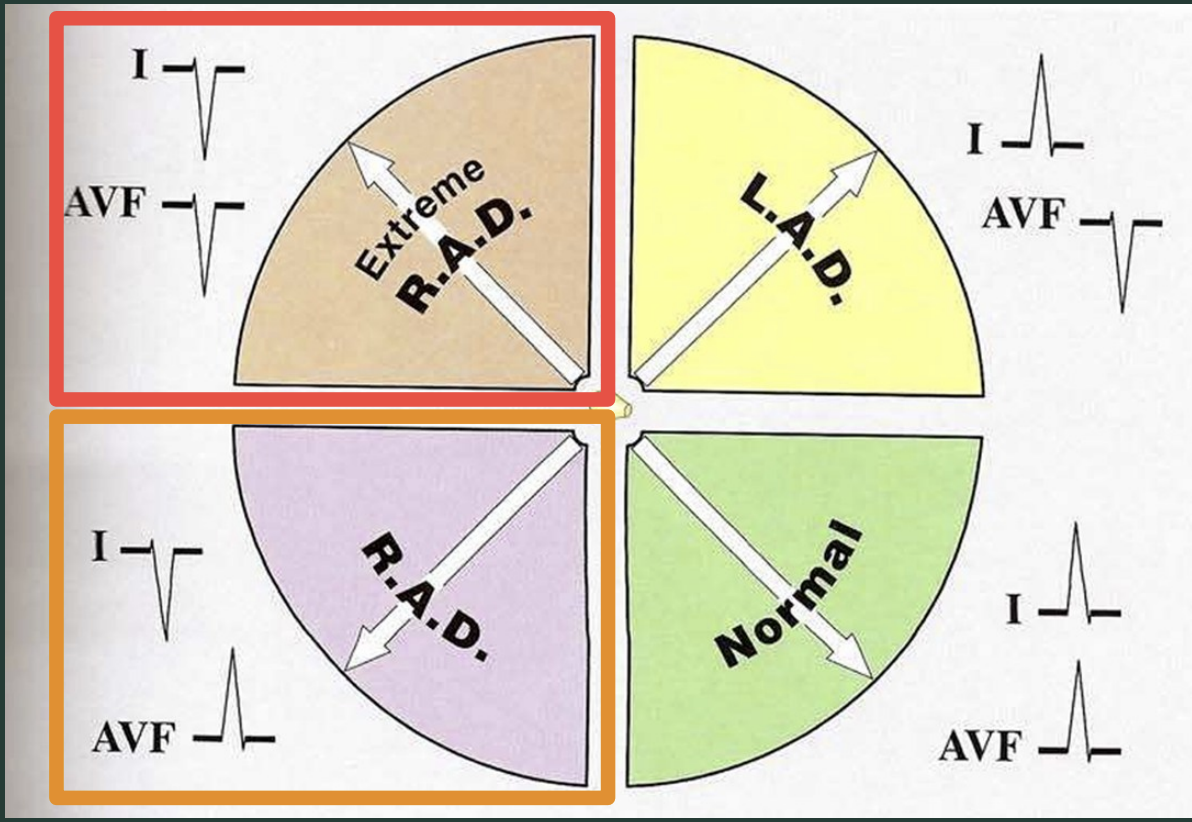
What lead definitions define normal?
positive in both lead I and aVF
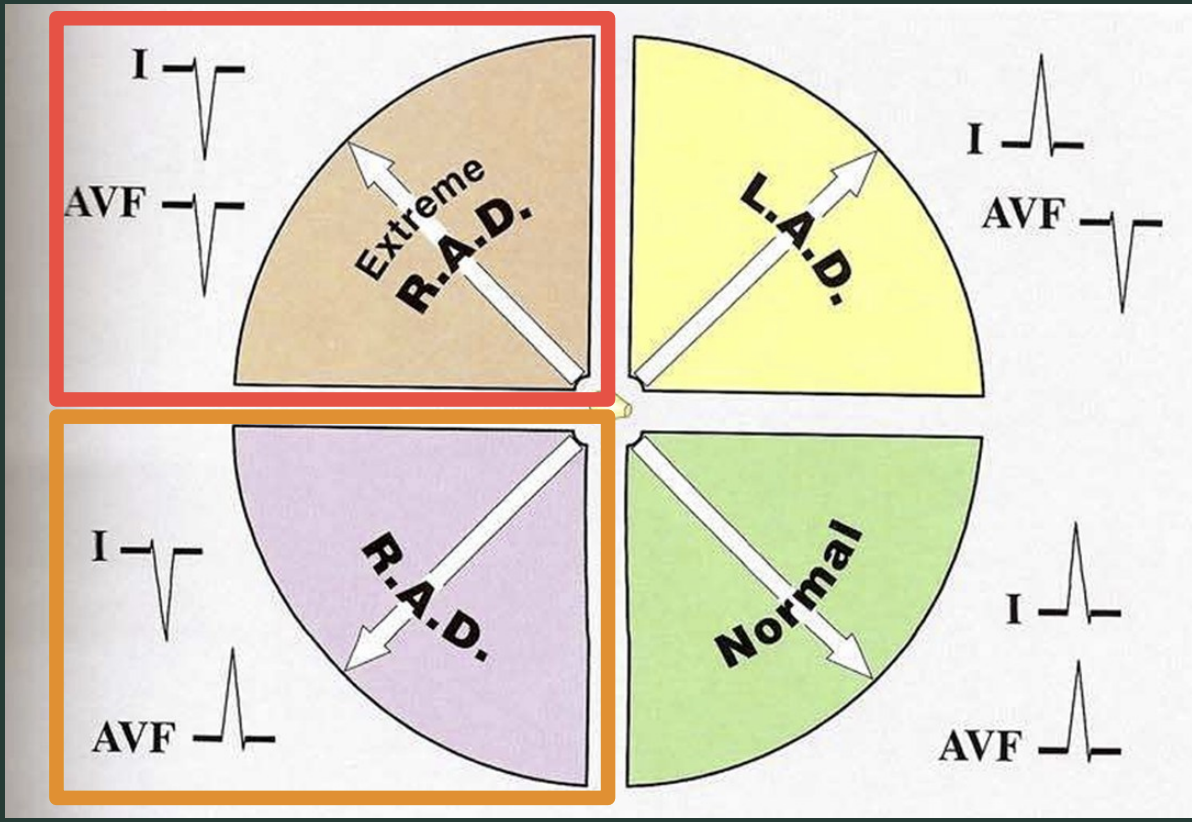
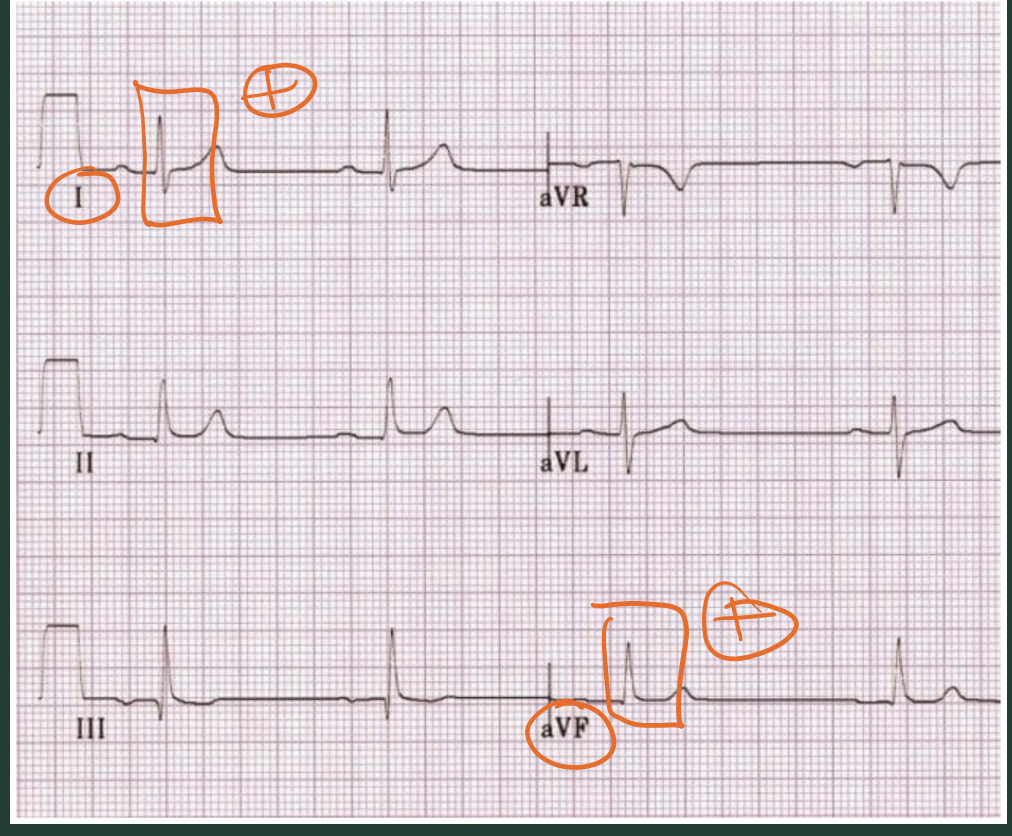
What axis quadrant?
normal
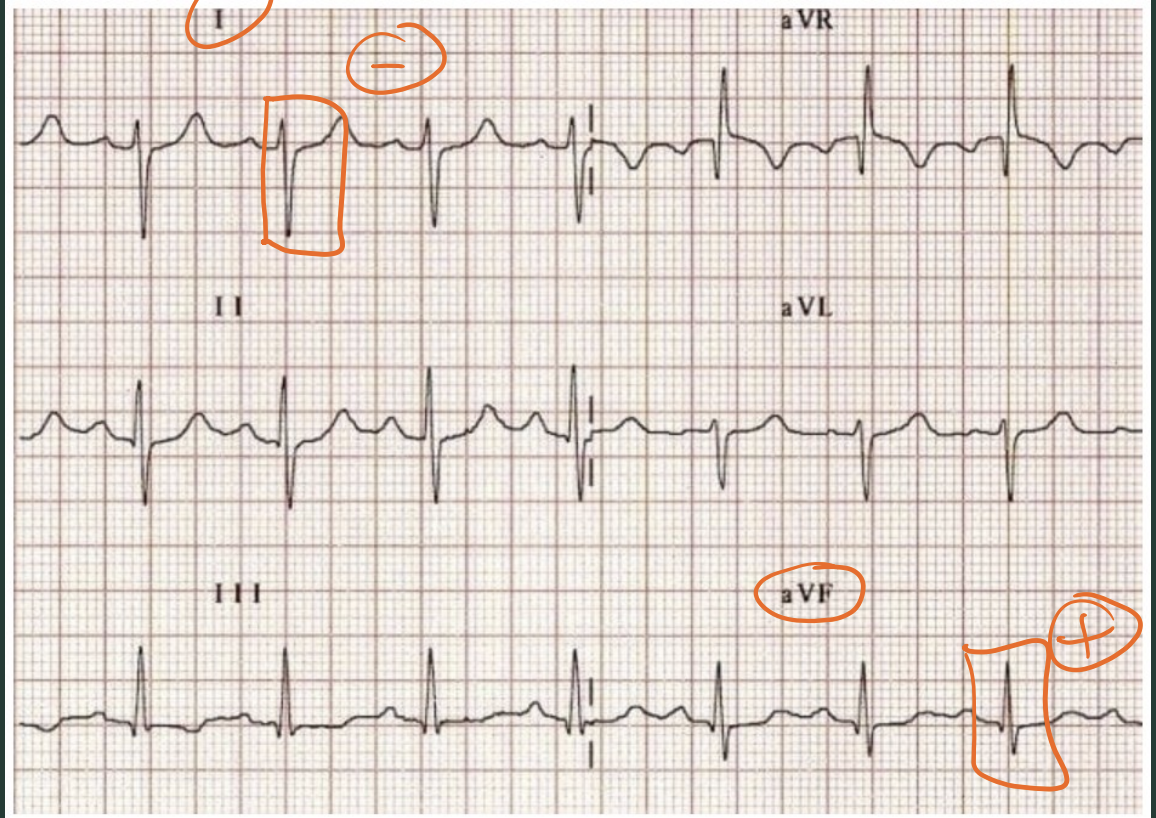
What axis quadrant?
RAD
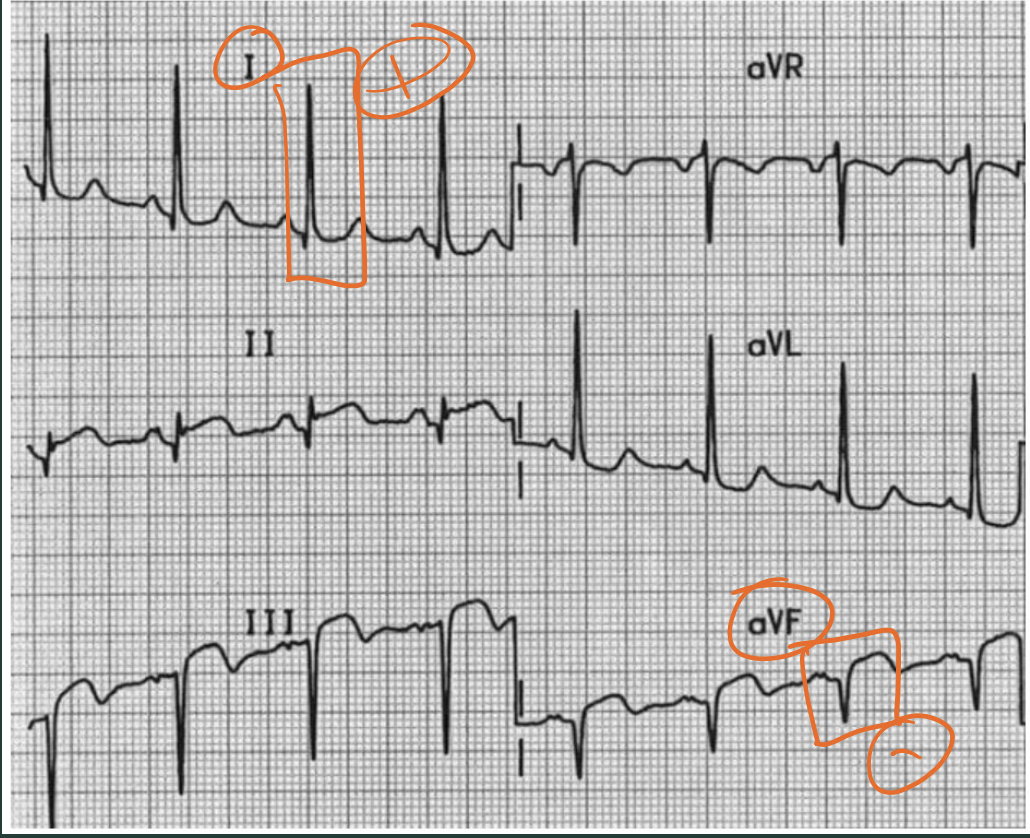
What quadrant?
LAD
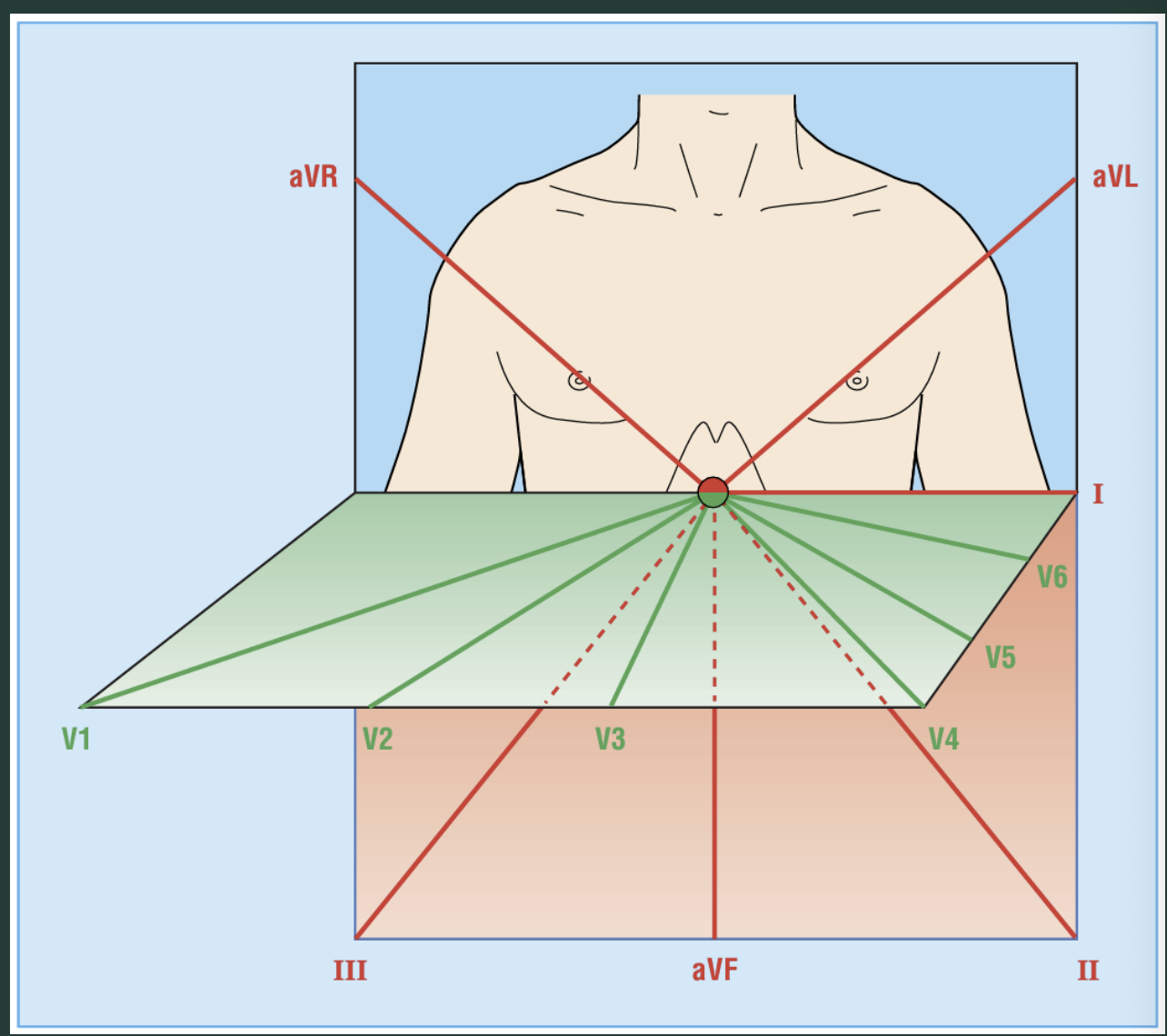
Which leads measure horizontal axis?
chest leads
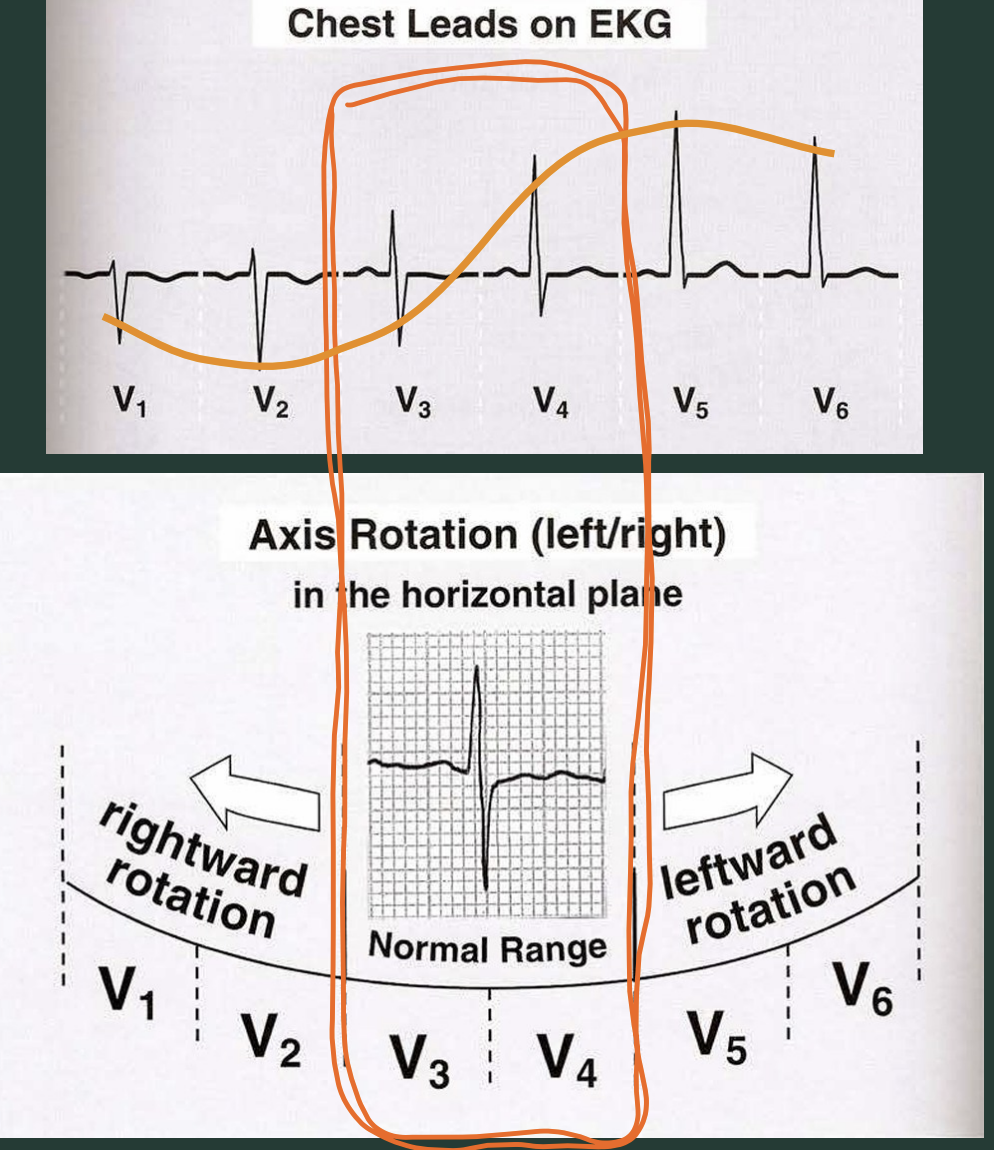
What does horizontal axis measure?
chest lead progression/rotation in the horizontal plane
When does normal chest lead transition occur?
in V3/V4
What is Rightward rotation?
CCW; early transition seen in V1/V2
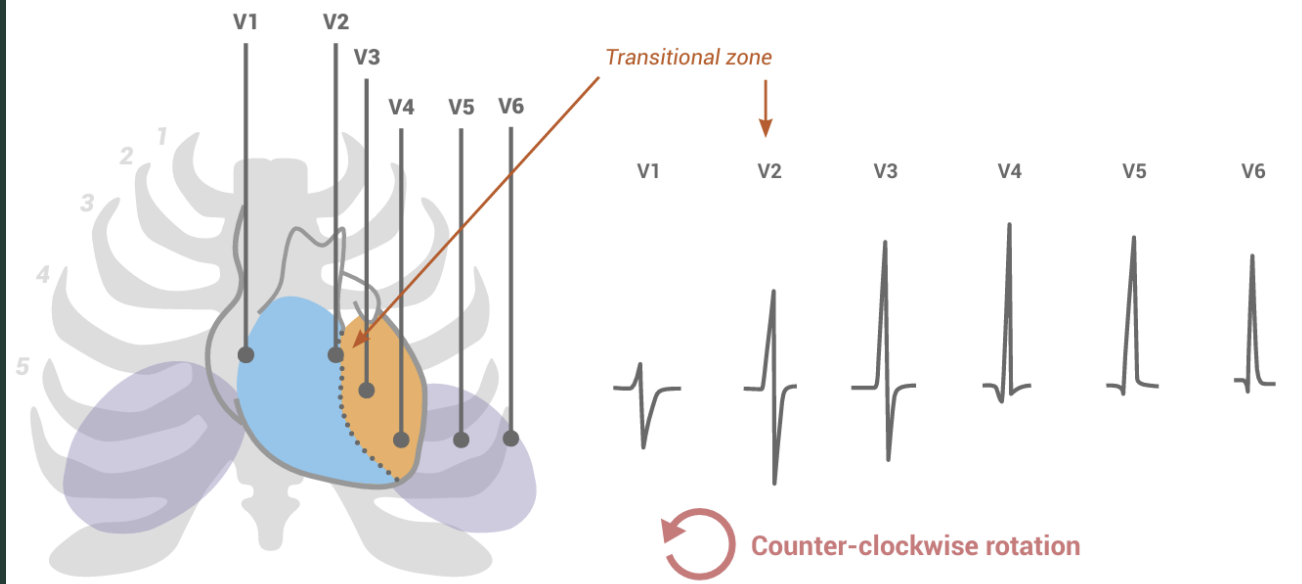
What is Leftward Rotation?
CW; late transition seen in leads V5/V6
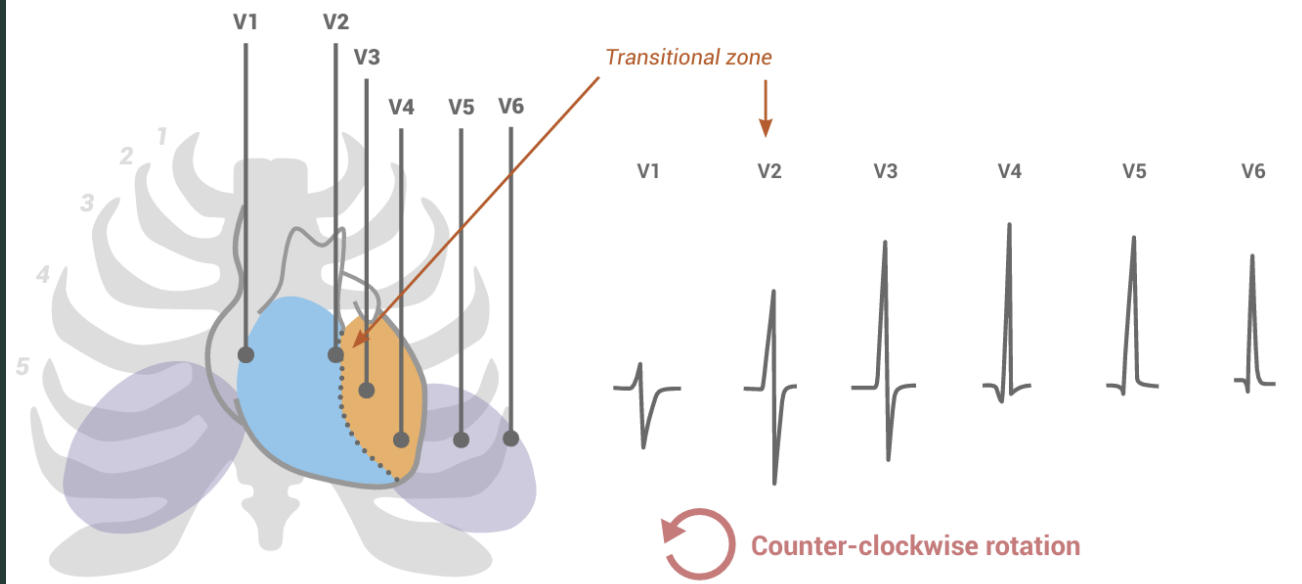
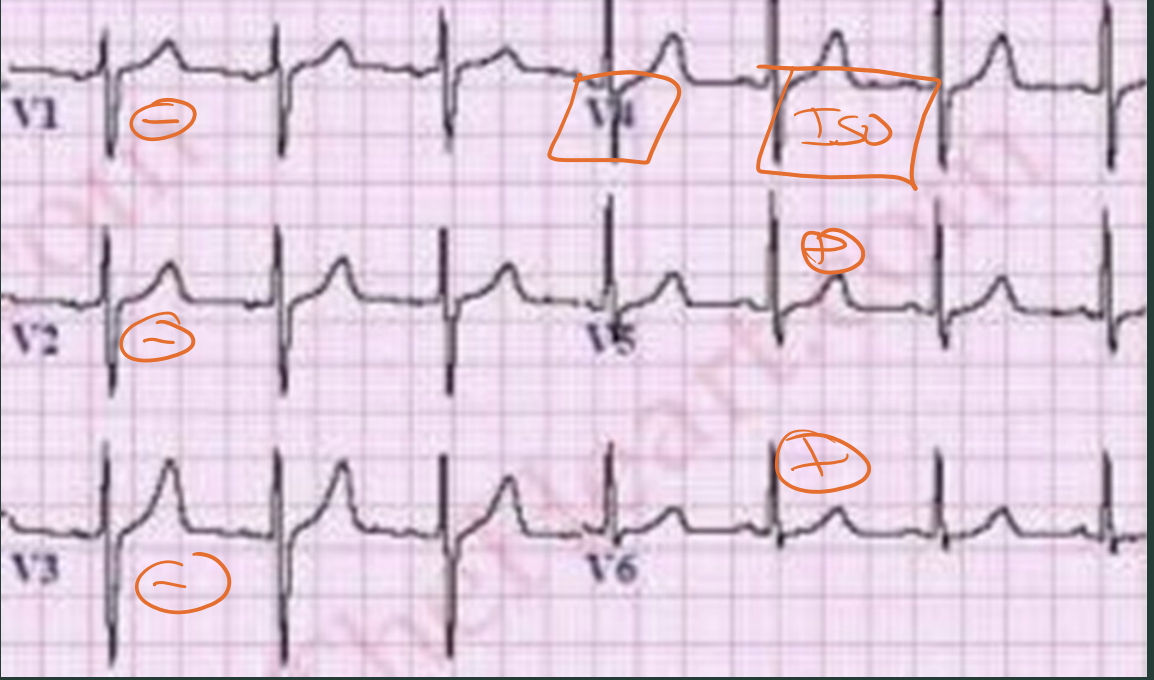
Axis rotation?
normal range, iso in V4
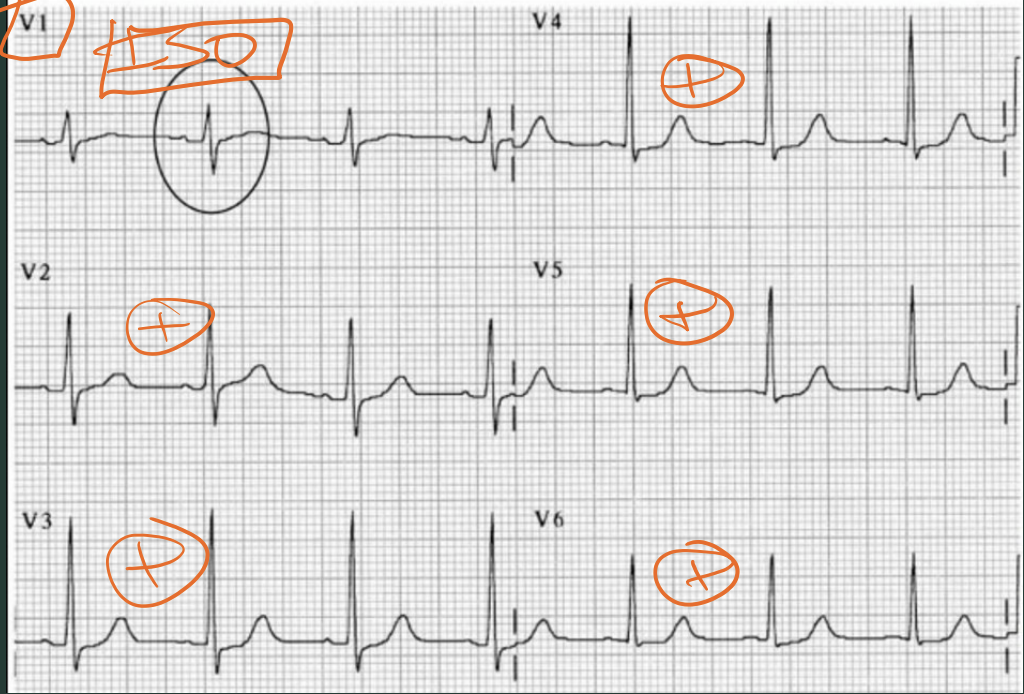
Axis rotation?
CCW/Early/Right; iso in V1
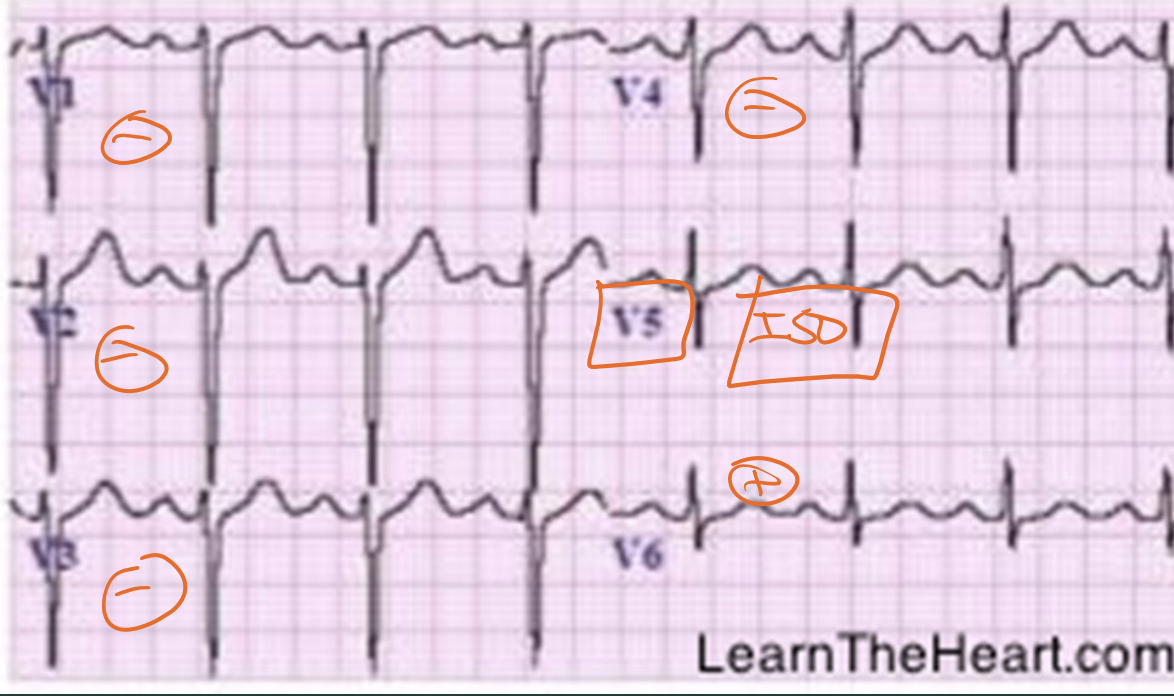
Axis rotation?
CW/Late/Left; iso in V5
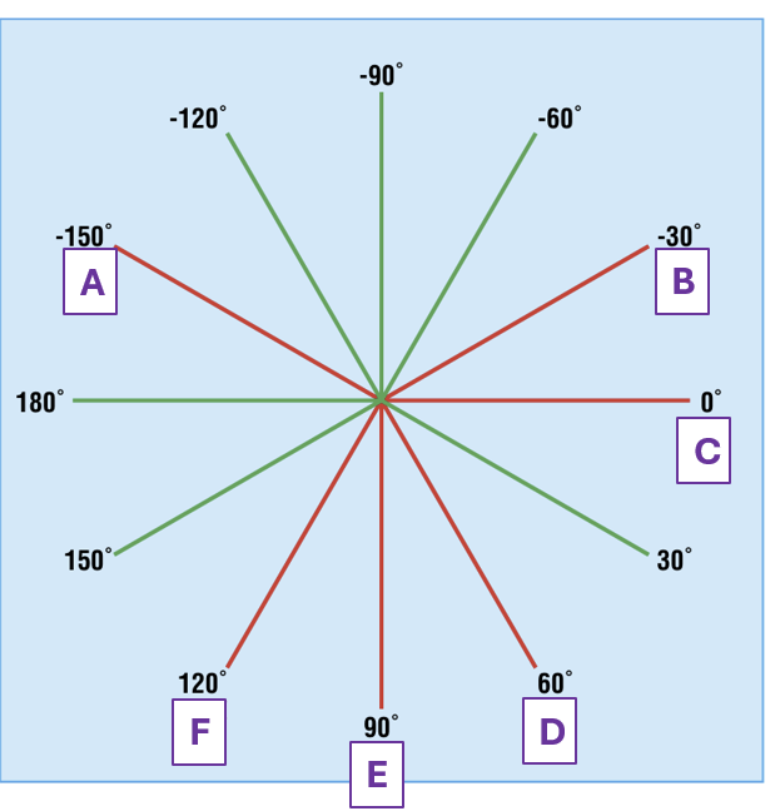
Lead A?
aVR
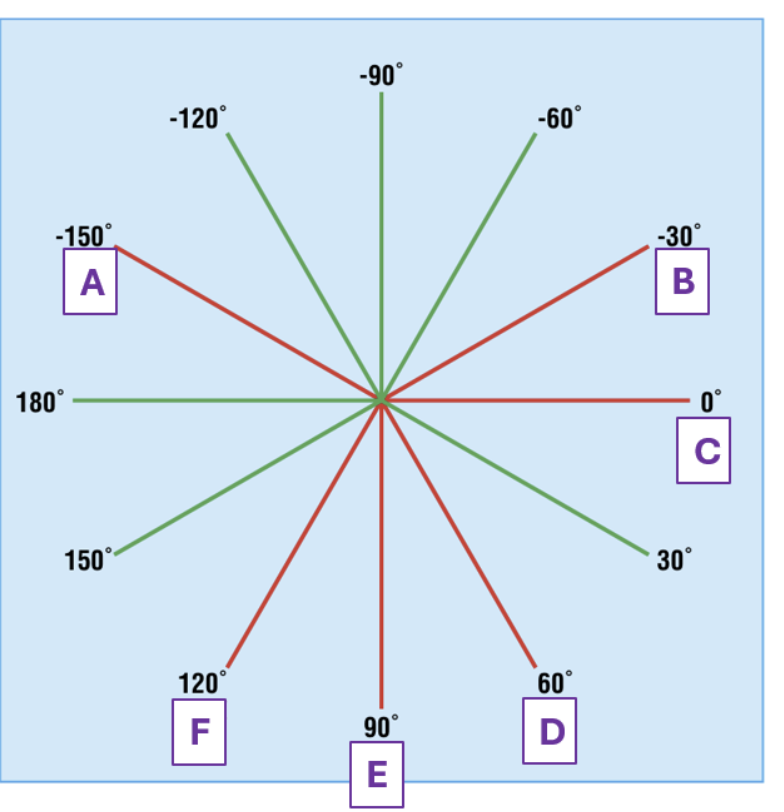
Lead B?
aVL
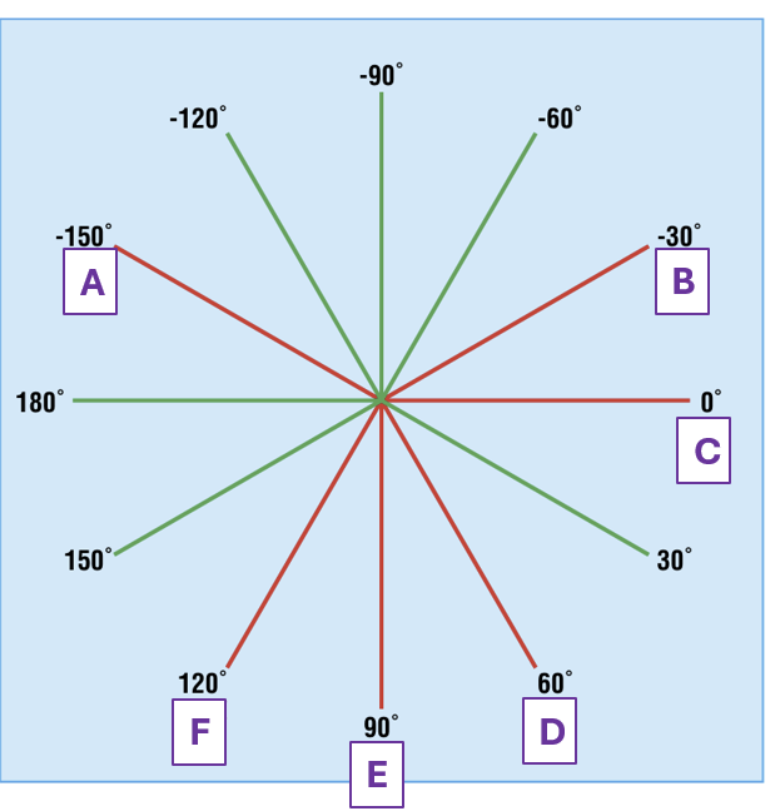
Lead C?
Lead I
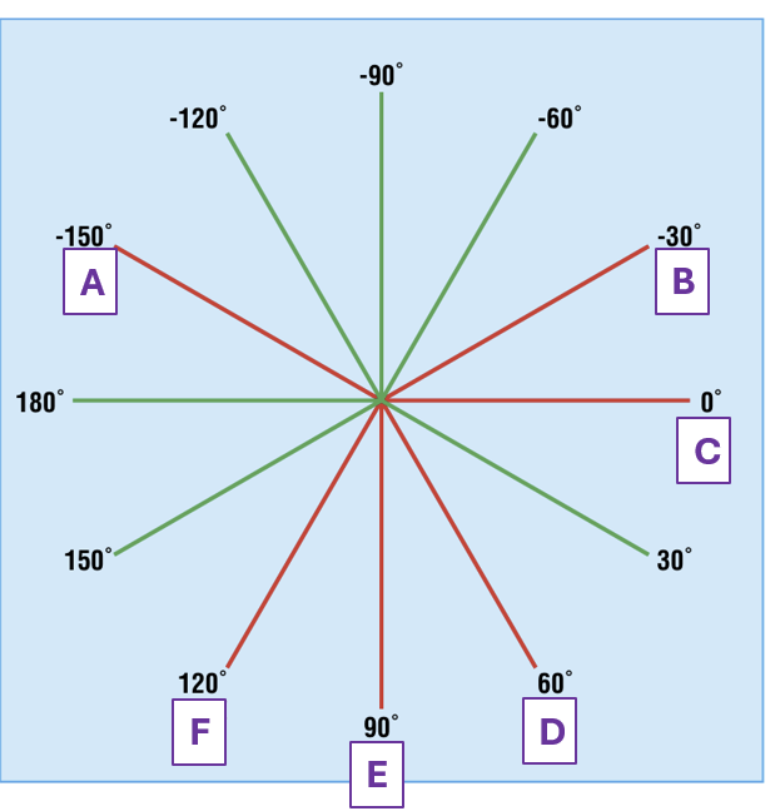
Lead D?
Lead II
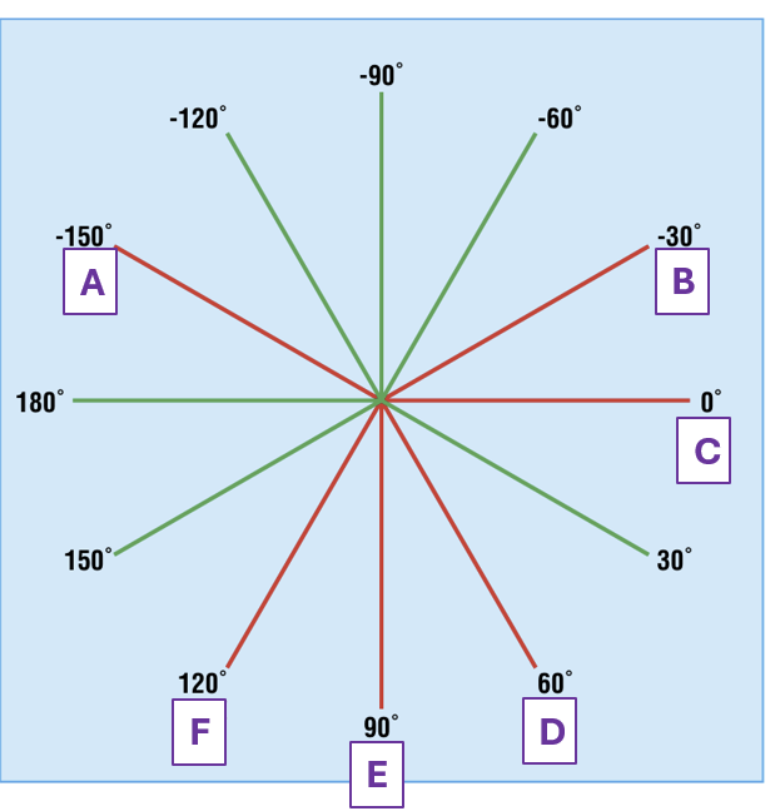
Lead E?
Lead aVF
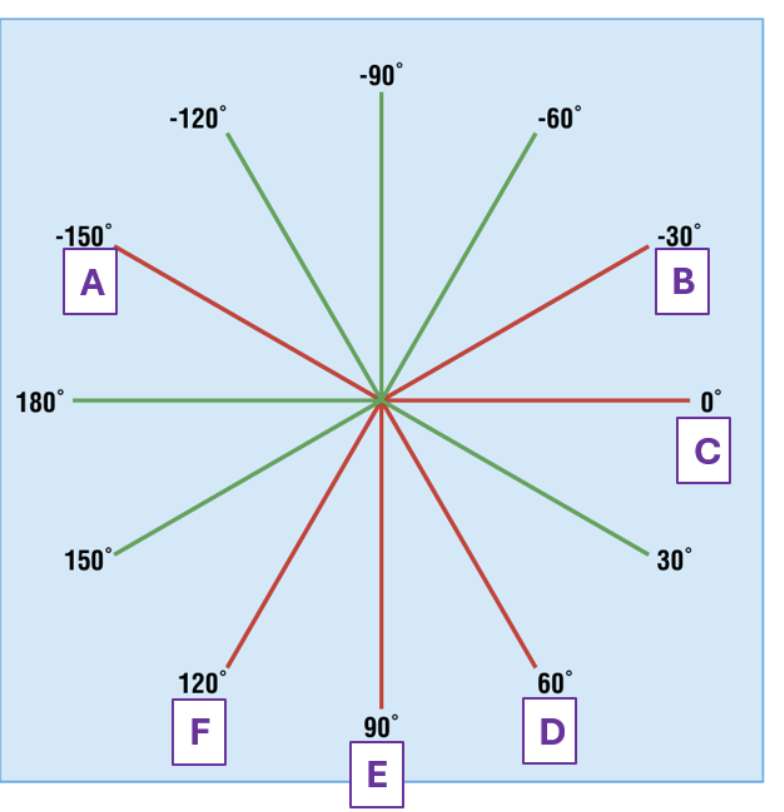
Lead F?
III
Which lead is used to identify hypertrophy for all 4 chambers?
V1
What does the P wave look like normally in lead V1?
small biphasic; RA-initial (+) then LA-terminal (-) component
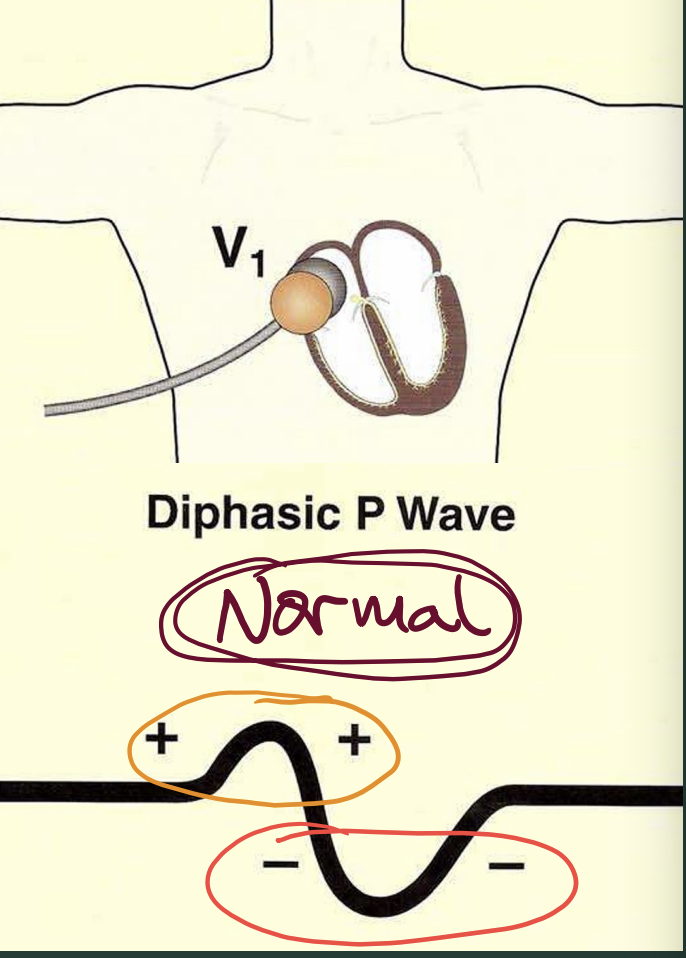
What leads are used to ID Atrial Hypertrophy?
V1 and II
What is the official name for RAH?
P pulmonale
What’s the official name for LAH?
P mitrale
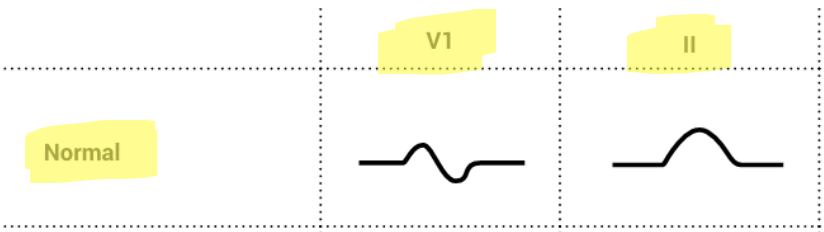
What lead deflections are characteristic of RAH?
observe the P waves: a larger initial (+) in V1, tall/peaked in II. (P wave height >2.5 mm)

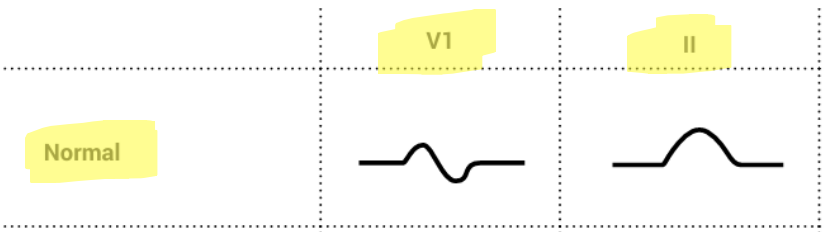
What lead deflections are characteristic of LAH?
observe the P waves: a larger terminal (-) in V1 (>0.04s), wide/notched in II (>0.12s)observe the P waves: a larger initial (+) in V1, tall/peaked in II. (P wave height >2.5 mm)
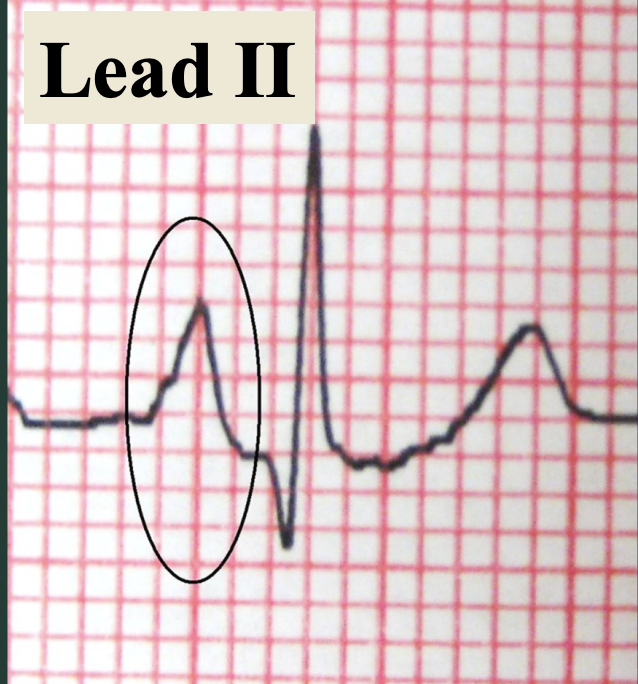
What type of hypertrophy is this?
RAH
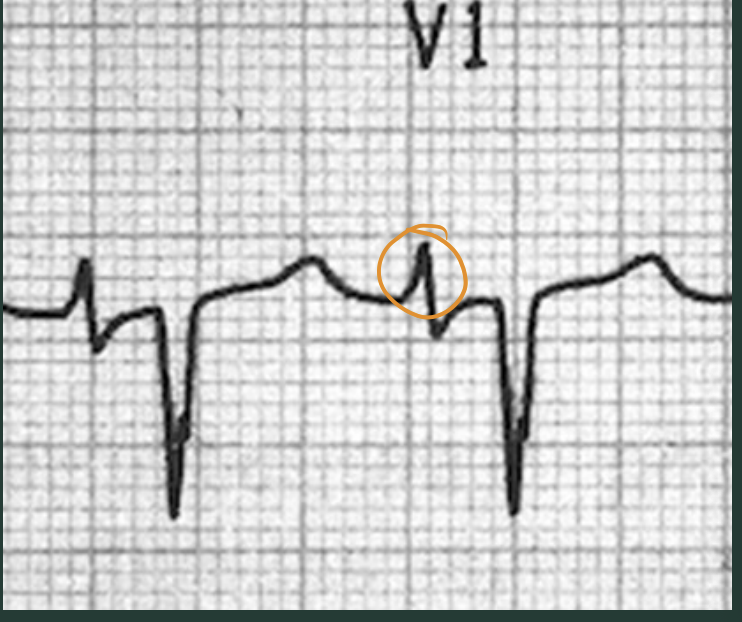
What type of hypertrophy?
RAH
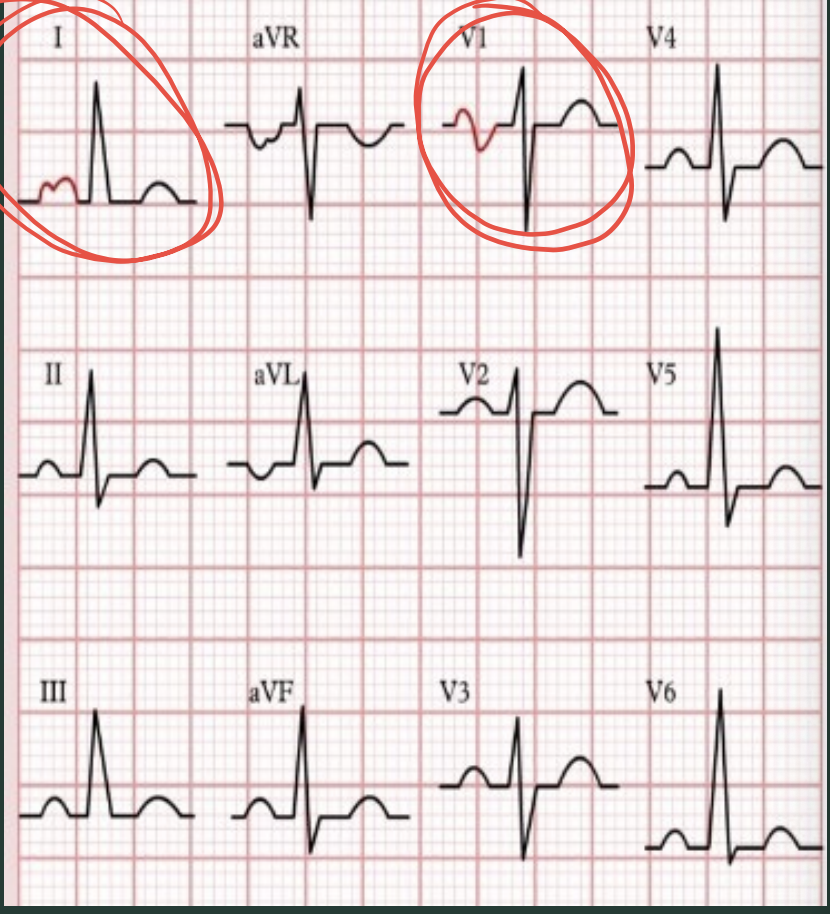
What type of hypertrophy is this?
LAH
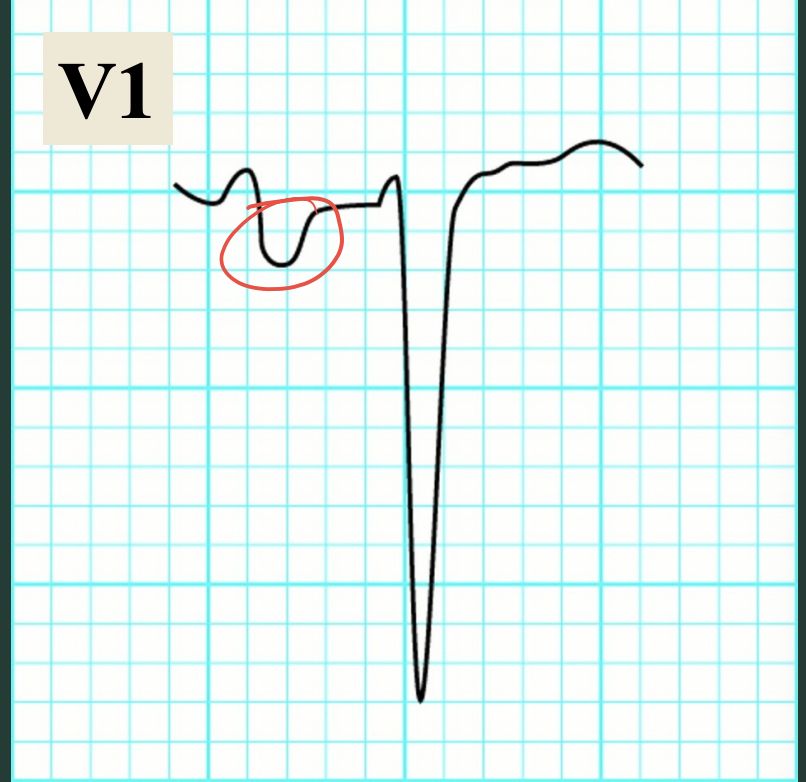
What type of hypertrophy?
LAH
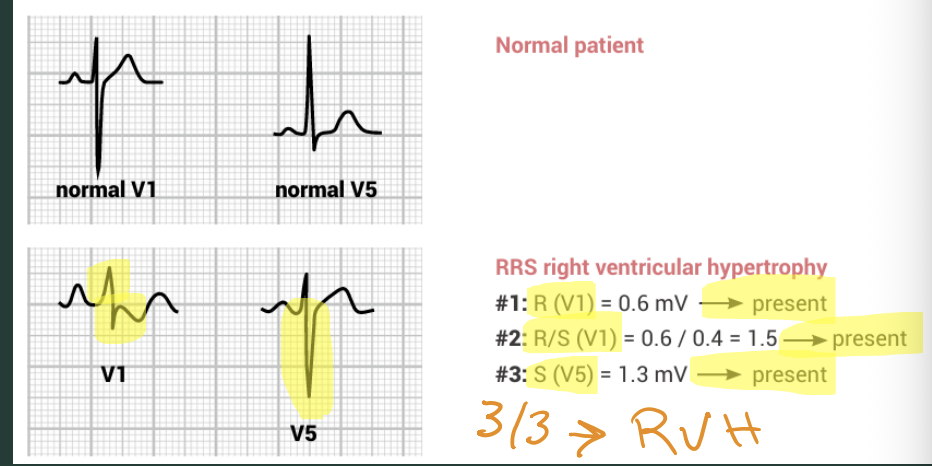
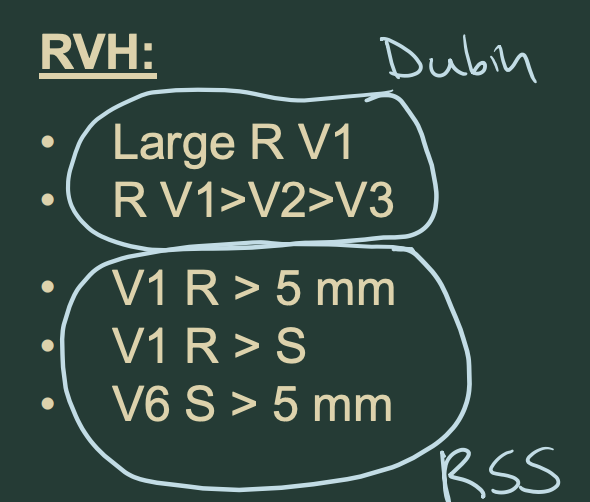
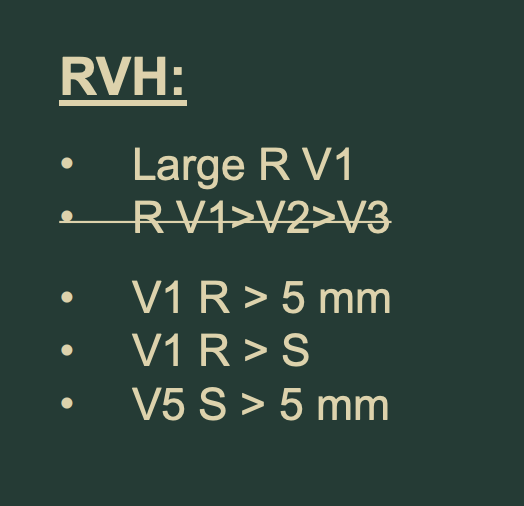
In general, what is characteristic of RVH?
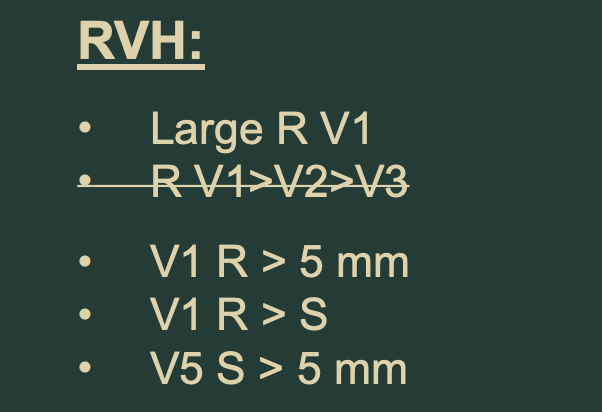
R wave dominant V1, Large R wave V1>V2>V3
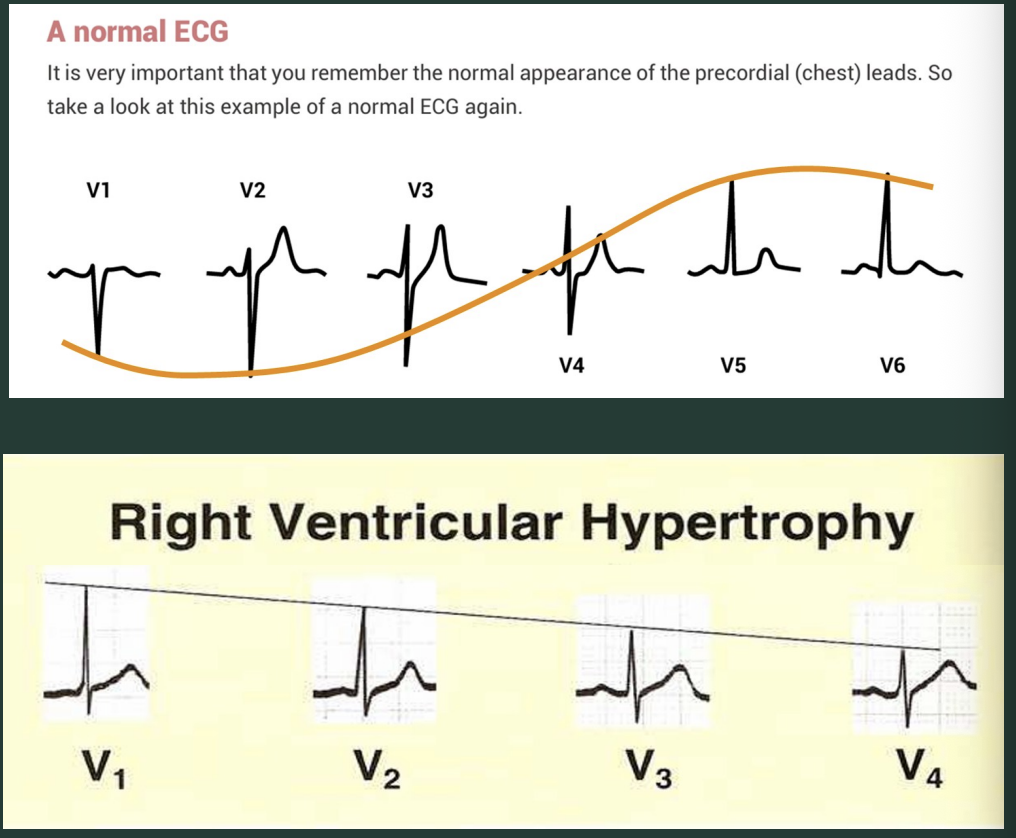
What are the 3 RSS criteria for RVH?
V1: R>5mm, V1: R>S (R/S ratio), V5: S>5mm
2 or more criteria must be present to consider RVH
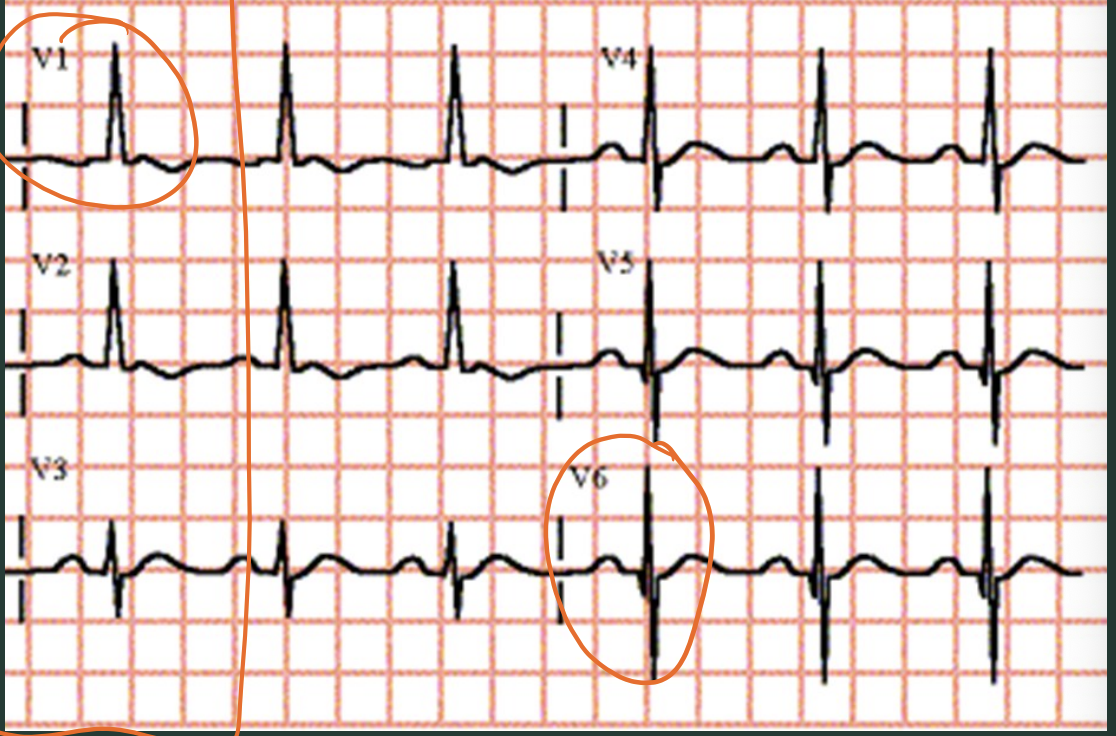
What type of hypertrophy?
RVH
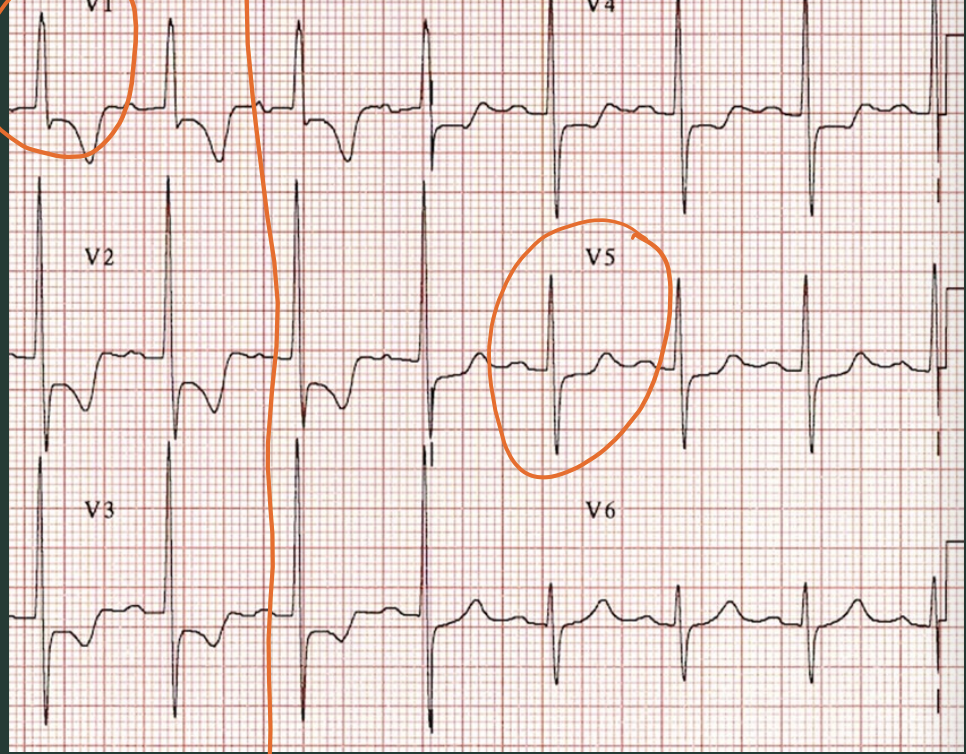
What type of hypertrophy?
RVH
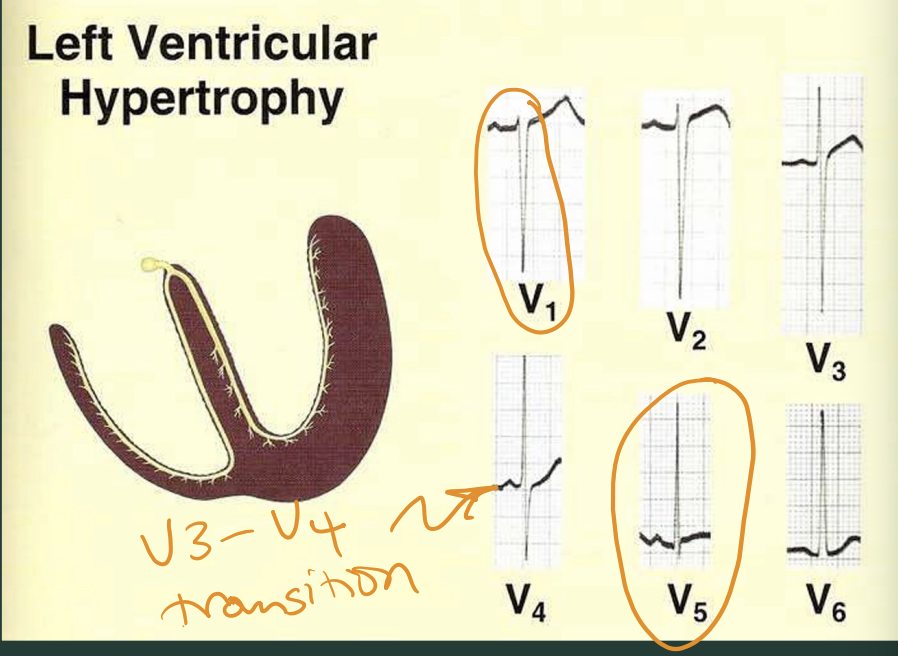
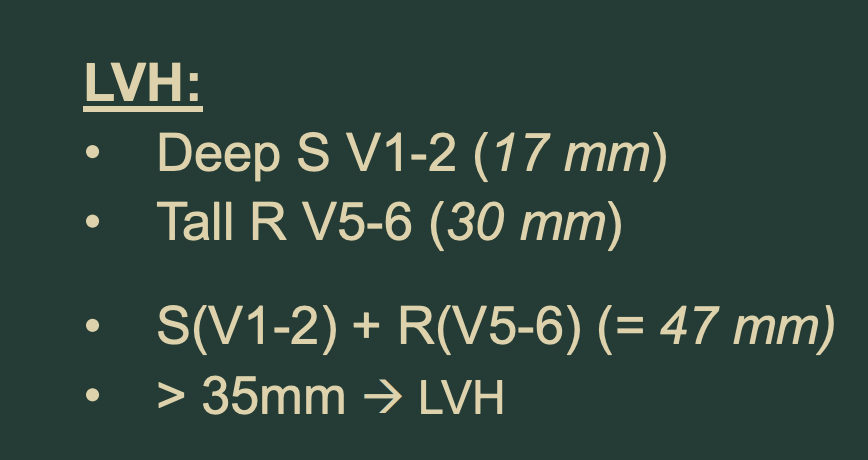
In general, what’s characteristic of LVH?
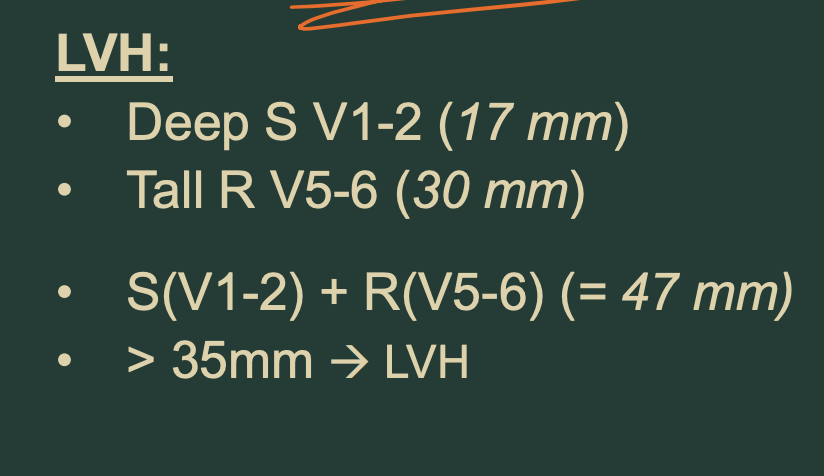
normal chest lead progression, but with abnormally large amplitudes
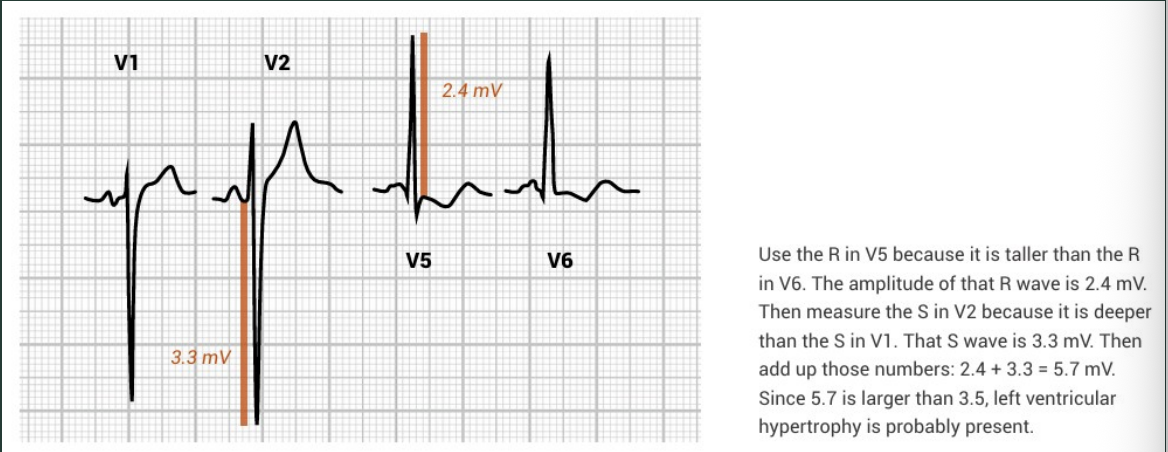
How to accurately assess for LVH?
add S wave in V1/V2 + R wave in V5/V6, if the sum us >35mm (35 small boxes, 7 big boxes) it’s LVH
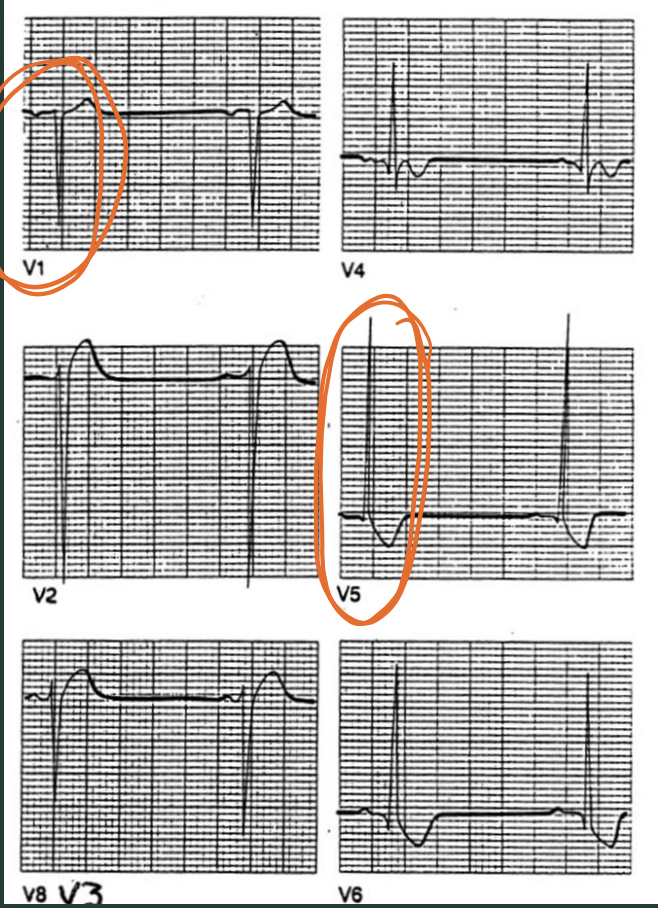
What type of hypertrophy is this?
LVH
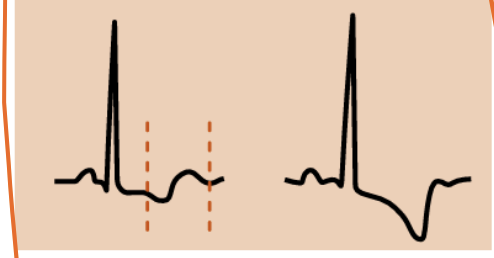
What does this depict?
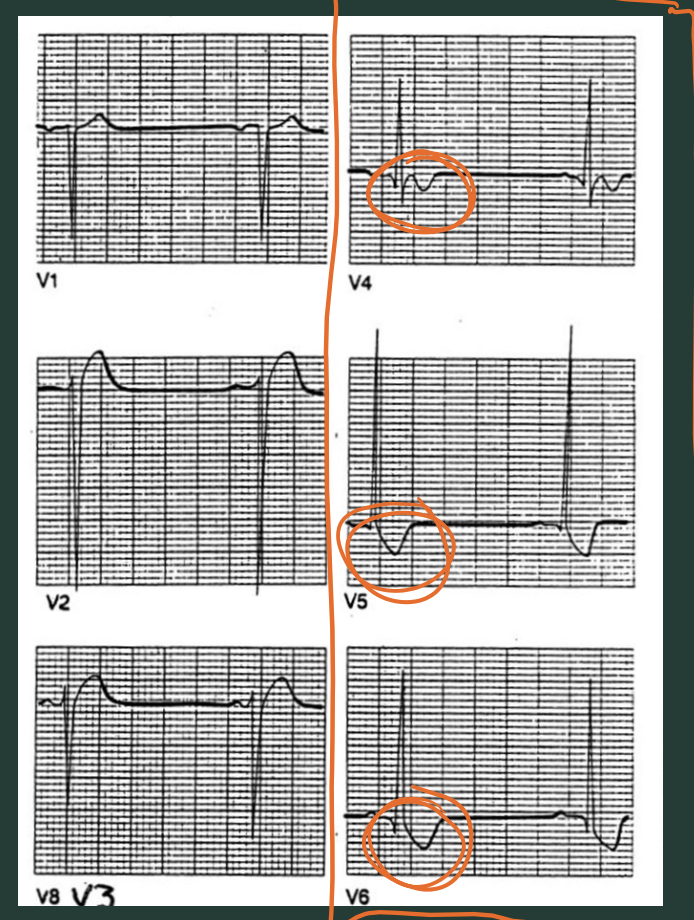
asymmetric T wave inversion: VH-associated finding
What’s characteristic of VH with strain?
asymmetric T wave inversion, J point below baseline, ST descending slope / humped.
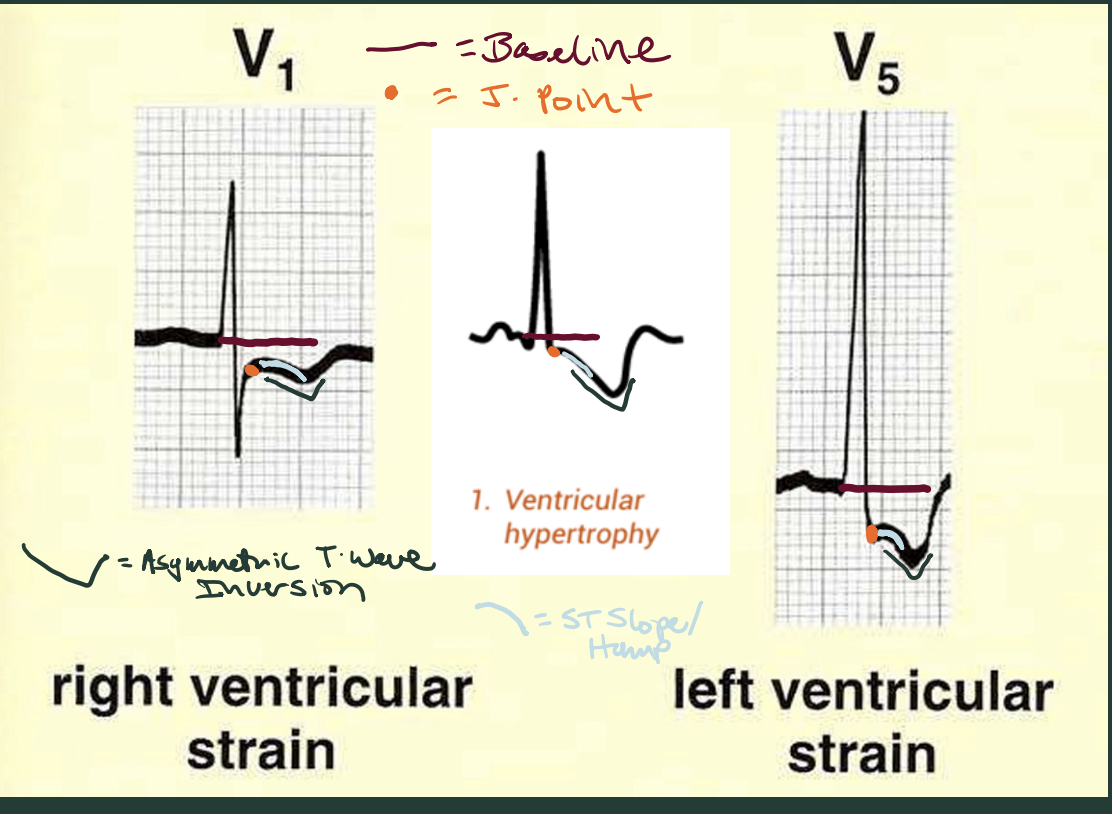
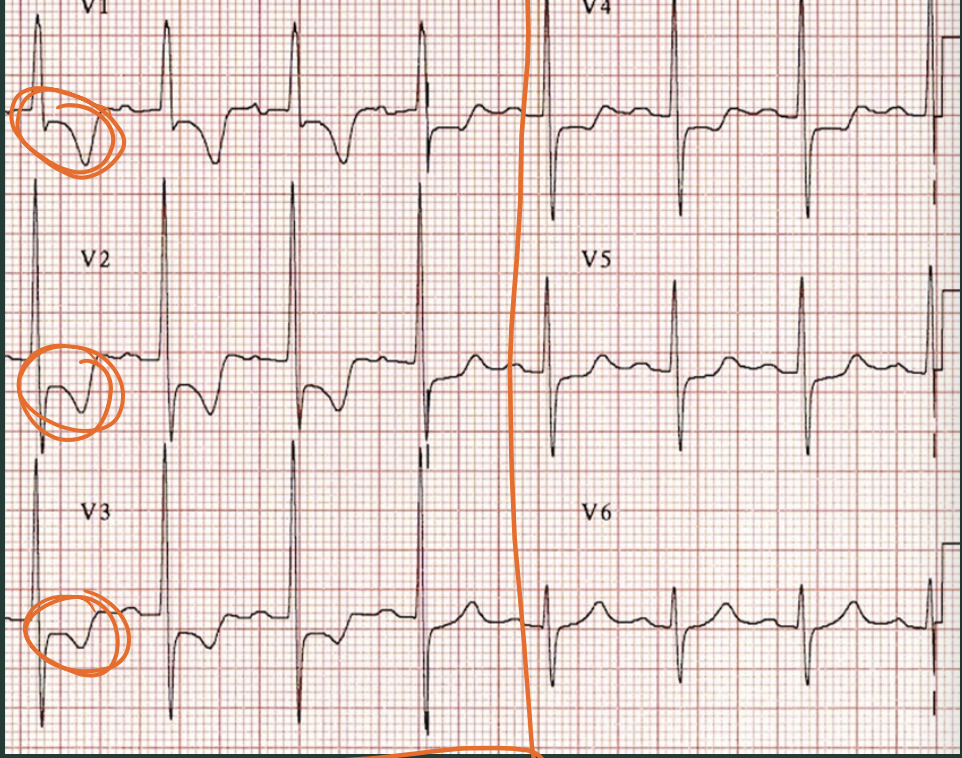
What type of hypertrophy?
RVH wuth RV Strain (sloped/humped ST depression with asymmetric T wave inversions
What type of hypertrophy?
LVH with LV Strain
What is the infarction triad?
ischemia (low blood flow), Injury (acute infarction), Necrosis (dead tissue)