Acute Effects of Radiation
 Call Kai
 Learn
Learn Practice Test
 Spaced Repetition
 Match
Match Flashcards
 Knowt Play
1/74

There's no tags or description
Looks like no tags are added yet.
Name | Mastery | Learn | Test | Matching | Spaced | Call with Kai |
|---|
No analytics yet
Send a link to your students to track their progress
75 Terms
Acute Radiation Syndrome
Breakdown of one or more body systems as the result of a total body dose of radiation that is extremely high and rapid
Survival/recovery is extremely dependent upon
the dose received by the individual
Is it possible to initiate acute radiation syndrome in diagnostic imaging?
Virtually impossible
sometimes can be done on purpose in radiation therapy
Acute radiation syndrome is linked with
catastrophic events/radiation release from nuclear power plants
Acute radiation syndrome has what effects
DETERMINISTIC EFFECTS
Lethal abberations
-ring, dicentric, anaphase bridging
CANT DIVIDE IN MITOSIS
Mature/differentiated cells
Perform the vital functions of the human body
Differentiated!!
Stem/undifferentiated/progenitor cells
Foundational cells
Do not have specific cell function yet
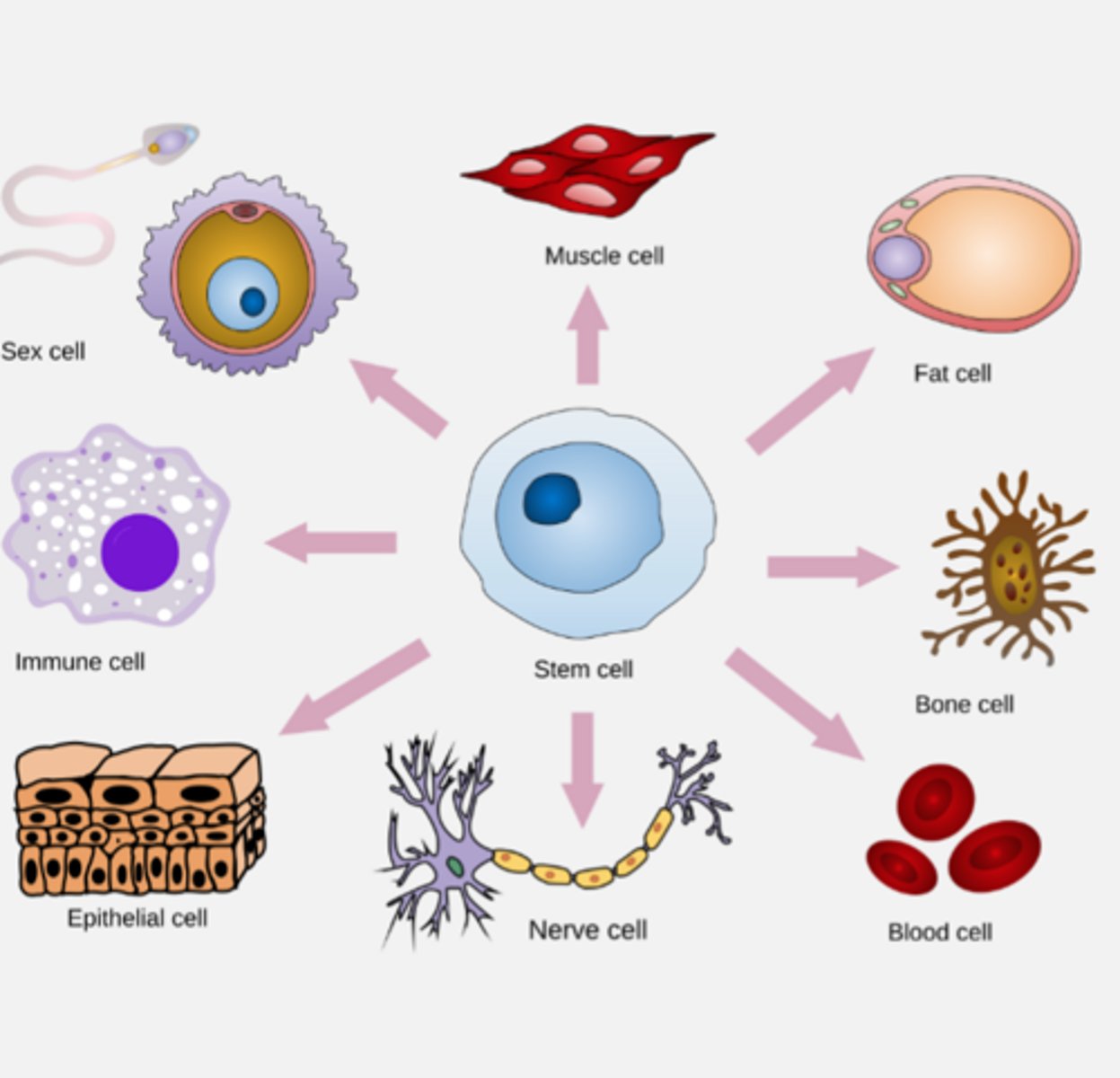
Law of Bergonie and Tribondeau
The radiosensitivity of cells is directly proportional to their reproductive activity and inversely proportional to their degree of differentiation.
Radiosensitivity directly proportional to reproductive rate
Radiosensitivity inversely proportional to their degree of differentiation
Mature cells are
fully differentiated and more radioresistant
Stem cells are
undifferentiated and more radiosensitive
Non-proliferating cells are more
radioresistant
rapidly proliferating cells are
radiosensitive
Which cell population is most affected by acute radiation syndrome/high doses?
Stem cell populations
Stages of acute radiation syndrome
Prodromal syndrome
Latent period
Manifest illness
Recovery or death
What is a strong indicator of the magnitude of radiation dose?
The amount of time that elapses between the four stages
Prodromal period
The initial manifestation of symptoms after an individual is exposed to a high, acute radiation dose
The effects seen in prodromal period reflect the initial death of a large number of what cells?
Differentiated/mature cells in the affected organ systems
The cells in this population may be the type that die via apoptosis or they may be very rapidly-proliferating cells that die via mitotic death
Radiation dose and prodromal phase relationship
The amount of time that elapses between irradiation and manifestation of prodromal symptoms is INVERSELY proportional to dose
If it only takes minutes for prodromal symptoms to appear
It is likely that the radiation dose was extraordinarily high and fatal
Smaller radiation doses may take
a few hours to a few days to cause prodromal symptoms
Blood marker that may be used to estimate radiation dose in an individual with suspected acute radiation syndrome
As low as 0.5 Gy
Can pull blood samples and assess lymphocytes at this marker/assess dose
Most common universal symptoms of acute radiation syndrome: gastrointestinal
Nausea
Vomiting
Diarrhea
Salivation
Anorexia
Dehydration
Most common universal symptoms of acute radiation syndrome: neuromuscular
Fatigue
Listlessness (not lots of energy)
Sweating
Fever (common side effect of infection)
Headache
Hypotension
Latent period
Enough of the mature cells will survive that the patient can continue to function for awhile
The time period after the initial death of differentiated cells, but before the catastrophic manifestation of stem cell death
False sense of security
How do patients report feeling during the latent period?
Report feeling better or "normal"
Symptoms often disappear or become mild but this is an illusion. The latent period will end and the full illness will begin.
Relationship between radiation dose and the length of the latent period
The amount of time that elapses between the latent period and the manifest illness is INVERSELY PROPORTIONAL to dose
High dose will result in
short latent period
Low dose will result in
Long latent period
In extreme cases, what happens with the latent period
There is no latent period
If there is not enough differentiated cells remaining after the prodromal period to support organ function, the patient will transition directly to manifest illness
Manifest illness
When things get really bad
With the exception of non-proliferating, most cells in the body have a finite lifespan (ex: red blood cell is in body for 120 days)
When the mature cells die, new cells normally ready to replace (stem cells)
If a high radiation dose has destroyed the stem cell population, the full radiation syndrome will manifest once all surviving differentiated cells have reached the end of their lives
Three major acute radiation syndromes
Cerebrovascular syndrome
Gastrointestinal syndrome
Hematopoietic syndrome
Dose threshold for cerebrovascular syndrome to occur
100 Gy
Dose threshold for gastrointestinal syndrome to occur
10 Gy
Dose threshold for hematopoietic syndrome to occur
2.5-5 Gy
Timeline of death for cerebrovascular syndrome
Death is inevitable and swift (24-48 hours)
Symptoms usually begin within minutes!!
Cerebrovascular effects manifest so fast that you never see the gastrointestinal or hematopoietic effects
Central nervous system is what type of system
Non-proliferating
-some cells never undergo mitosis
-cell cycle time can be weeks
-makes CNS very radioresistant
CNS syndrome is possibly caused by extreme damage to
microvasculature rather than CNS themselves, allowing fluid to leak into the brain
Hypothesis
Cerebrovascular symptoms
Vomiting
Diarrhea
Seizures
Coma (almost immediately)
Loss of coordination
Respiratory distress
Hypotension
Timeline of death for gastrointestinal syndrome
Death inevitable, may be prolonged for days (3-10 typically)
Symptoms within minutes or hours!!
Inevitably fatal, no proof of survival over 10 Gy
What is gastrointestinal syndrome caused by?
Death of epithelial lining of GI tract (specifically the small intestine)
Gastrointestinal symptoms
Nausea
Vomiting
Lethargy
Diarrhea
Anorexia
Hypotension
Why is radiation so damaging to the GI tract?
Self-renewing tissue such as that in the GI tract, maintains integrity through a system of stem cells that continually replace the mature, functional cells.
Stem cells with radiation exposure, there are no new cells to replace when they lose functionality!
Measure of cell death is loss of either
reproductive integrity or functionality
What cells of the GI tract does high radiation doses destroy?
The crypt stem cells
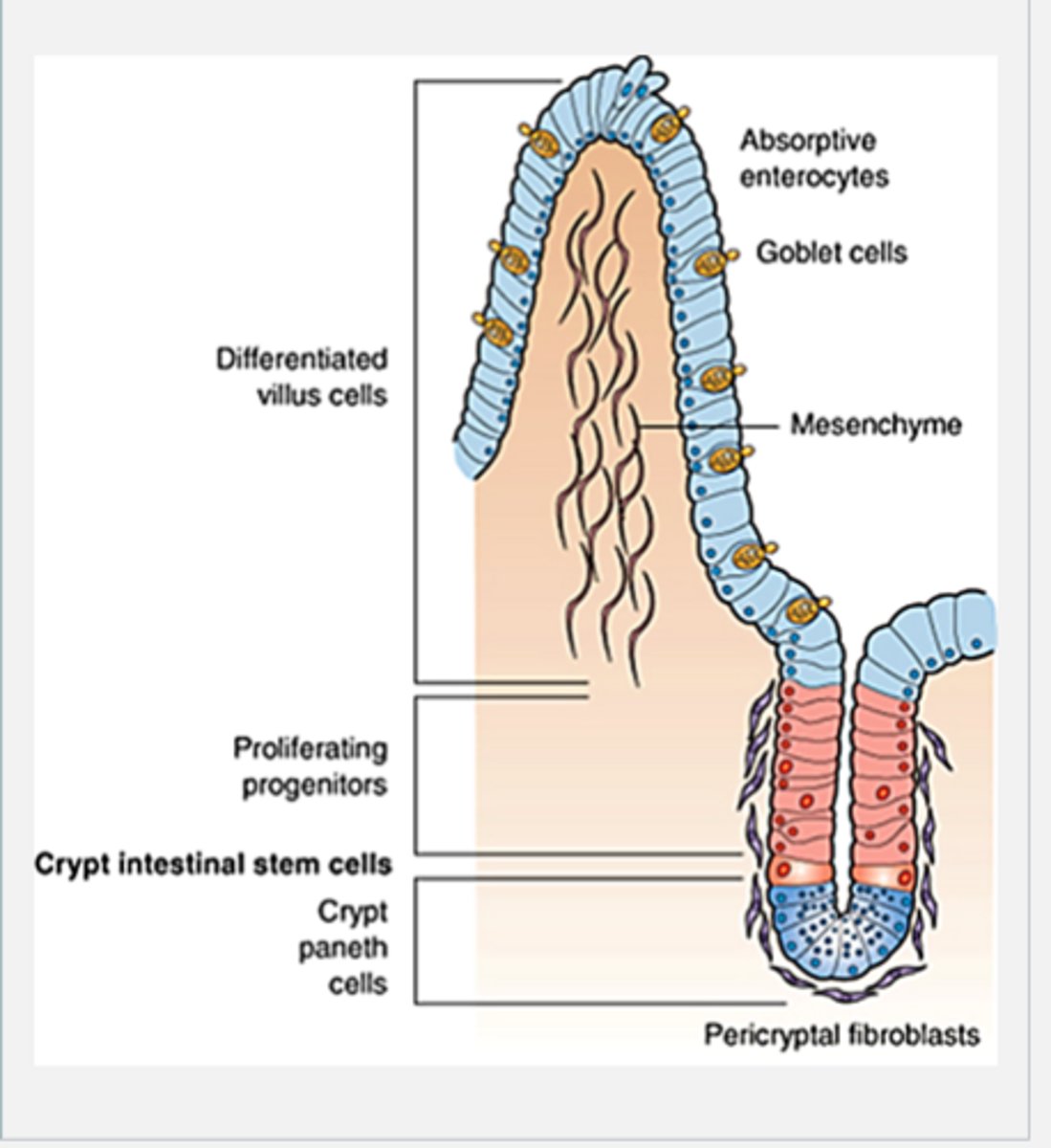
Small intestine renewability
Constantly renews itself through a system in which stem cells differentiate into epithelial villi cells
Lifespan of villi cell
3-5 days
When mature villi reach the end of their lifespan, there are no stem cells to differentiate into mature cells to replace them (crypt stem cells are dead)
Death timeline for hematopoietic syndrome
Death is not necessarily inevitable
If it occurs, it can take a month!!
What is hematopoetic syndrome caused by?
Caused by damage to precursor stem cells that form red/white blood cells
When does the latent period end with hematopoietic syndrome?
When the remaining mature blood cells reach the end of their lifetime and cannot be replaced by stem cells in bone marrow
Hematopoietic syndrome symptoms
Nausea
Vomiting
Diarrhea
Fever
Fatigue
Hypotension
Ulceration of mucus membranes (mouth)
Epilation (hair loss)
Petechial hemorrhages (pinpoint)
How does the hematopoetic system renew?
Renews via stem cells in bone marrow
The depletion of progenitor stem cells by radiation eventually reduces the
number of circulating white blood cells, red blood cells, and platelets
lose inability to fight infection, clot, etc.
LD50
Dose required to kill 50% of study population within a specified period of time
LD50/30
Dose required to kill 50% in 30 days
What is LD50/30 generally used for?
Animals because they develop signs of hematopoetic damage earlier
LD 50/60
Dose required to kill 50% in 60 days
What is LD50/60 generally used for?
Humans because they develop signs of hematopoetic damage later
Up to a dose of 2 GY, there is
no lethality
At a dose of 8 Gy, there is
100% of lethality
Between 2 Gy- 8Gy there is a
rapid increase in death with increasing dose
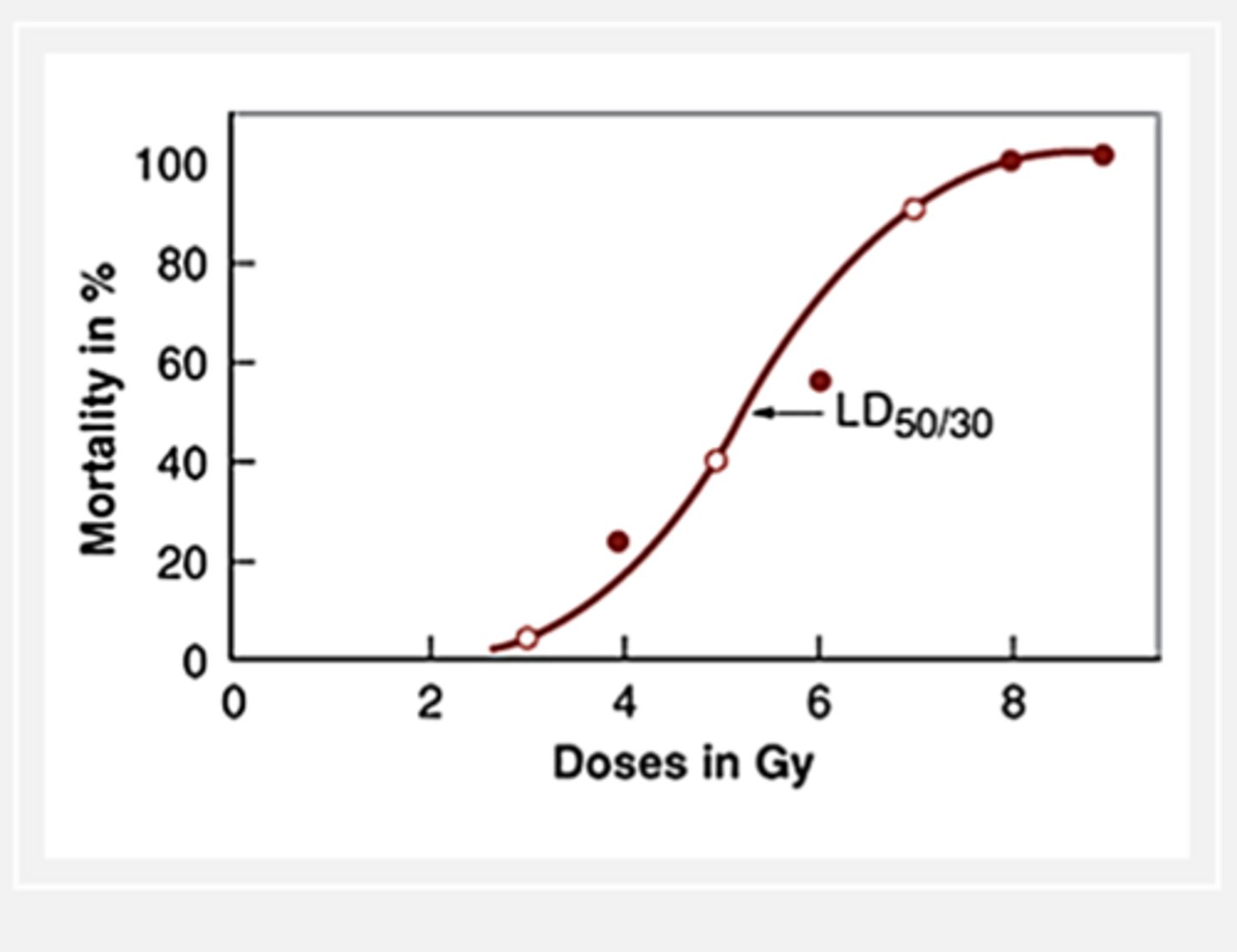
LD 50/60 dose for hematopoietic syndrome in humans
4 Gy
Predominant cause of death in hematopoietic syndrome
Caused by INFECTION
Due to depletion of immune cells
Bone marrow must have time to recover before infection sets in, which makes antibiotic an important component of treatment
Death is much more likely at 5Gy and almost certaintly requires
infection control drugs and procedures
What dose do patients receive in which they benefit from bone marrow transplantation?
8-10 Gy
Below 8 Gy, patient has
a decent chance of survival with careful care
Above 10 Gy, patient
will inevitably die from gastrointestinal syndrome
What is a good indicator of dose received?
The amount of time between exposure and manifestation of prodromal symptoms
Average time to vomiting decreases
as dose increases
Dose may be assessed with lymphocyte count within
48 hours of exposure
Chromosome aberrations in lymphocytes tend to disappear quickly near
LD50
Cutaneous radiation injury
Widespread skin damage seen concurrently with the three acute radiation syndromes
Cutaneous radiation syndrome relationship with duration of latent period
Inversely proportional
High dose: short latent period
Low dose: long latent period
Symptoms of cutaneous radiation injury
Itching
Tingling
Erythema
Epilation (hair loss)
Edema
Desquamation
What does cutaenous radiation injury occur from?
Results from depletion of epithelial stem cells in the BASAL layer of the epidermis
Studies of survivors of high total body radiation doses do not show any remarkable increase in
Stochastic effects like cancer