SP26 High-Yield Urine Crystal Flashcards
 Call Kai
 Learn
Learn Practice Test
 Spaced Repetition
 Match
Match Flashcards
 Knowt Play
1/42

There's no tags or description
Looks like no tags are added yet.
Name | Mastery | Learn | Test | Matching | Spaced | Call with Kai |
|---|
No analytics yet
Send a link to your students to track their progress
43 Terms
Calcium phosphate crystals are usually found in what type of urine? Associated with what condition?
Alkaline urine; associated with renal calculi (kidney stones).
Triphosphate crystals are found in what urine pH?
Alkaline urine.
Triphosphate crystals classically suggest what infection?
UTI with urease-positive bacteria, especially Urinary Tract Infection due to Proteus mirabilis.
Triple phosphate crystals are associated with what urinary complication?
Obstructive uropathy and stone formation.
Calcium carbonate crystals are typically found in what urine type and indicate what?
Alkaline urine; associated with calculi formation.
Calcium oxalate crystals are found in what type of urine?
Acidic urine.
Calcium oxalate crystals are classically associated with what poisoning?
Ethylene glycol poisoning.
Excess intake of what foods can lead to calcium oxalate crystals?
Oxalate-rich foods (e.g., spinach, tomatoes, oranges).
Calcium oxalate crystals are associated with what metabolic conditions?
Hyperoxaluria and Diabetes Mellitus.
Uric acid crystals are found in what urine pH?
Acidic urine.
Uric acid crystals are classically associated with what condition?
Gout
Uric acid crystals may be seen in what hematologic malignancy?
Leukemia.
Increased uric acid crystals suggest increased metabolism of what substance?
Purines.
Uric acid crystals may also indicate what chronic renal condition?
Chronic nephritis.
What is the clinical significance of hippuric acid crystals?
Usually no clinical significance.
Leucine crystals suggest what major organ disease?
Severe liver disease.
Tyrosine crystals are associated with what condition?
Severe liver disease.
Which two crystals commonly occur together in severe liver disease?
Leucine and tyrosine crystals.
Cystine crystals are associated with what inherited disorder?
Congenital cystinuria/cystinosis
Cystine crystals predispose patients to what complication?
Kidney stone (calculi) formation.
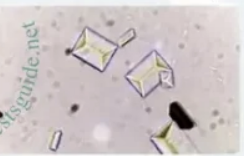
triphosphate

calcium oxalate
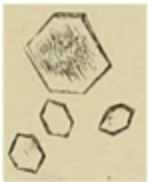
cystine
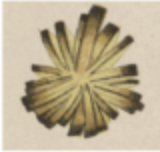
calcium phosphate
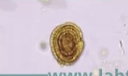
leucine
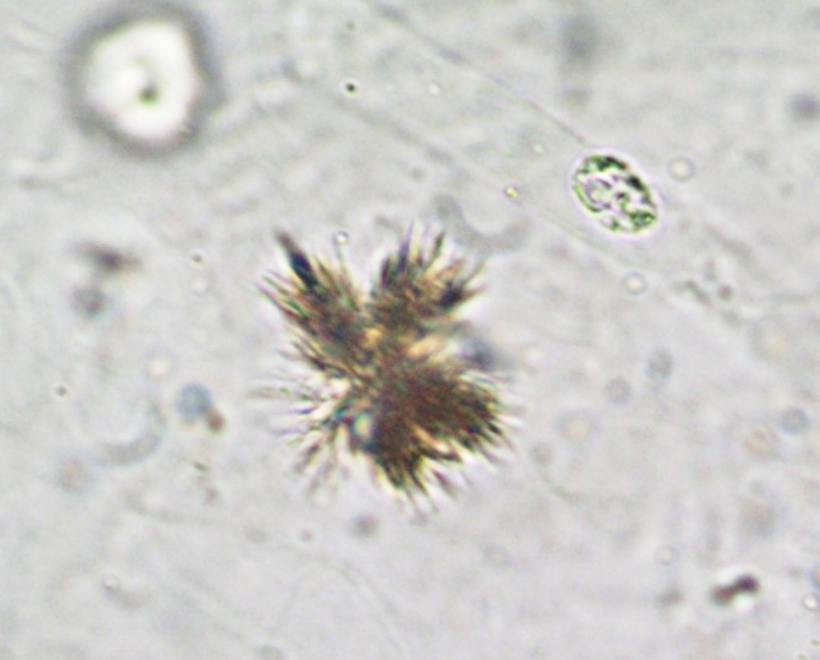
tyrosine
A positive Benedict’s test suggests what condition?
Diabetes Mellitus or glucose in urine (glycosuria).
The Biuret test detects what substance?
Protein
What color indicates a positive Biuret test?
Red/Purple (violet).
Is urine with a pH of 6 acidic or basic?
Acidic.
Urine with a pH above 7 is considered what?
Basic (alkaline)
What symptoms are classic for diabetes mellitus?
Excessive thirst and frequent urination.
Which urine test is usually positive in diabetes mellitus?
Benedict’s test (glucose present).
What symptoms suggest chronic kidney failure?
Fatigue, dizziness, swollen feet.
Which urine test may be positive in chronic kidney failure?
Biuret test (protein in urine)
Besides protein, what casts are associated with chronic kidney failure?
Red blood cell casts.
What symptoms commonly suggest a UTI?
Painful urination and increased frequency.
What crystals are commonly associated with UTIs?
Calcium triphosphate (struvite/triple phosphate) crystals.
UTIs caused by urease-producing bacteria usually produce what urine pH
Basic (alkaline) urine.
One function of the kidneys is to do what with glucose and albumin?
Return them to the bloodstream after filtration.
For every 4,400 pints of blood filtered, how many pints of urine are produced?
4 pints
Ketones in urine indicate what metabolic process?
Fat metabolism occurring at abnormally high rates.
Ketones may appear in urine during what type of diet?
Very low-carbohydrate diets.