Unit 7- APHUG
 Call Kai
 Learn
Learn Practice Test
 Spaced Repetition
 Match
Match Flashcards
 Knowt Play
1/60

There's no tags or description
Looks like no tags are added yet.
Name | Mastery | Learn | Test | Matching | Spaced | Call with Kai |
|---|
No analytics yet
Send a link to your students to track their progress
61 Terms
Cottage industry
manufacturing done in homes not factories
Industrial revolution improved:
Iron tool production with steam engine
Textile production using steam power
chemical industria with bleached and dyed cloth
Food processing with glass containers and canned food
primary sector
extract natural resources from earth
secondary sector
process/manufactory natural resources
tertiary sector
services that move, trade, sell products
quaternary sector
knowledge-based; research and development, teaching
quinary
highest decision-making level; CEO government officials
multiplier effect
a job’s potential to produce more jobs
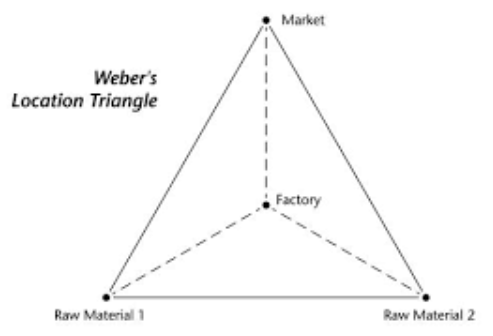
Webber’s least cost theory
transportation cost, labor costs, and agglomeration benefits decide where companies would locate manufactory plants
bulk reducing industry
raw material is heavier to transport than the refired/finished product
bulk-gaining industry
product is heavier when finished
energy dependent industry
an industry that has such high energy demands, that factories are built near abundant cheap energy
agglomeration economies
many business in proximity share the cost of utilities (building assessable road)
labor dependent industries
industries that need people with specific skills
locational interdependence
where a factory is located depends on where other factories are
just intime delivery
inputted resources needed at an assembly manufacturing plant arrive right when they’re needed
front office
very expensive place were business higher-ups can be nearby and intact with other businesses
back office
low profile place where the rest of workers are at
offshoring
companies move their business places overseas cause its cheaper
outsourcing
hiring other companies to do your want/labor

Factors in locating a facility:
large: state or states/region proximity to market, raw materials, labor supply, transport rhetoric
Medium: city/neighborhood taxes, location of highways and railways, skilled workforce, quality of public services
small: specific property land flatness, water and service access, highway and public transit rate
development
improving the conditions of people through knowledge/technology
developed country
very developed, further along the development continum
developing country
less developed, some progress toward development
Human development index HDI
measures level of development for a country through a standard of living, life expectancy, education
gross national income (GNI)
money from the output of goods/services in a country, includes money their leaves and enters a country
Purchasing power parity
amount of money needed more country to purchase the same goods/services in another country
Gross domestic product (GDP)
money from output of goods and services, not including money that leaves and enters the country
productivity
value of a product compared to amount of labor needed to move it
years of schooling for today’s adults
number of years a person 25+ years old has been schooled
developed countries: 12.2y
developing countries: 7.3y
expected years of schooling for today’s youth
average number of years on average 5 year olds all spend in school
Levels of development in regions:
North America: very high
Europe: very high
East Asia: high
Latin America: high
Southeast Asia: medium
South Asia: medium
sub–Saharan Africa: low
SW Asia and North Africa: high to low
Central Asia: high to low
gender inequality index
number 0-1 states how much gender inequality is in a country (based on health
gender development index (GDI)
number 0-1 that measures how different women vs men’s HDI is (based on income, education, life expectancy)
adolescent fertility rate
number of births per-1000 women ages 15-19
MDCs:16 per 1000 births
LDCs: 48 per 1000 births
maternal mortality rate
number of pregnancy related deaths
microfinance (loan alternative)
in developing countries, small loans and financial services given to individuals and small businesses
Modernization model
a model of the shift from traditional to modern operations in society
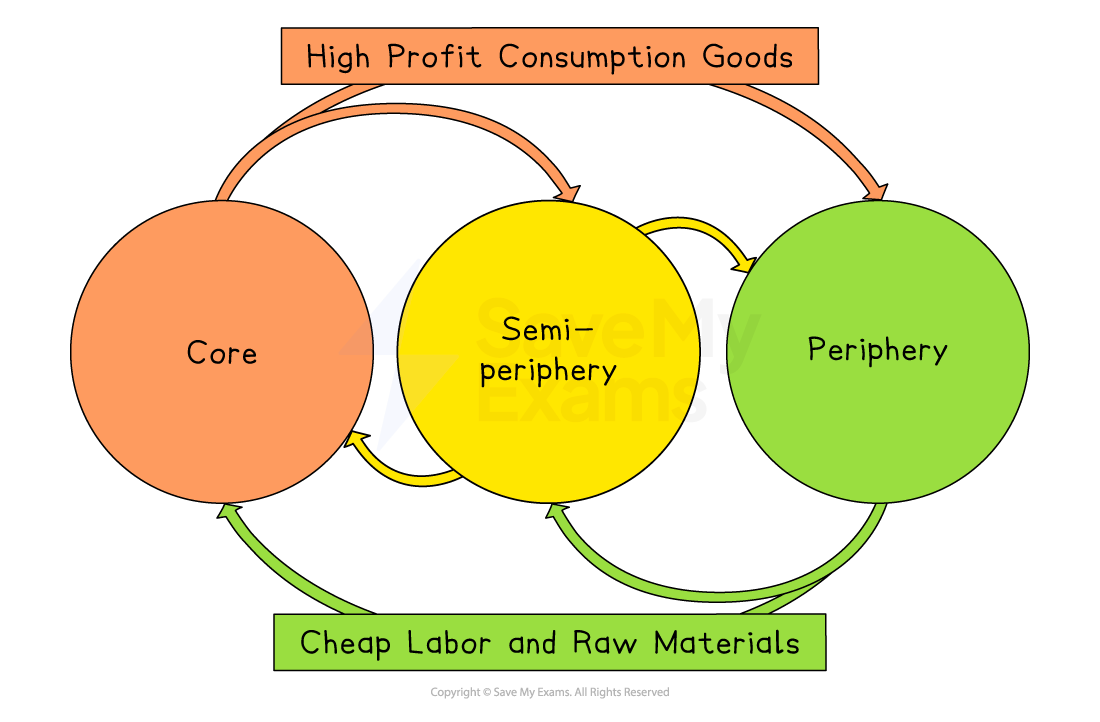
Wallerstein World Systems theory/core periphery model
locational triangle
comparative advantage
country can produce good for cheaper than another country
complimentary
two parties trade with each other, as they both have goods that the other wants
trading blocks
several countries agree to a set of trade rules
newly industrialized country (NIC)
ex: China, India, Brazil, Mexico
transnational corporations
companies that operate in multiple countries
new internal division of labor
core countries- quaternary sectors,
middle income countries- manufacture goods
LDC - resources/minerals
neoliberal policies
reduce gov regulations and taxation on trade
tariff
when companies import goods in from other countries, they need to pay taxes (tariffs) to their own gov
international mandatory fun (IMF)
provides short term loans to countries
export processing zone (EPZ)
areas in a country where special neighbors exist to help for claim controlled businesses
maquiladores
(Mexico) freezones (Dominican Republic)
special economic zone
china
post industrial economy
they no longer employ lots of workers in a factory
Rust belt
experienced decline in economy population and was largely unemployed and in poverty
technopole
hub for high tech manufacture and info based industry
growth pole
attracts growth and economic development
spin off benefits
positive outcomes in addition to the main goal
backwash effects
negative outcomes in addition to the main goal
post-fordist methods of production
automated machines replace workers in assembly lines, who learn to do several different jobs in the factory to notate among workstations in a day
substitution principle
business maximize profit by substituting are factor of production for another cheaper option
ecotourism
tourism based on ecologically significant places