BIO-Lab 8: Deuterostomes
 Call Kai
 Learn
Learn Practice Test
 Spaced Repetition
 Match
Match Flashcards
 Knowt Play
1/7

There's no tags or description
Looks like no tags are added yet.
Name | Mastery | Learn | Test | Matching | Spaced | Call with Kai |
|---|
No analytics yet
Send a link to your students to track their progress
8 Terms
Deuterostomes
a group of animals in which the blastophore develops into the anus first during embryonic development (e.g. echinoderms and chordates)
Chordates
a group of deuterostome animals that at some point in development, have a notochord, dorsal nerve chord, pharyngeal slits, and a post-anal tail (includes vertebrates like humans).
Echinodermata
a group of marine invertebrate animals like sea stars, sea urchins, and sea cucumbers that have spiny skin, radial symmetry (as adults), and a water vascular system used for movement and feeding.
phylum Echinodermata
spiny protective skin, secondary penta-radial symmetry (larvae are bilateral), water vascular system with tube feet, capable of regenerating missing limbs and/or organs, generally slow moving or sessile, calcite skeleton, coelom has circulatory, respiratory, & excretory functions.
phylum Chordata
bilaterial symmetry, coelomate, poorly segmented
Five defining characteristics of phylum Chordata
notochord, dorsal hollow nerve chord, pharyngeal gill slits, post-anal tail (contains skeletal 7 muscular elements & used for propulsion in aquatic animals, sometimes only seen in embryonic development (lost in humans)), endostyle (row of ciliated cells located at the bottom of the pharynx used to sweep food toward esophagus) or thyroid gland (found in primitive chordates)
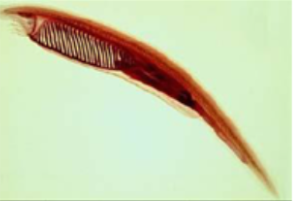
phylum?
Chordata
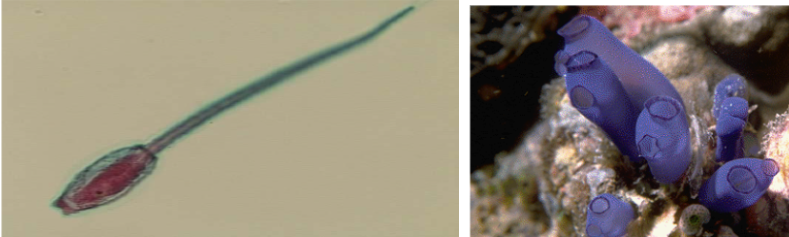
phylum?
urochordata