m1 (theories and conceptual mistakes)
 Call Kai
 Learn
Learn Practice Test
 Spaced Repetition
 Match
Match Flashcards
 Knowt Play
1/31

There's no tags or description
Looks like no tags are added yet.
Name | Mastery | Learn | Test | Matching | Spaced | Call with Kai |
|---|
No analytics yet
Send a link to your students to track their progress
32 Terms
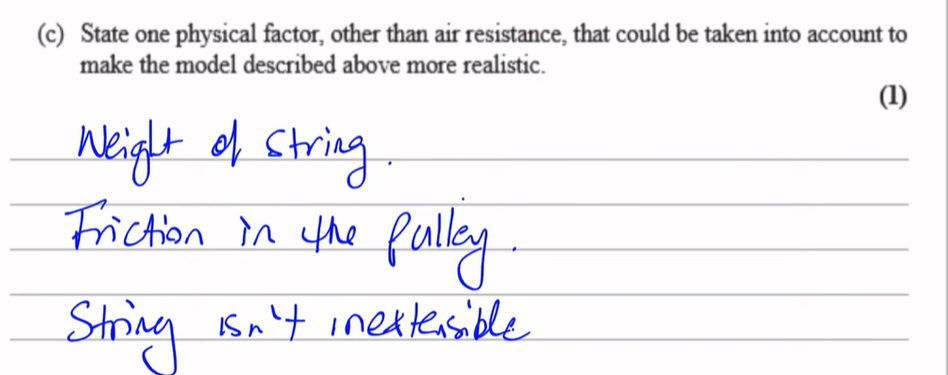
inextensible cable assumption
Same acceleration for both objects (e.g: for a tractor and block)

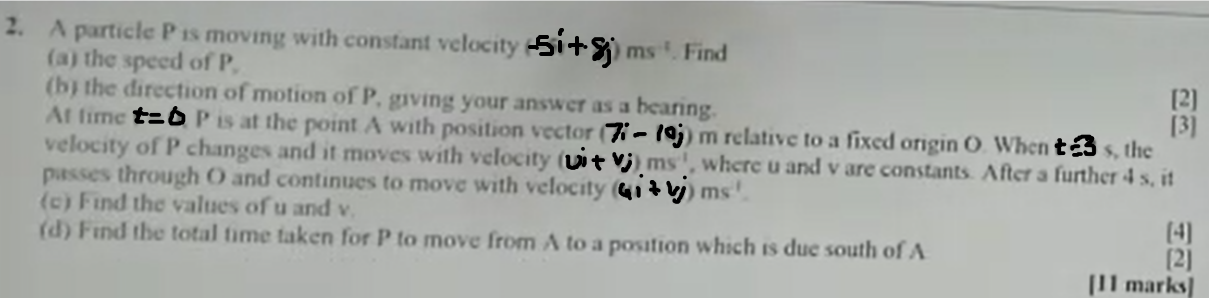
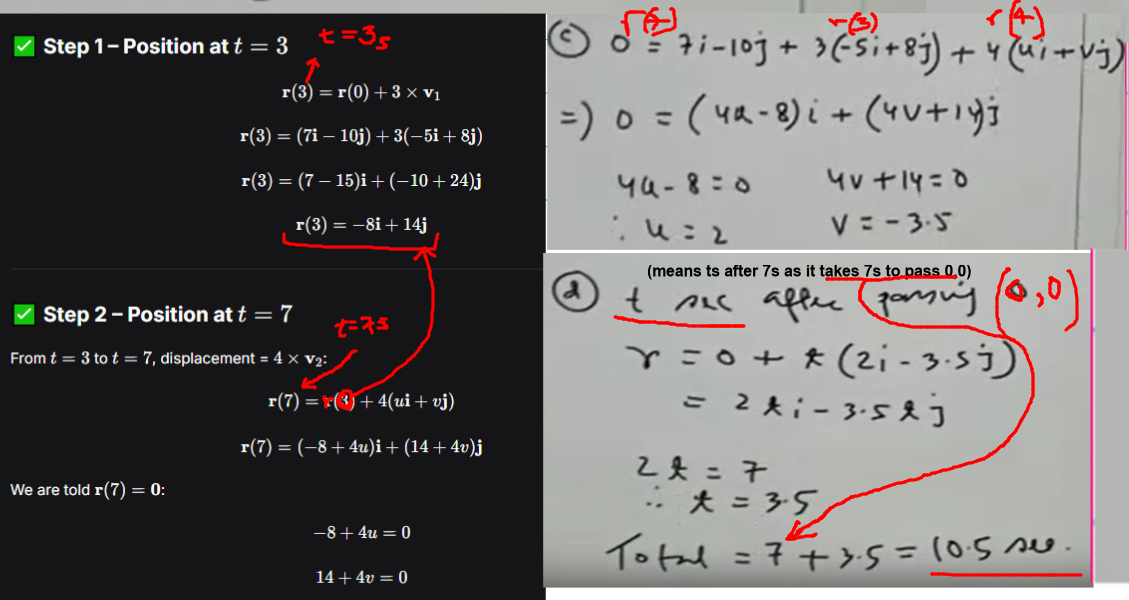
just do (c ) and (d)
normally its like r = r0 + vt, but here its:
r = r0 + v(initial)t + v(new)t
OR
r = r0 + vt
where r0 ==> r(3) = r0 + v(3)
![<p>just do (b) <br><br>[a and b unrelated sums]</p>](https://assets.knowt.com/user-attachments/d32fedd4-1170-4e03-871c-50c2fbb27842.png)
just do (b)
[a and b unrelated sums]
initially force is given to throw ball vertically upward but after that no force is given, hence it goes up due to inertia and current upward force is 0 and its decelerating
[think of after you kick a football it still keeps rising even tho there isnt anybody in the air thats pushing it or smt]
![<p>initially force is given to throw ball vertically upward but after that no force is given, hence it goes up due to inertia and current upward force is 0 and its decelerating</p><p>[think of after you kick a football it still keeps rising even tho there isnt anybody in the air thats pushing it or smt]</p>](https://assets.knowt.com/user-attachments/8a13708f-09dc-4e33-8401-814d97a35928.png)
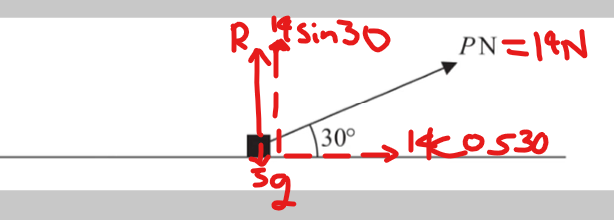
![<p><br>given, mass of block = 5kg, p = 14N<br><br> Find the reaction force[R] on block</p>](https://assets.knowt.com/user-attachments/0dcd97c4-f34f-45a6-b914-75b80e1133e5.png)
given, mass of block = 5kg, p = 14N
Find the reaction force[R] on block
R + 14sin(30) = 5g
R = 5(9.8) - 14sin(30) = 42N
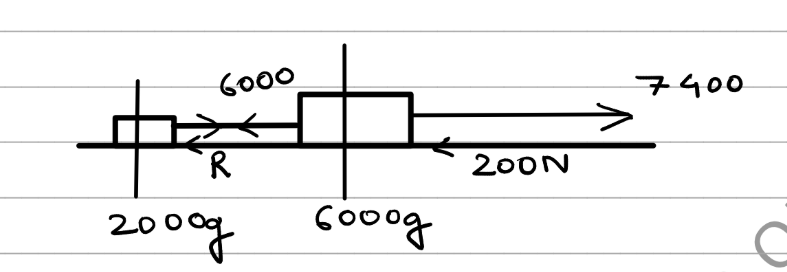
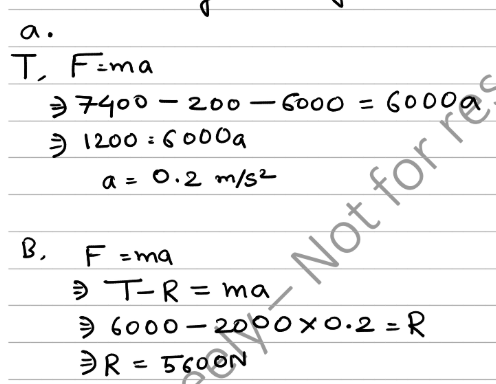
the block has resistance = R and tractor resistance = 200N
find R
R = 5600N
for this type of question, friction is given as resistance so no need to bring in “μR”

p = 15×10 i = 150i , q = 20×10i = 200i
bearing of P from Q, [so draw north line from Q]
bearing = 270°
![<p>p = 15×10 i = 150i , q = 20×10i = 200i<br><br>bearing of P <strong><mark data-color="yellow" style="background-color: yellow; color: inherit;">from Q, [so draw north line from Q]</mark></strong><br><br>bearing = 270°</p>](https://assets.knowt.com/user-attachments/a7d5e302-a390-4613-9d47-168f4dbc271a.png)
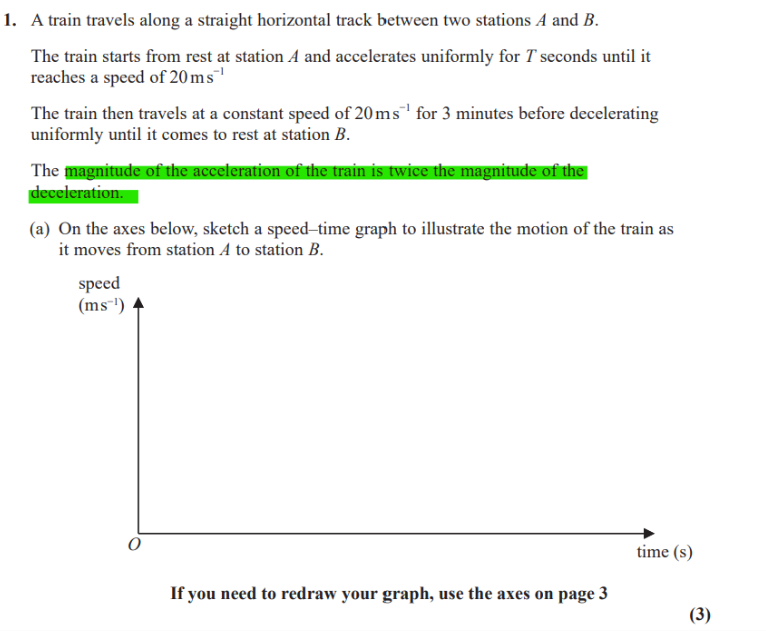
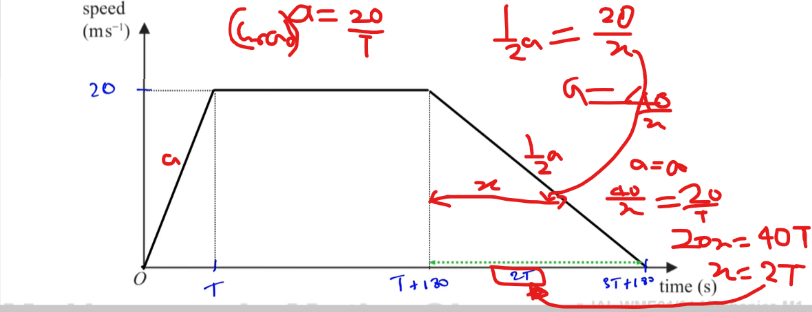
since question says magntitudes of acceleration and decelaration, we can consider deceleration without -ve sign.
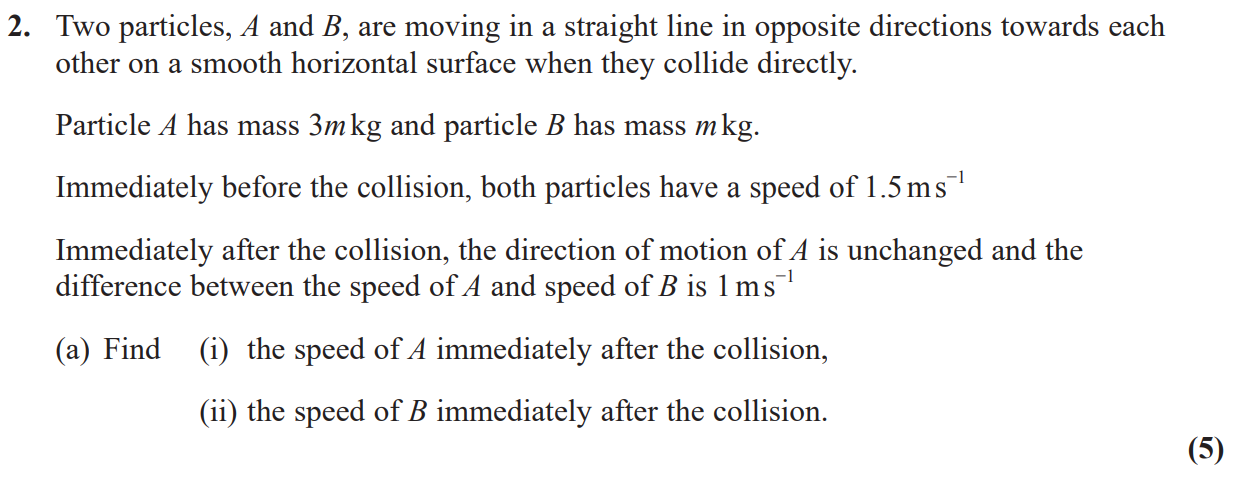
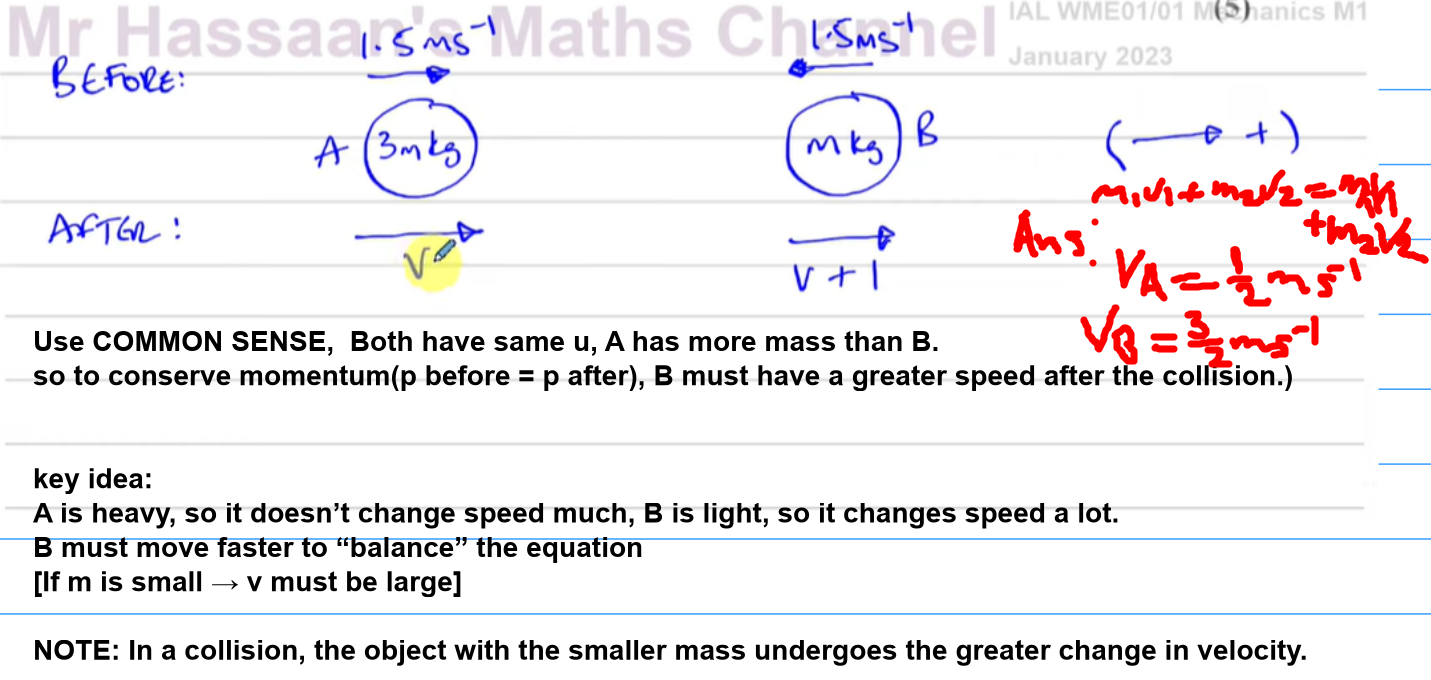
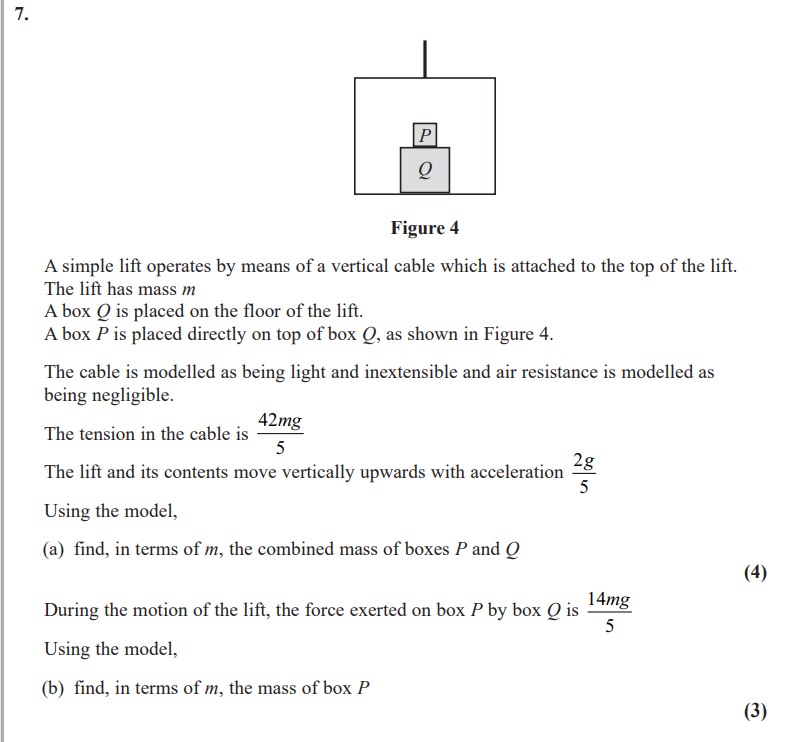
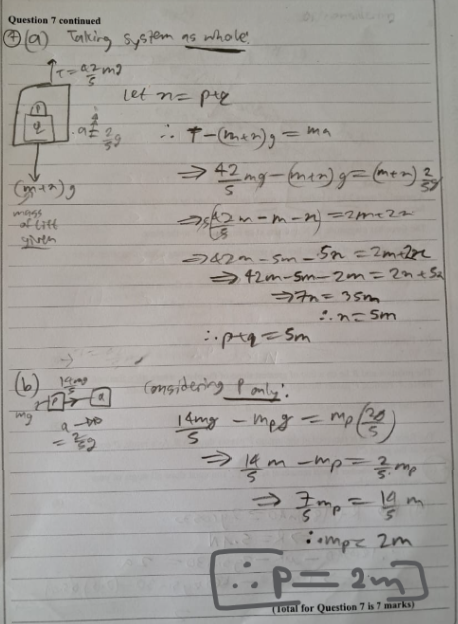
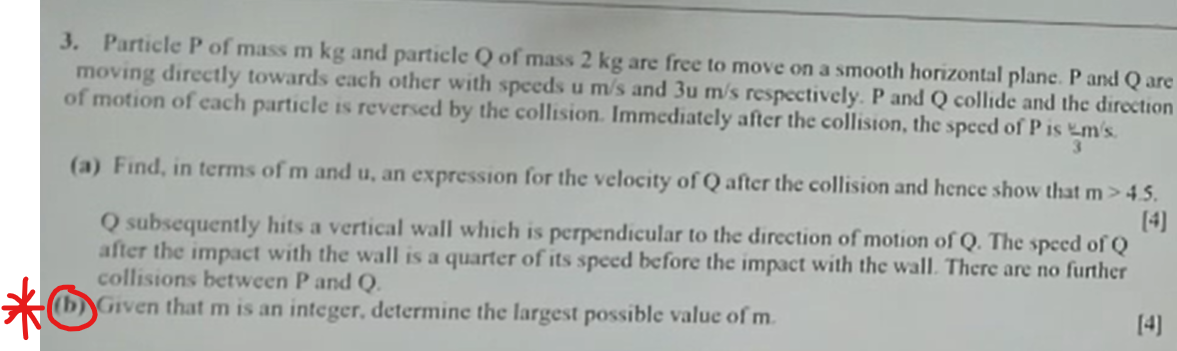
try number (b), pretty tricky
(b) take Vq after collision = Vp, 1/4(2/3mu - 3u) = u/3 (because Vp= u/3)
why Vq = Vp? cuz Q. asks to find max value of m for which no further collision
[ think if you are chasing someone, both are moving at same constant v of u/3, that means you will never collide with him,only way is to have more than u/3 ]
therefore, 1/4(2/3mu - 3u) = u/3
m = 6.5 kg
to nearest integer, m = 6kg
(if m is any value > 6.5kg, they will collide which the Q. does not want, so we round down to nearest integer)
![<p>(b) take <u>Vq after collision = Vp,</u> 1/4(2/3mu - 3u) = u/3 (because Vp= u/3)<br><br>why Vq = Vp? cuz Q.<u> asks to find max value of m for which no further collision</u> <br><br>[ think if you are chasing someone, both are moving at same constant v of u/3, that means you will never collide with him,only way is to have more than u/3 ]<br><br>therefore, 1/4(2/3mu - 3u) = u/3<br> m = 6.5 kg<br> to nearest integer, m = 6kg <br>(if m is any value > 6.5kg, <u>they will collide which the Q. </u><strong><u>does not want</u>,</strong> so we round down to nearest integer)<br></p>](https://assets.knowt.com/user-attachments/02d46680-0265-4c5f-806b-fe6423fefa67.png)

Question b)
To find the Vc right after the collision, use the conservation of momentum. The momentum of a particle is given by p=mv
First, find the velocities of A and B just before the collision:
For A:
vA=uA+at
vA=18−9.8(3.23)
vA=−13.693m/s
For B:
vB=uB+a(t−2)
vB=36−9.8(3.234−2)
vB=23.9068m/s
(btw Va and Vb is now Ua and Ub as we start from t=3.23 not t=0):
mAuA+mBuB=(mA+mB)vC
(0.5)(−13.6932)+(0.8)(23.9068)=(0.5+0.8)vC
−6.8466+19.12544=1.3vC
12.27884=1.3vC
vC=1.312.27884=9.445m/s
The answer is: 9.4 m/s
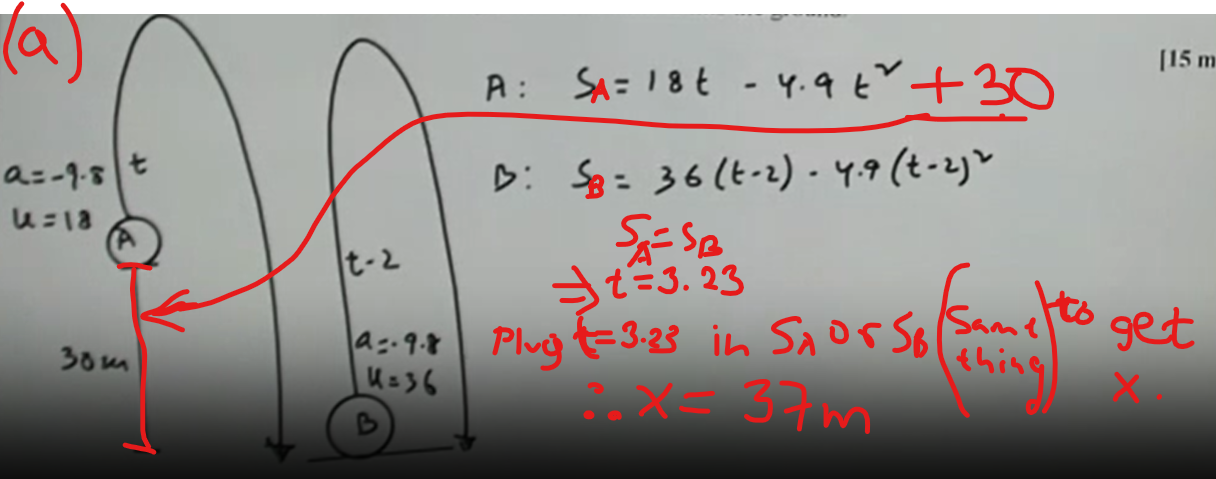
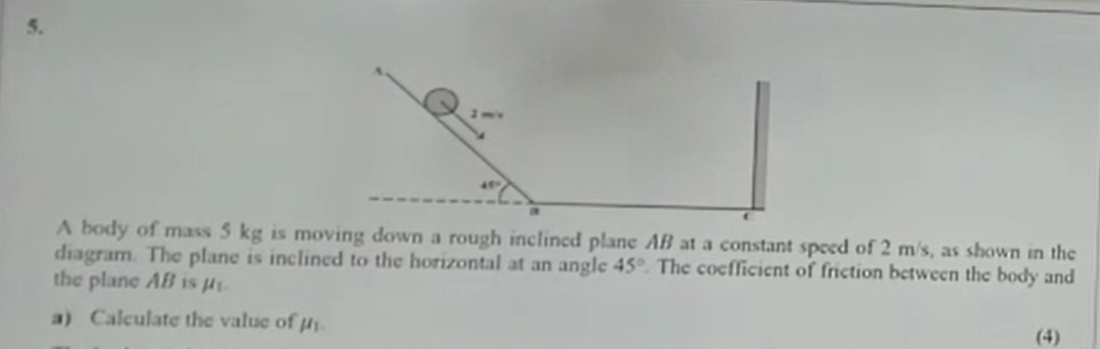
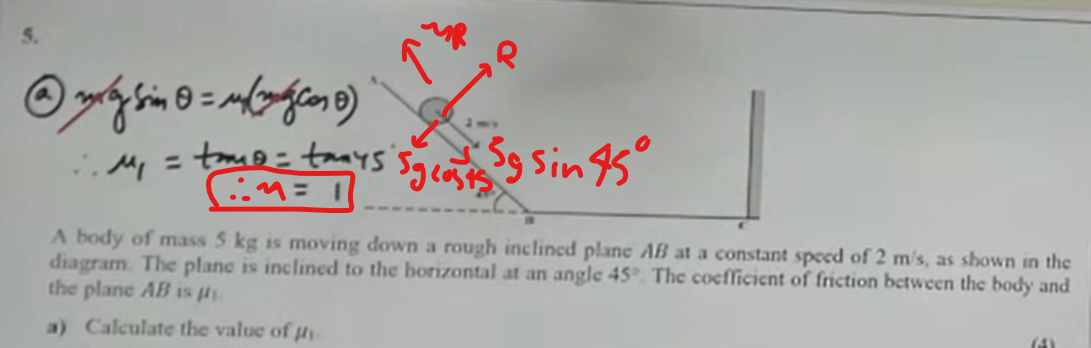
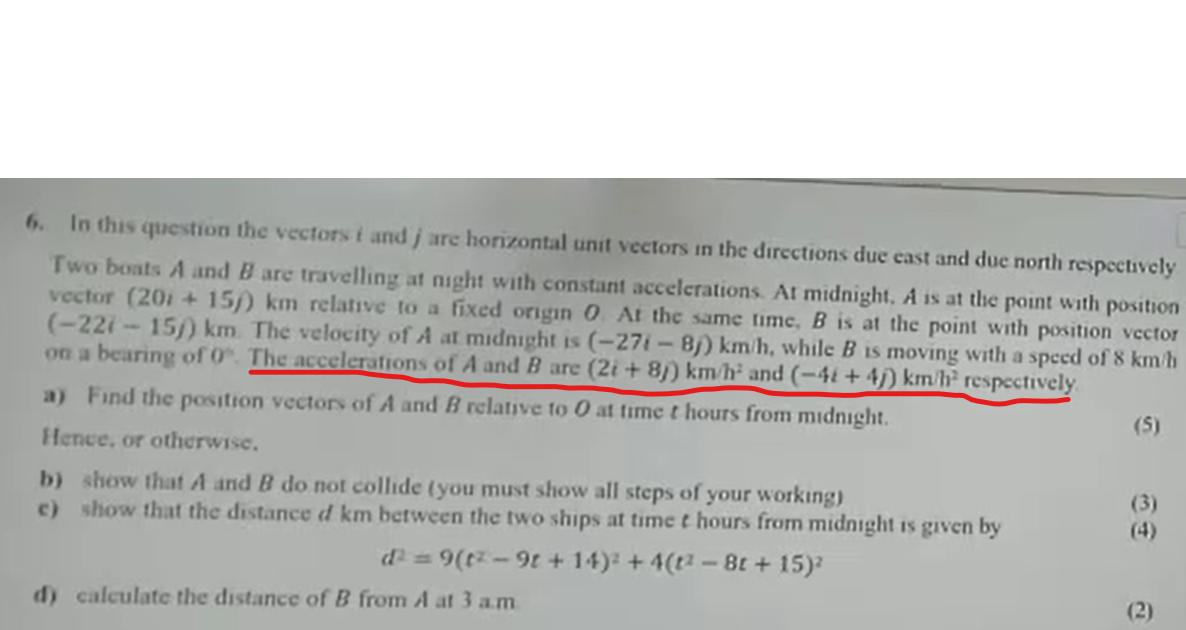
this one was tricky as normally they don’t give acceleration, so you do:
r = r0 + s
= r0 + vt
but with acceleration use: r = r0 + ut + 1/2(a)(t²)
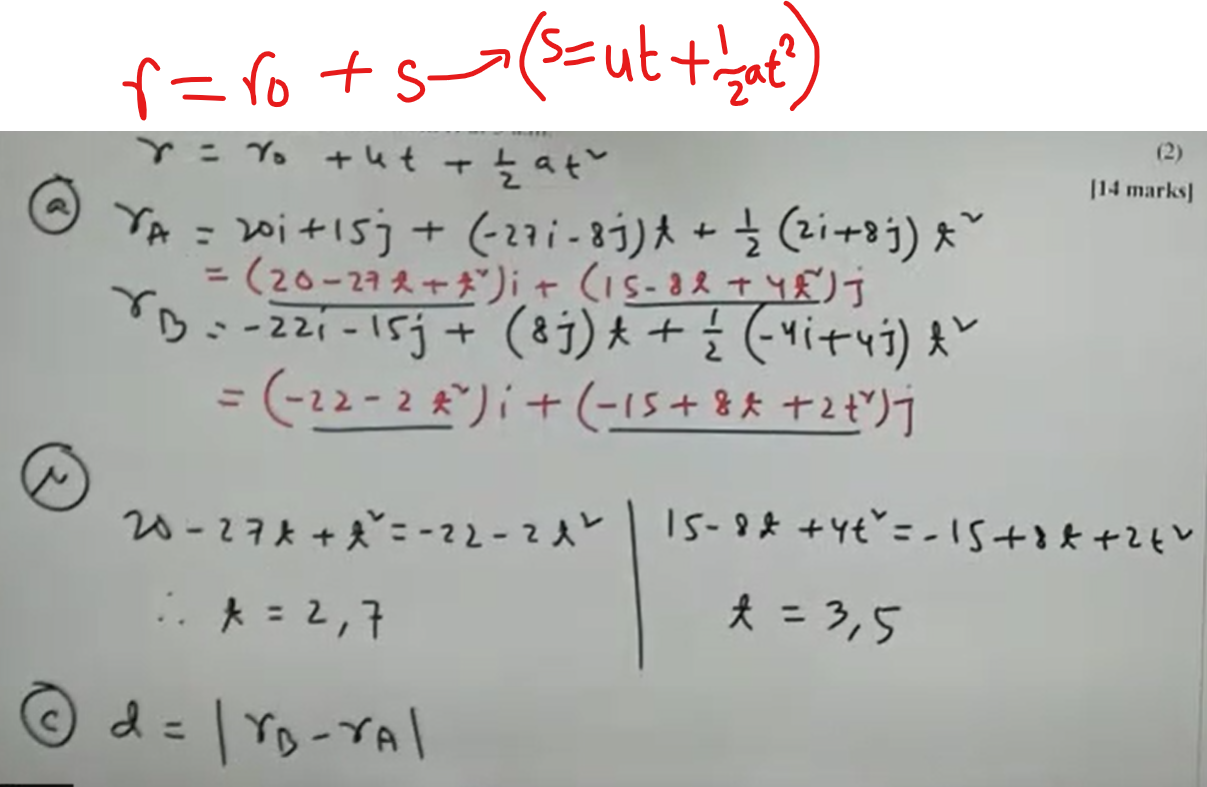
find size of angle between direction i and resultant force, given Rf = -8i + 15j
the correct answer is the green angle, as that is size of angle theta between i and Rf
B.A = tanθ = (15/8)
θ = 61.9
size of angle = 180 - 61.9 = 118°
[red angle is wrong here as that would be angle between -i and Rf]
(also think of A, S, T ,C or cast diagram for trig, thats the way you go which is a.c.w,
hence angle is 180-61.9 not 180+61.9)
![<p>the correct answer is the green angle, as that is size of angle theta between i and Rf<br><br>B.A = tanθ = (15/8) <br>θ = 61.9<br>size of angle = 180 - 61.9 = <strong><u>118° </u></strong><br><br>[red angle is wrong here as that would be angle between -i and Rf]<br><br>(also think of A, S, T ,C or cast diagram for trig, thats the way you go which is a.c.w,</p><p>hence angle is 180-61.9 not 180+61.9)</p>](https://assets.knowt.com/user-attachments/291f8fde-1a76-4689-b50c-9f3023ffbd20.png)
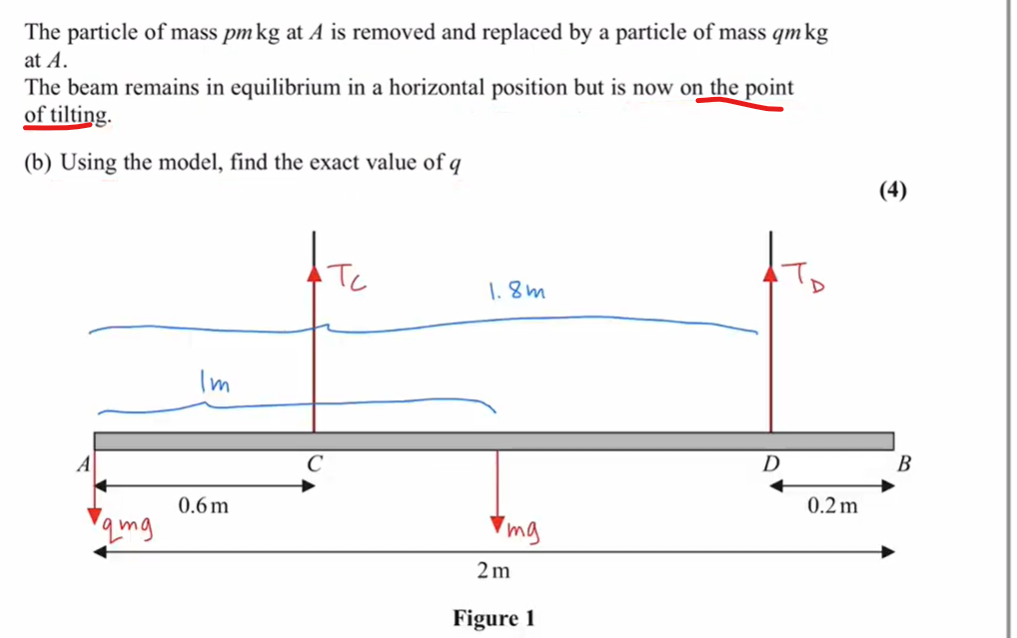
[NOTE: point of tilting means at the other support, T = 0 if its like strings or R = 0 if it’s like a seasaw]
![<p><br><br>[NOTE: point of tilting means at the other support, <strong><u><mark data-color="yellow" style="background-color: yellow; color: inherit;">T = 0</mark></u></strong> if its like strings or <strong><u>R = 0</u></strong> if it’s like a seasaw]</p>](https://assets.knowt.com/user-attachments/17cdadee-979a-4638-be4f-4c35c1a67738.png)
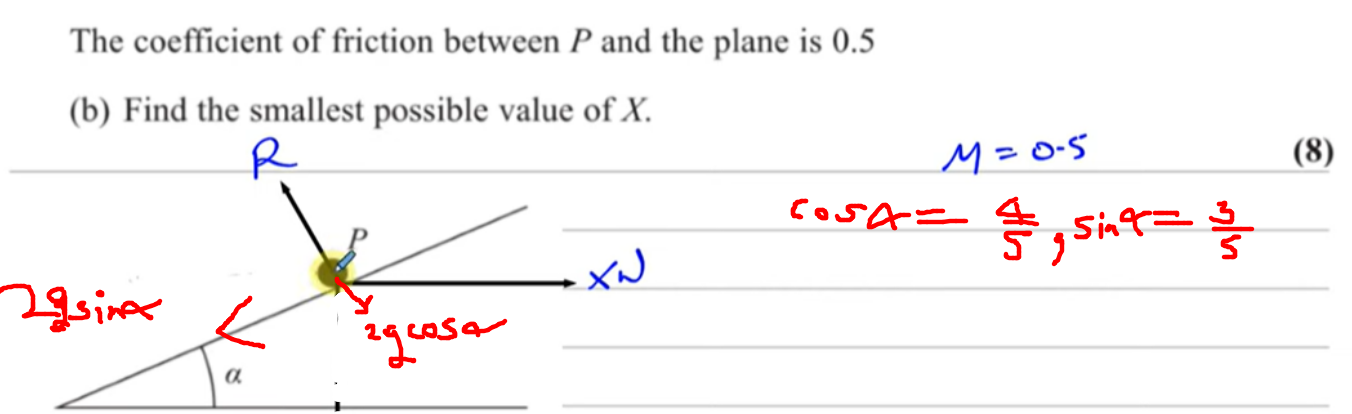
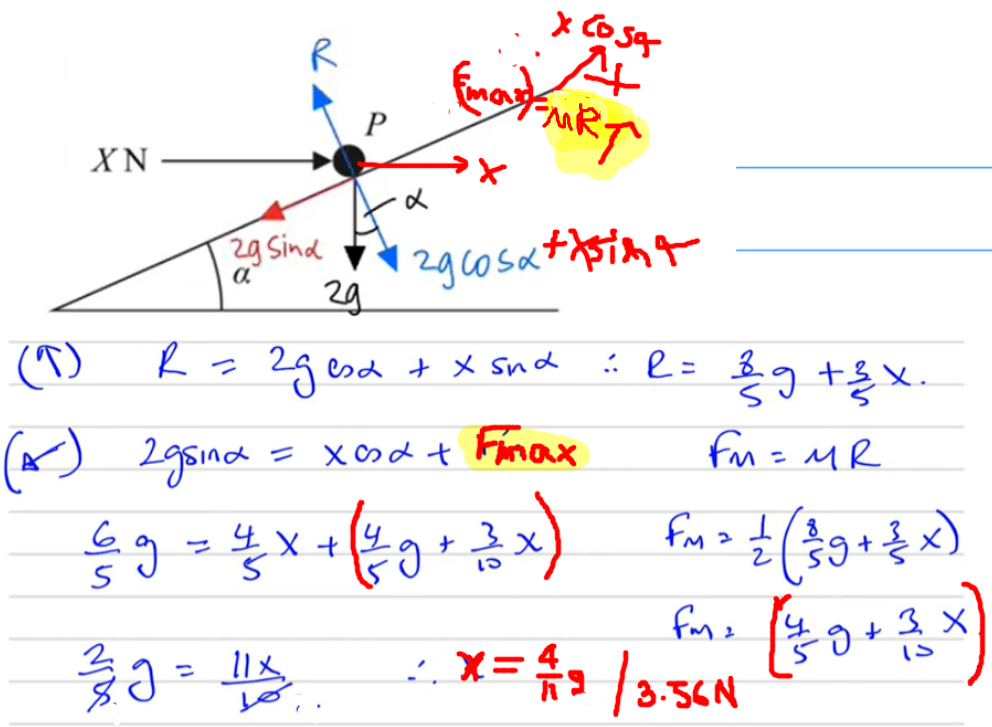
for smallest possible value of X, particle moves down plane/point of sliding down
therefore friction opposes this motion of p, thus acts upward
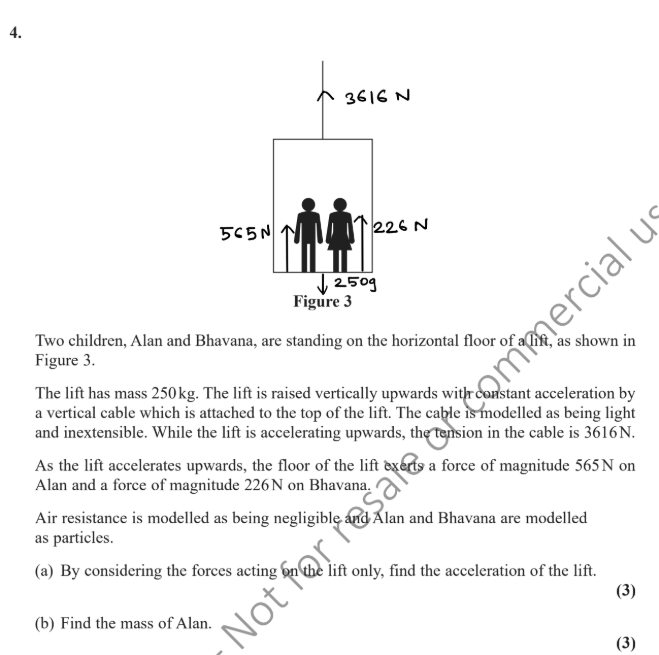
newtons 3rd law here:
Lift pushes up on people → R (upward on people)
People push down on lift → R (downward on lift)
therefore it is T - (mass of lift)g - (force from ppl) = (mass of lift) x a
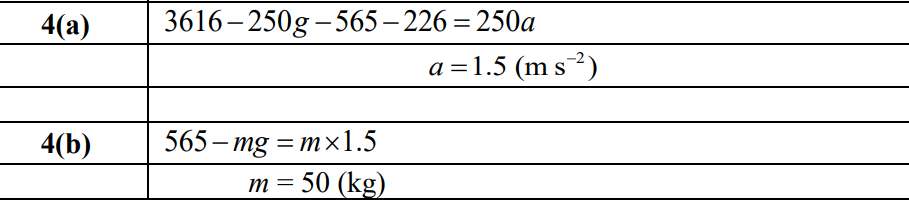
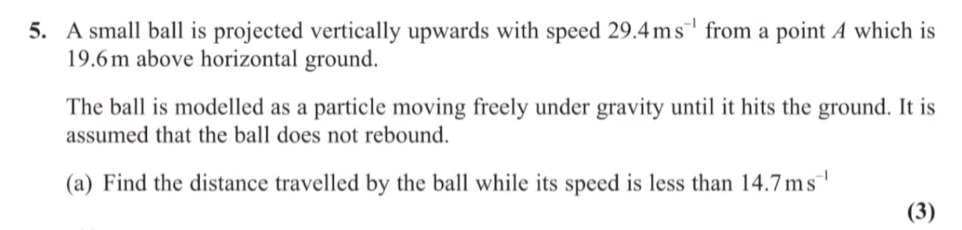
(this one was a bit tricky)
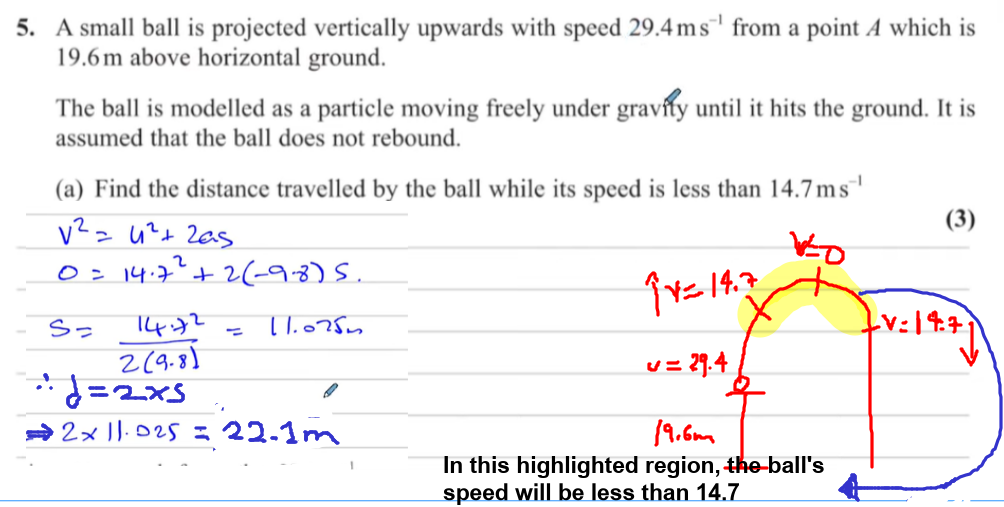
think about highlited region, the ball goes up until Smax, where v = 0, so it is decelerating
so we want distance from: 14.7 —> 0 and then drops down so: 0 —> 14.7
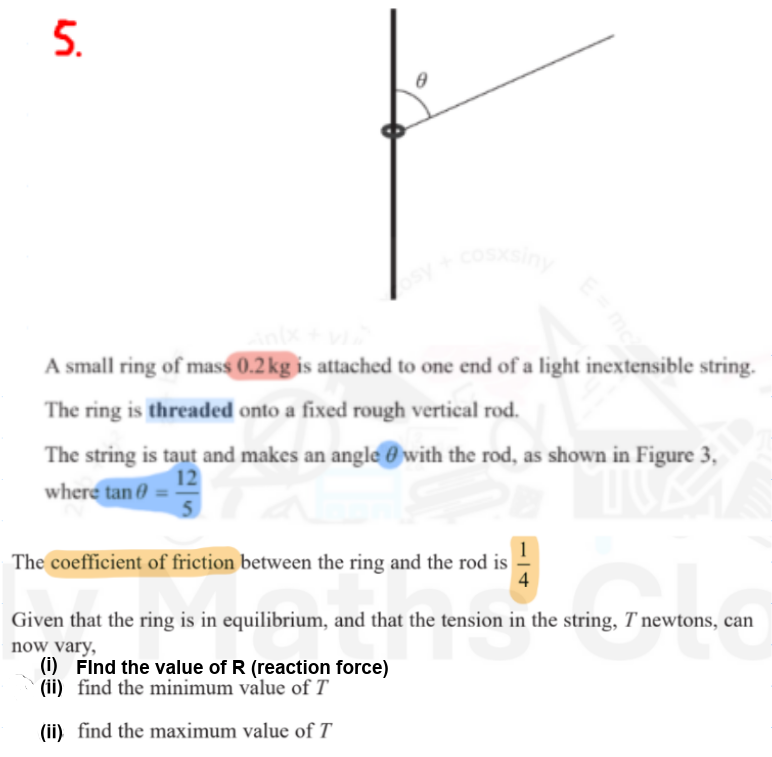
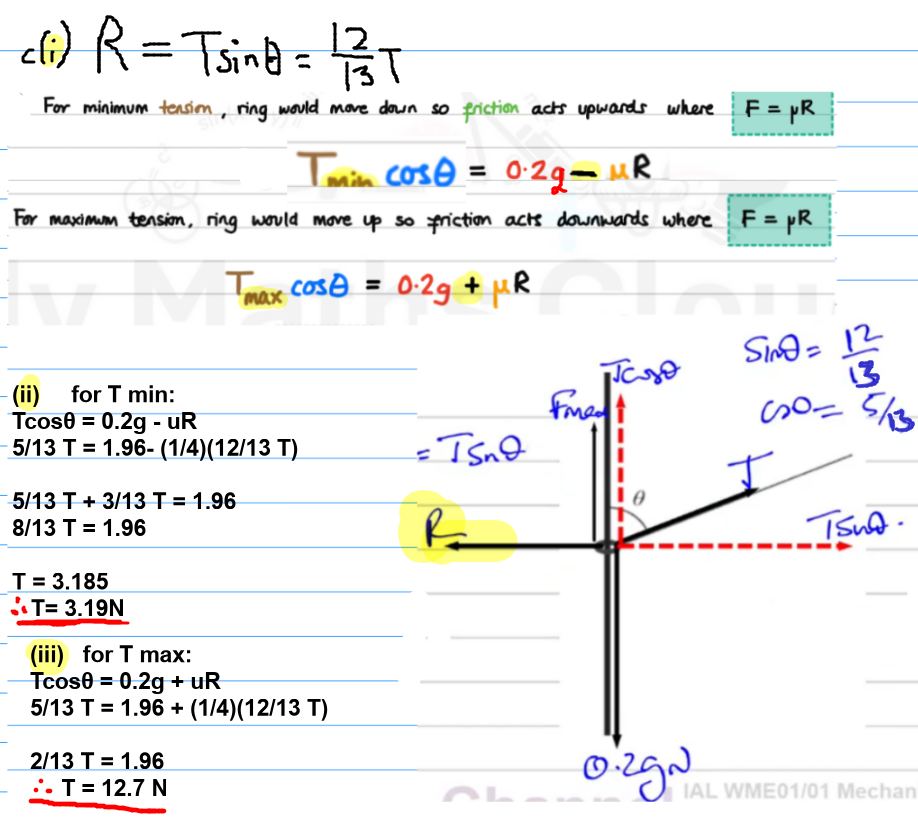
for a threaded ring/bead onto a fixed rough vertical rod: the reaction, R is to left or right not up
(depending on tension direction),
(The reaction R is perpendicular to the rod )
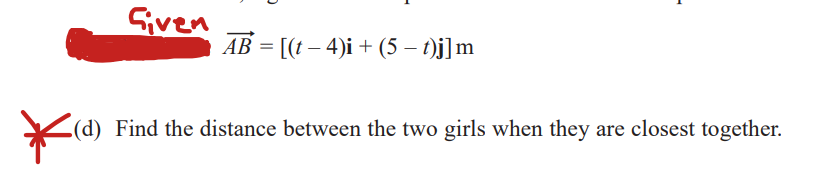
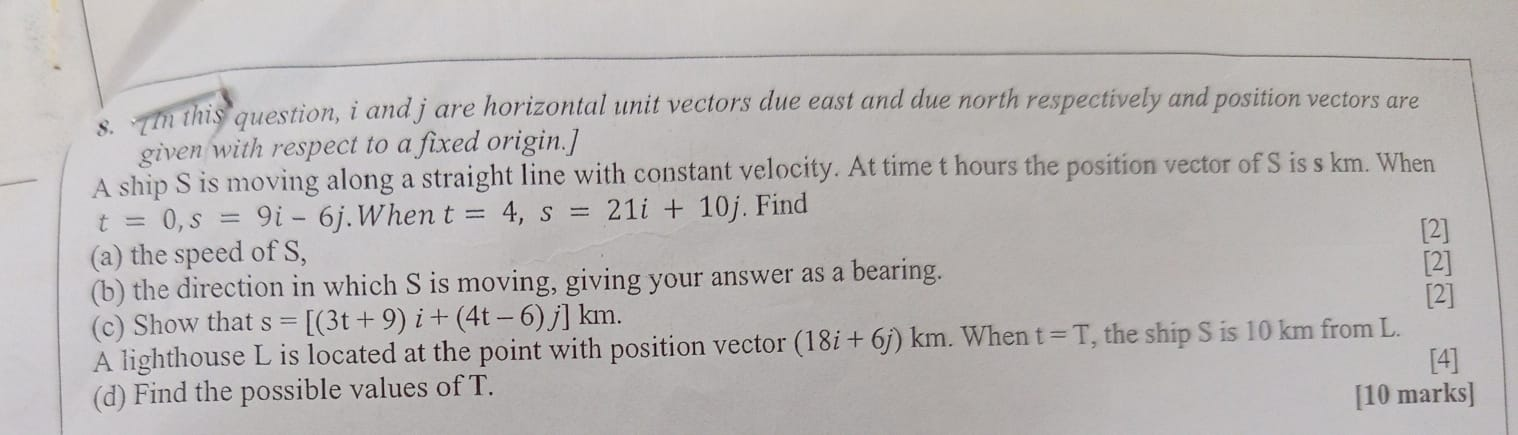
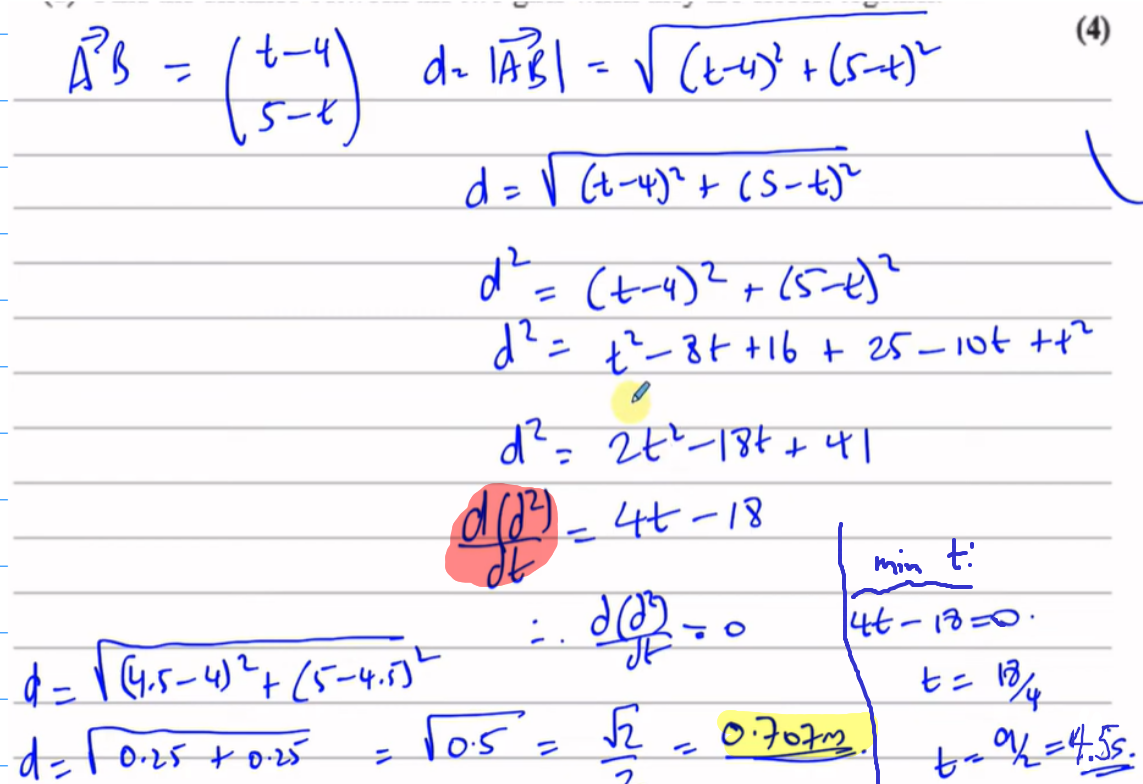
distance closest together OR min distance = 0.707m
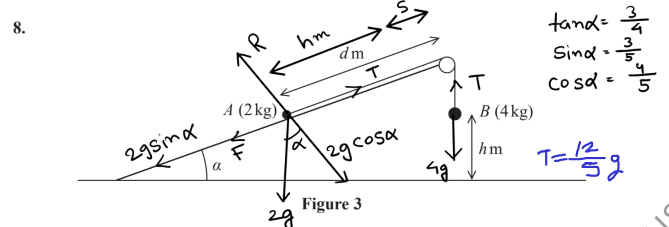
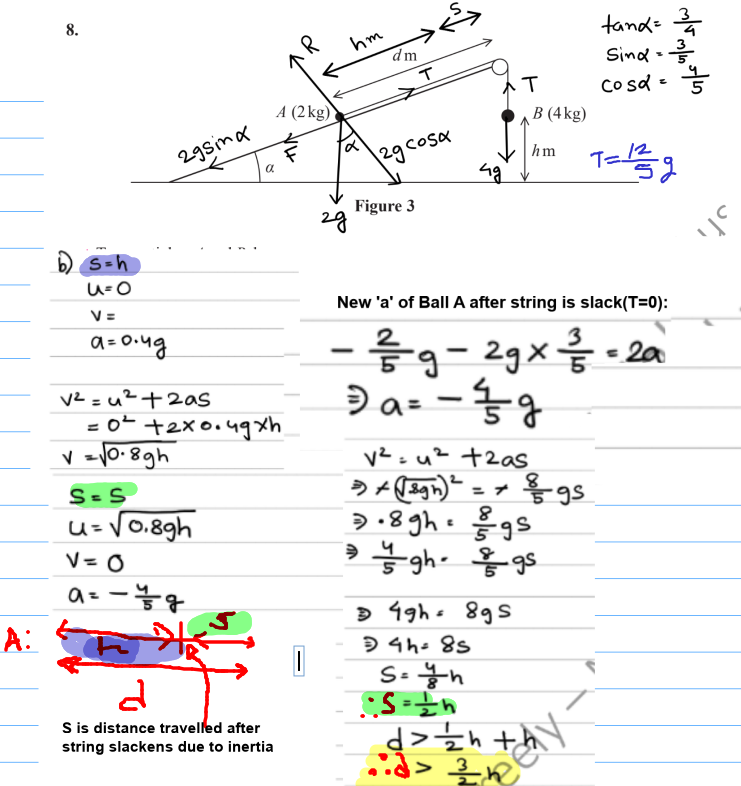
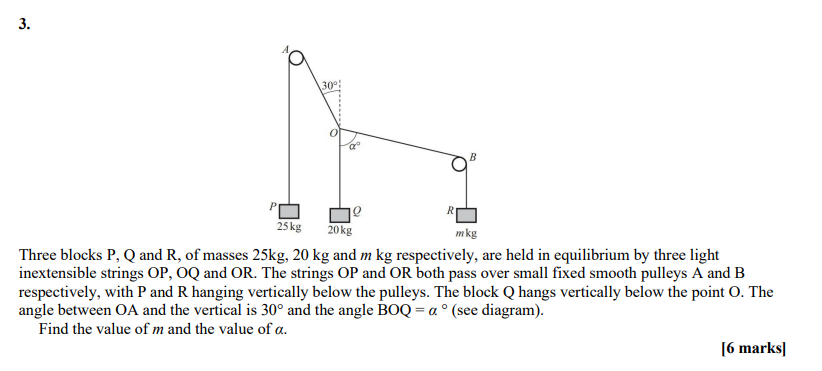
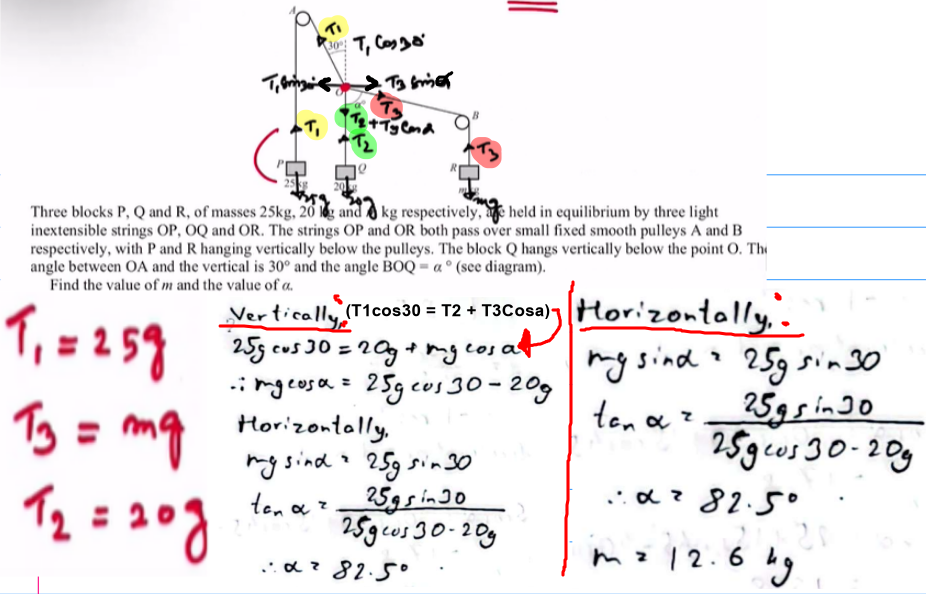
( a really nice equilibrium question)
when in equilibrium, T - mg = 0, => T = mg
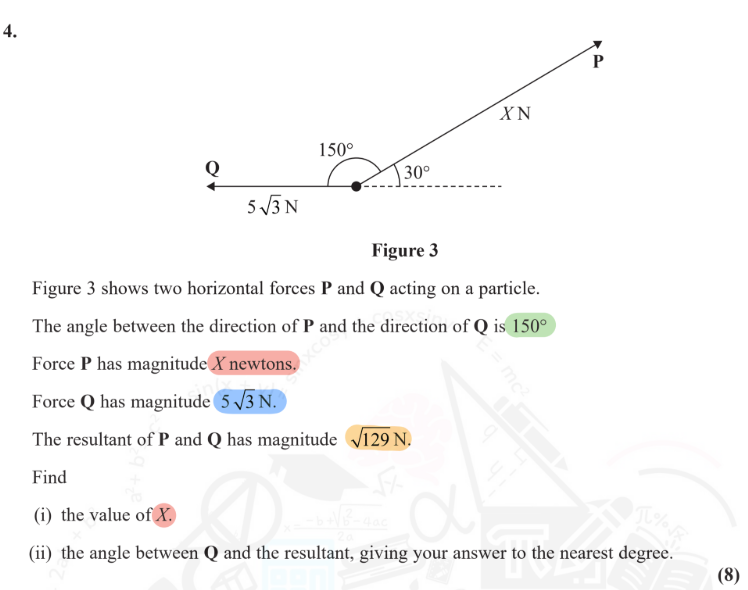
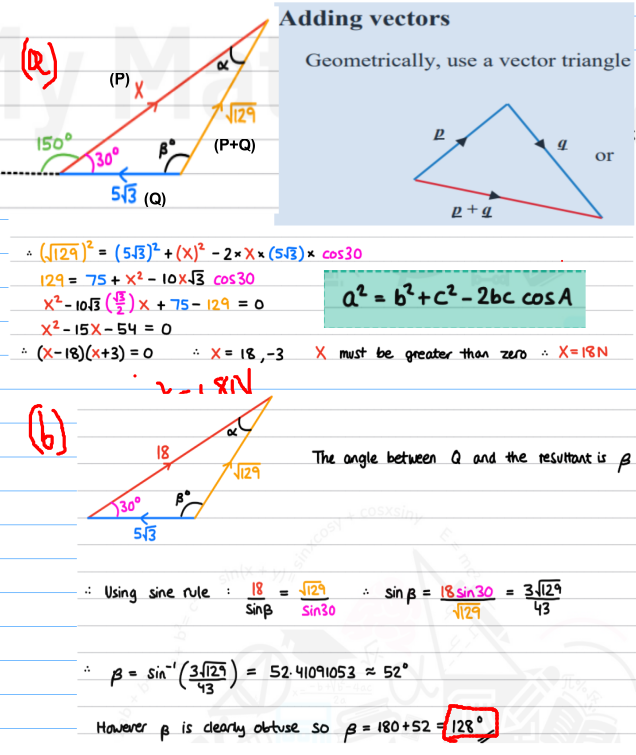
for (b) you cud do just use cos rule to find angle, much easier
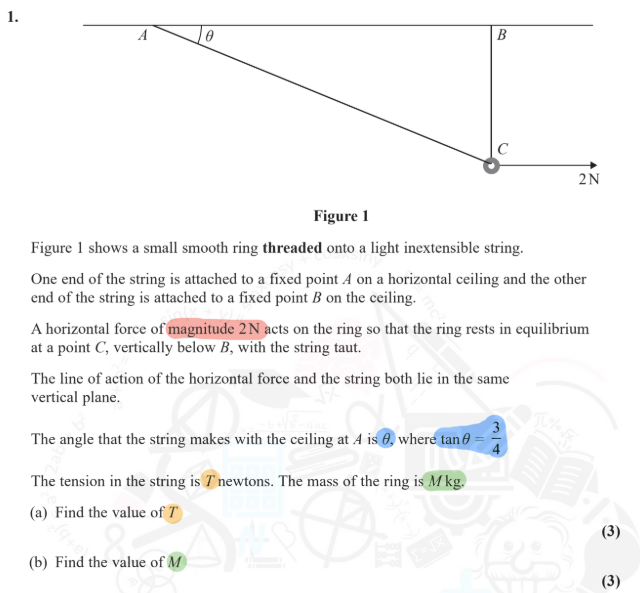
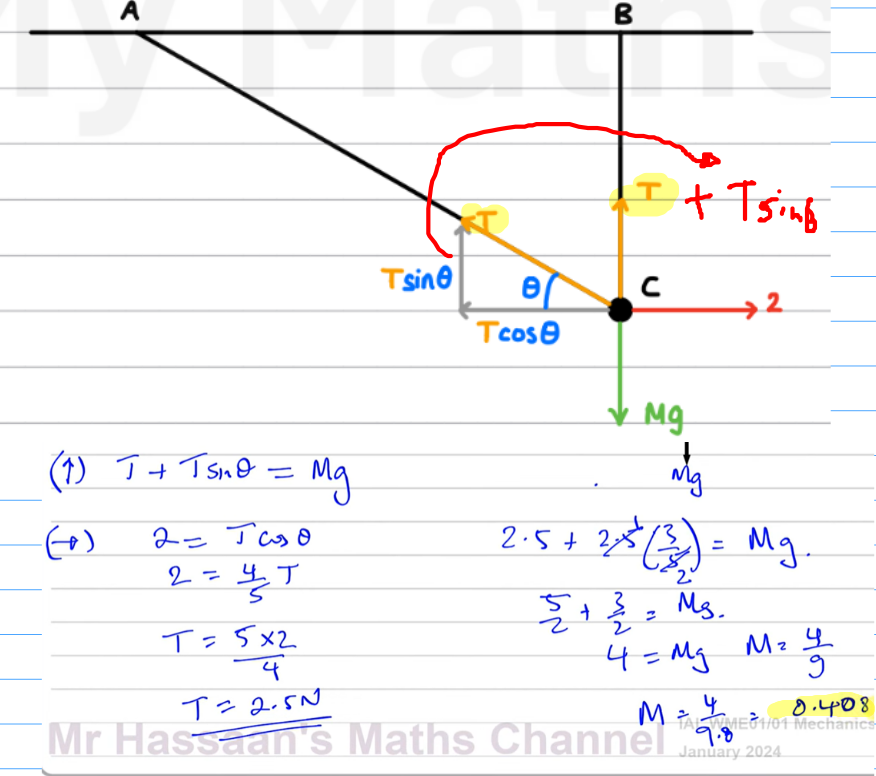
NOTE:
since a string is used and its threaded, there is no R.
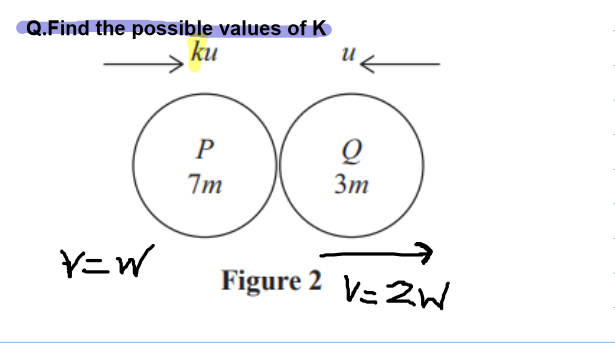
Find the possible values of K
(5marks)
main concept here:
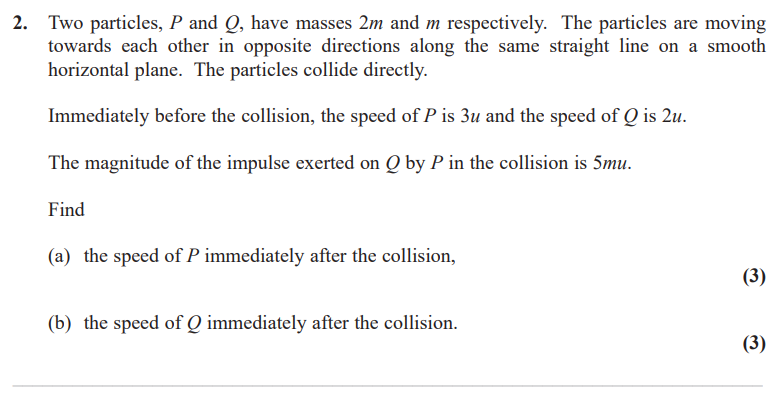
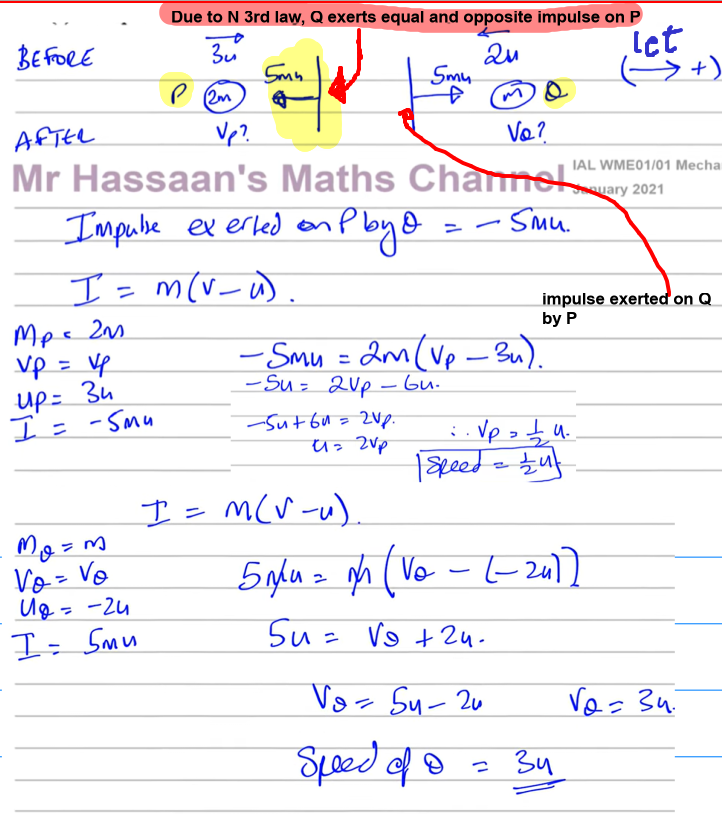
direction of P after collision is not given
So P it can go → or ← after collsion, hence 2 values of K will be found
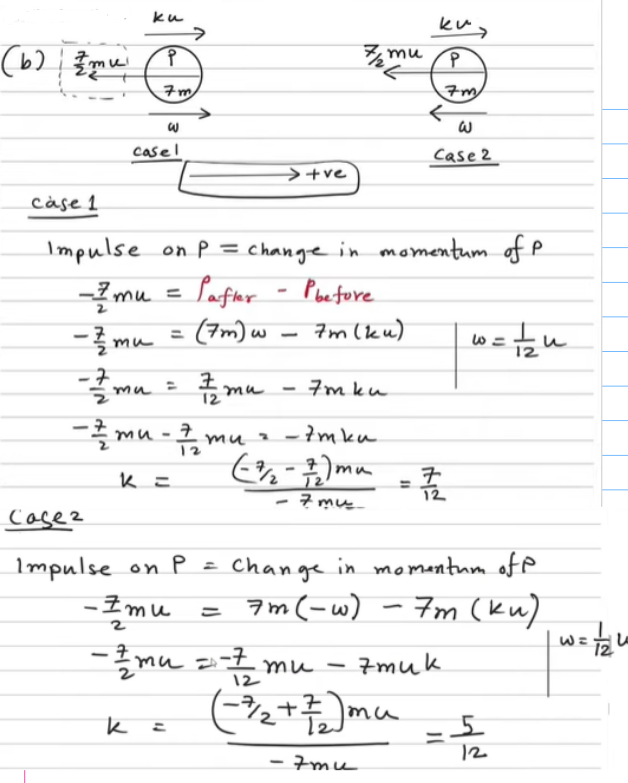
just concept →
For vector sums, keep in terms of i and j and at last convert to magnitude if needed
(like if they ask for speed then convert to magnitude)
for Suvat sums, especially the tricky ones, keep in terms of g and if needed x 9.8
you might lose marks due to inaccuracy if u input 9.8 early on
State how you have used the fact that the beam is modelled as a rod
(1mark)
- The beam is rigid and remains straight