METHODS OF DETERMINING PULP VITALITY
 Call Kai
 Learn
Learn Practice Test
 Spaced Repetition
 Match
Match Flashcards
 Knowt Play
1/26

There's no tags or description
Looks like no tags are added yet.
Name | Mastery | Learn | Test | Matching | Spaced | Call with Kai |
|---|
No analytics yet
Send a link to your students to track their progress
27 Terms
what is vitality
vitality: having an intact blood supply
what are characteristics of an ‘ideal’ pulp tester
must be effective on both anterior and posterior teeth (single/ multi-rooted)
must be effective if the tooth is carious or if it has been restored
must be effective when secondary dentine has been deposited
must be effective in unusual circumstances (re-implanted, transplanted teeth)
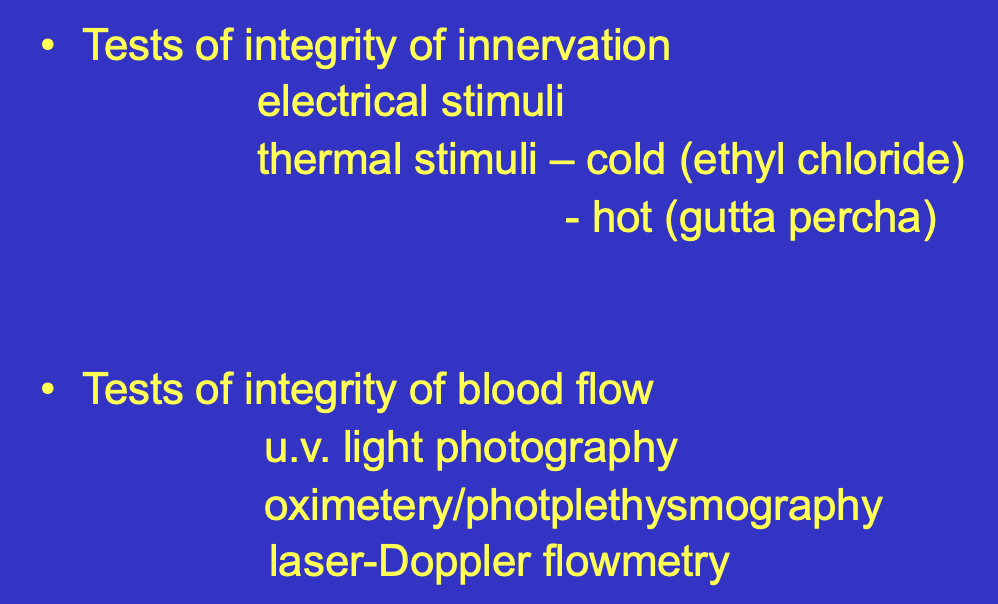
what are current methods of vitality testing
what are conventional principals of conventional pulp testing (4)
patient indicates a response
tests the whole of the pain pathway, not just the pulp
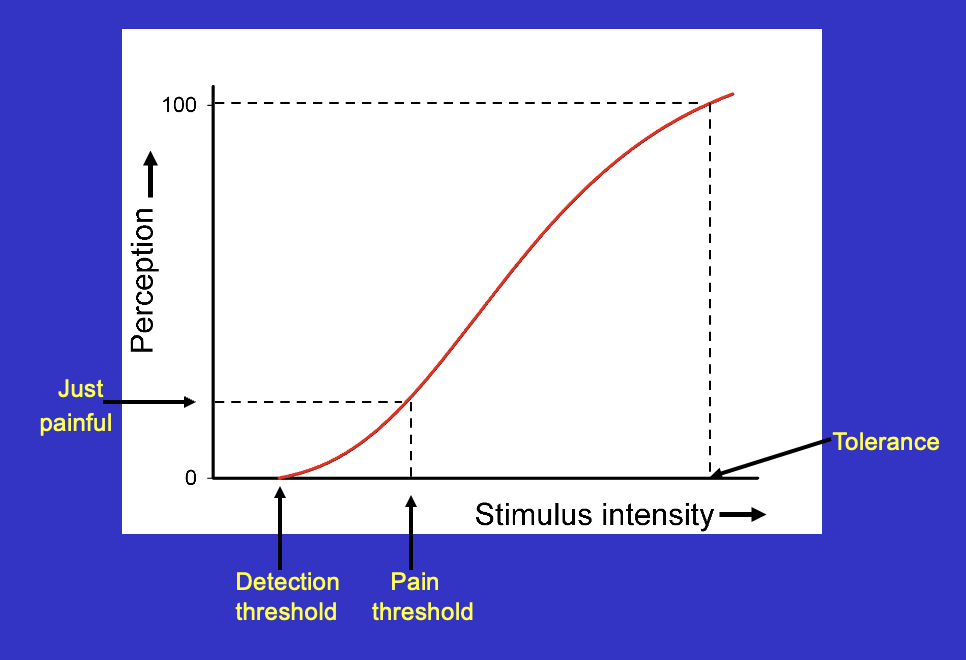
sensation uncomfortable at detection threshold, but not painful (pre-pain?)
confirm by questioning that it is the pulp that is being stimulated, not the gingiva or PDL
what are difficulties in pulp testing
the pulp is in an enclosed chamber, making access difficult
the pulp chamber is practically opaque - except for dentinal tubules
electrical resistance (impedance) varies widely
pulp size diminishes due to secondary dentine
what is a false positive
false positive: when pulp testing indicates that the tooth is vital when it actually is not (better than false -ve)
what is a false negative
false negative: when pulp testing indicates that the tooth is non-vital when in reality it is vital
what sensation results from an electrical pulp tester
the sensation is uncomfortable but not painful at threshold
what are the criteria for using an EPT (3)
avoid gingival margin and metal restorations (current spread)
need good electrical contact
teeth must be isolated
outline how good electrical contact can be achieved
good electrical contact
toothpaste, not prophylactic paste (glycerine)
electroconductive rubber
indifferent electrode (monopolar stimulation) in hand or via handle and operator - NO RUBBER GLOVES
outline how tooth isolation can be achieved
no saliva between teeth
no dentures or other appliances
how do electric pulp testers work
EPTs directly activate pulpal nerve fibres (bypass receptors)
pulp testers achieve this by depolarising pulpal nerve fibres so that they generate action potentials
for a nerve fibre to be depolarised, electrical current has to flow into it
but most pulp testers generate voltage pulses, not current pulses
therefore, the electrical resistance (impedance) of the tooth is important
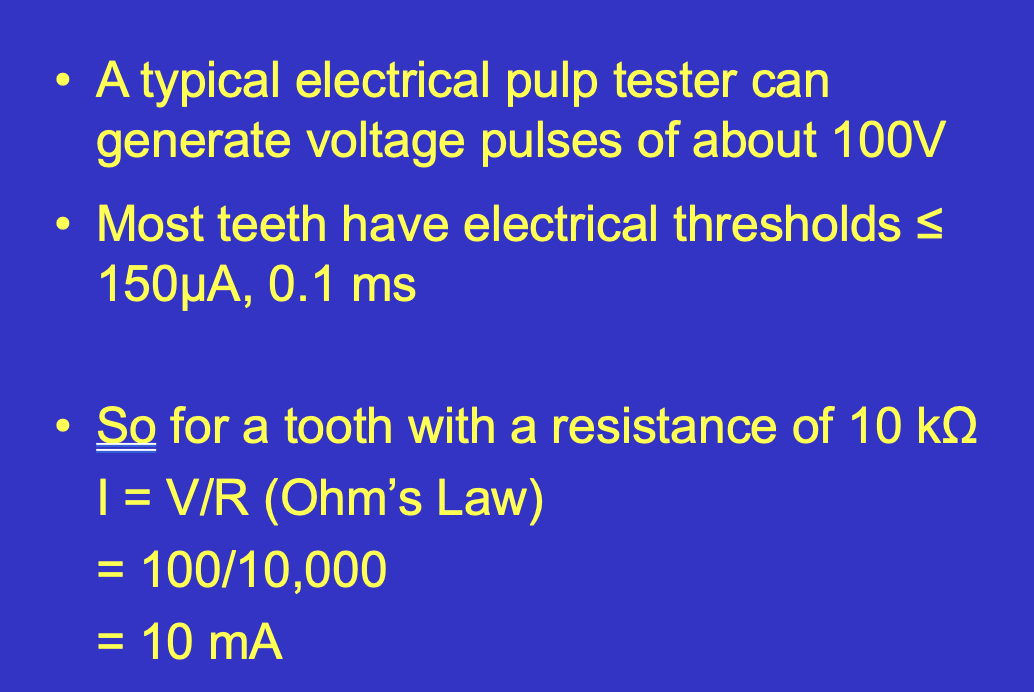
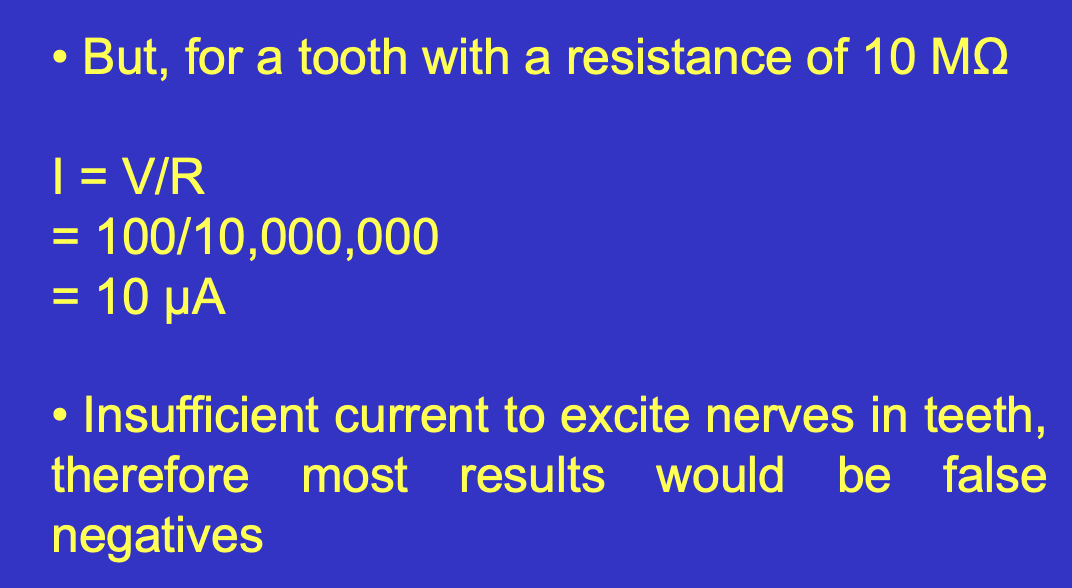
what features would cause a tooth to have a high electrical resistance
large and deep fillings
old patient
what are the options for EPT
monopolar VS bipolar stimulation
constant current VS constant voltage
diagram showing monopolar VS bipolar stimulation
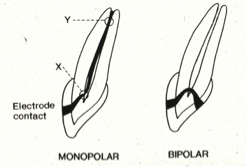
outline monopolar VS bipolar stimulation
nerve fibres are excited where current density is highest
is this in the dentinal tubules, at the pulp-dentine junction or at the apex?
use cathodal stimulation for monopolar testing
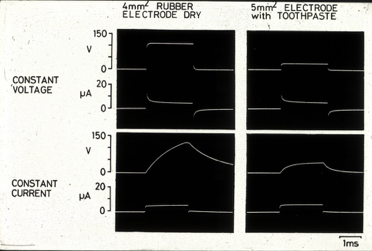
outline constant current VS constant voltage
most commercial pulp testers are of the constant voltage type
these often cause false positives because of stimulus spread to the gingival margin and PDL
with constant current devices there are few false positives but more false negatives
sensation and perception graph
outline heat thermal testing
hot gutta percha
sticks to teeth when surface is dry - use vaseline
difficult to control temperature and distribution
outline cold thermal testing
ethyl chloride spray (evaporative cooling)
apply with cotton wool pledget to single tooth
avoid soft tissues
Moody et al. (1989): 80% correct, 2 false +ve
better than electrical testing
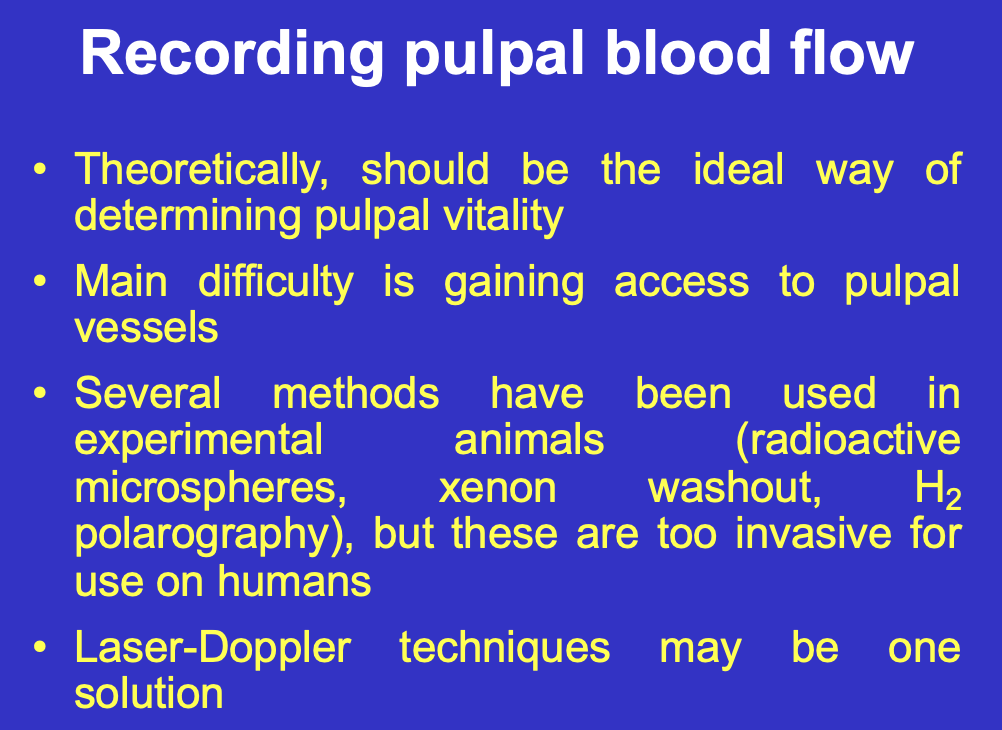
recording pulpal blood flow
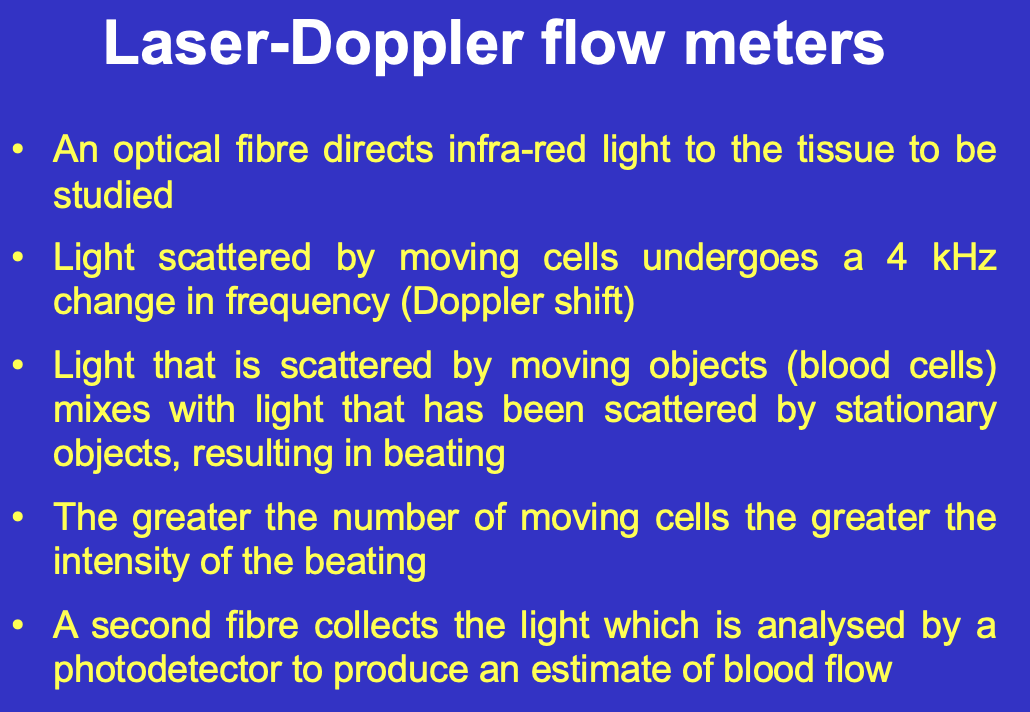
outline Laser-Doppler flow meters
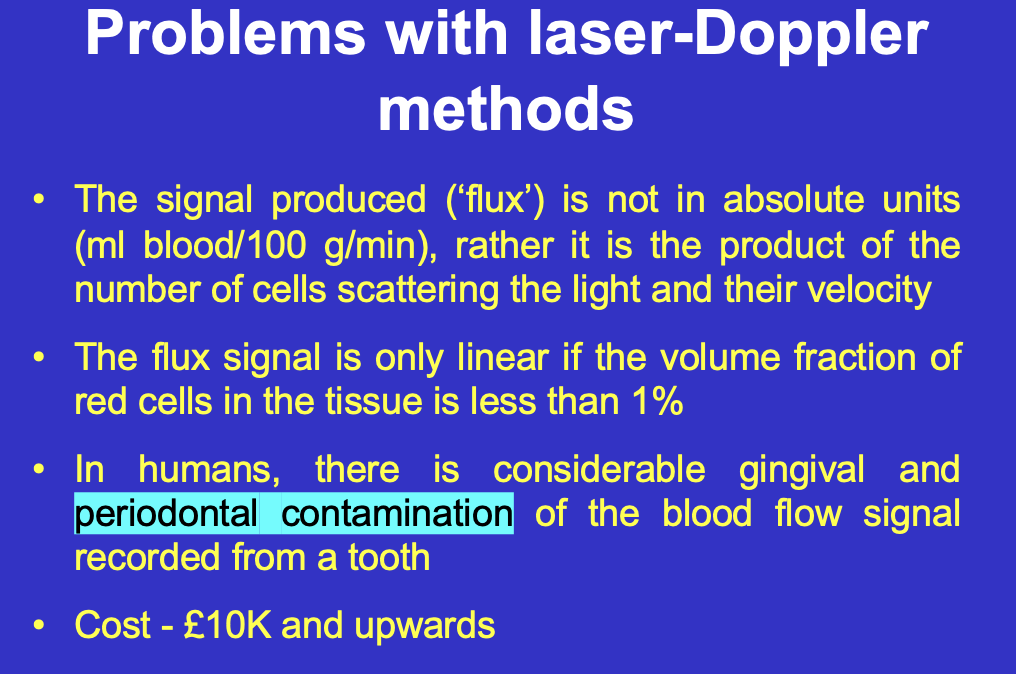
what are problems with Laser-Doppler methods
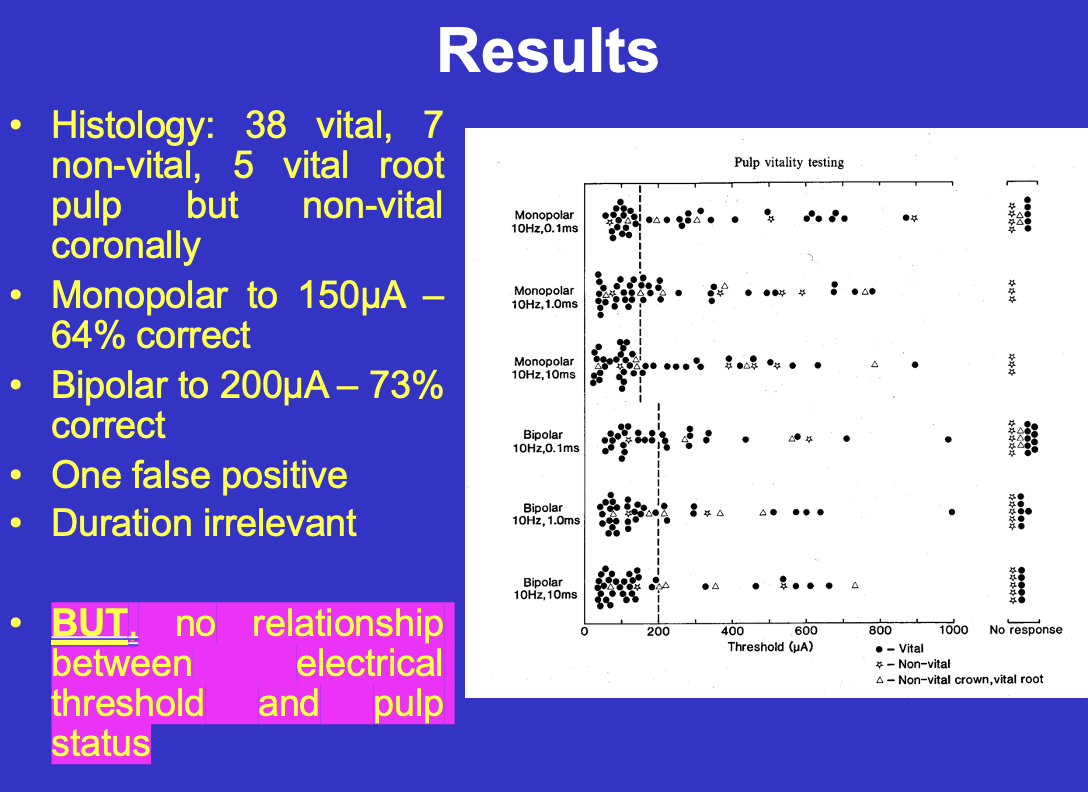
Soo-Ampon et al. (2003)
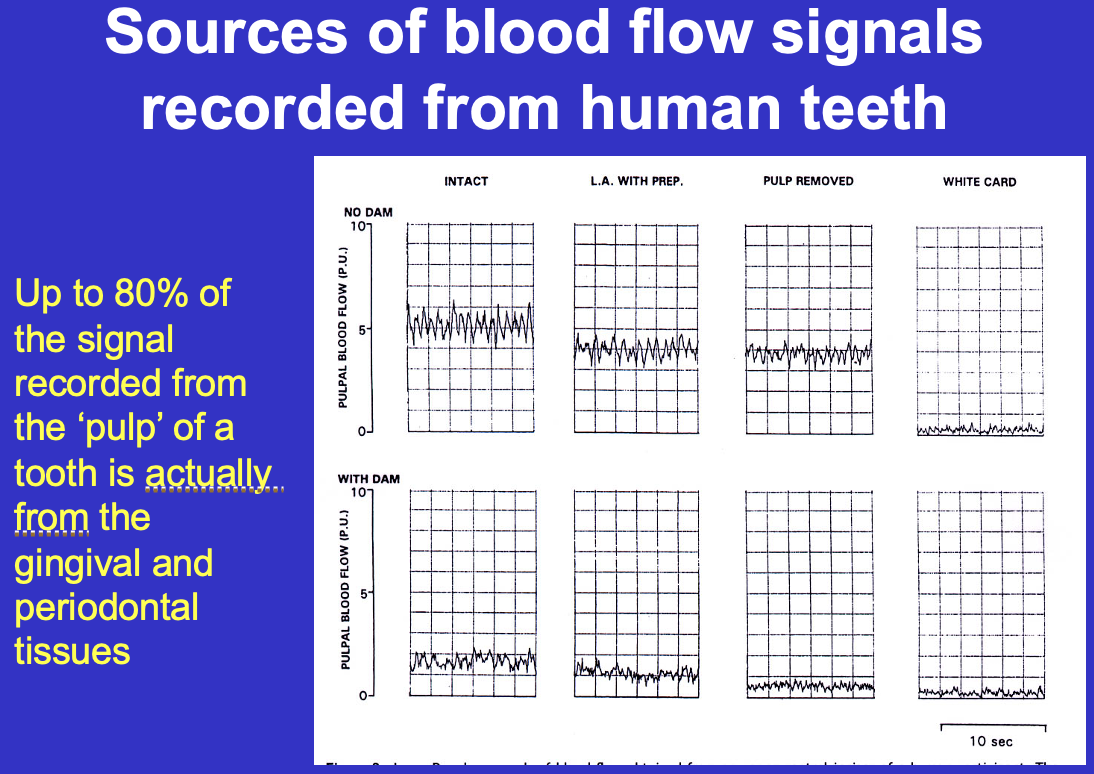
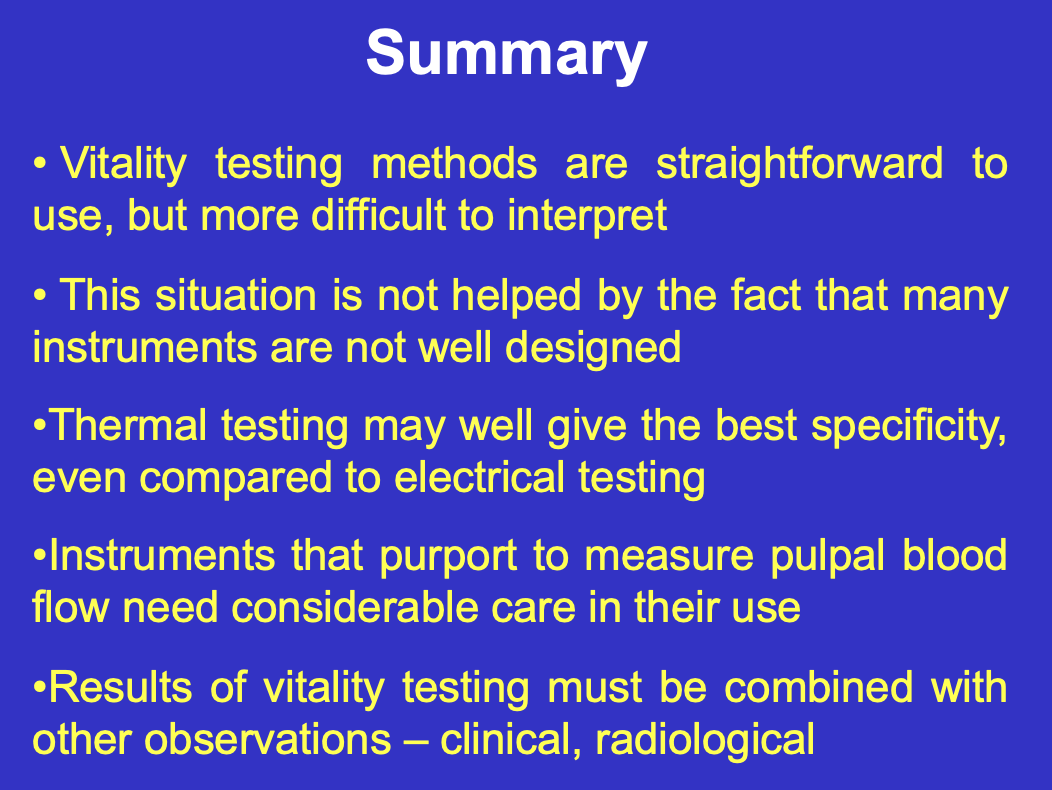
summary slide