Impressionism
 Call Kai
 Learn
Learn Practice Test
 Spaced Repetition
 Match
Match Flashcards
 Knowt Play
1/26

There's no tags or description
Looks like no tags are added yet.
Name | Mastery | Learn | Test | Matching | Spaced | Call with Kai |
|---|
No analytics yet
Send a link to your students to track their progress
27 Terms
Impressionism
Context - Industrial Revolution
Machines REPLACING human hands and workers → similar to how photography is taking out the human hand in art, leads to more leisure time
Factores = more production, more leisure time
more time → more travel → more interaction with diff cultures (Japan)
Emphasis on the MOMENT and the study of the transitory effect of light and how light affects color
HOW DOES THIS AFFECT ART
experimentation + technology
Subject - URBAN landscapes - modern day cities painted LIKE a landscape
Architecture built with steel, iron, and glass (modern materials)
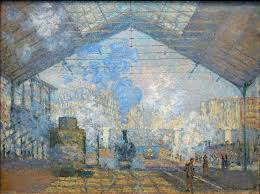
“The Saint Lazare Station” Oil on Canvas Painting; Monet; 1877; Impressionism
Painting TRAIN station → modern transportation
hub of development because it was modern transportation, and transportation led to more travel and experience/interaction with other cultures
MODERN MATS
Baren Haussmen -sick of old, classical, ancient stuff, wants something new and modern → renovates streets and neighborhoods using modern mats. → steel and glass
Series of 7 - to study the change of light
Triangle shape like a pointed arch → cathedral modern times → glorifies modern times and thought it should be documented
VISUAL → SYMBOLISM
Rapid brush strokes → represents the quick pace of the advancement of society and technology
Rapid brush strokes creates blurred edges -> shows the speed of train, further symbolizing how people should not stay in the past, but move forward
En plein air → capture mood/impression of the MOMENT
completed in short time and is relatively small so that he could quickly CAPTURE THE MOMENT
TRADITIONAL
sfumato
triangle
Parisian landscape style
INNOVATION
Urban subject - train, steel, and glass
En Plein Air - smaller
Rapid/loose brush strokes
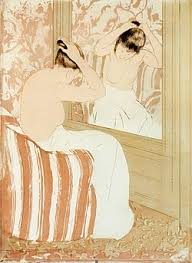
“The Coiffure” Mary Cassatt; 1840; etching with aquatint
Japonisme - Influenced by Japanese wood block prints
thin black contour lines
flat planes of color
decorative pattern
Voyeurism
A woman’s PRIVATE moment - shown NOT sexualized, as it was painted by a woman
NO nipples and not interacting w/ viewer → not sensual
Candid/fleeting moment of time
Audience = the EVERYDAY person
etching = mass production = lower prices = anybody can afford = more relatable art distributed to people to enjoy
Domestic Genre Scene; vernacular
DIFFERENT - not ouside and no technology
BUT it is a part of Impressionism because of Japonisme
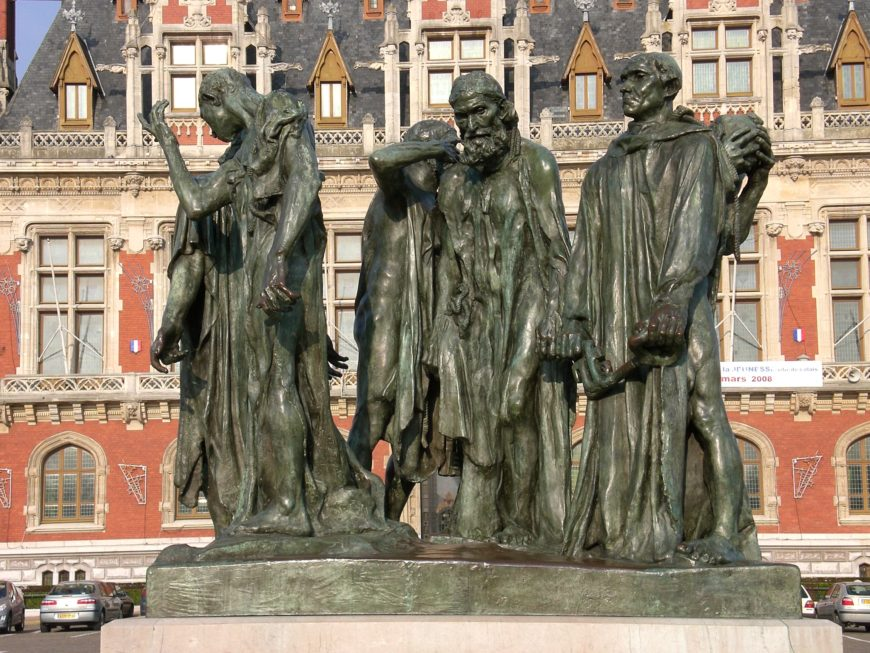
“Burghers of Calais” Auguste Rodin; 1885; Bronze
Commissioned by City of Calais to show the elders who offered themself as sacrifice in the Hundred Year’s War in 1346
However, Rodin shows the elders as defeated, prompting a bad reaction by Calais because it shows them as weak and easily defeated - like Y No Hai Remedio
Displayed in England AND France
England - wants to show that they are benevolent and merciful because they spared the elders
France - wants to honor their sacrifice
Shown EMOTIONAL and a RANGE of emotion (Lamentation), not ALL wanting to be sacrificed
Made look god-like because it is elevated on a platform. However, Rodin wanted to be on the same level so people can walk on the same level as the sculptures
12 casts - one in Calais and one in England in front of Parliament …”broke the mold”
rule in France where if art was made from mold, there could only be 12 so that the value of the art does not decrease from the recreations, if any more were to be made the mold had to be broken
Connection = Lamentation (range of emotions) and Y No Hai Remedio (defeated heroes, bad reaction)
WHY IMPORTANT FOR LATER SCULPTURE?
Shifts AWAY from idealized human form in SCULPTURE (already done in painting)
New focus on EMOTIONAL impact and greater realism
Sculpture should be viewed form ALL angles because new emotions can be shown at different angles
Post-Impressionism
Stylized brush strokes - rough, choppy, geometric
HATED impression because they did not like the rushed look
PERSONAL art and PERMANENT
symbolism for the artist’s personal mood and events
Individual ideas
Primitivism = Influence from “Non-Western/European” cultures (japan, africa)
Contrasting, complementary colors
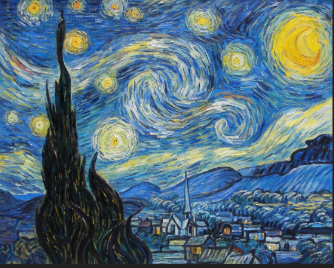
“Starry Night” Van Gogh; 1889; Oil on Canvas; Post Impressionism
Color scheme = vivid (saturated), complementary (contrast) colors
enhances his emotions of sadness through the blue night sky and the sense of wavy, swirling movement through → (next line)
ALMOST Pointillism- but drags out the points, creating short, choppy brush strokes that creates wavy, swirling movement. This also creates anxiety and makes the viewer uncomfortable, which would have been how he felt, as he was contemplating suicide.
IMPASTO technique - thick layers of paint (it’s 3d and coming off the canvas) - emphasizes movement AND creates shadow
EMOTIONAL, NIGHT landscape
typically, landscapes would have been during the day because there is more night, thus this painting is not well received by the public
View from the asylum room - he has an identity crisis
TRIED En Plein Air - problem = it is night time, so there isn’t enough light to study and capture the moment, and the asylum wouldn’t let him out during the night → view from asylum room
ASYMMETRICAL balance
Cypress tree big on the left
Cypress Tree - connects the sky and the Earth, making it an Axis Mundi. Additionally, in order to get to the sky from the earthly realm, you had to die first. This conveys his thoughts about suicide
Cypress tree = life after death
Church also pierces into the sky, but it is smaller because he got kicked out, showing how the church wasn’t central in his life anymore
Proportion of the sky to the town = LARGE sky vs small town, showing the crushing weight of the universe
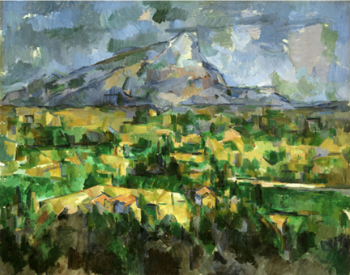
“Mont Saint-Victoire” Paul Cezanne; oil on canvas; 1902
Focus on Form and Structure
2 shapes= Triangle (stability and balance) and rectangle (order)
Focus on geometry, perpendiculars
Using color in a different way
CONTRASTING WARM and COOL TONES to make the mountain look both big AND small
Perspective using contrasting warm and cool tones
Paul Gauguin
French and Peruvian descent
Moved to Tahiti to live “life like a savage,” which the Tahitian people took as an insult because he was calling them “Savages”
Enjoyed “primitive” art - art without European influence
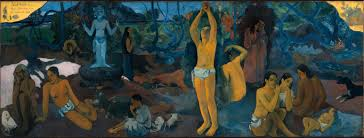
“Where do we come from? What are we? Where are we going?” Paul Gauguin; 1897; oil on canvas; post-impressionism
Frenbch AND Peruvian descent, living in Tahiti
Painted after the death of his favorite daughter
Story of his life in REVERSE
supposed to be read from right to left, and on the right, the first figure is a baby
Painted on rough sack-cloth (primitive)
Read from right to left, like ancient scrolls, such as Night Attack on Sanjo Palace
Figures float in space, almost dream-like
Complementary colors, but softened
Peruvian mummy, Tahitian deity
LIVES IN TAHITI → INCLUDES THE BLUE TAHITIAN DEITY
POST IMPRESSIONISM → PRIMITIVISM/JAPANESE (NON-EU) INFLUENCE
PERUVIAN DESCENT → PERUVIAN MUMMY (DEATH)
Tradition: oil on canvas; Christian context (figure on the center holding an apple, referencing Adam and Eve eating the forbidden fruit)
Innovation: Stylized figures, expressive colors, read from right to left, Tahitian deity, Peruvian mummy
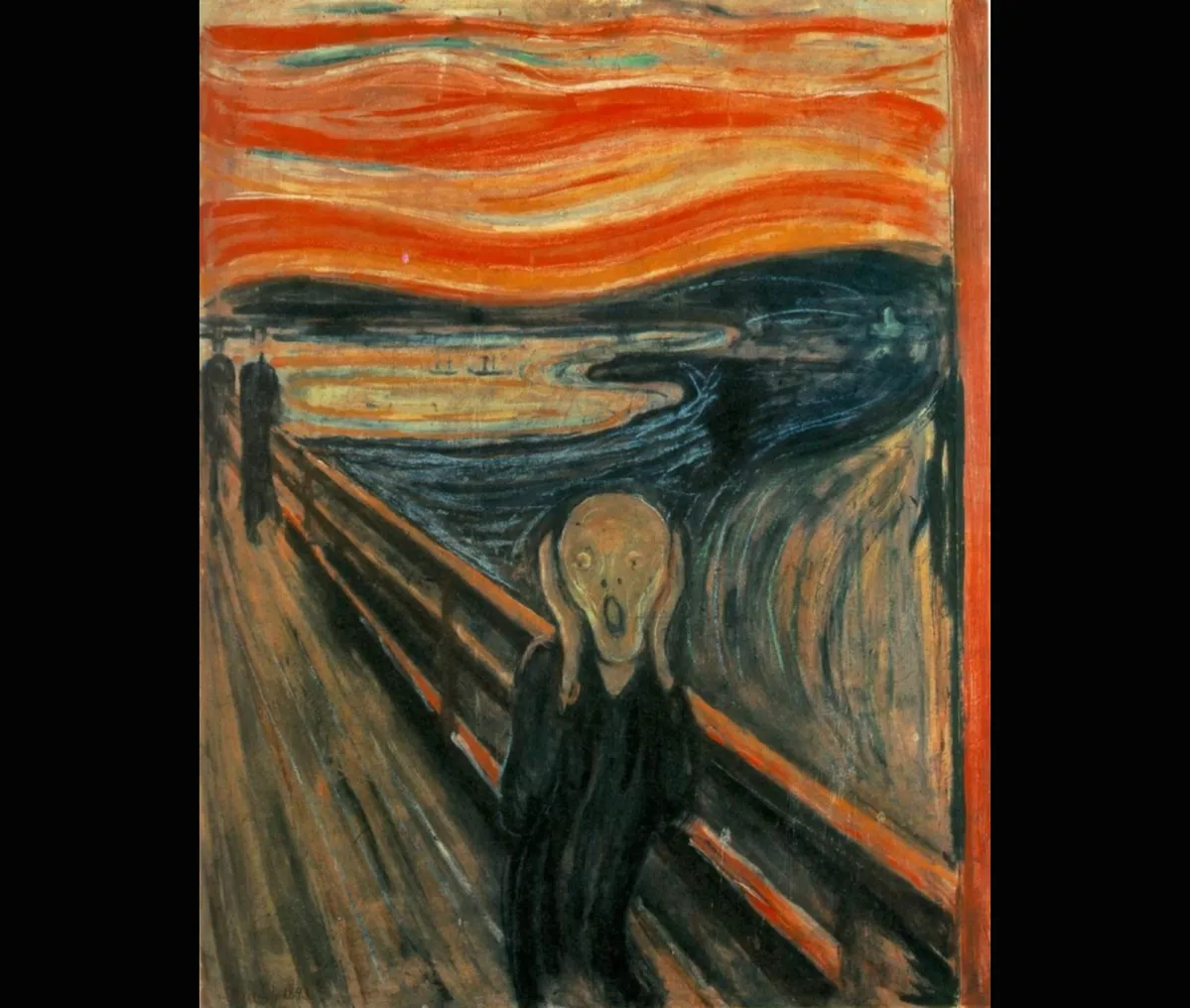
“The Scream” Edvard Munch; Symbolism; 1893; tempera + pastel on cardboard
Focused more on what is felt rather than seen. Emphasis on emotion (sadness, scared) - not about realism, but intense feeling
Elongated face - drawn out scream to make the fear bigger
Swirling brush strokes, showing anxiety and fear
Extreme loneliness - 2 other people in the back walking away
Synesthesia - SEEING sound - seeing the scream
concept where stimulation of one sensory pathway leads to an involuntary response of another sensory pathway
Influence from Gauguin - primitive figure, departure from reality
1883 Krakatoa Volcanic Eruption - fear
Oslofjord - where sister was in a mental asylum
Several version exist until he created this final one
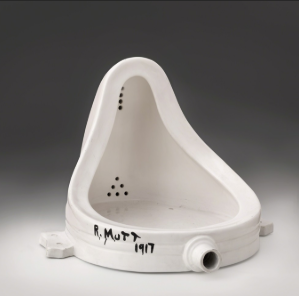
“The Fountain” Marcel Duchamp; Dada; 1917; FOUND OBJECT - urinal + paint
Disillusioned (disappointed/unhappy) with society post-war (WWI)
More about the concept and the meaning rather than the final product/art piece
Signed the name “Armut” - German for “poverty” - play on words
Mutt = cartoon
Mott = toilet company
“Readymade” ordinary object designated as art by an artist
Flips the urinal, paints a fake name (Armut), artistic setting, ironic title
CONTEXT
Marcel is apart of the Society of Independent Artists who overthrows the Paris Salon
Photographed by Stielgitz (made “The Steerage”)
EXPRESSIONISM
Thrived in Germany in the 1910s-20s
Unsettled by rapid urbanization and horrors of WWI
Influences - Munch (made The Scream), Van Gogh (Starry Night), Gauguin (Where do we come from?…)
More about the emotional experience rather than reality
Bold colors + exaggerated forms to symbolize inner turmoil
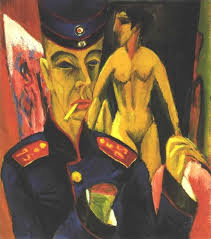
“Self Portrait as a Soldier” Ernst Kirchner; 1915; oil on canvas; expressionism
CONTEXT
Leader of Die Brucke; believed they were “the Bridge” between traditional and modern art
WWI → he was an unwilling volunteer into Germany army - dishonorably discharged for a mental break because of all of the inhumanity he witnessed
does not agree with Germany invading countries, questions his identity
Influenced by Nietzsche - death of God (like Romanticism where artists questioned God’s existence)
Work declared degenerate by Nazis and taken out of museums → K commits suicide in Switzerland
VISUAL
Nude female symbolizing his traditional training (he is the bridge)
Missing hand symbolizes his personal feeling that he can no longer make art, thus making himself feel useless because he could neither support a country in war nor make art
Clothing = army outfit but is weird because he is NOT SEEN IN COMBAT
he questions what he is doing because he is not helping a country in the war
JAGGED line → symbolize his emotional turmoil
turn quickly
“Primitive” style (Non-Euro), considered more honest and direct
Unsettling colors - sallow (sickly) yellow skin (also seen in Gauguins, but less intense) and garish red
FUNCTION
Work through personal feelings surrounding recovery after military service
Explore personal fears
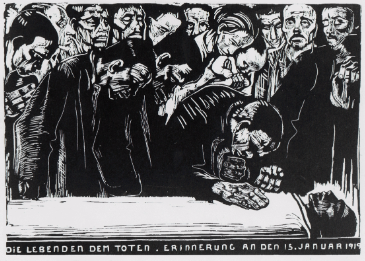
“Memorial Sheet for Karl Liebknecht” Kathe Kollwitz; 1920; Woodcut; Expressionism
CONTEXT
Kollwitz’s son (NOT PICTURED) died in German service of WWI - Kollwitz thinks its Germany’s fault
Liebknecht (an activist) - Shot to death in Communist uprising against Socialist German government (the hero died) → see a range of emotion (like Lamentation)
Nazis will also declare her work degenerate
VISUAL
Black and white - stark, emotional drama, mourful
Similar to Lamentation by Bondone (range of emotions as people mourns a dead person)
Jagged line thanks to woodcut technique, also allows for huge swaths (areas) of black
Cycle of poverty shown in the contrast between the youth and the age (Like Stone Breakers which was inspired by Karl Marx)
baby shown very white, representing innocence and purity
FUNCTION
Show the hardships suffered by working class - their hero is gone (Karl Marx - Stone Breakers)
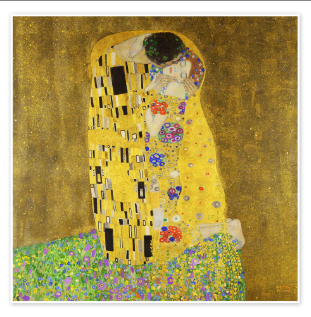
“The Kiss” Gustav Klimt; 1908; Art Nouveau; Oil and gold leaf on panel
Depicts Klimt and his long-term partner → represents the transcendence (thru the gold) of love
Gender shown contrasting through the rectilinear vs the curvilinear, and the color and the no color (like Oath of Horatii, Staff God)
Love is sacred
Inspired by visits to Ravenna Italy (Inspired by the Byzantine mosaics like Justinian I in San Vitale where they had a gold background to represent timelessness and divinity)
ABSTRACT EXPRESSIONISM
In the 1950s POST WW2 NYC
Large scale, non objective paintings (abstact)
All over composition - no central subject
Color and PROCESS (how its made) VERY important
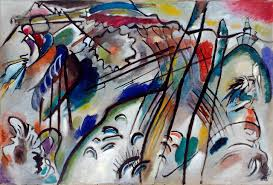
“Improvisation 28” Wassily Kandinsky; Abstract Expressionism; 1912; Oil on Canvas
Abstract and Nonrepresentational
communicates only through line and color; the lines look rough and fast
Composed like music, specifically improvisation as reflected in the title
Synesthesia - can SEE the music
Spiritual nature of art
Change in scientific theories of space and time by Einsten, Rutherford, and Planck (atoms - cant see)
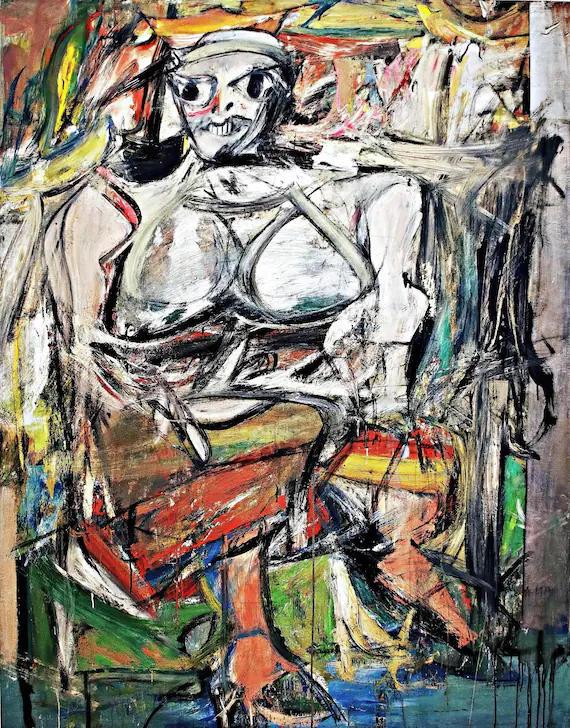
“Woman I” Willem de Kooning; Abstract Expressionism; OIl on Canvas; 1950
Action painting - painted fast and furiously (led to some holes); created several layers of paint and several gashes
did not paint with any preceding ideas, just let the idea form itself
Painting creates itself
SATIRE of a magazine portrayal of female (The Camel cigarette and ad-like smile; in magazines, sexualized females are shown in order to appeal to viewers, even if the product is unhealthy like the cigarettes → creates an unidealized female)
Challenges THE MALE GAZE
Jagged lines
Looks awkward and insecure
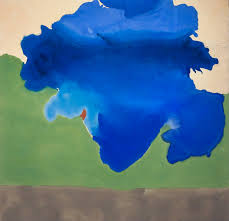
“The Bay” Helen Frankenthaler; 1963; acrylic on canvas
Color field painting, soak-stain (enjoyed hte process more → soak-stain technique where the paint would be dropped onto the canvas and form itself)
PROCESS over the product
Painting builds itself
Blurred edges, organic lines (natural), lack of space and depth
References nature = blue (water), green
Geographical names - similar to the natural formation of the painting itself
“Not nature, but a feeling per se” - What Helen said abt her painitng
SURREALISM
1920s-40s
Based on the psychological studies of Freud and Jung - focused on the unseen world, subconscious mind
Juxtaposition
Not necessarily meant to be understood - like
Andre Breton - Surrealist Manifesto - pure psychic automatism - let the subconscious mind make art
mixing of real and unreal
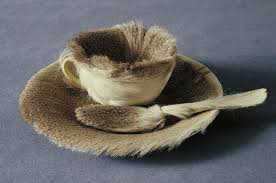
“Object” Meret Oppenheim; 1963; fur-covered cup
Juxtaposition - opposite elements placed together
Assemblage - collection of gather of real things (2+ objects) - LIKE “readymade” art used by Duchamp in “The Fountain”, but it was only ONE object, not 2+, so Duchamp’s is not assemblage
Anthropomorphic because it combines an animal feature, the fur, with a human-made objects (the tea cup)
References feminine domesticity - tea set (typically, only the females would engage in tea gatherings with each other while their husbands were away)
Eroticism - soft fur over curved form; meant to be erotic
references Freuds studies about subconscious sexualization
CUBISM - PICASSO
Spanish artist
Co-founded Cubism (with his friend George Braque) - analysis of shape and form
Influenced by Cezanne (geometry) and African masks (geometric)
Breaks art down into geometric shapes
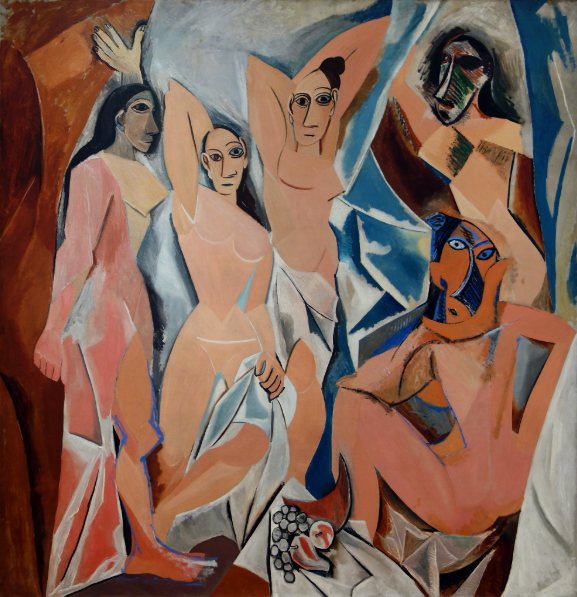
“Les Demoiselles D’Avignon” Pablo Picasso; Cubism; Oil on Canvas; 1906
Influenced
Differing points of view, multiple perspectives (like in Las Meninas)
Geometric stylized faces from African and Oceanic masks
African masks (worn by the woman on the right side) included to reference the belief that the masks protect from bad spirits → the bad spirits were STDS because the women depicted were prostitutes
Picasso - Spanish immigrant to Paris
woman = prostitute (likely posed for him but no empirical science and naturalism)
Called by Les Demoiselles (instead of The Prostitutes) by exhibitor for the nicer society, such as the Paris Salons
6 months studio preparation
Personal reflection on lust and anxiety from the fear of the STDs from the prostitutes
angular shape and form to emphasize his fear to touch them, and masks to protect from the “bad spirits” (STDs)
Original contained a male med student but he painted over it with a fifth female to eliminate the male gaze/sexualization
Jagged line in the blue separating the European women (no masks) and the masked (African influence) women
like the separation in The Steerage
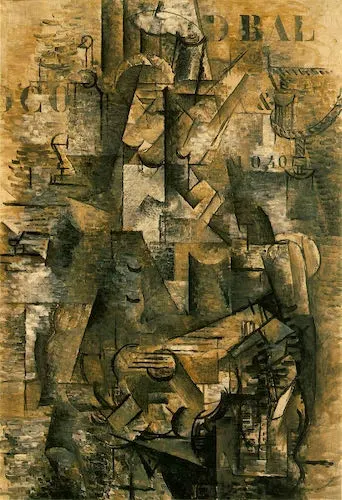
“The Portuguese” George Braque; 1911; Oil and Canvas
Analytical cubism - more about abstraction
breaking down into smaller forms
Monochrome, neutral colors to blend the foreground (front) and the background together
creates a sense of confusion of what the viewer is seeing
Exploration of shapes
supposed to be a portrait of a Portuguese musician
elements of music = guitar (broken down into shapes)
Letters = might be a Playbill, a reference to Portuguese musician
Letters look stenciled
Playbill = list of names of what the musician will play, and they were often produced using stencil
Foreground and background interact as ONE
Super influenced by Cezanne and his focus on geometry
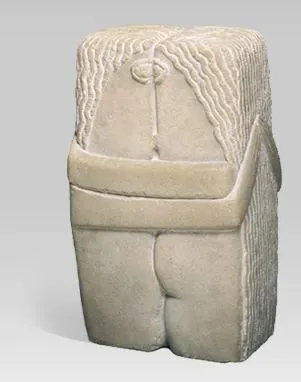
“The Kiss” Cubism; Constantine Brancusi; 1908; limestone
ALMOST symbolism - Much feeling scared and lonely
Brancusi is also lonely due to unrequited love
Interlocked shapes to create the sense of ONE entity
Two eyes to represent how to halves make a whole
Smooth skin contrast with rough hair
like Lamassu through this contrast of texture
Worked in Rodin’s studio
during this time, he also made a version, but more NATURALISTIC, but this is not, this is more about the FEELING of love
3rd version used as a tombstone for his love interest who committed suicide; shows him and her together in after life (even though he’s the only one who has feelings)
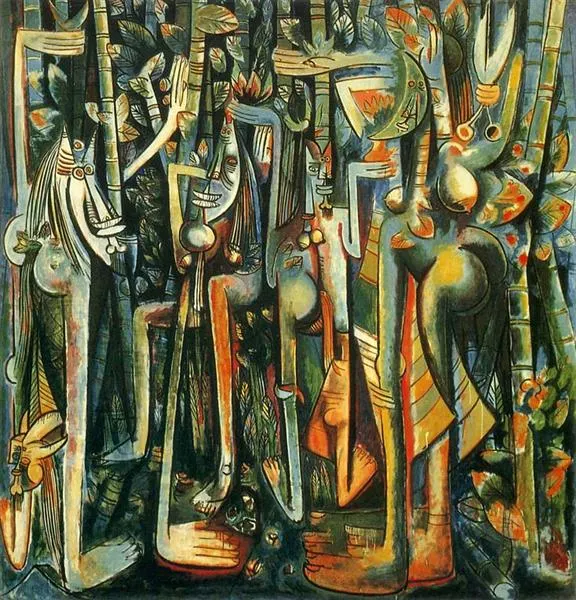
“The Jungle” Wifredo Lam; Gouache on Paper on Canvas; 1942
Cuban artist highlighting Afro-Caribbean culture
Slaves importem to farm sugar can → slaves were viewed as a commodity and a means to an end (harvesting of sugarcane crops)
Humans morphing into sugarcane to highlight slaves being seen as a commodity by becoming it
Surrealism influence (juxtaposition of human and sugarcane)
Cubism - geometric (Cezanne, Picasso)
Immersive -8’ x 8’, overwhelming, can’t see everything as a whole
Vibrant color
and natural, but not quite → unsettling
Set in a jungle, but sugarcane does not grow in the jungle (juxtaposition)
Santeria practiced their original African religion in secret because they are slaves and were at a place where their religion was not approved
night also when spirits are active
Sharp contrast to tourist posters that served as propaganda to draw Americans to visit beach resorts
more juxtaposition
this beach and jungle that is not beautiful vs the “beautiful” untruthful portrayal of Cuba to America
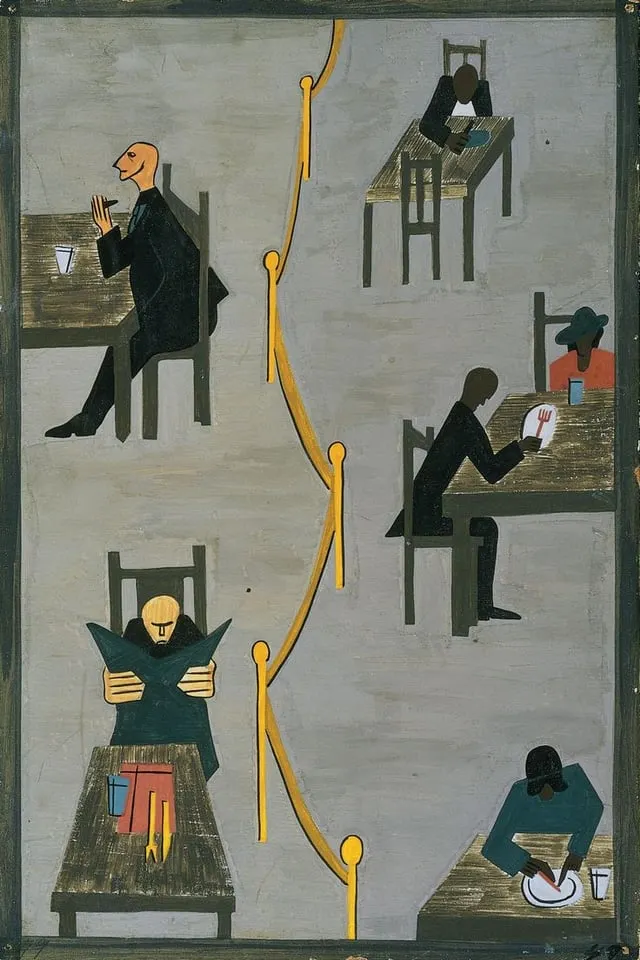
“Migration of the Negro: Panel 49” Jacob Lawrence; 1940; Cubism
Flat portrayal of a restaurant - only includes the most essential imagery - it is angular, simplified, and flattened
Series of 60 - Great Migration 1910 (slaves move to North)
African Americans - many moved North in hopes of less racism, but it wasn’t much better b/c they still experienced racism, not accepted, still viewed as subpar
Migrated w/ optimism but found more racism and segregation
Directionality of white faces = away, showing their ignorance and non-acknowledgement of the situation
Jagged line separating (like Les Demoiselles); White vs. Black
Emotional response to historic events - such as summer race riots in 1919
black teen was in beach waters, where even then black and whites were segregated, but ocean current moved him to the white side → beat to deaths by whites, sparking race riots in Chicago
these riots create “Red Summer” in 1919 - the White vs Black Americans - Whites = mainly Irish because they are upset that African Americans were coming to “take” their jobs → creating competition (Irish came to America for jobs)