Art in Early Civilization and Beyond
 Call Kai
 Learn
Learn Practice Test
 Spaced Repetition
 Match
Match Flashcards
 Knowt Play
1/18

Earn XP
Description and Tags
These flashcards cover key terms and definitions related to art in early civilization and various art movements throughout history, aiding in study and comprehension.
Name | Mastery | Learn | Test | Matching | Spaced | Call with Kai |
|---|
No analytics yet
Send a link to your students to track their progress
19 Terms
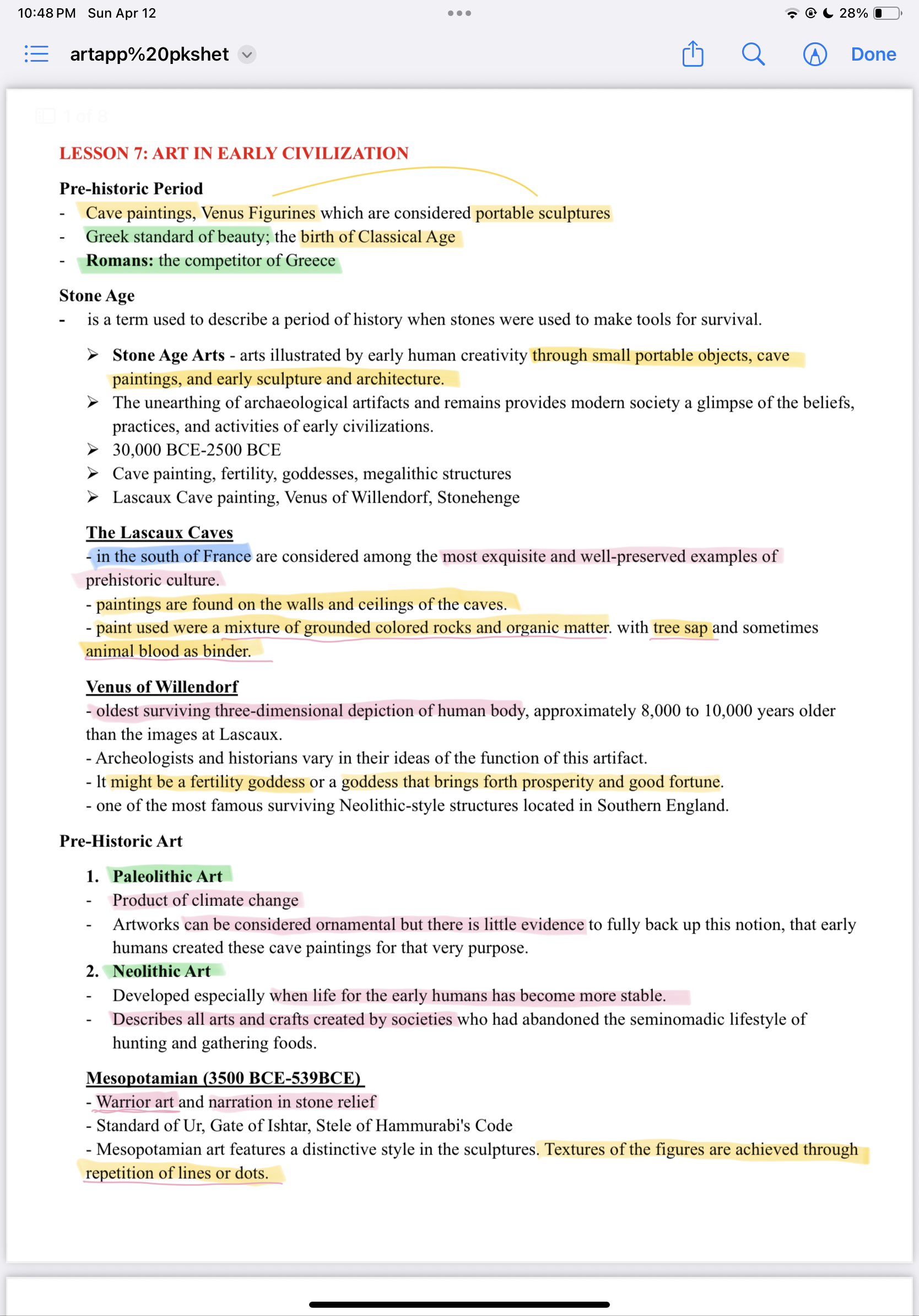
Stone Age
A term used to describe a period of history when stones were used to make tools for survival.
Paleolithic Art
Art produced during the Paleolithic era, which includes cave paintings and portable sculptures.
Venus Figurines
Portable sculptures from the prehistoric period often associated with fertility goddesses.
Lascaux Caves
Famous caves in France that contain some of the most exquisite and well-preserved prehistoric paintings.
Neolithic Art
Describes all arts and crafts created by societies that had settled down and abandoned a semi-nomadic lifestyle.
Standard of Ur
An artifact from ancient Mesopotamia that exemplifies the region's narrative stone relief art.
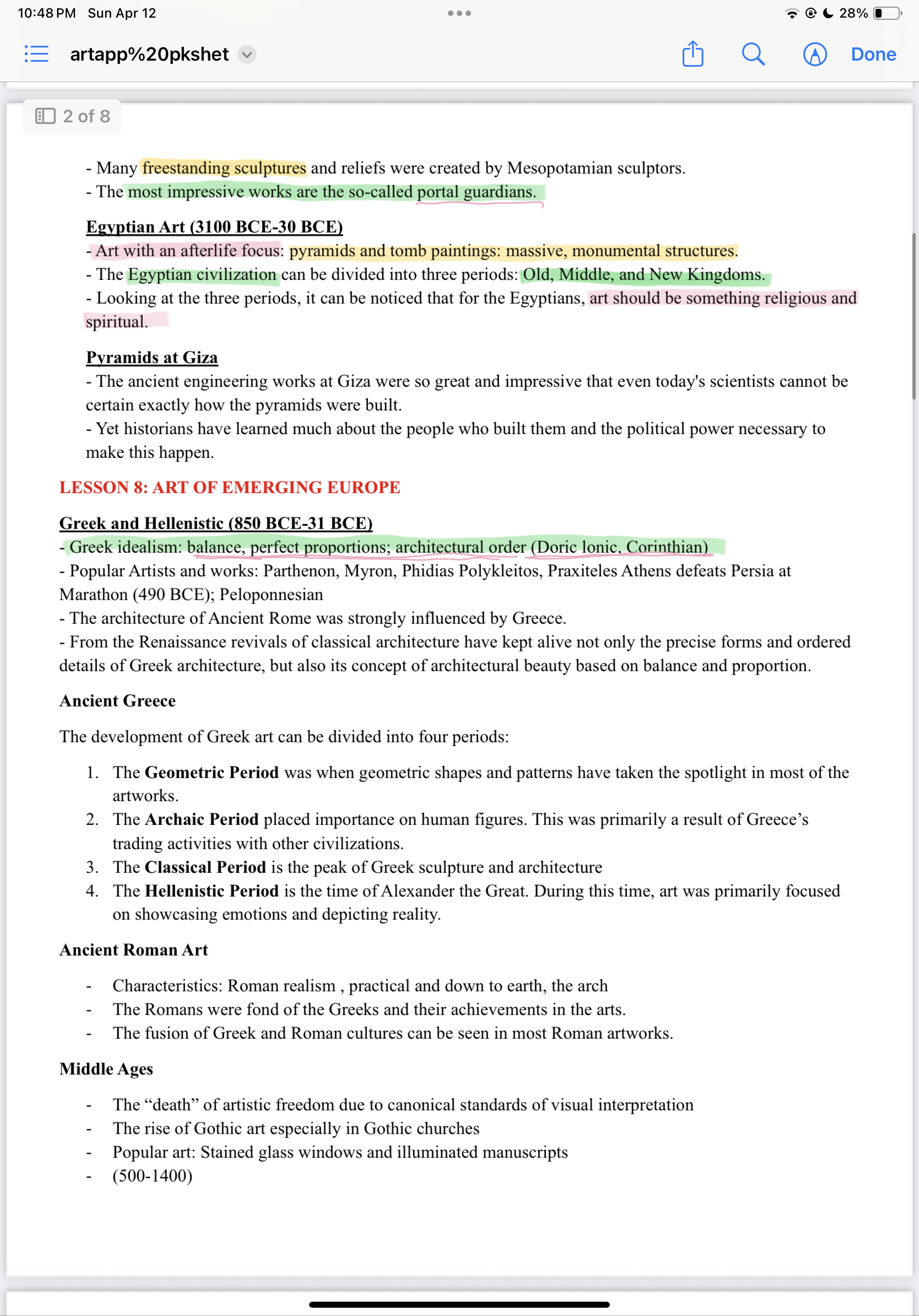
Egyptian Art
Art focused on religious and spiritual themes, characterized by monumental structures like pyramids.
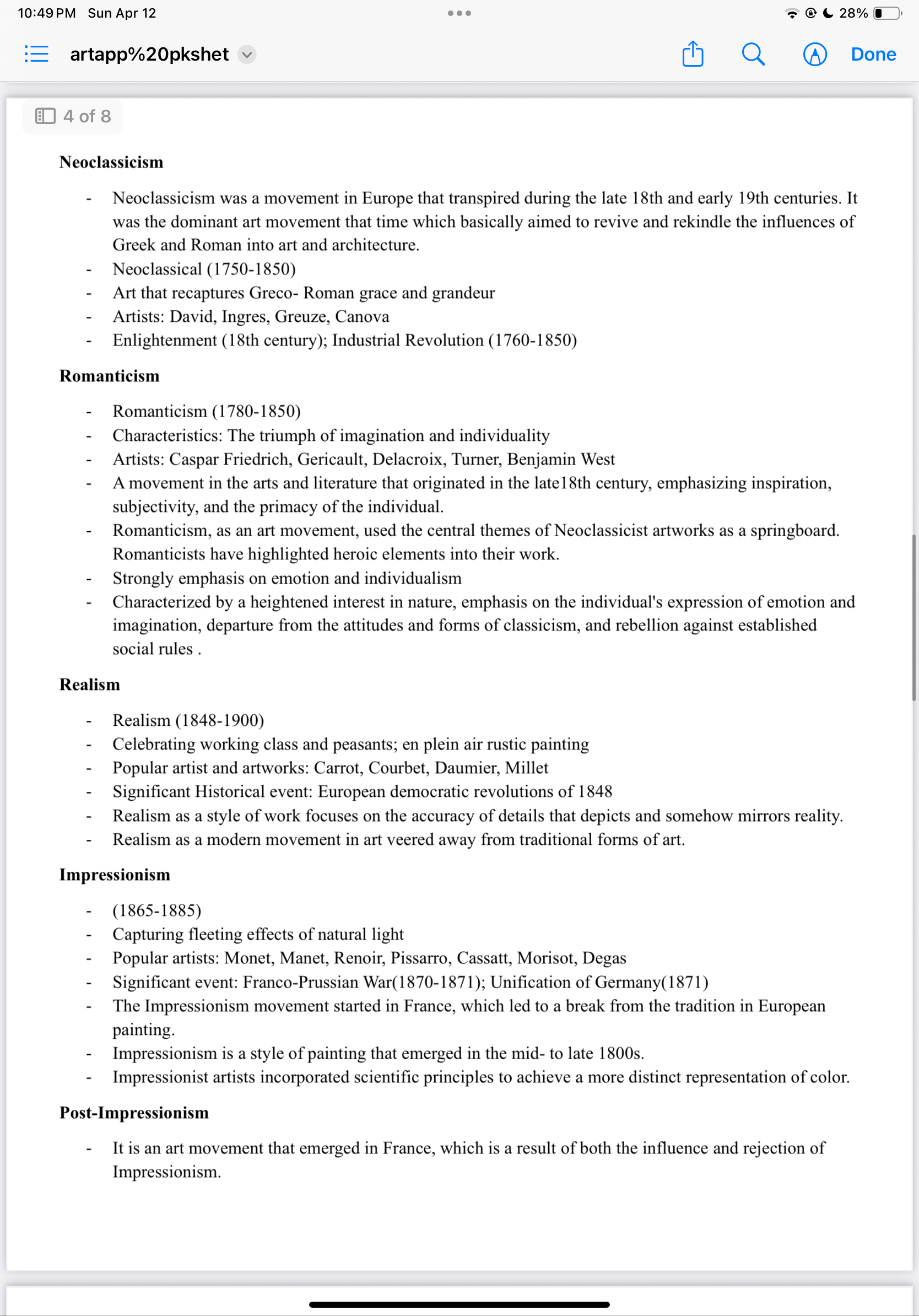
Neoclassicism
An art movement that aimed to revive and rekindle the influences of Greek and Roman art.
Romanticism
An art movement emphasizing imagination and individuality, often showcasing emotion and nature.
Realism
An art movement focused on depicting everyday life and the lives of the working class.
Impressionism
A style of painting that captures fleeting effects of natural light, characterized by visible brush strokes.
Cubism
An art movement that emphasizes fragmented subject matter viewed from multiple angles.
Surrealism
An artistic movement that explores irrational and subconscious notions through fantastic imagery.
Conceptualism
An art movement where the ideas behind the artwork take precedence over traditional aesthetic concerns.
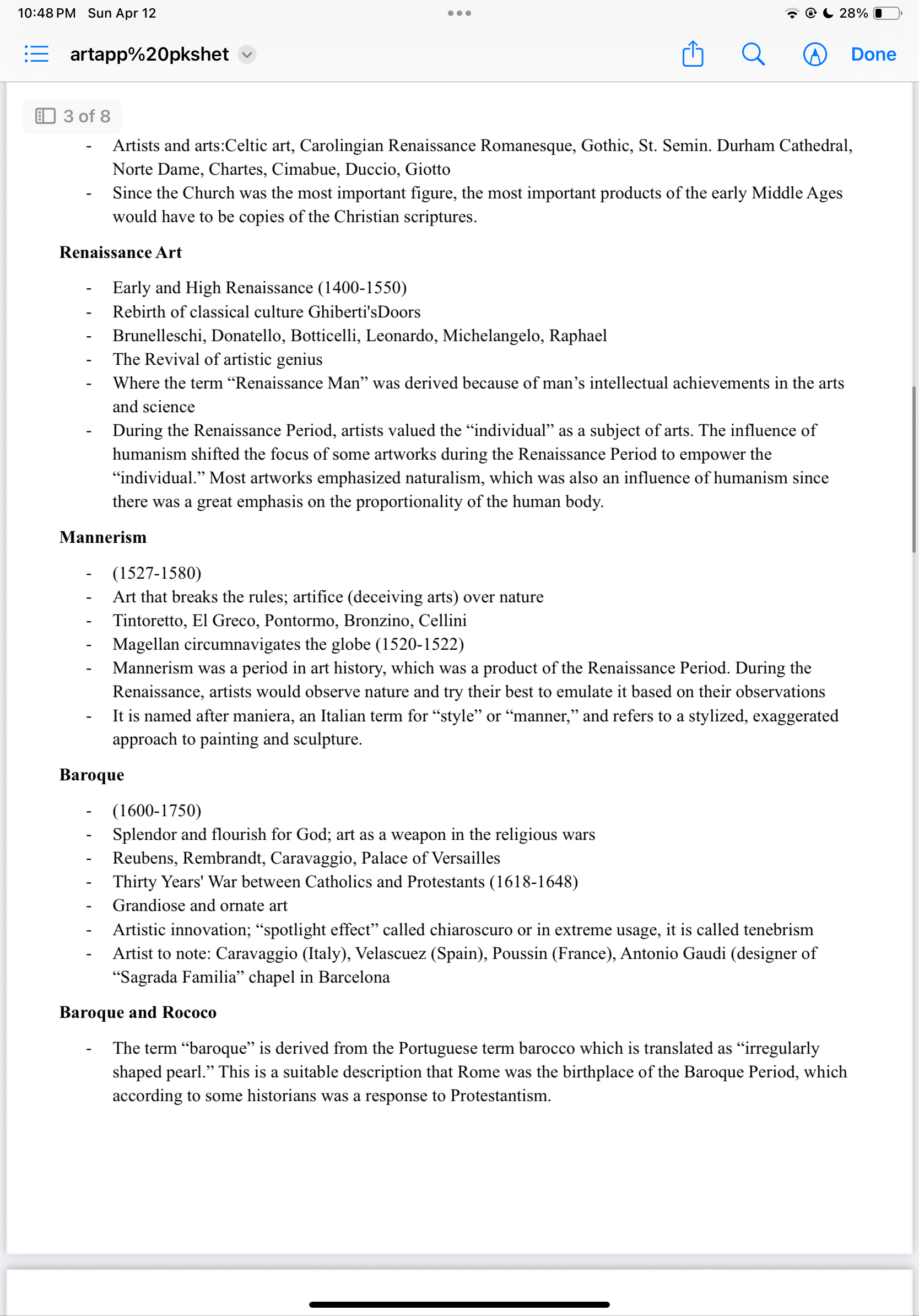
Baroque Art
An artistic style characterized by grandiose, ornate works often emulating religious fervor.