myth: classical/hell sculpture
 Call Kai
 Learn
Learn Practice Test
 Spaced Repetition
 Match
Match Flashcards
 Knowt Play
1/6

There's no tags or description
Looks like no tags are added yet.
Name | Mastery | Learn | Test | Matching | Spaced | Call with Kai |
|---|
No analytics yet
Send a link to your students to track their progress
7 Terms
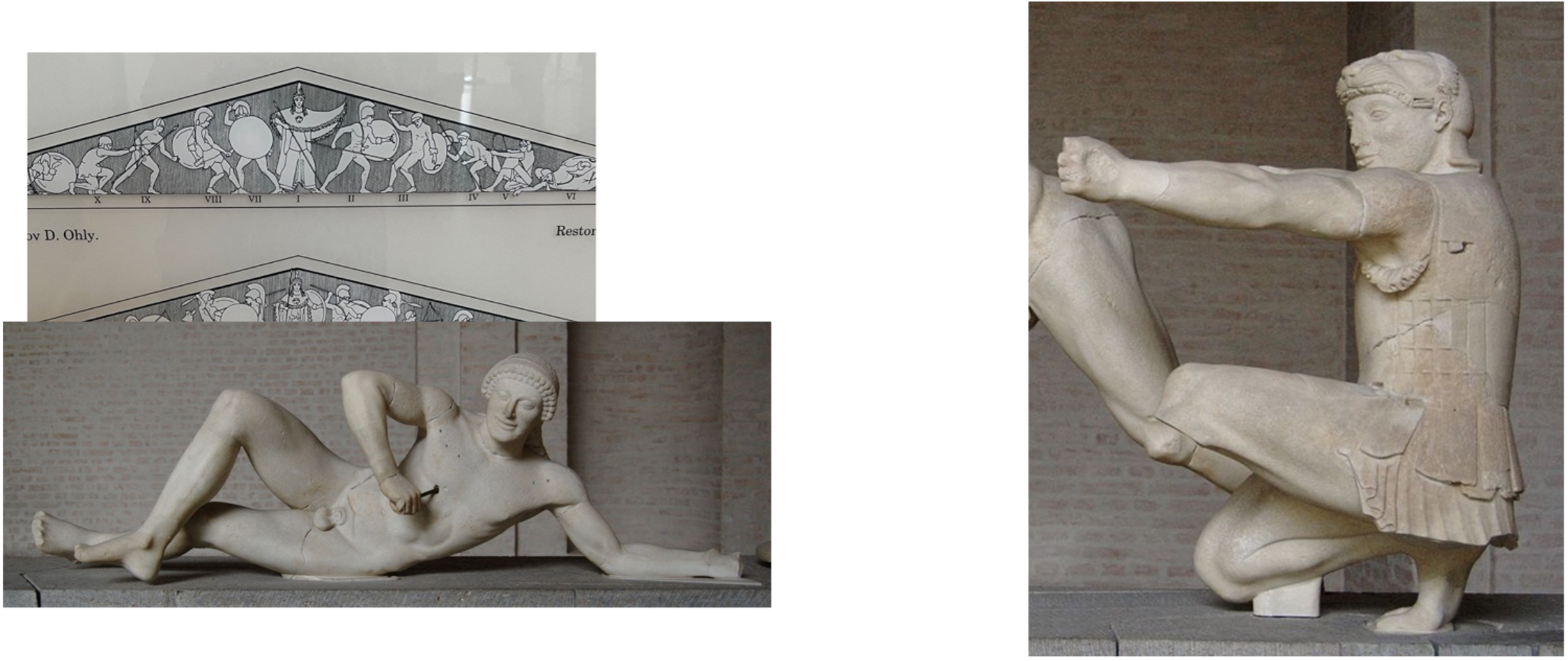
Temple of Aphaia at Aegina, 500-480 BCE
Cult activity from bronze age, earlier temple destroyed from fire c 500BC then this new one.
Two sets of sculptures on pediments (original was amazonachy and myth of Aphaia) but new ones are Athena and Trojan War.
Stylistic differences.
Heroic combat - on both sides of a central Athena.
West Pediment: Trojan War probs with Achilles and Ajax fighting Paris and Hector. Wounded warrior – stiffer body, frontal face, hairstyle.
East Pediment: Heracles and Telemon attack Troy – linked to local mythology as Telemon son of king Aikos (of Aegina). Reflects genealogy island. Severe style warrior i.e more muscle definition and weight in body balance. Lion skin head on Herakles archer and more naturalistic.
Ongoing conflict Aegina and Athens even though both took part in Salamis – distinguish themselves as separate.
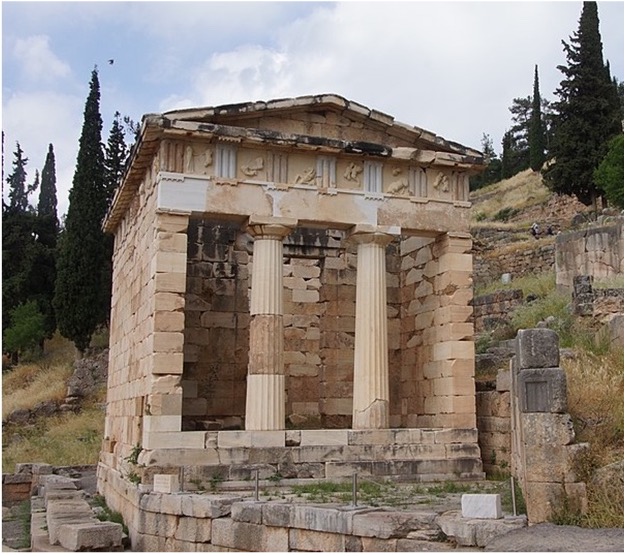
Athenian Treasury, Delphi, 490-480 BCE.
After battle of Marathon to display spoils. But could have been earlier so instead a memorial monument.
North Metopes: Ceryneian hind and Herakles and Cycnos (son of Ares) - different Herakles narrative told by Hesiod in poem Shield of Herakles and other lit sources.
South Metopes: Theseus and Skiron, Minotaur and Amazon Antiope. Faced Sacred Way where dedications and spoils of Marathon would have been.
East Metopes: Amazonachy – leggings, women as defeated. Represents Persians as Eastern invaders as Persians are being defeated
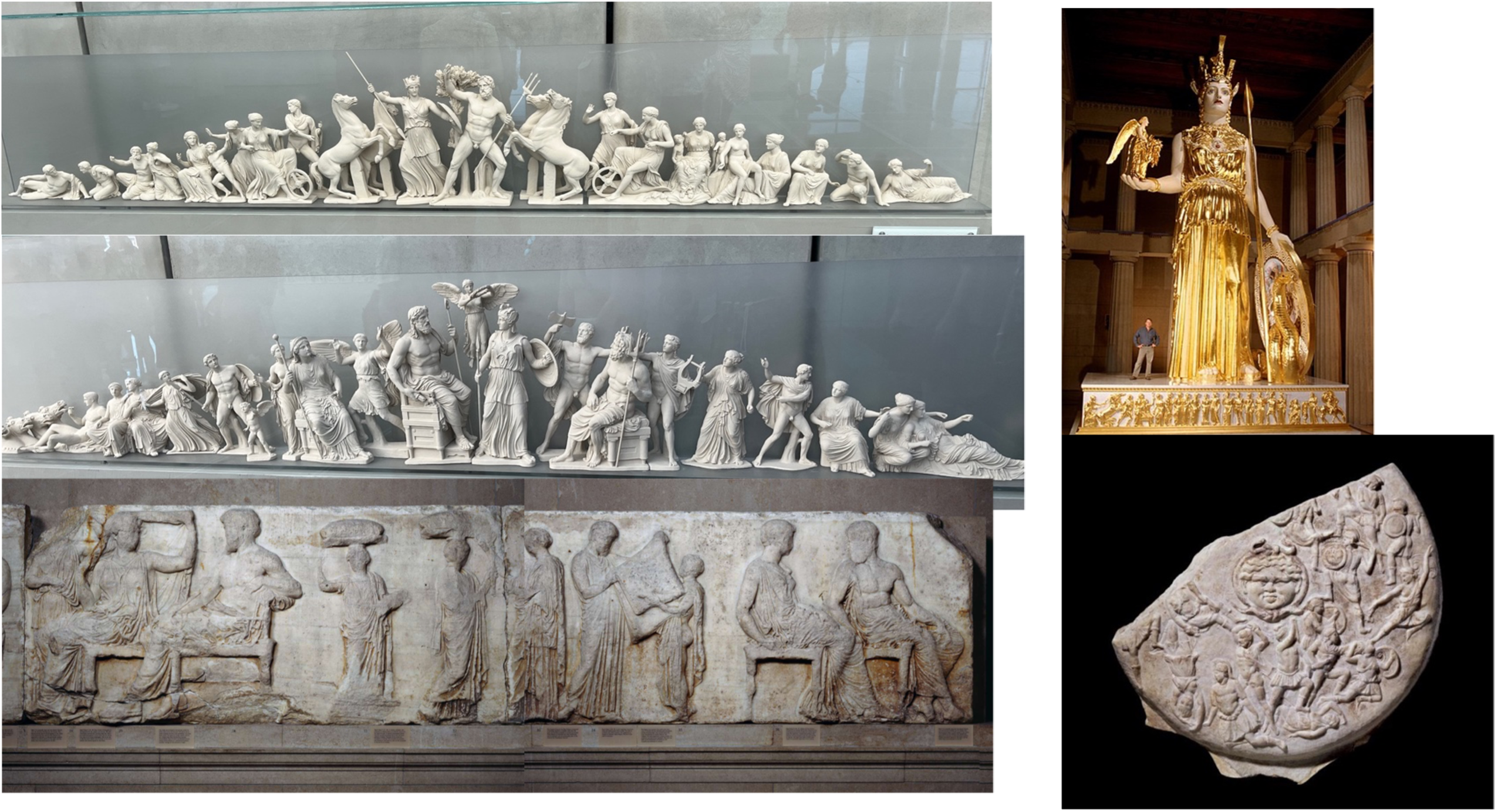
The Parthenon, Athens 447-432BC
Pausanias on pedimental sculptures and drawings from French author to help reconstruct.
West Pediment: contest Athena and Poseidon. River god Ilissus (localisation). Kekrops and Pandrosos (mythical king and judge contest).
Amazonomachy below on metopes: alternating scenes of mounted then two unmounted. Greek men heroically naked and women clothing in disarray. Eg. Antiope. Represent amazon invasion of Attica.
East Pediment: Birth of Athena. Seated Zeus in centre and Athena full grown next to. Conflation of time. Many gods witnessing eg. Dione and Aphrodite looking away, visual engagement.
Gigantomachy below on metopes eg. Hermes, Dionysus, and Aphrodite fighting.
North metopes: Fall of Troy, absence of battle scenes. Scenes that happen at night in Troy eg. Helen seeking refuge by cult statue of Athena and next to Aphrodite.
South metopes: Centauromachy. Some without any centaurs so thought may show marriage. Lapiths all look similar facially vs individualised centaurs.
Frieze: thought to show Panathenaic Procession. Story of community, reality, idealised images of young men. Leads to culmination of gods and handing of peplos.
Cult statue of Athena Parthenos: sculpted by Pheidias, 12, high in 438 BC. Wearing elaborate helmet with griffins and pegasoi. Holding golden statue of Nike and shield with snake and story of Pandora on other side (reflection of Helen). Embossed with Amazonomachy, gigantomachy and centauromachy on sandals (Pliny).
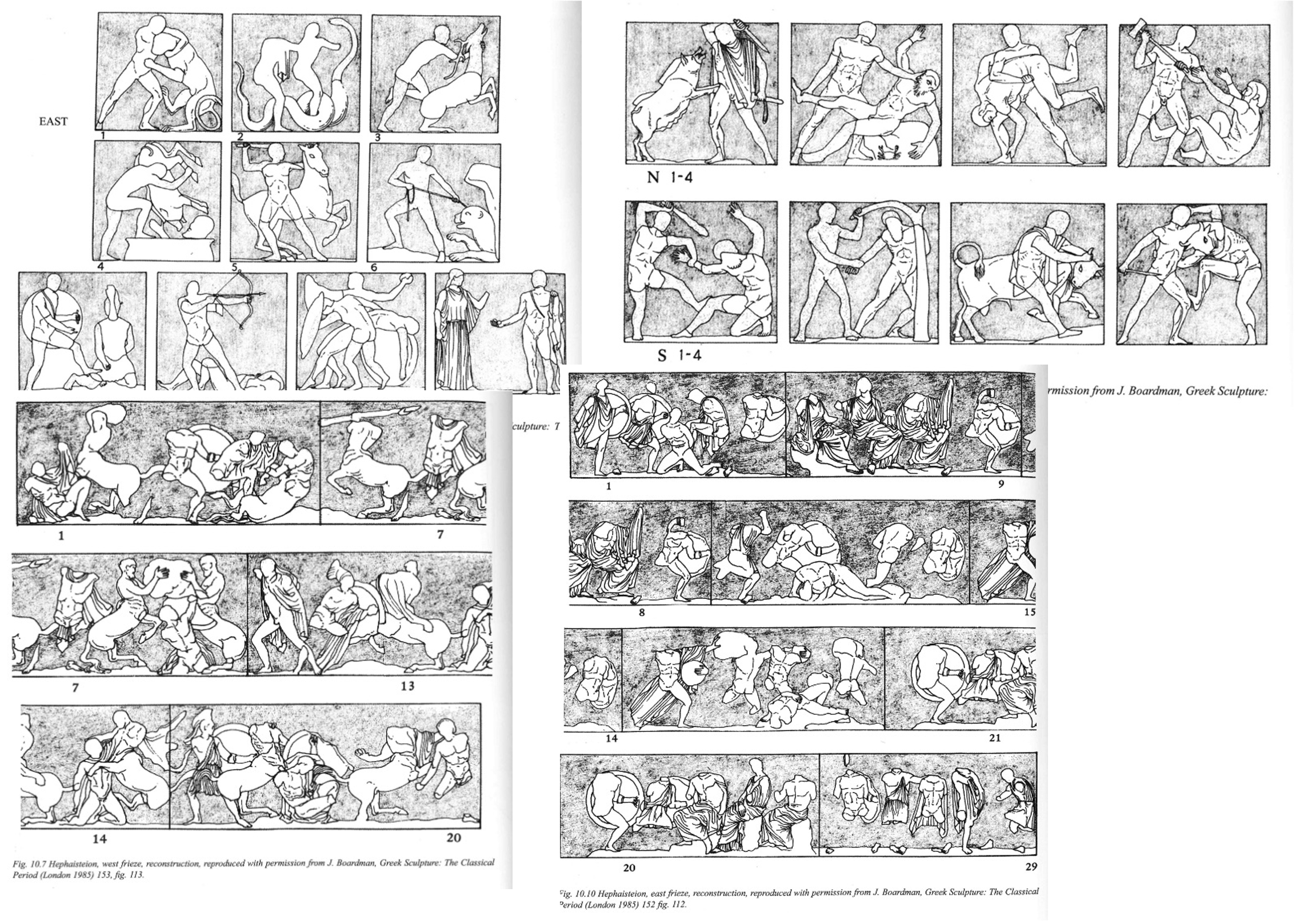
Hephaisteion, Athens 460-410 BC.
Temple to Hephaestus, evidence of bronze working to southwest. Overlooked central civic space and series of benches for spectators below temple to see this space.
East metopes: oldest elements, ten with the labours of Herakles.
North metopes: four with labours of Theseus
South metopes: four with labours of Theseus.
West frieze: centauromachy. Centaurs using large boulders (typical of giants).
East frieze: unidentified battle scene.
Cult statues of both Hephaestus and Athena, potentially also featuring as pediments.
Potential echoes of tyrannicides- Theseus in centre of both friezes showing poses of Harmodios and Aristogeiton (martyrs of Athens). Blending of myth and history.
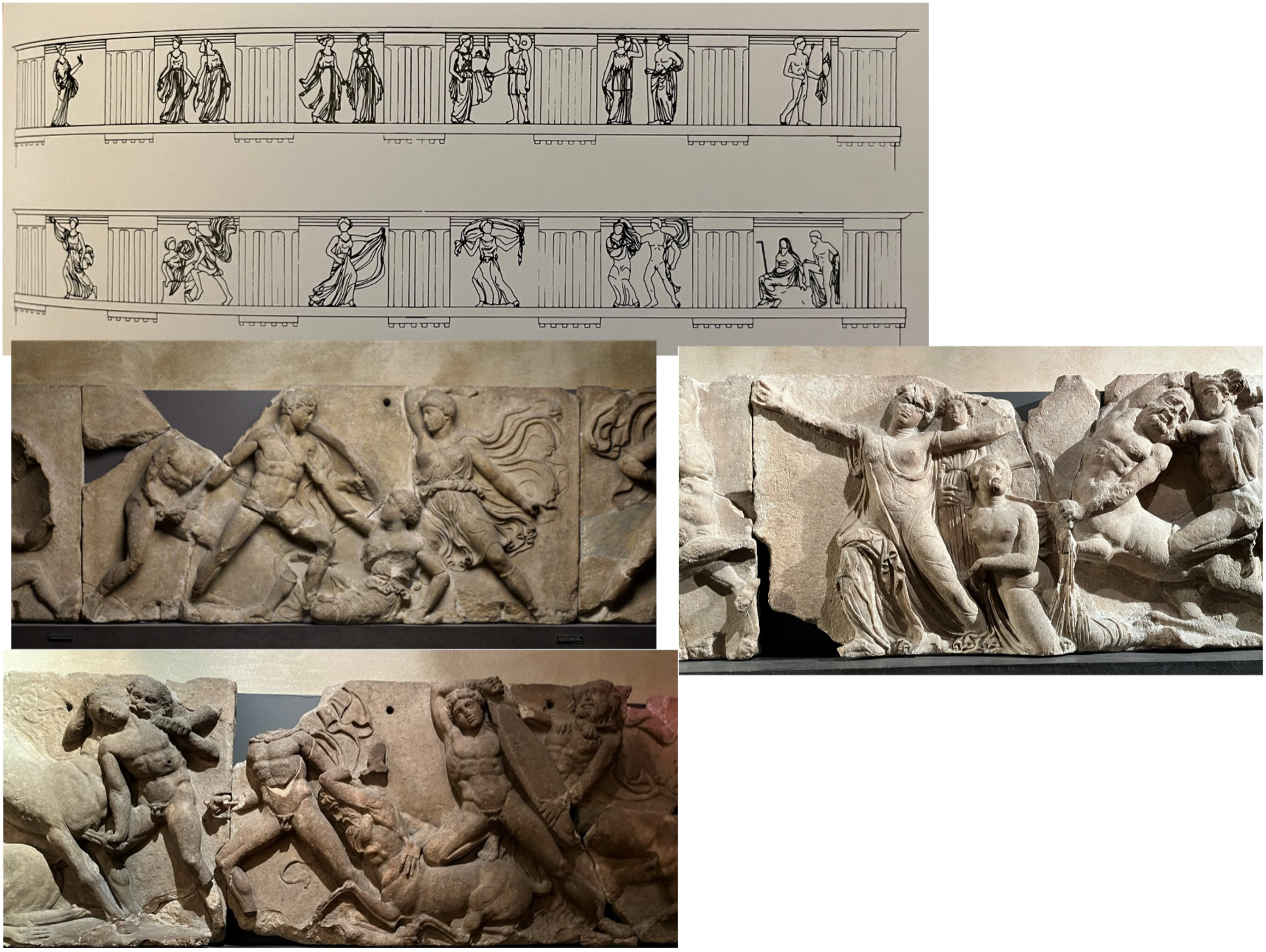
Temple of Apollo at Bassae 429-400 BC
In south Peloponnese, on site of old sanctuary by same architect of Parthenon (Pausanias)
Apollo Epikourios ‘the helper’ for the plague and battle victory.
Doric on outside but had long ionic colonnade on interior. Difference in column number.
South porch metopes: abduction of two daughters of Mycenean king by Castor and Pollox (neighbours of Phigelians who rebelled against Spartans, so may have been participants in cult here). Could allude to Spartan violence against Phigelians
North porch metopes: return from land of Hyperbians. Music and revelry. Nymphs? Relation to local Arcadian environment.
West and North frieze: Centauromachy, continuous scene but not narrative.
East and South frieze: Amazonomachy
Apollo and Artemis, north-west corner: an addition to the building at a later point shown in the cuts.
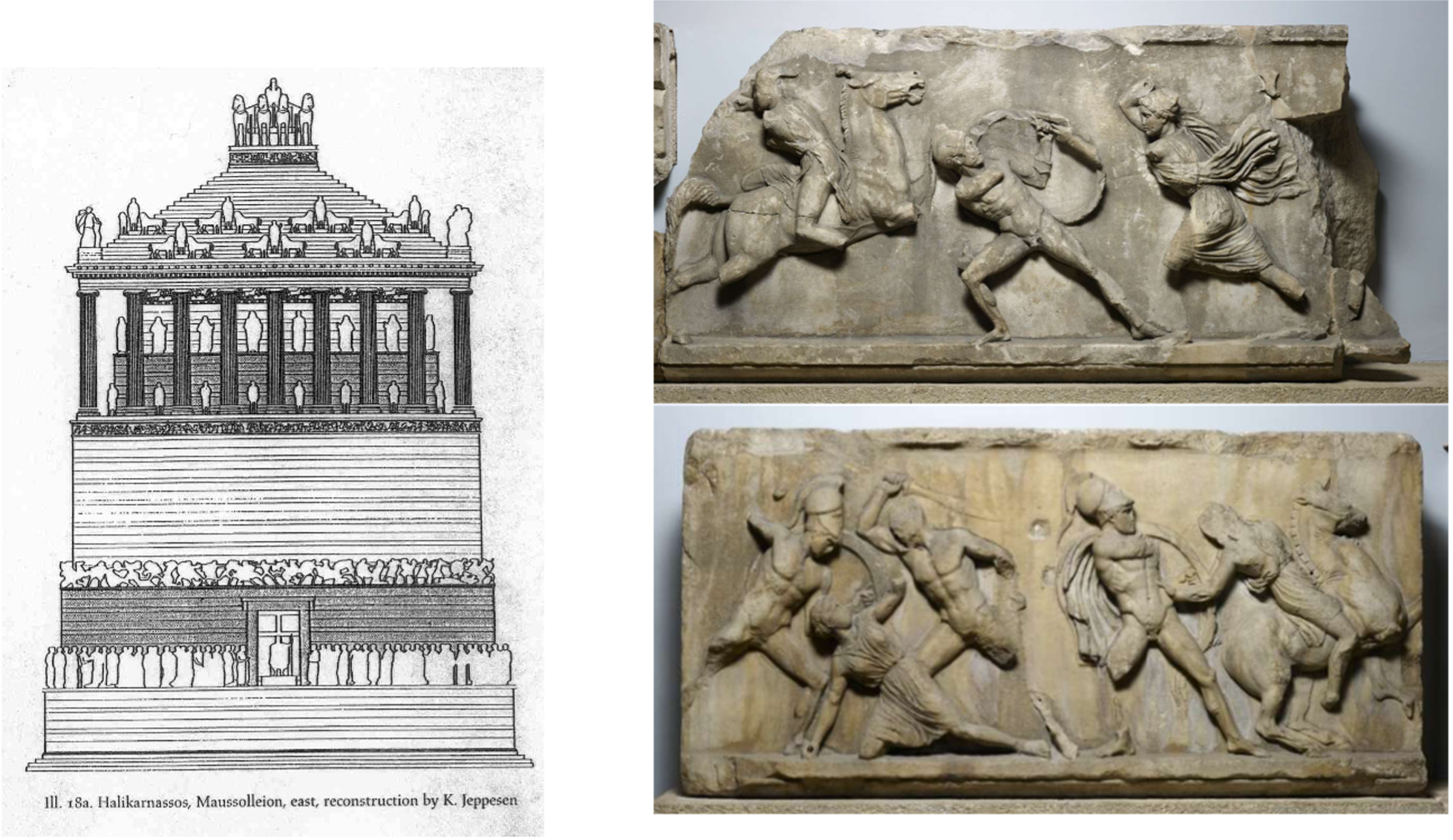
Mausoleum of Halicarnassus 350 BC
Capital of Karia, Mausolus moved it there and extended rule and territory into Lydia.
In city centre, through monumental gateway.
Reconstructions are problematic as such fragmentary evidence eg. where free standing statues were placed.
Continuous frieze across top of podium with: Amazonomachy eg. Hippolyta and Herakles, riding skills, Attic helmets from portraits, variety in style, used in funerary context of a Hellenized ruler shows Greek superiority to align himself.
Centauromachy and procession scene.
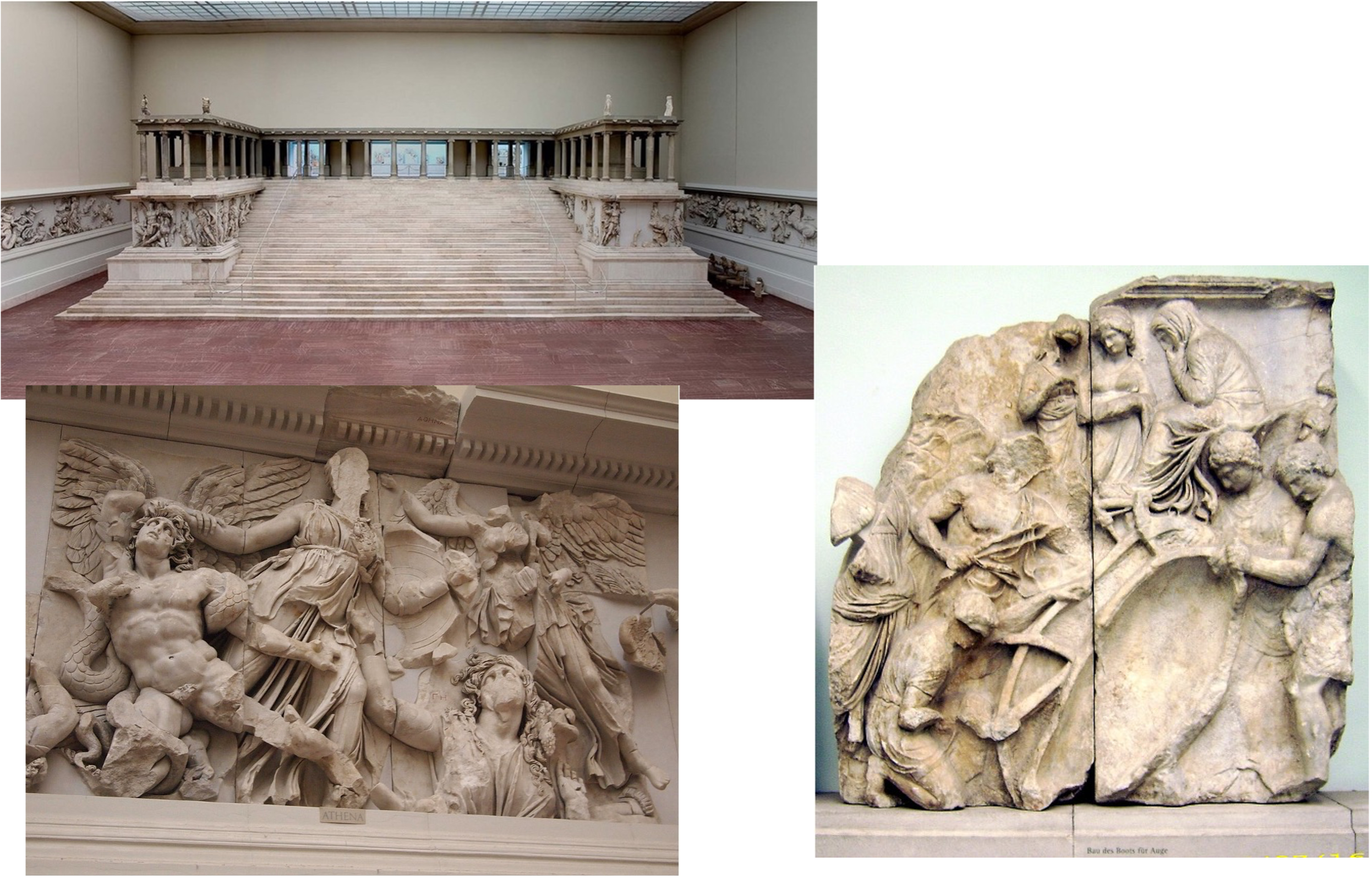
Great Altar of Zeus from Pergamon 180- 160 BC
Built by Eumenes II of Attalid dynasty.
Gigantomachy frieze: originally c. 100 figures, inscriptions of some, debate regarding underlying program. i.e based on Hesiod Theogony vs cosmological allegory.
East frieze: Zeus and Athena. Baroque style. Extravagant. Highly muscled. Hair characteristic of giants. Echoing of Poseidon and Athena on Parthenon. Aligns with Attalid attempt assign themselves as inheritors of Athenian power.
The Telephos frieze: on interior walls, life of Telephos as founder of Pergamon. Continuous narration i.e repeating characters. Similar to Hellenistic Megarian bowls showing scenes of Odyssey – this foreshadows also Roman period. More inclusion of other objects eg. trees, more figures, raft, column. Creates idea of depth and use of space.