Chapter 17 Vibrations and Sound
 Call Kai
 Learn
Learn Practice Test
 Spaced Repetition
 Match
Match Flashcards
 Knowt Play
1/26

There's no tags or description
Looks like no tags are added yet.
Name | Mastery | Learn | Test | Matching | Spaced | Call with Kai |
|---|
No analytics yet
Send a link to your students to track their progress
27 Terms
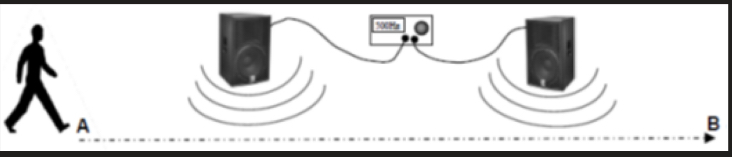
To demonstrate the interference of sound using a Signal Generator and Loudspeakers
Walk slowly from A to B, you will notice the loudness increasing and decreasing at regular intervals
This is because the sound waves from the two speakers interfere both constructively and destructively
The sound from each speaker have the same frequency
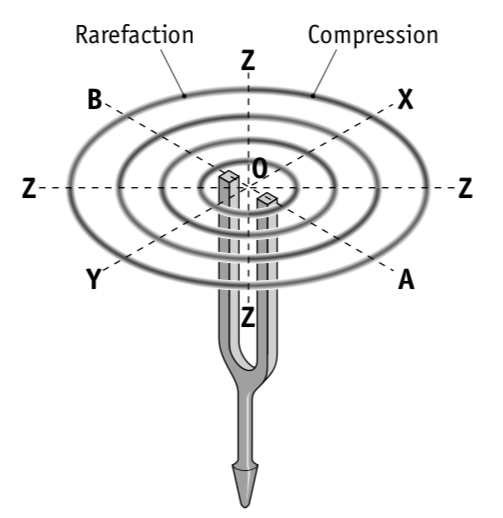
To demonstrate the interference of sound using a tuning fork
Place a vibrating tuning fork beside your ear and rotate it
The loudness of the sound will increase and decrease at regular intervals
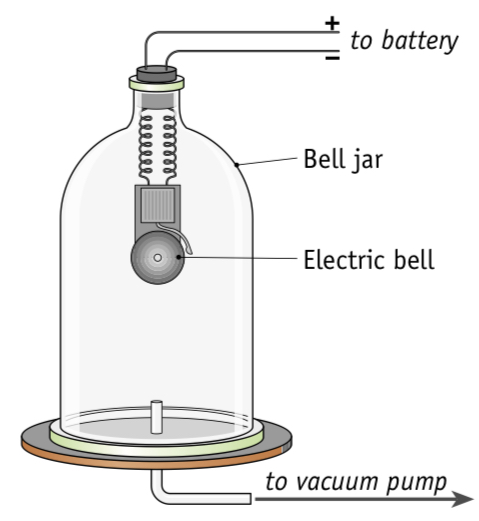
Experiment to show that sound needs a medium to travel through
Set up as shown
The bell can be heard ringing
Remove the air from the jar using a vacuum pump
The bell can no longer be heard
What is the Natural Frequency of an object?
The natural frequency of an object is the frequency at which the object will vibrate if free to do so
What are the factors which determine the natural frequency of a stretched string?
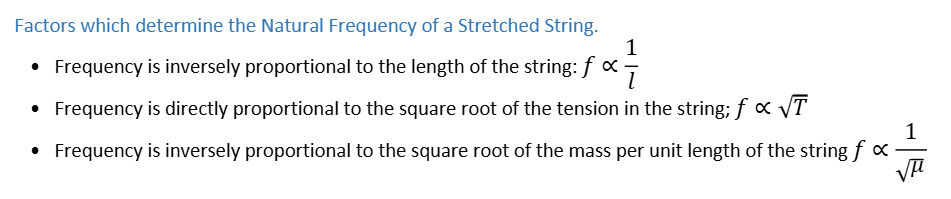
What does the symbol µ represent?
µ (pronounced meu) is the mass per unit length
What is Resonance?
Resonance is the transfer of energy between two bodies of the same natural frequency
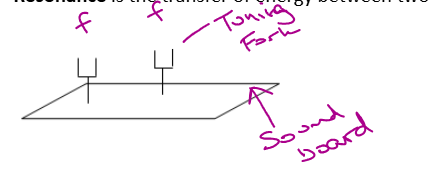
Experiment to demonstrate Resonance
Use two identical tuning forks of the same frequency
Start one vibrating and place it on the sound-board
Place the second tuning fork on the soundboard and stop the first from vibrating
The second fork can now be heard
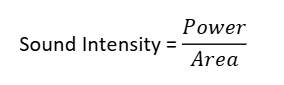
What is meant by Sound Intensity?
Sound Intensity is defined as power per unit area
Unit is Watt per metre squared (Wm-2)
N.B. Sound energy dissipates through all directions like a balloon so Area=4πr2
What is meant by the term Threshold of Hearing?
Threshold of Hearing is the smallest sound intensity detectable by the average human ear at a frequency of 1000Hz
(Its value is 1 x 10-12 Wm-2)
What effect does doubling the Sound Intensity have on the Sound Intensity Level?
Increase by 3dB
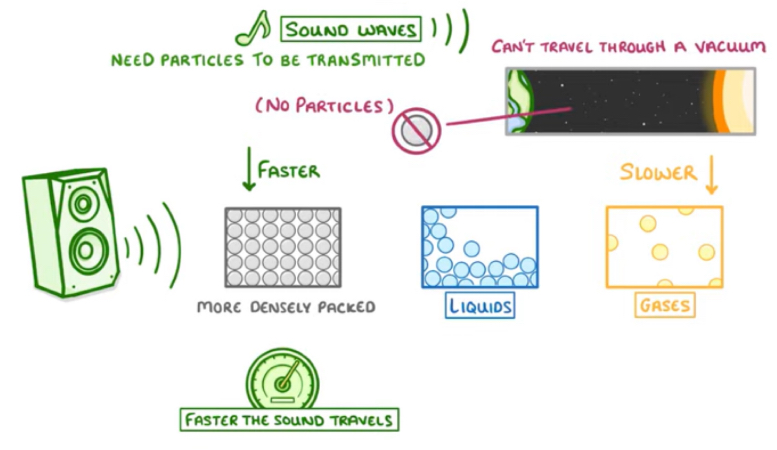
Speed of sound in different media
What are Harmonics?
Frequencies which are integer multiples of the fundamental frequency f are called harmonics
if f is the fundamental frequency (first harmonic), 2f is the 2nd harmonic, 3f is the third harmonic…
What are Overtones?
Frequencies which are multiples of a given frequency are called Overtones
if f is the first frequency, 2f is the first overtone, 3f is the second overtone…
Why is the db(A) scale used in sound-level meters?
The db(A) scale measures sound intensity level considering the variation of human ear response to different frequencies
State two conditions for total destructive interference to occur
Waves of equal frequency (amplitude)
180 degrees out of phase / trough aligns with crest
Diagram of Harmonics in a pipe closed at one end
Only ODD harmonics are present
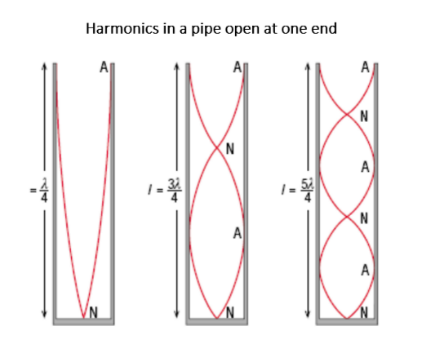
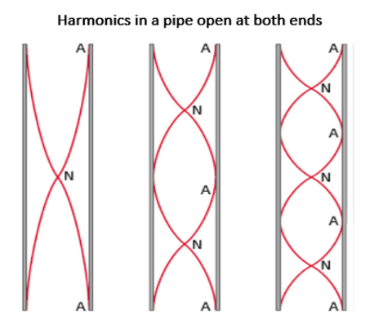
Diagram of Harmonics in a pipe open at both ends
ALL harmonics are present
What property of a Sound Wave does Loudness depend on?
Amplitude
What property of a Sound Wave does Pitch depend on?
Frequency
What property of a Sound Wave does Quality depend on?
Number of Overtones and the Relative Strengths of those different Overtones present
Explain the term Frequency Limits of Audibility
The frequency limits of audibility are the highest and lowest frequencies that can be heard by a normal human ear. The range is 20Hz - 20,000Hz
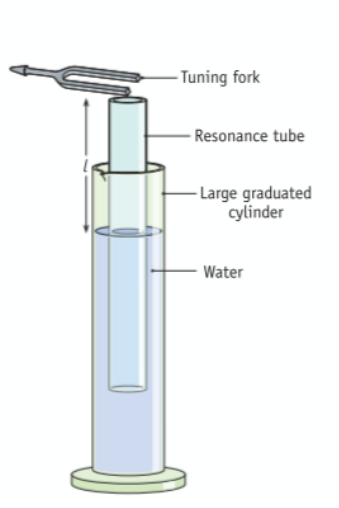
To measure the speed of sound in air
Method
Set up as shown
Strike a tuning fork of known frequency and hold it just above the tube
Adjust the length of the tube and locate the length that gives the maximum loudness (resonance occuring)
Measure the length of the air column with a metre stick
Repeat with tuning forks of different frequencies
Plot a graph of L against 1/f
Graph for Experiment to measure the speed of sound in air
speed of sound c = 4 x slope
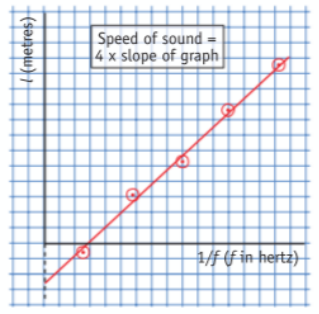
Explain why the line of best fit does not go through the origin
antinode lies a small distance outside the pipe (0.3d where d=diameter of pipe)
this is called the end correction
How did the student ensure that the fundamental frequency, not an overtone, was observed?
Start with a very small length and increase until a loud sound is heard