4th Bio Midterm
 Call Kai
 Learn
Learn Practice Test
 Spaced Repetition
 Match
Match Flashcards
 Knowt Play
1/290

Earn XP
Description and Tags
Lectures 30-35
Name | Mastery | Learn | Test | Matching | Spaced | Call with Kai | Chat |
|---|
No analytics yet
Send a link to your students to track their progress
291 Terms
what does osmotic concentration measure
solution concentration per liter
talking about solutes within water
who are the hyper and hypo relative to their environment
osmoregulators
because they are different relative to their environment
osmoconformers
have the same osmotic concentration as its environment
isotonic relative to environment
if you measured the solute in the organisms and outside it is the same
is isotonic passive or active
passive
osmoregulators
control their osmotic concentration independently from the environment
hyper/hypo relative to environment
can modify or regulate their concentrations within their bodies
are osmoregulators changing actively or passively
ACTIVELY
they are activity changing their osmotic concentration
you are actively pushing towards or against what is happening in the environment
if you say hyper or hypo what type of process is that
an active process
hyper and hypo is RELATIVE to the environment and not is just a constant state
what is excretion
process of moving nitrogenous waste
isotonic
water concentration in organism and concentration of water in environment is equal
water and salts are continuously diffusing
seeing equilibrium but it ISNT static
what group of animals tend to be isotonic
marine invertebrates
hypertonic
concentration of water in organism is less than the concentration of water in the environment
water moves IN, salts move OUT
hypotonic
concentration of water in the organism is more than the concentration of water in the environment
what type hyper or hypo is in freshwater & describe what happens to maintain water balance
hypertonic
organism is salty and water isnt
gain water by osmosis and excrete large amounts of highly dilute (low concentration) urine to reduce excess water
taking in water passively and ACTIVELY removing that water through excretion
have too much water so are trying to regulate by actively moving water out when water is coming in passively
what type hyper or hypo in the ocean & describe how they adapt
hypotonic
salty sea so organism has more water
can get strongly dehydrated so drink a lot of seawater
passively losing water and actively drinking water to regain it
since the sea is salty, salt is constalty coming into the body and that makes you dehydrated
so you drink a lot
losing water gaining salt
what type hypo or hyper on land & describe what happens
technically hypotonic
because there is less water on land so there is more inside of us
see a constant loss of water on land from secretions, excretions, and evaporation
we have strats to use on land to prevent water loss!
osmotic and tonic are the same
ex. hypotonic and hypoosmotic = same thing
whatever is happening from high to low is passively but what they are doing to balance it is active
when is nitrogenous waste formed
when we break down nucleic acids and proteins
but these nitrogenous wastes are toxic so we need to excrete it
what animal do you have to be to make ammonia as a nitrogenous waste
aquatic
but not all aquatic animals use it
ammonia
toxic
no internal water loss, must be diluted in water
for aquatic animals
release it into the environment
takes little energy to make and there is no water loss involved
good if you want to conserve water
urea
low toxicity because has more bonds (but that means it takes a lot of energy to make =)
leads to moderate water loss
energetically costly
mainly land animals
diluted through water (we do this)
uric acid
relatively non-toxic
so can store in your body
doesn’t dissolve in water so it reduces water loss
when you remove it not losing water to do so
LOTS of bonds so takes a lot of energy to make
removed at the same time as elimination (peep and poop at the same time)
what type of animals make uric acid
reptiles/birds, insects
what would make you produce more nitrogenous waste
if you eat a lot of protein in your diet
if you are an endotherm and need energy
what are the four basic steps of excretion
filtration
reabsorption
secretion
excretion
describe filtration
create the filtrate made up of water and solutes that is collected from blood
has good stuff and bad stuff
describe reabsorption
reabsorb the things we want to keep using the filtrate we made
and put them back into the bloodstream
what do we always reabsorb
WATER
describe secretion
some things that we want to remove aren’t passively moving into the filtrate
so we ACTIVELY move in things we don’t want into the filtrate
describe excretion (the step not the whole process)
let out what is left of the filtrate
in mammals that is urine
is secretion in excretion process passive or active
active! because getting those things that aren’t moving passively into the filtrate
in mammals where does the steps of excretion happen
in the nephron
describe the mammalian excretory system
kidneys
nephrons
where are the nephrons and what does this system do
in the kidneys
and in the kidneys sits the excretory system
describe the nephron
the long tube
has capillaries around it
what is the glomeulus
a ball of capillaries surrounding the nephron
what is the bowman’s capsule
it surrounds the glomerulus
what is the formation of filtrate facilitated by
blood pressure
this forms the filtrate
as blood pumps through the body there are pores through the capillariy and pushes the fluid into the bowman’s capsule
steps of mammalian nephron
bowman’s capsule
proximal tubule
loop of henle
distal tubule
collecting duct
where do you start when in the nephron
bowman’s capsule
what is the function of the bowman’s capsule
filtration is formed here
what is the function of the proximal tubule
goes from bowman’s capsule
reabsorption and secretion
reabsorb water, salt, ions, nutrients
IMMEDIATELY
secretion of toxins into filtrate
so actively moving toxins into the filtrate
reabsorption happens immediately
what is the function of the loop of henle
reabsoption of water only
all about reabsorbing water
all about bringing water to put into bloodstream and back into body
maintaining an osmotic gradient
so that water can always be moving passively
what is always moving passively in our kidneys
water
so always needs to maintain a strong osmotic gradient so that water is always being put back into the body
what is the function of the distal tubule
reabsorption
rebalance
some secretion as a double check
ions
what is the function of the collecting duct
excretion
final water reabsorption
where we form the urea that then moves into the bladder
secretion happens in multiple locations but what types of things are being secreted into the proximal and the distal tubules
proximal = TOXINS
distal = ions
how do desert mammals do water conservation on land
highly hypertonic urine
many long nephrons maintain steep osmotic gradients
a long nephron because have more absorption of water because of high tonic urine
how do you concentrate your urine
do more reabsorption
because you are actively reabsorbing things and making the filtrate more concentrated
the longer the nephron = the more time the time the filtrate spends = the steeper the osmotic gradient
freshwater mammals and conservation of water on land
have more short nephron loops and lower urine concentration
don’t have to worry about conserving water in their urine since live in water
the less you have to conserve water the better
because it is costly and takes energy
birds and conservation of water on land
primarily produce uric acid
which is water efficient since don’t have to dissolve uric acid in water
benefit of producing uric acid instead of urea for birds
they don’t have a bladder so they don’t have anywhere to store their uric acid
what do freshwater fish do to conserve water
excrete large amounts of dilute urine
conserve salts by reabsorping ions from filtrate
because they are losing salt to the environment
what do marine fish do to conserve water
filtration rates low, little urine excreted
always losing water to environment so trying to keep as much as it can and excretes highly concentrated urine
chloride cells in gills help maintain salt balance
have special cells to reduce the salt and maintain a salt balance
because they keep gaining it since in an ocean
best water conservation is seen where?
dry places
because that is where water conservation is selected agains
because trying to conserve their water
retain more water
cellular respiration products and reactants
requires oxygen and produces carbon dioxide
gas exchange
uptake of oxygen from environment and the discharge of carbon dioxide to environment
what facilitates cellular respiration
gas exchange
what type of respiratory surface do gases diffuse across
moist respiratory surfaces
because have to dissolve into a liquid to amke it across that membrane
the respiratory surface is what is used for gas exchange
what are some general things that matter for gas exchange
metabolic rate
habitat
animal size
type of circulatory system (closed or open)
what is the best way to increase gas exchange effiency
increase surface area
the area that they have to cross
marine invertebrates typically use…
diffusion
through the skin
because they are not metabolicly active and needs are low so get enough oxygen from diffusing
there is less oxygen in water than in air
diffusion isn’t enough when you have a closed circulatory system
when do we see selection for gills
when we get more metabolicy active
what is the benefit of gills
they give a larger surface area to increase efficiency
they are folded a lot
animals that use gills
fish, sharks, mollusks, crustaceans
what maximizes gas exchange in fish
countercurrent flow
to make sure oxygen flows over their gills
increasing surface area can increase area for oxygen to get into the bloodstream and then there is an increased area for carbon dioxide to get out
insects are invertebrates
how do insects do gas exchange on land
tracheae
oxygen/carbon dioxide transfer completed by trachea
hemolymph distributes nutrients, collects waste
what are tracheae
air tubes that branch throughout body
there are pores that connect the tracheae to the cells inside the body
and then go through these branches that are found close to every cell and delivers o2
what is separate in insects
their circulatory system and oxygen deliver are separate
in us we think of oxygen delivery as a circulatory system
insects acquire oxygen directly
what is the major thing we see with land gas exchange when we shift to vertebrates
lungs
first group to have lungs
ray finnned fish
almost all tetrapods have lungs (except lungless salamanders)
not all tetrapods have a fully developed ribcage
gets ribs when we get a spinal cord
tetrapods
amphibians, mammals, reptiles/birds
amniotes are the first gropu with a really developed ribcage
what do lungless salamanders use to breathe
cutaneous
what is the primary/sole gas exchange organ for tetrapods
lungs
the complexity in reptiles and mammals increases surface area
what increases our surface area in gas exhange in mammals
the alveoli
alveoli increase surface area so have more contact with the capillaries with the diffusion surface and move oxygen into the body
purpose of breathing
to increase the rate that gas exchange happens
to maintain high o2 and low co2 at the respiratory surface
maintaining concentration gradient
describe breathing in amphibians
don’t have a well developed rib cage
can’t move around their rib in breathing
lower lung surface area than amniotes
don’t have as much gas exchange in their lungs since they do pulmocutaneous
use positive pressure breathing
exhale = just open mouth
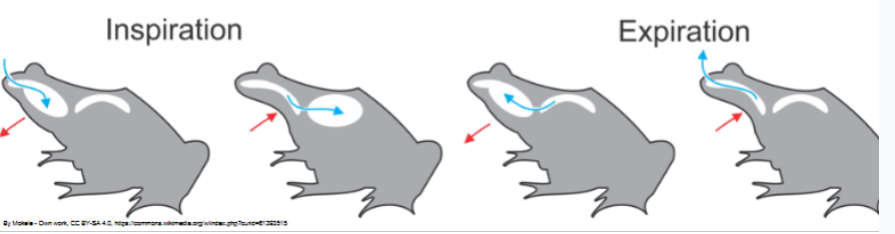
describe positive pressure breathing
facilitates gas exchange
lowers floor of throat during inspiration and then force air from the oral cavity into their lungs by contracting their throat muscles
pull air in and then push it
kinda like swallowing air
what type of process (passive or active) is positive pressure breathing
ACTIVE
because pulling air in and pushing it out
positive pressure breathing requires…
force
describe breathing in birds
they have to be highly efficient
they have air sacs that act as bellows to keep air flowing
they force area around the body
2 cycles of inhalation/exhalation for air to complete circuit
unidirectional air flow
what is a bellow
in a bird
lilke an accordian and use this structure to push air around their body
describe the 2 cycles of inhalation/exhalation in birds
they breathe air first into posterior air sac (inhalation), then lungs (exhalation), then from there to anterior air sac (inhalation), and then from the anterior air sacs and out the mouth (exhalation)
why do birds have 2 cycles of inhalation/exhalation
to allow for unidrectional airflow
what is unidirectional air flow in birds
fresh air and oxygen-reduce air don’t mix
breathe out air (co2 rich) and breathe in air (oxygen rich) don’t mix
so don’t dilute oxygen in the system (efficency!)
oxygen and carbon dioxide don’t interact