Skeletal Practicum Unit
 View linked note
 Call Kai
 Learn
Learn Practice Test
 Spaced Repetition
 Match
Match Flashcards
 Knowt Play
1/56

There's no tags or description
Looks like no tags are added yet.
Name | Mastery | Learn | Test | Matching | Spaced | Call with Kai |
|---|
No analytics yet
Send a link to your students to track their progress
57 Terms
Articulate
Two or more bones meeting to form a joint
Palpate
To examine by touch
Lateral
Away from the midline of the body
Medial
Toward the midline of the body
Superior
Above
Inferior
Below
Anterior
Front
Posterior
Back
Proximal
Nearer to the trunk of the body
Distal
Further from the trunk of the body
ROM
Range of motion; movement available at a joint
Skull
Cranium + facial bones
arthr/o
Joint
carp/o
Wrist
cervic/o
Neck
chondr/o
Cartilage
cleid/o;clavicul/o
Collar bone
cost/o
Rib
lumb/o
Lower back
orth/o
Straight
oste/o
Bone
stern/o
Breastbone
thorac/o
Chest
Condyle
The smooth surface that usually articulates with another bone
Process
Any part of the bone that pokes out
Epicondyle
Raised area on or above a condyle for attachment of ligaments/tendons
Head
Articulates with a fossa
Trochanter
Very large, blunt, irregularly shaped process where muscles attach (femur)
Meatus
Canal-like passage
Suture
fibrous joints that connect bones of the skull
Sinus
Cavity within a bone
Foramen
Round/oval opening through a bone
Tubercle
Small rounded projection where muscles attach (humerus)
Fossa
Shallow depression
Spine
Sharp, slender projection
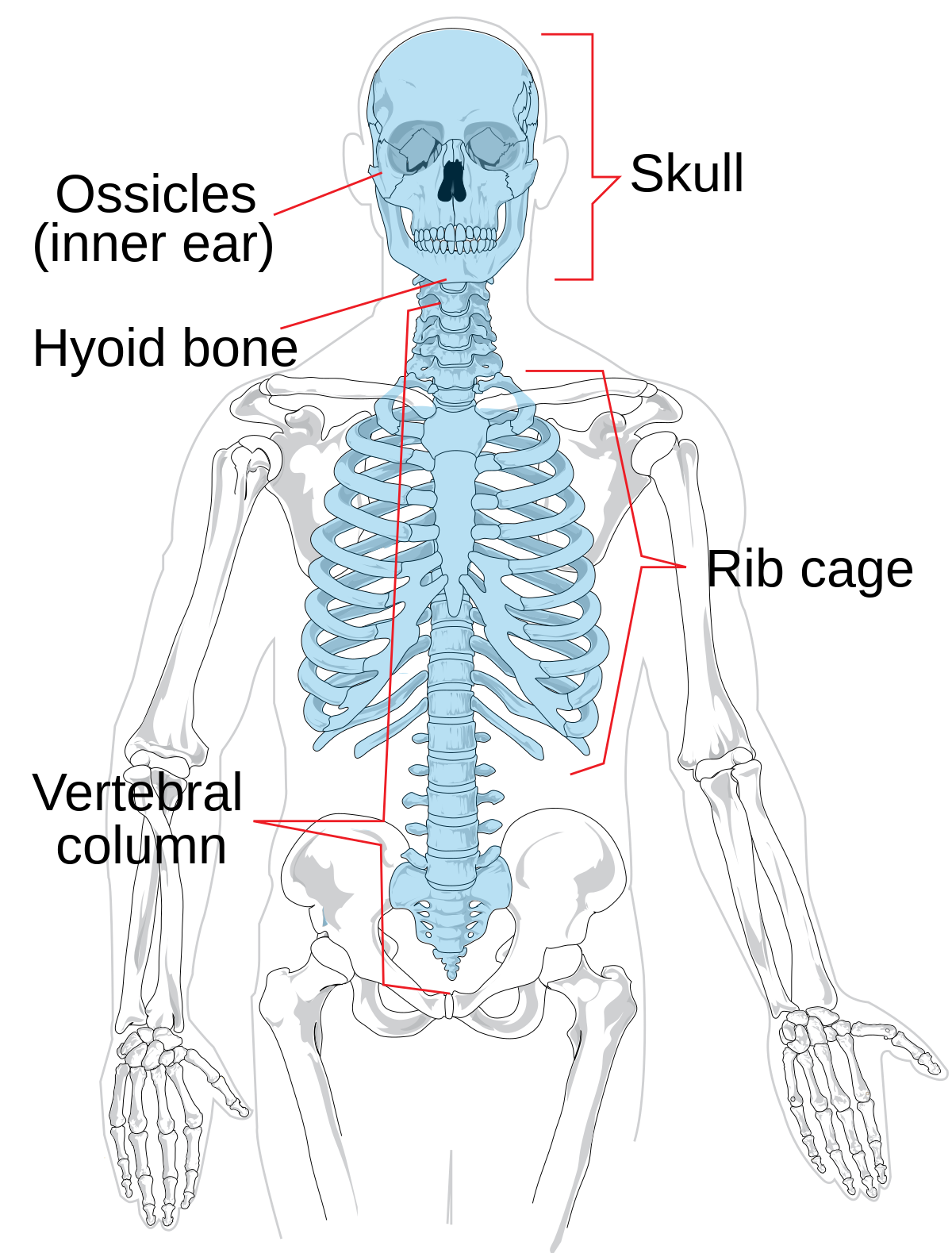
Axial Skeleton
Skull- cranium + facial bones
Sternum- Manubrium, Body, Xyphoid Process
Ossicles- middle ear bones
Ribs (total of 12)
Hyoid Bone (supports the tongue)
Vertebrae: Cervical (7, neck), Thoracic (12, rib cage), Lumbar (5, low back), Sacrum (5, articulates w pelvic bones), Coccyx (4, tailbone)
Appendicular Skeleton
Pectoral Girdle
scapula
clavicle
Upper Limb
humerus
carpals
ulna
metacarpals
radius
phalanges
Pelvic Girdle
2 pelvic bones containing ilium, pubis, ischium
Lower Limb
femur
fibula
tibia
metatarsals
tarsals
patella
phalanges
Sections of the Vertebral Column
Cervical (neck)- 7
Thoracic (ribs)- 12
Lumbar (low back)- 5
Sacrum (articulates w the pelvic bones)- 5
Coccyx (tailbone)- 4
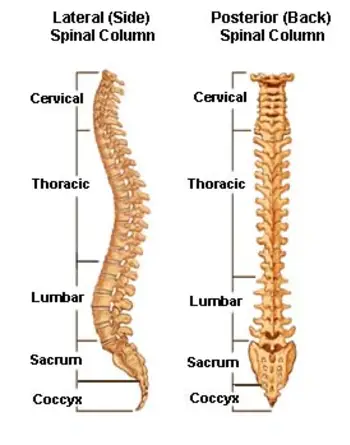
Vertebral Column Curvatures
Cervical
Thoracic
Lumbar
Sacral
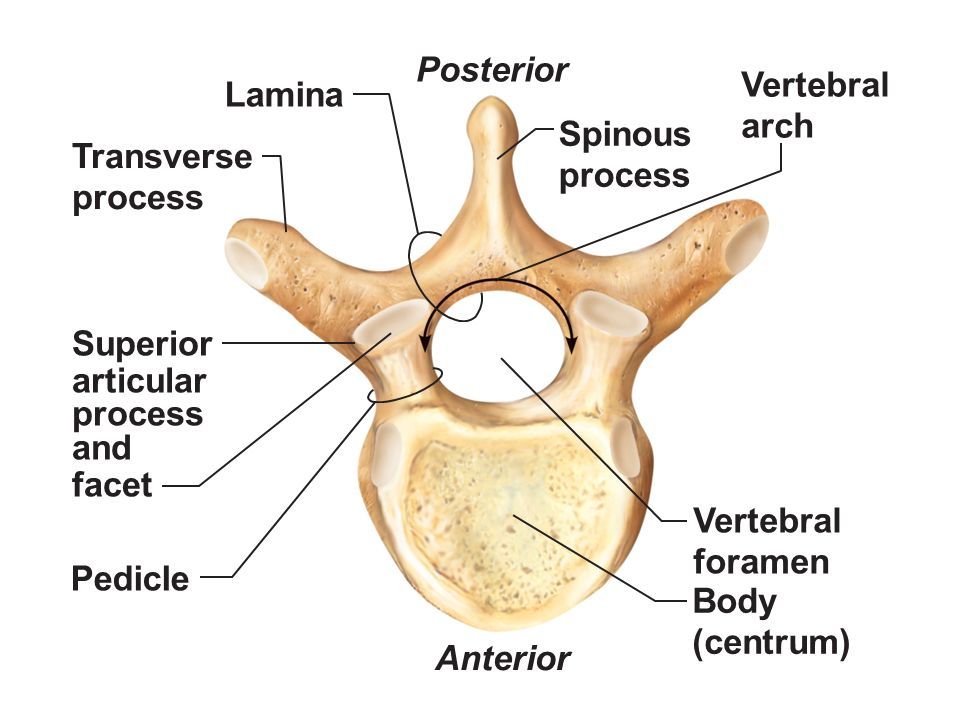
Vertebrae Parts
body
vertebral foramen
spinous process
Intervertebral Discs
C1 Atlas (top)
Dens (thumb-like part around which the atlas rotates)
C2 Axis (bottom)
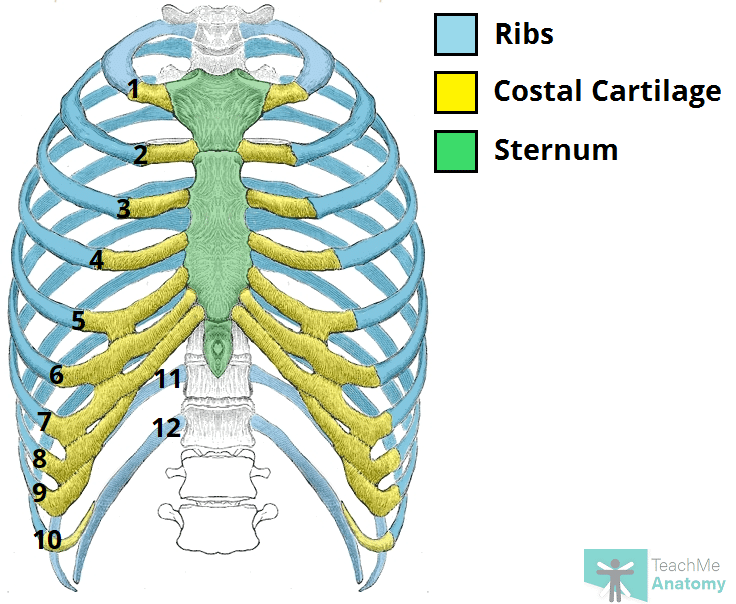
Thoracic Cage
ribs
costal cartilage (the ribs that are actually attached to the sternum)
thoracic vertebrae (the part of the spine that the ribs attach to)
sternum
Ribs
total 12
true ribs- upper 7 that attach to vertebrae and costal cartilage of each rib
false ribs- lower 5: 3 pairs attach to the vertebrae and costal cartilage of rib #7. 2 lowest pairs attach only to vertebrae (floating ribs)
Sternum
manubrium
body
xyphoid process
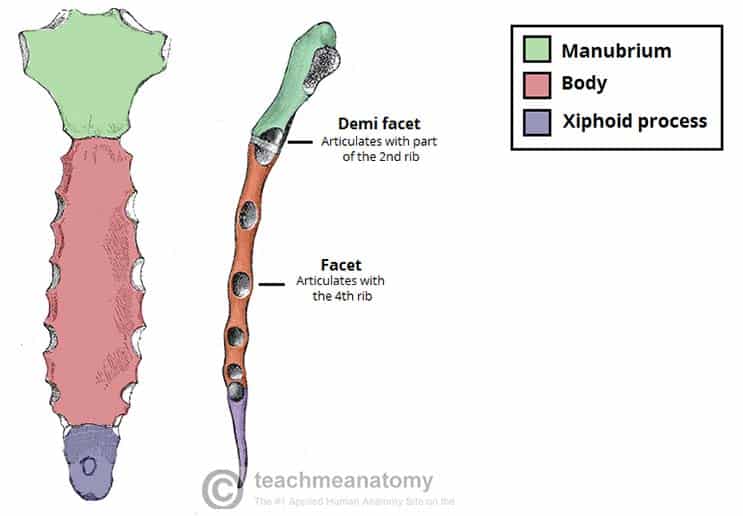
Pectoral Girdle
clavicle
sternal end- the end that touches the sternum
scapula
glenoid fossa
spine of the scapula (posterior view)
supports upper extremities
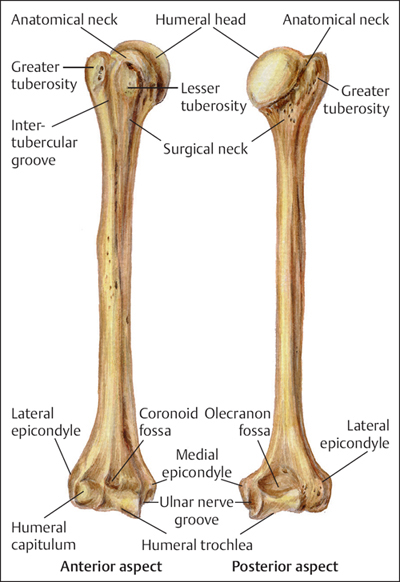
Humerus (upper limb)
head
greater and lesser tubercules (if showing, then humerus is in anterior position)
lateral and medial epicondyle (posterior)
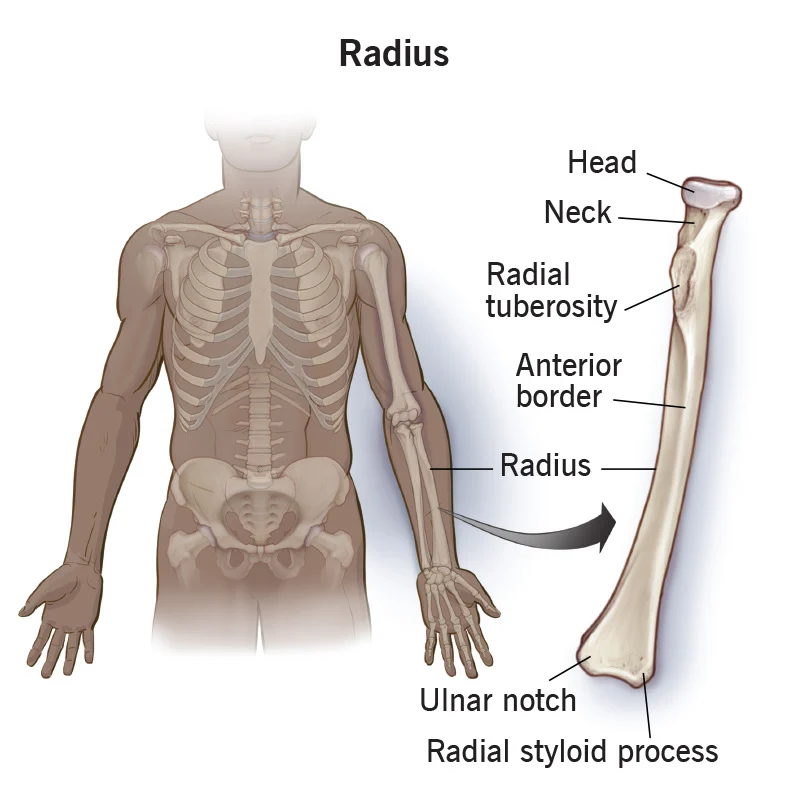
Radius
connects to the thumb (lateral)
parts:
head
styloid process- found on the lateral surface of the distal radius bone
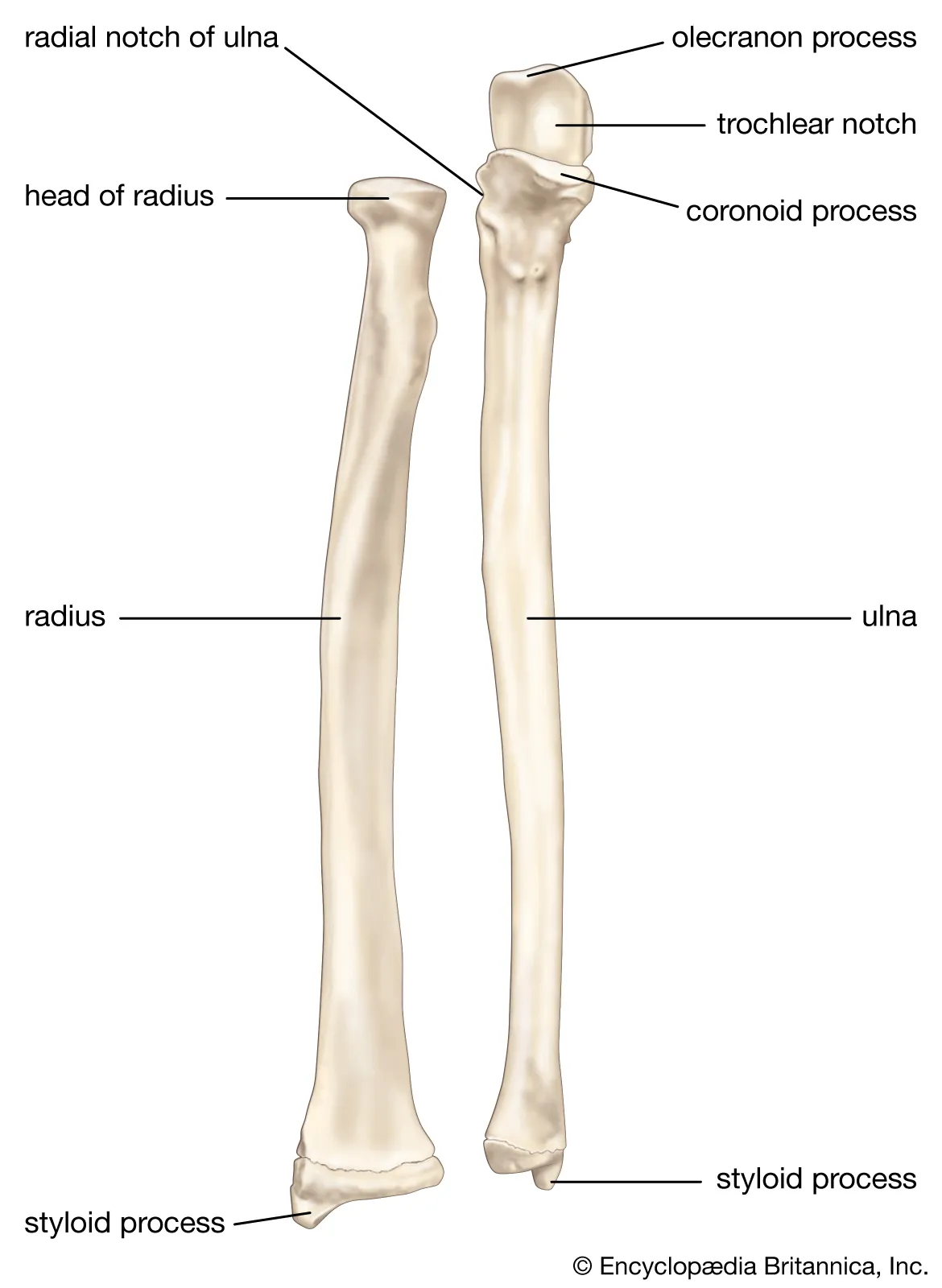
Ulna
connects to the pinky (medial)
Parts:
trochlear process- a large depression in the upper extremity of the ulna that fits the trochlea of the humerus (the bone directly above the ulna in the arm) as part of the elbow joint
olecranon process- articulates with the humerus to provide flexion and extension of the elbow
styloid process- a bony projection at the end of the ulna, near your hand, called the ulnar styloid process. It fits into the cartilage of your wrist joint and plays an important role in the strength and flexibility of your wrist and forearm
pronation/supination
twisting of the radius
pronation is counterclockwise/posterior
supination is clockwise/anterior
Hand
carpals- wrist bones
metacarpals- hand/palm bones
phalanges- finger bones
Pelvic Girdle
2 hipbones
Ilium
ischium
pubis
pubic symphysis- right where the 2 sides of the pubis join
acetabulum- where head of femur rotates/articulates
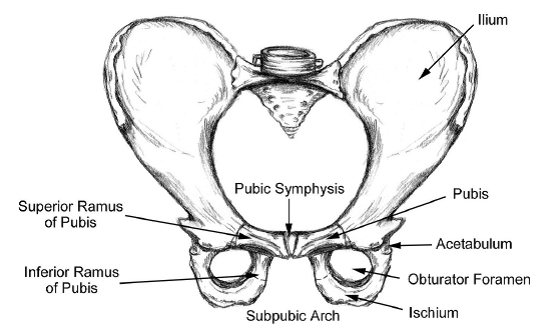
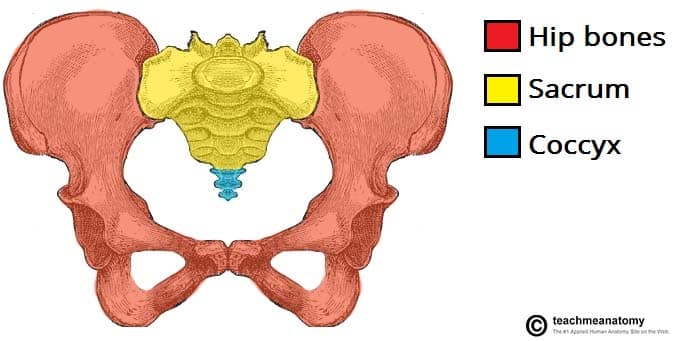
Pelvis
Pelvic Girdle PLUS sacrum + coccyx
sacrum + coccyx is part of the vertebrae tho
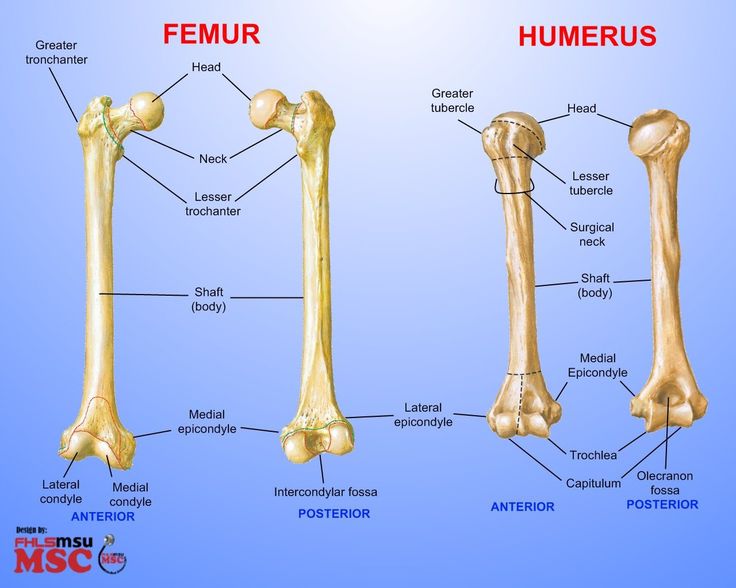
Femur
acetabula=fossa of the femur
parts:
head
neck
greater + lesser trochanter
greater=first bump
lesser = weird second bump
POSTERIOR
lateral condyle (anterior)
medial condyle (anterior)
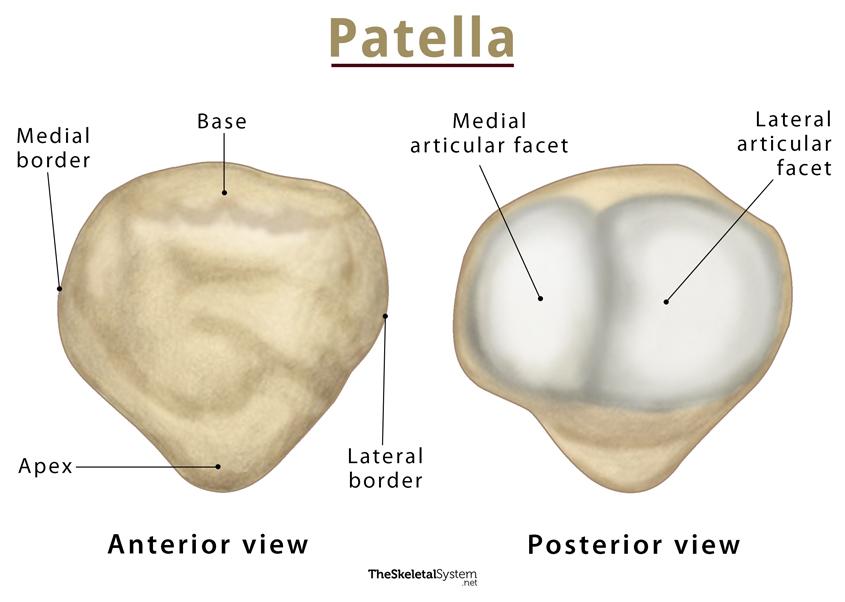
Patella
AKA the knee cap
protects the joint from damage
the largest sesamoid bone in the body
Tibia
front
medial malleolus = distal end of the tibia
tibial tuberosity- an elevation on the proximal, anterior aspect of the tibia, just below where the anterior surfaces of the lateral and medial tibial condyles end
medial condyle- the inner part of the upper expanded section of the tibia
lateral condyle- a condyle on the outer side
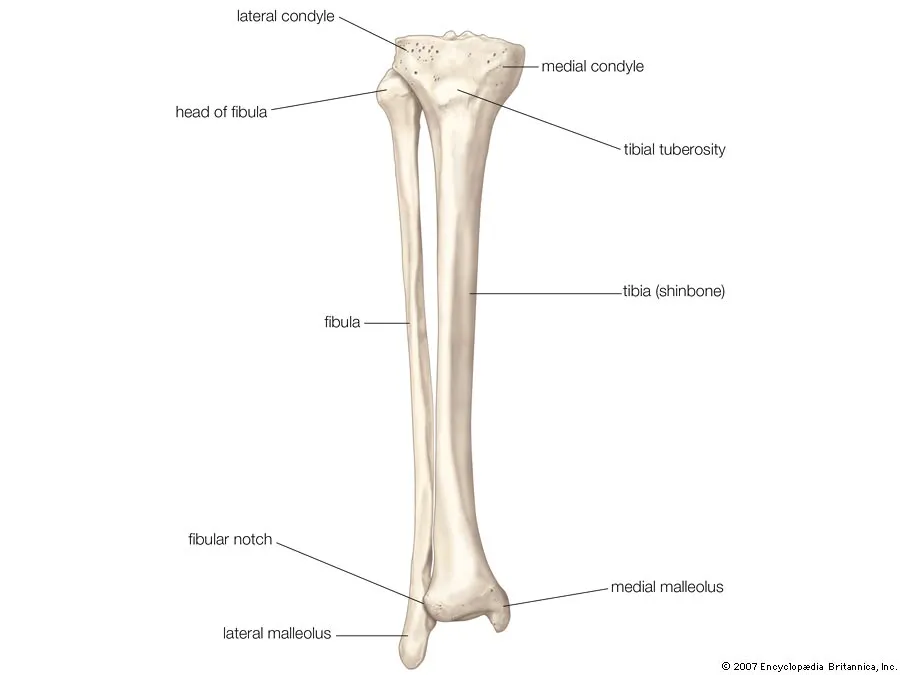
Fibula
back
lateral malleolus = distal end of the fibula
Foot
tarsals- ankle bones
metatarsals- foot bones
phalanges- toe bones
calcaneus = foot (heel bone)