Module 5 Labeling/Extra Info
 Call Kai
 Learn
Learn Practice Test
 Spaced Repetition
 Match
Match Flashcards
 Knowt Play
1/42

There's no tags or description
Looks like no tags are added yet.
Name | Mastery | Learn | Test | Matching | Spaced | Call with Kai |
|---|
No analytics yet
Send a link to your students to track their progress
43 Terms
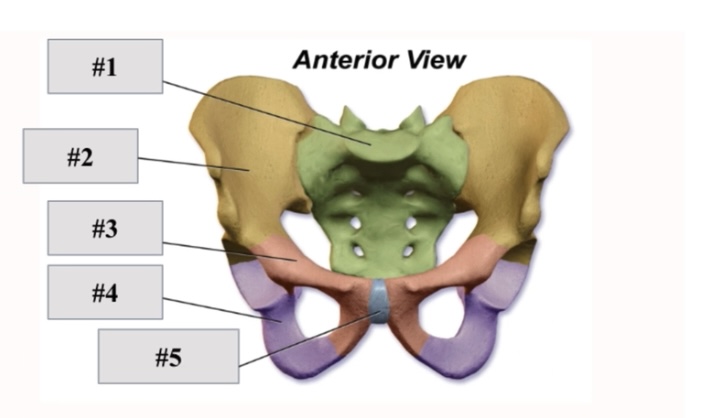
#1?
Sacrum or the pelvis
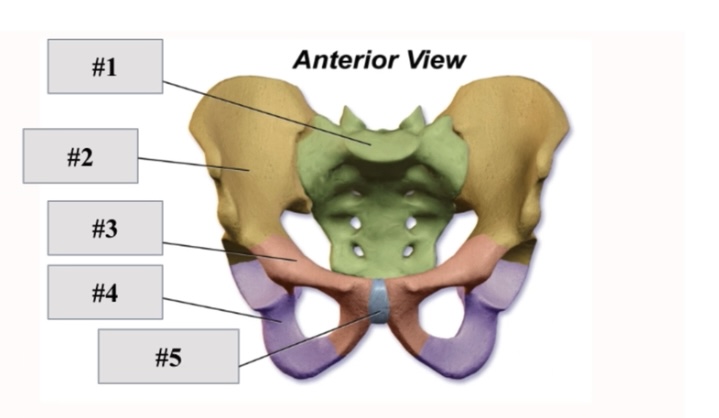
#2?
Ilium of the pelvis
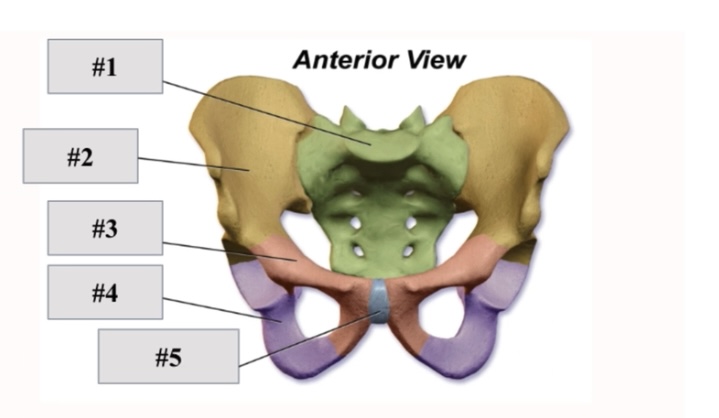
#3
Pubis of the pelvis
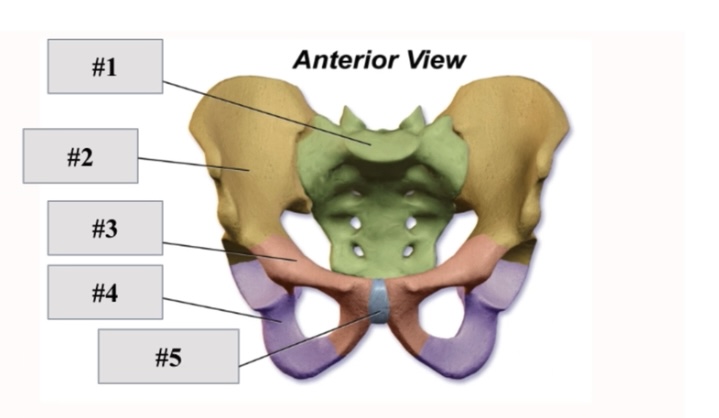
4?
Ischium of the pelvis
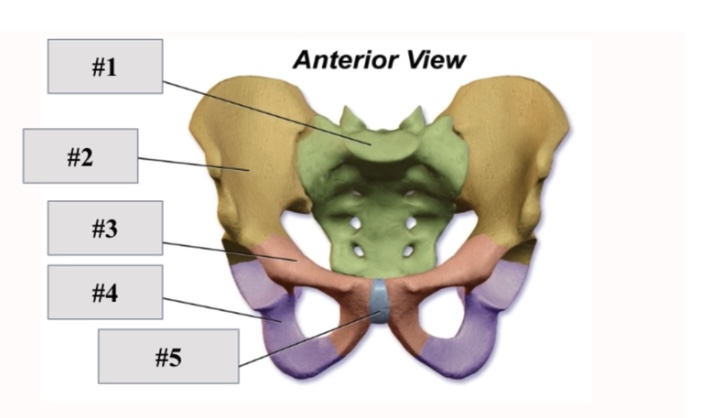
5?
Coccyx of the pelvis
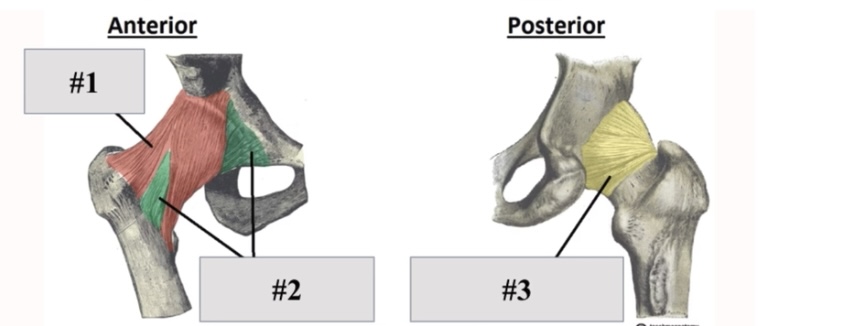
1?
Iliofemoral (Y ligament)
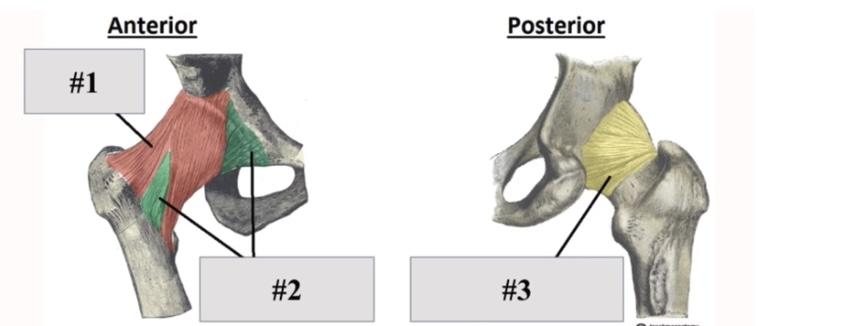
2?
Pubofemoral Ligament
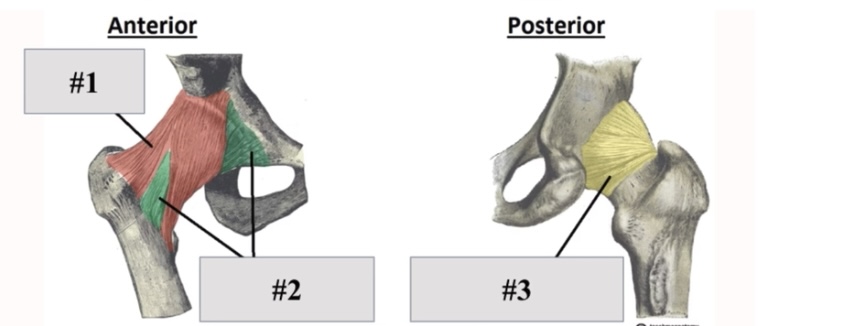
3?
Ischiofemoral Ligament
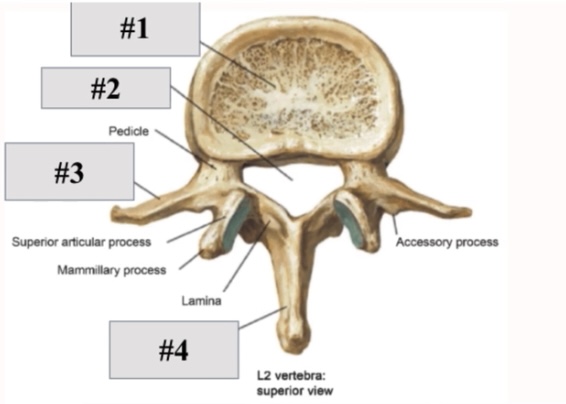
#1?
Vertebral body of the lumbar spine
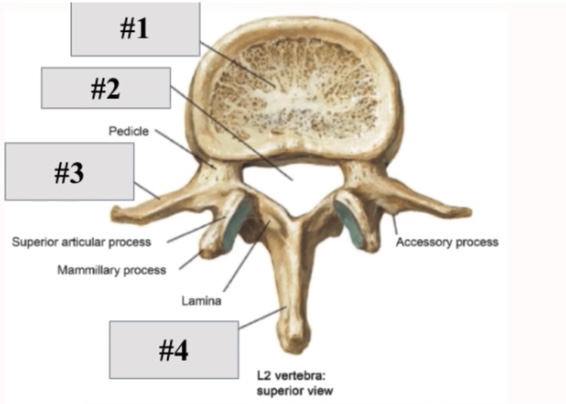
2?
Vetebral foramen of lumbar spine
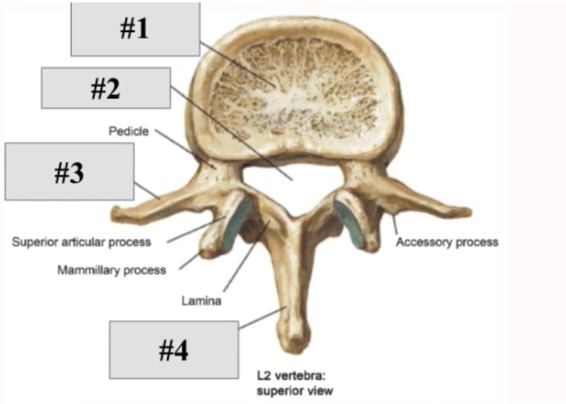
3?
Transverse process of lumbar spine
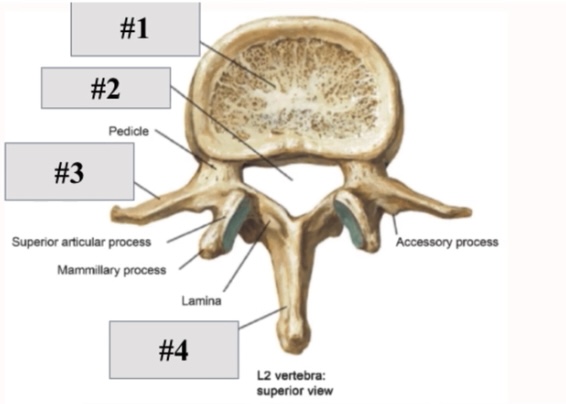
4?
Spinous process of lumbar spine
Sequence the vertebral regions from superior to inferior.
Cervical → Thoracic → Lumbar → Sacrum
How many vertebrae are in the Cervical, Thoracic, and Lumbar regions respectively?
7 Cervical, 12 Thoracic, 5 Lumbar (7, 12, 5)
What are the three unique identifying features of cervical vertebrae
Bifid spinous processes, transverse foramina, and triangular vertebral foramina
Which specific vertebra is known as the “Atlas”
C1
Which vertebra features the “dens”(odontoid process)
C2 (The Axis)
What type of a joint is the Atlantoamxial Joint, and what movement does it allow?
Piviot joint, it allows for rotation (the “no” motion)
What is the primary function of the lumbar vertebrae
Weight-bearing of the torso
Which region of verebrae is the only one to feature costal (demi) facets for rib articulation.
Thoracic vertebrae
What are the true ribs
Ribs 1-7
What are the false ribs?
Ribs 8-10
Why are the floating ribs
Ribs 11-12
Why are ribs 1-7 classified as “True Ribs”
Because each has its own costal cartilage that connects directly to sternum.
How do “False Ribs” (8-10) attach to the sternum
Their costal cartilages join the cartilage of rib 7
Why are ribs 11-12 called “floating ribs”
They have no anterior attachment to the sternum or other ribs
Which three bones fuse together to form the Os Coxae (Hip bone) and the acetabulum
Ilium, ischium, and Pubis
What is the scientific name for the hip joint
Acetabulofemoral joint
How is the hip joint classified by structure
Ball and socket joint
What is the primary mechanical function of the hip joint
To support body weight in static and dynamic postures
Which landmark is known as the “sit bones” because it supports weight when seated
Ischial Tuberosity
Which landmark is the superior rim of the illium and key palpitation point
Iliac Crest
What is the strongest ligament in the body
Iliofemoral ligament (Y Ligament)
Which ligament originates from the ischium and spirals to limit medial rotation
Ischiofemoral ligament
List the four abdominal muscles from superficial to deep
External Oblique (Superficial), Internal Oblique & Rectus Abdominis (Intermediate), Transverse Abdominis (Deep).
Which muscle is referred to as the “natural corset” because it stabilizes the spine and compresses contents without moving the trunk
Transverse abdominis
What are the three columns of the erector spinae group lateral to medial.
Iliocostalis, Longissimus, and Spinalis ("I Love Spinach")
In which plane of motion do Flexion and Extention occur
Sagittal plane
In which plane of motion does lateral flexion (side bending) occur
Frontal (Coronal) Plane
Rotation occurs around which axis
Vertical Axis
If a patient can bend forward but cannot rotate their head, which specific joint is likely restricted
Atlantoaxial Joint
Which muscle is the primary “powerhouse” for climbing stairs or rising from a chair
Gluteus Maximus
Which muscle is responsible for "hip hiking" when standing on one leg?
Quadratus Lumborum.