Fish Predation + Feeding
 Call Kai
 Learn
Learn Practice Test
 Spaced Repetition
 Match
Match Flashcards
 Knowt Play
1/44

Earn XP
Description and Tags
Name | Mastery | Learn | Test | Matching | Spaced | Call with Kai |
|---|
No analytics yet
Send a link to your students to track their progress
45 Terms
optimal foraging theory
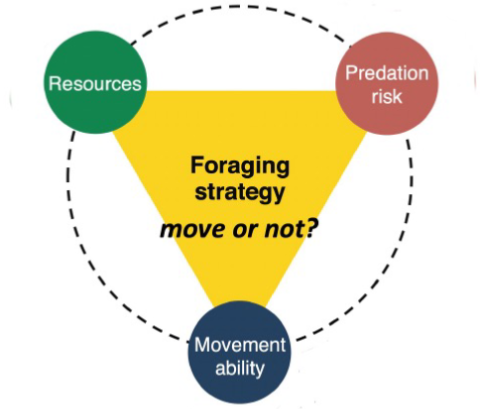
predation evolutionarily
very important: stresses animals, reduces prey fitness (nonconsumptive effects of predation, threat of predation everyday
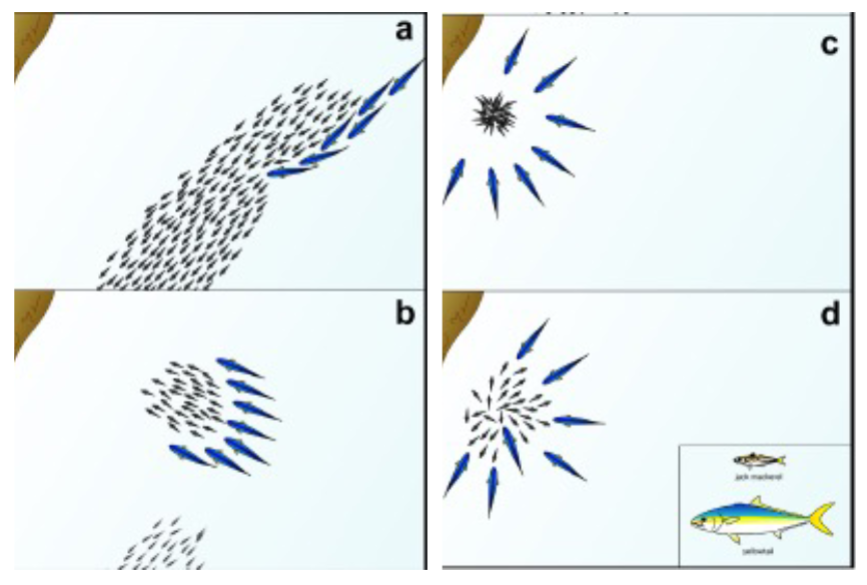
tuna w/ schooling fish
cut off a section, herd into a ball, eat until some point where the bait of the ball is too small to be worth the effort
this increases catch efficiency b/c tuna can eat multiple @ the same time if the fish are small enough
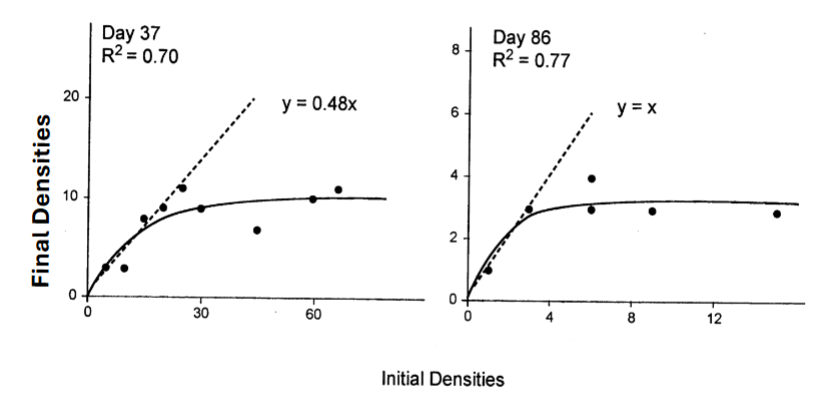
gobies - density
density independent before maturing
density dependent after maturity: gobies become vulnerable to predators during territorial combats + sexual displays
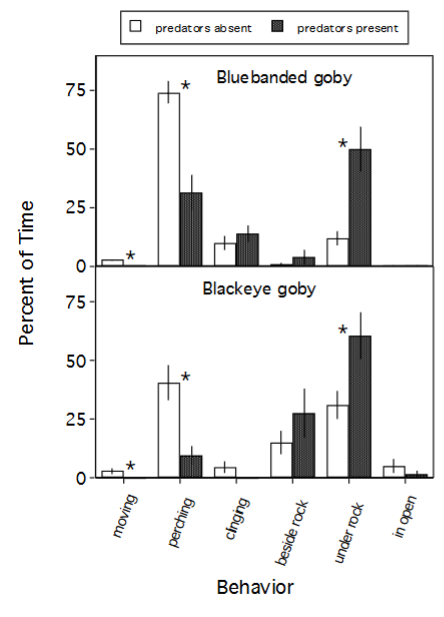
gobies - predation + growth
growth lower around predators —> lower fitness = foraging less and more stressed
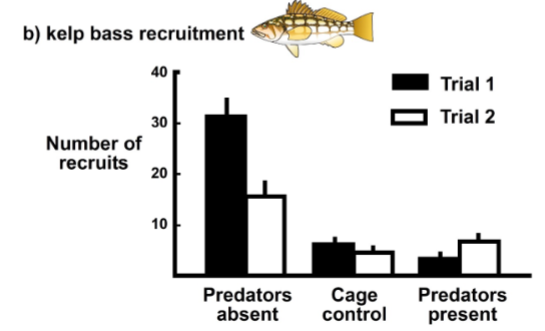
recruitment enhanced by presence of conspecifics and decrease with presence of predators
kelp bass
recruitment highest when predators absent
atavistic
inherent, ancient
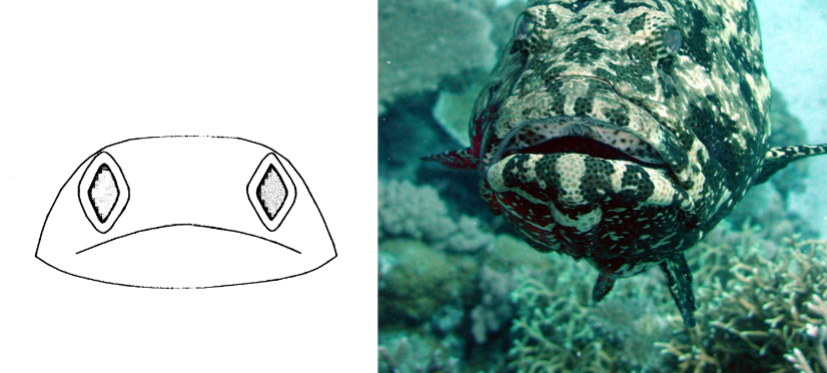
fright response
broad head, wide downturned mouth, ringed broadly elliptical eyes
prey responses to avoid predation
eye spots (ocelli)
spines
camouflage
eye spots (ocelli) - why?
predators only eat things they can fit in their mouth
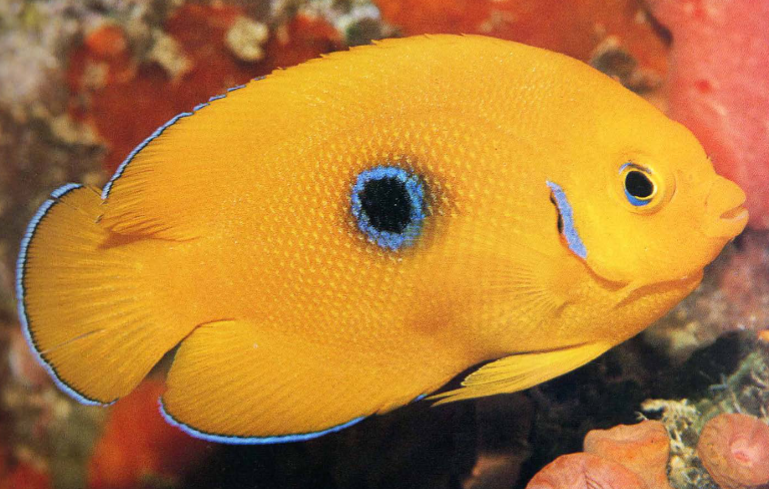
eye spots (ocelli) - stripe?
stripe through real eye to disguise it (tropical goby)
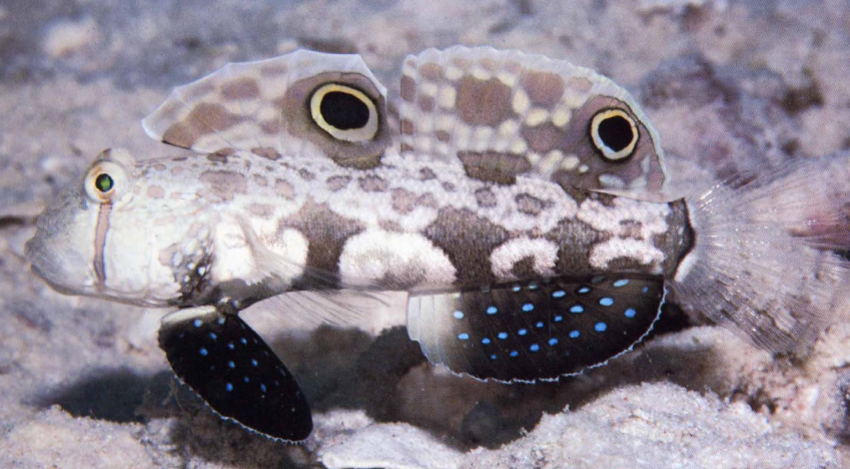
eye spots (ocelli) - tail?
to confuse predators to which side is the end
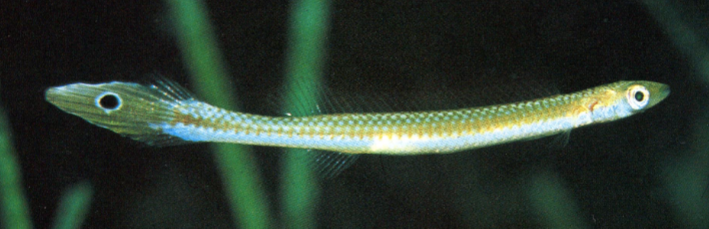
eye spots (ocelli) - skates
predator: hammerheads
they need to pin it down with their head so it can’t be too big
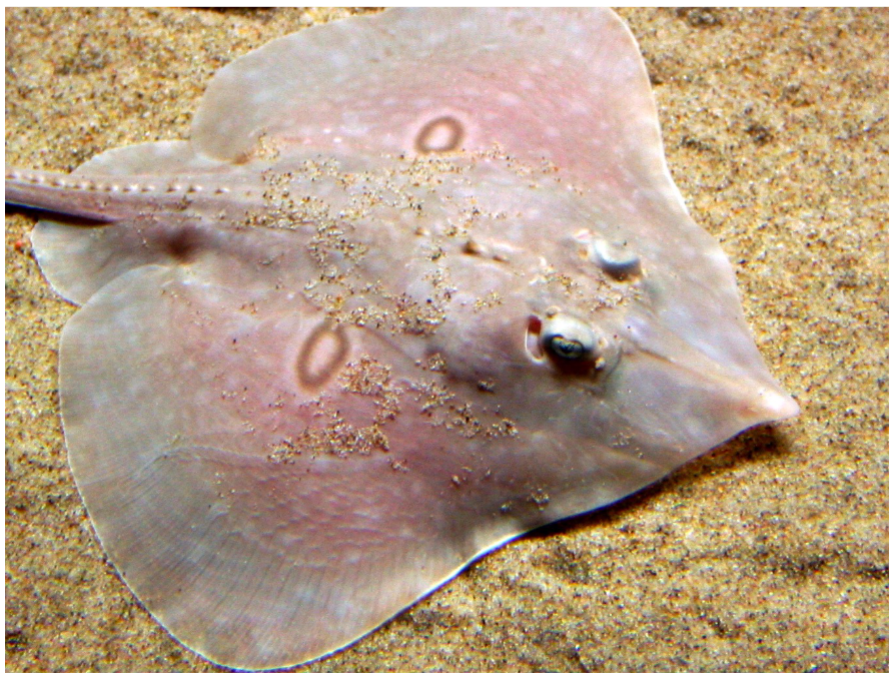
camo - halibut
shift into sand (as predator and prey)
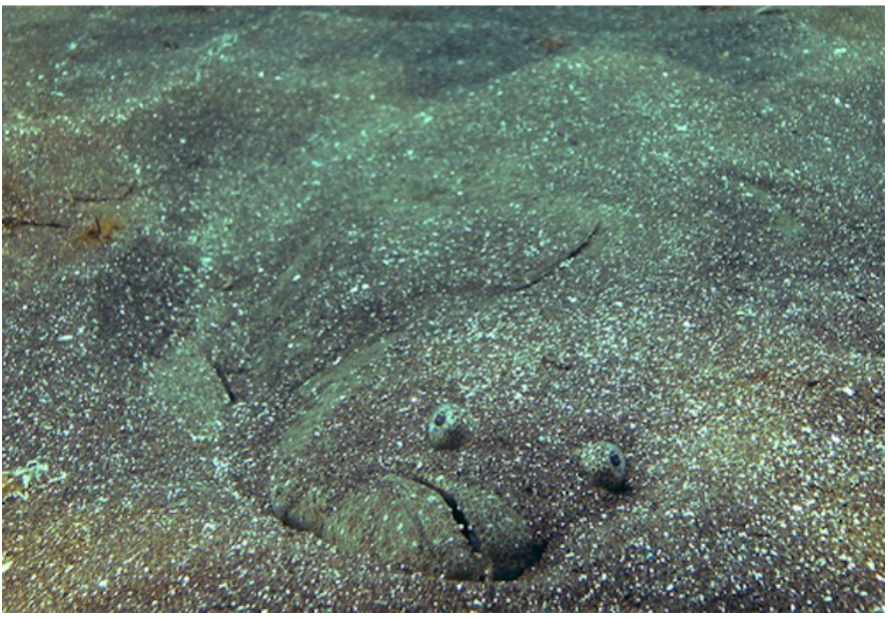
camo - flatfish
chromatophores
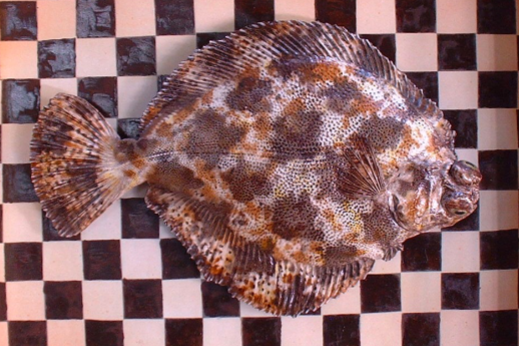
confusion pattern
to hide eyes
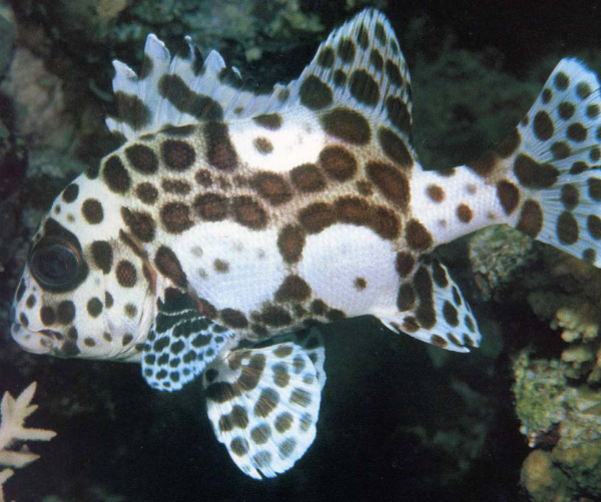
camo - stripes
disrupt the silhouette in murky water
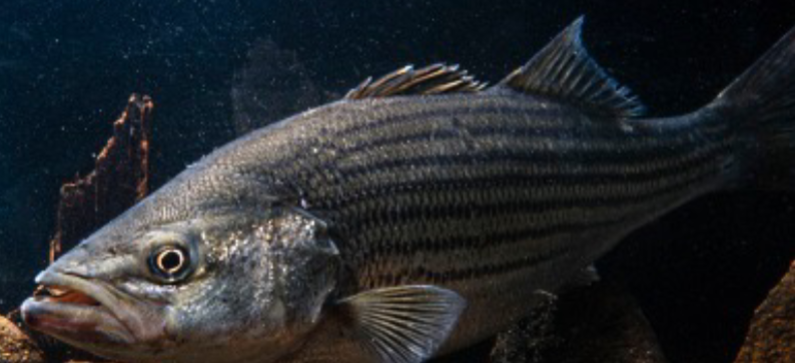
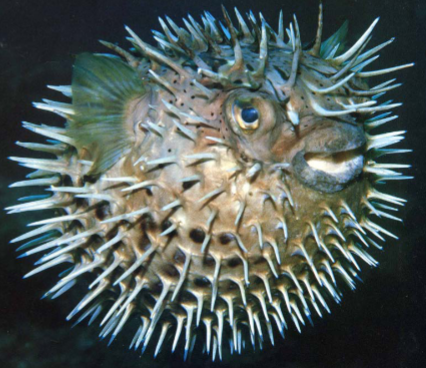
spines
just for dissuading predators, don’t help feed or attract mates
ex: lionfish, scorpionfish, pufferfish, stingray, etc
red queen hypothesis
predators + prey continually evolve in response to each other
anglerfish
large mouths, large teeth, bioluminescent lures
dragonfish
long teeth —> trap prey, sometimes prey only partially in mouth but can start digesting them
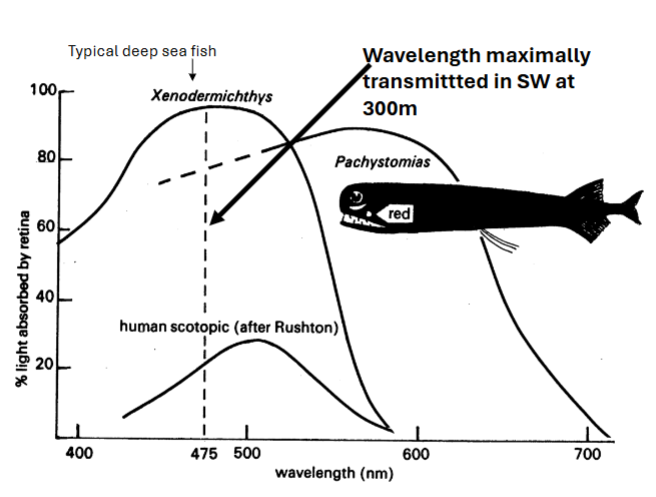
photophores along body, eye spots (head lamps, under real eye), lure, bioluminescent teeth
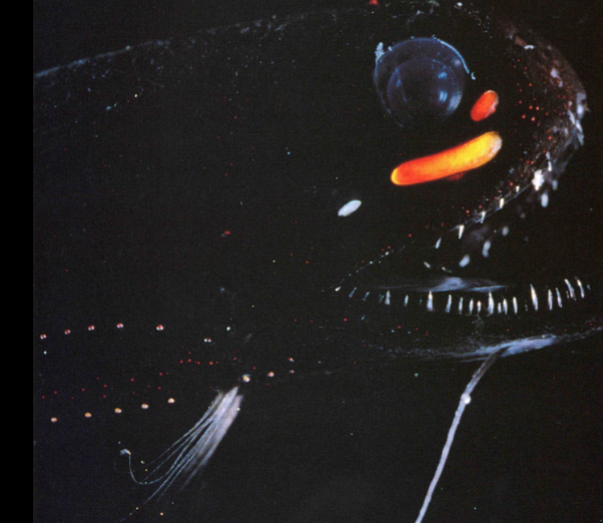
dragonfishes + light fishes light
emit light that others can’t see to see better (only helps themselves
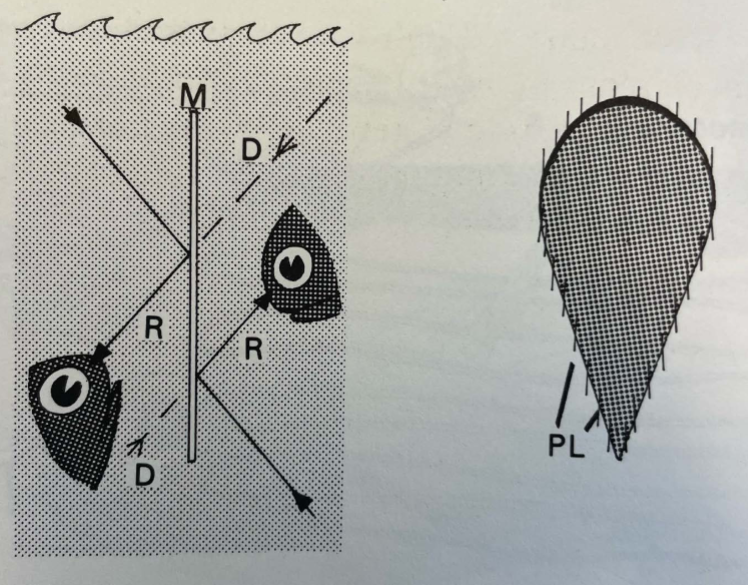
hatchetfish
really shiny + reflective scales that are oriented perp to downwelling light, acting like a mirror
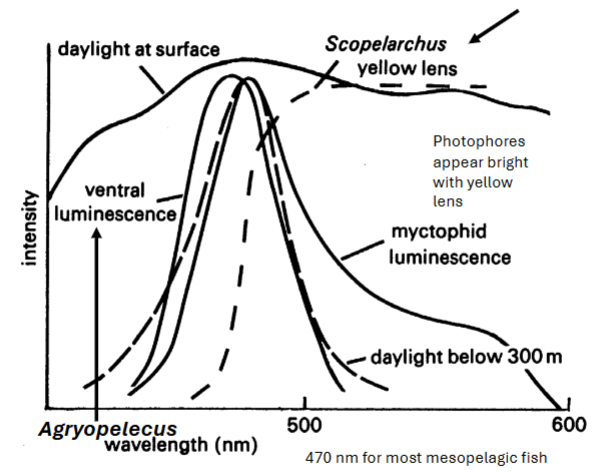
scopelarchus
have a yellow lens - photophores appear bright with yellow lens (can see laternfish (myctophids))
fish feeding
herbivores, omnivores, detritus feeders, carnivores
detritus feeder
consumes dead and decaying organic matter
herbivores
very few fish are true herbivores, most are opportunistic
harder to digest plants (takes more energy)
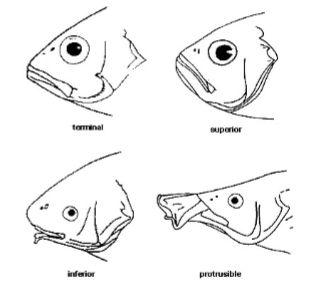
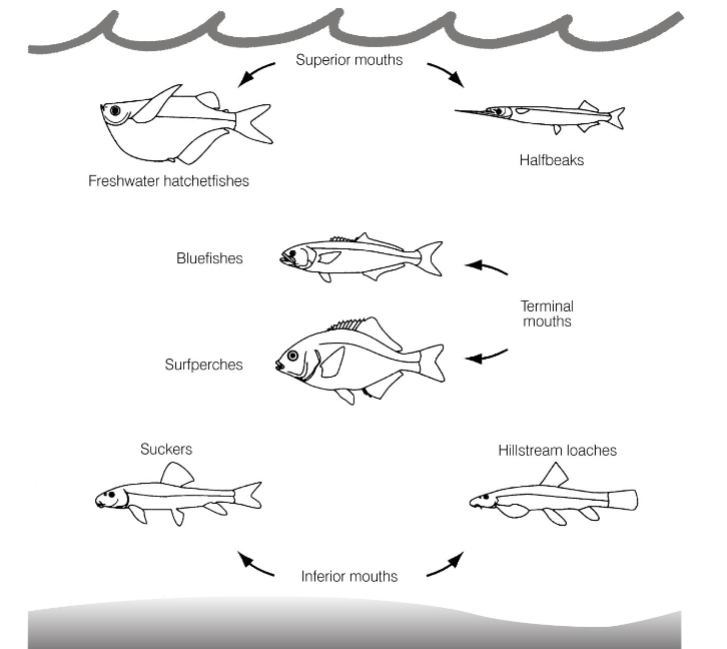
mouth position + fxn
terminal: body terminates at mouth that opens forward
superior (supraterminal): opens upwards
inferior (subterminal): opens downwards
protrusible: can extend
suction feeding
as mouth extends, prey sucked into mouth by vacuum —> close operculum, expand buccal cavity to create pressure + suction
mouth position examples
superior: hatchetfish, halfbeaks (at the top)
terminal: bluefish, surfperch (in the middle)
inferior: suckers, hillstream loaches (at the bottom)
inertial suction
rapid expansion of the buccal cavity
up to a 40-fold increase in the buccal cavity, water then passed over the gill rakers and into the opercular cavity
jaw protrusion
upper jaw protrudes in many teleost fish, forming a pipette mouth
gill rakers
bony extensions of the gill arch used for filter feeding
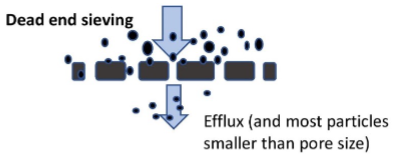
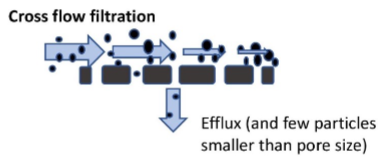
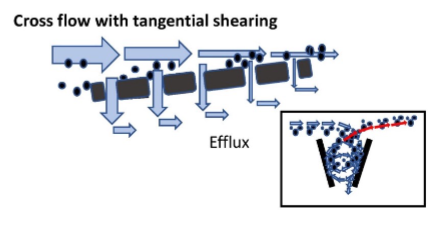
how food gets from rakers to gut
dead end sieving, cross flow filtration, cross flow w/ tangential shearing
dead end sieving
cross flow filtration
cross flow w/ tangential shearing
pharyngeal jaws
second set of jaws, evolved from modified gill arches, dentition and fxn depend on diet
winnowing (black perch) - food
bite turf, swish around, spit out algae, swallow inverts
moray eel - food
primarily eat large fish, capture w outer jaws + eat fish w inner jaws
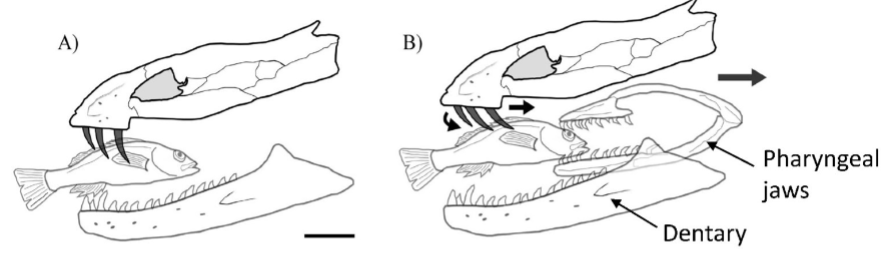
bat rays - pharyngeal jaws
pharygeal plate
horn shark - pharyngeal jaws
placoid (sharper) teeth outside mouth, crushing plates inside mouth
(doesn’t lose teeth like other sharks
opaleye - food
scraping premax + dentary, strip algae off surfaces
completely flatten out mouth to the get @ the surfaces
gain vs food particle size
far left: sea bass eating copepod (unless can concentrate and eat a large amount at once)
far right: kelp bass eating surfperch
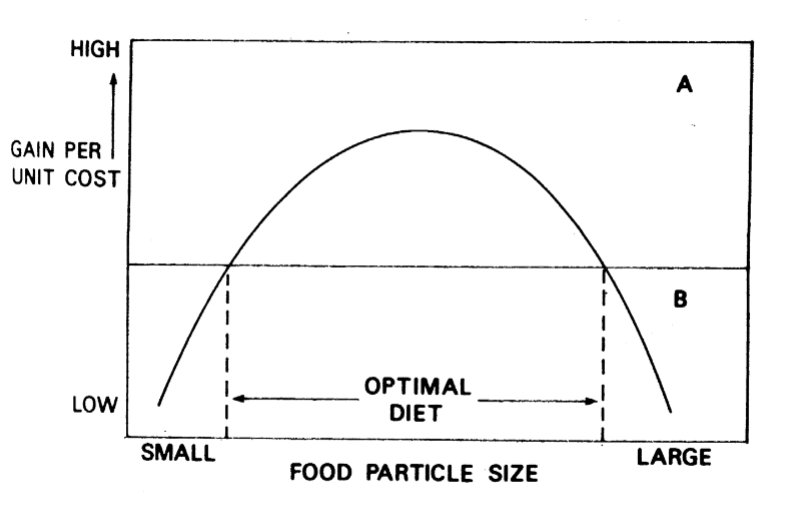
most basic predator rule
if they can fit it in their mouth whole, they’re gonna eat it