2173 MC TEST
 Call Kai
 Learn
Learn Practice Test
 Spaced Repetition
 Match
Match Flashcards
 Knowt Play
1/14

Earn XP
Description and Tags
fk2173
Name | Mastery | Learn | Test | Matching | Spaced | Call with Kai |
|---|
No analytics yet
Send a link to your students to track their progress
15 Terms
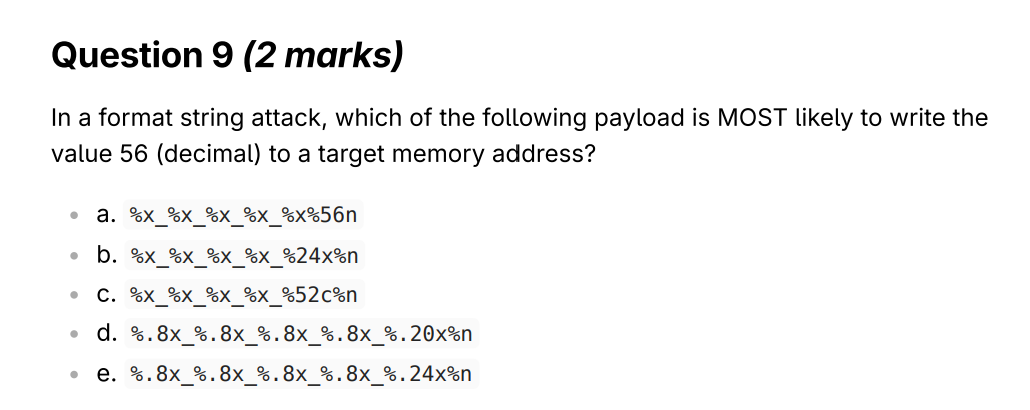
q9
simplest:
%.nx
n=number
number=written value
%n=takes number of printed chars, writes that int into memory
E
8+8+8+8=32
32+24=56
%.8x=prints 8chars
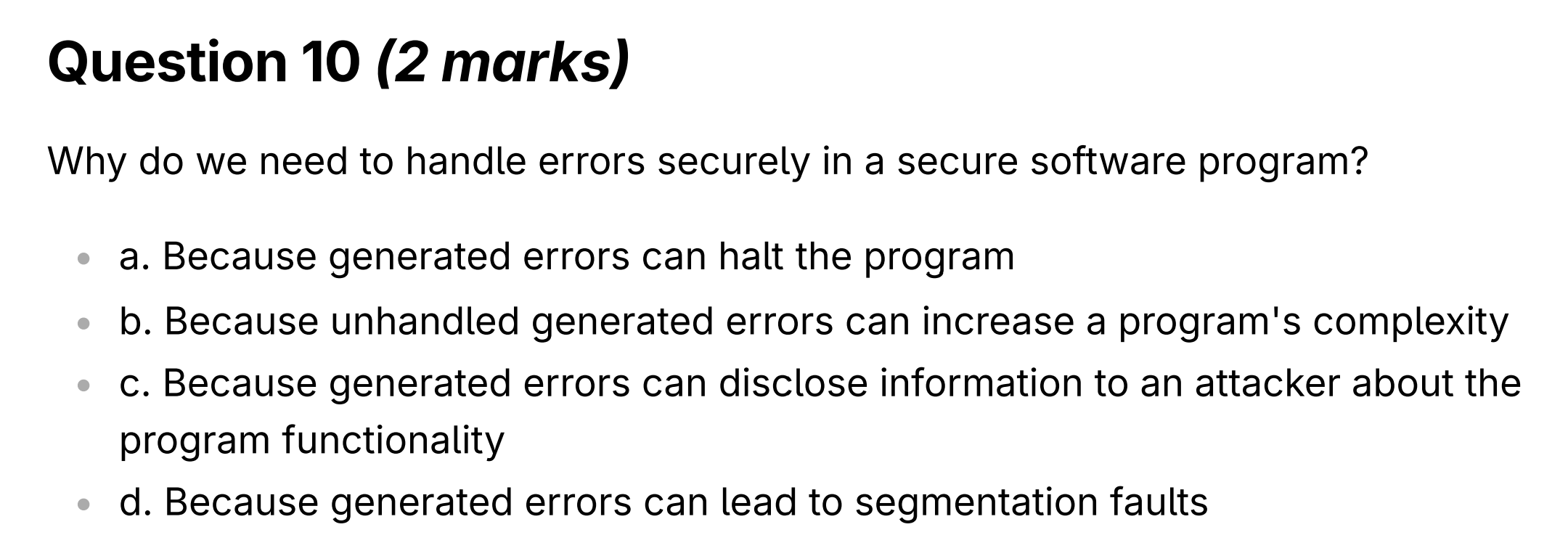
q10
C, generated errors, can disclose program functionality info
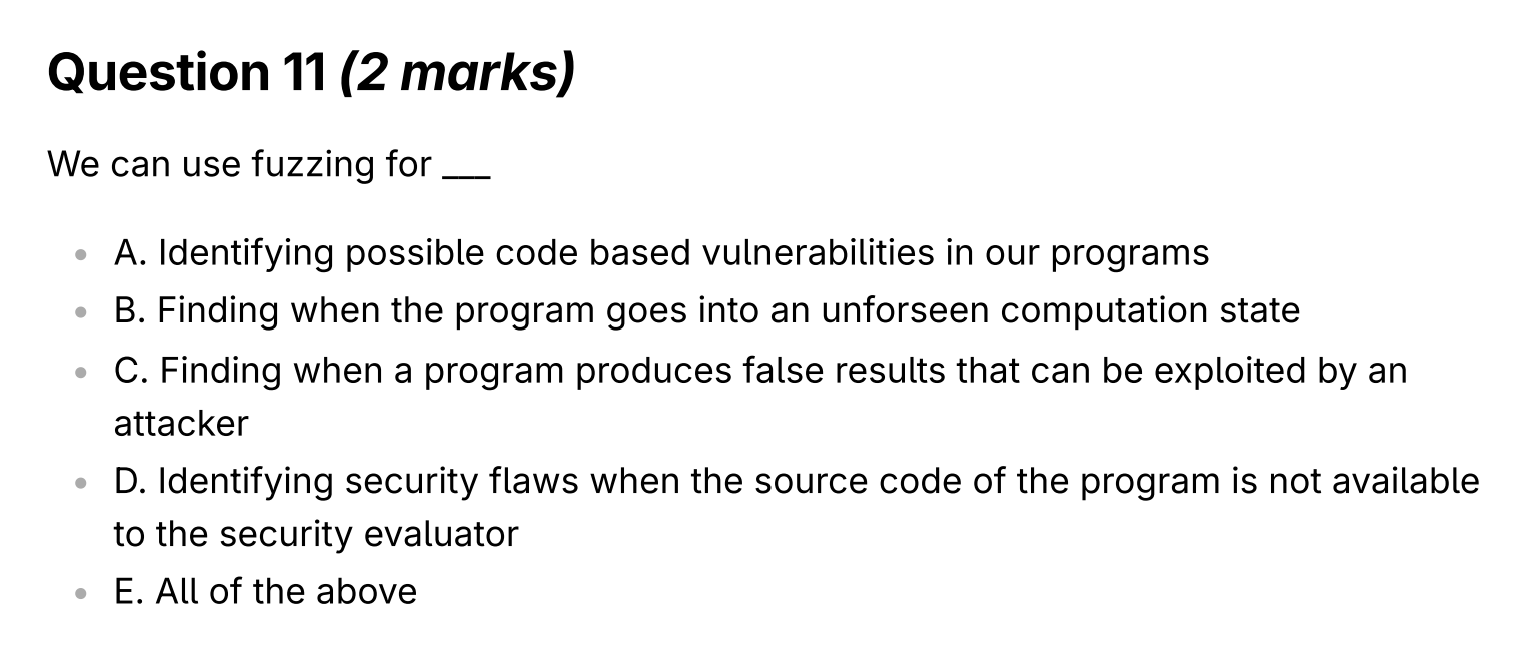
q11
E
find code vul
unforseen computation state
false results attacker exploit
security flaw, source code unavail
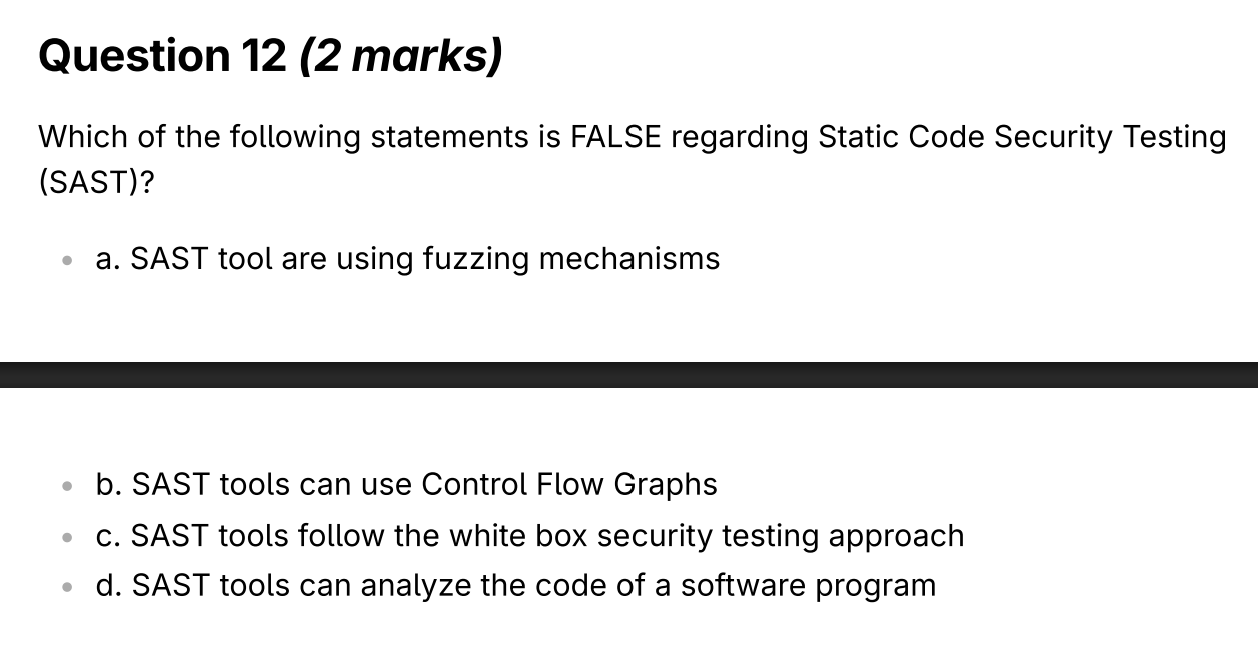
q12
A
SAST-analyse code, not running
Fuzzing-send random data, run, check crash
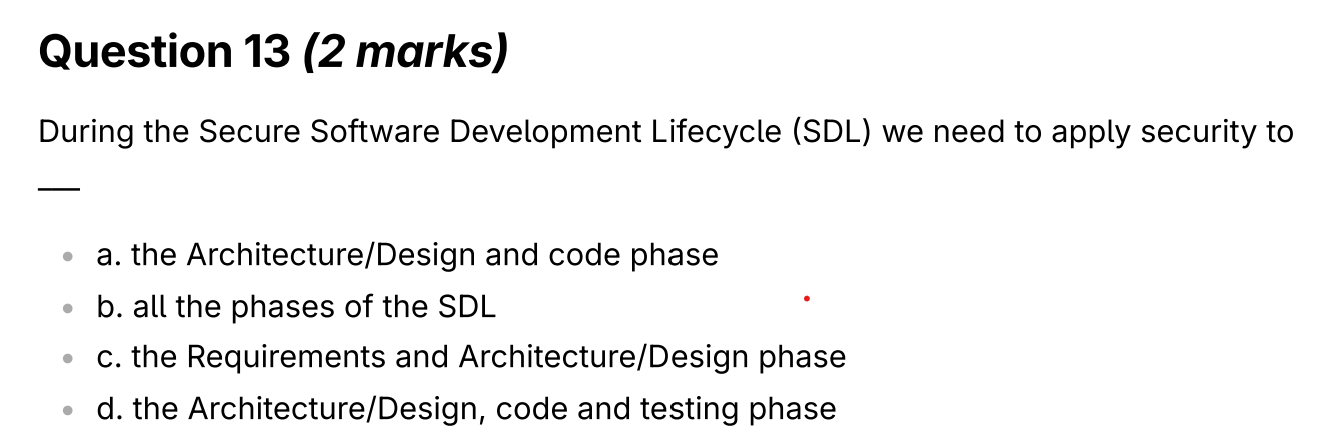
q13
B
apply security, all SDL phases
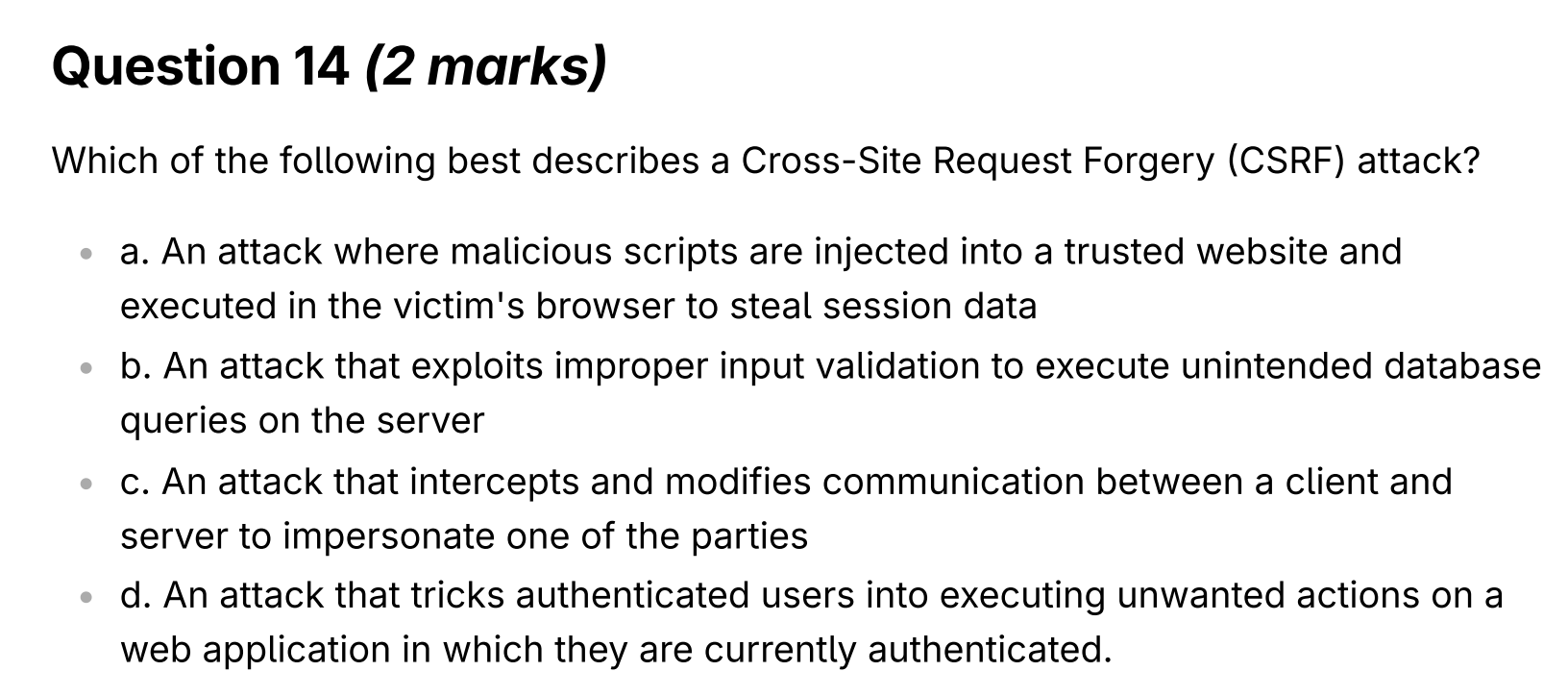
q14
D
CSRF-
Cross-site request forgery
trick authenticated users, execute unwanted actions, web app, authenticated
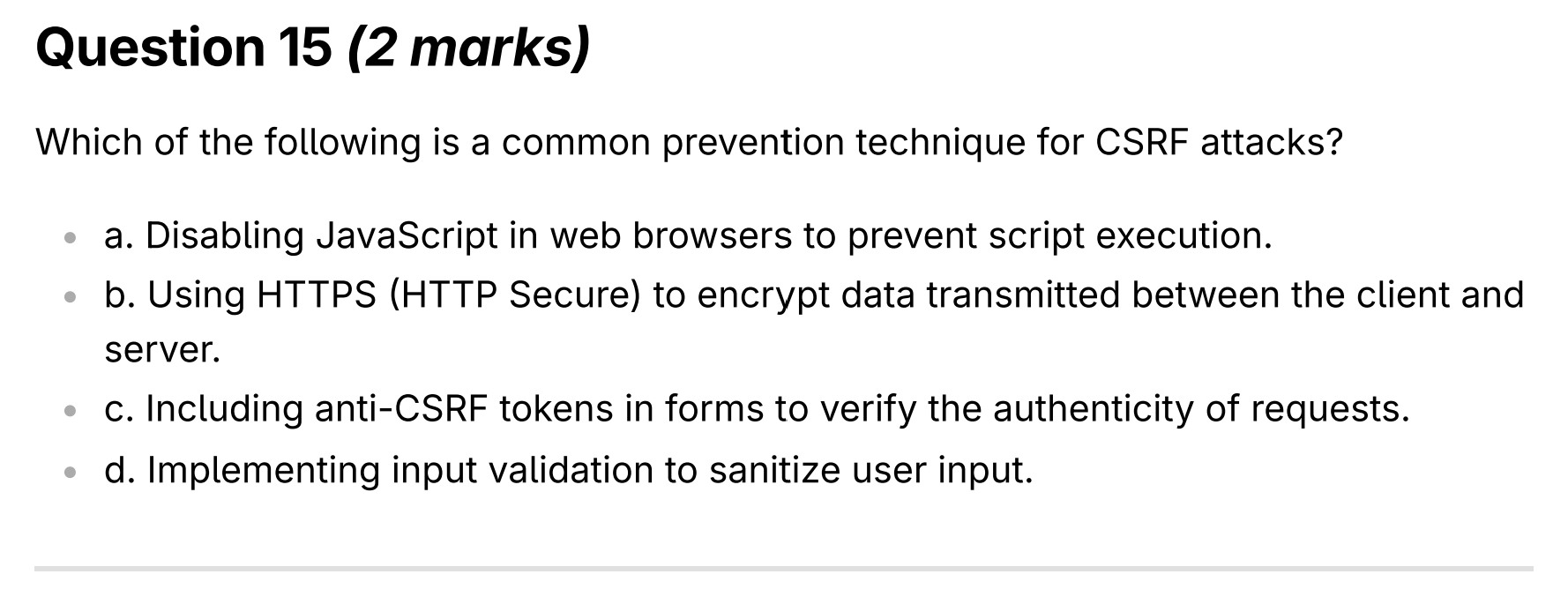
q15
C)
include anti-csrf tokens in forms, verify request authenticity
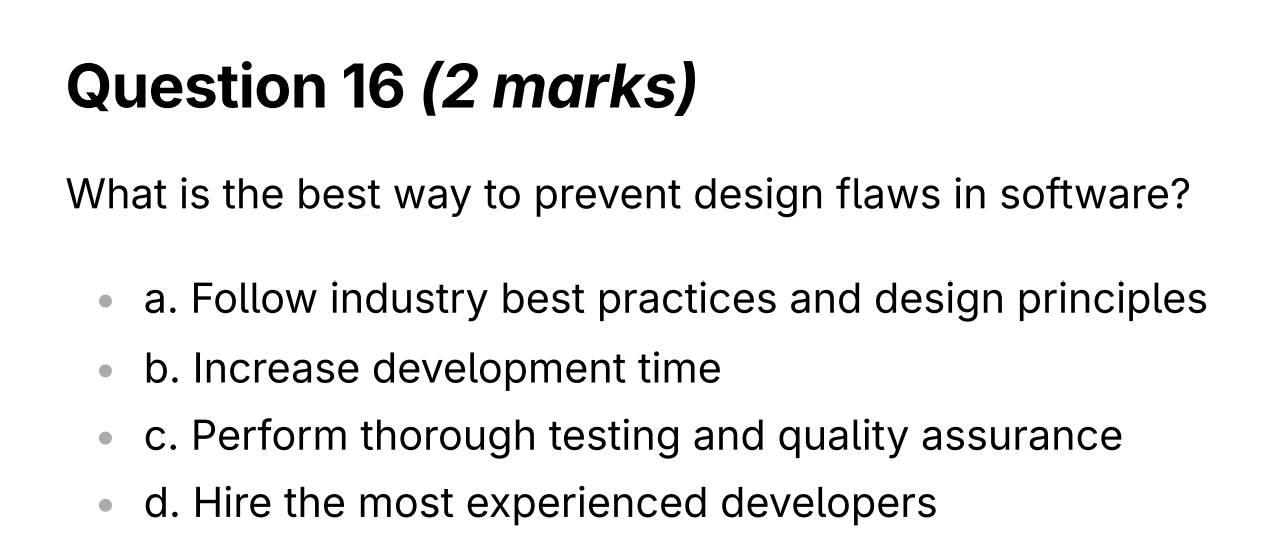
q16
A)
follow industry best practices, design principles
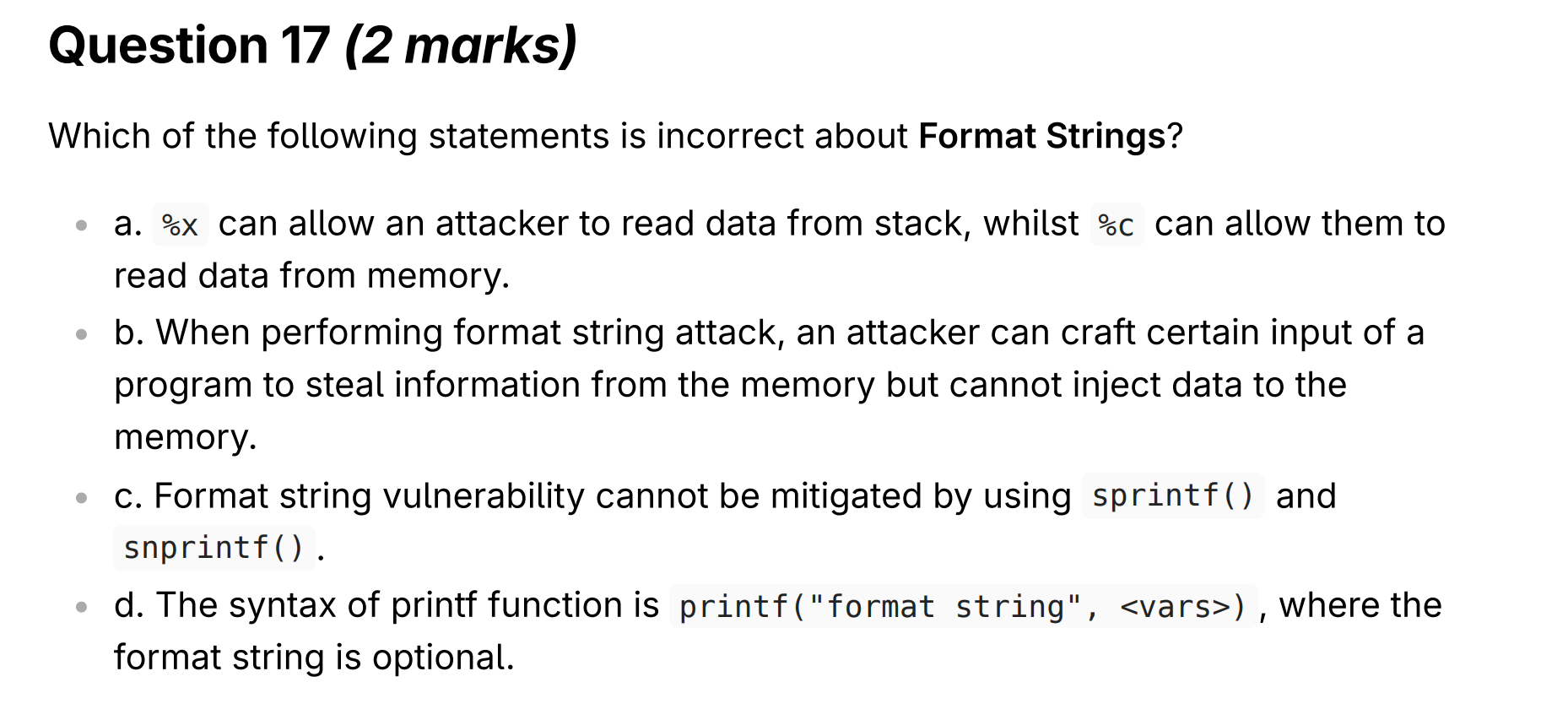
q17
B)
attacker can craft certain input to steal information, but cannot inject data to memory
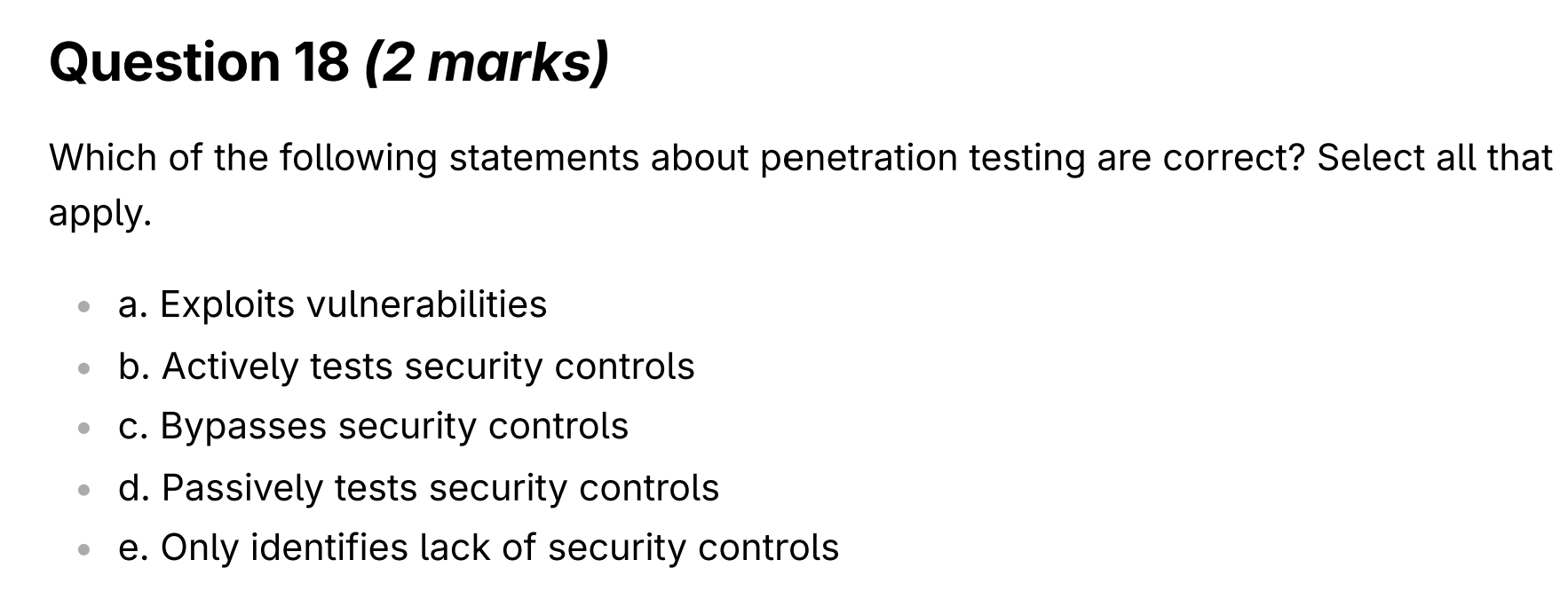
A,B,C
exploit vul, active test security control, bypass sec con
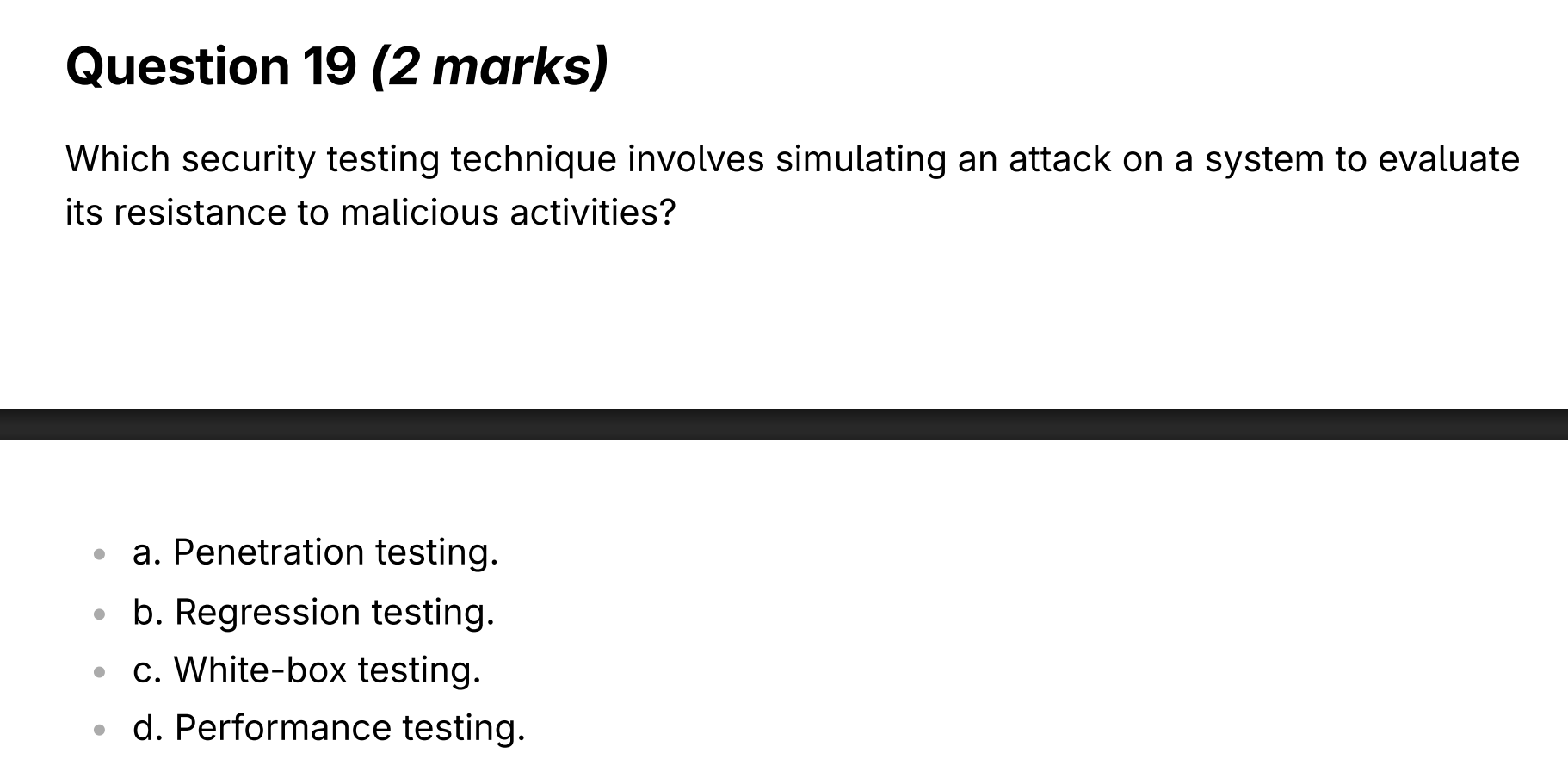
q19
A)
penetration testing:
simulate attack, evaluate, malicious activity resistance
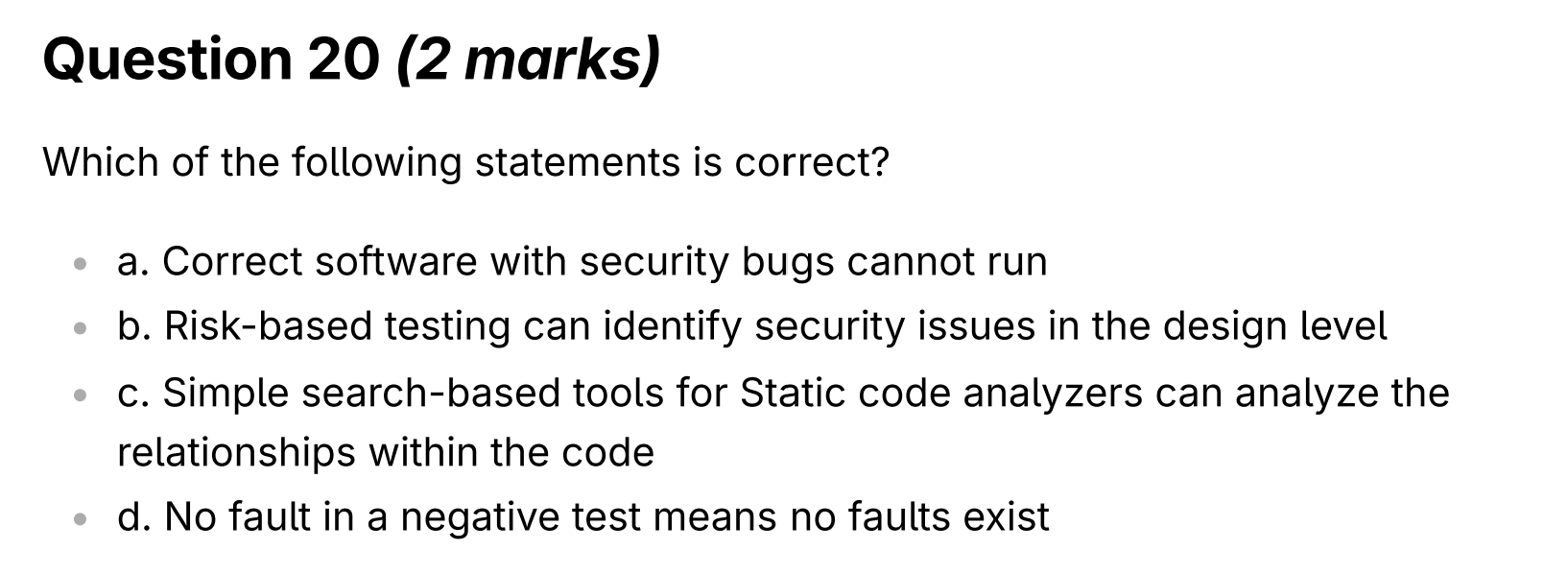
q20
B)
True:
risk-based testing, identify security issues, design level
False:
correct software, security bugs, no run
search-based tools, static code analysers, no analyse relationships
no fault negative test, no faults
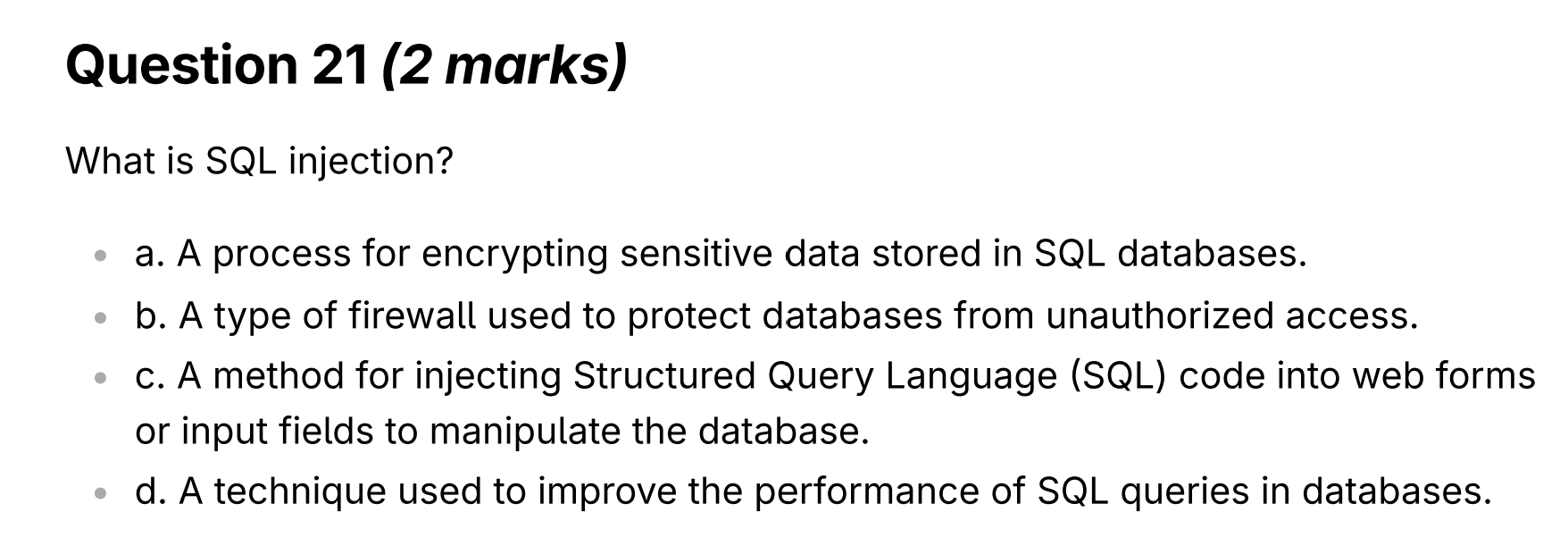
q21
C)
inject SQL (structured query language) code, web forms/input fields, manipulate database
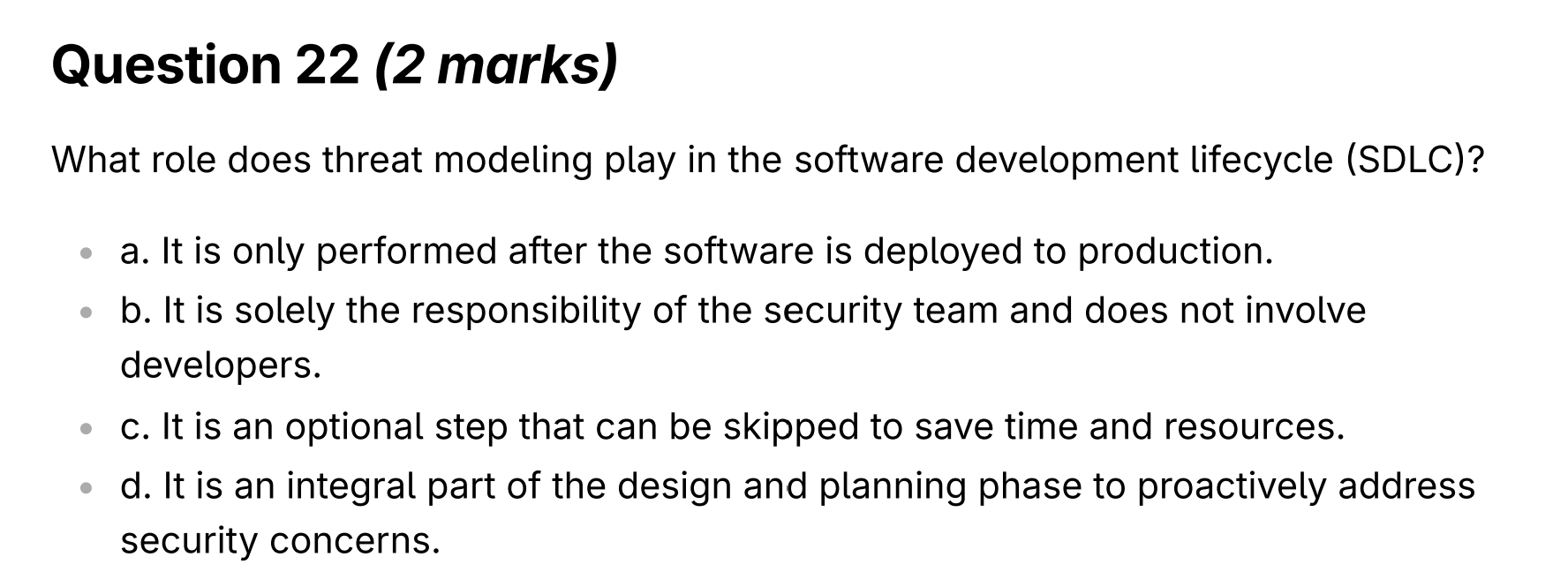
q22
D)
threat modelling in SDLC:
proactively, address security concerns
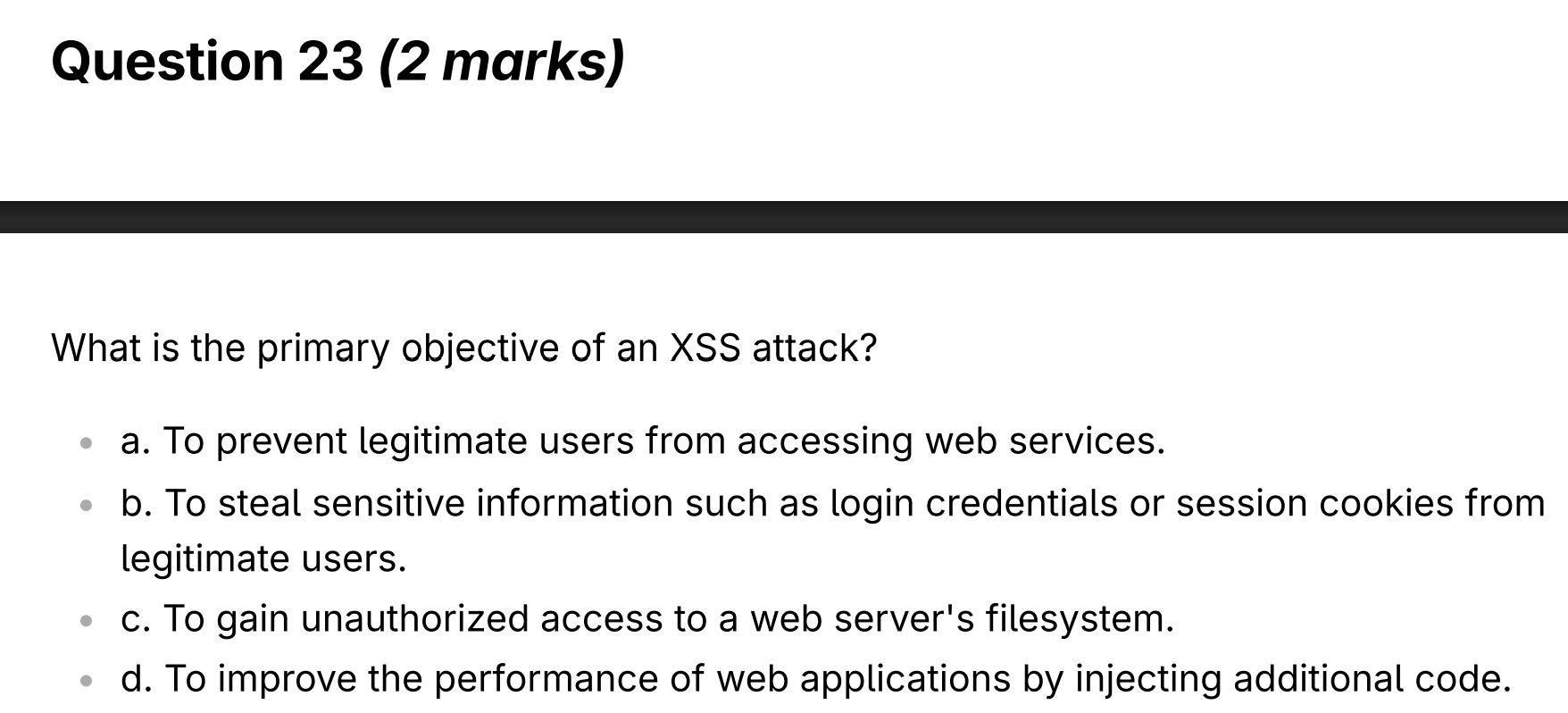
q23
B)
XXS attack:
steal sensitive info