India: Notable Writers (and their Most Famous Works and Notable Biographical Information and Information about their Works) and Literary Terms and Concepts (inc. Genres) and Notable Literary Developments
 Call Kai
 Learn
 Practice Test
 Spaced Repetition
 Match
 Flashcards
 Knowt Play
1/23

There's no tags or description
Looks like no tags are added yet.
24 Terms
750 BCE - 500 BCE - Ramayana (All Facts)
300s BCE - 200s BCE - Kautilya (All Facts)
Prime Minister under Chandragupta Maurya
Some believe the text was composed by multiple authors, however
300s BCE - 200s BCE - Kautilya: Arthasastra (All Facts)
Describes the Mauryan ideal of government
100s CE - 200s CE - Vatsayana Mallagana (All Facts)
Indian Sage
Wrote in the holy city of Benares
100s CE - 200s CE - Vatsayana Mallagana: Kama Sutra / Aphorisms of Love (All Facts)
Work which serves as a guidebook to the many and varied pleasures of sexual love
It functioned as a guide to every aspect of erotic etiquette
It was composed from the male point of view, although the author suggests that brides-to-be should study it before their marriages
Work which was essentially a veritable encyclopedia of sexuality
It lists literally hundreds of ways of sexual intercourse
It includes information on
Courtesans
Go-betweens
Sexual preferences of different nationalities
Courtship
Kissing
Marriage
Seduction
The physical act of love is set out in unprecedented detail
Included a selection of magic spells one could perform during sex
Work which is 1250 slokas (verses), it is divided into 36 chapters and written in Sanskrit
Underlying the book is the philosophy of the Hindu religion, which stresses that sexuality is a central part of human life, as fundamental as breathing
300s BCE - 400s CE - Mahabharata (All Facts)
Hindu collection of texts including epic poems and the Bhagvad Gita
300s - 400s - Kalidasa: The Ring of Shakuntala (All Facts)
Masterpiece of Indian literature
Drama which illustrates the pious and chivalrous ideal of the Brahmans
600s - Bana / Banabhatta (All Facts)
Sanskrit writer and court poet of Emperor Harsha
600s - Bana / Banabhatta: Harshacharita (All Facts)
Biography of Indian Emperor Harsha
680 - 760 - Bhavabhuti (All Facts)
Sanskrit playwright and dramatist
He wrote three outstanding plays, two of which tell the story of Rama
1149 - 1200 - Chand Bardai: Prithviraj Raso (All Facts)
Important early epic of the bardic period of Hindi literature
1253 - 1325 - Amir Khusrau (All Facts)
Indo-Persian Sufi Mystic, Writer, Poet, and Composer
He composed poetry for six different Delhi sultans
He was nicknamed the “Parrot of India”
He was the first artist to reflect the absorption of Islam into Indian life by mixing mystic themes and images from both cultures
His poetry and songs gained huge popularity
He is famous for his many works and stories such as “Laila and Majnun” and “Shirin and Khusrau”
His devotion to the Sufis, a liberal Muslim sect, inspired his best work
He was buried close to the grave of Nizamuddin Auliya
1320 - 1392 - Lalleshwari / Lal Ded / Mother Lalla (All Facts)
She was born in Kashmir in northern India
Her poetry illustrates a major cross-interaction between religious traditions that shaped the history of southern Asia
She was Hindu, but her emphasis on experience appealed to many Sufi Muslims
Her poetry represents the dynamic developments in religious thought created from the interaction between Hindus and Muslims in India during her time
1339 - 1399 - Baru Chandidas (All Facts)
Bengali Poet and Singer
He was a (high-caste) Brahman
He was among the first Bengali writers of Visnuite Poetry
He was famous for his beautiful set of songs about Krishna (one of the incarnations of the Hindu god Vishnu, whose cult became very popular in northeastern India during the namesake’s lifetime)
He stressed the importance of human emotion to be free from base desires
1339 - 1399 - Baru Chandidas: Shrikrishnakirtan / Song of Krishna (All Facts)
Lyrical work in which the namesake author retells the traditional story of the cowherd Krishna and his love for the shepherdess Radha
Work which was unusual for its time in its down-to-earth language style
Work which enriched Bengali literature
1381 - 1461 - Krittibas Ojha (All Facts)
Bengali Poet
1400s - Krittivasi Ramayan (All Facts)
Rhymed version of the Ramayana which enriched Bengali literature of the time

1530 - Babur: Baburnama (All Facts)
Collection of memoirs written during the life of the namesake founder of the Mughal Empire about his childhood and life and reign, which
he wrote when he retired in his garden (which was built to remind him of the pleasures of Kabul) after reigning, sometimes putting aside the writing of these memoirs to draw hashish smoke into his lungs, allowing the memories of bloody battlefields to metamorphize themselves into “wonderful fields of flowers”
were later published into different languages
immortalized him in colorful fashion
Collection of memoirs which include that he
assumed the throne and became King of Ferghana (a tiny portion of the Timurid Empire) but was deposed three times
was both beggar and emperor, knowing fortune and failure via his three depositions in the small province of the Timurid Empire
had sadness due to the tribesmen who had never seen guns before, laughing at the noise and confronting them with obscene gestures before being massacred; but had little sympathy for the supposedly “sophisticated” societies that he would eventually conquer
had sadness due to his son and successor’s sickness, in which the holy men of his time told him that his son and successor will only be cured if he gave up the most valuable thing he possessed; which the namesake thought was the Koh-i-Nor diamond, but it was really the namesake himself
had given up drinking, and filled up a pool constructed during his reign with lemonade rather than wine
Collection of memoirs in which he wrote
that the native Indian peoples he conquered lived in “a country [which he called Hindustan] that has few pleasures to recommend it and that: The people are not handsome. They have no idea of the charms of friendly society, of mixing frankly together, or of familiar intercourse. They have no genius, no comprehension of mind, no politeness of manner, no kindness of fellow feeling, no ingenuity or mechanical or artistic abilities, no knowledge of design or architecture, no horses, no flesh, no grapes, no melons, no ice, no decent food, baths, no candles, not even a candlesticks”
He likely wrote this as propaganda to justify conquest of the peoples there so he could build his empire
with loving detail about the flora and fauna of his subject territories; describing parrots, rhinoceroses, the leaves of an apple tree, and the changing colors of flocks of geese on the horizon
famously, “what value is worldly wealth, and how can it redeem [his namesake son and successor]?”

1489 - 1546- Mirabai (All Facts)
Bhakti Poet

1551 - 1602 - Abu Fazl (All Facts)
Indian Writer and Historian during the Mughal Empire
He was the son of the unorthodox Muslim mystic Sheikh Mubarak
He was a Muslim “Free-Thinker”
He was a proponent of religious tolerance, like Emperor Akbar
He owned a library of 24K well-used books
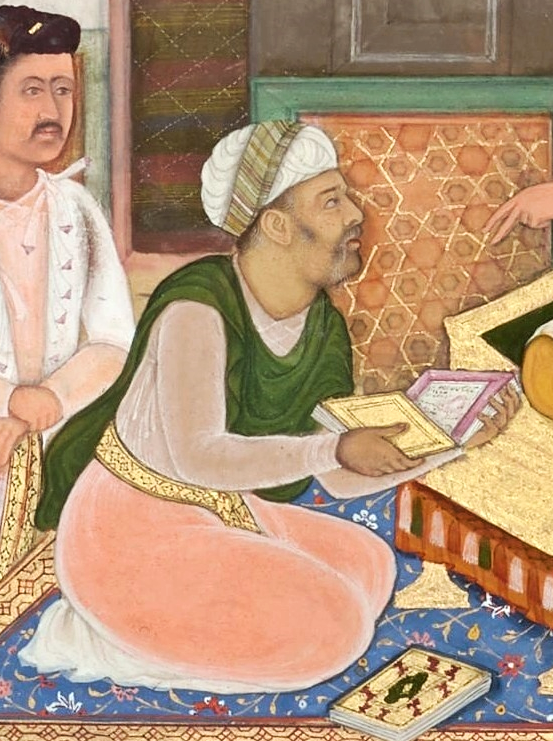
1605 - Abu Fazl: Akbarnama (All Facts)
Work ordered to be written by Emperor Akbar, in which the namesake author was the most qualified for the task
Work written as a comprehensive account of Emperor Akbar’s reign of the Mughal Empire, detailing the history of and laws made under Emperor Akbar’s reign
Work which was the most detailed book ever written about a “great man,” with devoted 1,500 pages to the minutest details of Emperor Akbar’s life including
what he drank
what he said and did each day
which wife he slept with each night
Work which details every word and quote of Emperor Akbar’s ranging from philosophy and etymology to cooking recipes and methods of oiling camels
Work in which the namesake author talked to hundreds of witnesses including
Akbar’s aunt, who recalled the Mughal Empire at the time of Akbar’s predecessor and father Humayun, who she said had lost and regained the empire
Humayun’s servant Bayezid, who was old and suffering from a stroke but nonetheless dictated his memories to the namesake author’s clerk
Humayun’s servant Jauhar
Work in which the namesake author had compiled it while always having two clerks at his side

1511 - 1623 - Tulsidas (All Facts)
Hindu Indian Poet
He lived in Benares
He was part of the Rama Cult

1623 - Tulsidas: Ramcharitmanas (All Facts)
Work which was (is) the namesake author’s version of the Ramayana