Organizational Psychology
 Call Kai
 Learn
Learn Practice Test
 Spaced Repetition
 Match
Match Flashcards
 Knowt Play
1/422

There's no tags or description
Looks like no tags are added yet.
Name | Mastery | Learn | Test | Matching | Spaced | Call with Kai |
|---|
No analytics yet
Send a link to your students to track their progress
423 Terms
Organizational Psychology: Applies theories and research to improve employee-
well-being, workplace efficiency, and overall organizational success.
Critical Thinking in Organizational Psychology
List what that includes:
Being Open-Minded
Being Skeptical
Being Logical
Critical Thinking in Organizational Psychology
Being Open-Minded
Avoid _________ thinking on complex topics.
Examine ____ available evidence before forming conclusions.
black-and-white
all
Critical Thinking in Organizational Psychology
Being Skeptical
Separate _____ from ______
facts from opinions.
Critical Thinking in Organizational Psychology
Being Skeptical
Separate facts from opinions.
Ask: _____ collected the data? _____ provided it? What conclusions are _____?
Who
Who
Valid
Critical Thinking in Organizational Psychology
Being Logical
Ensure conclusions _______ from the evidence.
logically follow
Critical Thinking in Organizational Psychology
Being Logical
Ensure conclusions logically follow from the evidence.
Identify ________ and ______.
biases & assumptions
Critical Thinking in Organizational Psychology
Critical Thinking Exercise
Ex: "Eating Ice Cream Increases Murder Rates."
Be Open-Minded
Be Skeptical
Be Logical
Be Open-Minded – Consider if there’s a real link.
Be Skeptical – Is correlation mistaken for causation?
Be Logical – Look for a third factor (e.g., hot weather).
Critical Thinking in Organizational Psychology
What is a Theory?
Definition:
A statement of relationships among concepts within a defined context.
Critical Thinking in Organizational Psychology
What is a Theory?
Definition: A statement of ________ among ________ within a defined ________.
A statement of relationships among concepts within a defined context.
Critical Thinking in Organizational Psychology
What is a Theory?
Quote: “There is nothing so _______ as a good theory” – Kurt Lewin.
practical
Critical Thinking in Organizational Psychology
Purpose of Theory
Explains _______, ______, & __________ phenomena occur.
how, when, and why
Critical Thinking in Organizational Psychology
Purpose of Theory
Does not describe “____” happens (that’s classification/taxonomy).
what
Critical Thinking in Organizational Psychology
Evaluating Theories
Utility –
Does it predict and explain behavior?
Critical Thinking in Organizational Psychology
Evaluating Theories
Falsifiability –
Can it be proven wrong with evidence?
Critical Thinking in Organizational Psychology
Evaluating Theories
Example: Is it a good theory?
“Introverts perform better in school because they study more.”→
“After we die, we are reincarnated as spirit animals.” →
“Introverts perform better in school because they study more.” → ✅ Testable and falsifiable.
“After we die, we are reincarnated as spirit animals.” → ❌ Not falsifiable.
Work Behaviors in Organizational Psychology
Purpose of Study:
______ different types of work behaviors.
Understand ______ (impact on organizations).
Classify different types of work behaviors.
What employees do (behavior)
Work Behaviors in Organizational Psychology
Purpose of Study:
Understand ______ (impact on organizations).
Understand outcomes (impact on organizations).
What results occur (outcomes)
Work Behaviors in Organizational Psychology
Purpose of Study:
Identify ______ (predictors of behavior).
Identify antecedents (predictors of behavior).
Why they do it (antecedents)
Work Behaviors in Organizational Psychology
Purpose of Study:
Identify antecedents (predictors of behavior).
Antecedents:
are the causes or influences before behavior happens.
Work Behaviors in Organizational Psychology
Purpose of Study:
Identify antecedents (predictors of behavior).
Antecedents: are the causes or influences before behavior happens.
Key Antecedents:
Person:
Situation:
Person: factors related to the person that make a behavior more or less likely
Situation: external factors in the environment that make a behavior more or less likely
Work Behaviors in Organizational Psychology
Purpose of Study:
Identify antecedents (predictors of behavior).
Antecedents (_____ X _____): are the causes or influences before behavior happens.
Antecedents (Person X Situation)
Work Behaviors in Organizational Psychology
Types of Work Behaviors List them:
Productive Work Behaviors
Counterproductive Work Behaviors (CWB)
Work Behaviors in Organizational Psychology
Types of Work Behaviors List them:
Productive Work Behaviors
List the types:
Task Performance
Contextual Performance
Adaptive Performance
Innovation
Work Behaviors in Organizational Psychology
Types of Work Behaviors List them:
Productive Work Behaviors
Task Performance:
Core job responsibilities.
Work Behaviors in Organizational Psychology
Types of Work Behaviors List them:
Productive Work Behaviors
Task Performance: ______ responsibilities (measured in job analysis and performance management).
Job-specific
Work Behaviors in Organizational Psychology
Types of Work Behaviors List them:
Productive Work Behaviors
Task Performance: Core job responsibilities.
Two Types:
Typical Performance
Maximum Performance
Work Behaviors in Organizational Psychology
Types of Work Behaviors List them:
Productive Work Behaviors
Task Performance: Core job responsibilities.
Typical Performance:
Daily work behavior.
Day-to-day effort
Work Behaviors in Organizational Psychology
Types of Work Behaviors List them:
Productive Work Behaviors
Task Performance: Core job responsibilities.
Maximum Performance:
When employees put in their best effort (e.g., during evaluations).
Work Behaviors in Organizational Psychology
Types of Work Behaviors List them:
Productive Work Behaviors
Task Performance: Core job responsibilities.
Antecedents of Task Performance→
Person Factors -
Situation Factors -
Person Factors -
Ability→ Can the employee do the job?
Motivation→ Do they want to do the job?
Situation Factors -
Work environment, job design
Ex: Even talented workers perform poorly with broken equipment.
Work Behaviors in Organizational Psychology
Types of Work Behaviors List them:
Productive Work Behaviors
Contextual Performance:
Behaviors that support the work environment (Organizational Citizenship Behaviors or OCBs).
Work Behaviors in Organizational Psychology
Types of Work Behaviors List them:
Productive Work Behaviors
Contextual Performance: Behaviors that improve the work environment but are _____ part of job descriptions.
not
Work Behaviors in Organizational Psychology
Types of Work Behaviors List them:
Productive Work Behaviors
Contextual Performance: Behaviors that support the work environment (Organizational Citizenship Behaviors or OCBs).
Types of OCBs:
Altruism:
Sportsmanship:
Courtesy:
Conscientiousness:
Civic Virtue:
Work Behaviors in Organizational Psychology
Types of Work Behaviors List them:
Productive Work Behaviors
Contextual Performance: Behaviors that support the work environment (Organizational Citizenship Behaviors or OCBs).
Types of OCBs→ Altruism:
Helping others
Work Behaviors in Organizational Psychology
Types of Work Behaviors List them:
Productive Work Behaviors
Contextual Performance: Behaviors that support the work environment (Organizational Citizenship Behaviors or OCBs).
Types of OCBs→ Sportsmanship:
Not complaining about minor inconveniences.
Ex: An employee keeps a positive attitude even when the printer breaks.
Work Behaviors in Organizational Psychology
Types of Work Behaviors List them:
Productive Work Behaviors
Contextual Performance: Behaviors that support the work environment (Organizational Citizenship Behaviors or OCBs).
Types of OCBs→ Courtesy:
Being considerate & respecting others
Work Behaviors in Organizational Psychology
Types of Work Behaviors List them:
Productive Work Behaviors
Contextual Performance: Behaviors that support the work environment (Organizational Citizenship Behaviors or OCBs).
Types of OCBs→ Conscientiousness:
Following rules diligently.
Work Behaviors in Organizational Psychology
Types of Work Behaviors List them:
Productive Work Behaviors
Contextual Performance: Behaviors that support the work environment (Organizational Citizenship Behaviors or OCBs).
Types of OCBs→ Civic Virtue:
Participating in organizational affairs.
~It reflects commitment to the organization as a whole.
Work Behaviors in Organizational Psychology
Types of Work Behaviors List them:
Productive Work Behaviors
Contextual Performance: Behaviors that support the work environment (Organizational Citizenship Behaviors or OCBs).
Antecedents of Contextual Performance→
Person Factors -
Situation Factors -
Person Factors -
Personality (agreeableness, conscientiousness) = show more OCBs
Motivation (genuine vs. self-serving).
Situation Factors -
Job design (autonomy).
Because people feel trusted & respected.
Organizational culture.
Supportive cultures encourage helping and cooperation.
Work Behaviors in Organizational Psychology
Types of Work Behaviors List them:
Productive Work Behaviors
Contextual Performance: Behaviors that support the work environment (Organizational Citizenship Behaviors or OCBs).
Antecedents of Contextual Performance→ They are affected by the ____________.
person and the work environment
Work Behaviors in Organizational Psychology
Types of Work Behaviors List them:
Productive Work Behaviors
Adaptive Performance:
Adjusting to change.
Work Behaviors in Organizational Psychology
Types of Work Behaviors List them:
Productive Work Behaviors
Adaptive Performance: Ability to handle ______, ______, & ______
emergencies, stress, and change.
Work Behaviors in Organizational Psychology
Types of Work Behaviors List them:
Productive Work Behaviors
Adaptive Performance: Adjusting to change.
Antecedents of Adaptive Performance→
Person Factors -
Situation Factors -
Person Factors -
Cognitive ability
Experience
Personality
Smart, experienced, and flexible people usually adapt better
Situation Factors -
Changing technology
Globalization
Organizational change
The environment can force adaptation.
Work Behaviors in Organizational Psychology
Types of Work Behaviors List them:
Productive Work Behaviors
Innovation:
Developing new ideas or processes.
Work Behaviors in Organizational Psychology
Types of Work Behaviors List them:
Productive Work Behaviors
Innovation: Employees ______ new products, services, or processes.
create
Work Behaviors in Organizational Psychology
Types of Work Behaviors List them:
Productive Work Behaviors
Innovation: Developing new ideas or processes.
Innovation helps organizations survive and ____.
Without innovation, companies become ____.
Innovation helps organizations survive and compete.
Without innovation, companies become outdated.
Work Behaviors in Organizational Psychology
Types of Work Behaviors List them:
Productive Work Behaviors
Innovation: Developing new ideas or processes.
Antecedents of Task Performance→
Person Factors -
Situation Factors -
Person Factors -
Task-related knowledge
Creativity
Motivation
Situation Factors -
Organizational support
Communication
Job specialization
Even creative employees may not innovate if the organization does not support new ideas.
Work Behaviors in Organizational Psychology
Types of Work Behaviors List them:
Counterproductive Work Behaviors (CWB):
CWB refers to behavior that harms the organization or its people.
Work Behaviors in Organizational Psychology
Types of Work Behaviors List them:
Counterproductive Work Behaviors (CWB): CWB refers to behavior that harms the organization or its people.
CWB does not assume _______.
intention
A behavior can be harmful even if the person did not mean harm.
Work Behaviors in Organizational Psychology
Types of Work Behaviors List them:
Counterproductive Work Behaviors (CWB)
List the types:
Interpersonal Deviance:
Organizational Deviance:
Work Behaviors in Organizational Psychology
Types of Work Behaviors List them:
Counterproductive Work Behaviors (CWB)
Interpersonal Deviance:
Harm directed at other people.
Gossip, harassment, bullying, workplace violence.
Work Behaviors in Organizational Psychology
Types of Work Behaviors List them:
Counterproductive Work Behaviors (CWB)
Interpersonal Deviance: Gossip, harassment, bullying, workplace violence.
Sexual Harassment:
Quid Pro Quo:
Hostile Work Environment:
Work Behaviors in Organizational Psychology
Types of Work Behaviors List them:
Counterproductive Work Behaviors (CWB)
Interpersonal Deviance: Gossip, harassment, bullying, workplace violence.
Sexual Harassment: Quid Pro Quo:
Job benefits in exchange for favors.
This for that.
Work Behaviors in Organizational Psychology
Types of Work Behaviors List them:
Counterproductive Work Behaviors (CWB)
Interpersonal Deviance: Gossip, harassment, bullying, workplace violence.
Sexual Harassment: Hostile Work Environment:
Inappropriate comments, jokes, gestures.
Work Behaviors in Organizational Psychology
Types of Work Behaviors List them:
Counterproductive Work Behaviors (CWB)
Interpersonal Deviance: Gossip, harassment, bullying, workplace violence.
Antecedents:
Weak policies, inconsistent enforcement.
Work Behaviors in Organizational Psychology
Types of Work Behaviors List them:
Counterproductive Work Behaviors (CWB)
Organizational Deviance:
Theft, sabotage, policy violations.
Harm directed at the organization itself.
Work Behaviors in Organizational Psychology
Types of Work Behaviors List them:
Counterproductive Work Behaviors (CWB)
Organizational Deviance: Theft, sabotage, policy violations.
Types:
Property Deviance
Production Deviance
Work Behaviors in Organizational Psychology
Types of Work Behaviors List them:
Counterproductive Work Behaviors (CWB)
Organizational Deviance: Theft, sabotage, policy violations.
Property Deviance:
Theft, sabotage, destroying company property.
Work Behaviors in Organizational Psychology
Types of Work Behaviors List them:
Counterproductive Work Behaviors (CWB)
Organizational Deviance: Theft, sabotage, policy violations.
Production Deviance:
Absenteeism, tardiness, turnover, substance abuse.
Work Behaviors in Organizational Psychology
Types of Work Behaviors List them:
Counterproductive Work Behaviors (CWB)
Organizational Deviance: Theft, sabotage, policy violations.
Production Deviance→ Substance Abuse:
Leads to ____ absenteeism, workplace accidents, and ____ productivity.
higher
lower
Work Behaviors in Organizational Psychology
Types of Work Behaviors List them:
Counterproductive Work Behaviors (CWB)
Organizational Deviance: Theft, sabotage, policy violations.
Production Deviance→ Absenteeism: Influenced by _____ vs. ______ to attend work.
ability (can’t) vs desire (don’t wanna)
Work Behaviors in Organizational Psychology
Types of Work Behaviors List them:
Counterproductive Work Behaviors (CWB)
Organizational Deviance: Theft, sabotage, policy violations.
Production Deviance→ Absenteeism: Antecedents:
Employee attitudes, policies, organizational culture.
If people dislike the job or feel unvalued, they may miss work more often.
Work Behaviors in Organizational Psychology
Types of Work Behaviors List them:
Counterproductive Work Behaviors (CWB)
Organizational Deviance: Theft, sabotage, policy violations.
Production Deviance→ Turnover types:
Voluntary (chooses) vs. Involuntary (removed)
Optimal (YAY) vs. Dysfunctional (Booo)
Avoidable (preventable) vs. Unavoidable (circumstances idk)
Work Behaviors in Organizational Psychology
Types of Work Behaviors List them:
Counterproductive Work Behaviors (CWB)
Organizational Deviance: Theft, sabotage, policy violations.
Production Deviance→ Turnover→ Key Antecedents:
Job satisfaction, stress, commitment.
Organizational climate and job market conditions.
Work Behaviors in Organizational Psychology
Types of Work Behaviors List them:
Counterproductive Work Behaviors (CWB)
Organizational Deviance: Theft, sabotage, policy violations.
Production Deviance→ Turnover→ Key Antecedents: "Turnover ____" – Employees leave when peers leave.
Contagion
Work Behaviors in Organizational Psychology
Types of Work Behaviors List them:
Counterproductive Work Behaviors (CWB)
Organizational Deviance: Theft, sabotage, policy violations.
Key Antecedents:
Stress, poor work climate.
What is an Attitude?
Definition:
Enduring evaluations about work-related aspects (e.g., job, organization, boss, coworkers).
What is an Attitude?: Enduring evaluations about work-related aspects (e.g., job, organization, boss, coworkers).
3 Components (ABC Model):
Affective
Behavioral
Cognitive
What is an Attitude?: Enduring evaluations about work-related aspects (e.g., job, organization, boss, coworkers).
3 Components (ABC Model): 1. Affective –
Feelings or emotions about work.
“I enjoy my job.”
What is an Attitude?: Enduring evaluations about work-related aspects (e.g., job, organization, boss, coworkers).
3 Components (ABC Model): 2. Behavioral –
Intentions to act a certain way.
“I stay late & help.”
What is an Attitude?: Enduring evaluations about work-related aspects (e.g., job, organization, boss, coworkers).
3 Components (ABC Model): 3. Cognitive –
Beliefs about the job or workplace.
“My manager is fair.”
What is an Attitude?: Enduring evaluations about work-related aspects (e.g., job, organization, boss, coworkers).
Why Do Work Attitudes Matter?
Humanistic Perspective:
Work should be satisfying and provide growth.
What is an Attitude?: Enduring evaluations about work-related aspects (e.g., job, organization, boss, coworkers).
Why Do Work Attitudes Matter?
Predicting Behavior:
Attitudes influence work performance and engagement.
A common exam idea is that attitudes are not just “feelings.”→ They can influence real outcomes.
What is an Attitude?: Enduring evaluations about work-related aspects (e.g., job, organization, boss, coworkers).
List Key Theories around Attitude:
Cognitive Dissonance
Theory of Planned Behavior (TPB)
Psychological Contract
What is an Attitude?: Enduring evaluations about work-related aspects (e.g., job, organization, boss, coworkers).
Key Theories around Attitude:
Cognitive Dissonance:
Psychological discomfort from conflicting attitudes and behaviors.
An employee believes honesty matters but lies at work.
What is an Attitude?: Enduring evaluations about work-related aspects (e.g., job, organization, boss, coworkers).
Key Theories around Attitude:
Cognitive Dissonance: Psychological discomfort from conflicting attitudes and behaviors.
People adjust behavior or attitudes to ______ _______.
reduce dissonance
What is an Attitude?: Enduring evaluations about work-related aspects (e.g., job, organization, boss, coworkers).
Key Theories around Attitude:
Cognitive Dissonance: Psychological discomfort from conflicting attitudes and behaviors.
People want ______ between beliefs and actions.
consistency
What is an Attitude?: Enduring evaluations about work-related aspects (e.g., job, organization, boss, coworkers).
Key Theories around Attitude:
Cognitive Dissonance: Psychological discomfort from conflicting attitudes and behaviors.
Someone changes their _______ after acting differently
belief
What is an Attitude?: Enduring evaluations about work-related aspects (e.g., job, organization, boss, coworkers).
Key Theories around Attitude:
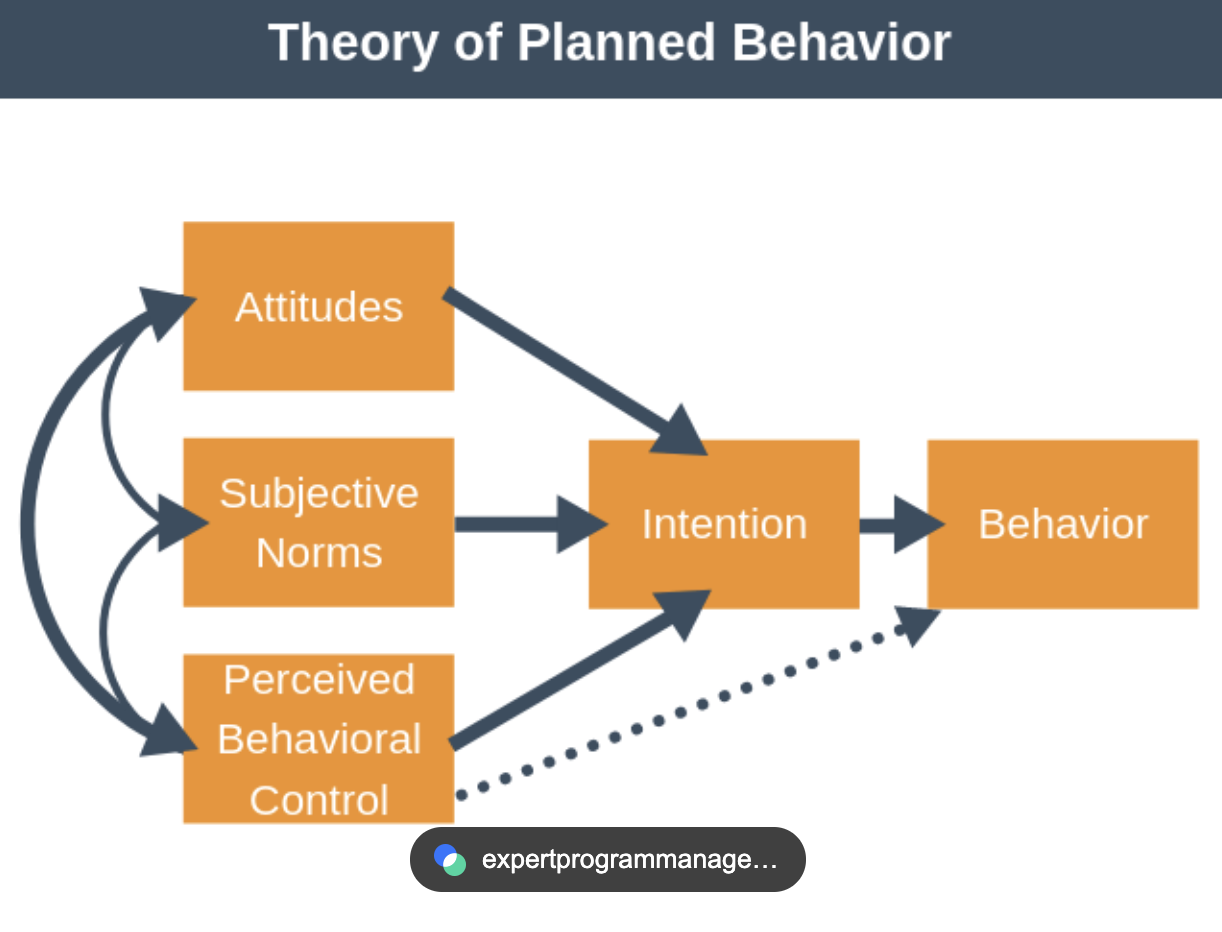
Theory of Planned Behavior (TPB)→ Behavior is influenced by:
Attitude toward the behavior (positive or negative).
Subjective norms (how others perceive it).
Perceived behavioral control (difficulty level).
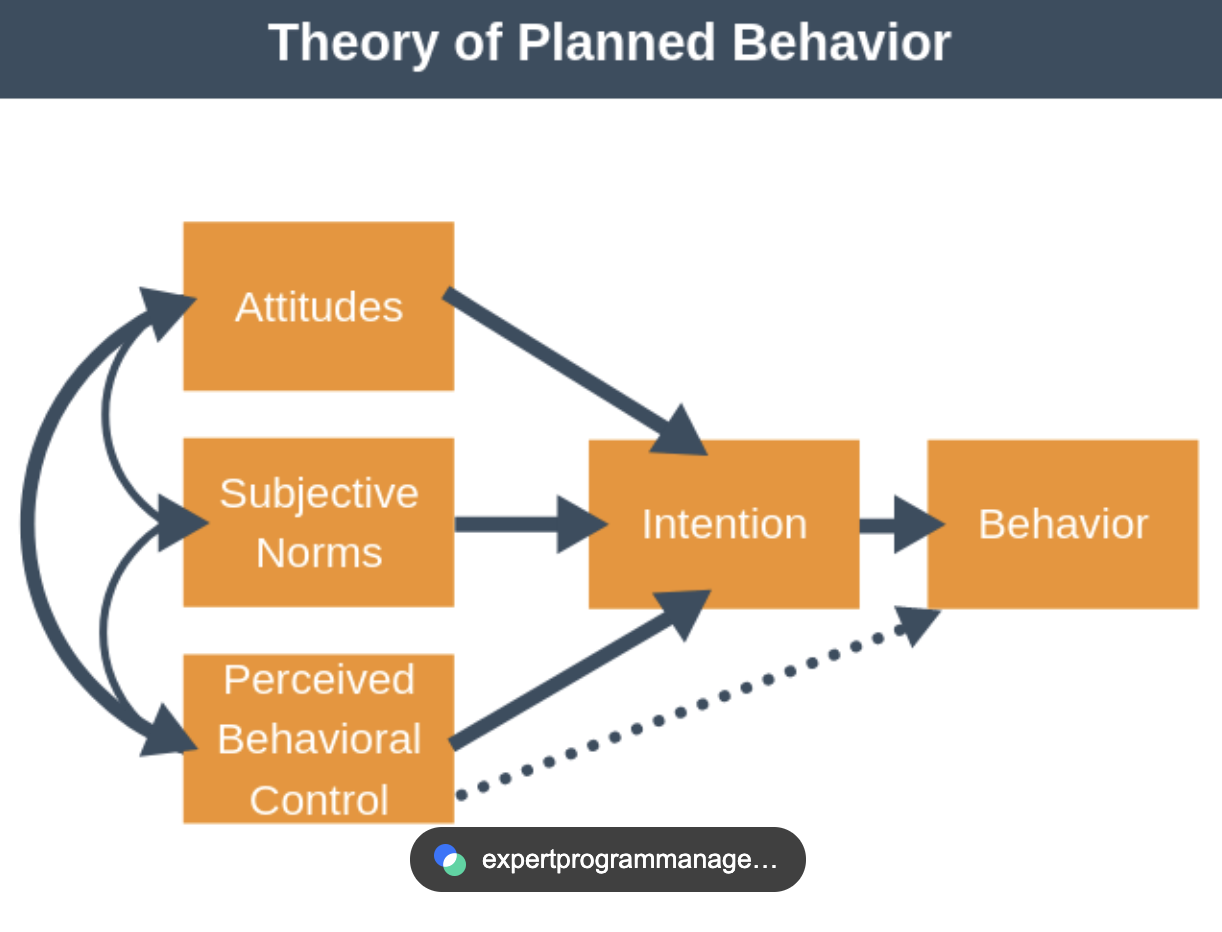
What is an Attitude?: Enduring evaluations about work-related aspects (e.g., job, organization, boss, coworkers).
Key Theories around Attitude:
Theory of Planned Behavior (TPB)→ Behavior is influenced by: 1. Attitude toward the behavior (positive or negative). asks~~
Do I think this action is good or bad?
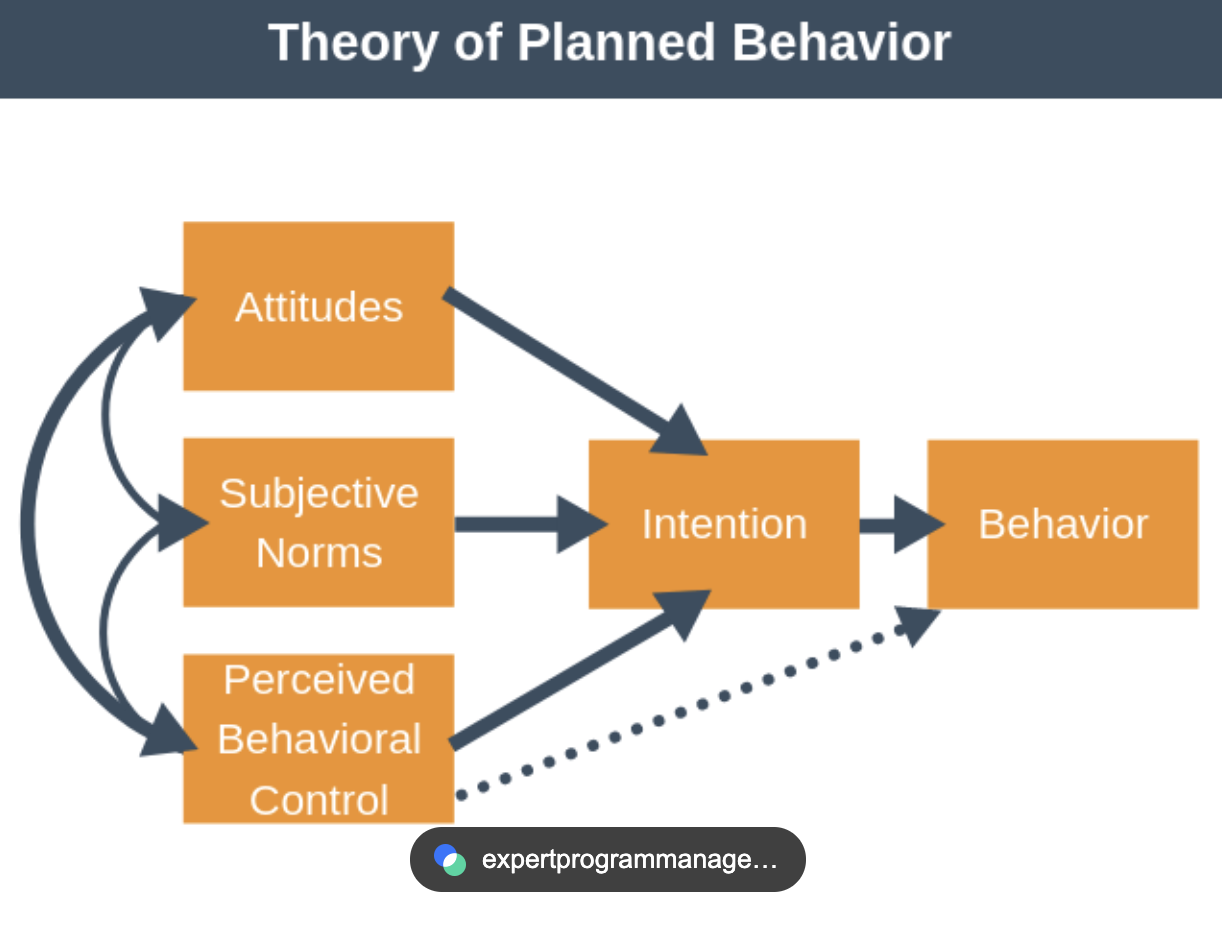
What is an Attitude?: Enduring evaluations about work-related aspects (e.g., job, organization, boss, coworkers).
Key Theories around Attitude:
Theory of Planned Behavior (TPB)→ Behavior is influenced by: 2. Subjective norms (how others perceive it). asks~~
Do people important to me approve of it?
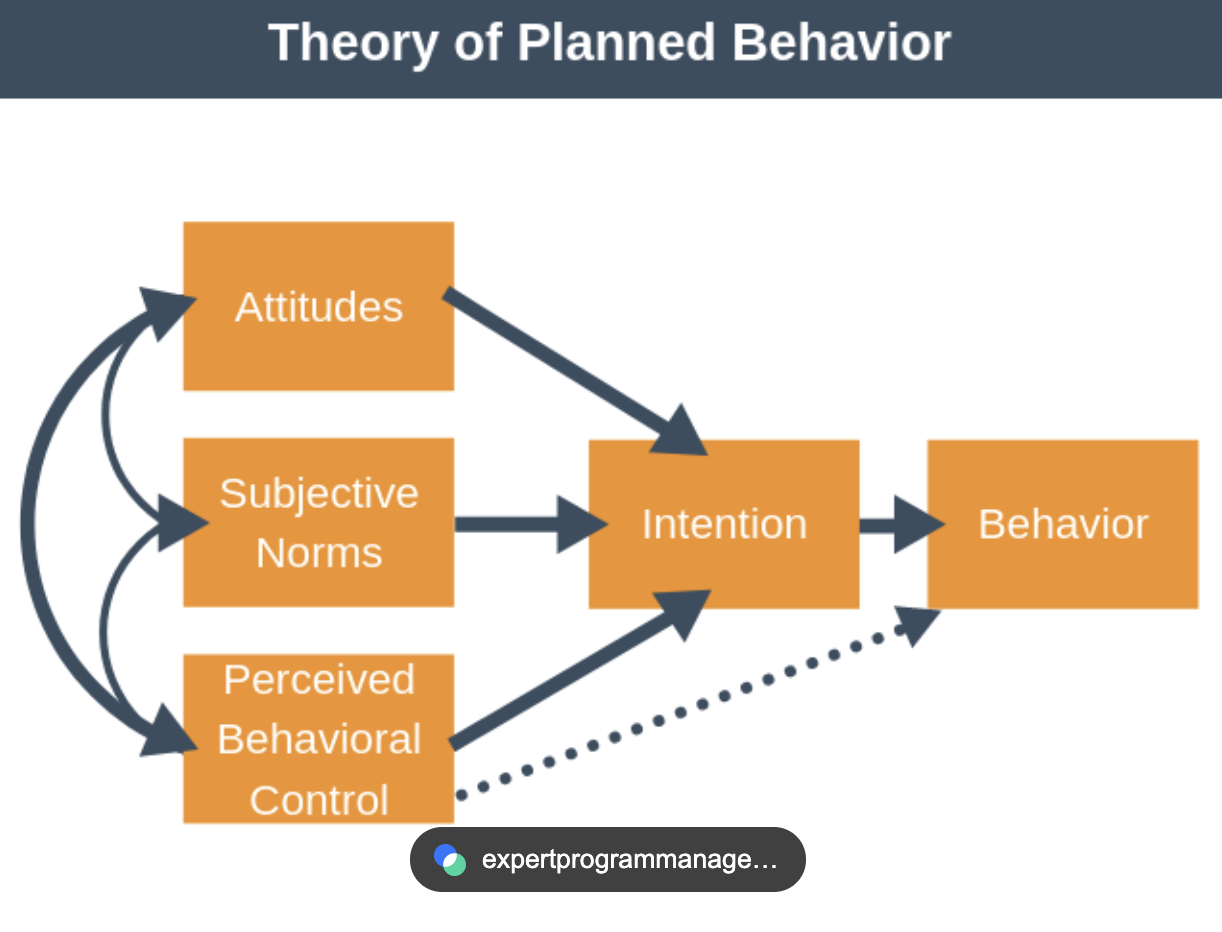
What is an Attitude?: Enduring evaluations about work-related aspects (e.g., job, organization, boss, coworkers).
Key Theories around Attitude:
Theory of Planned Behavior (TPB)→ Behavior is influenced by: 3. Perceived behavioral control (difficulty level). asks~~
Can I actually do it?
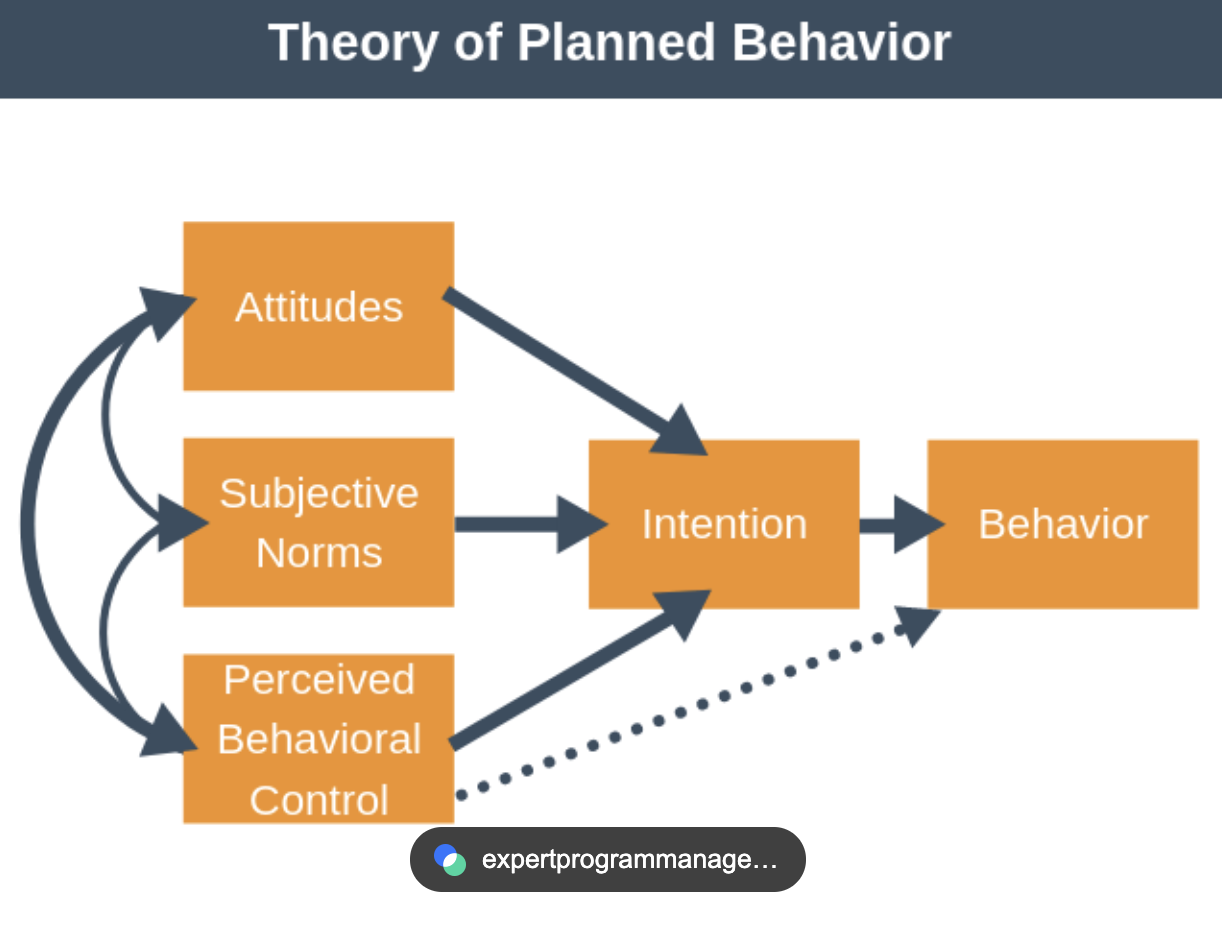
What is an Attitude?: Enduring evaluations about work-related aspects (e.g., job, organization, boss, coworkers).
Key Theories around Attitude:
Theory of Planned Behavior (TPB)→ Once behavior is influenced by those 3 (Attitude toward the behavior, Subjective norms, & Perceived behavioral control) it then leads into _________ → ________
Intention (Want to do it)→ Behavior (Actually doing it)
What is an Attitude?: Enduring evaluations about work-related aspects (e.g., job, organization, boss, coworkers).
Key Theories around Attitude:
Theory of Planned Behavior (TPB)
Implications: To _____ behavior, adjust attitudes, norms, or perceived control.
change
What is an Attitude?: Enduring evaluations about work-related aspects (e.g., job, organization, boss, coworkers).
Key Theories around Attitude:
Psychological Contract:
The implied agreement between employer and employee.
It is not a legal contract.
What is an Attitude?: Enduring evaluations about work-related aspects (e.g., job, organization, boss, coworkers).
Key Theories around Attitude:
Psychological Contract: The implied agreement between employer and employee.
2 types:
Transactional
Relational
What is an Attitude?: Enduring evaluations about work-related aspects (e.g., job, organization, boss, coworkers).
Key Theories around Attitude:
Psychological Contract: The implied agreement between employer and employee.
Transactional –
Short-term, specific obligations.
“I work, you pay me.”
What is an Attitude?: Enduring evaluations about work-related aspects (e.g., job, organization, boss, coworkers).
Key Theories around Attitude:
Psychological Contract: The implied agreement between employer and employee.
Relational –
Long-term, broad expectations.
“I work hard, and you support my growth and future.”
What is an Attitude?: Enduring evaluations about work-related aspects (e.g., job, organization, boss, coworkers).
Key Theories around Attitude:
Psychological Contract: The implied agreement between employer and employee.
Common Violations:
Lack of training, compensation, promotion, job security, or feedback.
Violations often reduce commitment and increase turnover.
Job Satisfaction
Definition:
Positive feelings about one's job.
Job Satisfaction
Influencing Factors:
Job Characteristics Model:
Range of Affect Theory (1976)
Personality & Disposition:
Job Satisfaction
Influencing Factors:
Job Characteristics Model:
Skill Variety
Task Identity
Task Significance
Autonomy
Feedback
Job Satisfaction
Influencing Factors:
Job Characteristics Model: 1. Skill Variety –
Using multiple skills.
Job Satisfaction
Influencing Factors:
Job Characteristics Model: Task Identity –
Completing whole projects
Identifiable piece of work.
Job Satisfaction
Influencing Factors:
Job Characteristics Model: Task Significance –
Feeling work is meaningful.
Job Satisfaction
Influencing Factors:
Job Characteristics Model: Autonomy –
Control over decisions.
Job Satisfaction
Influencing Factors:
Job Characteristics Model: Feedback –
Clear performance information.
Job Satisfaction
Influencing Factors:
Range of Affect Theory (1976) –
Facets of work are differentially weighted when assessing job satisfaction.
That means one person may care most about pay, while another cares most about coworkers.
This theory explains why job satisfaction is subjective.
Job Satisfaction
Influencing Factors:
Personality & Disposition:
Some people are ______ more satisfied regardless of job.
naturally
Some of it comes from stable personality traits.
Job Satisfaction
Influencing Factors:
Personality & Disposition:
_______ factors (e.g., twin studies) suggest job satisfaction is partly inherited.
Genetic