Lecture 13-16: Our Planet’s Future
 Call Kai
 Learn
Learn Practice Test
 Spaced Repetition
 Match
Match Flashcards
 Knowt Play
1/23

There's no tags or description
Looks like no tags are added yet.
Name | Mastery | Learn | Test | Matching | Spaced | Call with Kai |
|---|
No analytics yet
Send a link to your students to track their progress
24 Terms
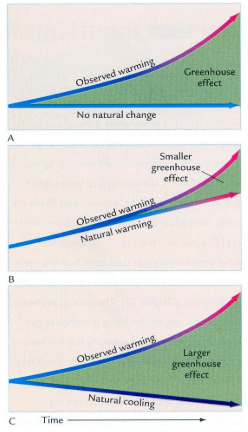
How to ‘prove’ anthropogenic warming?
Understand baseline of change, is it on a cycle?
Work out what the “observed warming” over time is (based on empirical measurements of long-term trends)
Difference between observed and baseline change, how large or how small it is, then shows if, e.g. the greenhouse effect is present
The ‘debate’ is: is the observed warming simply a part of a natural process?
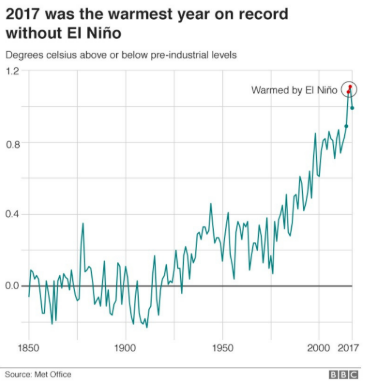
How can El Niño be used to deduce anthropogenic warming?
By subtracting the amount of warming just due to El Niño
In 2017, El Niño only made a small difference to the peak in global temps, but it was still the warmest year on record
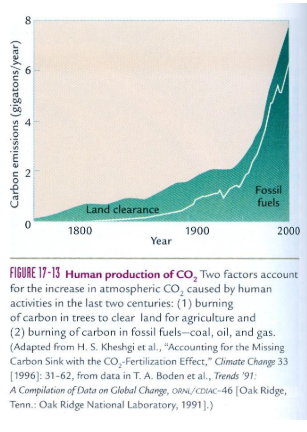
What’s human-induced climate change primarily due to?
Fossil fuels and land clearance - increases CO2 emissions
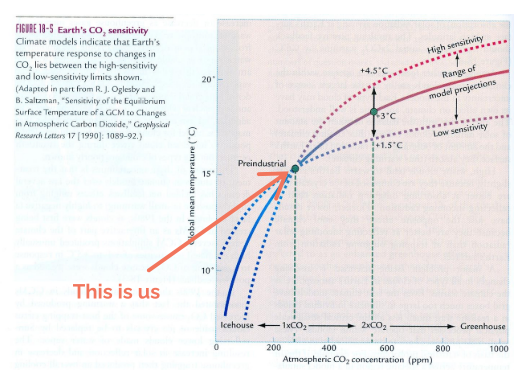
Predicting the future
Using climate models to predict what would happen if CO2 changes in a certain way, 1.5 degrees = target
What does predicting the future of climate change depend on?
How quickly we move away from fossil fuels
Socioeconomic pathways
Sulphate emissions - sulphate aerosols act as cloud condensation nuclei
Methane emissions
Distribution patterns have changed, Europe = sulfur emissions declined, East Asia = sulfur emissions increased
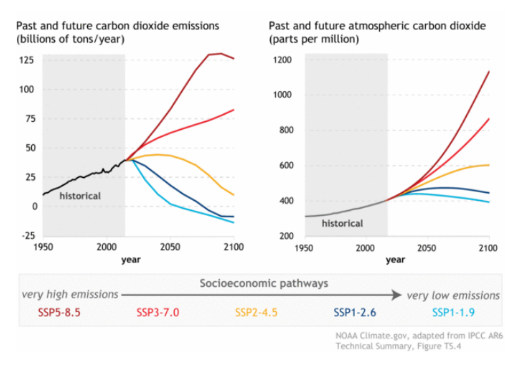
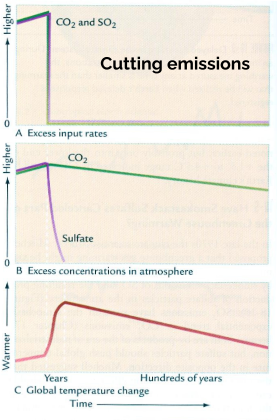
What would happen if we implemented a policy to rapidly cut back on both industrial CO2 and SO2 emissions?
Predicted we would have an initial increase in temperature (because of the loss of SO2 aerosol effect - creates clouds and reflects sunlight)
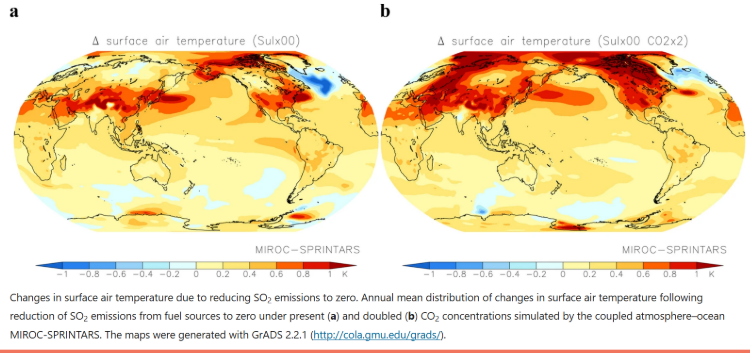
What will happen to the severity of temperature change from cutting SO2?
Will differ based on latitude and atmospheric CO2
Higher latitudes/Northern hemisphere = larger increase in temperature
Temperature change is more severe with a 2x CO2 increase
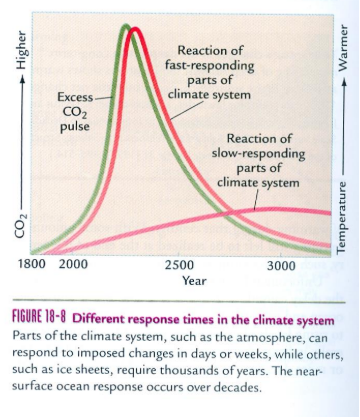
Response time within the climate system - another concern
Different components of the climate system respond to changes at different paces, still see heightened temps for a while after
Ocean will hold a lot of heat, take a long time to be released back into the atmosphere
CO2 decrease = increase in thermal expansion of ocean
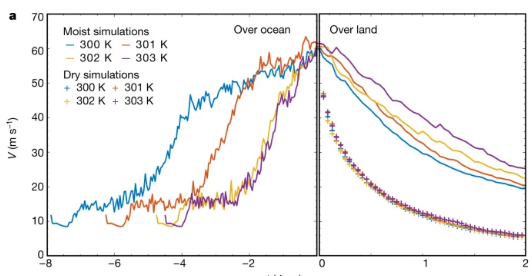
What will happen to tropical storms, hurricanes, and cyclones in the future?
Hard to say if they will be more frequent - regional differences
Intensity is likely increasing
Associated rainfall is going to increase
Associated flooding will increase (and be more damaging)
Dissipation over land will take longer
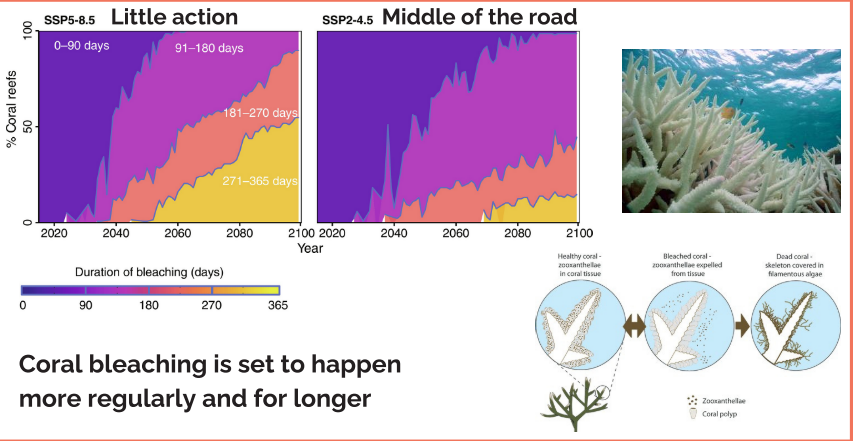
What will happen to coral bleaching?
More regularly and for longer
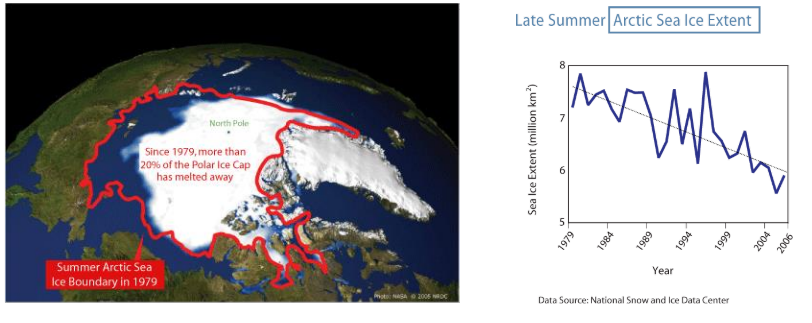
What will happen to ice concentrations?
Naturally fluctuates, but long-term decrease in sea-ice extent
Since 1979, more than 20% of the polar ice cap has melted away
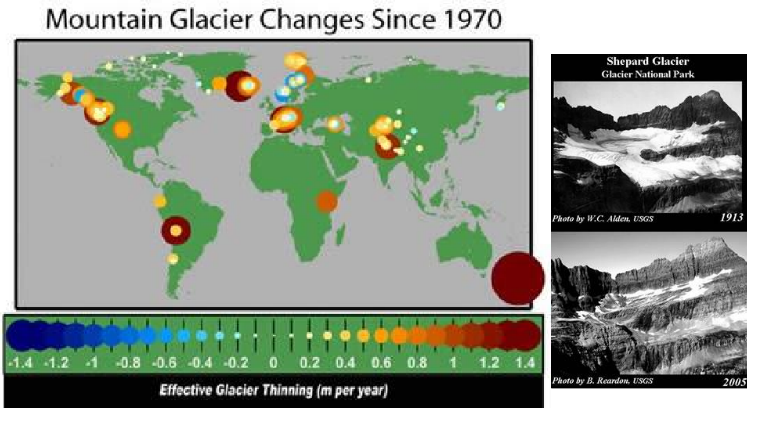
What will happen to glaciers?
Thinning/retreating severely all over the world, much more rapid loss with climate change
Humans depend on glaciers for freshwater
What about ocean acidification (CO2 problem)?
As oceanic CO2 concentration increases, ocean water acidity pH decreases
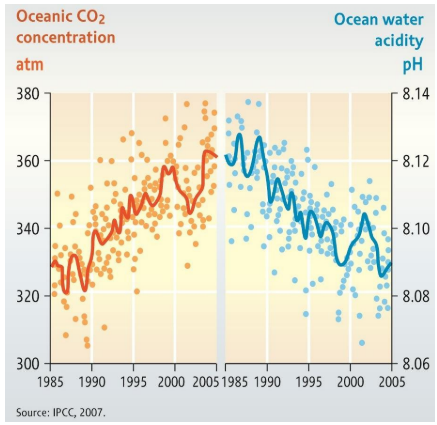
Ocean acidicification process
Since industrial revolution - ph is decreasing
What are the 2 major processes affecting CO2 system in the ocean?
Addition and removal of CO2 by organisms - anthropogenic influence (fast)
Carbonate mineral precipitation and dissolution - slow geological process
2 common forms of carbonate
Calcite and aragonite