Large Animal Knots and Ropes (ABH)
 Call Kai
 Learn
Learn Practice Test
 Spaced Repetition
 Match
Match Flashcards
 Knowt Play
1/23

There's no tags or description
Looks like no tags are added yet.
Name | Mastery | Learn | Test | Matching | Spaced | Call with Kai |
|---|
No analytics yet
Send a link to your students to track their progress
24 Terms
Purpose of knots and ropes(4) (Large Animal Knots and Ropes)
holding
catching
stabilizing
maneuvering
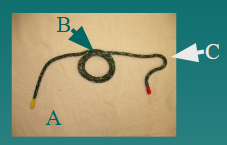
wat is A (2) (Large Animal Knots and Ropes)
end or running part
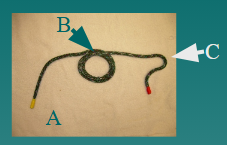
what is B (Large Animal Knots and Ropes)
standing part
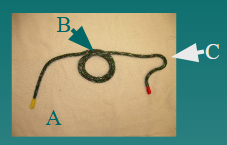
what is C (2) (Large Animal Knots and Ropes)
Bend or Bight
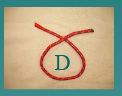
what is D (2) (Large Animal Knots and Ropes)
Loop or Half-hitch
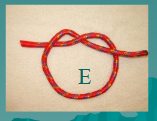
what is E (Large Animal Knots and Ropes)
Overhand knot
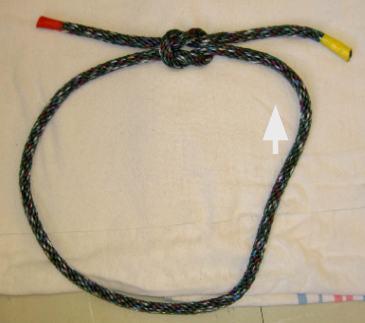
what kinf of knot (Large Animal Knots and Ropes)
square knot
uses of square knot (3) (Large Animal Knots and Ropes)
will not slip or release
can be used to tie 2 ropes together
For tying suture in place - closing up a wound
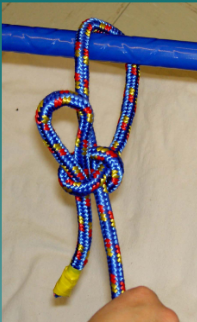
what knot is it (Large Animal Knots and Ropes)
quick release
use of quick release (2) (Large Animal Knots and Ropes)
or tying an animal to a post
can be quickly untied by releasing the knot
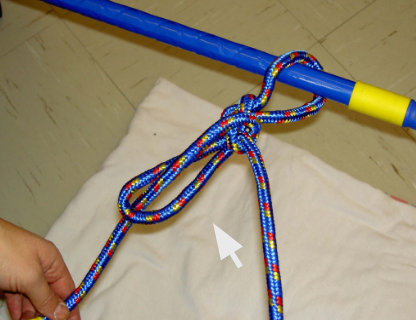
what kind of knot (Large Animal Knots and Ropes)
quick release with a ‘lock’
why shouldn’t horses be tied up too long (Large Animal Knots and Ropes)
could get a foot over top of the lead rope
ideal length of lead rope between the tie and the halter is approximately (Large Animal Knots and Ropes)
2 ft
A safe height to tie a horse is usually around (Large Animal Knots and Ropes)
wither height
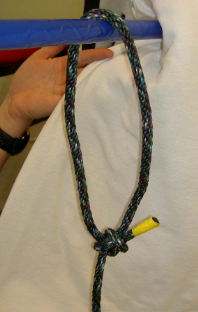
what knot is it (Large Animal Knots and Ropes)
bowline knot
use of bowline knot (Large Animal Knots and Ropes)
Horse Castrations
why are bowline knots used in horse castrations (Large Animal Knots and Ropes)
keeps control of the horse but doesn’t tighten up on his neck / no choking
method for bowline knot (6) (Large Animal Knots and Ropes)
make a small loop (rabbit hole) (left side)
thicker part of rope on top of small loop
rope in R hand then comes up thru loop ( rabbit out of hole)
wrap it around the “tree” , lower part of the L rope under the hole
bring it back up and down the hole ( on the right side of the original rope out of the hole)
Then gently pull the two ends away from each other
4 parts of cattle halter (Large Animal Knots and Ropes)
adjustable head/ear part
fixed / nose band
chin band/ mandible
free end - to tie animal
number one rule of tail ties (Large Animal Knots and Ropes)
do not attach to a fixed object
method for tail tie (5) (Large Animal Knots and Ropes)
With the longer piece on the right, hold a rope over the tail just at the end of the last coccygeal vertebra.
Fold the rest of the tail upward over the rope.
Pass the end of the rope behind the tail and make a bight in it.
Bring the bight over the folded tail.
Pull it tight through the rope which is looped around the tail.
use of casting restraint (Large Animal Knots and Ropes)
A method of forcing an animal to the ground usually with ropes
what are the 2 casting restraint methods (Large Animal Knots and Ropes)
two-half hitch method
Burley method
what tie is used for IV cathetar in calves (Large Animal Knots and Ropes)
3 legged tie