Ecdysozoa Lab - Bio 2
 Call Kai
 Learn
Learn Practice Test
 Spaced Repetition
 Match
Match Flashcards
 Knowt Play
1/20

There's no tags or description
Looks like no tags are added yet.
Name | Mastery | Learn | Test | Matching | Spaced | Call with Kai |
|---|
No analytics yet
Send a link to your students to track their progress
21 Terms
Clade Ecdysozoa - Ecdysis means molting (change in size/form)
Includes:
Phylum Nematoda
Phylum Tardigrada
Phylum Onychophora
Phylum Arthropoda
Phylum Nematoda (Roundworms)
Bilateral
Triploblastic pseudocoelomate ("false" body cavity that is partially lined by mesoderm)***
Protosomes (Mouth first)
Ubiquitous (Exists everywhere)
Phylum Nematoda - Characteristics
Some are free-living; most are parasites
Adaptations for parasitic life:
-> Thick Cuticle
-> Abundance of reproduction structures***
-> Reduced digestive system***
-> Reduced sensory structures
Typically dioecious (Separate male and female)
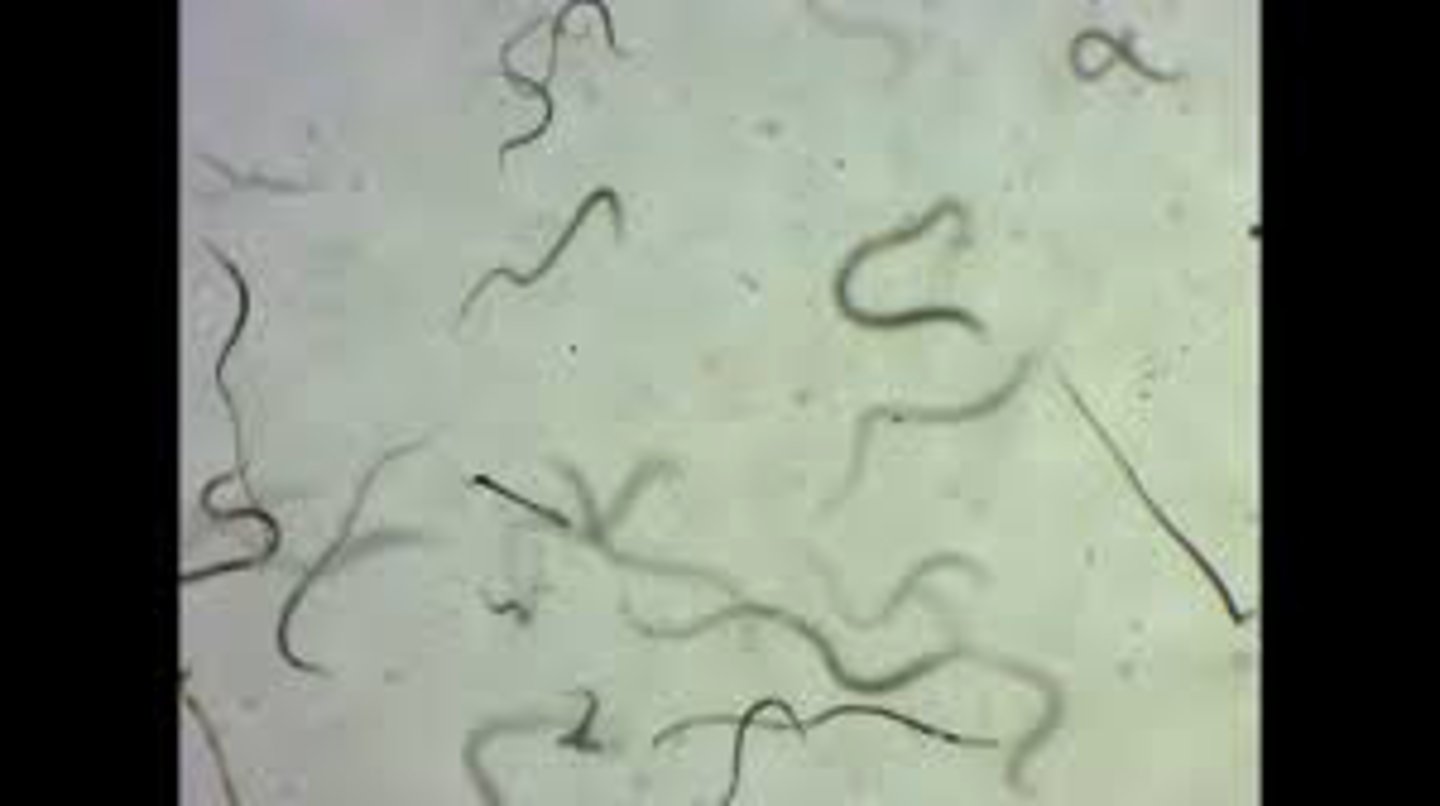
Phylum Nematoda
Turbatrix aceti (Vinegar eel)
Free living
Random Movement
Only possesses longitudinal muscles (lacks circular motion)
Phylum Nematoda
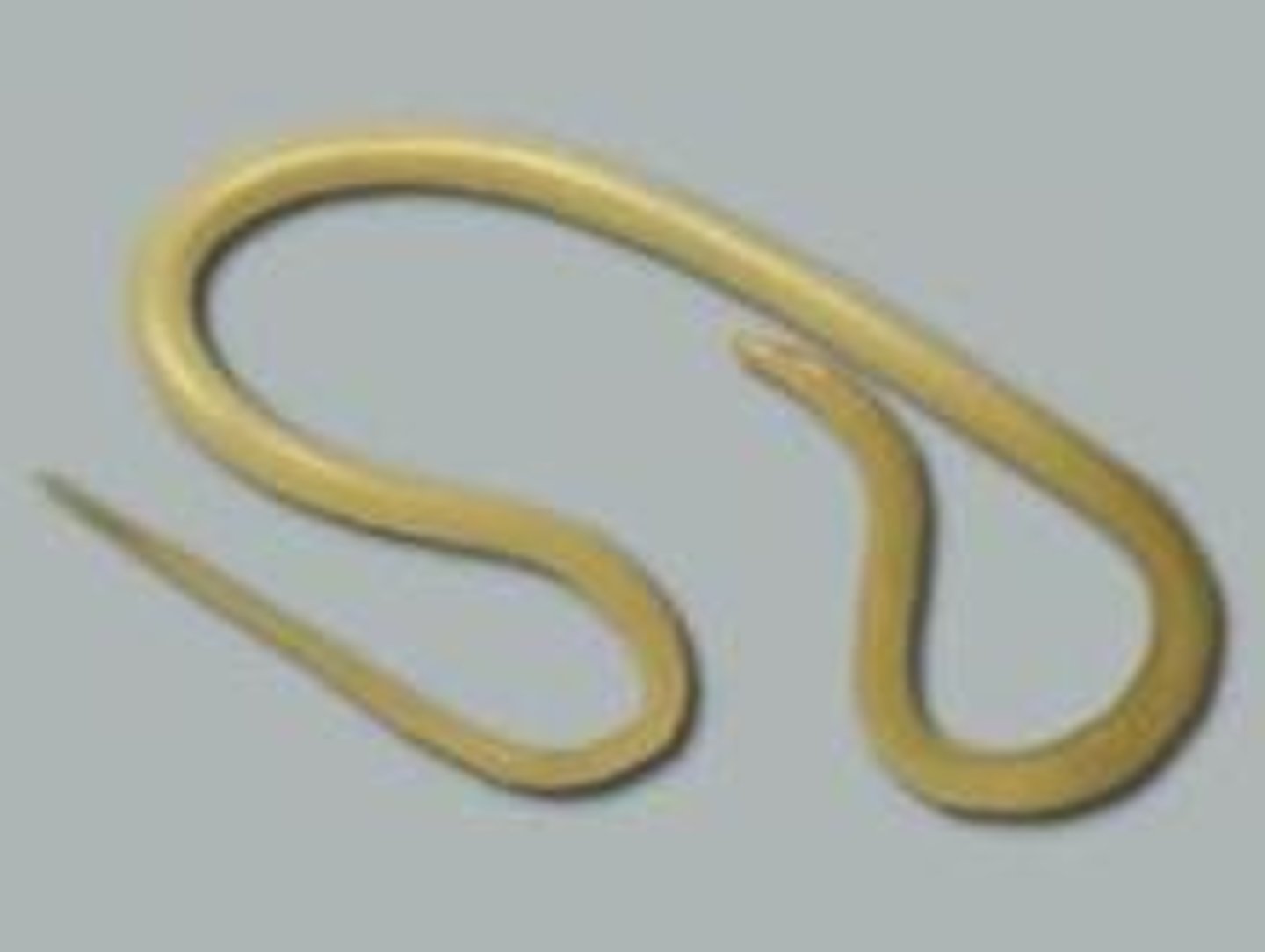
Ascaris (Human intestinal roundworm)
Parasitic
Dioecious (Separate male and female)
Dimorphic (Males and females look different)
-> Males have a hood at the end and are shorter than females
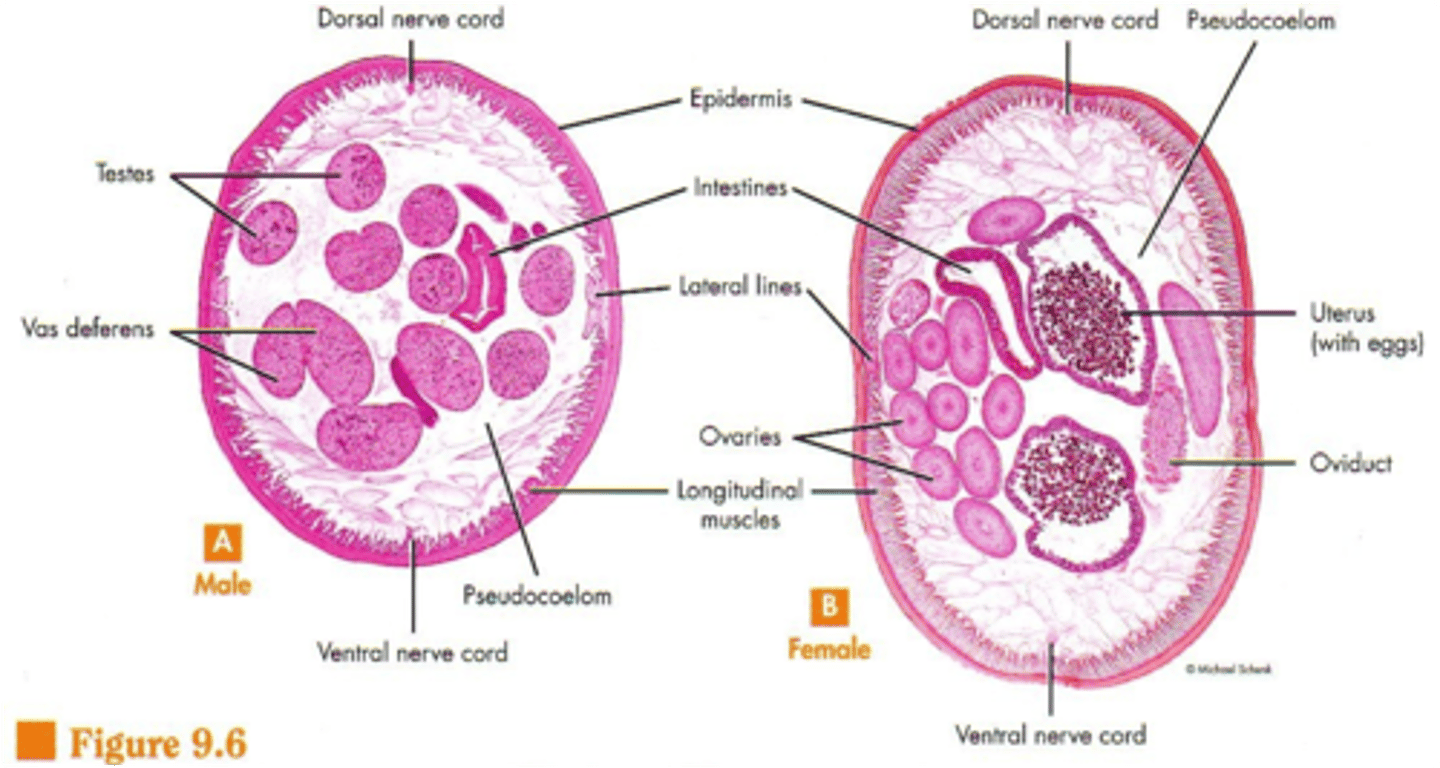
Ascaris (slide)
Reproductive organs
Pseudocoelum
Longitudinal muscles
(Female has the larger circles)
Phylum Nematoda
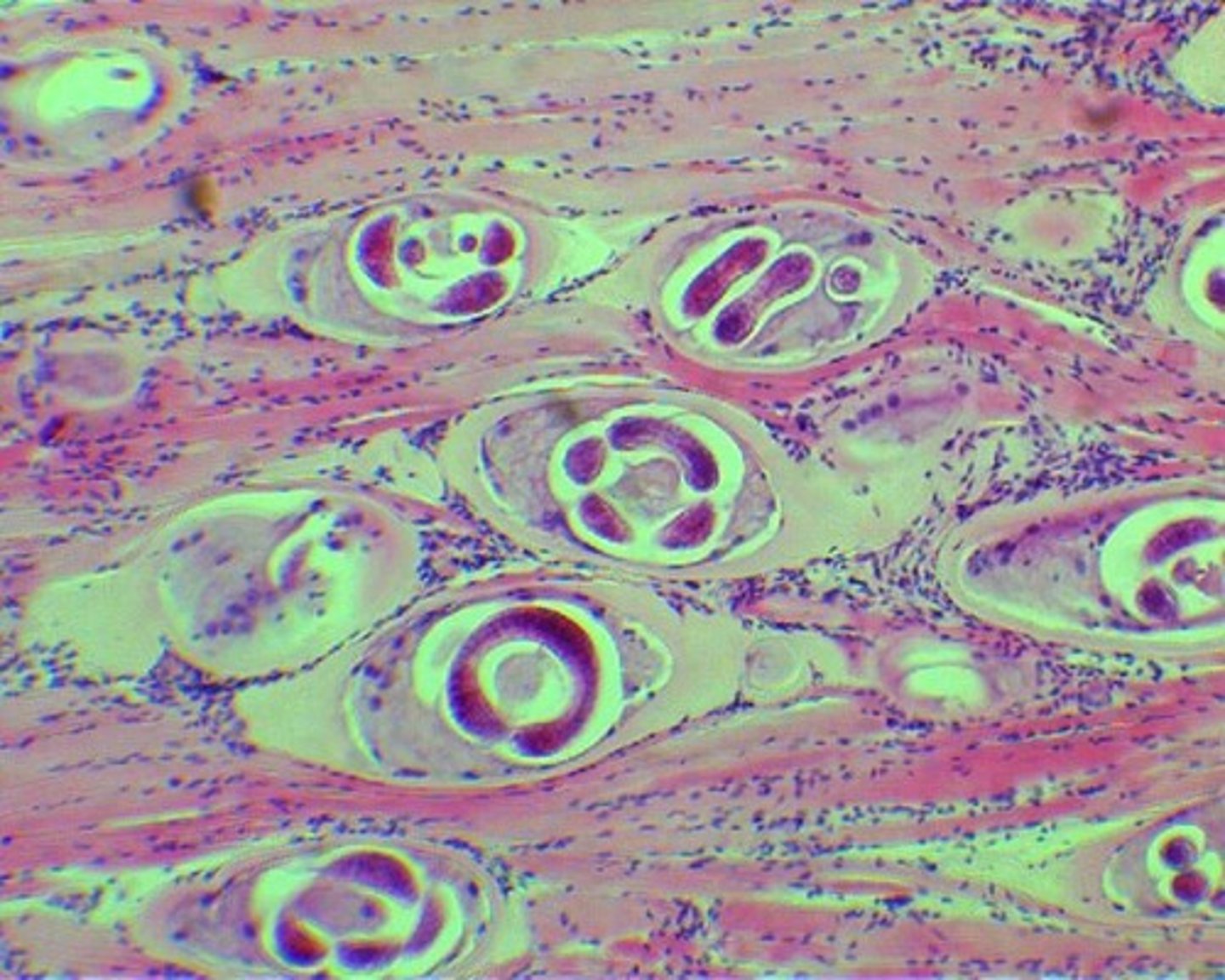
Trichinella spiralis - encysted in pig muscle
Larval worm - Darker circles
Cyst - Part surrounding the larval worm
Phylum Nematoda
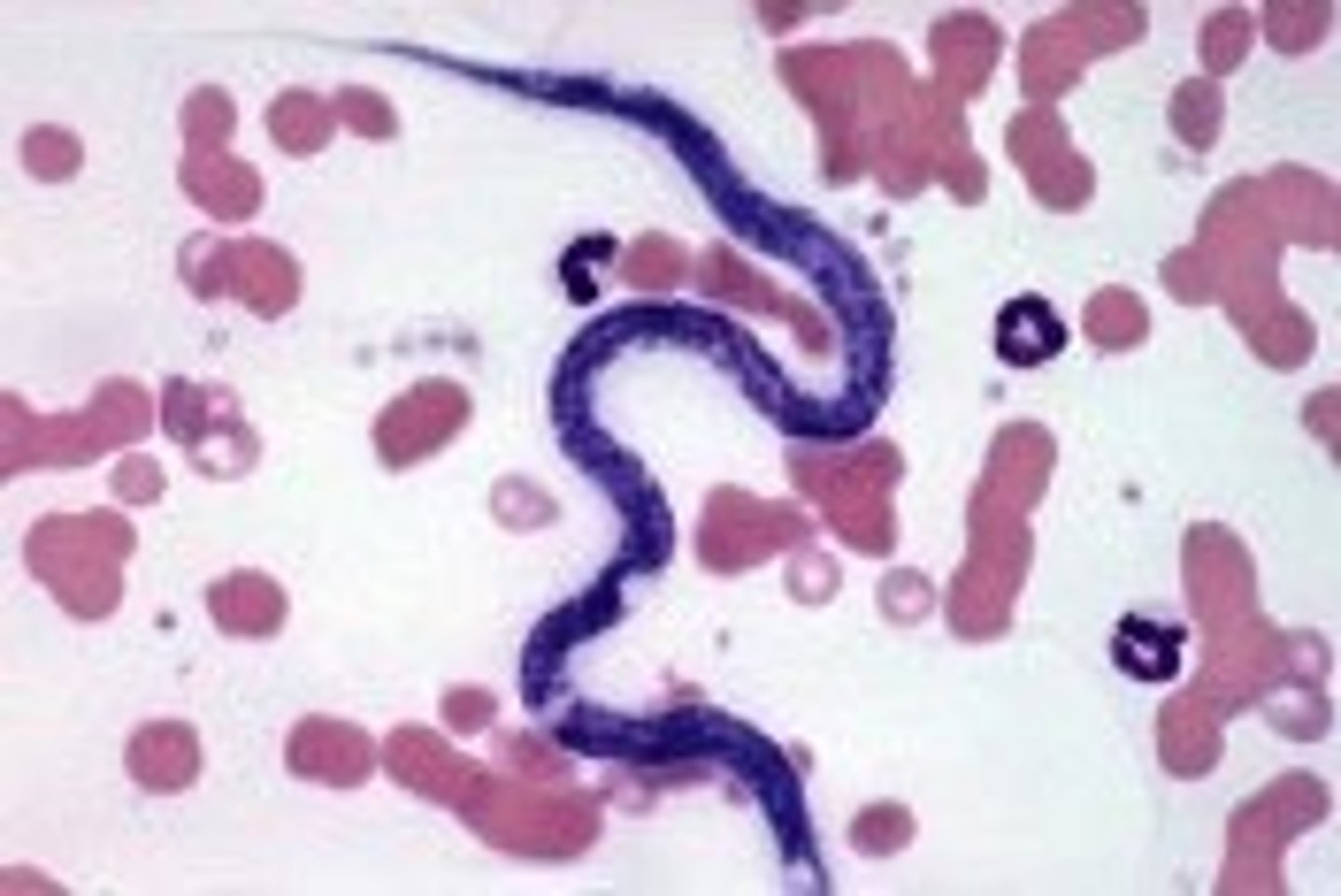
Dirofilaria immitis - dog heartworm
Blood slide
Phylum Tardigrada (water bears)
Small, bilateral, protosome, true coelom visible
Cuticle - Rigid, non-living exoskeleton made of chitin***
Segmentation and lobopodal (unjointed) legs***
Open circulatory system - Body cavity (hemocoel) filled with fluid to transport blood/oxygen***
Tun state - Survive extreme temps, pressure, radiation***
Dioecious - Females can undergo parthenogenesis, where they can become pregnant without fertilization
Phylum Arthropoda
Bilateral
Triploblastic eucoelomate (true body cavity completely lined by mesoderm)
Protostomes
Largest phylum on Earth
Arthropod Characteristics
Cuticle made of chitin***
Segmentation & jointed appendages - a pair on each body segment (they have joints)
Open circulatory system - Heart pumps hemolymph (instead of blood) through open spaces (hemocoel)***
Subphylums of Phylum Arthropoda
Subphylum Myriapoda
Subphylum Chelicerata
Subphylum Crustacea
Subphylum Hexapoda
Subphylum Myriapoda - Centipedes and Millipedes
Unbranched (uniramous) appendages and a single pair of antennae
Class Diplopoda (millipedes)
-> 2 pairs of legs per segment
Class Chilopoda (centipedes)
-> 1 pair of legs per segment
-> Poisonous claws behind head
Subphylum Chelicerata - Spiders, Horseshoe Crabs, Scorpions
Cephalothorax and abdomen regions
Six jointed appendages
Manipulation of food, locomotion, defense, and copulation
-> Chelicerae - first pair (Modify to fangs)***
-> Pedipalps - second pair
All others are used as legs
Subphylum Chelicerata - Class Merostomata and Arachnida
Class Merostomata (horseshoe crabs)
-> Living fossils - around for 350 million years
-> Book gills = highly folded gills***
-> Compound and simple eyes
Class Arachnida (spiders, scorpions, ticks, mites)
-> Some have modified chelicerae into fangs - inject venom
-> Book lungs = highly folded lungs***
-> Spinnerets - secreting silk
Subphylum Crustacea - Crabs, lobsters, crayfish, shrimp, and barnacles
Cephalothorax and abdomen
-> Biramous appendages - two jointed branches from a single base
Two pairs of antennae
Mandibles = jaws
Two pairs of maxillae = hold and manipulate food
Subphylum Crustacea
Class Malacostraca
Order Decapoda (10 legs; lobsters and crayfish)
Cephalothorax covered in carapace = hard chitin covering
-> Maxillipeds - appendages on 1st 3 segments
-> Chop food and pass to the mouth
-> Chelipeds - 4th segment
-> large pinching claws
-> Large four segments = walking legs
-> Dioecious
-> Swimmerets = used for swimming and holding eggs in the females
-> Swim backwards
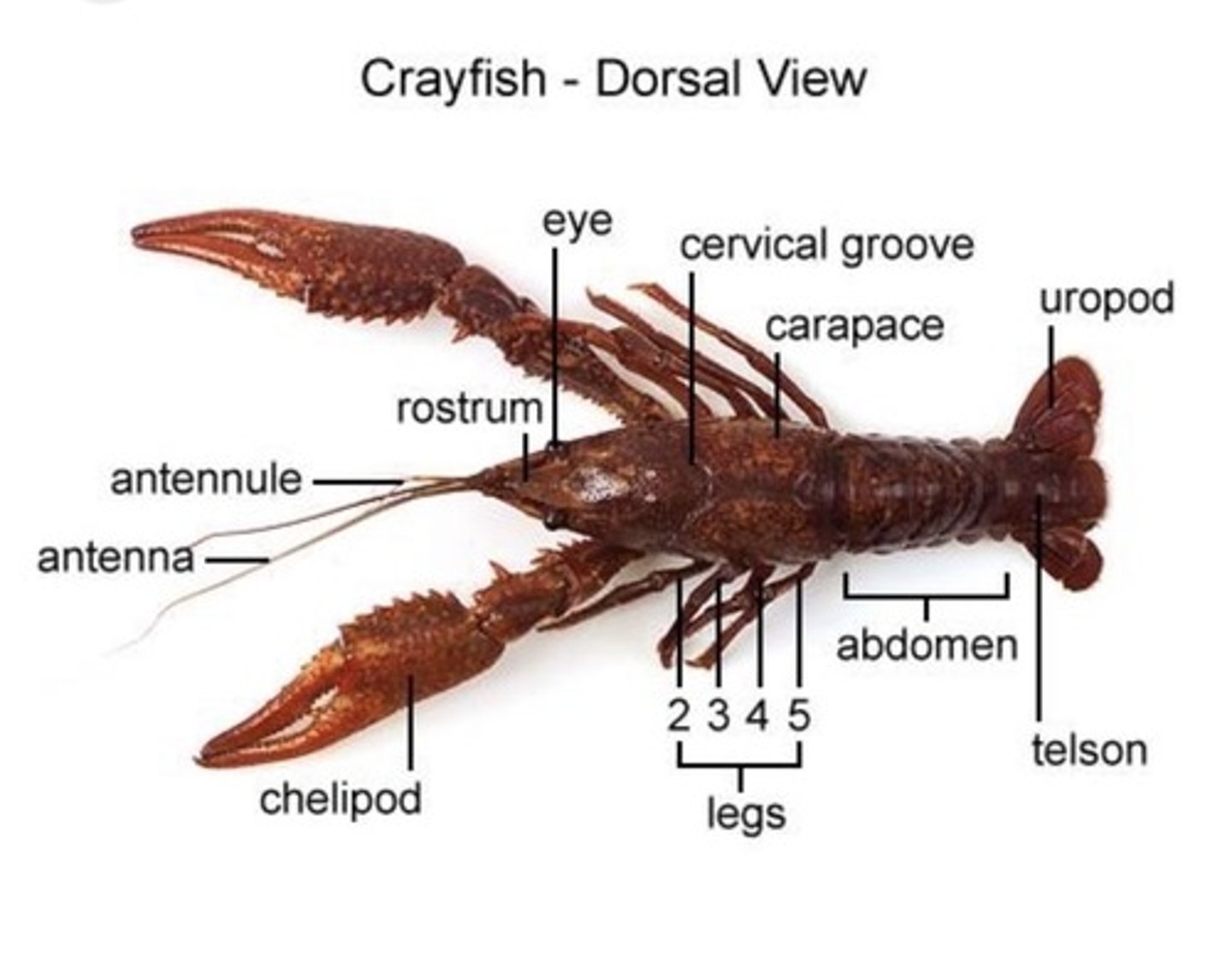
Crayfish External Anatomy - Top View
Top View
-> Rostrum - In front of the eyes***
-> Eye
-> Antenna
-> Chilipod - Big claws***
-> Legs (2, 3, 4, 5)
-> Carapace - Main body and chitin abdomen covering***
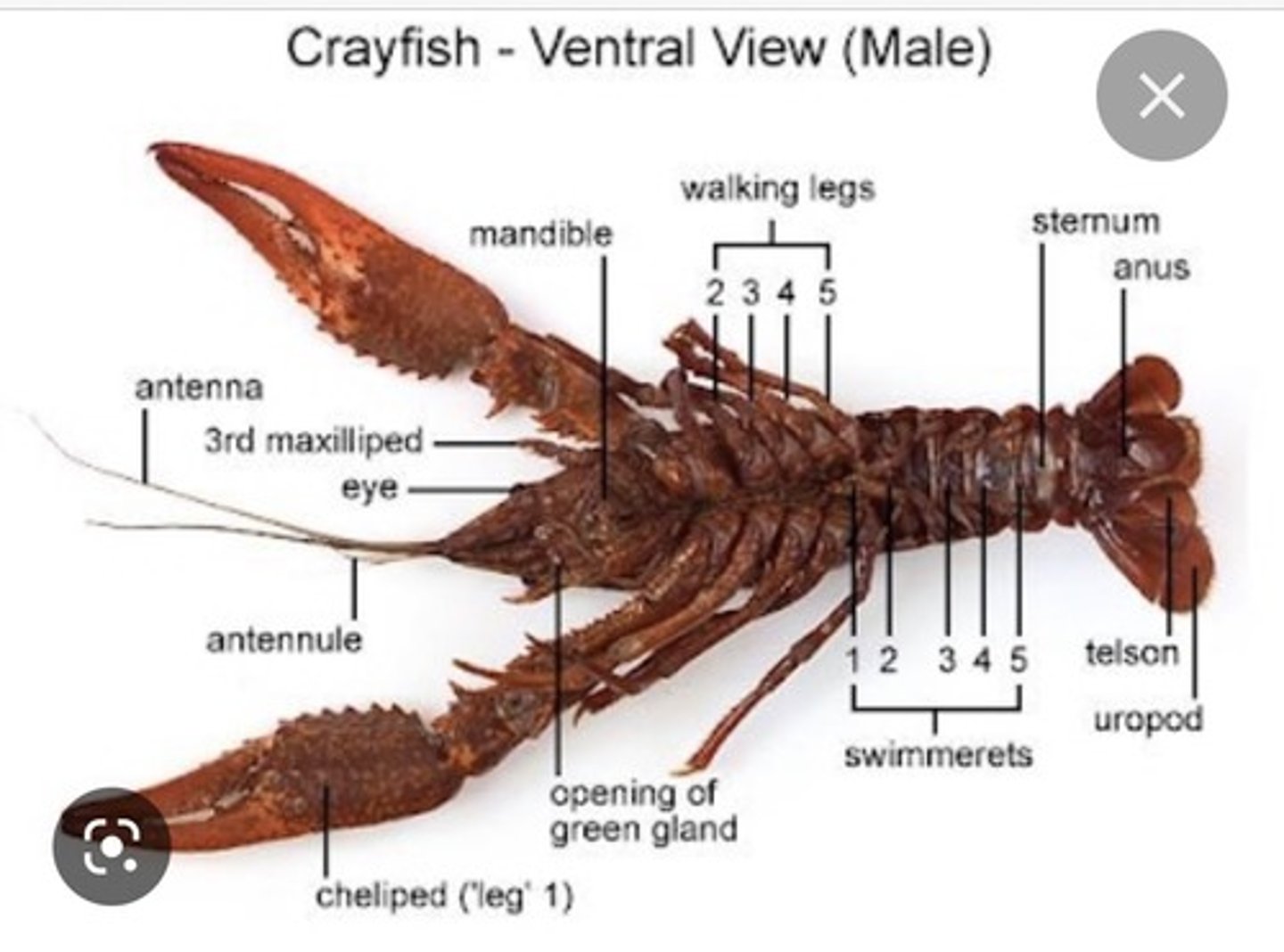
Crayfish External Anatomy - Bottom View
-> Mandible - Jaws near the mouth (Side of the head)
-> Maxilliped - Behind the mandibles (3 of them)
-> Walking legs (2, 3, 4, 5)
-> Swimmerets (1, 2, 3, 4, 5) - Below the walking legs***
Subphylum Hexapoda - Insects
The most diverse, abundant, successful class of organisms
-> Gas exchange via spiracles (pores) that allow air to enter tracheae (air tubes interfacing with tissues)
-> Excretion through Malpighian tubules
-> Tympanum- hearing
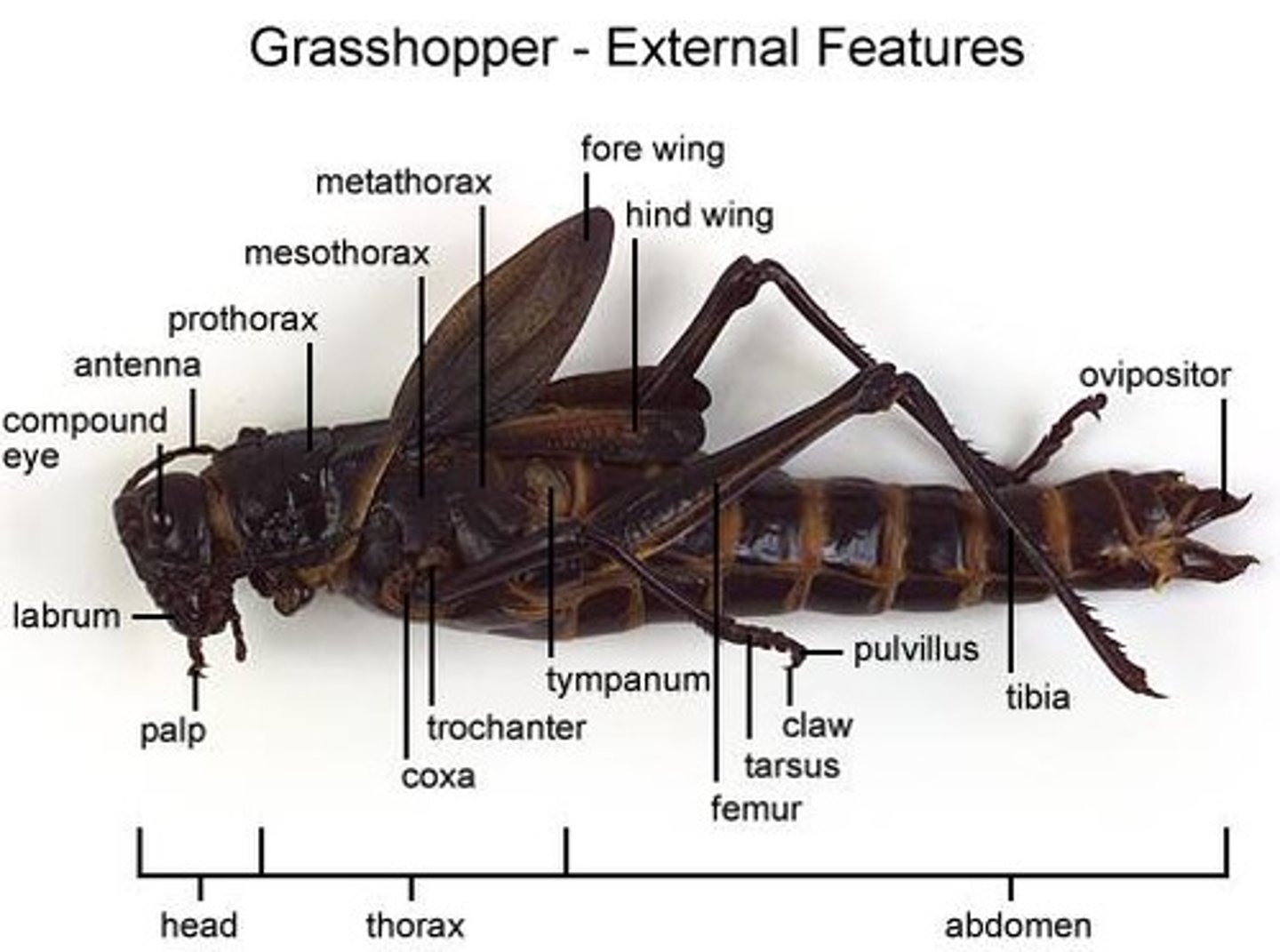
Grasshopper External Anatomy
-> Antenna
-> Compound eyes
-> Simple Eyes
-> Fore and Hind Wings
-> Jumping Legs
-> Tympanum***