7.3 MASS TRANSPORT- circulatory system
 Call Kai
 Learn
Learn Practice Test
 Spaced Repetition
 Match
Match Flashcards
 Knowt Play
1/73

There's no tags or description
Looks like no tags are added yet.
Name | Mastery | Learn | Test | Matching | Spaced | Call with Kai |
|---|
No analytics yet
Send a link to your students to track their progress
74 Terms
why do multicellular organisms require a cardiovascular system?
it would take days for molecules to diffuse through a large animal through diffusion. so they need a circulatory system with a pump to transport materials quickly around their bodies
what is a mass flow system
the transport of substances in a flow of fluid
what is an example of mass flow systems in plants
transport of materials in the xylem and phloem
what do mass flow systems work alongside?
specialised exchange systems like lungs, gills, leaves
the need for a mass transport system with a pump depends on what 2 things?
surface area to volume ratio
how metabolically active the organism is, e.g. flight
in humans, where does the right side of the heart pump to?
lungs only- pulmonary circulation
in humans, where does the left side of the heart pump blood to?
the rest of the body- systemic circulation
what is a closed circuit system
the transport medium is confined to vessels
what system do vertebrates have
closed circuit system
what does the vena cava do
carry deoxygenated blood from the body to the heart
what does the pulmonary vein do
carries oxygenated blood from the lungs to the heart
what does the pulmonary artery do?
carries deoxygenated blood to the lungs
what does the aorta do
carries oxygenated blood to the body
what does the hepatic artery do
bring oxygenated blood to liver
what does hepatic portal vein do
carries blood from stomach and intestines to the liver
what does the hepatic vein do
carries deoxygenated blood from the liver to the heart
what does the renal artery do
carries oxygenated blood into kidneys
what does the renal vein do
carries deoxygenated blood away from the kidneys
what percentage of plasma is water
90 percent
what are 2 properties of blood
good solvent, high heat capacity
what are the 5 functions of blood
transport- dissolves gases, hormones, soluble food, enzymes, antibodies, blood cells
maintains body temperature- distribute heat around body.
buffers ph- blood must stay at 6.8-7.4 or it will damage cells
regulation of body fluid electrolytes- excess ions are removed from the body in urine, ma contain 10g NaCl per day
defence: by white blood cells and blood clotting
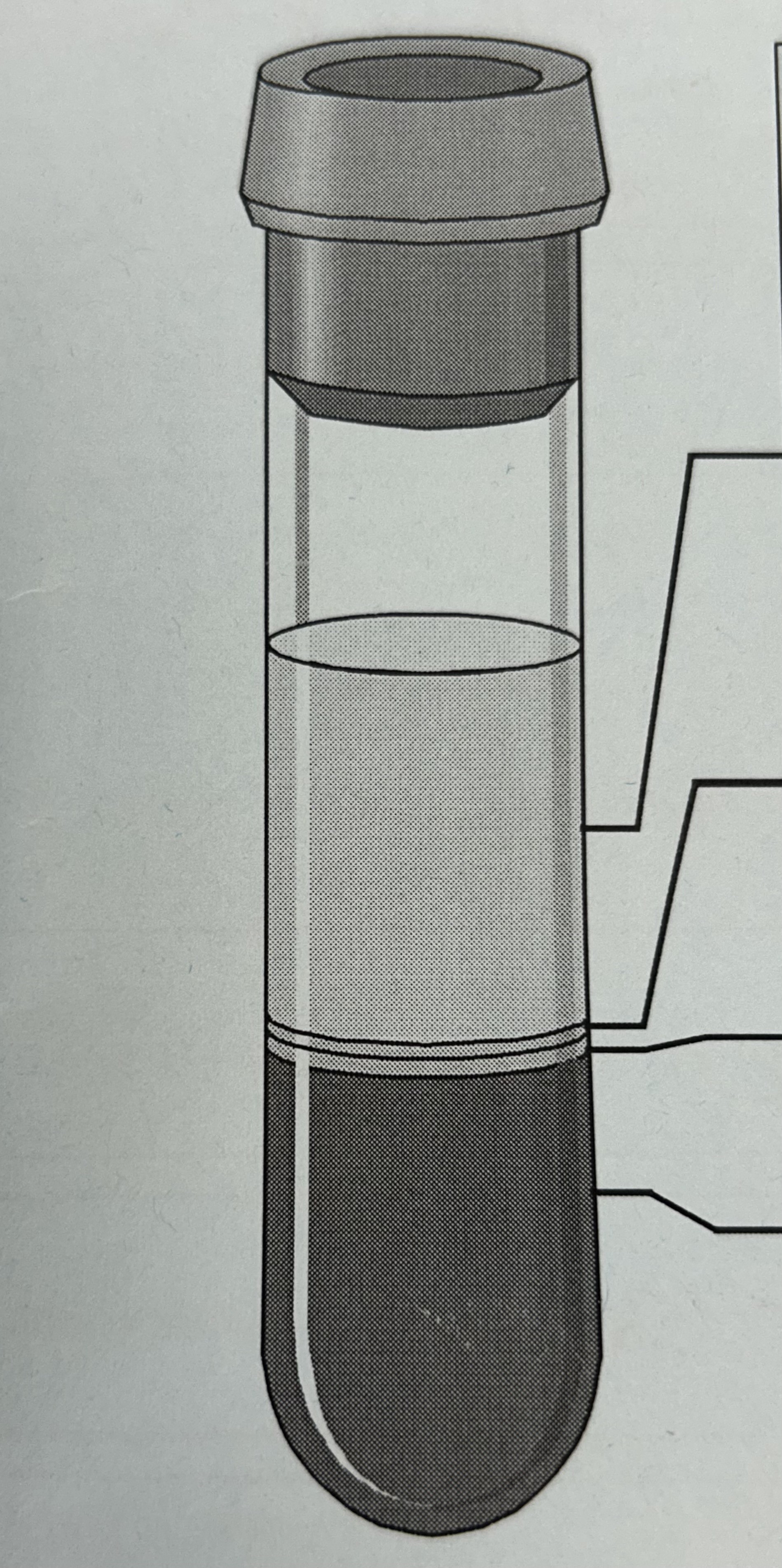
what is the top liquid part of this blood sample?
plasma- liquid part of blood. a dilute solution of salts, glucose, amino acids, vitamins, urea, proteins, fats
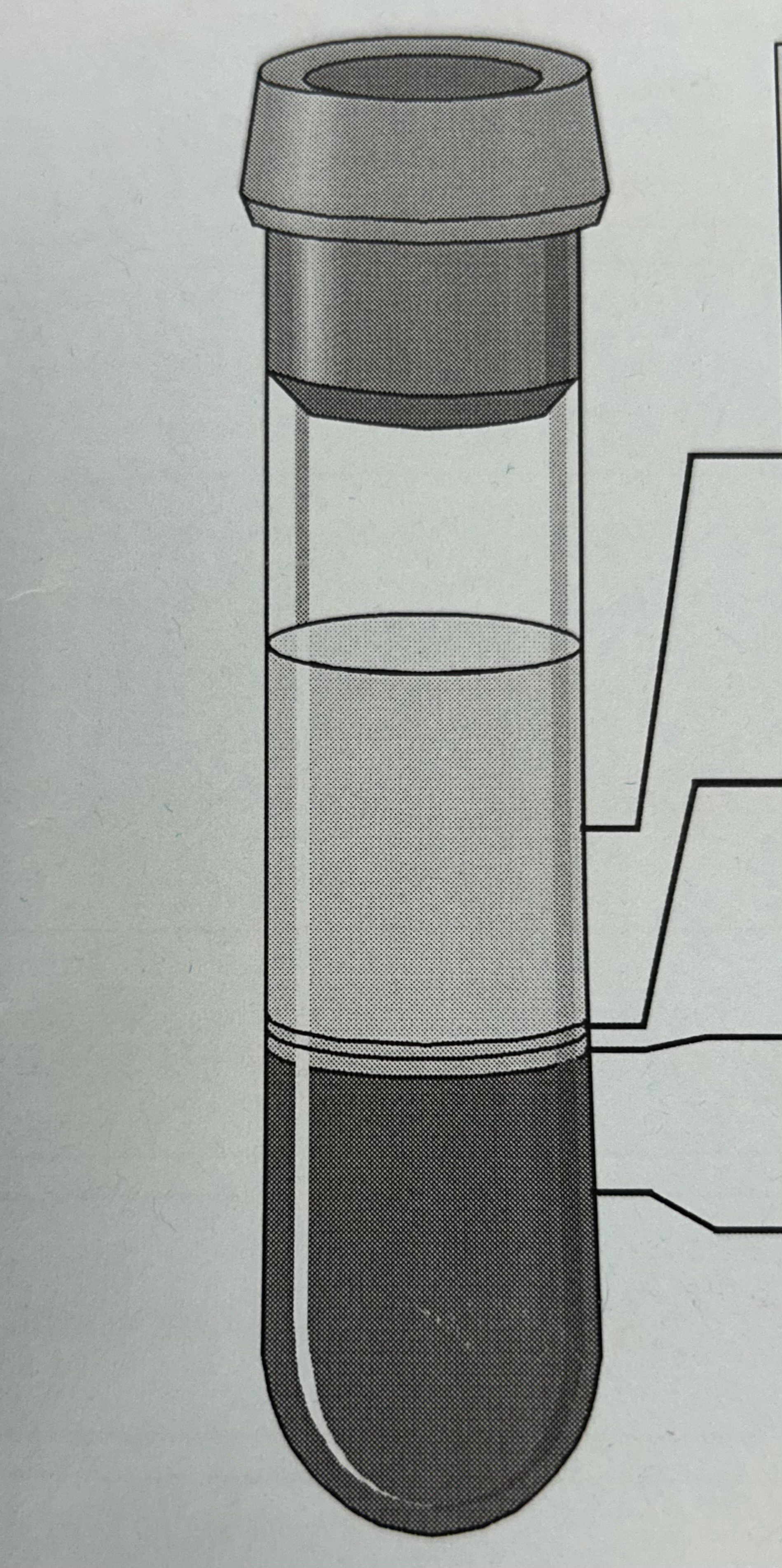
what is the first small layer in this blood sample?
white blood cells involved in the immune system
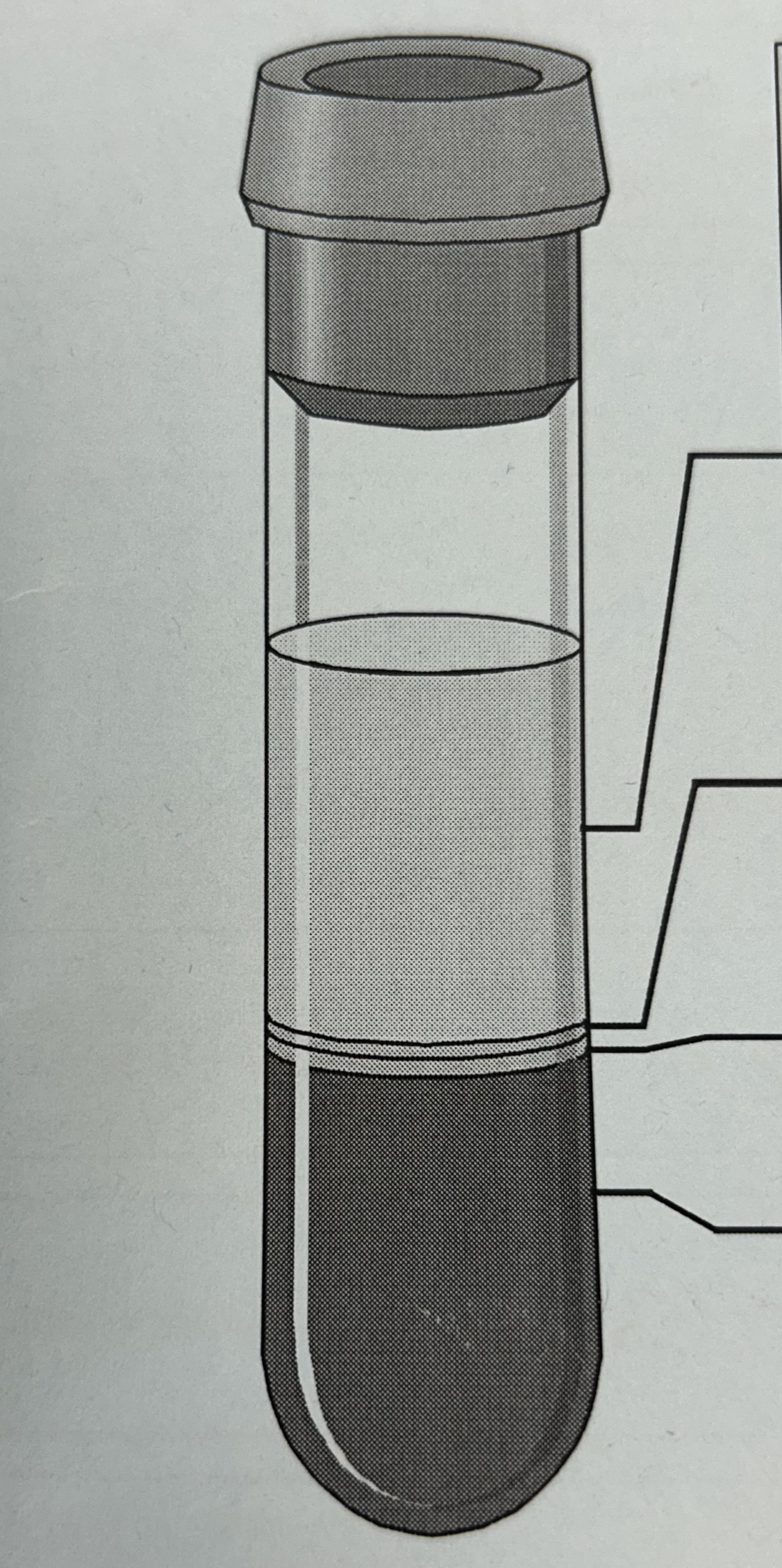
what is the second small layer in this blood sample?
platelets involved in blood clotting
what is the bottom liquid in this blood sample?
red blood cells involved in carrying oxygen
what do arteries do
carry blood away from the heart and into centrioles
what are atrioles
smaller arteries that control blood flow from arteries to capillaries
what are capillaries
tiny vessels that link atrioles to veins
what do veins do?
carry blood from capillaries to heart
what 5 things do arteries/arterioles/veins have similar in structure? (simplified)
tough fibrous outer layer, muscle layer, elastic layer, thin inner lining, lumen
what does the tough fibrous outer layer do in arteries/arterioles/veins?
resists pressure changes from both within and outside
what does the muscle layer do in arteries/atrioles/veins?
can contract and therefore controls the flow of blood
what does the elastic layer do in arteries/arterioles/veins?
helps to maintain blood pressure by stretching and recoiling
what does the thin inner lining (endothelium) do in arteries/arterioles/veins?
smooth to reduce friction, thin to allow diffusion
what is the lumen in arteries/arterioles/veins?
central cavity of blood vessels, blood flows through
function of capillaries
allows exchange of materials between the blood and the tissues via tissue fluid
do veins and venules have thick or thin walls
thin walls, mainly collagen, since blood at low pressure
do capillaries have thick or thin walls
very thin, permeable walls, only one cell think to allow exchange of materials
do arteries and arterioles have thick or thin walls and why
thick walls, smooth elastic layers: resist higher pressure
muscle layer to aid pumping
how large is the lumen in veins and venules?
large to reduce resistance to flow
how large is the lumen in capillaries
very small- blood cells must distort to pass through and so slow down
how big is the lumen in arteries/arterioles
small lumen to maintain high pressure
do veins and venules have valves
many valves to prevent backflow
do capillaries have valves
no
do arteries and arterioles have valves
no
what is the blood pressure in the veins and venules
lower pressure
what is the blood pressure in the capillaries
blood pressure falls
what is the blood pressure in arteries and arterioles
high
is the blood oxygenated in the veins and venules?
usually deoxygenated, except pulmonary vein
is the blood oxygenated in the capillaries
changes from oxygenated to deoxygenated, except in lungs
is blood oxygenated in arteries and arterioles?
usually oxygenated except in pulmonary artery
what are the 2 phases of the cardiac cycle
systole, diastole
what is the cardiac cycle (definition)
the sequence of coordinated contractions of the different chambers of the heart
why is the coordination of the contractions so important?
there wouldnt be the right pressure
what is the mass flow system that multicellular organisms use
circulatory system/cardivascular system
how is mass flow achieved in animals
use muscular contraction- either of body muscles or a specialised pumping organ e.g. heart
mass flow in plants (1 main point, 3 sub)
rely on natural/passive processes like evaporation of water:
mechanism to maintain mass flow movement in one direction
means of controlling flow in transport medium for changing needs of different parts of an organism
mechanism for mass flow of water
features of a transport system
suitable medium to carry materials e.g. blood- liquid based- water dissolves substances, moved around easily, can be gas in lungs
transport medium moved in bulk over large distances- more rapid than diffusion.
closed system of tubular vessels that contain transport medium, forms branching network, distribute it to all parts of an organism
what is the heart made of
cardiac muscle
what is cardiac muscle made of
myocytes
what do myocytes do
when receive electrical impulse, they contract together, causing heartbeat.
constantly active so have great oxygen requirements, so fed by numerous capillaries from two coronary arteries.
what do blockages in the coronary arteries cause
myocardial infarction (heart attack)- caused by lack of oxygen to cardiac muscle
what is the order of the cardiac systole
diastole, atrial systole, ventricular systole
what happens in diastole
Atria + ventricles are relaxed (cardiac diastole).
Blood returns to heart via pulmonary veins/vena cava and enters atria.
Pressure in atria is greater than in the ventricles.
Atrioventricular (AV) valves open.
Semilunar valves closed.
Blood flows passively from atria into ventricles.
what happens in atrial systole
Atria contract.
Ventricles remain relaxed.
Pressure in the atria increases.
Atrioventricular (AV) valves are open.
Semilunar valves are closed.
Blood is forced/pumped from the atria into the ventricles.
This completes ventricular filling.
what happens in ventricular systole
Ventricles contract and their walls thicken.
Ventricular pressure increases.
Atrioventricular (AV) valves close.
Semilunar valves open.
Blood is forced from the right ventricle into the pulmonary artery and from the left ventricle into the aorta.
Atria remain relaxed and fill with blood.
explain how the highest blood pressure is produced in the left ventricle
thick muscular wall causes stronger contractions
some babies are born with a hole between the right and left ventricles. these babies are unable to get enough oxygen to their tissues. suggest why
deoxygenated blood and oxygenated blood mix
lower volume of oxygenated blood leaving the left ventricle
not enough oxygenated blood reaching tissues to respire
what is the function of the coronary arteries
blood vessels that provide oxygen and glucose to the heart itself as a muscle
the rise and fall in blood pressure in the aorta is greater than in the small arteries. suggest why
aorta flows directly out of left ventricle, therefore has much higher pressure
pressure increases and decreases as ventricles contract and relax
aorta has thick elastic tissue which can stretch and recall, maintains constant pressure so blood flowing through smaller arteries is more constant
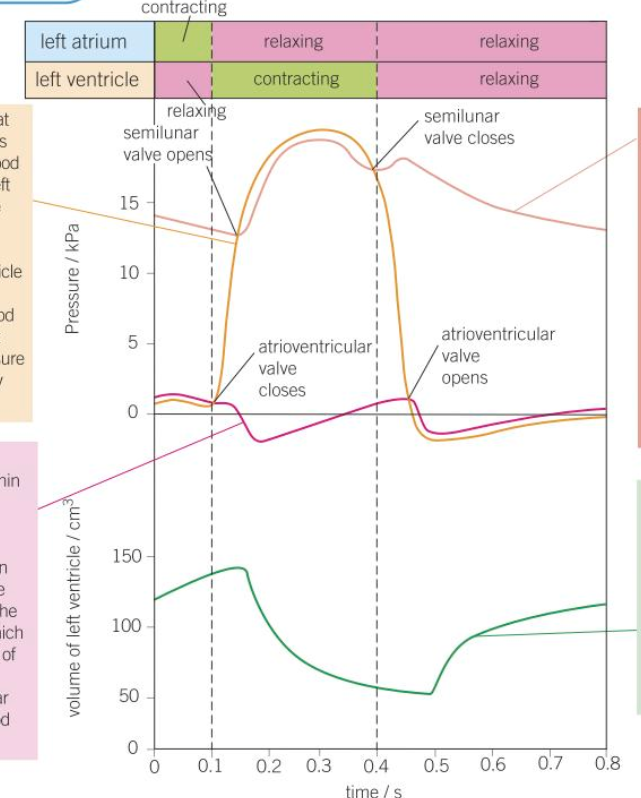
what is happening at the pink line? (describe changes in atrial pressure)
Atrial pressure relatively low throughout- thin muscular walls, contract with less force than ventricles.
Pressure rises during atrial systole- atria contract, force blood into ventricles.
Pressure falls- atria relax and the atrioventricular (AV) valves close.
Blood returns to atria from veins, atria fill, pressure gradually increases.
When AV valves open, blood flows into ventricles and atrial pressure decreases slightly.
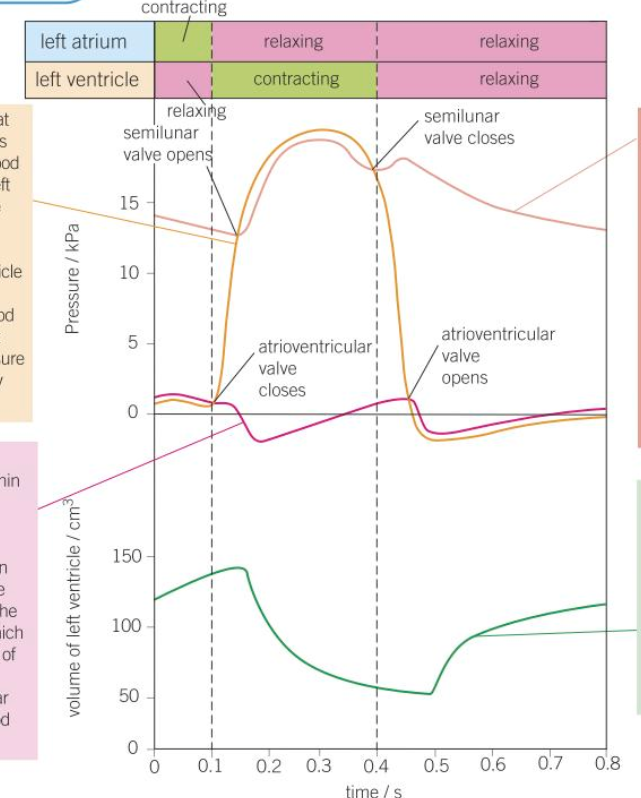
whats happening at the green line?
ventricular volume rises as atria contract and ventricles fill with blood
drops suddenly as blood is forced out into aorta when semilunar valve opens
volume increases again as ventricles fill with blood
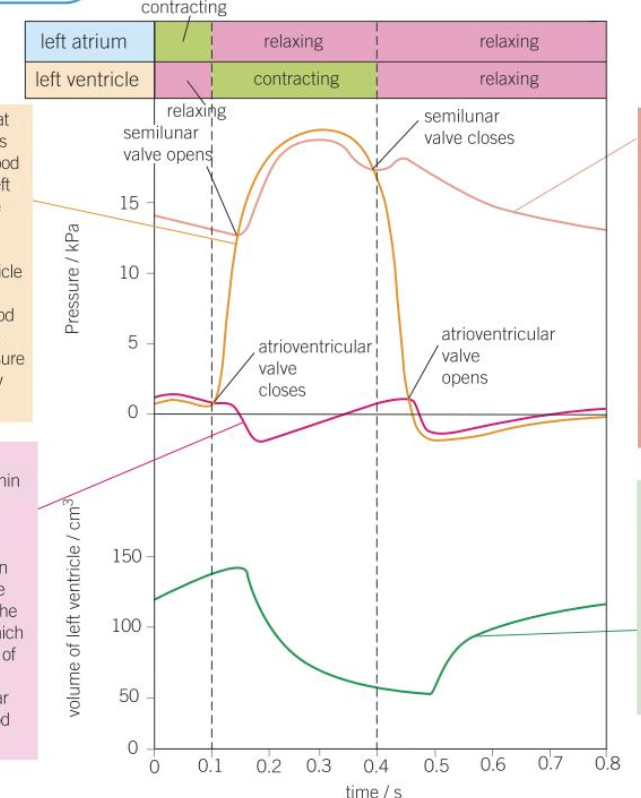
whats happening at the yellow line?
ventricular pressure is low at first, gradual increase as ventricles fill with blood as atria contract
left av valves close causing a large pressure rise as muscular ventricular walls contract
as pressure rises above the aortas pressure, blood is forced into aorta through the semilunar valves.
pressure falls as ventricles empty and walls relax
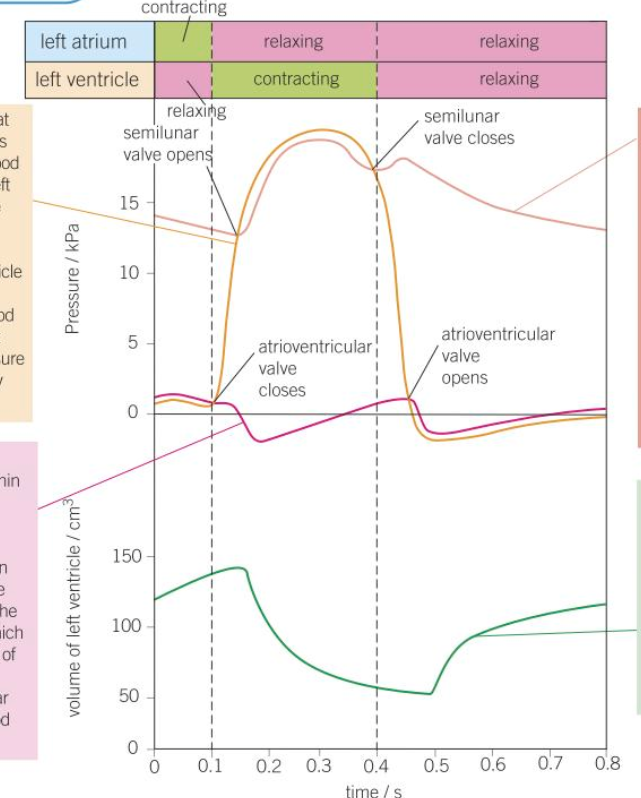
what is happening at the light pink line?
aortic pressure rises when ventricles contract as blood is forced into aorta
pressure gradually falls, never below 12kpa because of the elasticity of its walls, creating a recoil action.
recoil action is essential as blood is constantly delivered to tissues
recoil produced temporary rise in pressure at the start of relaxation phase