Glycogenesis
 Call Kai
 Learn
Learn Practice Test
 Spaced Repetition
 Match
Match Flashcards
 Knowt Play
1/8

Earn XP
Description and Tags
Source: https://bio.libretexts.org/Bookshelves/Biochemistry/Fundamentals_of_Biochemistry_(Jakubowski_and_Flatt)/02%3A_Unit_II-_Bioenergetics_and_Metabolism/15%3A_Glucose_Glycogen_and_Their_Metabolic_Regulation/15.02%3A_Glycogenesis
Name | Mastery | Learn | Test | Matching | Spaced | Call with Kai | Chat |
|---|
No analytics yet
Send a link to your students to track their progress
9 Terms
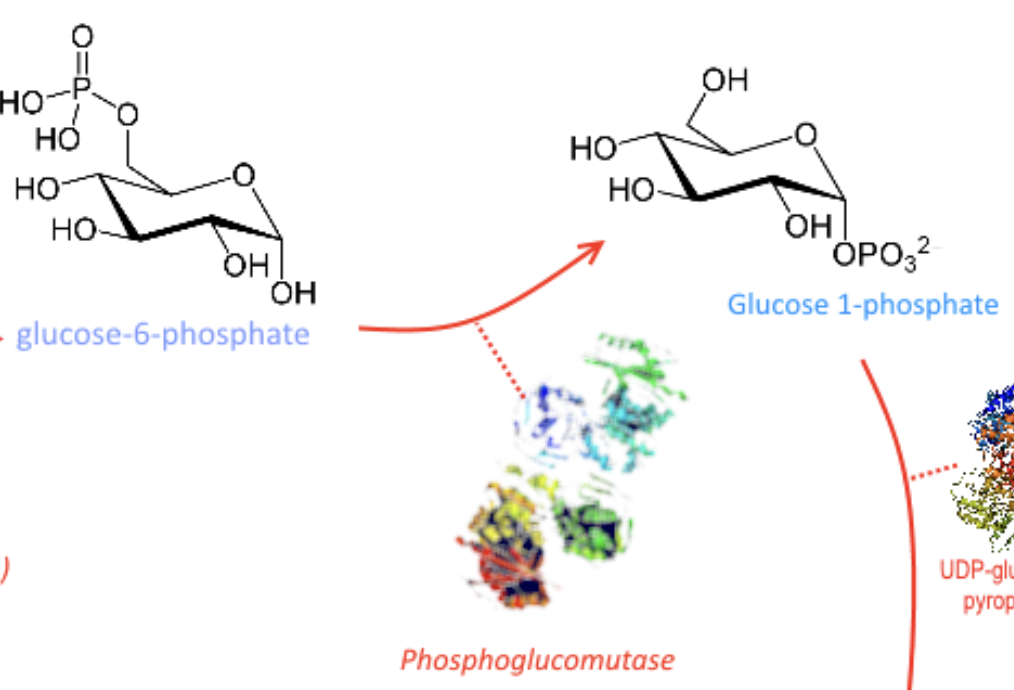
Step 1: Glucose 6-phosphate is converted to […]
glucose 1-phosphate
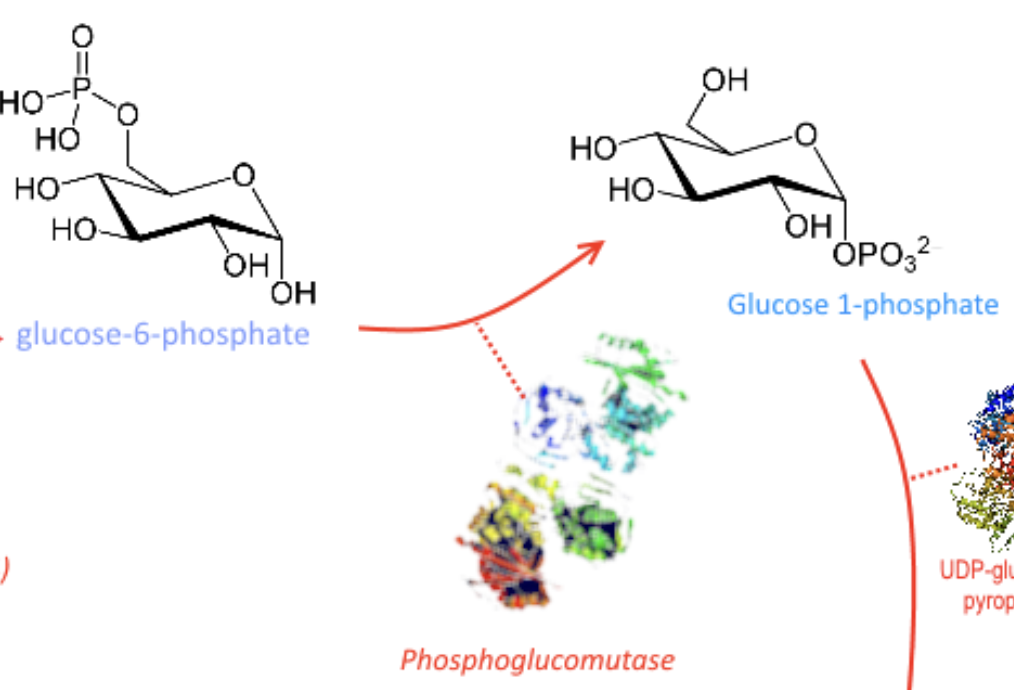
The isomerization of glucose 6-phosphate to glucose 1-phosphate is catalyzed by […]
phosphoglucomutase
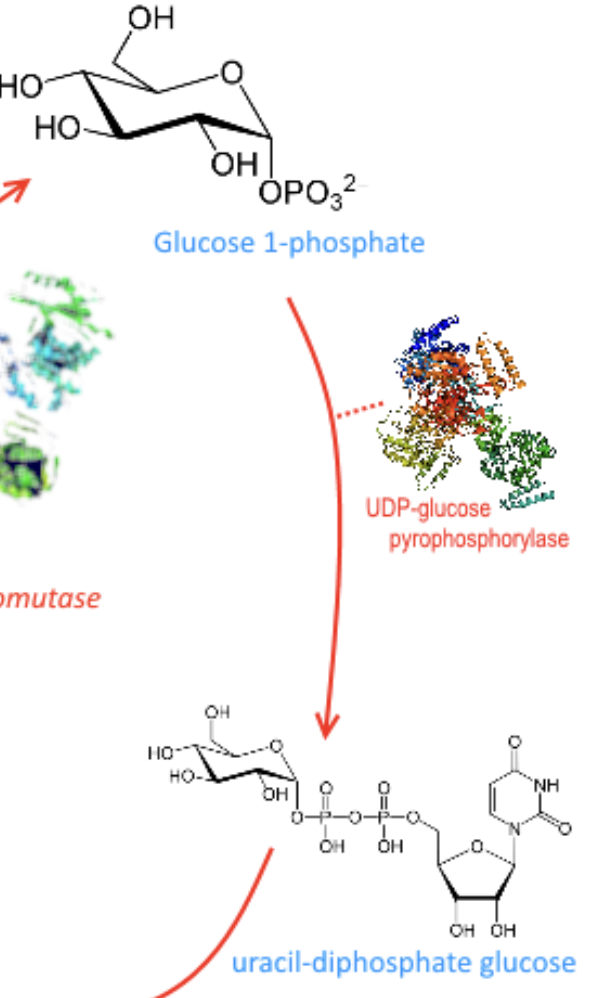
Step 2: Glucose-1-phosphate is then “activated” by the attachment of a uridine diphosphate group, which produces […]
UDP-glucose or uracil diphosphate glucose
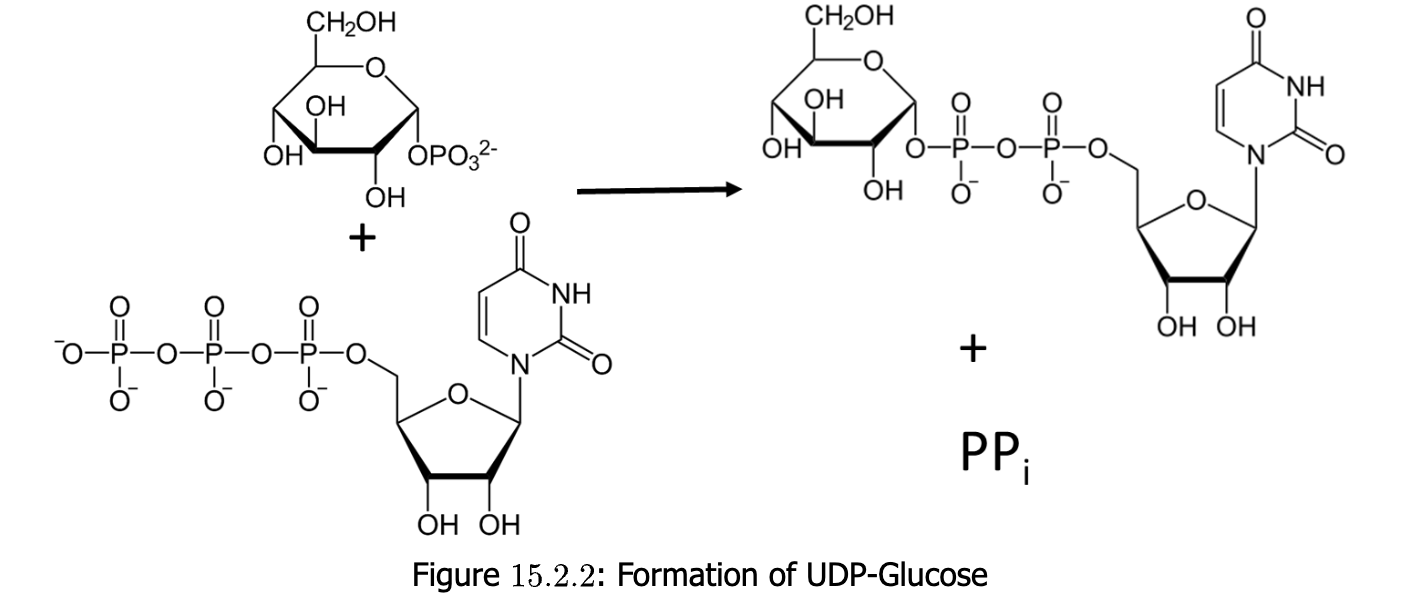
The production of UDP-glucose is catalyzed by […]
UTP-glucose-1-phosphate uridylyltransferase (preferred name)
Also called:
UDP-glucose pyrophosphorylase
UGPase
uridyltransferase
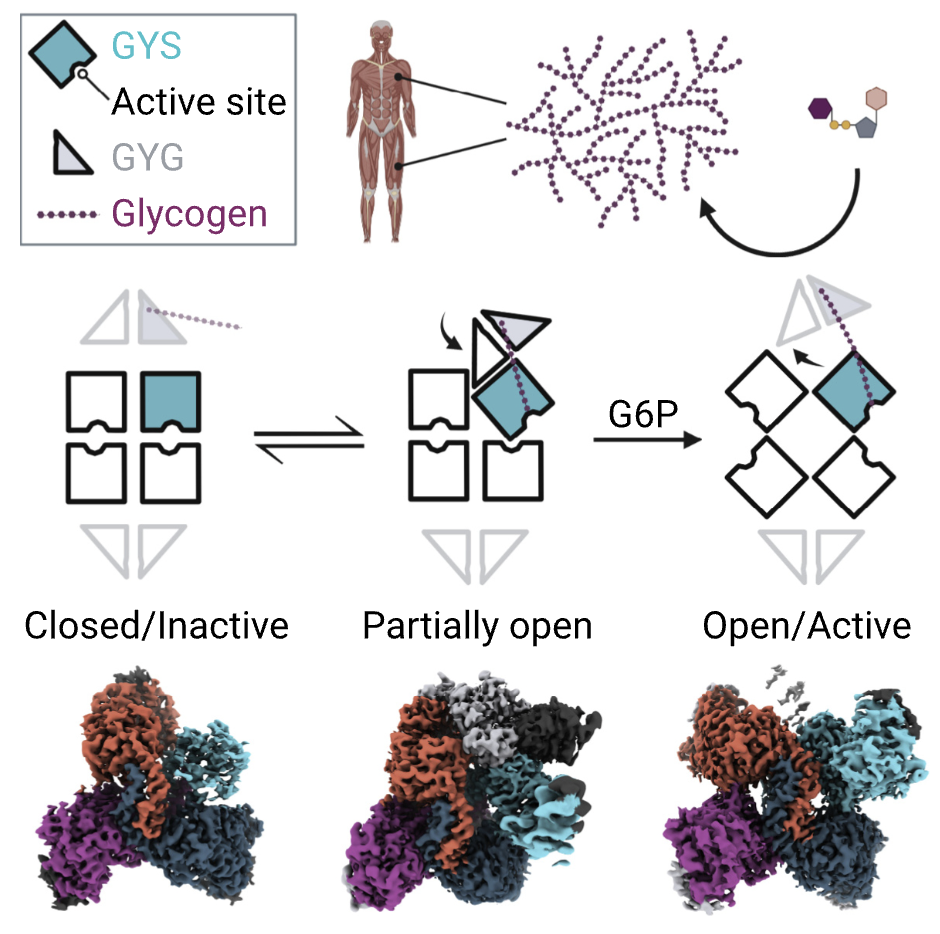
Step 3: UDP-glucose is used enzyme […] to extend the main glycogen chain.
glycogen synthase (GS or GYS)
UDP serves as a good leaving group, allowing the formation of the alpha-1,4 bond.
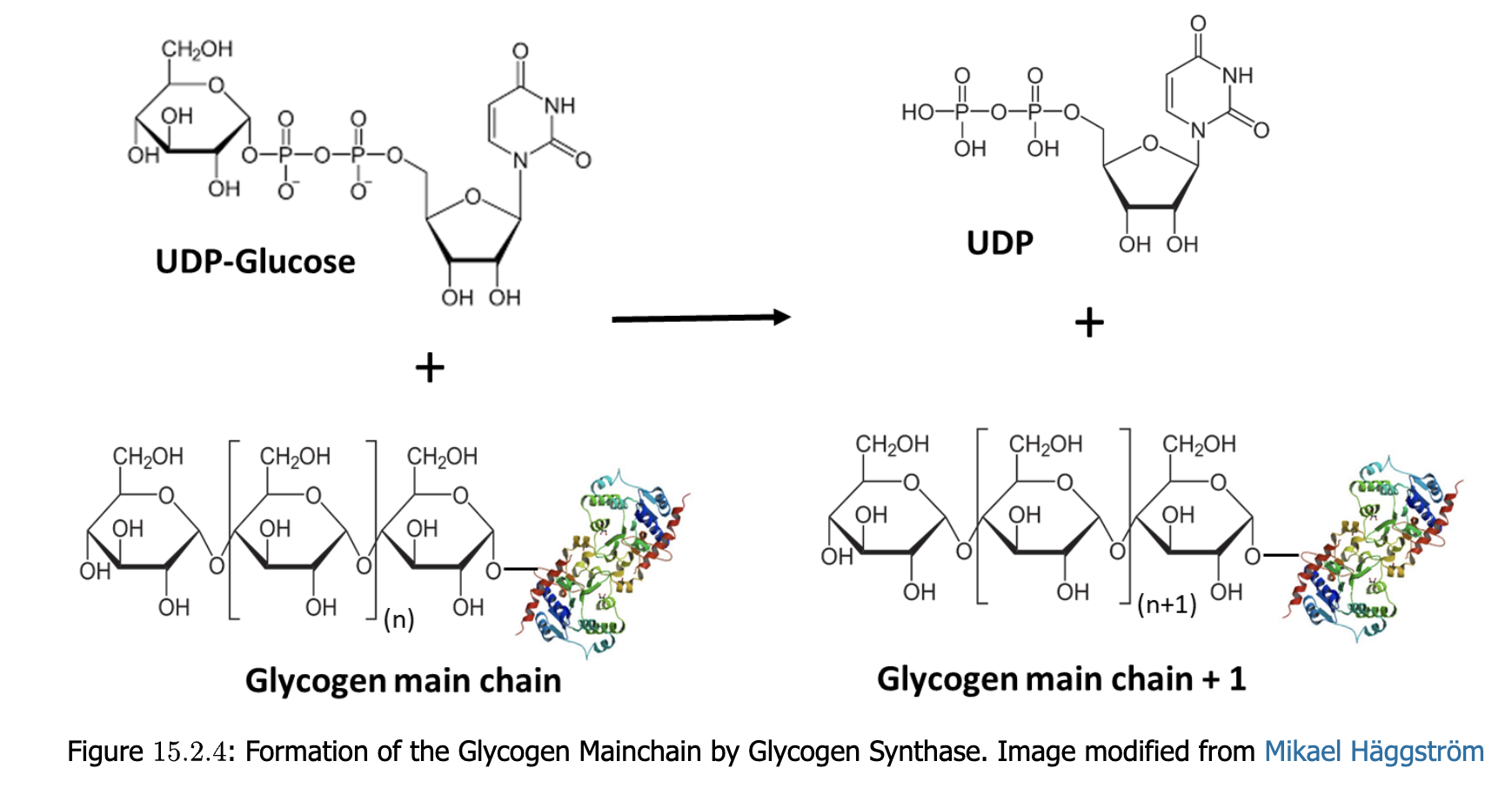
Glycogen synthase requires a glycogen primer of 4 to 6 glucose residues to add new residues to the main chain. The small docking protein, […], provides this primer.
glycogenin (GN or GYG)
Step 4: The branching of glycogen chains is carried out by the enzyme […].
glycogen branching enzyme (GBE)
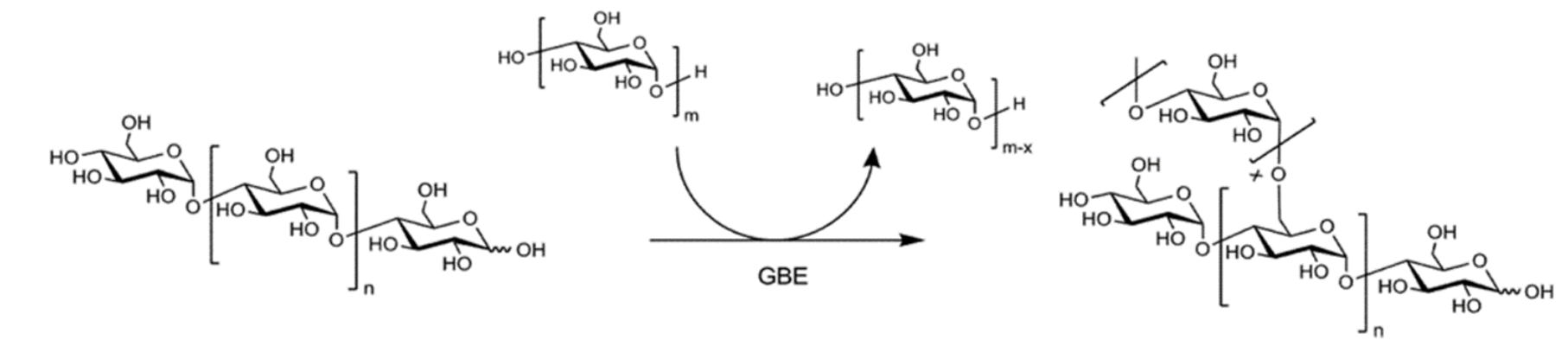
Glycogen branching enzyme (GBE) catalyzes the hydrolytic cleavage of a(n) […] and subsequent inter- or intra-chain transfer of the fragment to the […] position of an alpha-glucan.
alpha-1,4 glycosidic linkage; C6 hydroxyl
An alpha-glucan is a polysaccharide made of glucose units linked by alpha bonds.
In this image, an inter-chain transfer is occurring.
Above the arrow, the GBE enzyme removes several glucose residues (usually around 7) from one linear glycogen chain and then attaches it as an alpha-1,6 branch to the other chain.
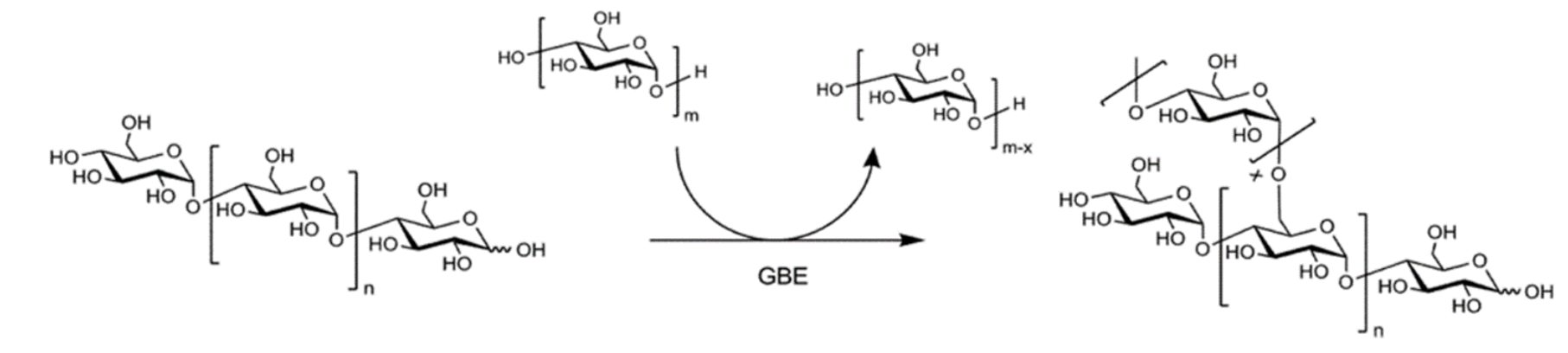
Glycogen branching creates additional […], which can act as a primer site for […] (the main enzyme that breaks down glycogen).
non-reducing ends; glycogen phosphorylase
Because of this, glucose residues can be released very quickly when needed.