Systems Integration in Multicellular Organisms: Nervous, Endocrine, and Brain Functions
 Call Kai
 Learn
Learn Practice Test
 Spaced Repetition
 Match
Match Flashcards
 Knowt Play
1/48

There's no tags or description
Looks like no tags are added yet.
Name | Mastery | Learn | Test | Matching | Spaced | Call with Kai |
|---|
No analytics yet
Send a link to your students to track their progress
49 Terms
What is systems integration in multicellular organisms?
The coordination between different organ systems to collectively perform life functions and maintain survival.
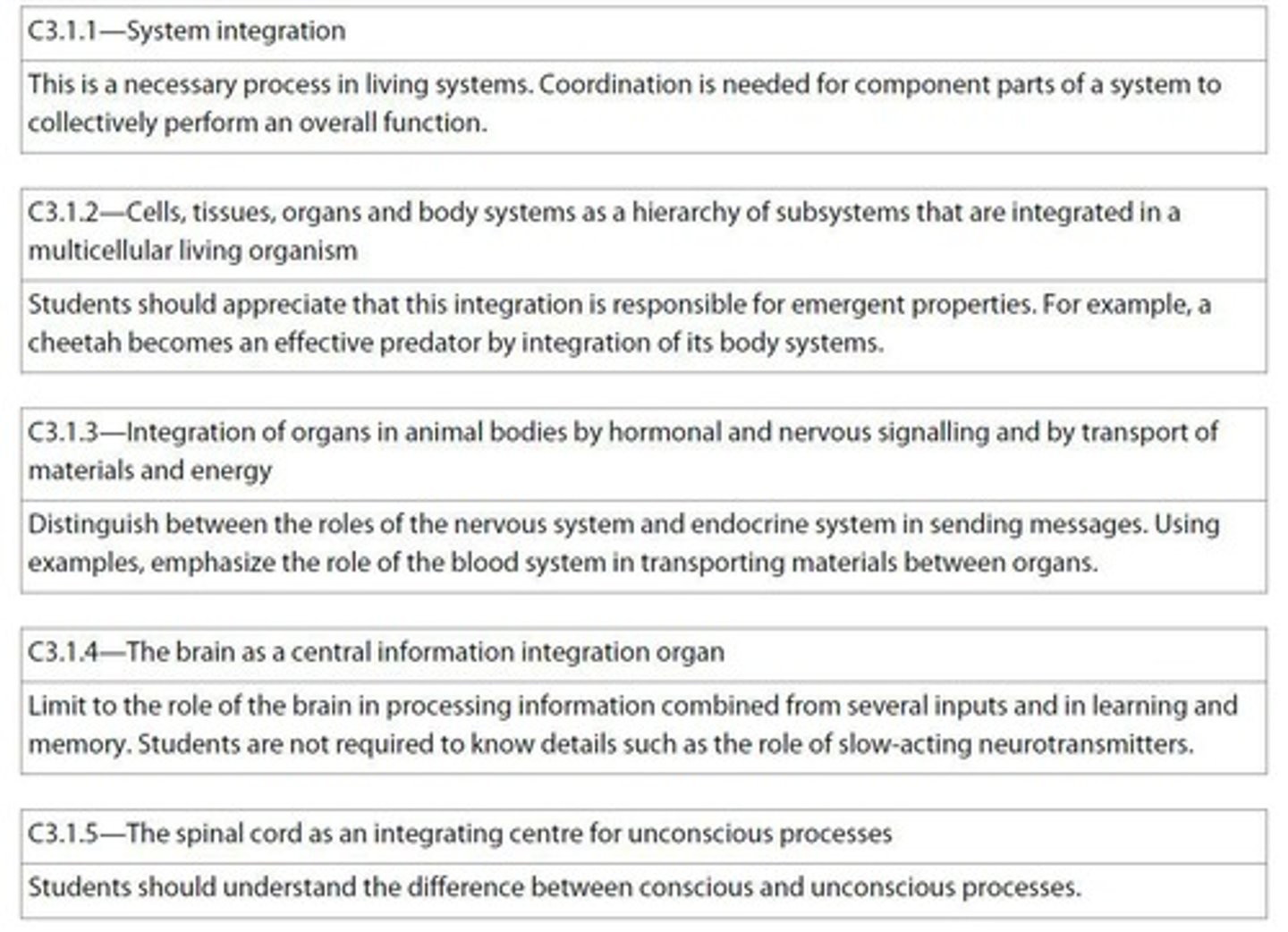
What are the basic components of multicellular organisms?
Cells, tissues, organs, and body systems that are integrated as subsystems.
What are emergent properties?
New functionalities that arise from the interactions between different components of biological systems.
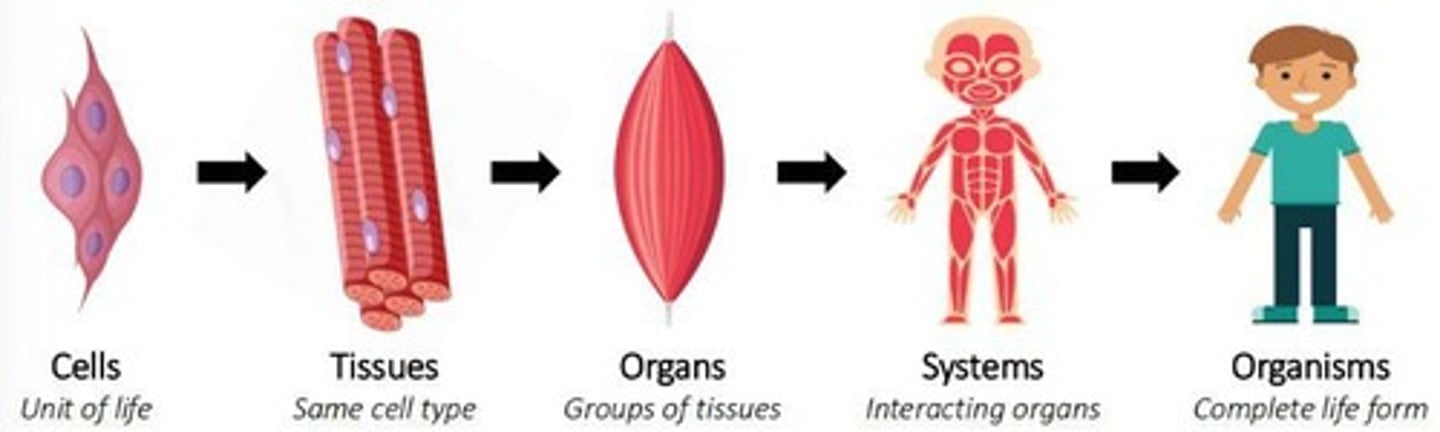
What two systems allow for coordination between body organs?
The Nervous System and the Endocrine System.
What is the function of the nervous system?
To transmit electrochemical impulses for rapid signaling and coordination of actions.
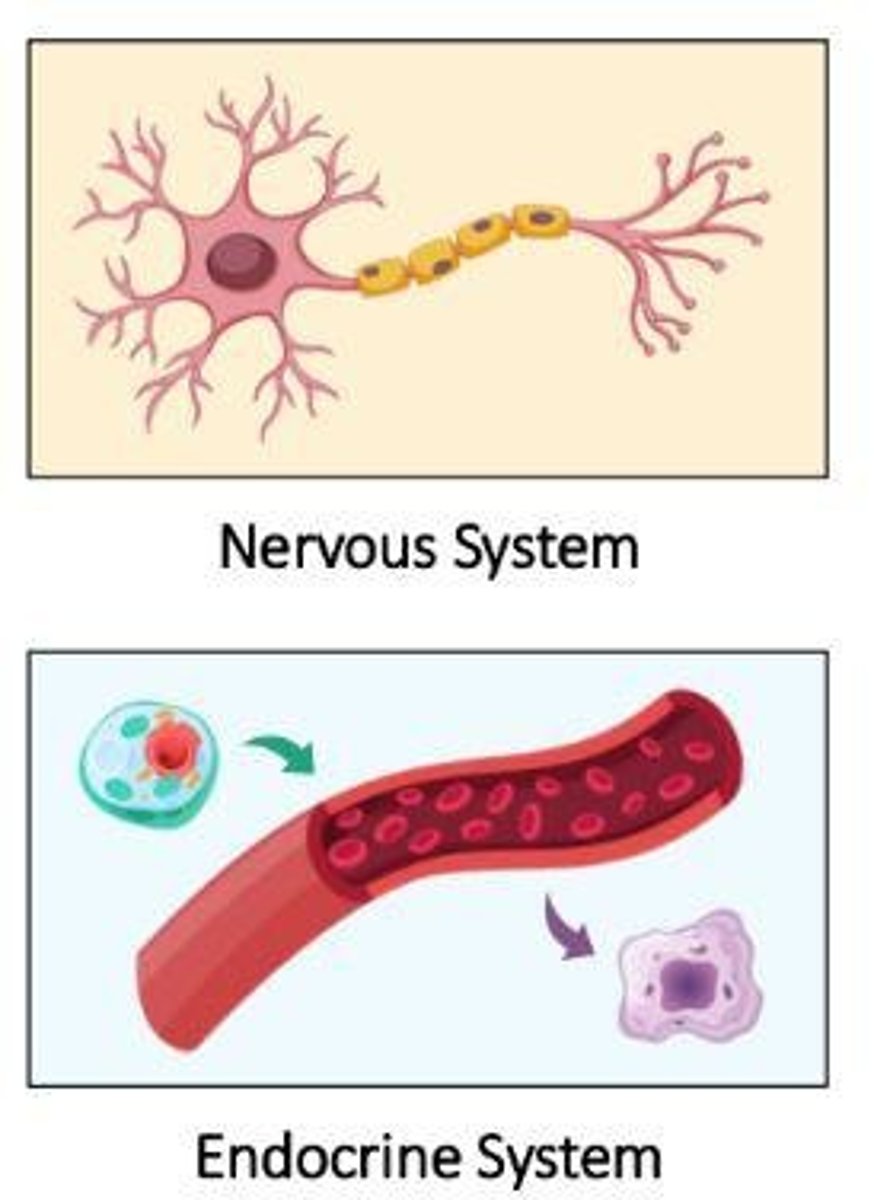
What does the endocrine system consist of?
Ductless endocrine glands that release hormones directly into the bloodstream.
What are the two main parts of the nervous system?
Central Nervous System (CNS) and Peripheral Nervous System (PNS).
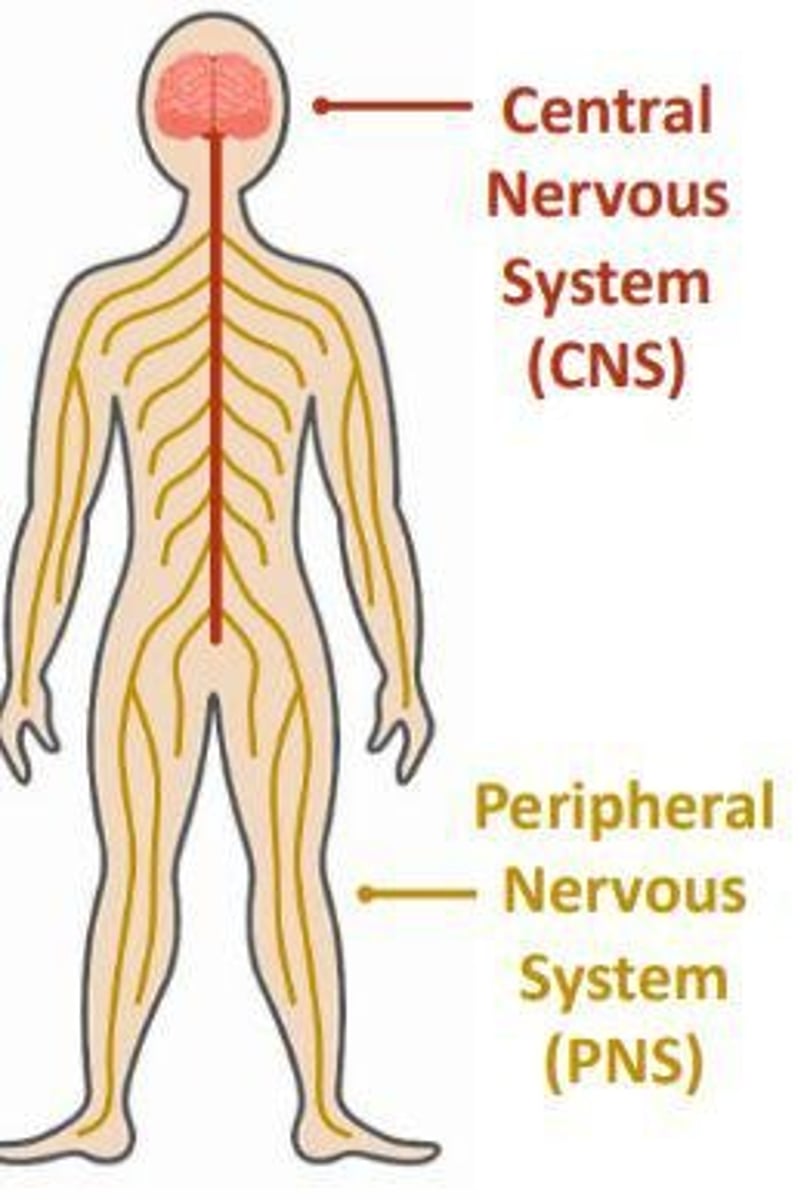
What is the role of the CNS?
To act as an information processing center composed of the brain and spinal cord.
What is the function of the PNS?
To link the CNS to receptors and effectors, transferring information to and from the system.
What is a stimulus-response pathway?
A pathway where stimuli are converted into electrical impulses by receptors, leading to a response by effectors.

What are sensory neurons responsible for?
Relaying signals to the CNS from sensory receptors.
What do motor neurons do?
Relay signals from the CNS to effectors such as muscles or glands.
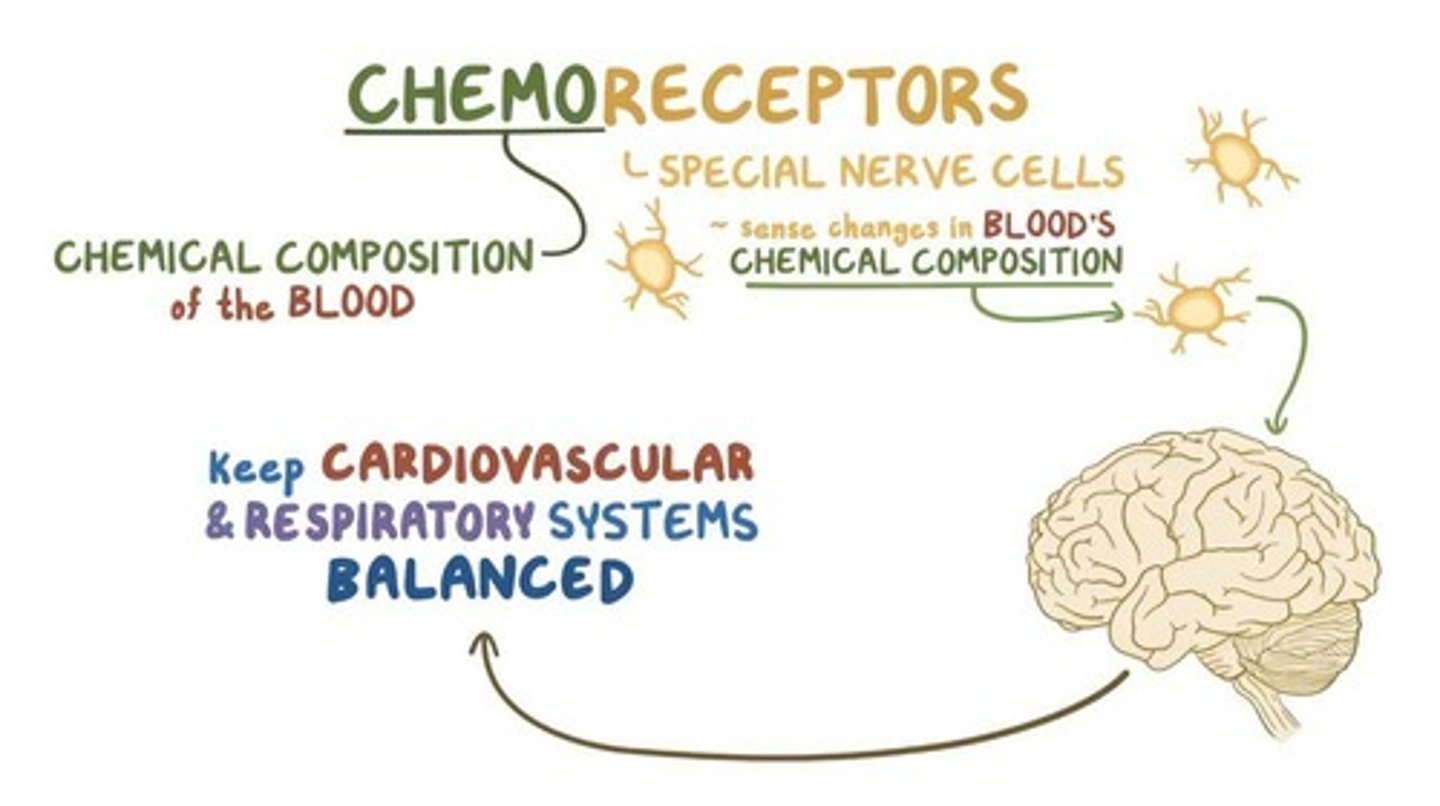
What are chemoreceptors?
Receptors that sense changes in the concentration of substances, such as CO2 in the blood.
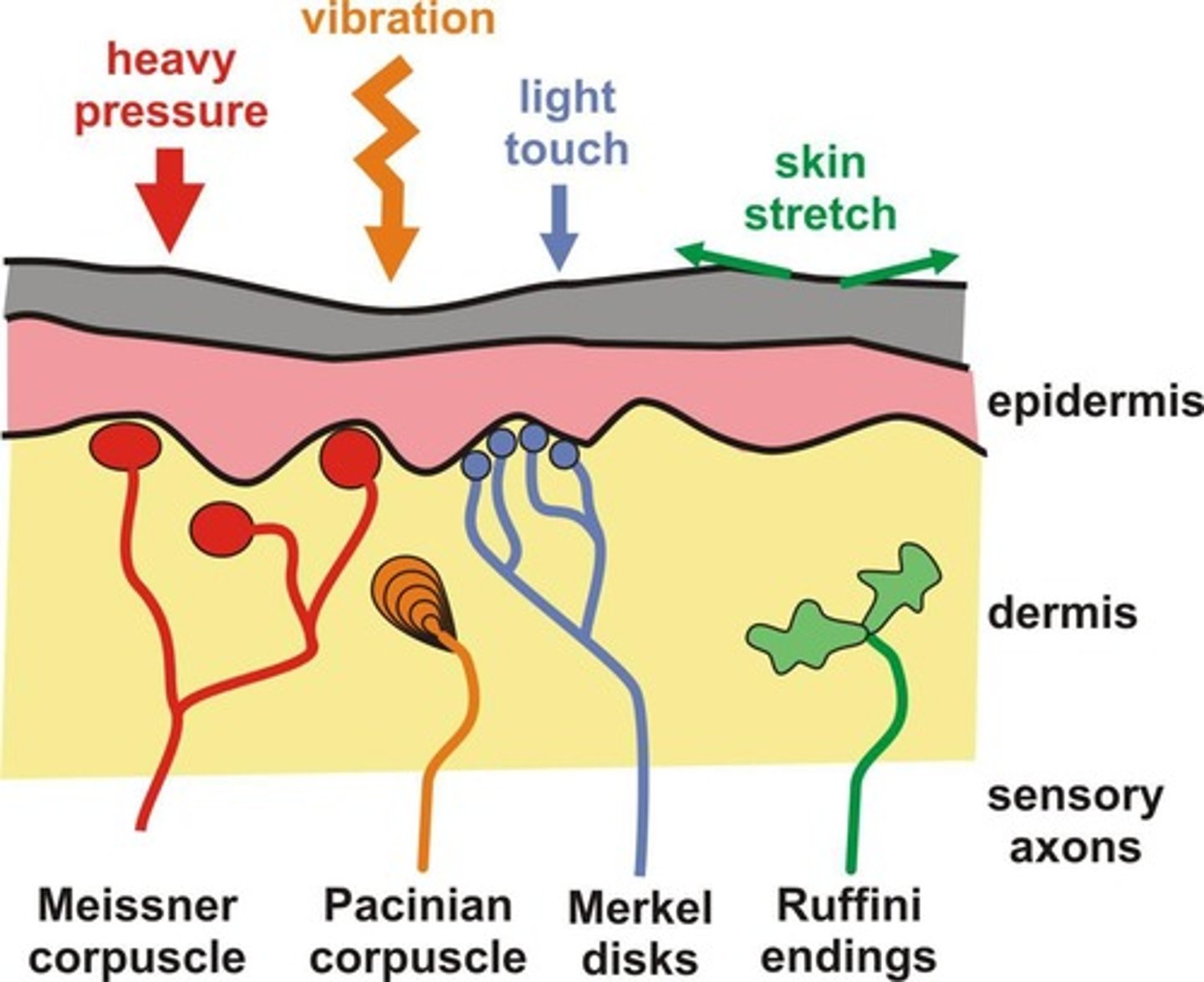
What do mechanoreceptors detect?
Limb motions and body position in space.
What is the function of thermoreceptors?
To detect changes in temperature.
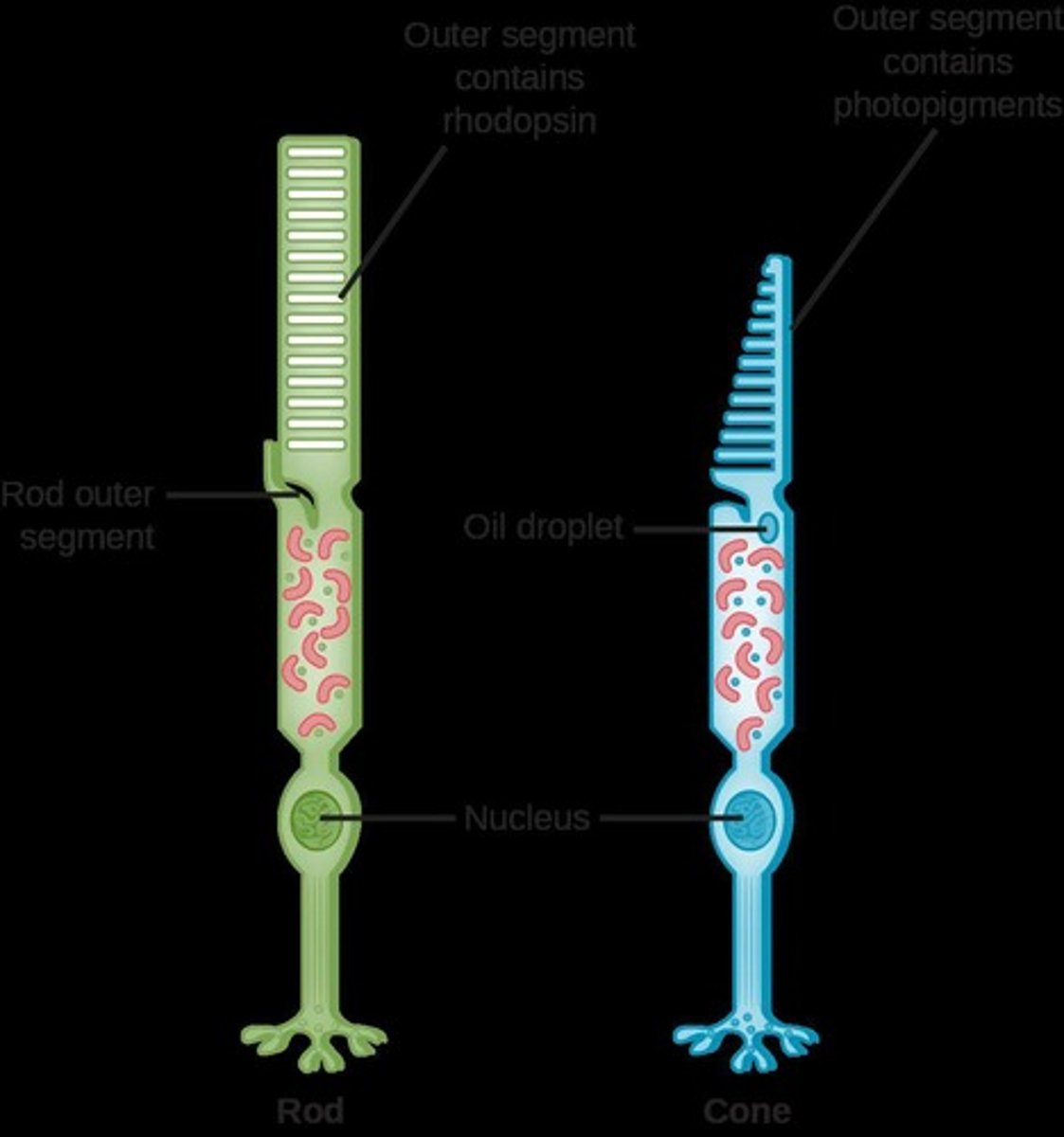
What do photoreceptors detect?
Light energy, and are found in the retinas of the eyes.
What is the role of nociceptors?
To sense pain, which is a perception of injury to a body region.
What is an effector?
Any organ or cell that acts in response to a stimulus by triggering a response.
How do endocrine glands function?
They release hormones into the bloodstream and are ductless.
What are exocrine glands?
Glands that secrete chemicals onto surfaces or cavities via ducts.
What is the spinal cord's role?
To connect peripheral nerves to the brain and serve as an integrating center for unconscious processes.
What happens if a spinal section is injured?
It affects all body parts ventral to that region.
What analogy is used to describe nerves?
A nerve is like a road, with bundles (fascicles) as specific lanes and fibers (cars) traveling to a set destination.
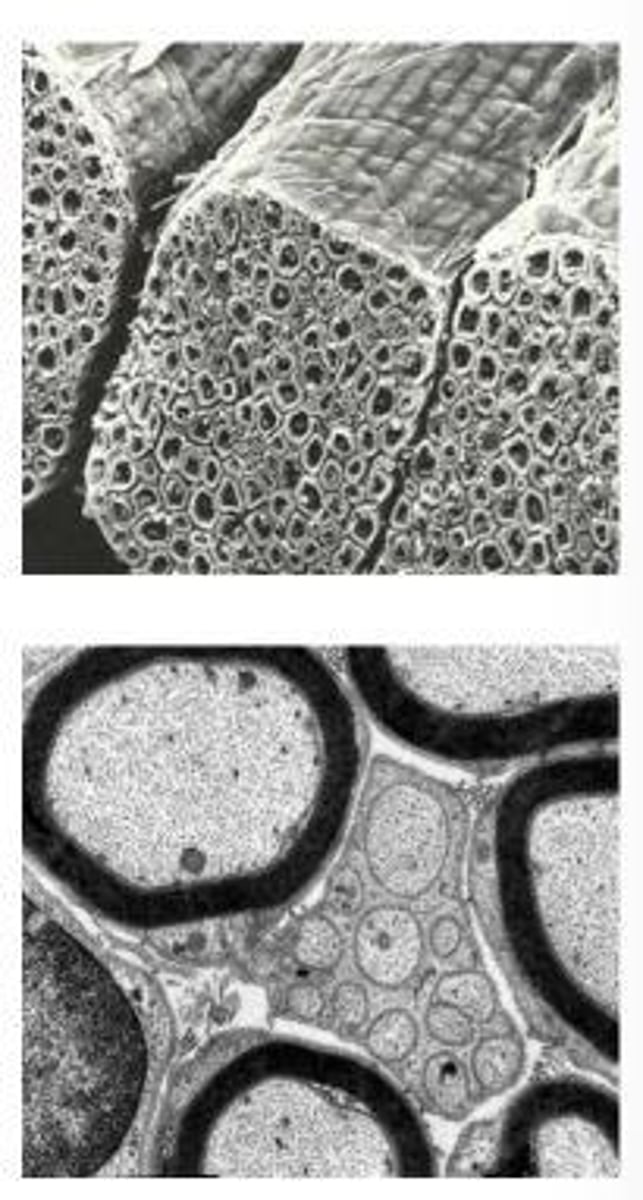
What is the myelin sheath?
A fatty layer that insulates nerve fibers and improves conduction speeds.
What is the primary function of the spinal cord?
To relay signals to the brain and act as an integration center for certain unconscious processes (reflex arcs).
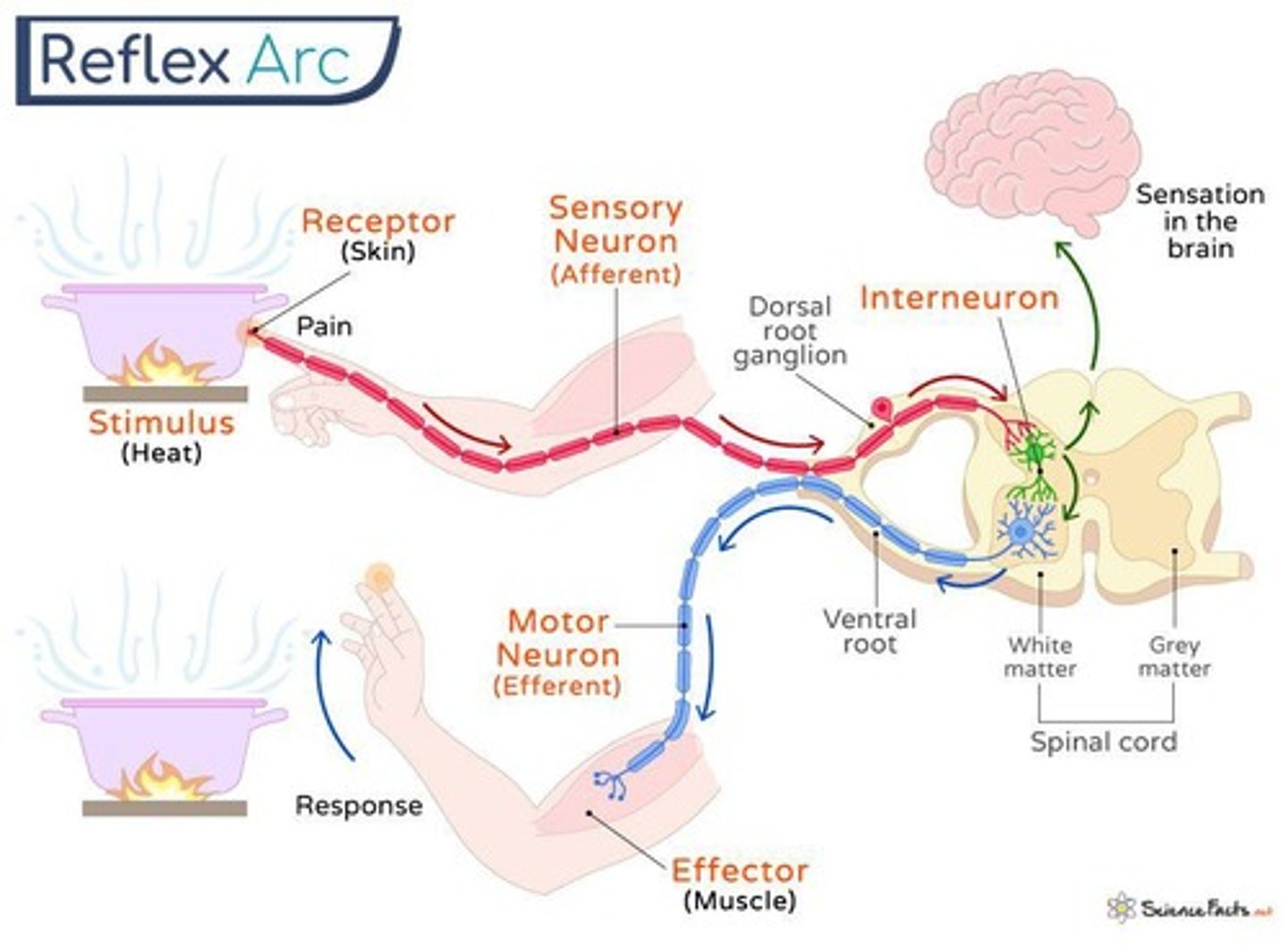
What is a reflex?
A rapid and involuntary response to stimuli, with skeletal muscles as the effector.
How does a reflex arc operate?
It does not involve the brain; instead, information is relayed via the spinal cord.
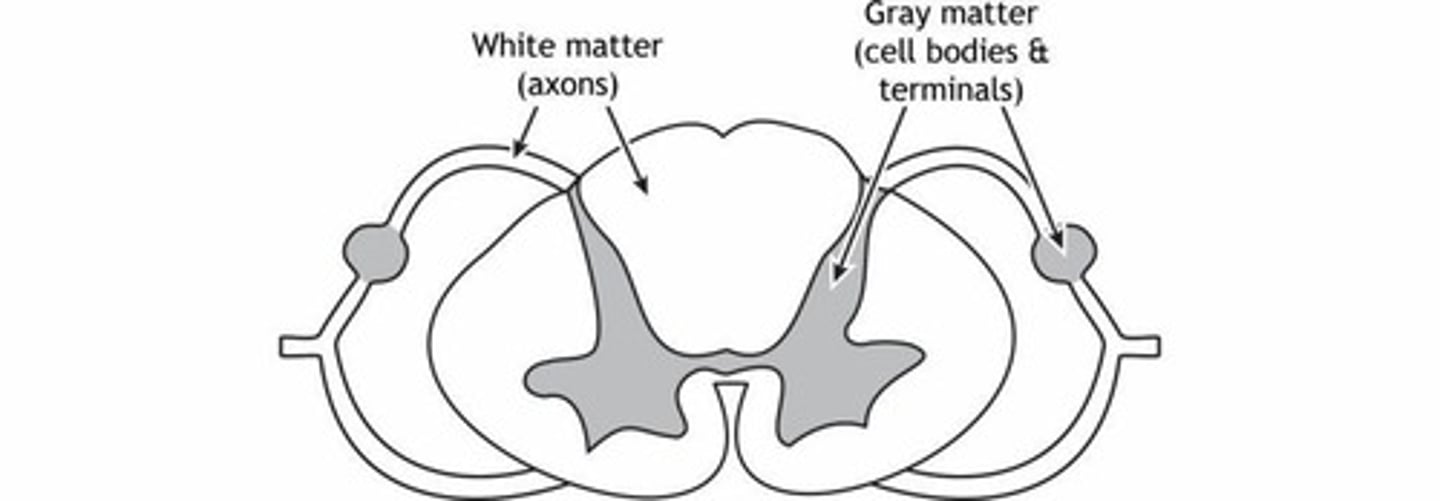
What is the difference between white matter and gray matter in the spinal cord?
White matter consists of myelinated axons (fast signals, low processing power), while gray matter consists of unmyelinated axons (slow signals, high processing power).
What are the three main parts of the human brain?
Cerebrum, cerebellum, and brainstem.
What is the primary role of the cerebrum?
It is the predominant processing center responsible for complex cognitive tasks.
What are the four lobes of the cerebrum and their functions?
Frontal Lobe (voluntary motor activity), Parietal Lobe (touch sensation), Occipital Lobe (visual processing), Temporal Lobe (auditory/language processing).
What is the function of the cerebellum?
It coordinates skeletal muscle contraction and is responsible for balance and proprioception.
What does the brainstem connect?
It connects the cerebrum to the spinal cord and cerebellum.
What functions does the brainstem regulate?
It regulates involuntary (autonomic) and unconscious functions, such as breathing and heart rate.
What is the role of the hypothalamus in the endocrine system?
It connects the nervous and endocrine systems and functions as a homeostasis control center.
What does the pituitary gland do?
It controls the release of hormones from other endocrine glands in the body.
What hormones does the pancreas secrete?
Insulin and glucagon, which regulate blood glucose levels.
What is the function of melatonin?
It regulates circadian rhythms and promotes sleep in diurnal animals.
How does light exposure affect melatonin secretion?
Light exposure inhibits melatonin secretion via signals sent from the suprachiasmatic nucleus in the hypothalamus.
What is epinephrine and its role in the body?
Epinephrine (adrenaline) is a stress hormone that activates the sympathetic nervous system, preparing the body for vigorous activity.
What physiological changes occur due to epinephrine release?
Increased heart rate, dilation of arterioles to skeletal muscles, increased ventilation rate, and release of glucose and fats from storage.
What do chemoreceptors and baroreceptors detect?
Chemoreceptors detect changes in blood pH, while baroreceptors detect changes in blood pressure.
What is the role of the enteric nervous system in digestion?
It controls the involuntary movement of food through peristalsis in the alimentary canal.
What is peristalsis?
The contraction of longitudinal smooth muscles in the alimentary canal to move food.
What is the difference between voluntary and involuntary nerve pathways in digestion?
The CNS controls voluntary actions like swallowing and egestion, while the enteric nervous system controls involuntary movements.
What is the significance of the corpus callosum?
It connects the two hemispheres of the brain, and damage can cause 'split brain' syndrome.
What is the primary function of the brainstem?
To regulate autonomic functions and connect the brain to the spinal cord and cerebellum.
How does the body respond to vigorous activity regarding heart rate?
Heart rate and stroke volume increase to improve blood flow to tissues.
What triggers the increase in ventilation rate during vigorous activity?
The need for more oxygen and the removal of carbon dioxide due to muscle contraction.