CDM terms for M1
 Call Kai
 Learn
Learn Practice Test
 Spaced Repetition
 Match
Match Flashcards
 Knowt Play
1/41

Earn XP
Description and Tags
Flash cards with terms for CDM Midterm 1
Name | Mastery | Learn | Test | Matching | Spaced | Call with Kai |
|---|
No analytics yet
Send a link to your students to track their progress
42 Terms
Camera Movement
How the camera shifts in physical placement or position to capture the subject or action
Pan
when a stationary camera pivots on its axis from side to side
Tilt
When the camera follows along by moving towards, away or alongside the person or object
Cinematography
F (Frame)
How the camera structures our view of a person or an object by emphasizing or restricting certain details
A (Angle)
How the camera's placement at a particular height shapes our view
M (Movement)
How the camera shifts in physical placement or position to capture the subject or action
E (Extended or shallow depth)
The camera focus on the foreground/backround elements in a shot
Mise-en-scene
S, Setting
Where characters are and how the location(s) is/are designed
P, Props
How objects are utilized in a film's storytelling to advance the plot or to tell us something about the characters
A, Arrangement of items
How the characters and objects are placed within the frame
C, Costuming (clothes, hair, makeup)
How the characters are adorned via hair, clothes and makeup
E, Emphasis on lighting
How three-point lighting is used (or modified) to mediate our view
Ideology
Arbitrary conventions that govern conduct and largely go unquestioned because they present themselves as “natural”, “normal” and “the way things are”
Hegemony/Hegemonic Order:
Inequality or unfairness presented as the normal, social arrangements (and worth defending)
Imperfect Cinema
Critiques the “perfect cinema” of European modernism
Advocates for a "committed" cinema that seeks liberation rather than a specific aesthetic form
Neocolonialism
the use of economic, political, cultural, or other indirect pressures by developed nations or transnational corporations to control or influence developing nations, instead of direct military or colonial rule
Key light
The strongest light source; placed above and to the side of protagonists, often cast shadows
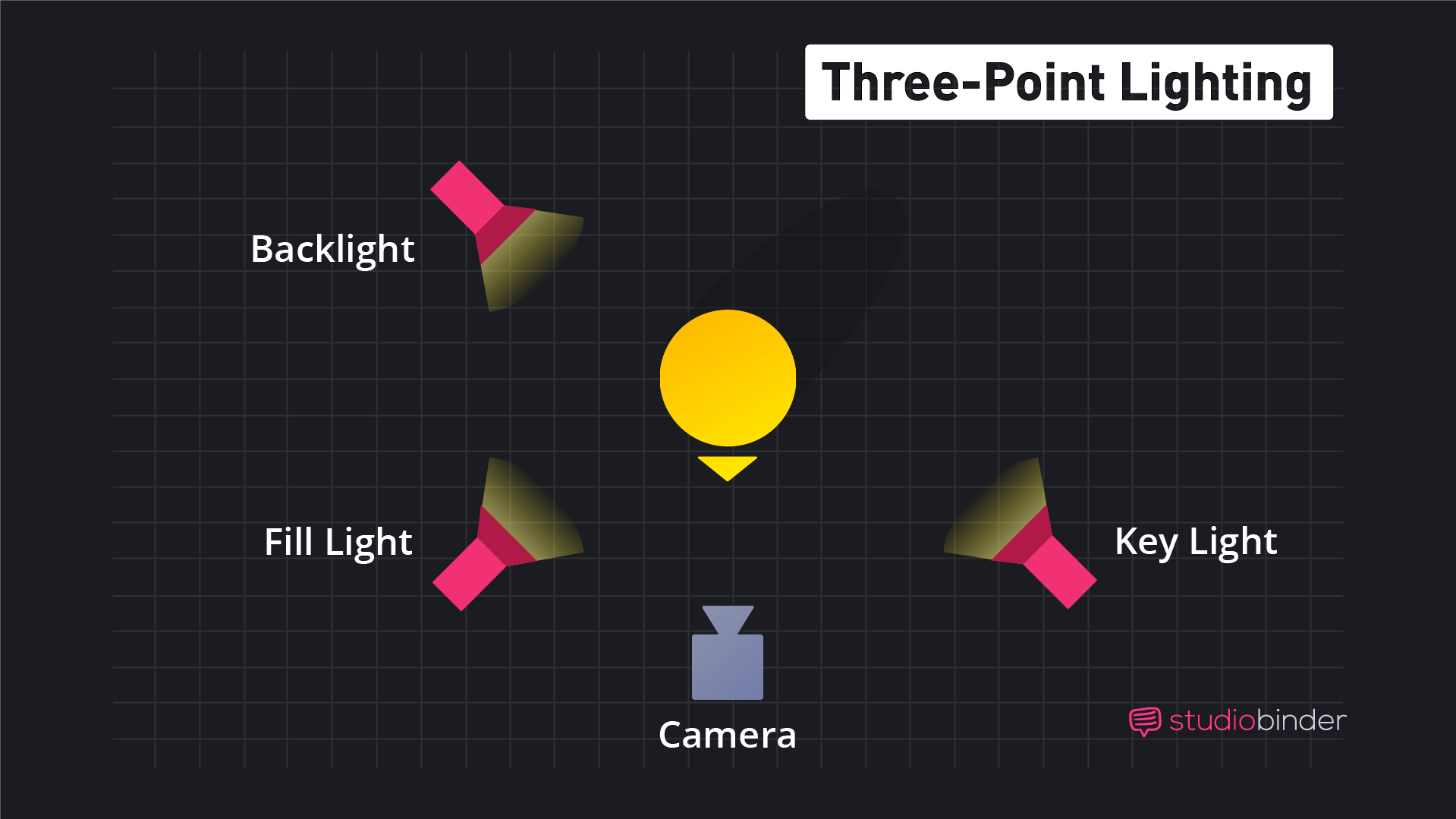
Fill light
typically a weaker source the fill is placed opposite ot the key to fill in the shadows
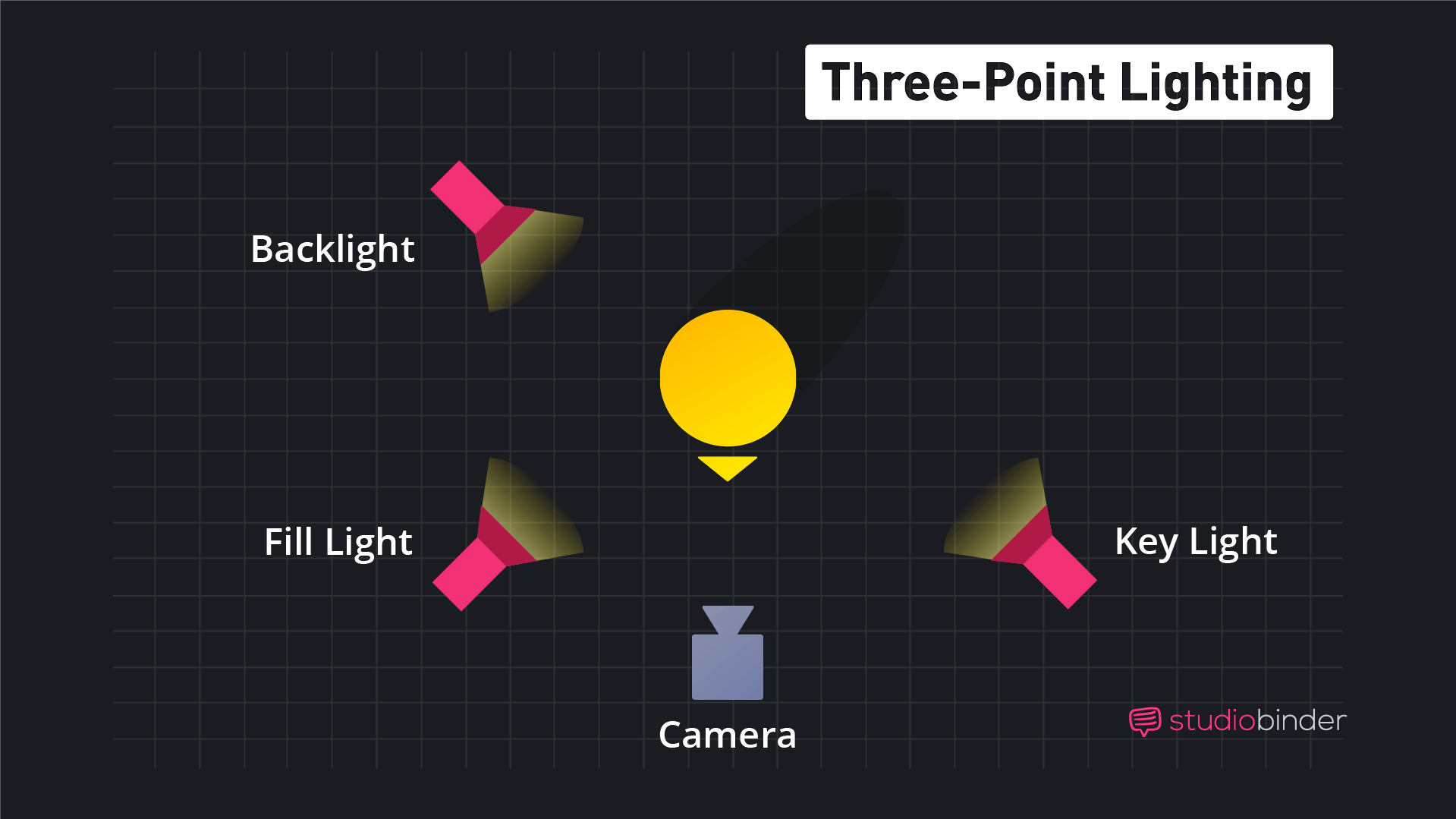
Back light
Placed to light behind the subject
High-key lighting
A variety of light sources that ensure that everything is the frame is well lit
Low-key lighting
Creates dynamic contrast and sharp dark shadows, with the fill typically eliminated. It is difficult to see the carters and their surroundings
Italian Neorealism
Images in Italy after WW1, in direct contrast to Hollywood's classic cinema. Uses non-professional actors, shooting on location, minimal editing, use of natural lighting, long takes and limited use of close ups
Master shot
Used to locate character dialogue/action in location
180-degree rule
Having 4 cameras (1,2,3 and X) surrounding the actors ¾ of them
axis of action, spatial continuity across sets/shots
Establishing Shot
Locate viewers in a specific space
Can be real, fictional, historical
reveals setting and establishes a center lines
Montage: French word for assembly
Broadly a montage sequence refers to the method or governing logic for how shots are arranged in a scene/sequence
Parallel editing
When two things are happening at the same time and are shown to be happening at the same time
Eye-line match
Used to orient viewers in space
Reverse shot
one character is shown looking off screen to another (often off screen) followed by a cut of the other character looking back at them
Continuity editing
unites cuts amidst onscreen movement, termed matching on action
Used to show/unite different camera distances/angles within the same scene
Also used to connect a character across time
Match cuts
Connect disparate time and space
Pull viewers from one scene to the next while echoing thematic concerns Wipe
(Transition) Wipe Shot
Shot A peels off to reveal shot B
Used to move locations (can be vertical/horizontial)
Move time forward slightly (slightly)
(Transition) Dissolve
Signals a jump in time and/or space
Shot A overlaps with shot B
Sometimes referred to as cross-dissolve
(Transition) Fade in/ Fade out
Most often it signals a shift in time
Typically fade to black, but not always
sometimes red or white
Iris (Shot)
Eye shaped mask over the lense
Iris in/out
Closes in or opens out form a masked circle to reveal a detail
can also function to fade in/out
Dynamism Montage
fast paced shots juxtaposed with slower, longer takes to show slash of ideas through the production of visual conflict
Discontinuous ending
juxtaposition of shots seems more fragmented (i.e. image relations are symbolic)rather than action oriented or visually patterned
Hollywood montage
Small or large jumps in time and pace are highlighted in the montage
In the classical hollywood style montage signifies the rapid progression in time. Common examples include training sequences,and the assembling of teams
Continuity is regularly maintained by using to connect with time
In contemporary mainstream Hollywood films, montage sequences are often used to accelerate time
Wide angle (Shot)
when used on a limited depth-of-field, causes a fish-eye effect that exaggerates characters and distorts audience perspective
Canted (dutch) angle (Shot)
Often used to highlight psychological distress or disorient viewers from the story content
Metric montage
Montage effects are built purely out of the length of cuts
Rhythmic Montage
The rhythm within the frame and the meter between the shots is varied
Tonal montage
The content combines with the form to create a dominant emotional tone in a montage pattern
Associational montage (overtonal)
Combining the three earlier forms in associational montage an idea/realization starts to emerge from amongst the cuts, image composition, mete, tone and rhythmic variance
Intellectual montage
The shots are constructed to provoke a theoretical or abstract meaning in the mind of the audience
Diegetic sound
Sound intended to be emanate from within the diegesis or story world of the narrative
Non-Diegetic Sound
Sound emanates from the film text, but is not part of the diegesis