Topic 1 Mercantilism
 Call Kai
 Learn
Learn Practice Test
 Spaced Repetition
 Match
Match Flashcards
1/45

There's no tags or description
Looks like no tags are added yet.
Name | Mastery | Learn | Test | Matching | Spaced | Call with Kai |
|---|
No analytics yet
Send a link to your students to track their progress
46 Terms
What economic theory guided England and most European nations during the 17th and 18th centuries?
Mercantilism
What was the main belief of mercantilism regarding a nation's economic strength?
It came from protecting and increasing its home economy through strict control over colonies and maintaining a favorable balance of trade.
How was wealth measured in mercantilist thought?
By the quantity of silver and gold a country possessed.
What does Bullionism refer to in the context of mercantilism?
The belief that a nation's economic health is measured by its stock of precious metals like gold and silver.
What was the dominant economic theory regarding global wealth during the mercantilist period?
The global supply of wealth was finite, and nations should accumulate as much as possible.
What strategies did mercantilist countries use to maintain a favorable trade balance?
Maximizing exports and minimizing imports, often through imperialist policies.
What role did colonies play in mercantilist economics?
Colonies provided raw materials to the home country, which were then manufactured and sold back to the colonies.
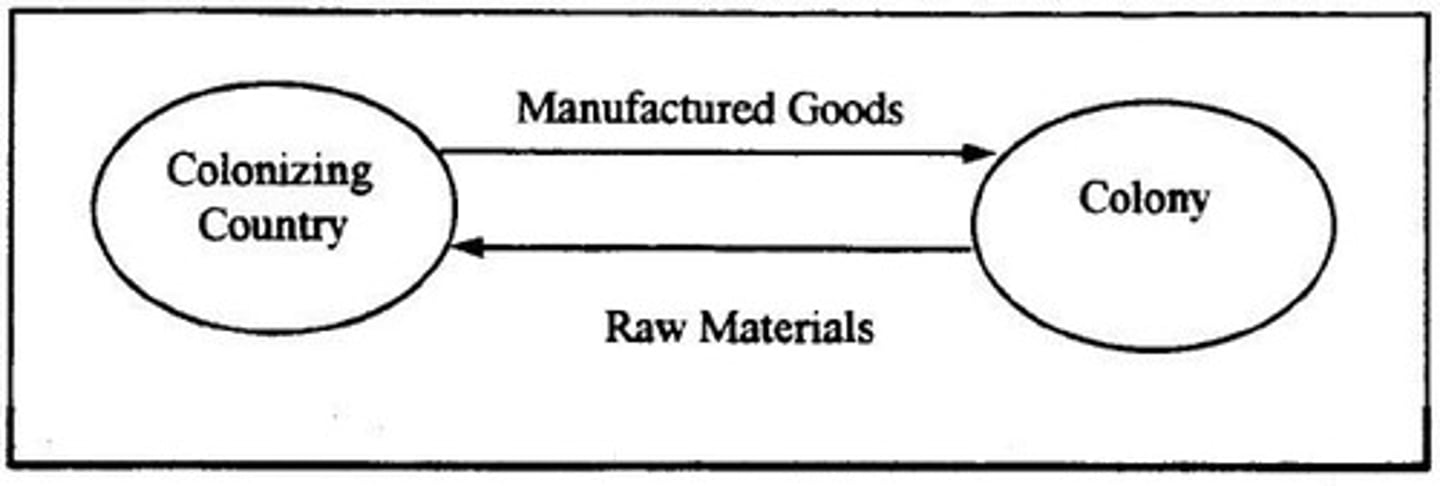
What are the five underlying principles of mercantilism?
1) Wealth is static. 2) Wealth is measured by precious metals. 3) Encourage exports over imports. 4) A large population is key to self-sufficiency. 5) The state should guide the economy.
What is the mercantilist view on government intervention in trade?
Mercantilism relies on government intervention to regulate trade and protect domestic industries.
How did mercantilism view agriculture compared to trade and industry?
Trade was the most important, followed by industry, while agriculture was considered the least important.
What was the mercantilist policy regarding foreign currency?
Encouragement of foreign currency coming into the country while preventing gold outflow.
What was the role of a strong central government in mercantilism?
To promote mercantilist goals by granting monopolies and limiting competition.
What were the mercantilist policies regarding imports and exports?
Discouragement of imports, protection of domestic industries, and promotion of exports.
What was the relationship between mercantilism and colonialism?
Colonies were established as sources of raw materials and markets for manufactured goods.
What was the mercantilist approach to trade routes and international competition?
Only powerful nations could dominate trade routes and compete successfully in international trade.
What was the mercantilist stance on trade balance?
A favorable trade balance was essential, requiring exports to exceed imports.
What did mercantilism dictate about the importance of industry and commerce?
Trade was prioritized, with industry and commerce being secondary.
What was the impact of mercantilism on economic efficiency?
It often led to inefficiency, conflict, and less value creation.
How did mercantilism relate to the decline of feudalism?
It developed logically from the changes inherent in the decline of feudalism and the rise of strong national states.
What is mercantilism?
An economic theory that emphasizes the importance of accumulating wealth through trade and maintaining a favorable balance of trade.
Why was sea power important in mercantilism?
Sea power was necessary to control foreign markets and reduce dependence on other nations for shipping.
What were the Navigation Acts?
A series of laws passed by England between 1650-1767 to control colonial trade.
What were the three main rules of the Navigation Acts?
1. Goods shipped to/from colonies had to be on English or colonial-built ships. 2. Goods had to pass through English ports. 3. Certain goods could only be exported to Britain.
What was the impact of the Navigation Acts on colonial trade?
Colonists could only trade on English ships, had to send goods to England first for taxation, and were restricted from creating their own factories.
What is the Triangular Trade?
A trade system involving three regions: Great Britain sent goods to Africa, Africa sent slaves to the Americas, and the Americas sent products back to Great Britain.
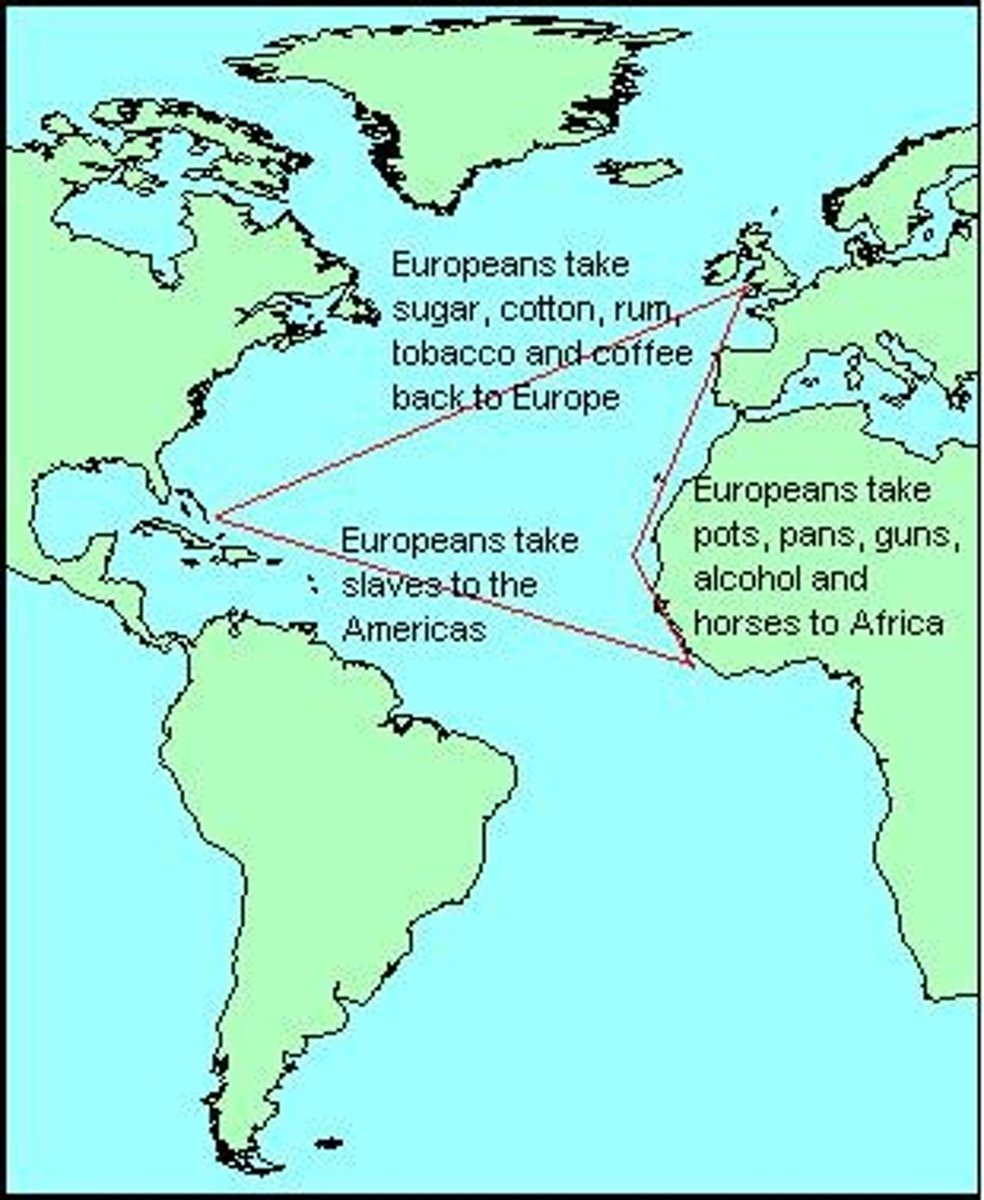
What goods did Great Britain send to Africa in the Triangular Trade?
Cloth, guns/ammunition, and manufactured goods.
What did Africa send to the Caribbean and America?
Slaves and spices.
What products were sent from the Caribbean to Great Britain?
Iron, lumber, sugar, rum, tobacco, cotton, and other crops.
What was the transatlantic slave trade?
The forced transport of 10 to 12 million enslaved Africans to the Americas from the 16th to the 19th century.
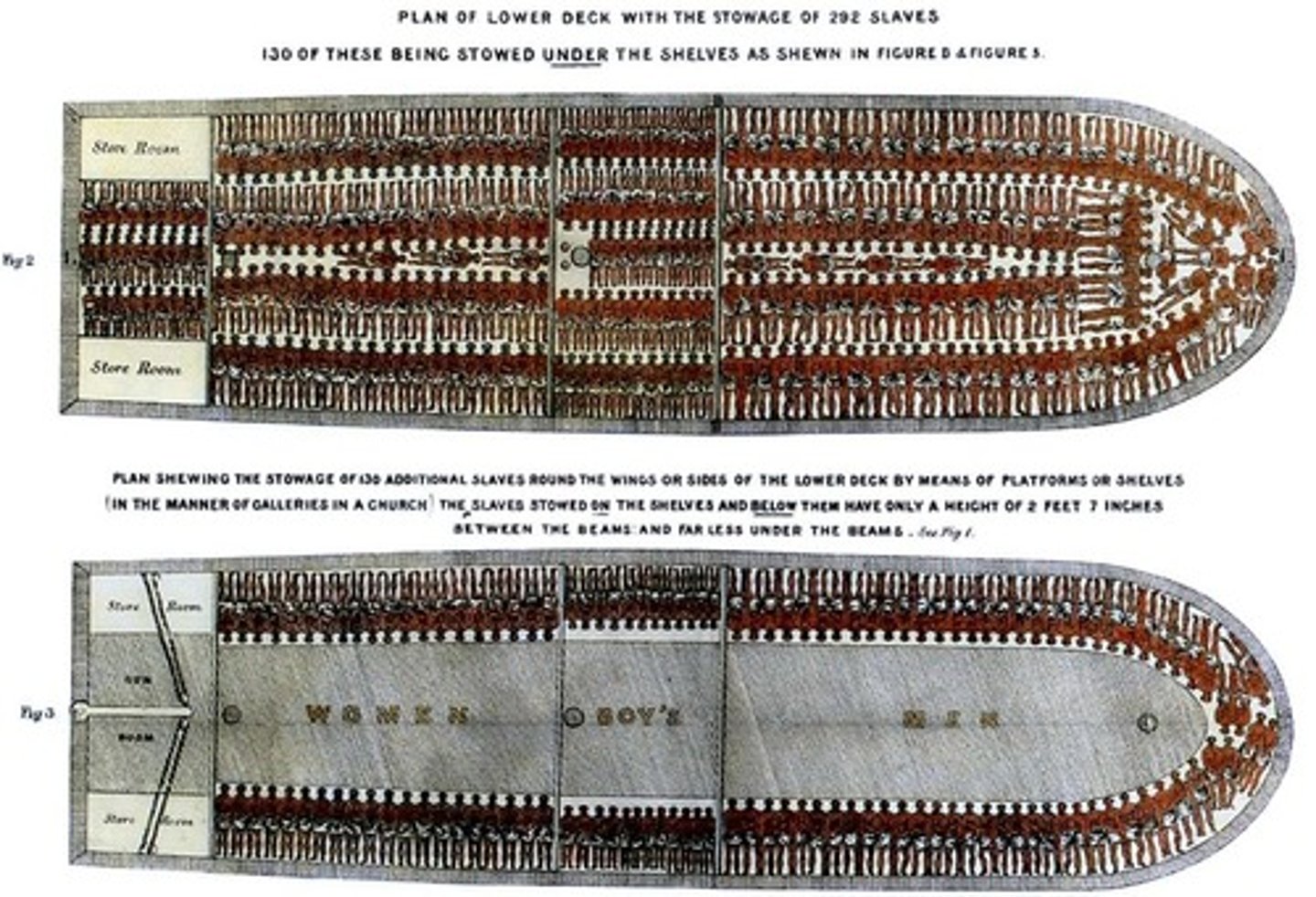
What were the three stages of the triangular trade?
1. Goods from Europe to Africa. 2. Enslaved people from Africa to the Americas. 3. Products from the Americas to Europe.
What were the consequences of mercantilism on colonies?
Colonies faced inflation, excessive taxation, and were restricted in trade and manufacturing.
How did mercantilism affect prices and competition?
It restricted imports, leading to higher prices and limited competition compared to a system of free trade.
Who were some scholars that critiqued mercantilism?
Adam Smith and David Hume.
What economic theory replaced mercantilism?
Market theory, driven by supply and demand.
What is Neo-Mercantilism?
Modern protectionist policies that restrict imports to support domestic industries.
What are some examples of modern mercantilist policies?
Tariffs on imports, subsidies for domestic industries, and restrictions on foreign labor.
What is the relationship between mercantilism and the transatlantic slave trade?
Mercantilism facilitated the transatlantic slave trade as it relied on cheap labor for raw material production.
What was the role of forced labor in mercantilist economies?
Forced labor was used to produce raw materials for export to core nations, maintaining economic dependency.
How did mercantilism contribute to international prestige?
A powerful merchant fleet enhanced a nation's military power and international standing.
What was the impact of mercantilism on consumer access to goods?
It limited access to goods and resulted in higher prices due to restricted imports.
What is the significance of comparative advantage in trade?
It allows countries to specialize in producing goods they can create more efficiently, leading to mutually beneficial trade.
What were the economic conditions in colonies during the mercantilist period?
Colonies experienced inflation, high taxation, and restrictions on manufacturing and trade.
What was the effect of mercantilist policies on colonial economies?
They created economic distress and limited the growth of local industries.
What was the role of smugglers in colonial trade?
Smugglers took advantage of lax enforcement of trade regulations to bypass mercantilist restrictions.
How did mercantilism lead to internal conflict in France?
The rigidity of mercantilist policies contributed to tensions that ultimately led to the French Revolution.
What was the main goal of mercantilist policies?
To maximize exports and minimize imports to accumulate wealth.