Oral path identification
 Call Kai
 Learn
Learn Practice Test
 Spaced Repetition
 Match
Match Flashcards
 Knowt Play
1/52

There's no tags or description
Looks like no tags are added yet.
Name | Mastery | Learn | Test | Matching | Spaced | Call with Kai |
|---|
No analytics yet
Send a link to your students to track their progress
53 Terms
Angular cheilitis
vomit deposit
bulomia
sucking lemon
too much soda or sport drinks
can be see it the back of the tongue
Erosion
retrocuspid papila
due to acid that eats the tooth surface
erosion
Normal or Abnormal? Name?
Abnormal; Nicotine Stomatitis
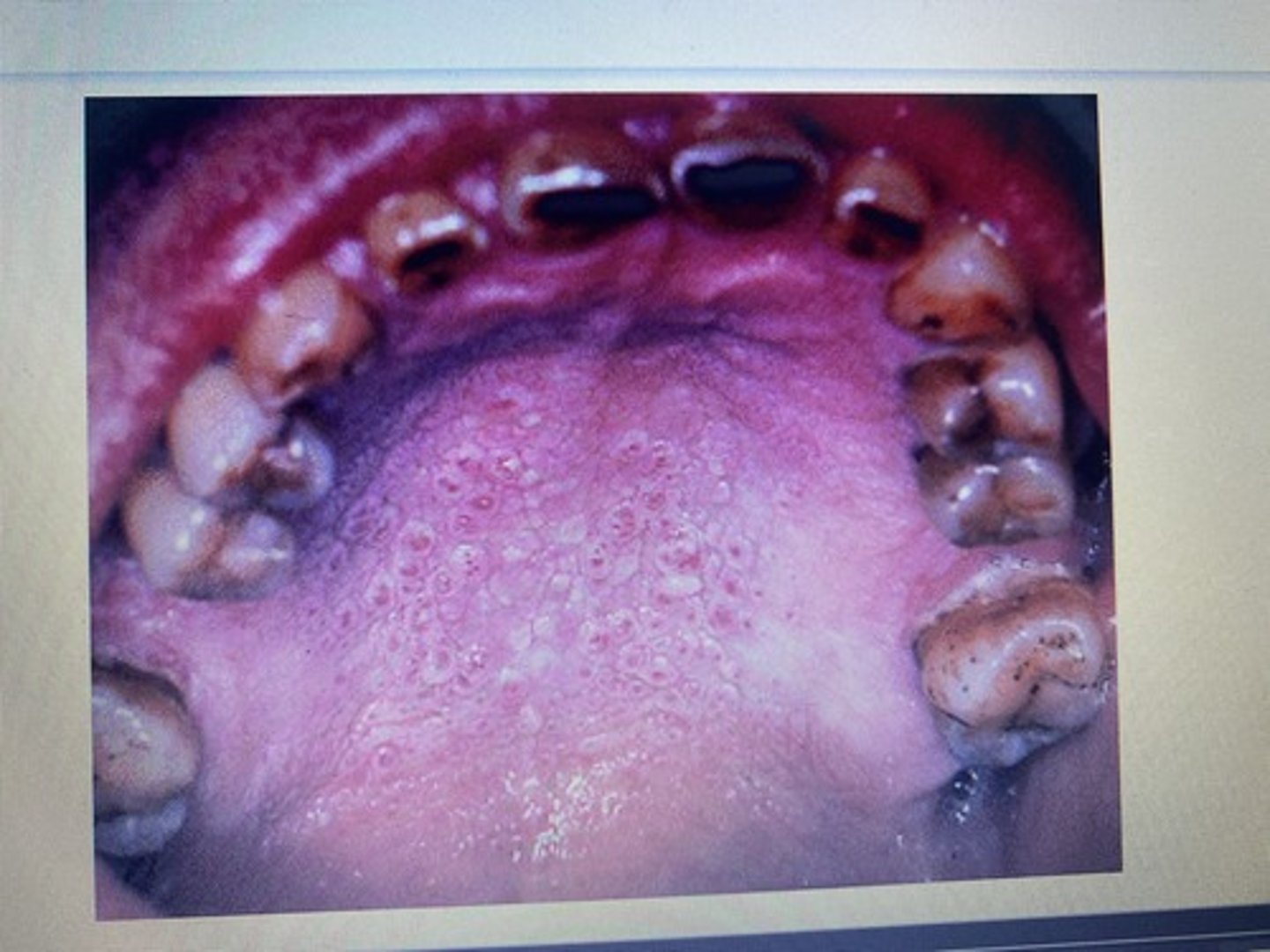
erosive lesion
ephigu
cantoliasis - loss of
most cases brought on by stress
lichen planus
candidiasis
aspirin Gensis
Type I hypersensitivity
Anaphylaxis
B-Cell
humoral,
Sessile
A sessile base is flat and wide.
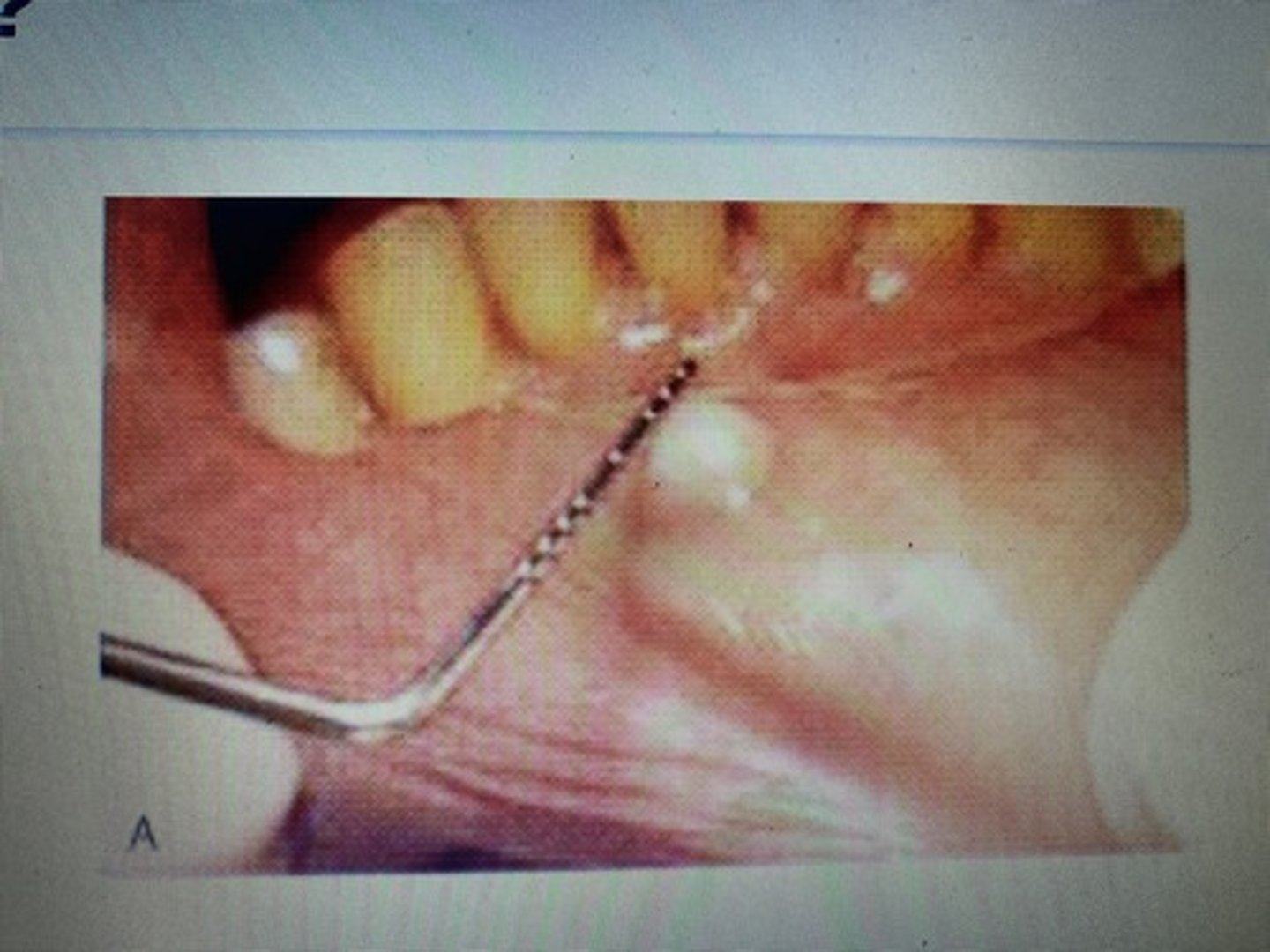
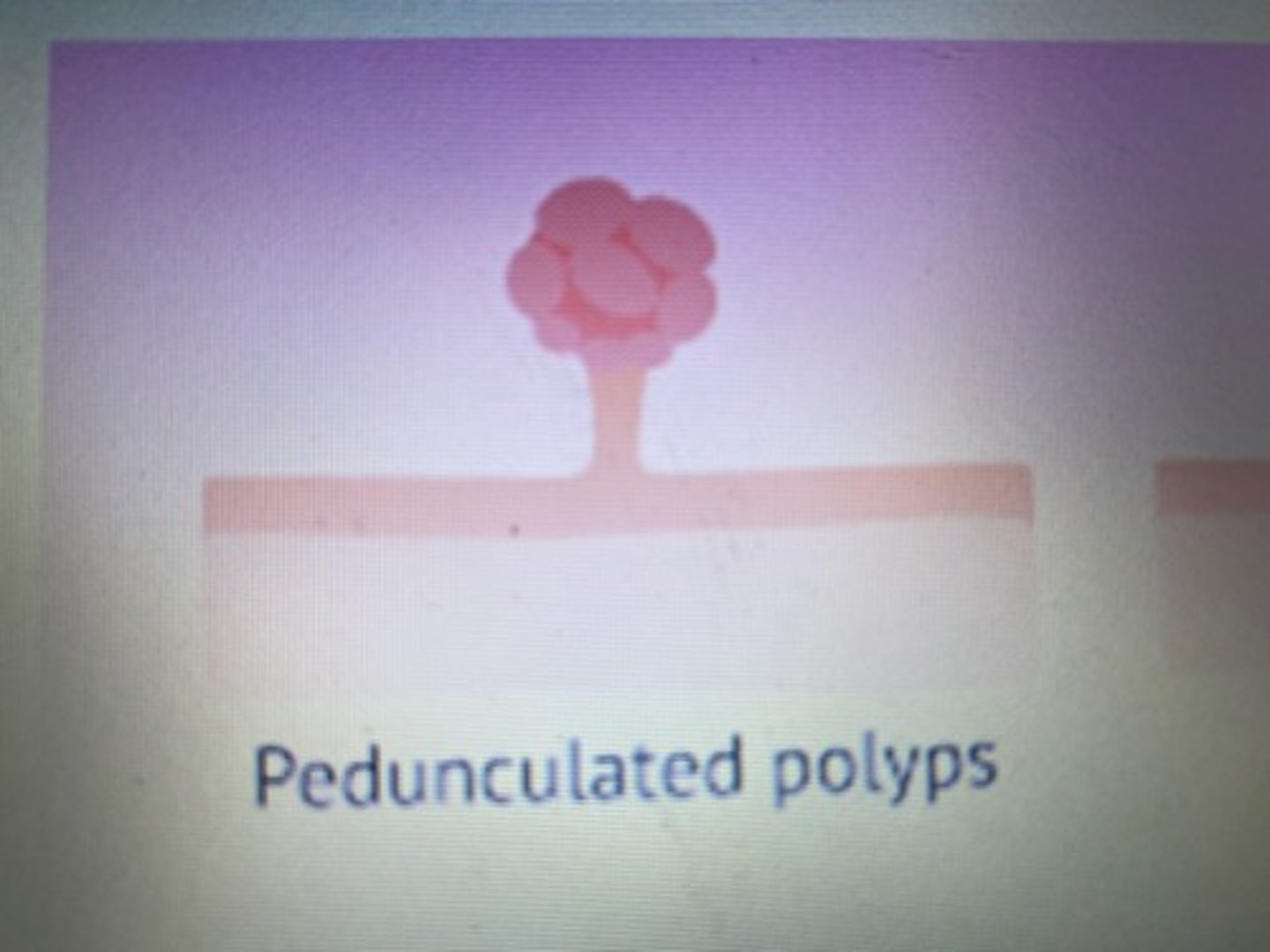
Pedunculated
Pedunculated base is opposite and resembles a stem or stalk.
How would you describe the shape of this maxillary torus?
Lobulated
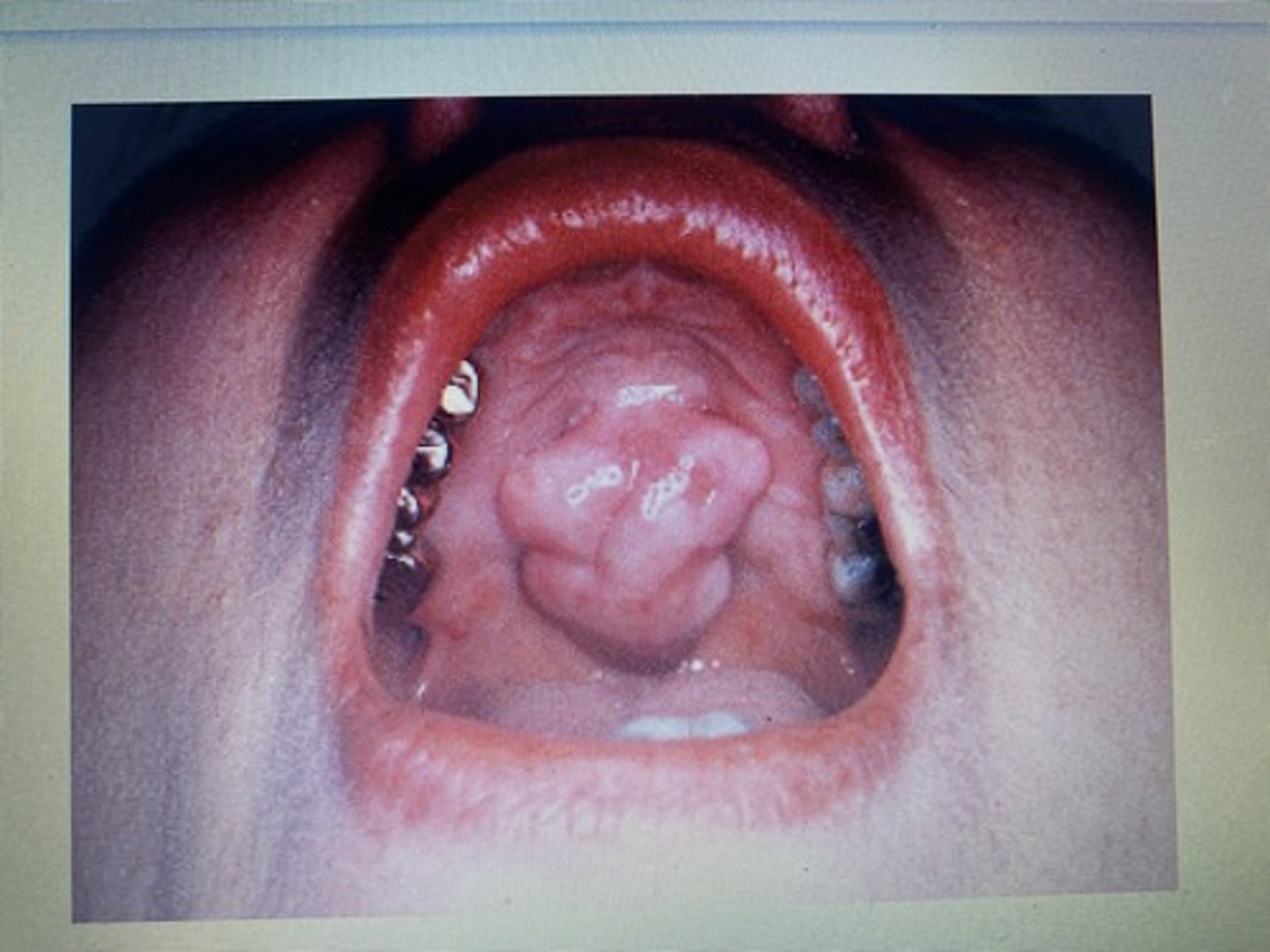
Lobulated
It resembles lobes that are fused together.
Does the bottom of the tongue appear normal or abnormal? What is this called?
Normal - lingual varicosities
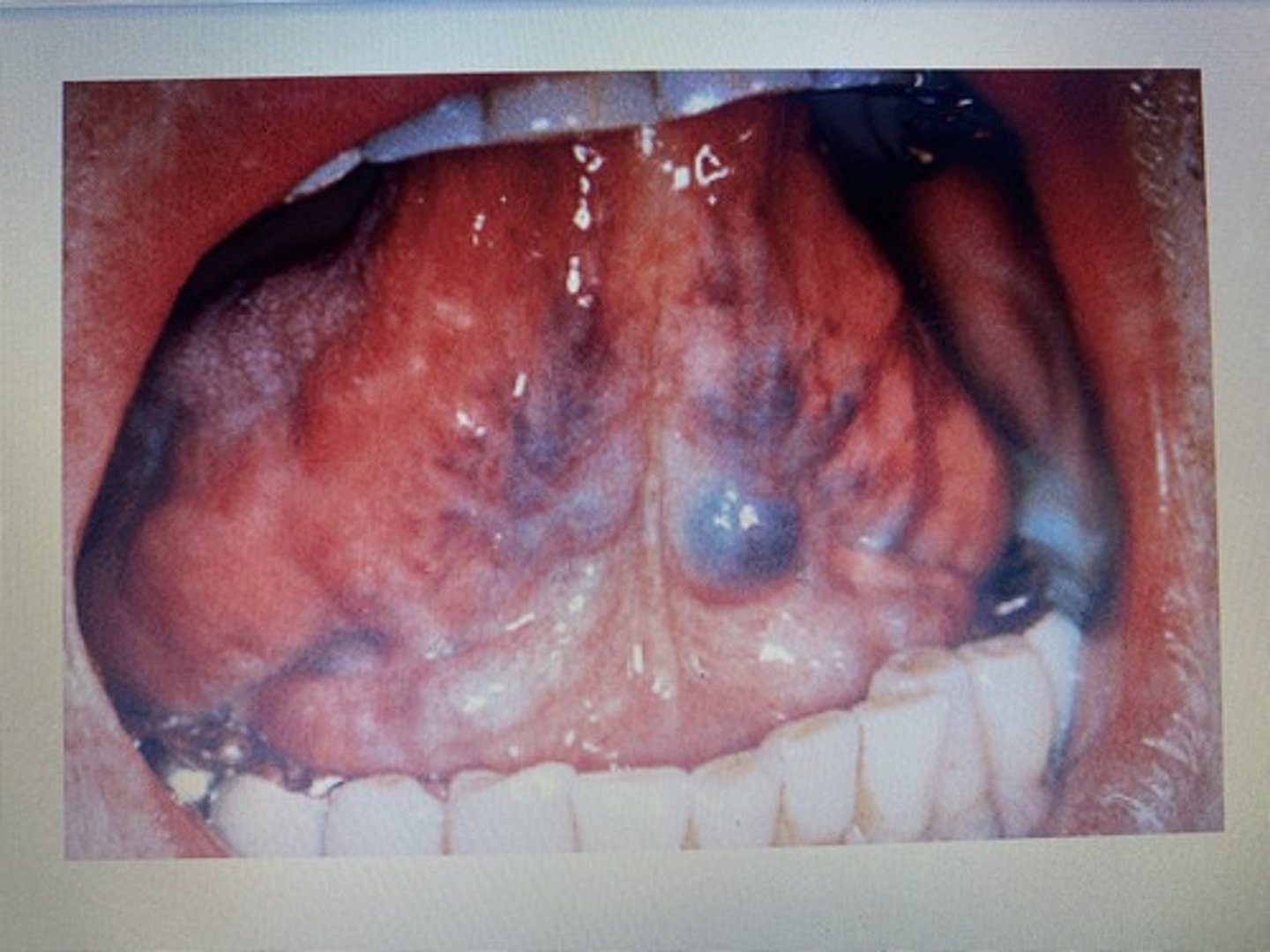
Lingual Varicosities
This purple appearance on the lingual aspect of the tongue is caused by blood vessels underneath the tongue. It is perfectly normal and OK. Some people have it more pronounced than others.
Normal of Abnormal ? Name?
Normal; melanin pigmentation
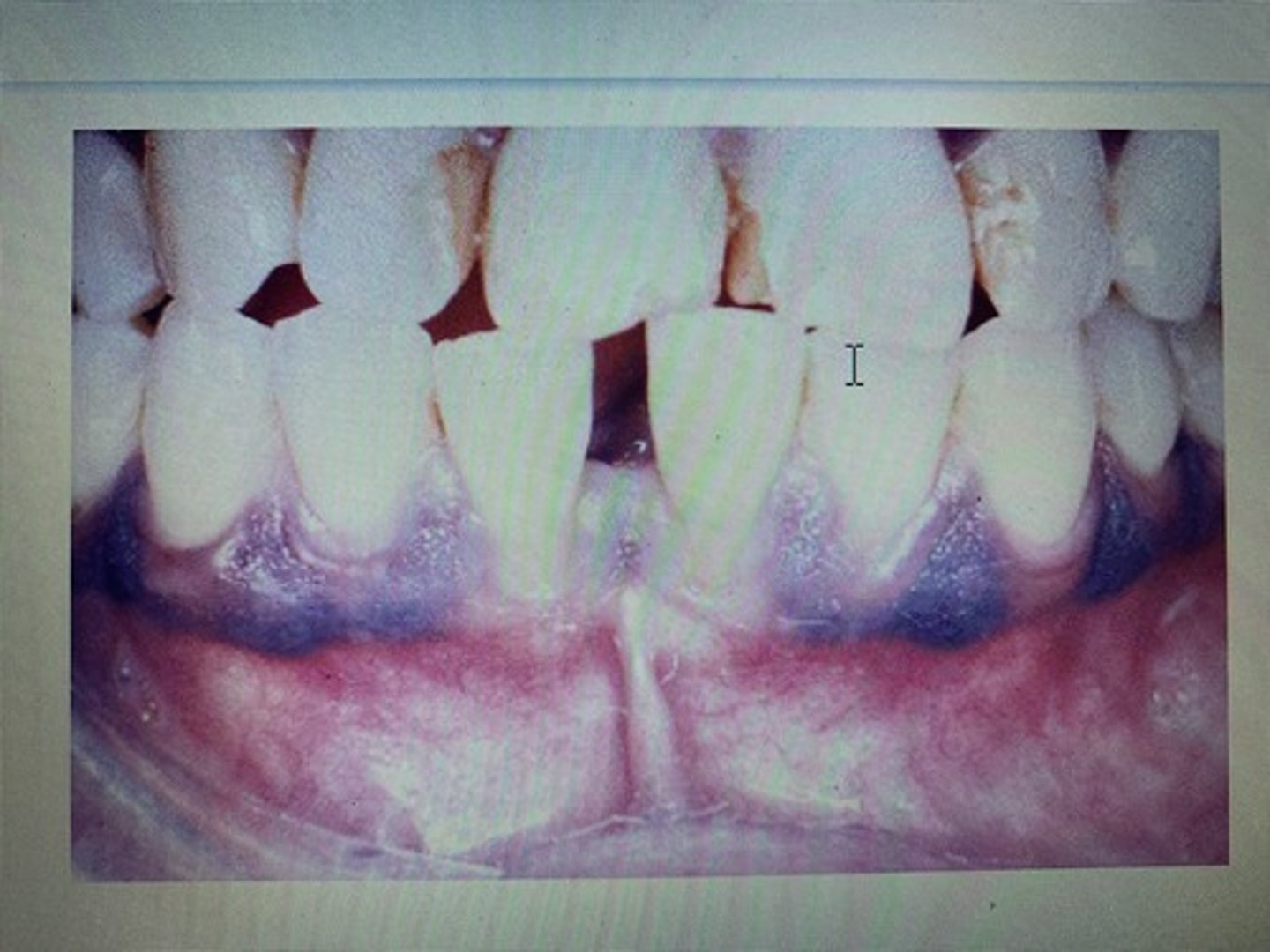
Melanin Pigmentation
This is a variant of normal and is completely OK. Pigmentation of the Gingiva can be seen in patients with a darker complexion.
Normal or abnormal? Name?
Abnormal; Aspirin Burn
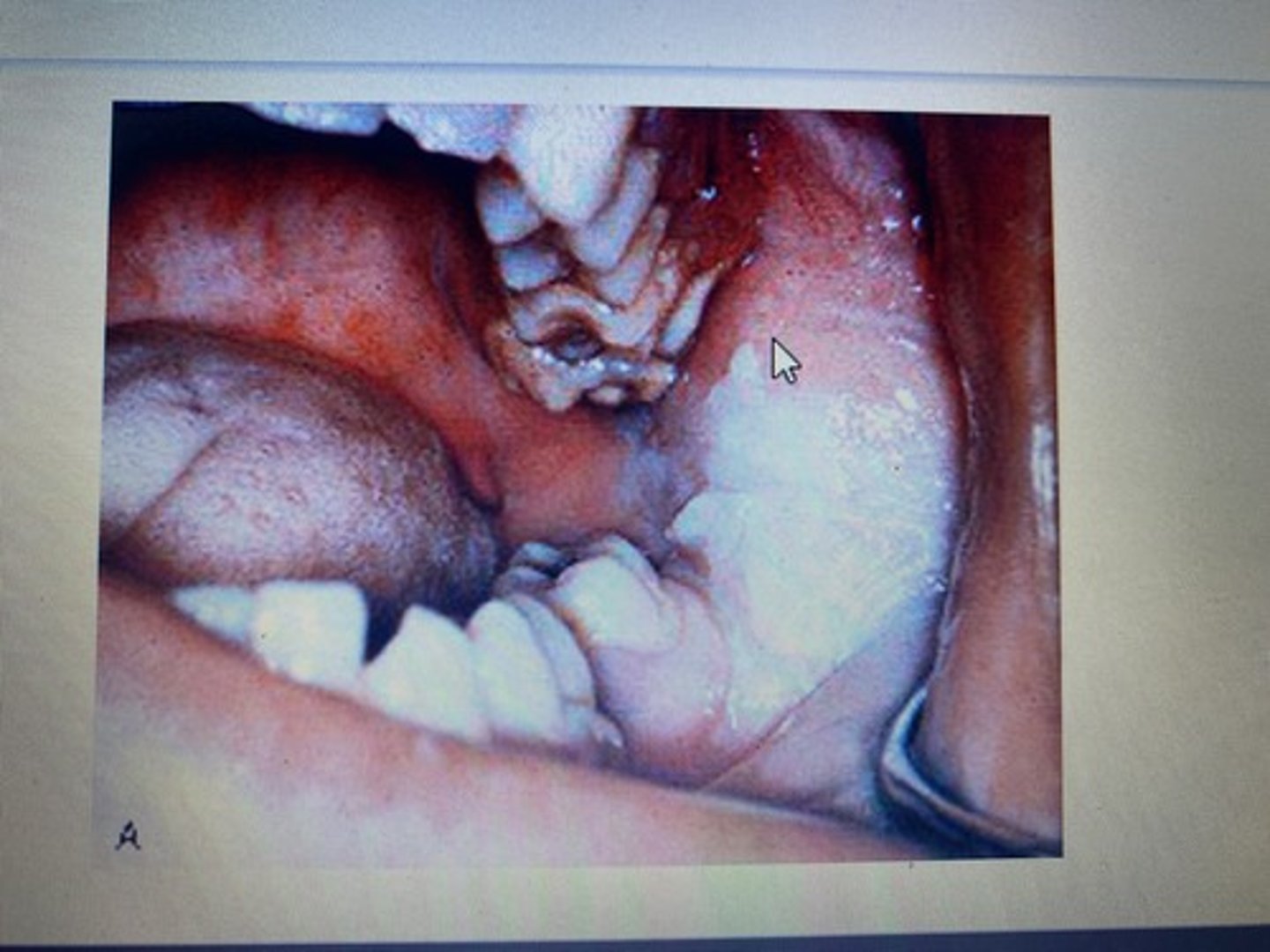
Aspirin Burn
This white lesion on the cheek is caused by a patient placing aspirin directly on the tooth with a toothache, causing a chemical burn in the tissue.
What is this called ? What causes it?
Abfraction ( wedge shaped defects at the gum line caused by micro fractures in the tooth structure. Often worsened by clenching, grinding, extremely hard brushing, or biting objects such as fishing line etc.)
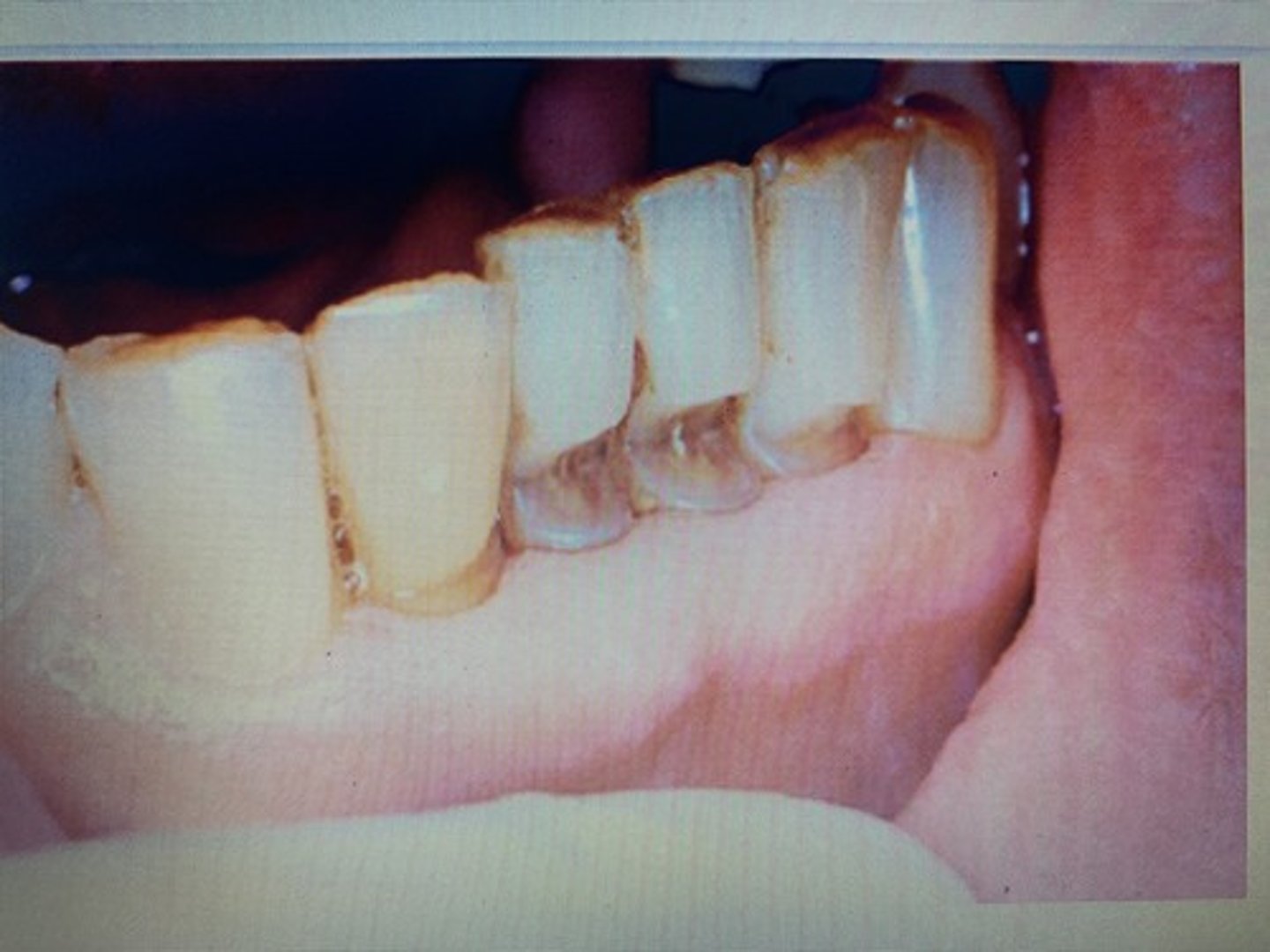
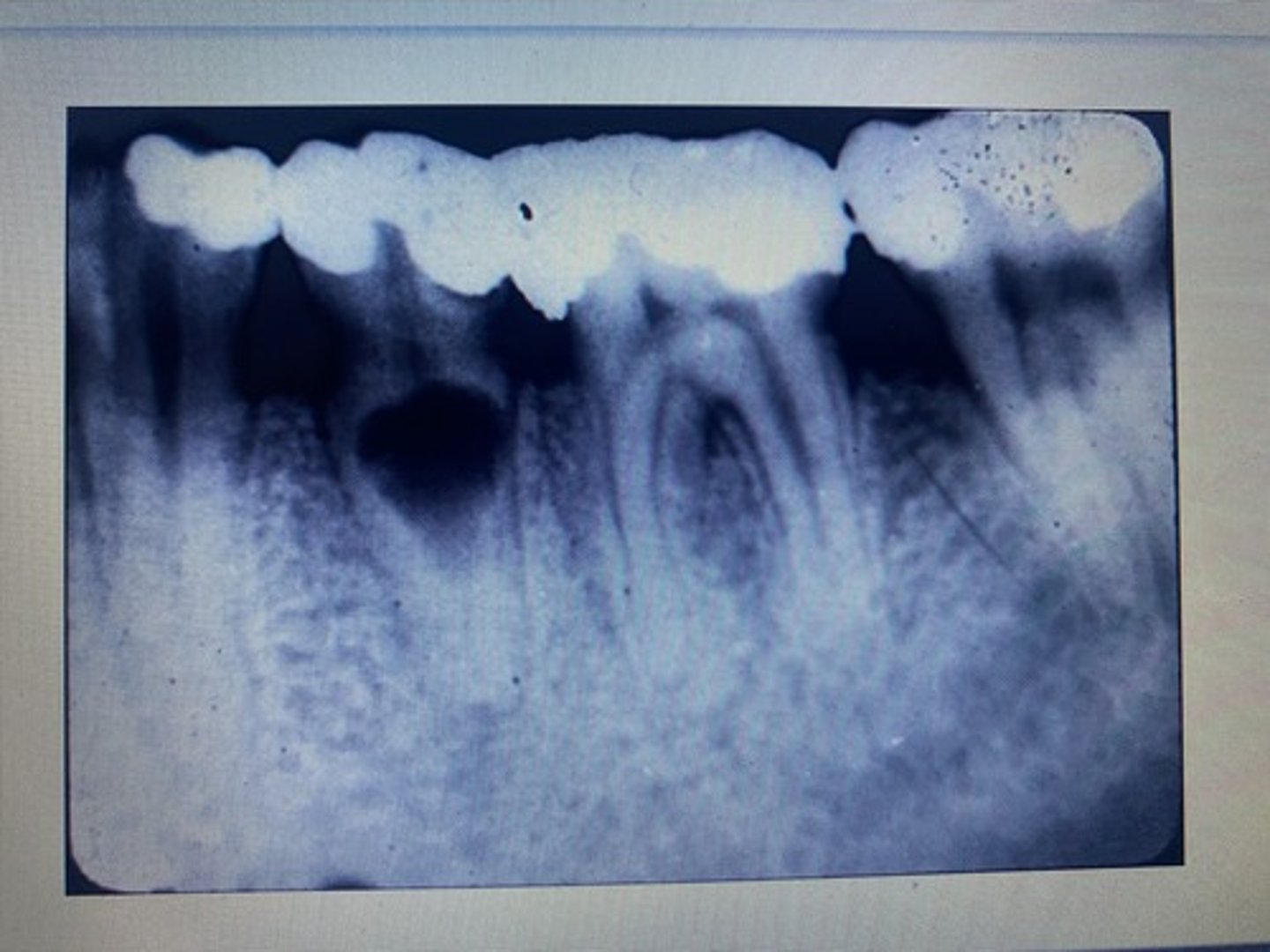
Normal or Abnormal? Name?
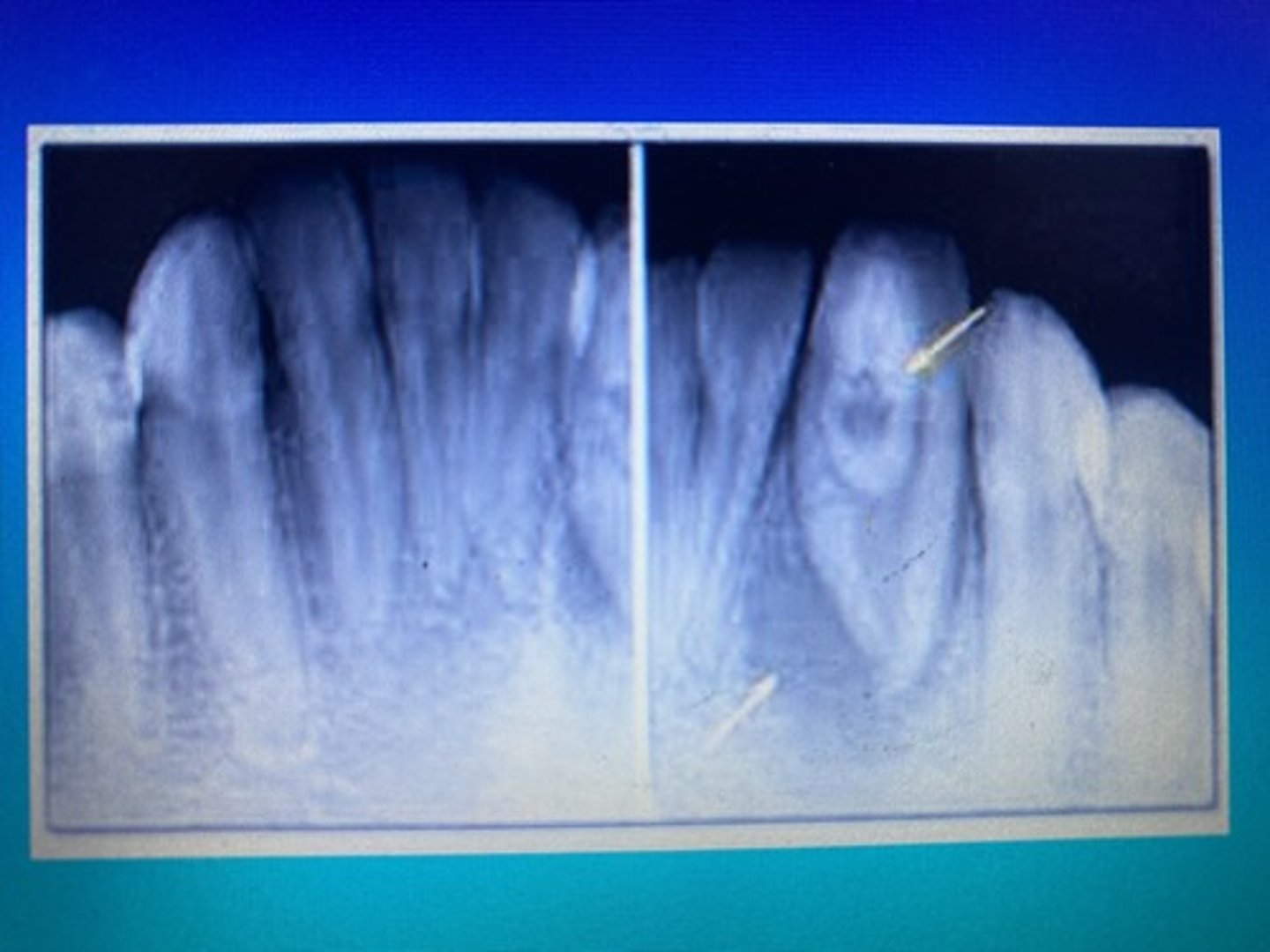
Abnormal; Internal Root Resorption
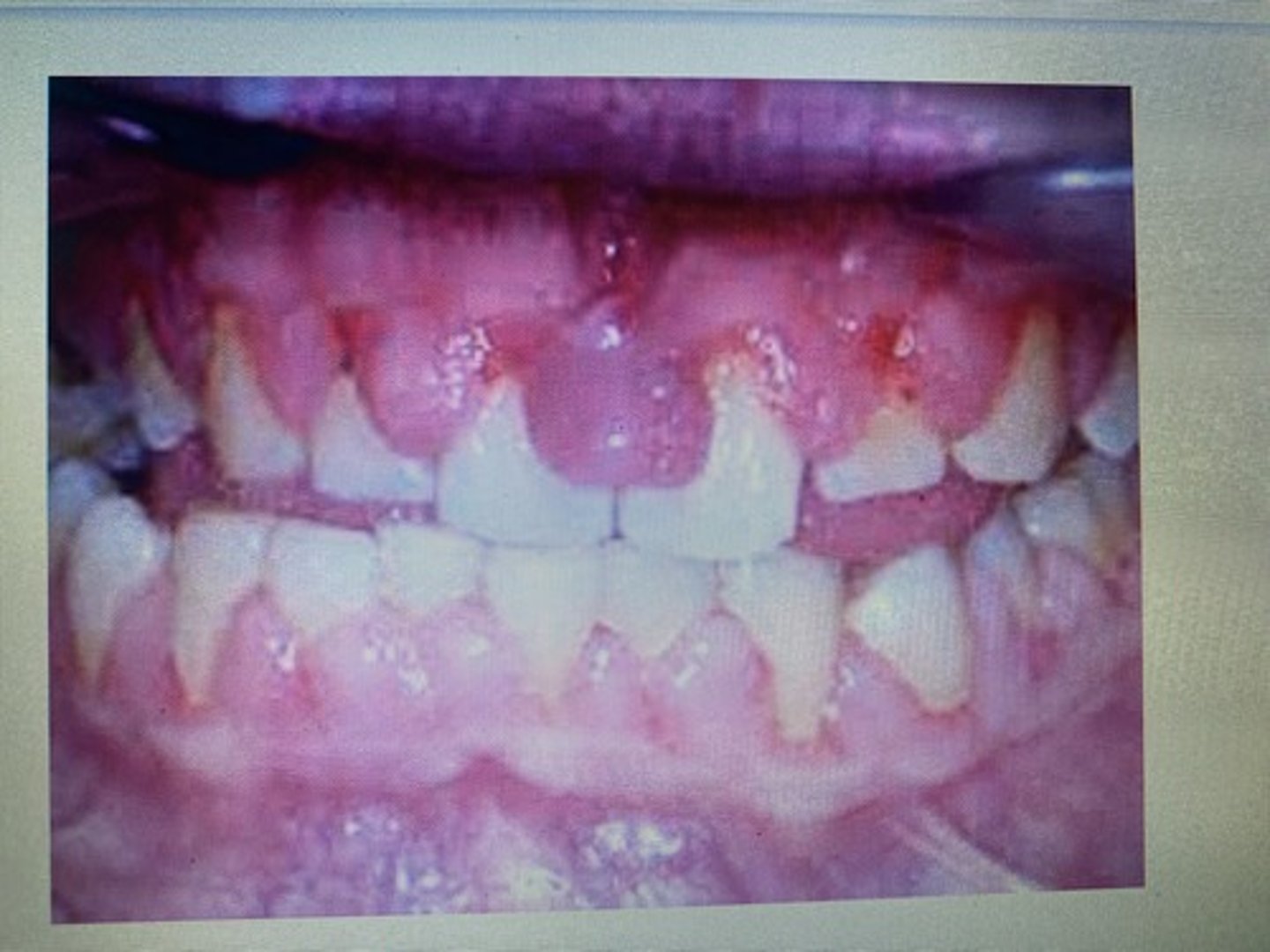
Patient has epilepsy that is treated with calcium-channel-blockers. What is a likely clinical presentation the patient could have ?
Gingival Hyperplasia
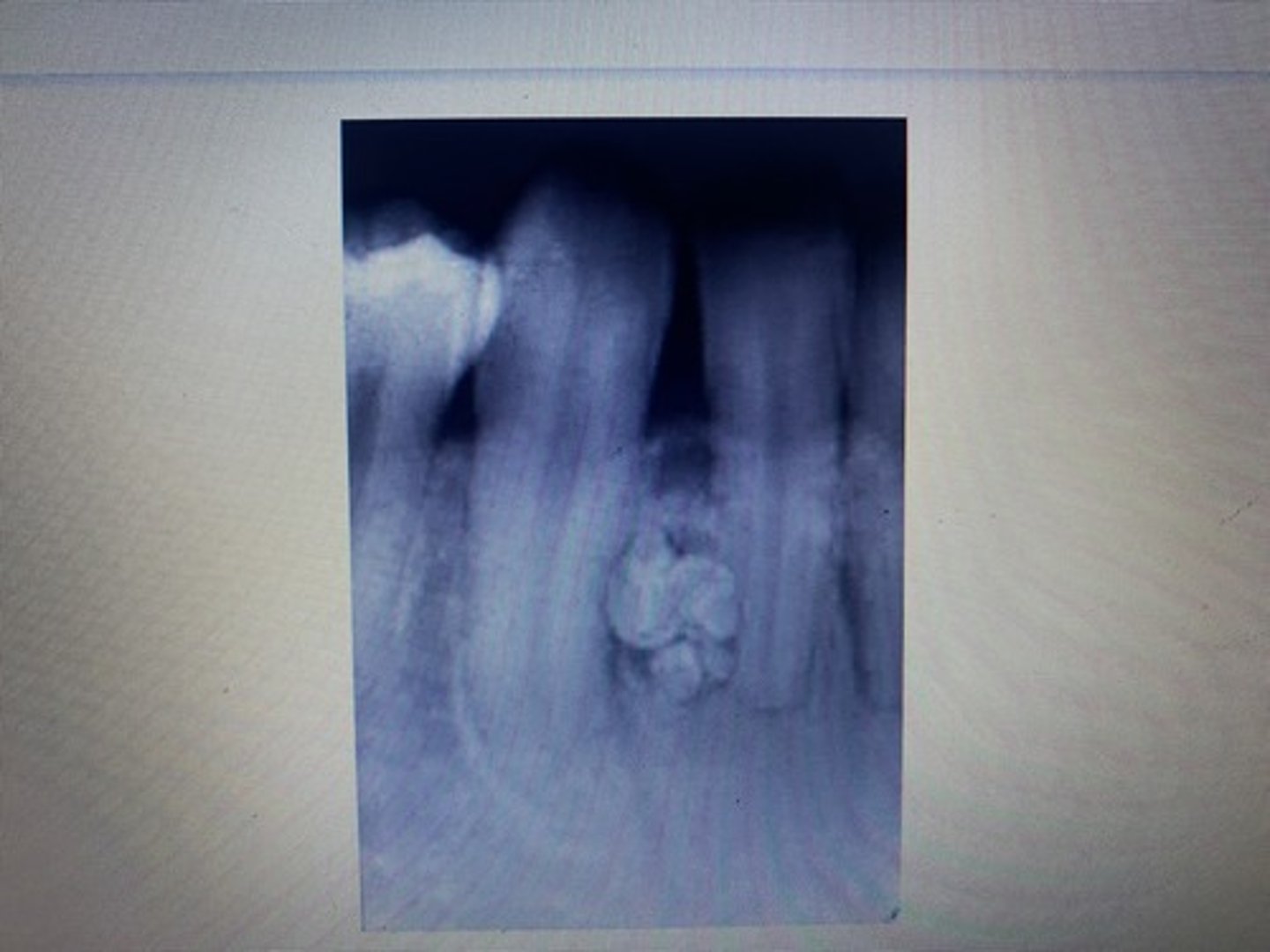
Normal or Abnormal? Name?
Abnormal; Compound Odontoma (benign tumor, appears to be a cluster of small teeth)
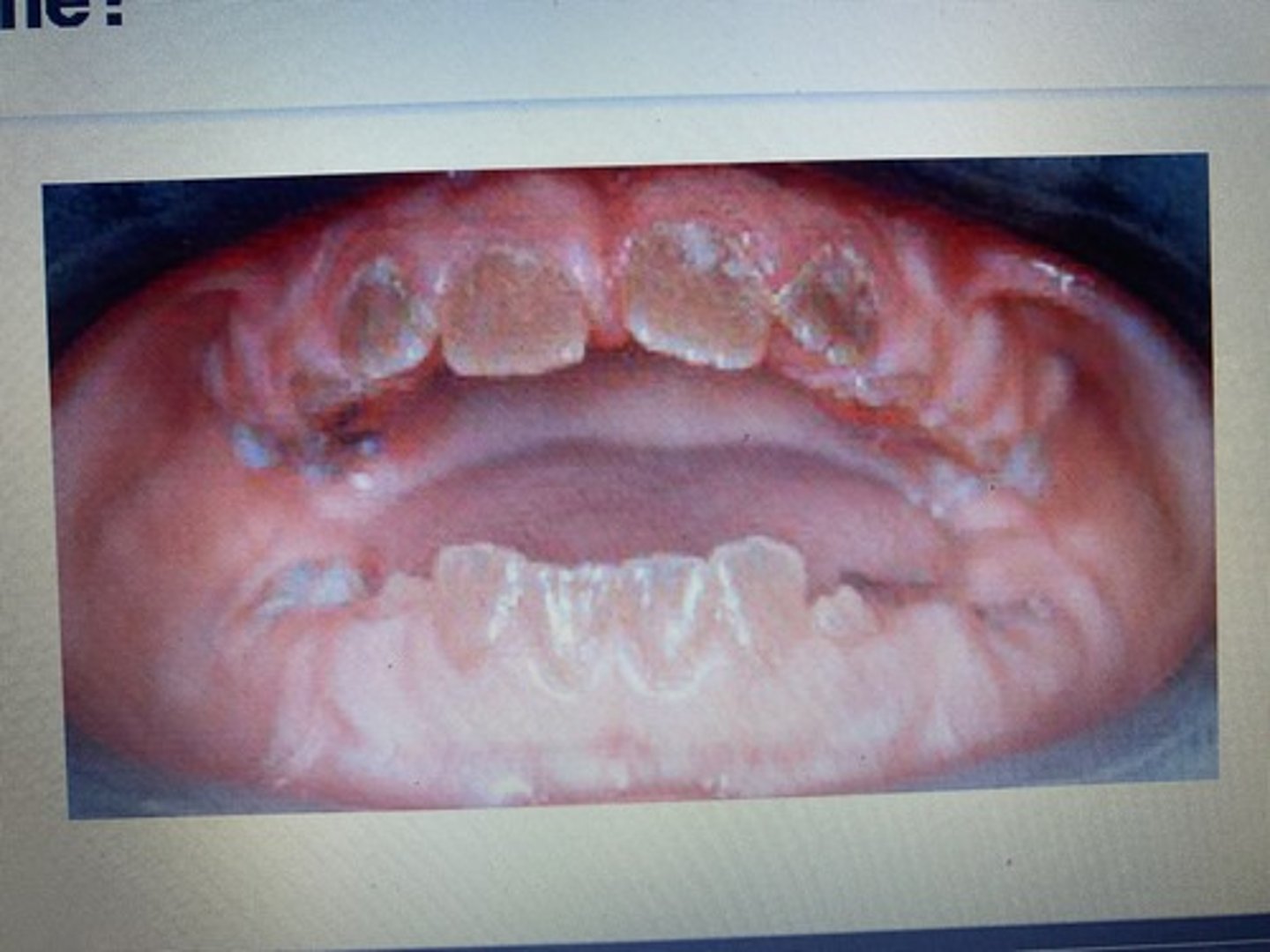
Patients presents with this familial condition; Name?
Dentinogenisis Imperfecta (This is a pathological condition in which familial history plays a role in diagnosis. This condition is hereditary)
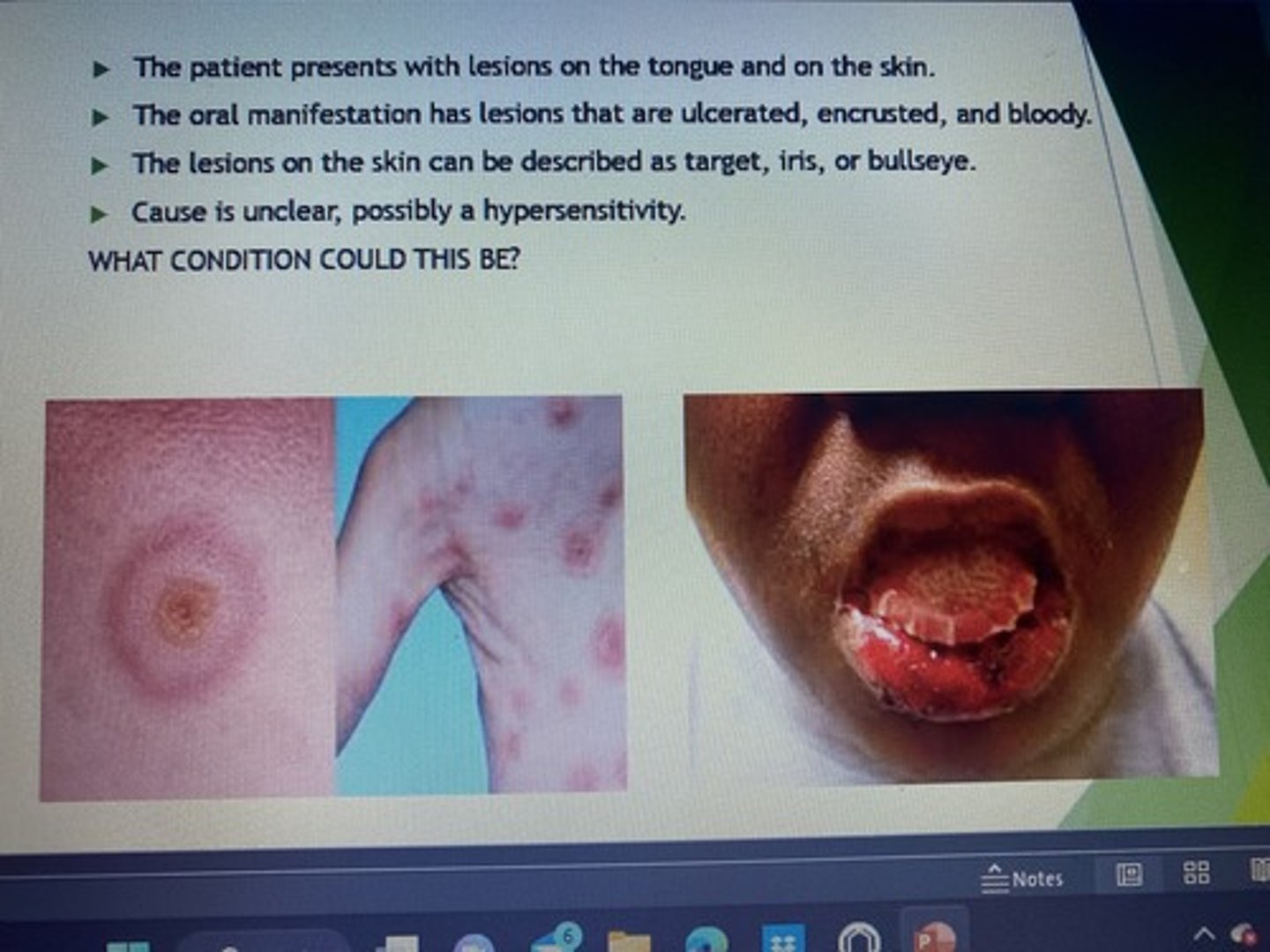
Erythema multiforme
The patient presents with lesions on the tongue and on the skin.
The oral manifestation has lesions that are ulcerated, encrusted, and bloody.
The lesions on the skin can be described as target, iris, or bullseye.
Cause is unclear, possibly a hypersensitivity.
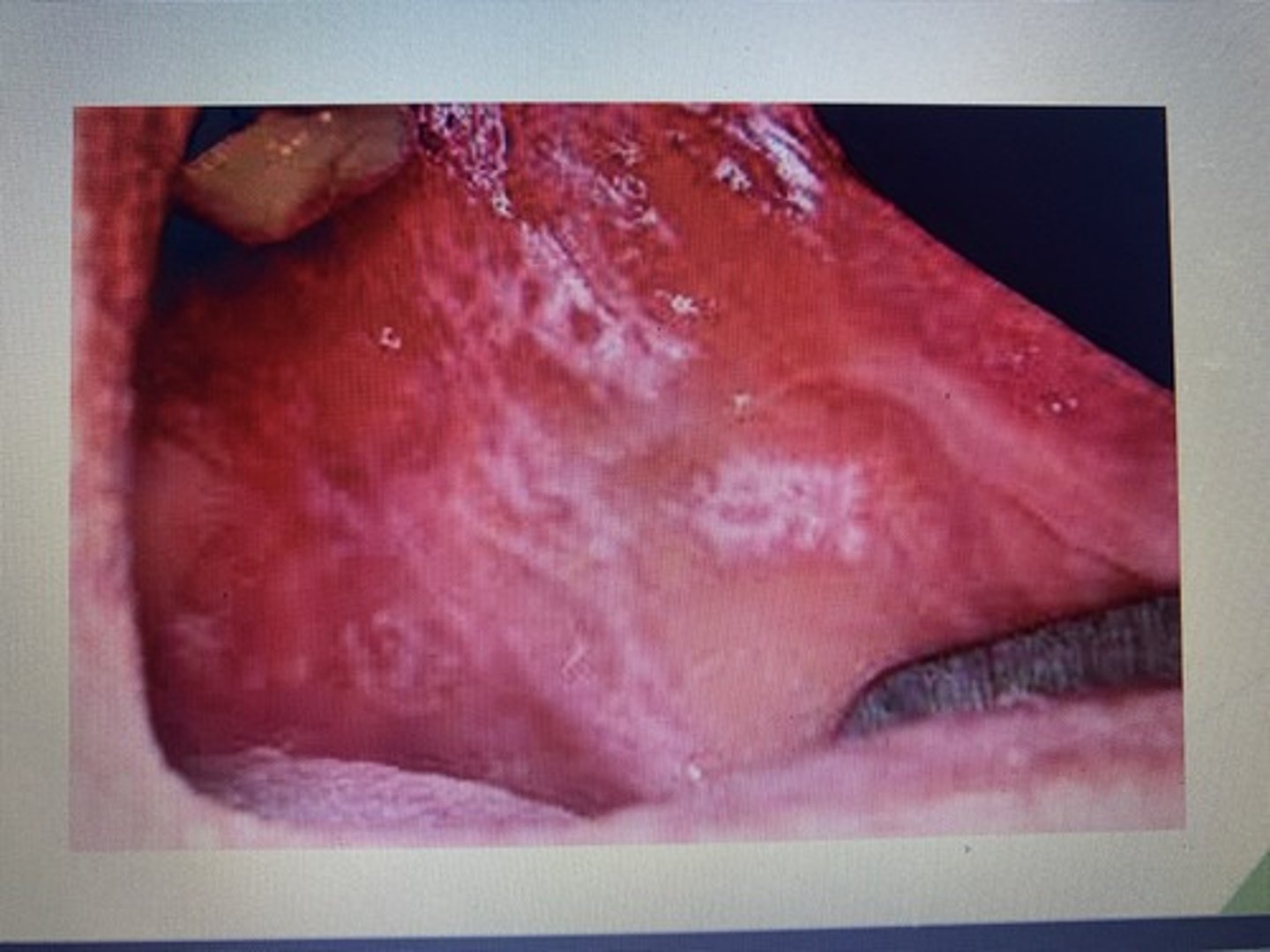
Lichen Planus
This lesion is most common in middle aged adults with a slightly higher occurrence in women.
Can be characterized by Wickhams Striae.
Most commonly seen on the cheeks but may be seen on the tongue, lips, floor of mouth, and Gingiva.
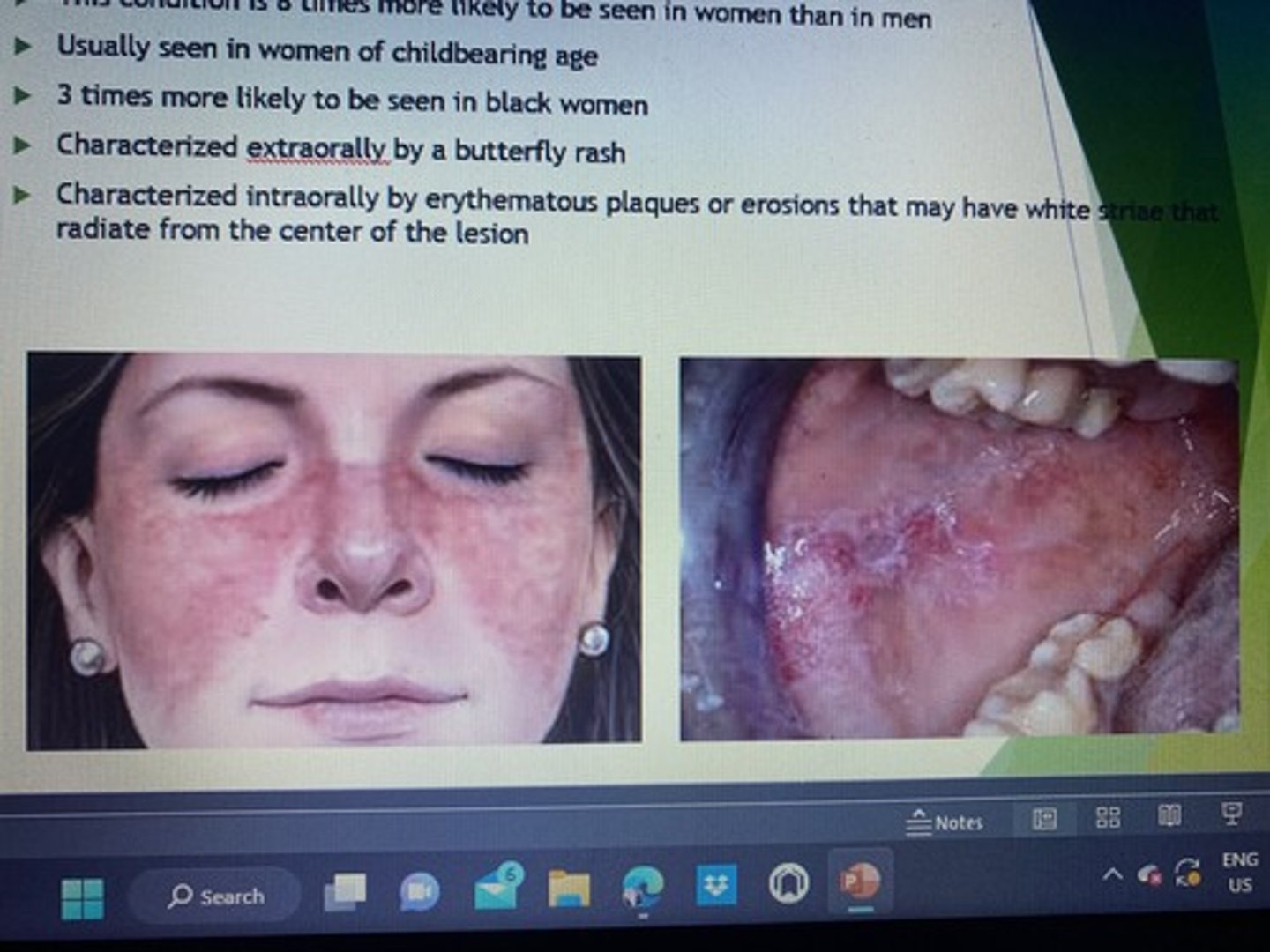
Systemic Lupus Erythematosus (SLE)
This condition is 8 times more likely to be seen in women than in men.
Usually seen in women of childbearing age.
3 times more likely to be seen in clack women.
Characterized extraorally by a butterfly rash.
Characterized intractable by erythematous plaques or erosions that may have white striae that radiate from the center of the lesion.
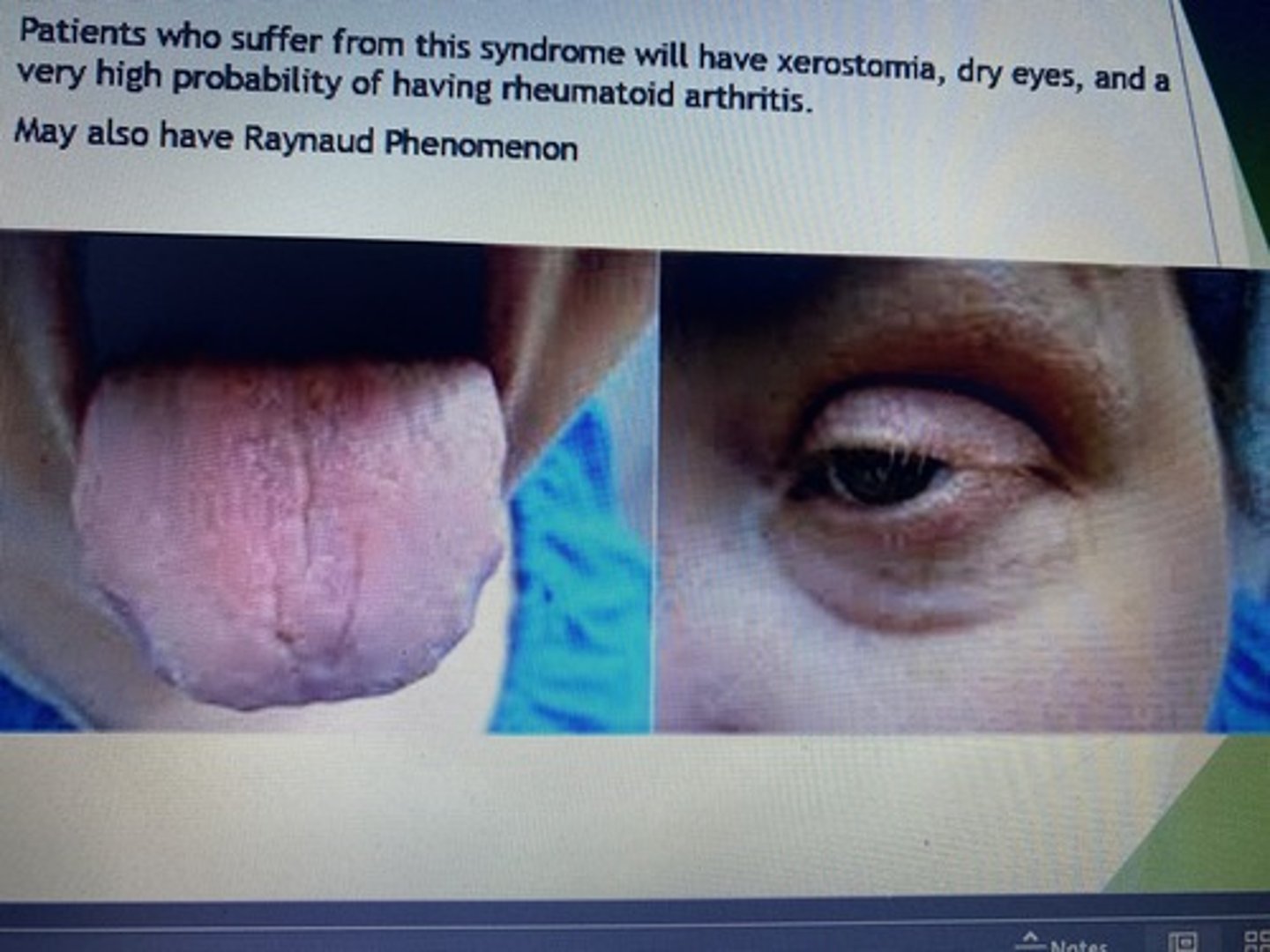
Sjögren's syndrome
Patients who suffer from this syndrome will have xerostomia, dry eyes, and a very high probability of having rheumatoid arthritis.
May also have Raynaud Phenomenon.
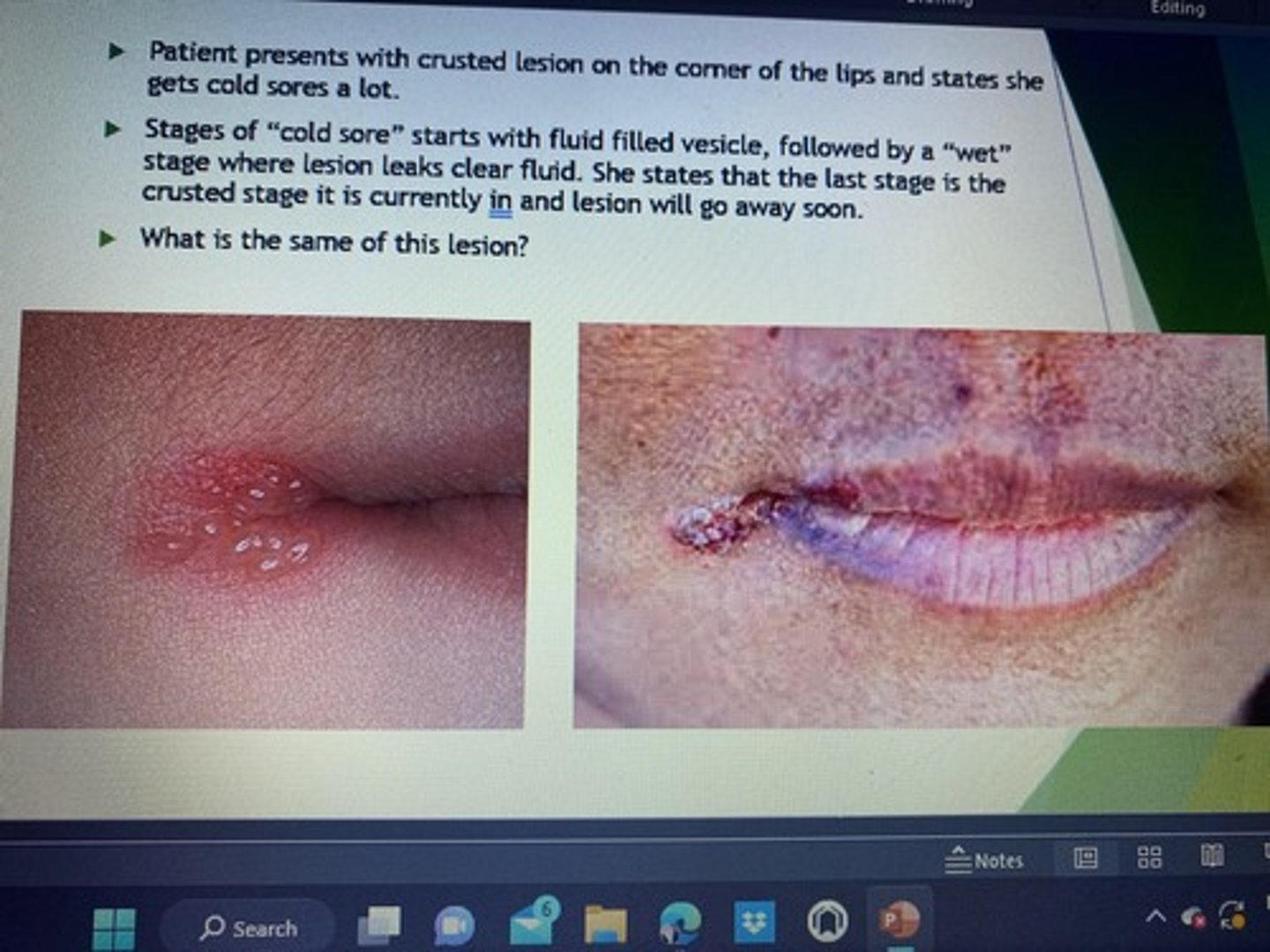
Herpes simplex virus (HSV1)
Patients presents with crusted lesion on the corner of the lips and states she gets cold sores a lot.
Stages of cold sores starts with fluid filled vesicle, followed by a "wet" stage where lesion leaks clear fluid. She states that the last stage is the crusted state it is currently in and lesion will go away soon.
Normal or Abnormal? Name?
Normal; Ankyloglossia also called "tongue-tied".
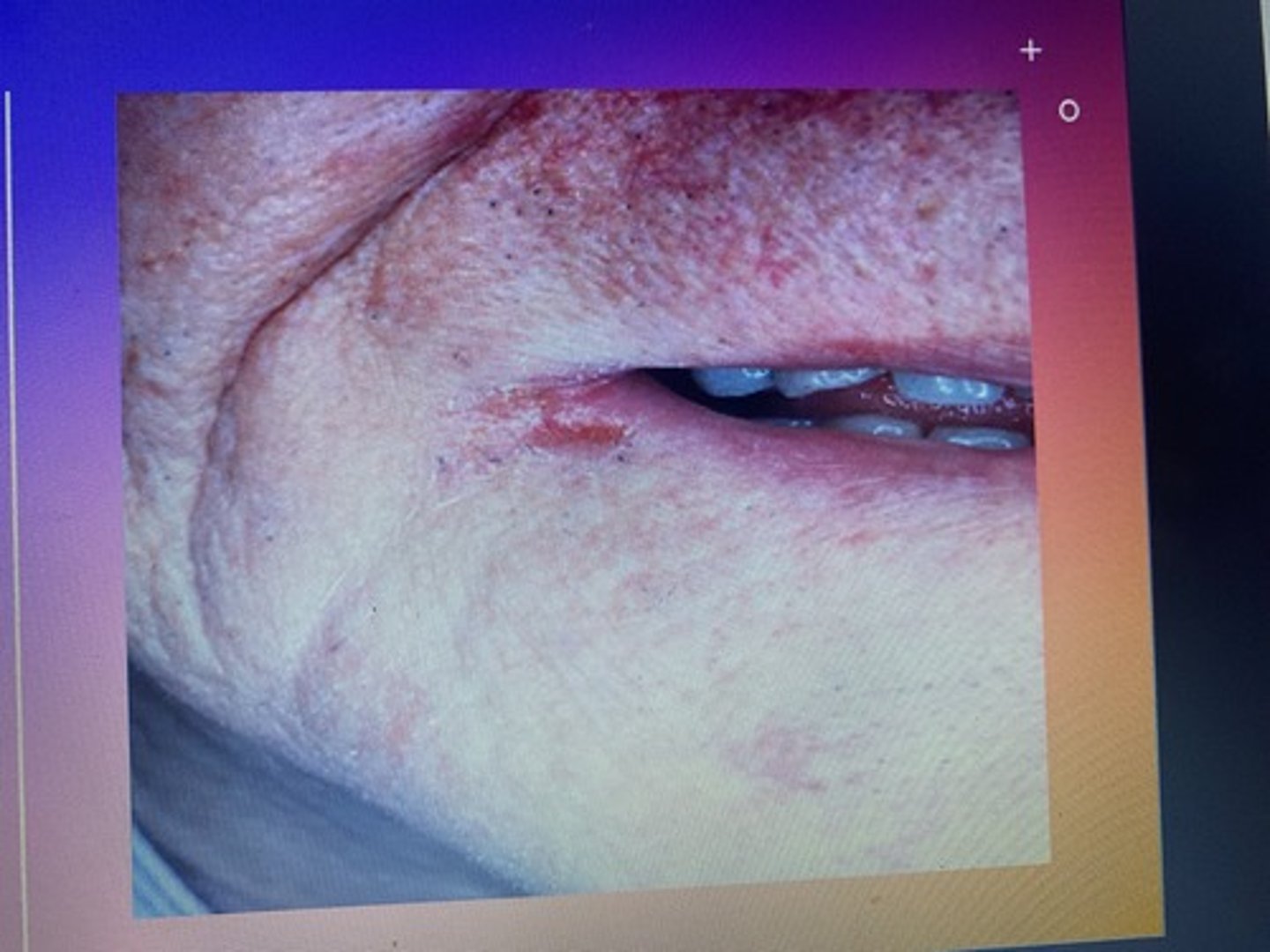
Angular Cheilitis
This lesion is most likely caused by Candida albicans or a nutritional deficiency.
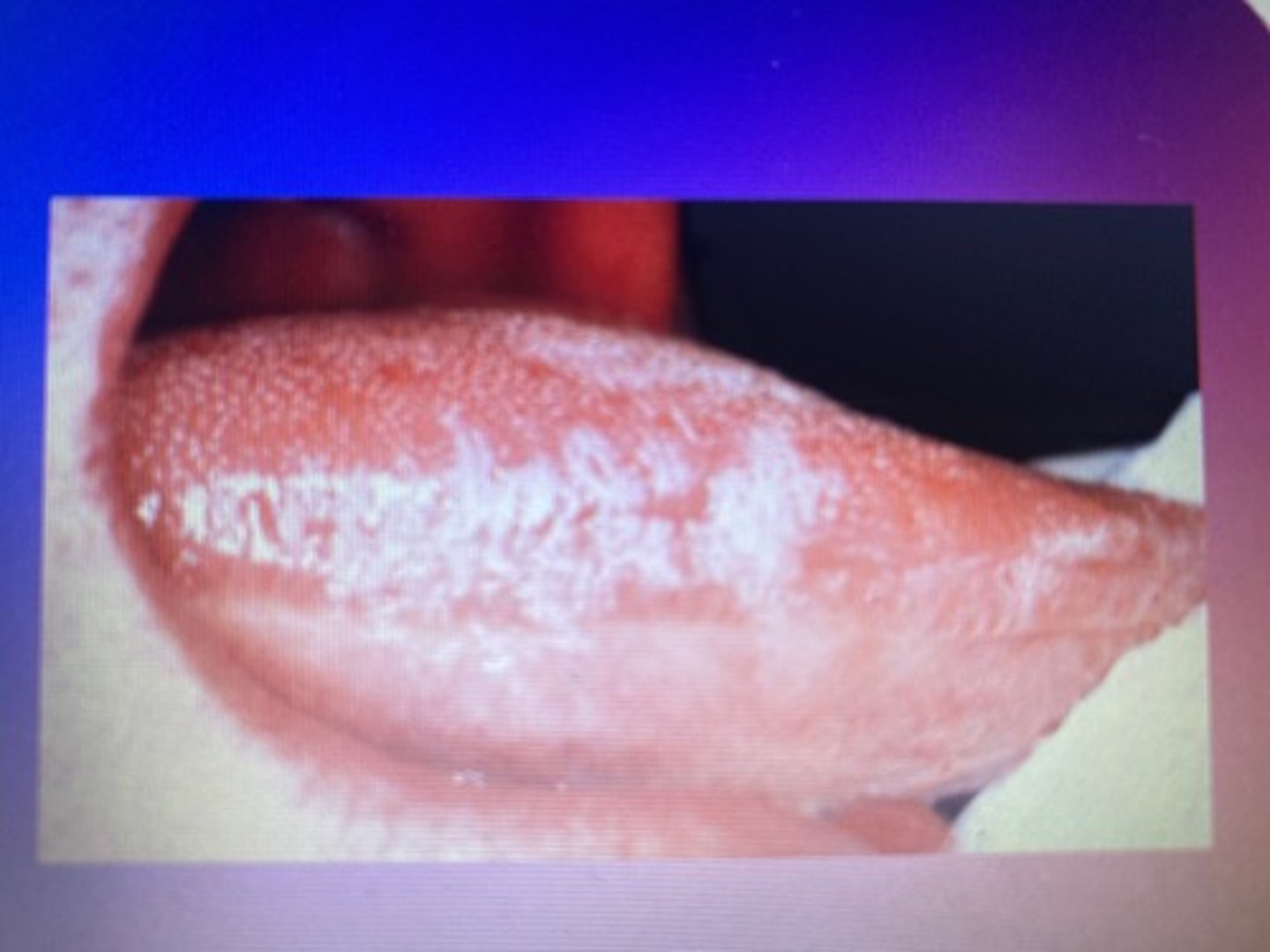
Hairy Leukoplakia
This lesion is most likely caused by the Epstein-Barr virus.
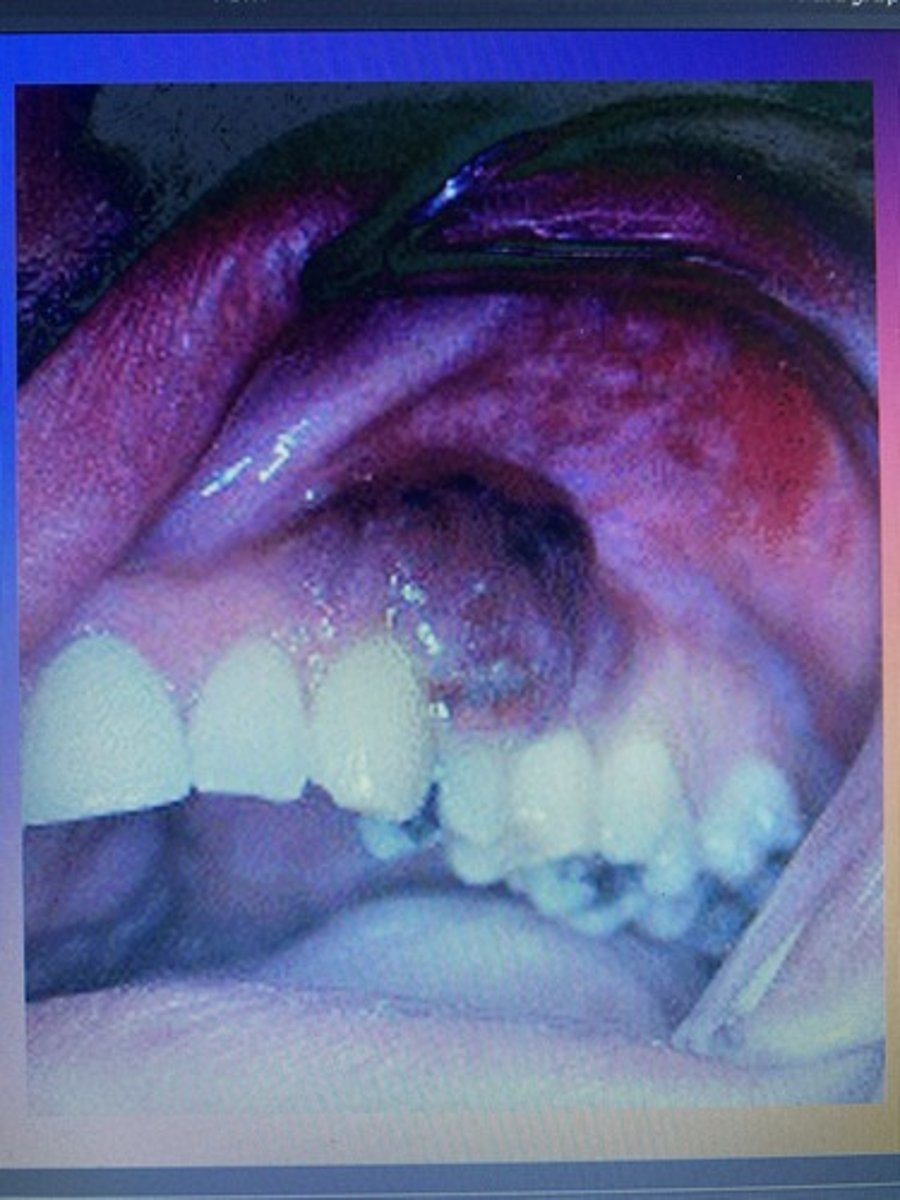
Kaposi Sarcoma
This patient is HIV positive and presents with this lesion on their Gingiva. The diagnosis of this lesion is an indication that their condition is progressing into AIDS. (Two groups are at risk: elderly men mainly of Mediterranean origin and person with iatrogenic immunosuppressant)
Heck's Disease (Multifocal epithelial hyperplasia)
Often seen in children. It is caused by specific strains of the human papilloma virus (HPV) and is not commonly seen in patients with HIV.
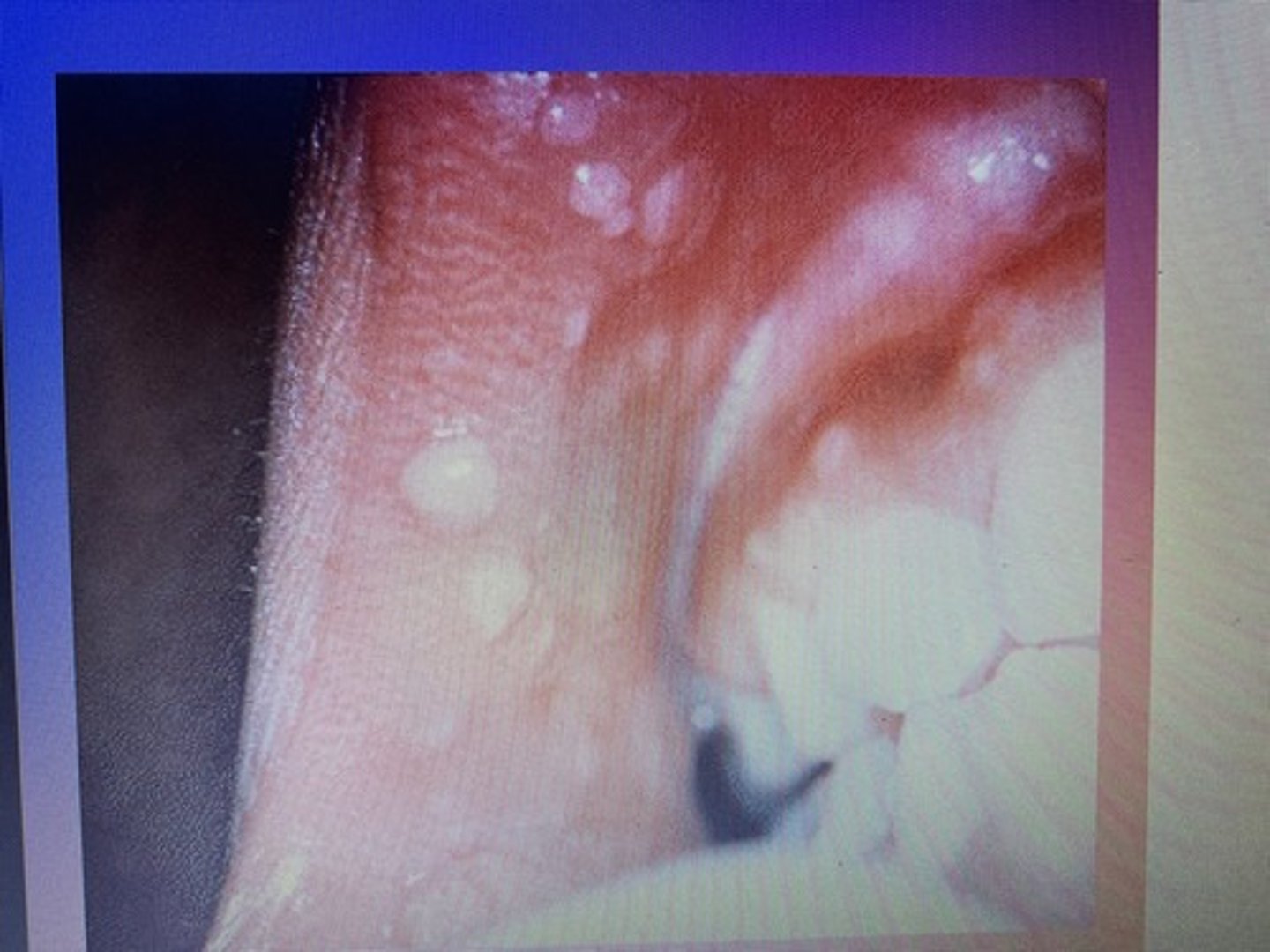
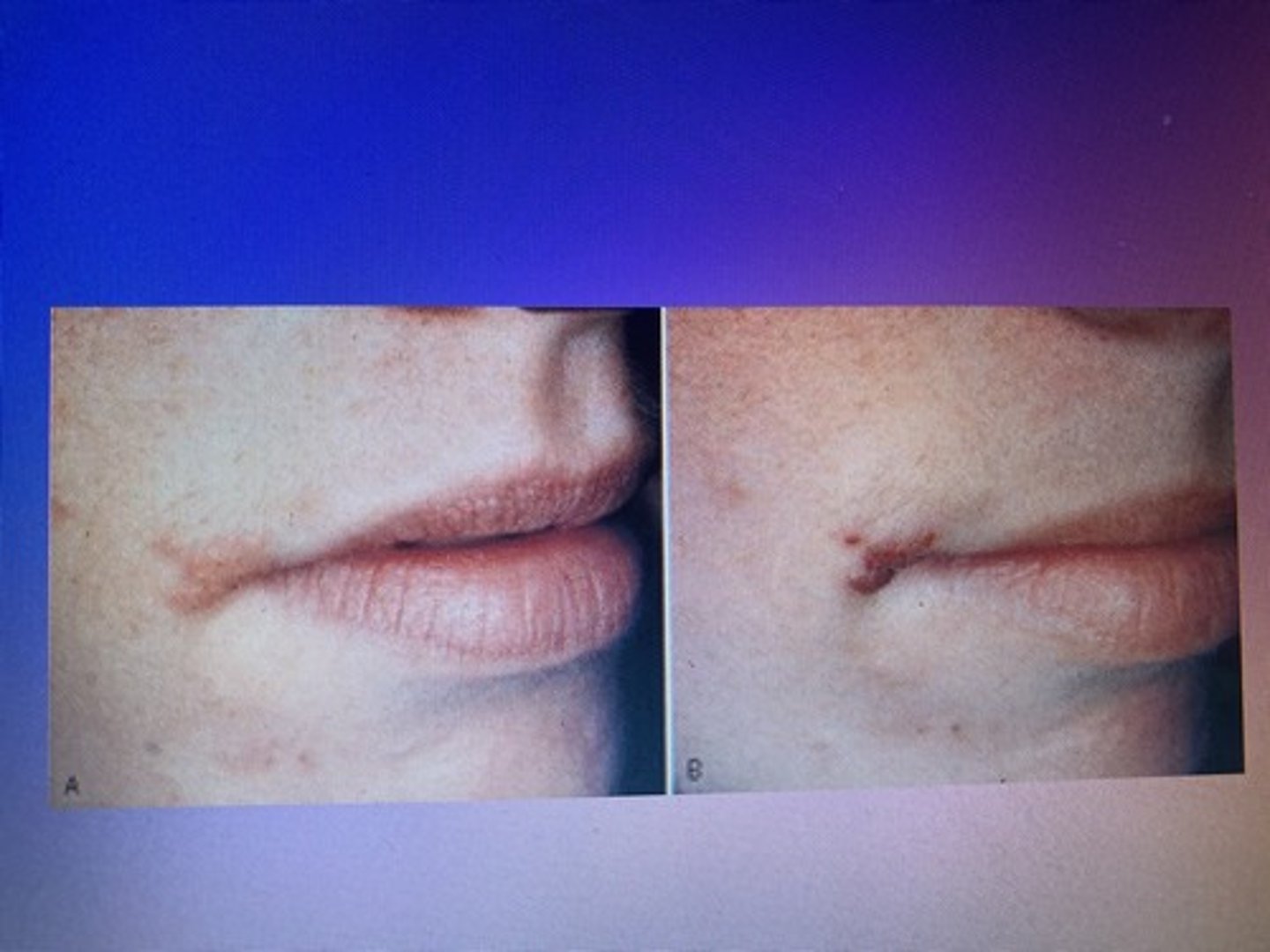
Herpes simplex virus (HSV) this specific manifestation is termed herpes labialis
This cluster of vesicles seen on the corner of the patients vermillion border.
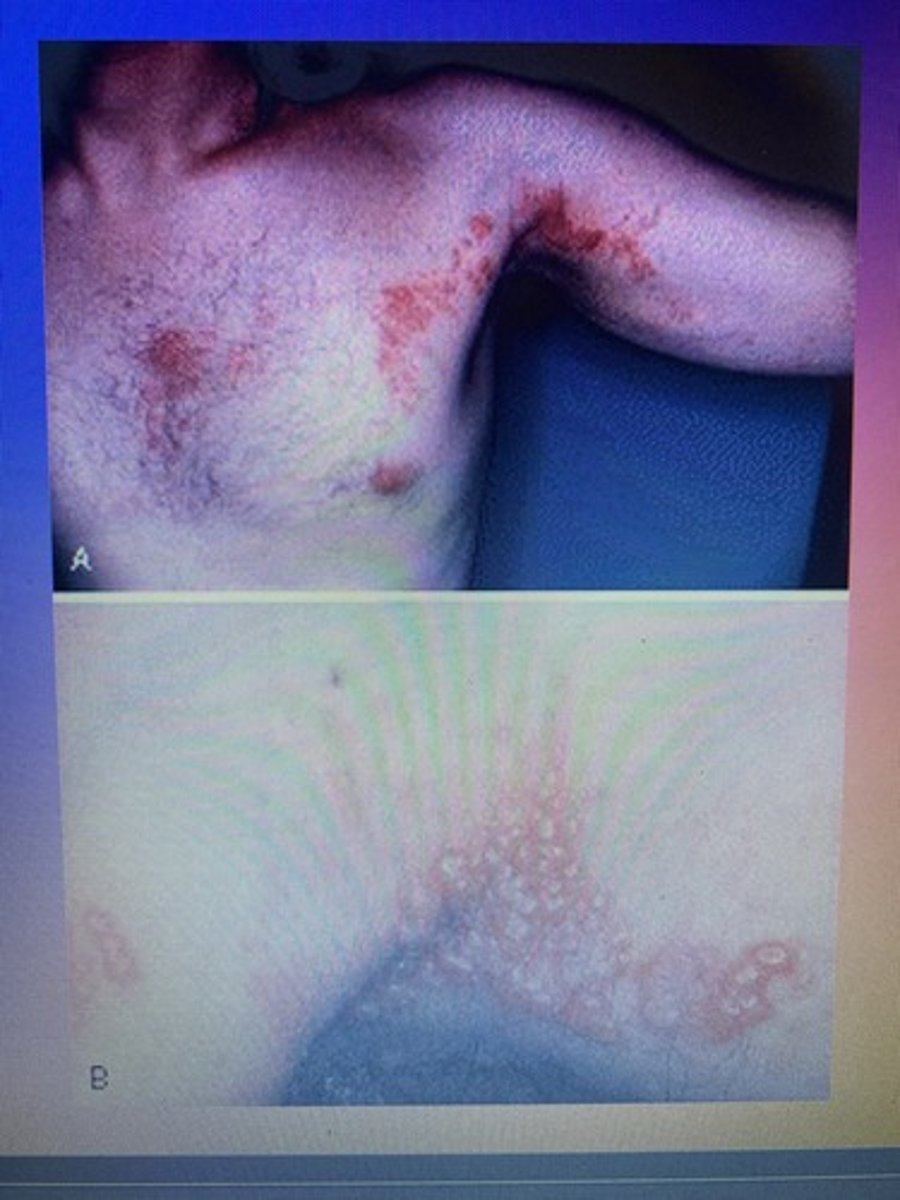
Herpes Zoster or Shingles
This unilateral cluster of vesicles on along the patients peripheral nerve.
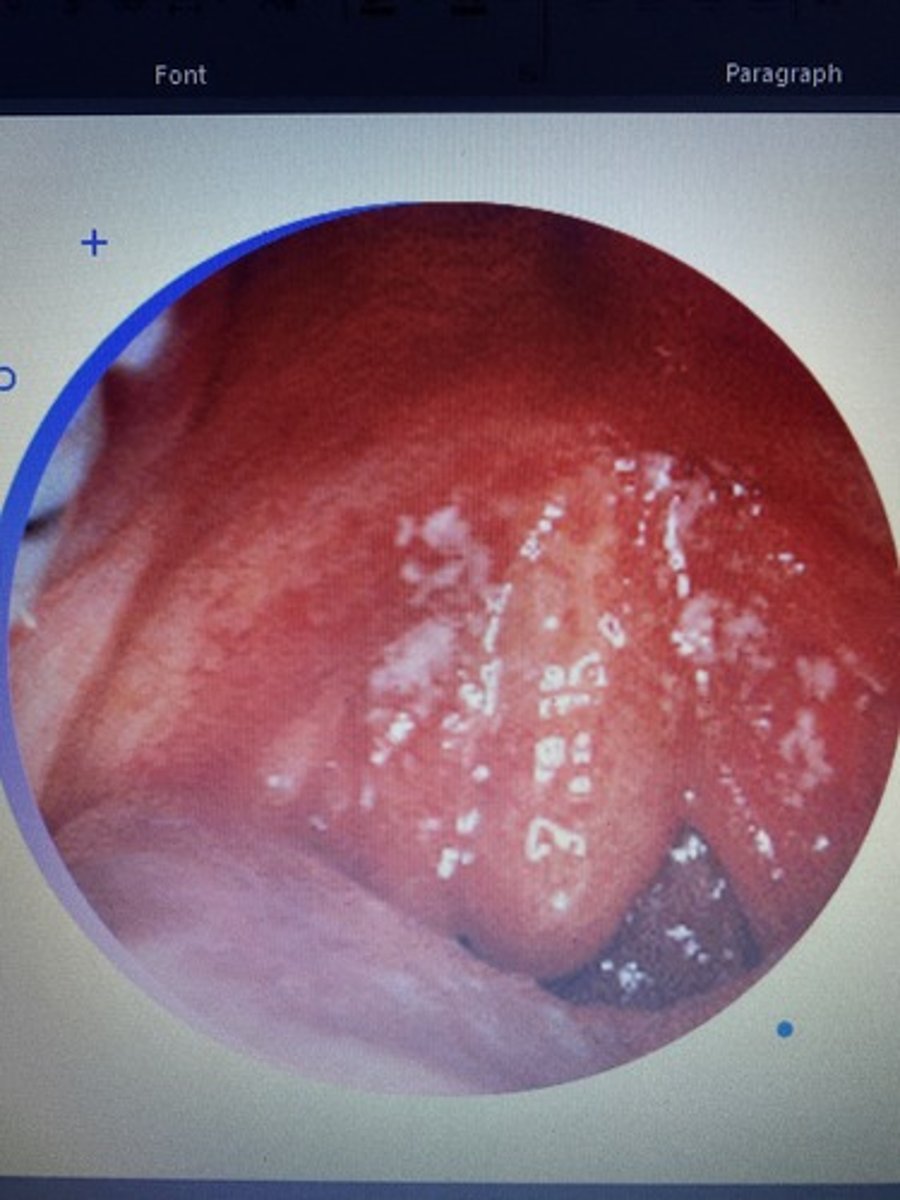
This condition is seen often in patients with HIV?
Candidiasis
Normal or Abnormal? Name?
Normal; Fordyce Granules
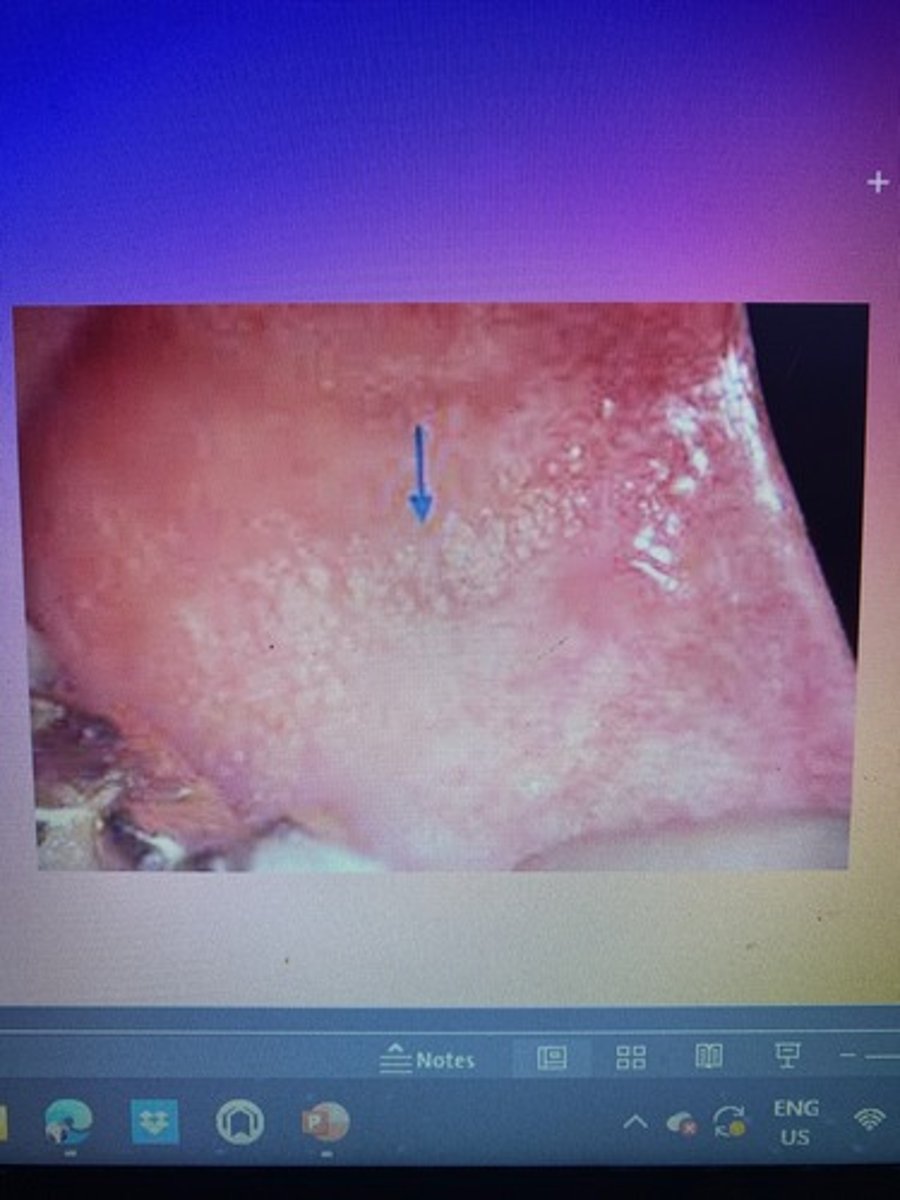
Normal or Abnormal? Name?
Leukoedema
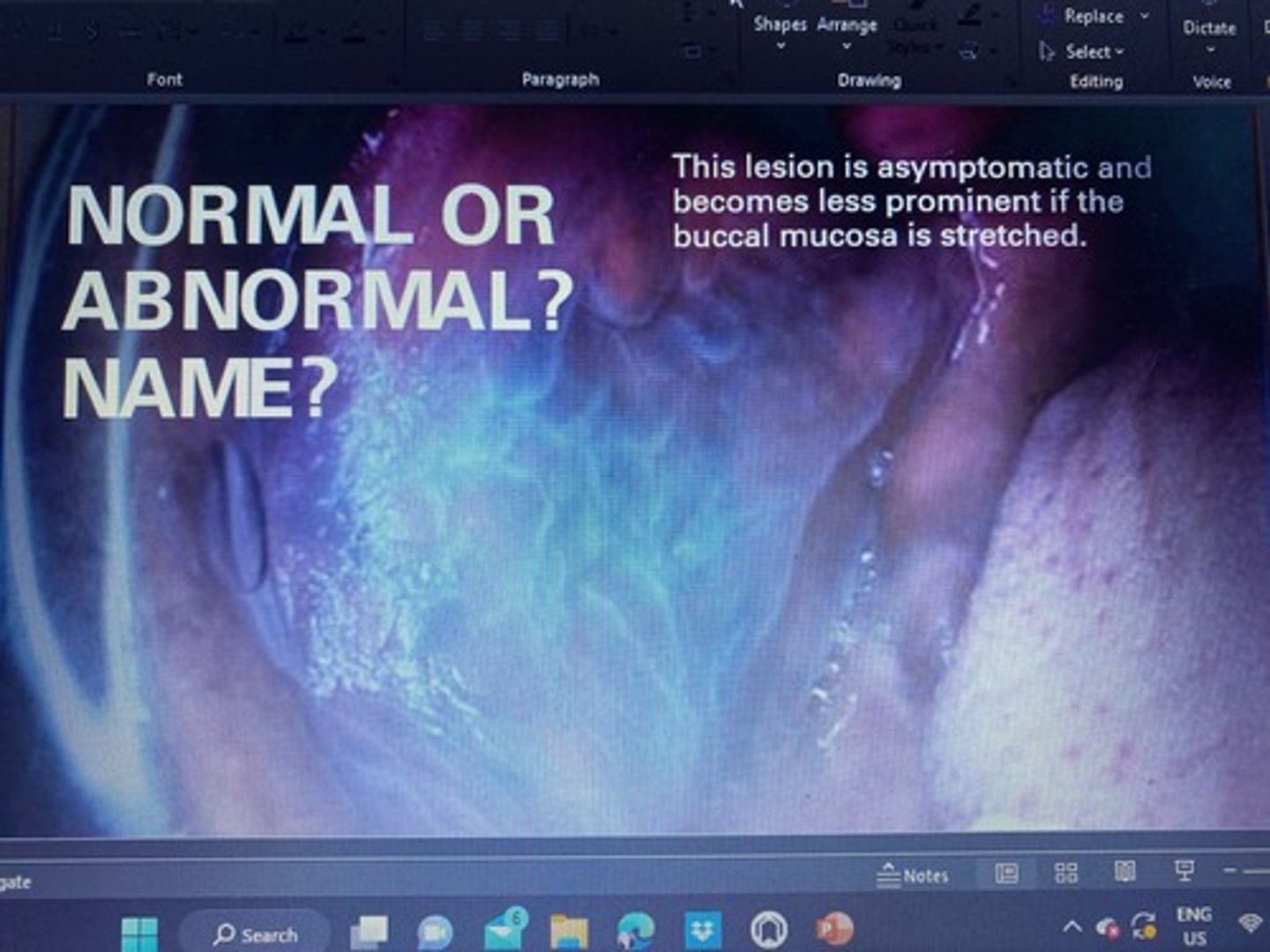
Normal or Abnormal? Name?
Low maxillary frenulum attachment (this may cause a diastema or "gap" between #8-9 if it is not corrected in early childhood)
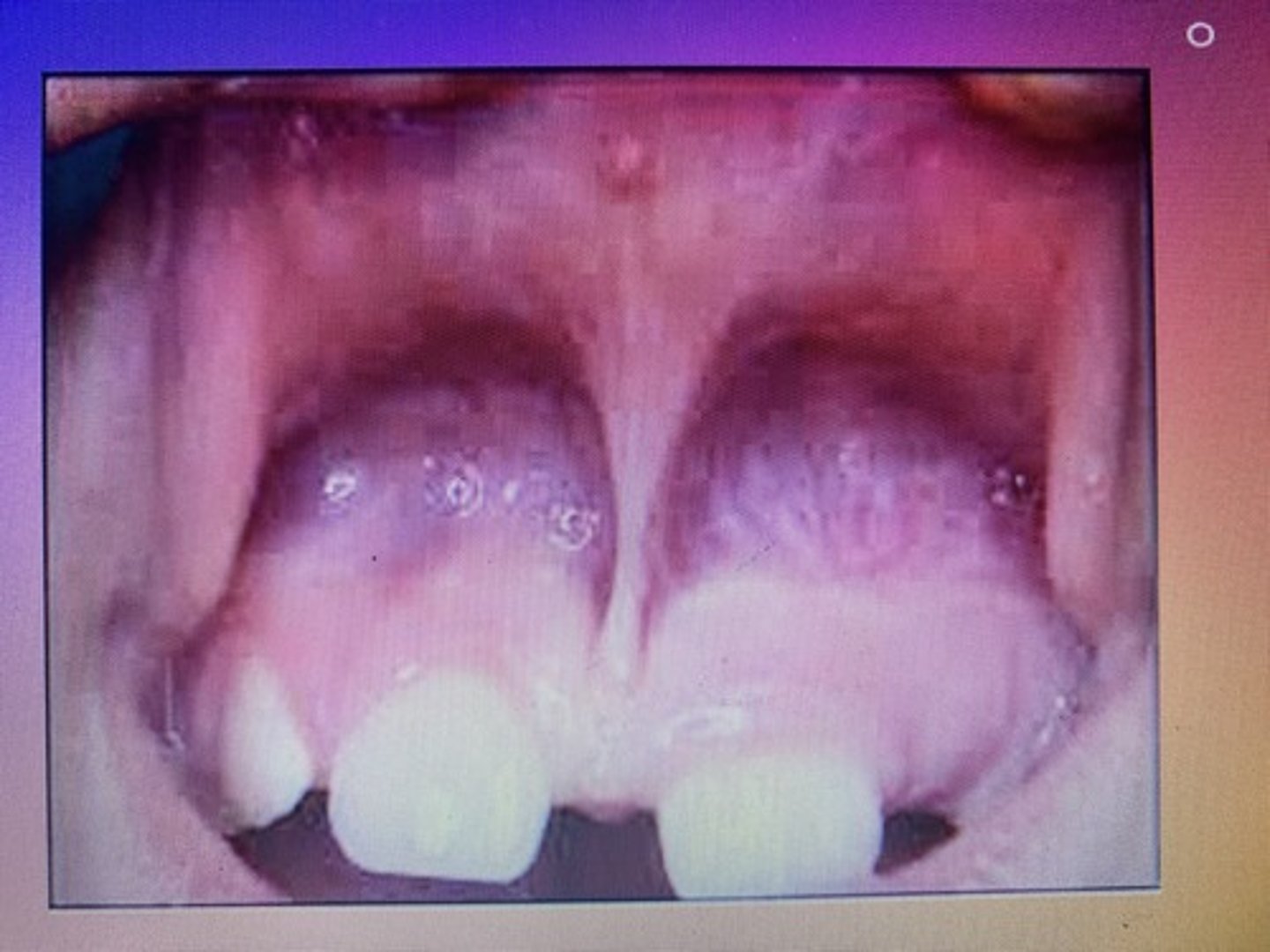
Mesiodens
The most common supernumerary tooth.
Always interproximal of tooth 8 and 9.
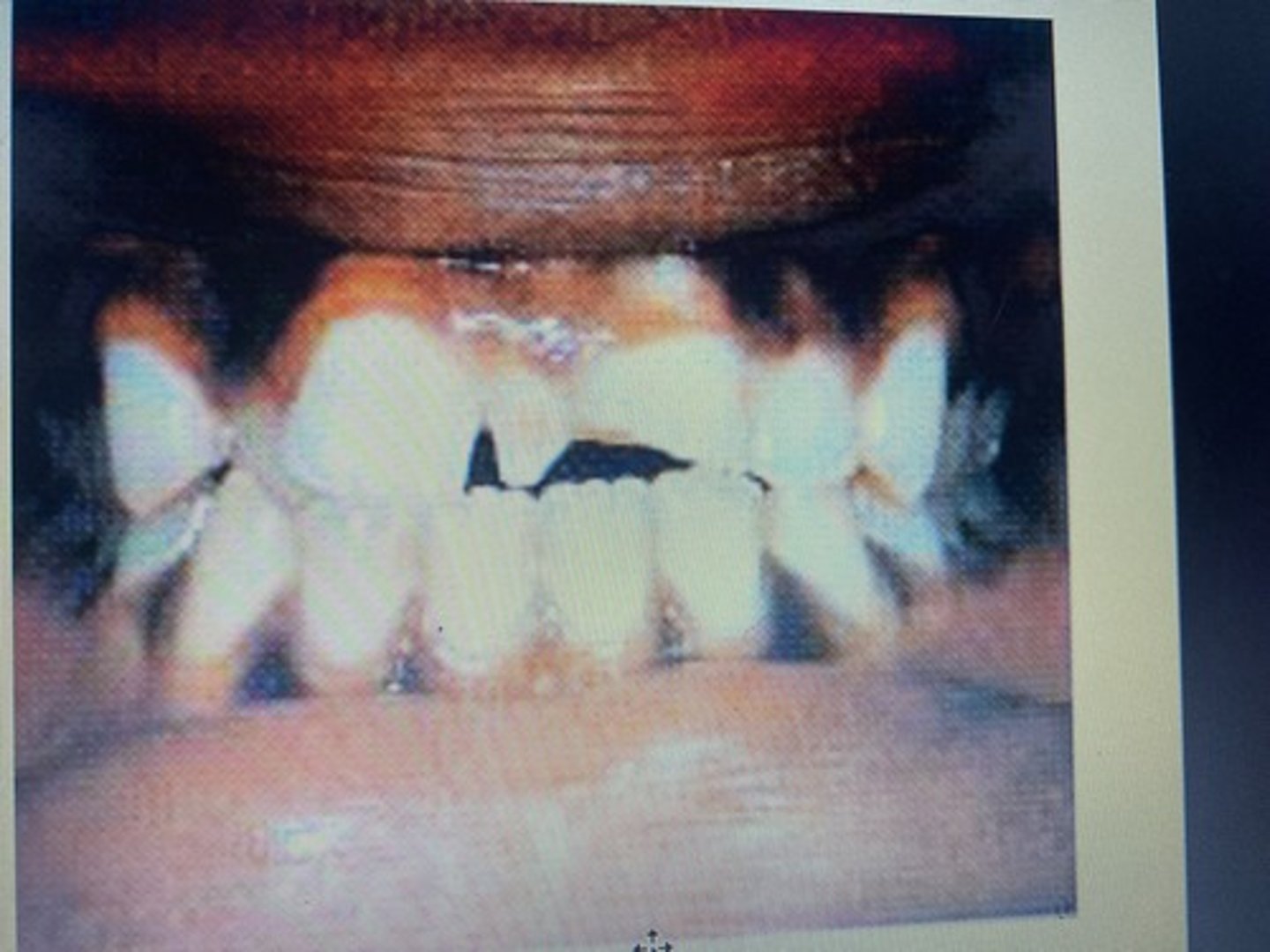
Name this condition
Supernumerary roots
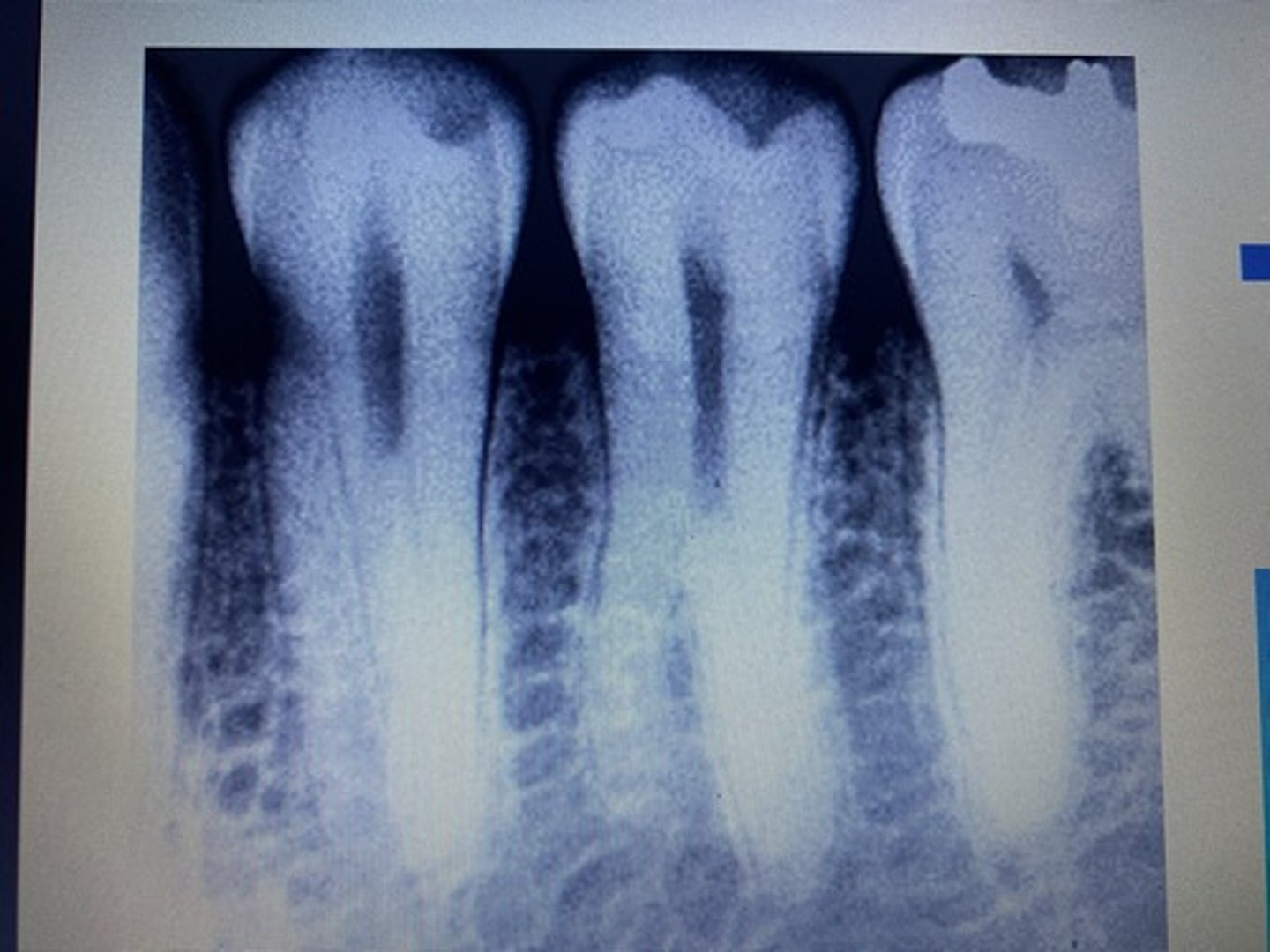
Name this abnormality
Enamel pearl
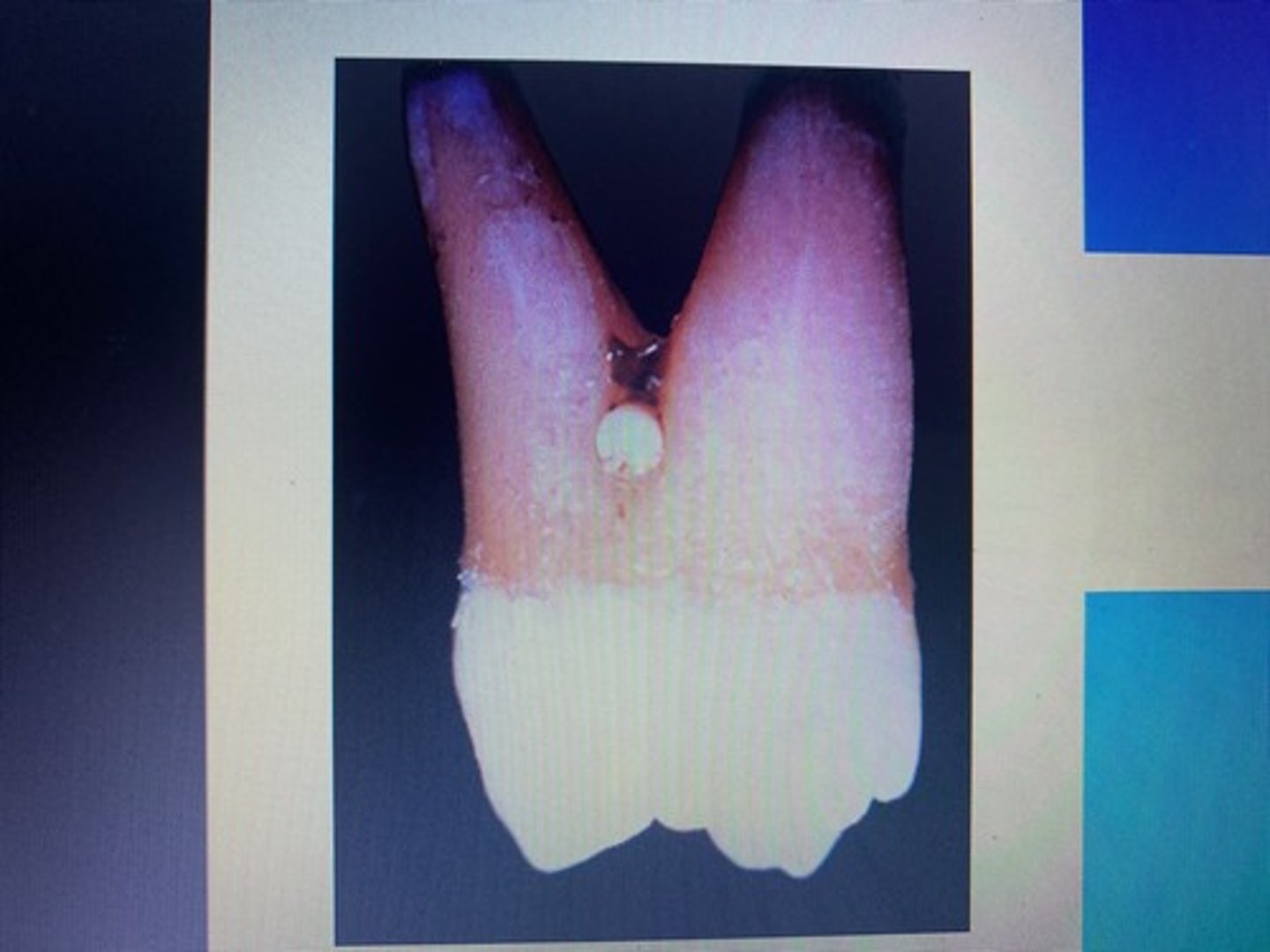
Name this condition
Concrescence
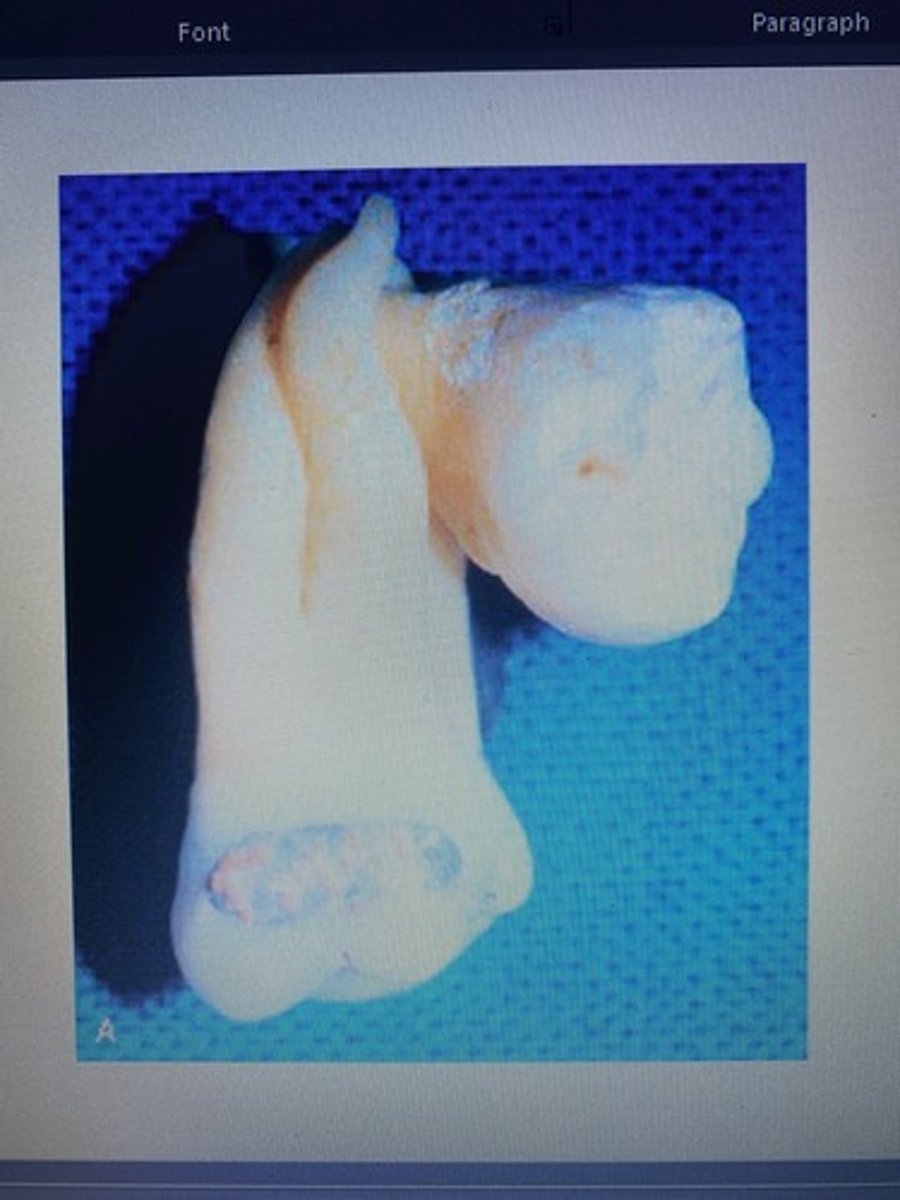
Patients teeth are Carie's free, as are all of the teeth of all the patients who exhibit this defects.
Fluorosis
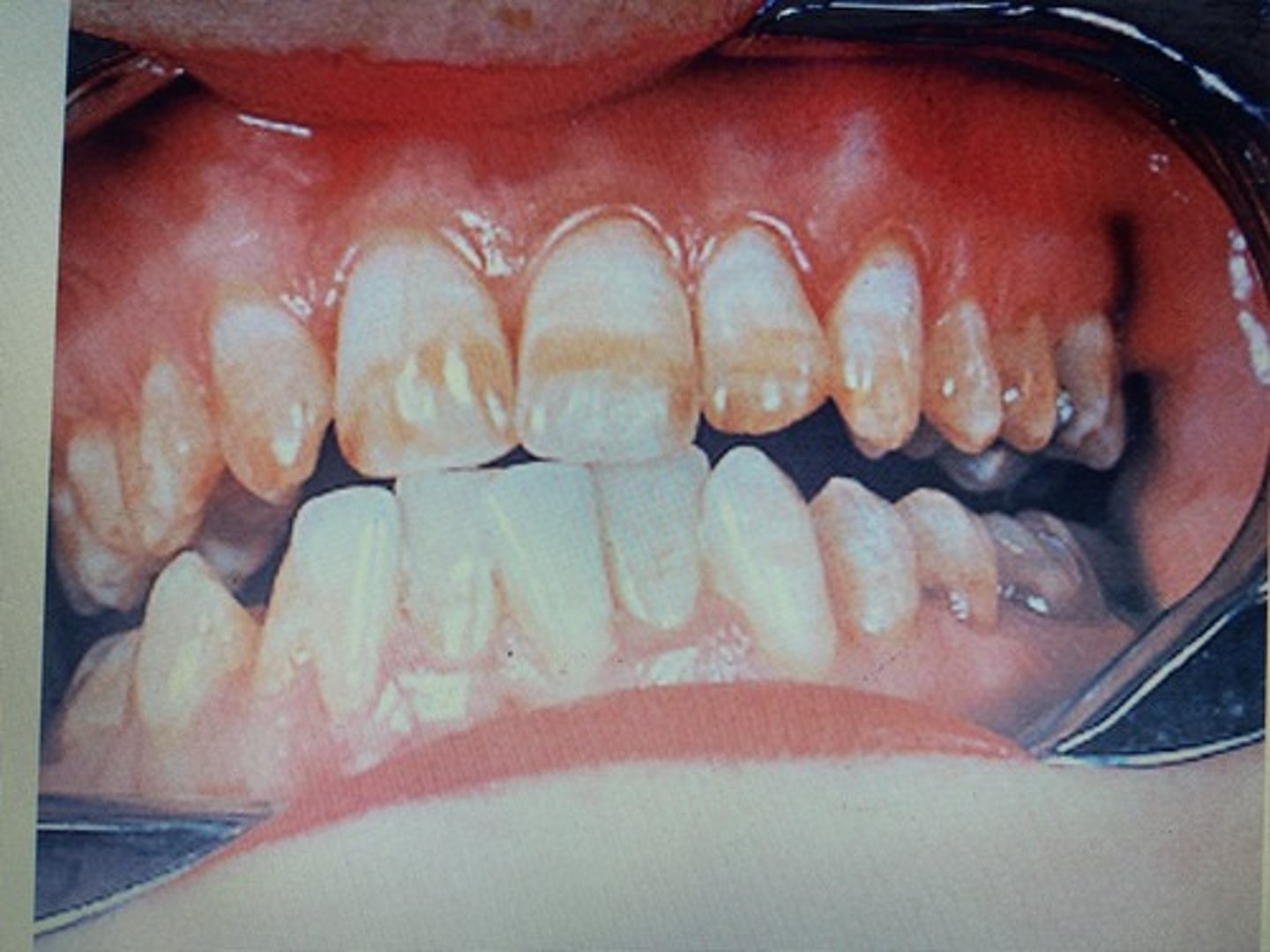
Name this condition
Germination (this large tooth has one root)
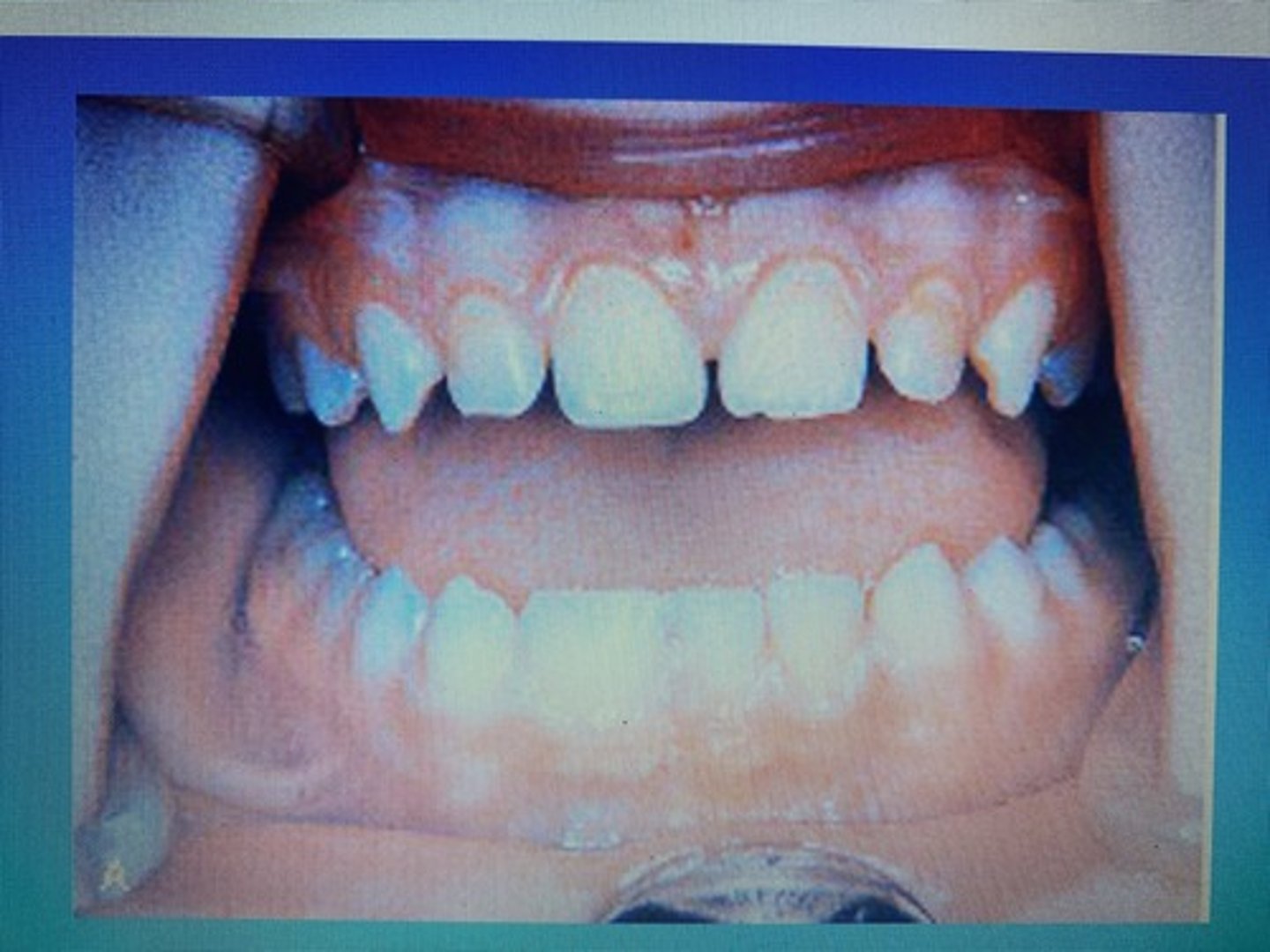
Name this condition
Dilaceration
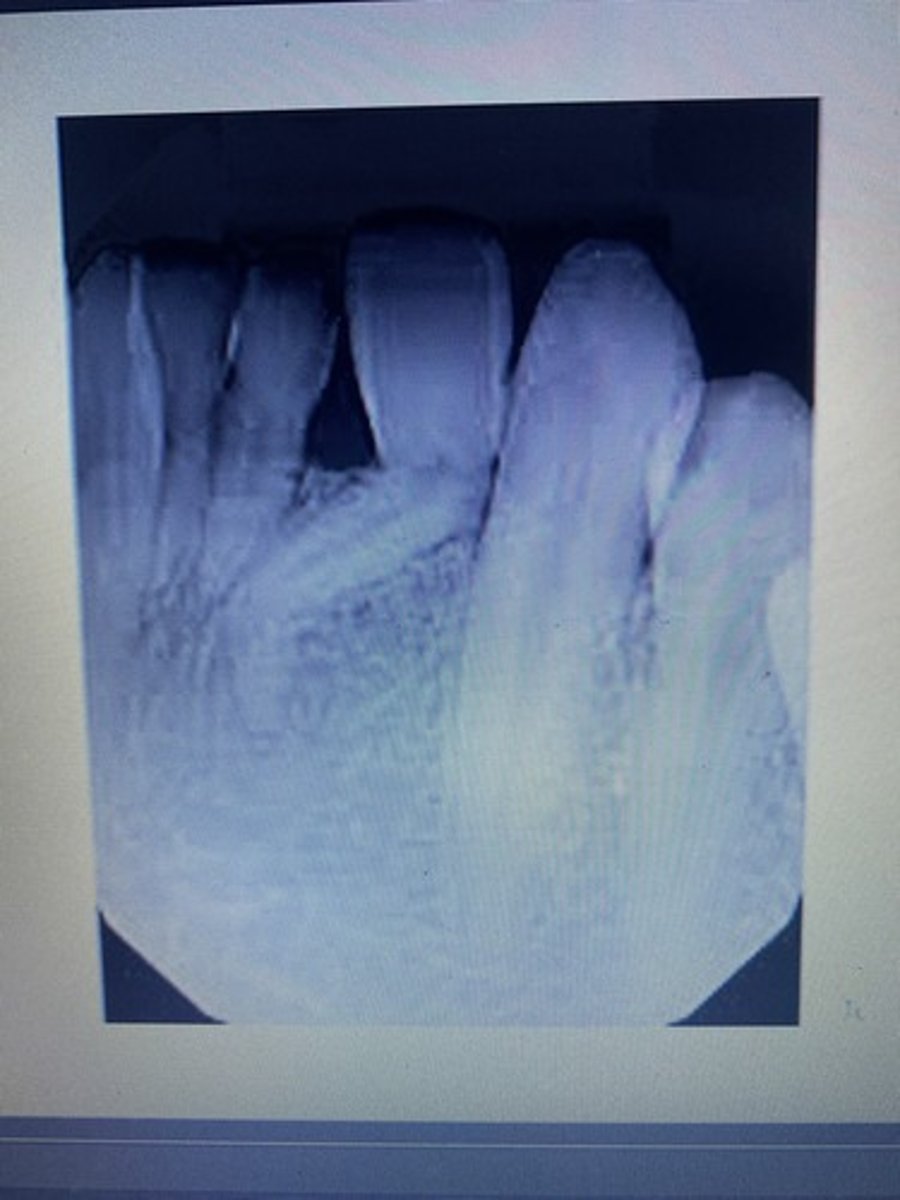
Name this cyst (often heart shaped due to a atomic Y shape of the area)
Nasopalatine Canal
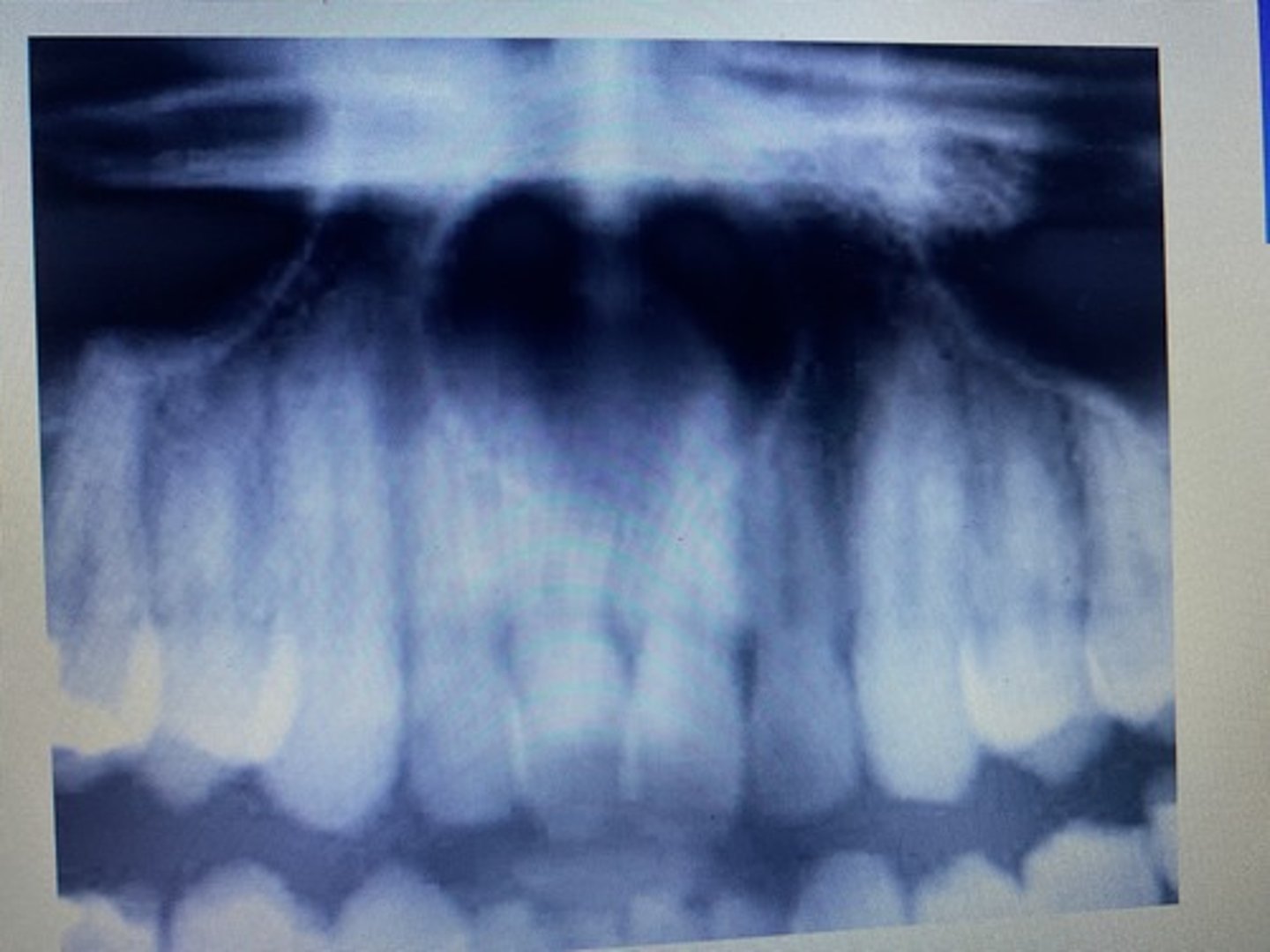
Name this condition (Most common cyst observed in the oral cavity, caused by pulpa inflammation and often a side effect of a long lasting or recurrent periapical infection)
Radicular cyst
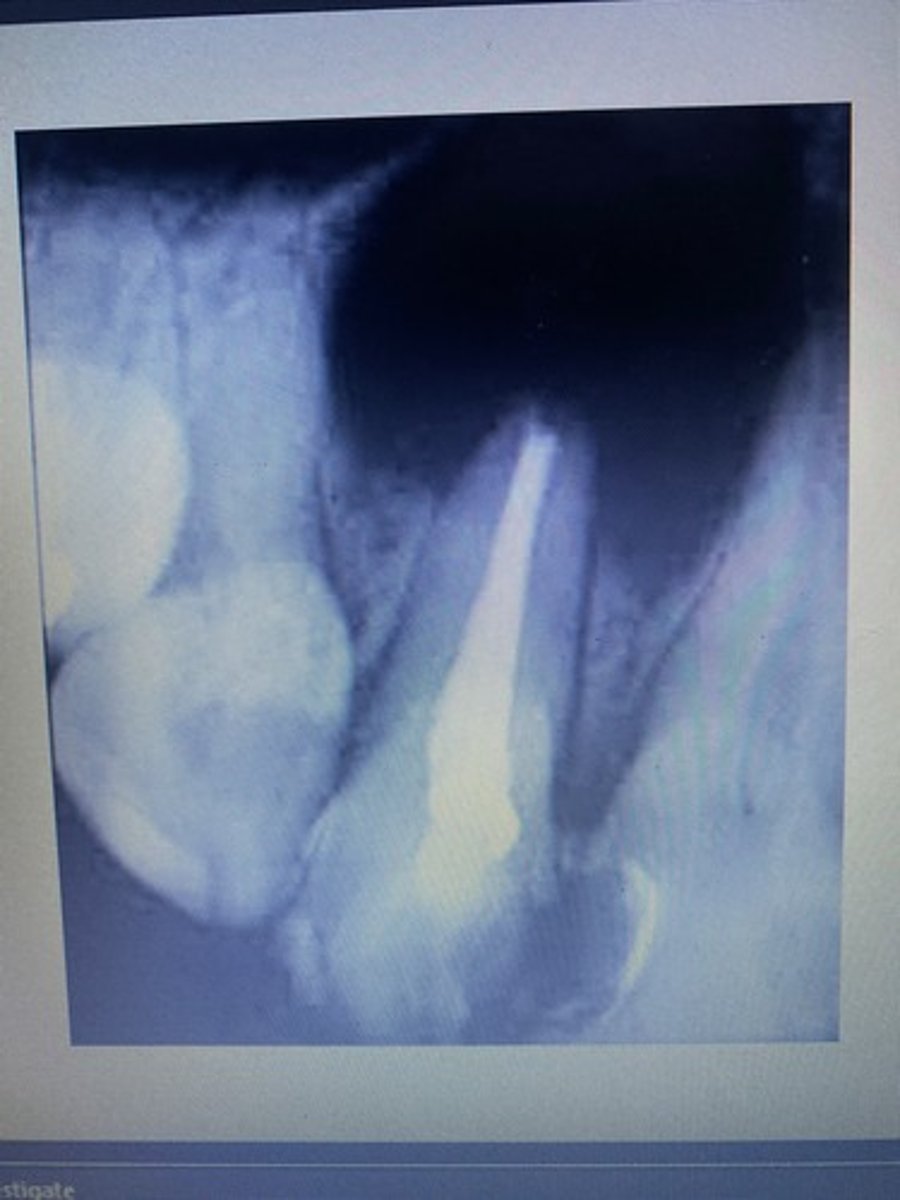
Name this condition (this is a developmental abnormality, often accompanied by a periapical lesion)
Dens In Dente
Angular cheilitis