AMNE371 - Old Kingdom (Images)
 Call Kai
 Learn
Learn Practice Test
 Spaced Repetition
 Match
Match Flashcards
 Knowt Play
1/10

There's no tags or description
Looks like no tags are added yet.
Name | Mastery | Learn | Test | Matching | Spaced | Call with Kai |
|---|
No analytics yet
Send a link to your students to track their progress
11 Terms
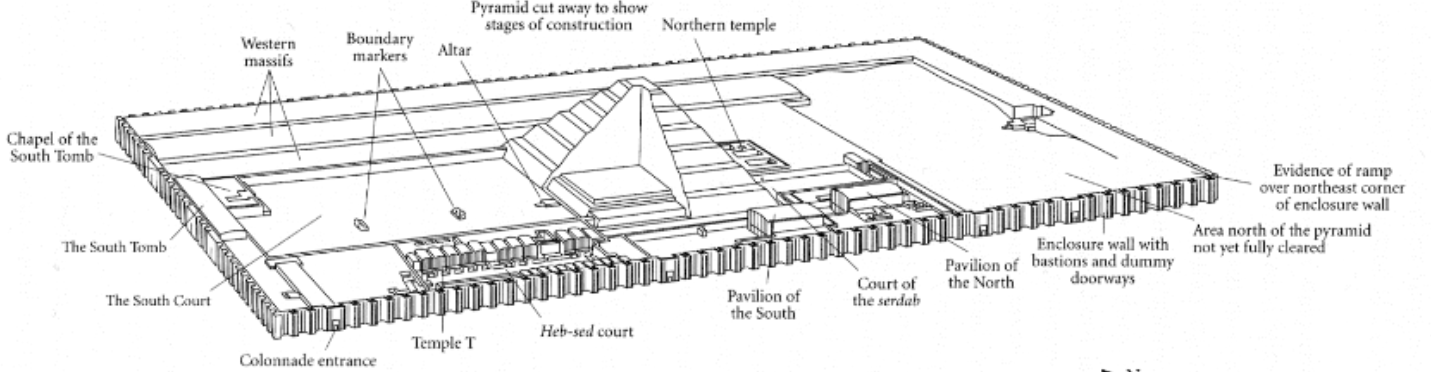
Mortuary Complex of Djoser at Saqqara
a burial site built for Pharaoh Djoser during the Third Dynasty, featuring a step pyramid and various associated structures that reflect the advancements in architectural design
built near Memphis
It served as a symbol of Djoser's power and beliefs in the afterlife, showcasing innovations in masonry and the development of monumental architecture in ancient Egypt.
Massive food stores in chambers and underground galleries
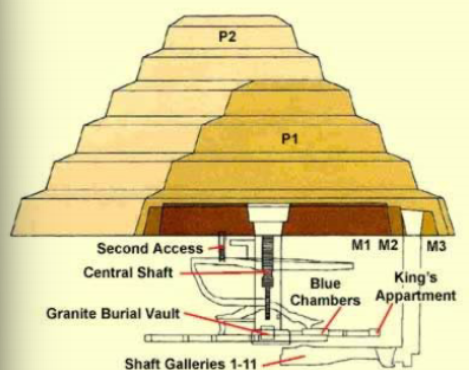
Step Pyramid of Djoser
Originally built as a mastaba (bench) tomb that was later expanded
Built of limestone blocks
initially 4 step pyramid that expanded later
Series of corridors and chambers including Djoser’s burial chamber
Corridors were decorated with tiles and used for burials and storages of over 40,000 stone vessels
East side of the complex has ‘dummy’ (non-functional) buildings
included Sed Festival Court
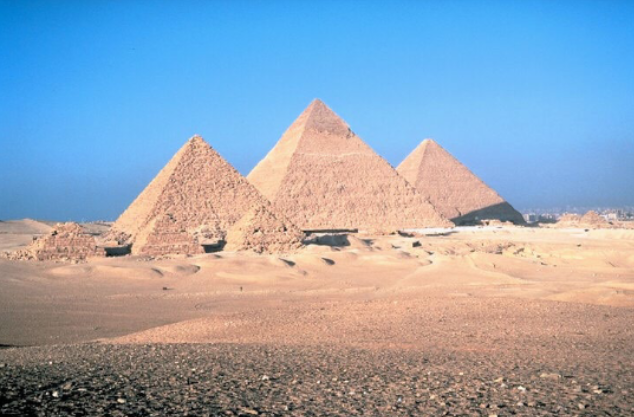
The Pyramids of Giza
Pyramid building reached its peak in the 4th Dynasty
Change of form to ‘true pyramid’ likely represents growing association of king with the sun god, Ra
pyramids were symbols of the sun- strengthening rays to create stairway or ramp for the dead king to ascend to the heavens
The first pyramid (the Great Pyramid) was built by Khufu
aligned with the cardinal points
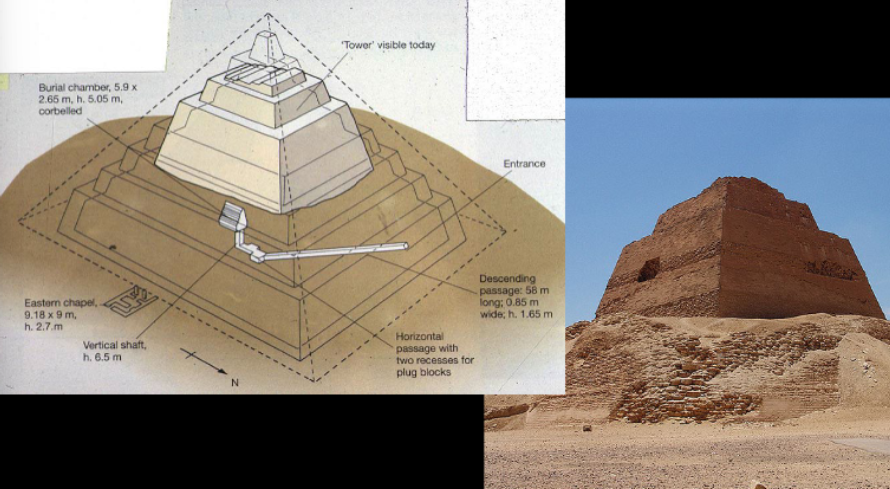
The Pyramid of Sneferu
Attempts to build a true pyramid by 4th Dynasty King, Sneferu
Originally designed as a 7-step pyramid and later extended to 8, then a true pyramid
Was not completed
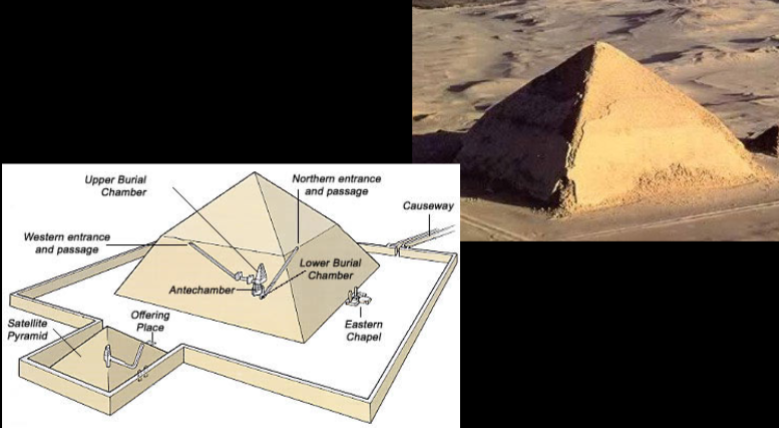
The Bent Pyramid of Sneferu at Dahshur
First designed as a true pyramid
started with 55 degree angle, but due to the unstable interior structure, it was switched to 43 degrees
Has burial chambers and blocking stones, but not the likely burial place of king
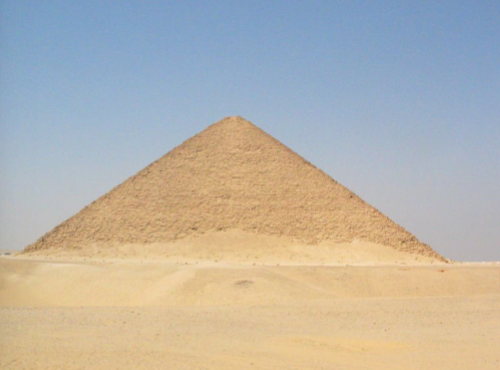
The Red (North) Pyramid of Sneferu at Dashur
First successful true pyramid
43 degree slope gives it the ‘squat’ appearance
Has burial chambers with corbelled vault roofs
Likely burial place of Sneferu
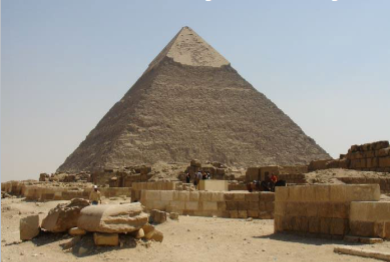
Second Pyramid of Giza
Built by Khafra
Retains original limestone casing at the top and red granite covering the base
Had red granite walls and columns inside with a white calcite floor
Most elaborate temple up to this point
12 statues of Khafra stood in courtyard
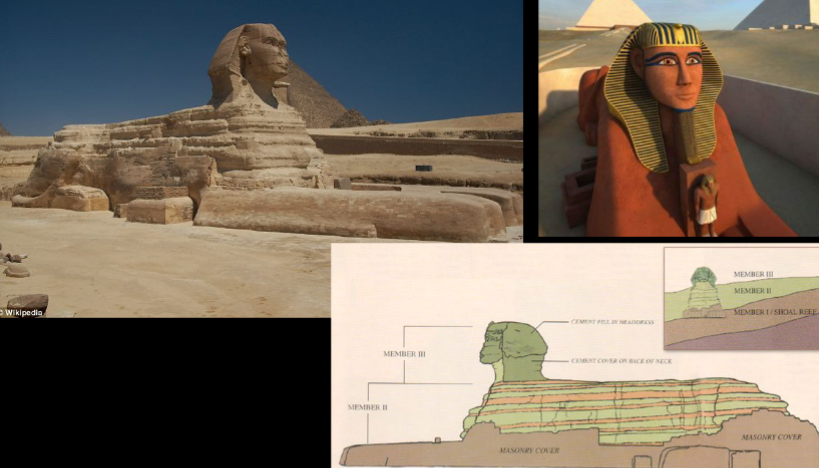
The Great Sphinx
One of the last components of Khafra’s building project
Lion as the guardian with the king making offering to Ra
may be associated with emerging solar cult
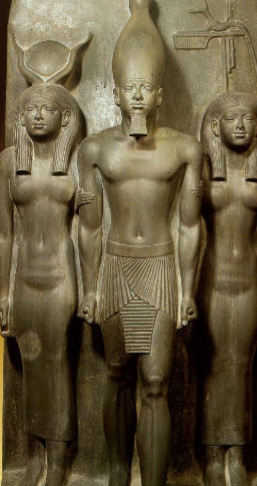
Valley Temple at Giza
Last pyramid at Giza built by Menkaura
Extensive use of granite
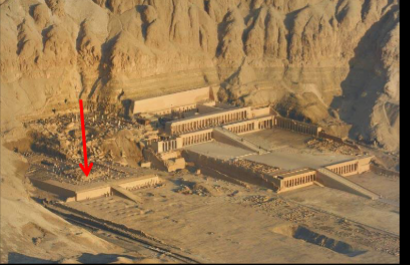
Mentuhotep II’s Mortuary Complex at Deir el-Bahri
Middle Kingdom monumental architecture
marks re-emergence of large scale royal burial
Buried outside Thebes in Upper Egypt
Heavily influenced Hatshepsut’s mortuary temple
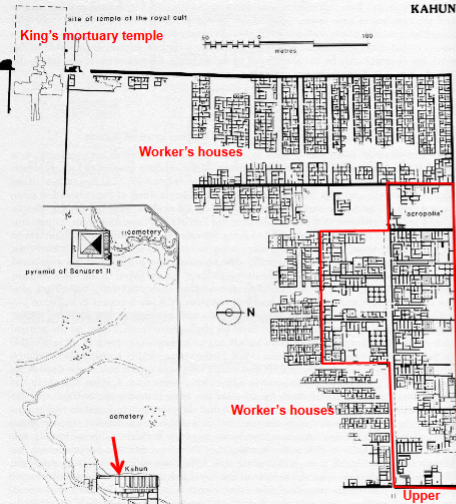
Kahun (el-Lahun)
Excavated by Petrie
partially destroyed by farming
Pyramid Town built near the Faiyum for workers involved in the maintenance of Senusret II’s mortuary temple
planned settlement laid out by state bureaucracy
not a typical village as it was not fortified
Reflects bureaucratic conception of Egyptian society based on two distinct social classes
Important as many artefacts left in situ in the village
tools, baskets, farmer’s toolkits
Houses contained granaries to provide rations to workers
Kemp estimated grain could support 5000-9000 people
Houses modified to the family’s circumstances