Muscular system part 1 - Muscle Basics & Terminology
 Call Kai
 Learn
Learn Practice Test
 Spaced Repetition
 Match
Match Flashcards
 Knowt Play
1/21

There's no tags or description
Looks like no tags are added yet.
Name | Mastery | Learn | Test | Matching | Spaced | Call with Kai |
|---|
No analytics yet
Send a link to your students to track their progress
22 Terms
What movement do muscles do
Pull, contract only never push
Agonist
Primary mover muscle
Antagonist
Reverse / opposes movement
In elbow flexion and extension, between the biceps and triceps, which is the agonist and which is the antagonist
flexion - Bicep is agonist, triceps is antagonist
extension - triceps is agonist, biceps is antagonist
Synergists - what and what are the functions
Helps the agonist / primer mover
Add force and prevent unwanted movement
Fixator
Type of synergist that immobilizes the origin → gives primer mover a stable base
If the rotator cuffs stabilize the shoulders, what function is it doing
Fixator
If muscle is anterior to joint, what movement is it likely to do
Flexion
If muscle is posterior to joint, what movement is it likely to do
Extension
If muscle is lateral to joint, what movement is it likely to do
Abduction
If muscle is medialto joint, what movement is it likely to do
Adduction
How does movement based on location differ in lower limbs such as your knee and ankle joints
Opposite from upper limbs
Anterior - extension (quads)
Posterior - flexion (hamstrings)
What location is the temporalis muscle
Temporal bone
What shape is the deltoid muscle based on the name
Triangle
What are the three sizes when it comes to naming muscles
Maximus
Minimus
Longus
What are the three directions of muscle fibers or fascicles when naming
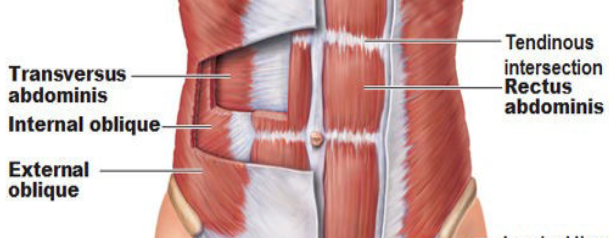
Rectus, transversus, oblique
Rectus direction
Fibers run straight
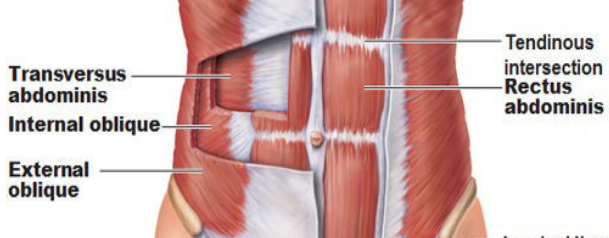
Transversus direction
Fibers run at right angles (perpendicular)
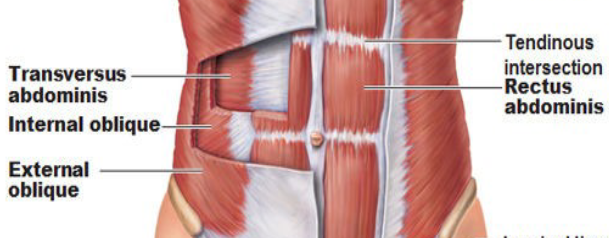
Oblique direction
Fibers run at angles to imaginary defined axis (diagonally)
Naming muscles by number of
origins
bi - 2
tri -3
quad - 4
When naming based on location of attachment
which comes first
Origin comes first before insertion
What does the sternocleidomastoid connect
Sternum - clavicles - mastoid process