fun guys exam 1
 Call Kai
 Learn
Learn Practice Test
 Spaced Repetition
 Match
Match Flashcards
 Knowt Play
1/57

There's no tags or description
Looks like no tags are added yet.
Name | Mastery | Learn | Test | Matching | Spaced | Call with Kai |
|---|
No analytics yet
Send a link to your students to track their progress
58 Terms
plant disease definition
Any deviation from the normal function of a plant that
threatens its health or survival or decreases its aesthetic
or economic value as a whole or any of its parts
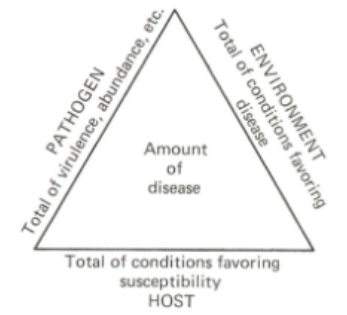
plant disease triangle
pathogen, environment, host
fungi characteristics
heterotrophs that absorb nutrients
utilize organic matter for carbon
need water, nitrogen, light, proper temps
have a number of different cell types
can be difficult to identify and classify
hyphae definition
long slender filaments of multicellular fungi
mycelium definition
mass of connected hyphae
how do fungi obtain food
secreting digestive enzymes into their substrates— external digestion
allows them to break down cellulose and lignin (and sometimes animals)
how are the carbon needs for fungi met (2 options)
parasitism of plants or animals, causing disease
saprophytism: growing on dead animal, plant, or microbial biomass
pathogen definition
agent that causes disease
endophyte:
live inside tree organs such as leaves or xylem but cause no damage
latent infection
the time between the infection and symptom expression
why is the disease triangle helpful
it emphasizes that disease and pathogen are not the same thing and that disease is caused by a mixture of factors
sign meaning
physical appearance of a pathogen
symptom meaning
alterations in the appearance of the host due to disease
infected meaning
plants or plant parts that a biotic pathogen has entered
infested meaning
areas, stands, plots, soils, containers, etc where pathogen is present
fungi characteristics:
basic structural unit is almost always a hypha
reproduction propagule almost always a spore
nutrition is heterotrophic and absorptive
Oomycota
technically not kingdom Fungi
water molds
Ascomycota
8 spores in ascus sac that are forcibly discharged
includes so many
Basidiomycota
sexual spores
many have septal structures that clamp connections during most of the life cycle
Agaricomycotina (subphylum)
inlcudes conks and puffballs
the basidia are aseptate and spores germinate to give only hyphae
life cycle of basidiomycete
spores are spread by wind
spores germinate (if they land somewhere good)
when sexually compatible germlings grow nearby, their hyphae fuse and mix cell content (plasmogamy)
If conditions allow, produces fruitbody for sexual reproduction and dispersal
control vs management
control: reduction of disease to zero
management: not total control
silviculture for disease management
thinnings help remove diseased individuals
planting or favoring resistant species
choosing management style based on disease
breeding for disease management
duh
r selected plants
rapid growth
dominate disturbed areas
invest in reproduction
K selected plants
cope with heavy competition
long term srvival
defense against herbivores and pathogens
ash dieback hosts
most european ash highly susceptible, Asian ash more tolerant
ash dieback pathogen
Hymenoscyphus fraxineus
ash dieback environment
moist, cool sites
ash dieback disease cycle
ascospores produced on fallen leaves
they are fired upwards and wind dispersed
infects leaf, causes necrosis
moves into shoot if leaf is not dropped
if leaves are shed, they restart cycle
ash dieback signs and symptoms
small brown lesions on leaves that become large black and necrotic
cankers on shoots
diamond shaped cankers on stem around branches
wilting and branch dieback
ash dieback distribution
native to asia
introduced to europe, killed 80% of young ash in norway
swiss needle cast hosts
douglas fir that’s it
dense young stands
swiss needle cast pathogen
Nothophaeocryptopus gäumannii
swiss needle cast environment
moise
young, dense stands like Christmas tree plantations
epidemic in Oregon
swiss needle cast symptoms
needles become yellow-green, chlorotic, then mottled or brown, then fell
thin crowns, particularly in lower inner foliage
lines in stomata on needles
powdery mildew of flowering pear environemnt
free moisture on leaf surface NOT required
xylem location and purpose
inner bark transport water
phloem location and purpose
outer bark, transport nutrients
mechanisms of wilting
plugging by mycelium and spores
plugging by gels, gums from cell wall breakdown
parenchyma cells may produce tyloses- blocks pathogen invasion but also blocks water flow
dutch elm disease pathogen
Ophiostoma ulmi
dutch elm disease spread
beetle inoculates tree during feeding, beetles breed in infected dying tree
oak wilt pathogen
bretziella fagacearum or something
most and least susceptible groups to oak wilt
red oaks most
white oaks least
oak wilt environment
disease progression favored by hot dry conditions, disease transmission favored by cool moist condistions
oak wilt treatment
trenching
avoid pruning in spring and summer
treat wounds
mistletoe genus
viscum
what hype of parasite is mistletoe
hemiparasite and obligate parasite- takes water an inorganic nutrients from host but makes organic food
how does mistletoe affect host plant
kills them by using all their water
canker definition
infection disease of the phloem and cambium on stems, branches, or twigs of trees
what causes cankers
mostly Ascomycota